Inspiration
Humanitarian responders and emergency planners are often forced to make critical decisions using fragmented data spread across multiple sources. While vast amounts of disaster and preparedness data exist, translating that information into clear, actionable insight remains difficult during time-sensitive crises.
We were inspired to build CrisisCompass to bridge this gap — transforming complex risk data into understandable intelligence that helps responders quickly identify where intervention is needed most.
What it does
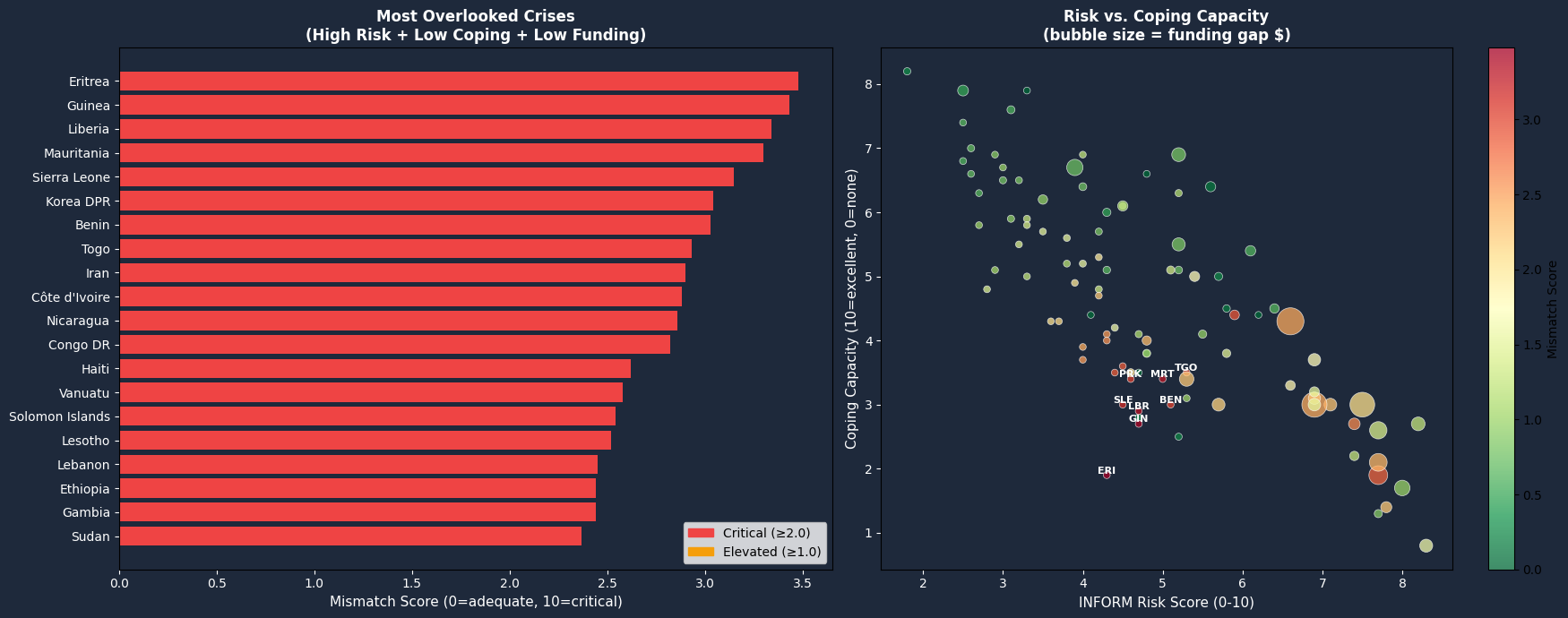
CrisisCompass analyzes humanitarian and disaster preparedness data to identify regions where disaster risk exceeds response capacity.
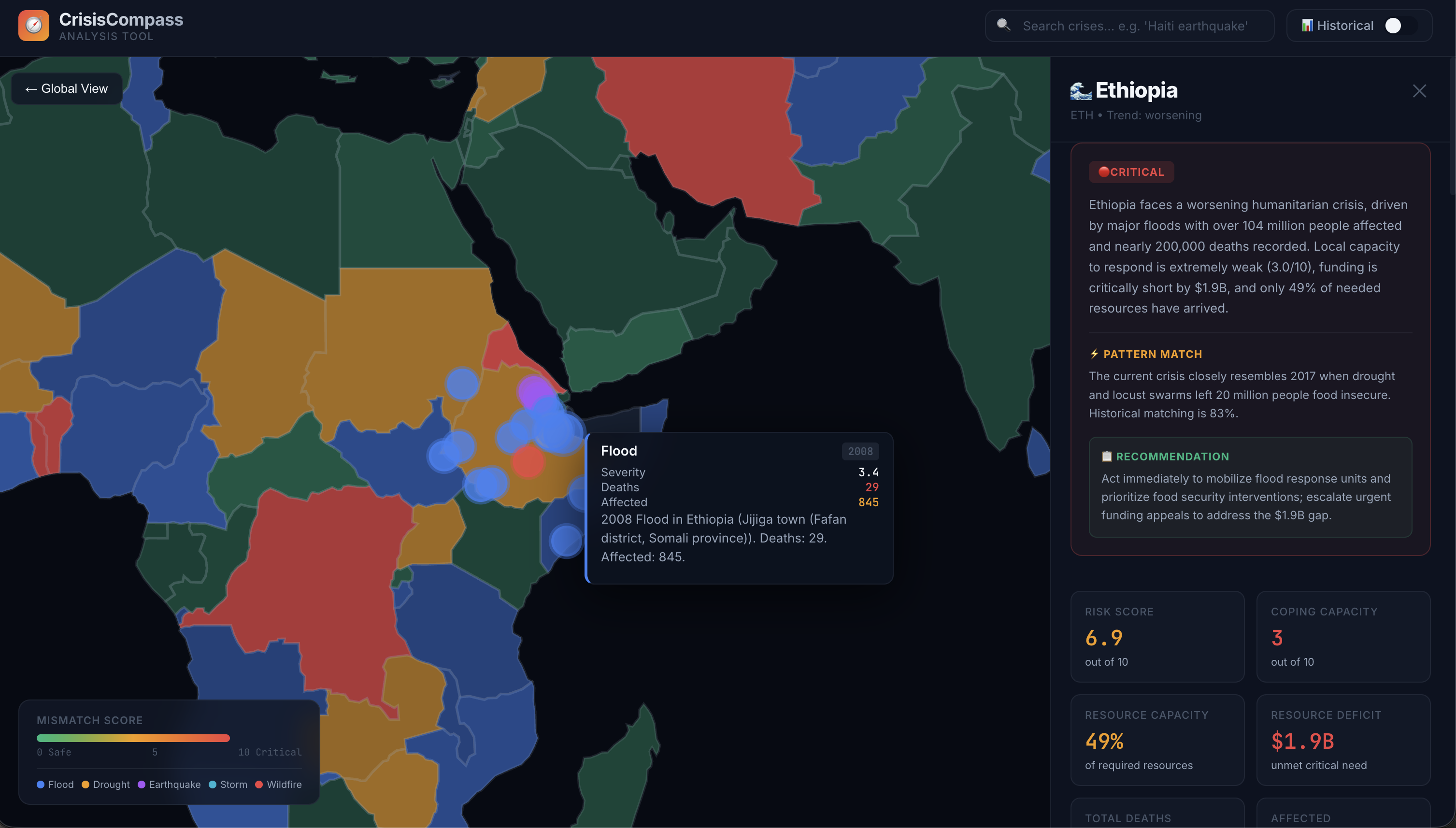
Through an interactive global map, users can explore countries ranked by vulnerability and preparedness levels. Using Sphinx AI, responders can generate natural-language risk summaries, historical pattern comparisons, and actionable recommendations based on structured analytics derived from processed datasets.
How we built it
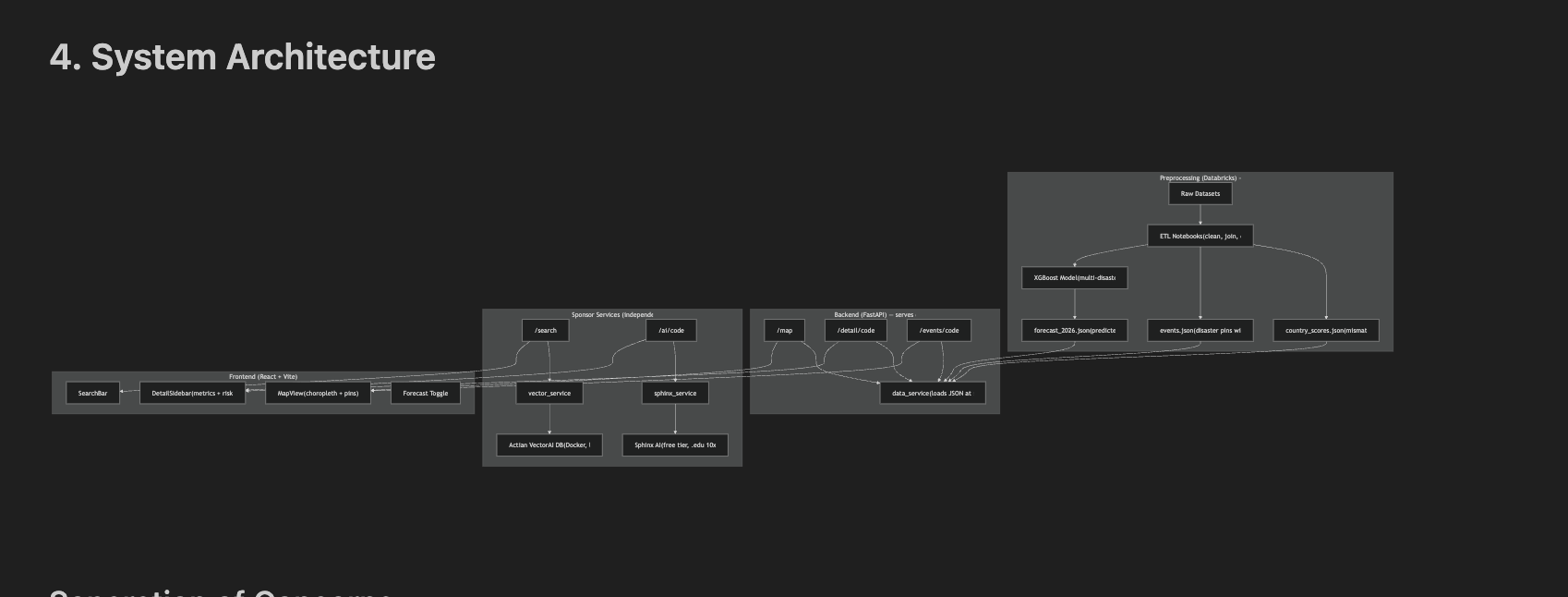
We used Databricks to ingest, clean, and preprocess large-scale humanitarian and disaster datasets. During preprocessing, we engineered a composite mismatch score representing disaster exposure versus response readiness.
This structured data powers Sphinx AI, which generates prompt-driven analytical explanations and situational narratives for selected regions. A React + Vite frontend renders an interactive geospatial dashboard, allowing users to explore risk levels and generate AI-powered insights in real time.
Challenges we ran into
One of our biggest challenges was converting complex analytical outputs into insights that remain understandable under time pressure. Balancing data accuracy with clear visualization required multiple iterations of scoring models and UI design.
Integrating AI-generated explanations with structured data while maintaining responsiveness in the application also required careful system design.
Accomplishments that we're proud of
We built an end-to-end platform that connects large-scale data engineering with AI-assisted decision support. CrisisCompass successfully turns raw humanitarian datasets into intuitive visual insights and contextual recommendations, demonstrating how AI can assist real-world crisis response workflows.
What we learned
We learned that effective AI systems depend heavily on strong data preprocessing and feature engineering. We also gained experience integrating analytics platforms with generative AI to translate technical outputs into human-centered decision support tools.
What's next for CrisisCompass
Next, we plan to integrate real-time disaster feeds, expand predictive modeling capabilities, and incorporate additional datasets such as weather forecasts and infrastructure readiness indicators. Our long-term goal is to evolve CrisisCompass into a live decision-support platform for emergency responders and humanitarian organizations worldwide.
Built With
- databricks
- fastapi
- mapboxgl
- pyspark
- python
- sphinx
- vite
- xgboost


Log in or sign up for Devpost to join the conversation.