-
-
Architecture
-
Surgery 1
-
Stretching Spleen
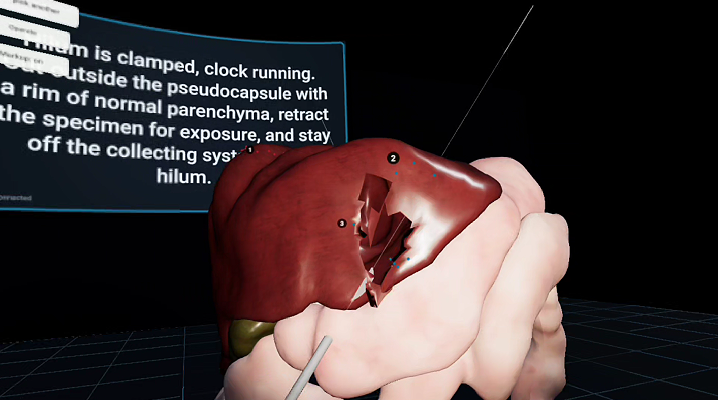
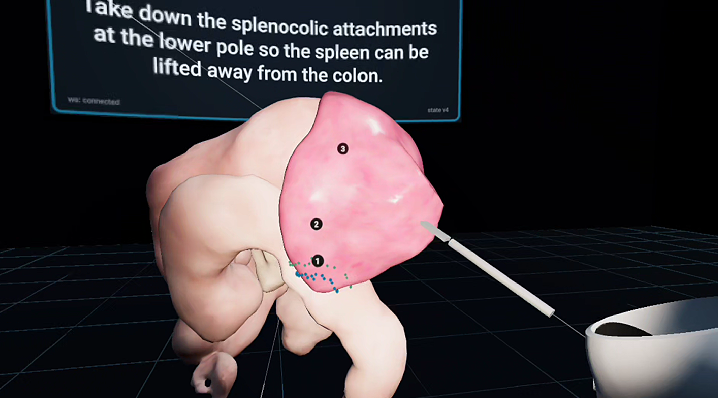
Surgical training has a major accessibility problem: learning a procedure requires more than reading instructions or watching videos, but realistic hands-on simulation is expensive, limited, and difficult to create for every operation. Existing educational resources are also fragmented across papers, textbooks, guidelines, and surgical videos, making it hard to turn the latest medical knowledge into something trainees can actually practice.
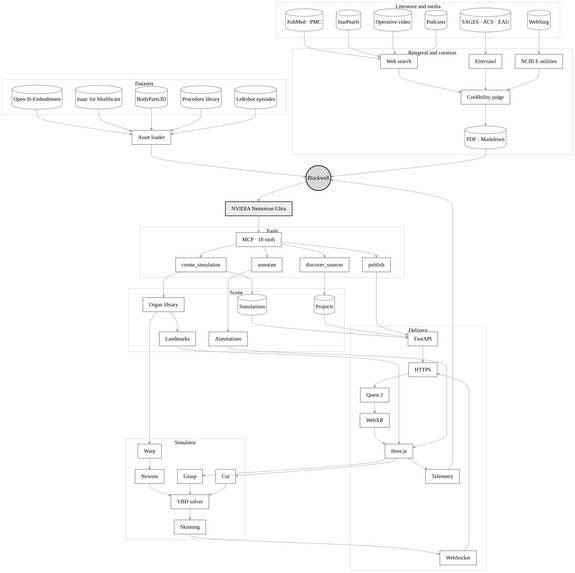
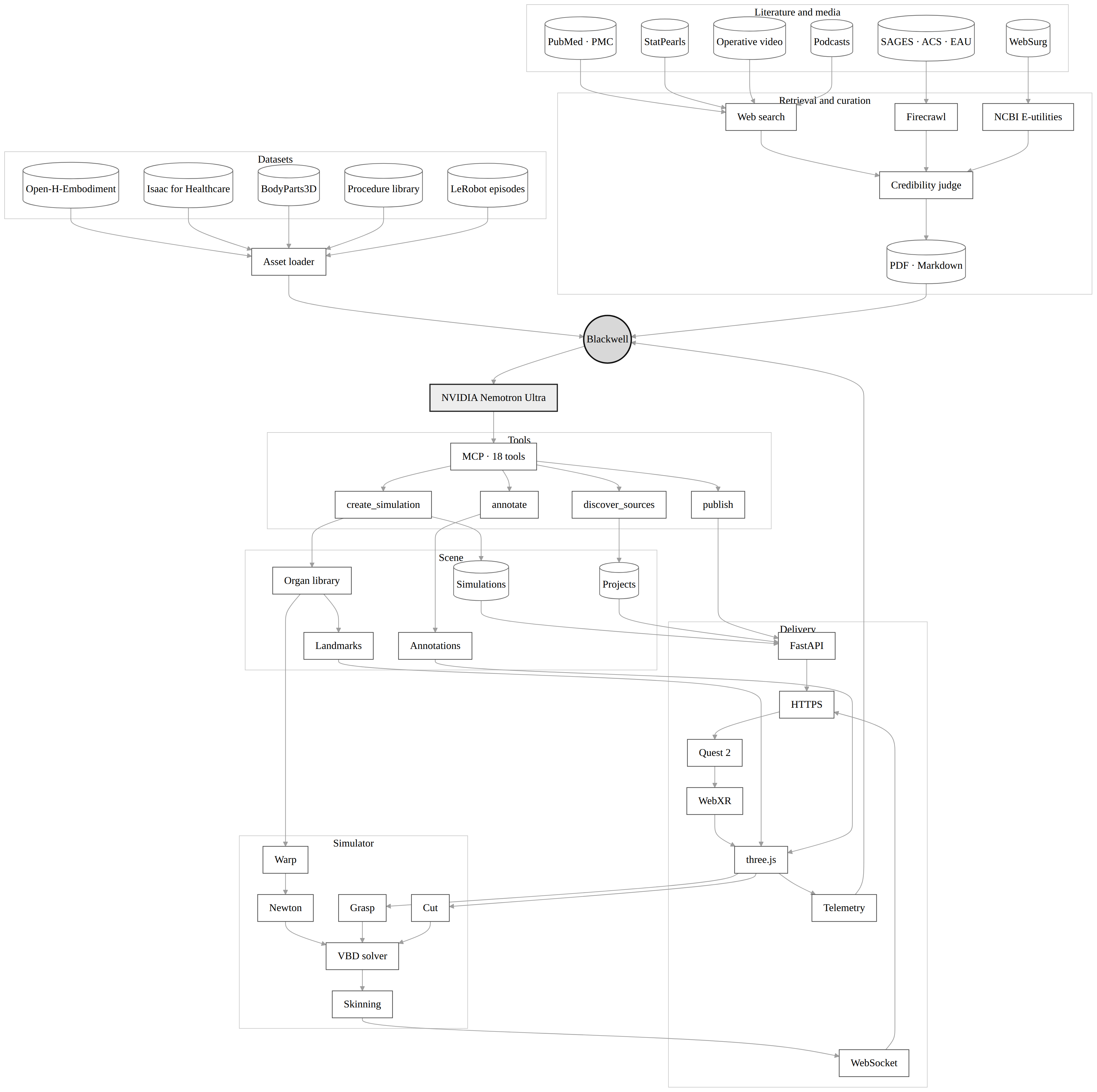
Blackwell makes surgical simulation generative and interactive. Instead of relying on a small library of manually built training scenarios, a user can describe what they want to learn and Blackwell builds the lesson around that request. It researches the procedure across papers, textbooks, guidelines, videos, and real surgical demonstrations, cross-validates what it finds, evaluates source reliability, resolves conflicting information, and keeps every instruction traceable back to its evidence. It then turns that verified knowledge into an interactive environment rather than another document or video. The result is a system that can transform scattered medical knowledge into personalized, hands-on surgical training on demand, making high-fidelity simulation far more scalable, adaptable, and accessible.
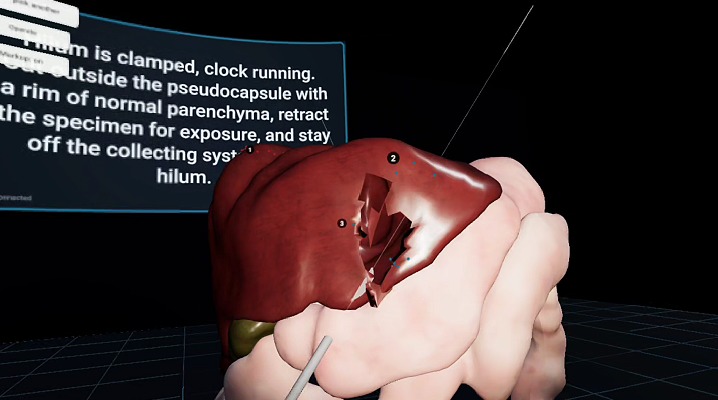
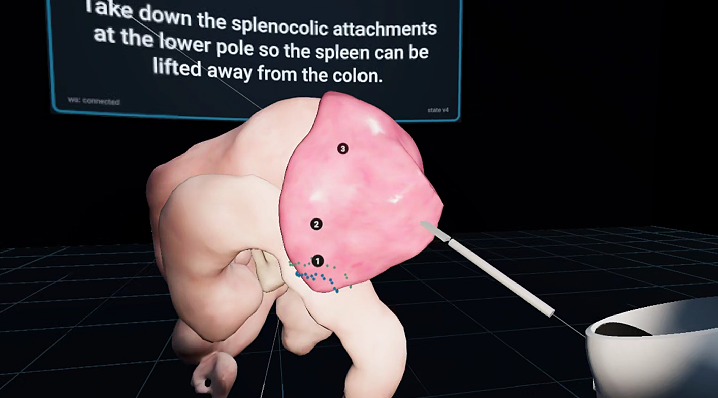
Under the hood, Blackwell automatically selects the relevant anatomy, identifies validated surgical landmarks, and compiles the procedure into a live GPU soft-tissue simulation powered by NVIDIA Newton and Warp. The system supports 28 anatomical organs and 207 computed landmarks, with guidance such as where to grasp, retract, dissect, avoid, or cut attached directly to deformable tissue so it moves correctly as the anatomy is manipulated. Users can physically grasp and retract organs with pincers and make real incisions with a scalpel in VR, while the Quest acts as a lightweight WebXR client and the heavy simulation, surface skinning, and physics run remotely on the GPU. The AI never invents arbitrary coordinates or anatomy: it can only operate through validated organs, landmarks, tools, and bounded physical parameters.

Log in or sign up for Devpost to join the conversation.