Here’s a tighter version under 250 words.
Inspiration
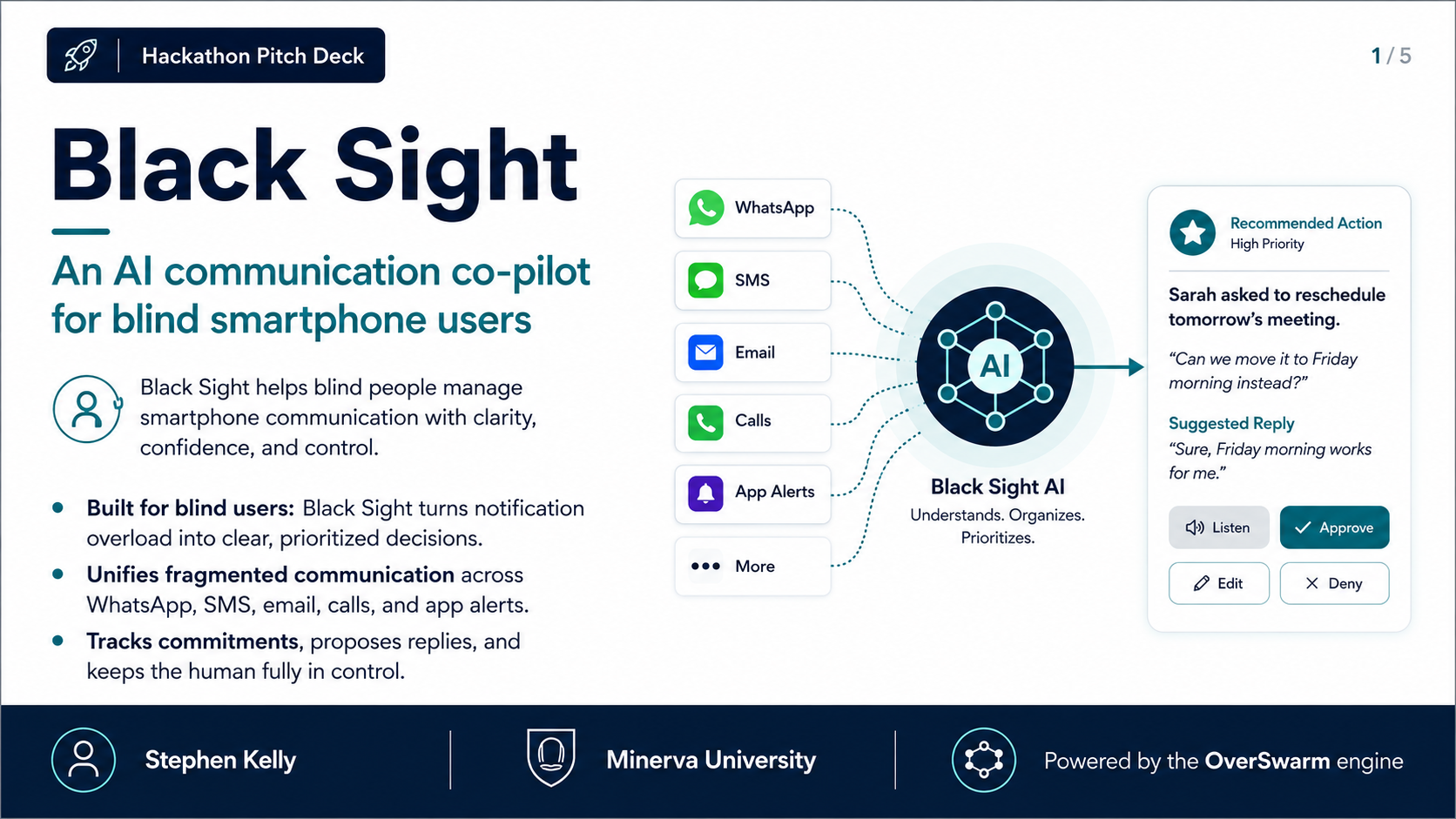
Blind people can hear notifications through screen readers, but still face fragmented conversations, lost context, and constant interruption. We built BlackSight to help users understand what matters—not just hear what arrived.
What it does
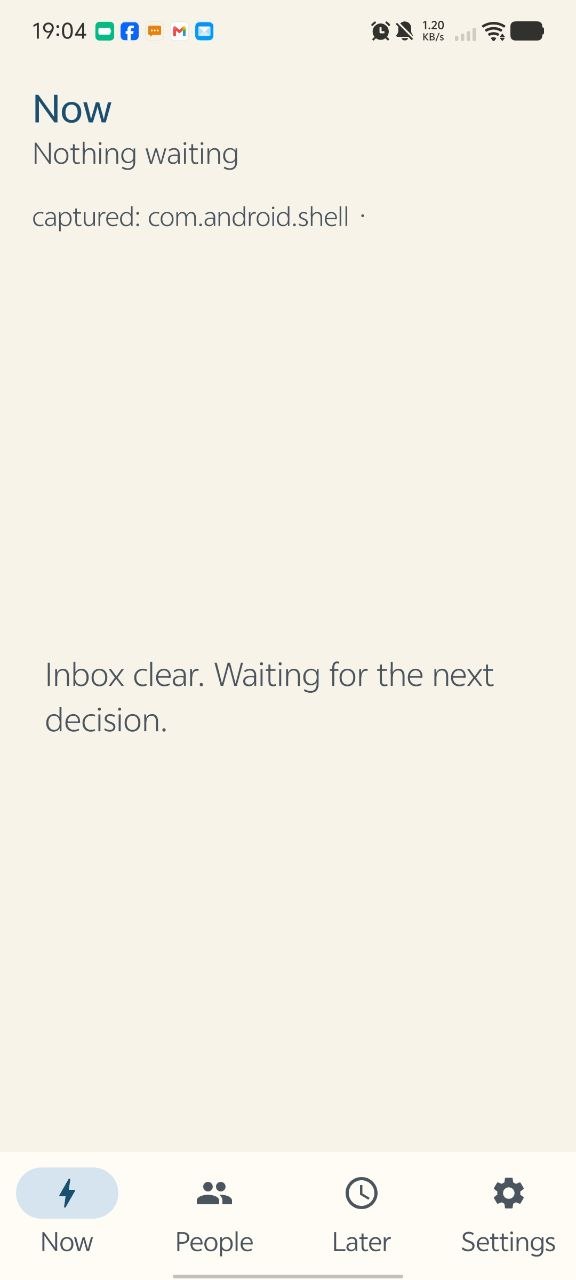
BlackSight unifies notifications across apps, prioritizes urgent messages, tracks commitments, creates reminders, and drafts replies. Every action requires user approval. A trusted second phone can add signals, escalation, and spare AI compute without seeing private message content.
How we built it
BlackSight runs on the OverSwarm engine. Android captures notifications, while Jac manages people, devices, messages, decisions, and learning in a persistent graph. Walkers handle ingestion, triage, reminders, escalation, and feedback. byLLM, sem, and scheduled walkers power structured AI reasoning and background processing. Mobile phones can also share local inference workloads.
Challenges we ran into
We had to solve cross-app identity matching, privacy between devices, incomplete notification previews, local-model limitations, network failures, and safe reply execution.
Accomplishments that we're proud of
We created a working, privacy-first, multi-device AI system where Jac is the core engine—not a wrapper. BlackSight learns from user feedback, degrades gracefully, and never sends messages without consent.
What we learned
Accessibility must shape the architecture from the beginning. We also learned that local models work best for background tasks, while graph-based memory makes AI behavior more visible and explainable.
What's next for BlackSight
We plan to add OCR, screen understanding, scam detection, richer reminders, guided app navigation, and broader shared mobile compute through OverSwarm.

Log in or sign up for Devpost to join the conversation.