-
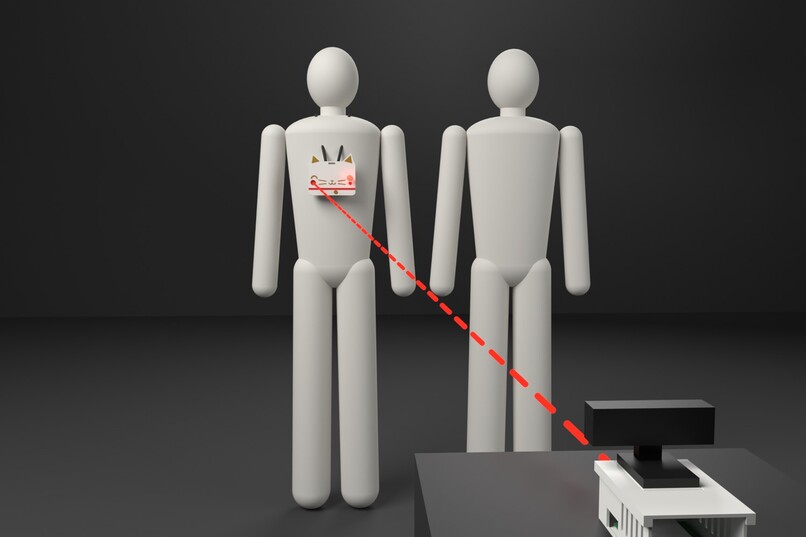
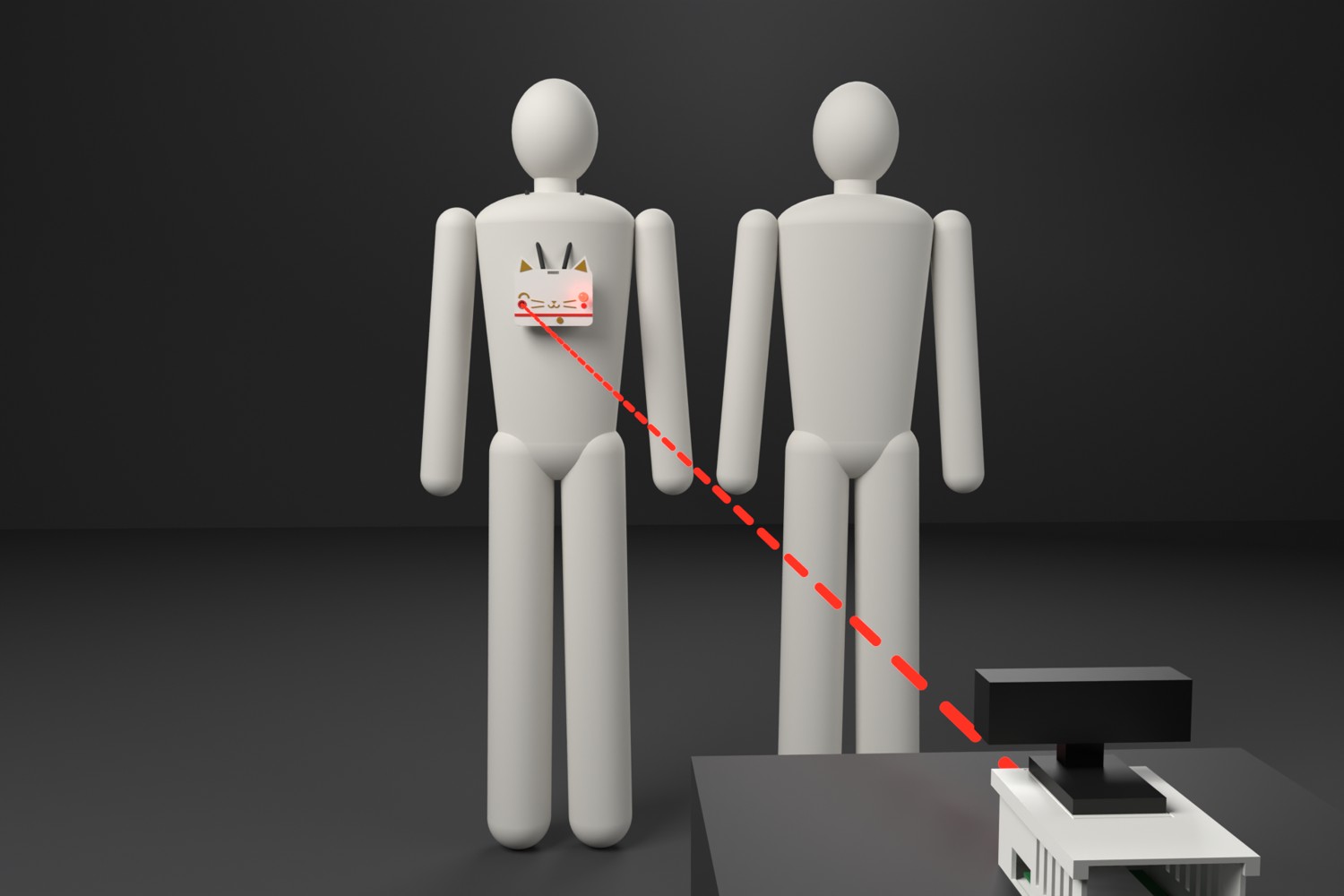
In the room: the badge's infrared light reaches the camera (drawn in red).
-
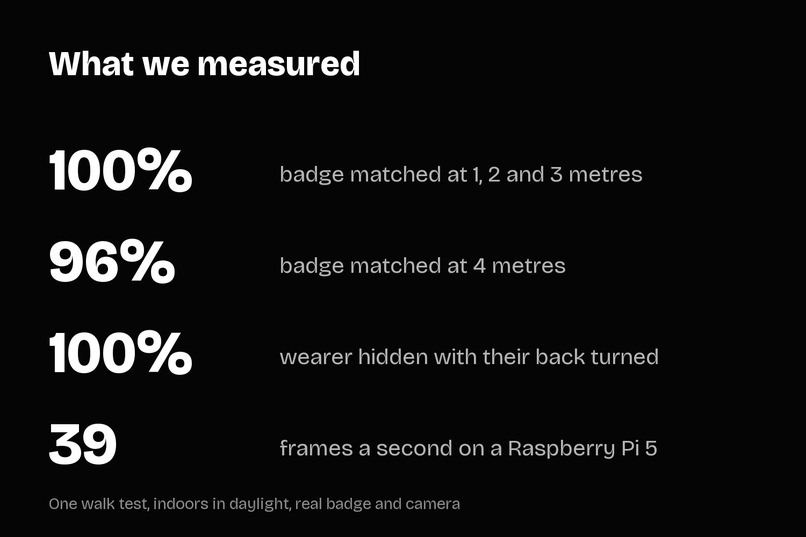
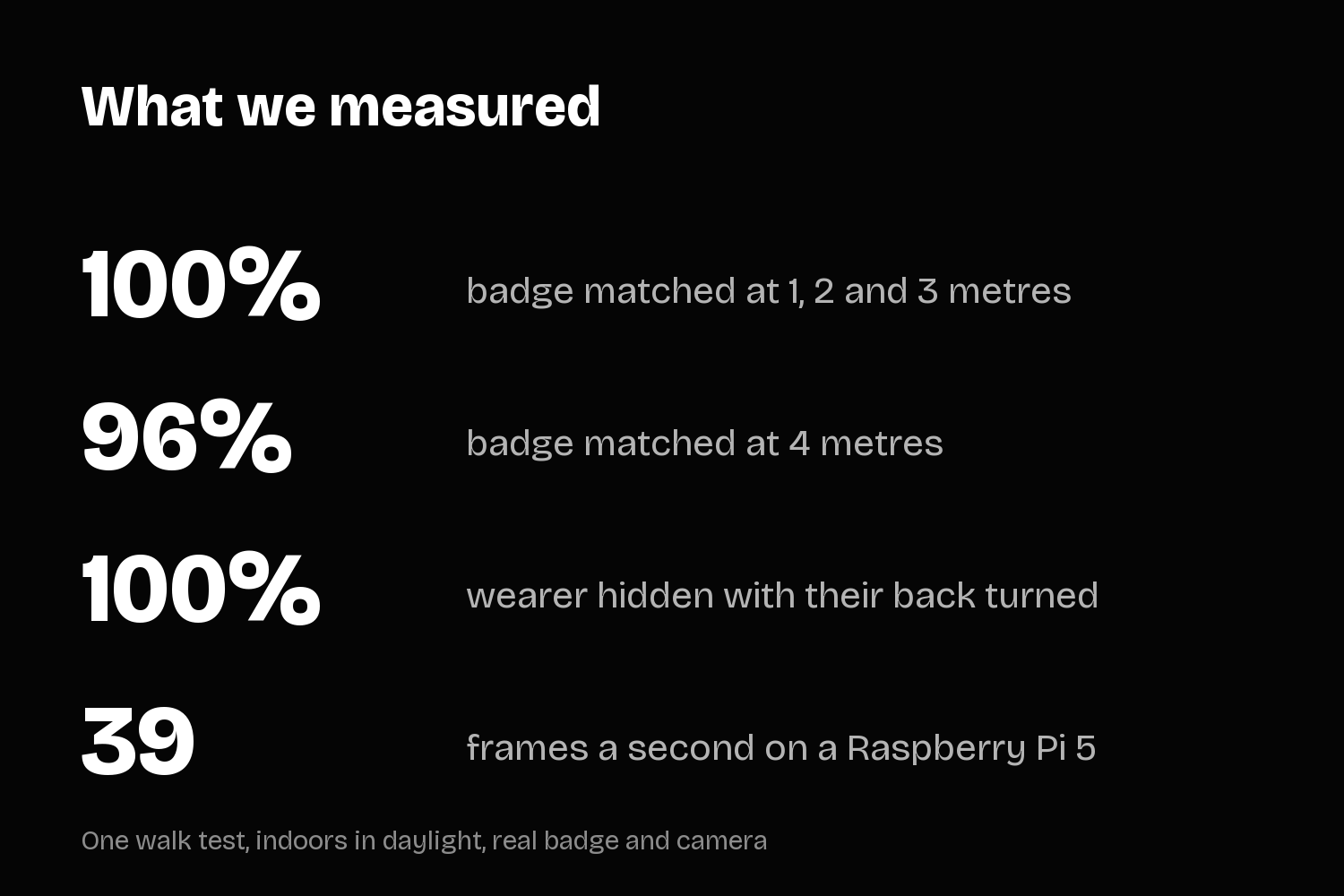
What we measured in our own walk test.
-
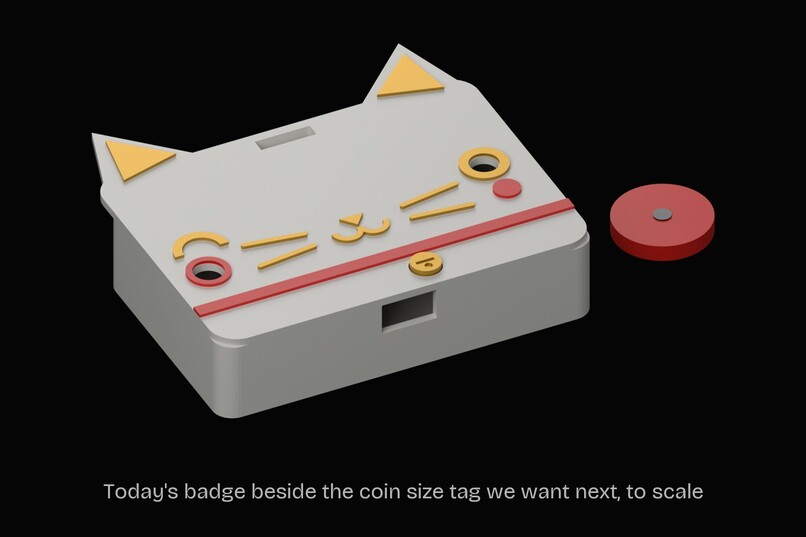
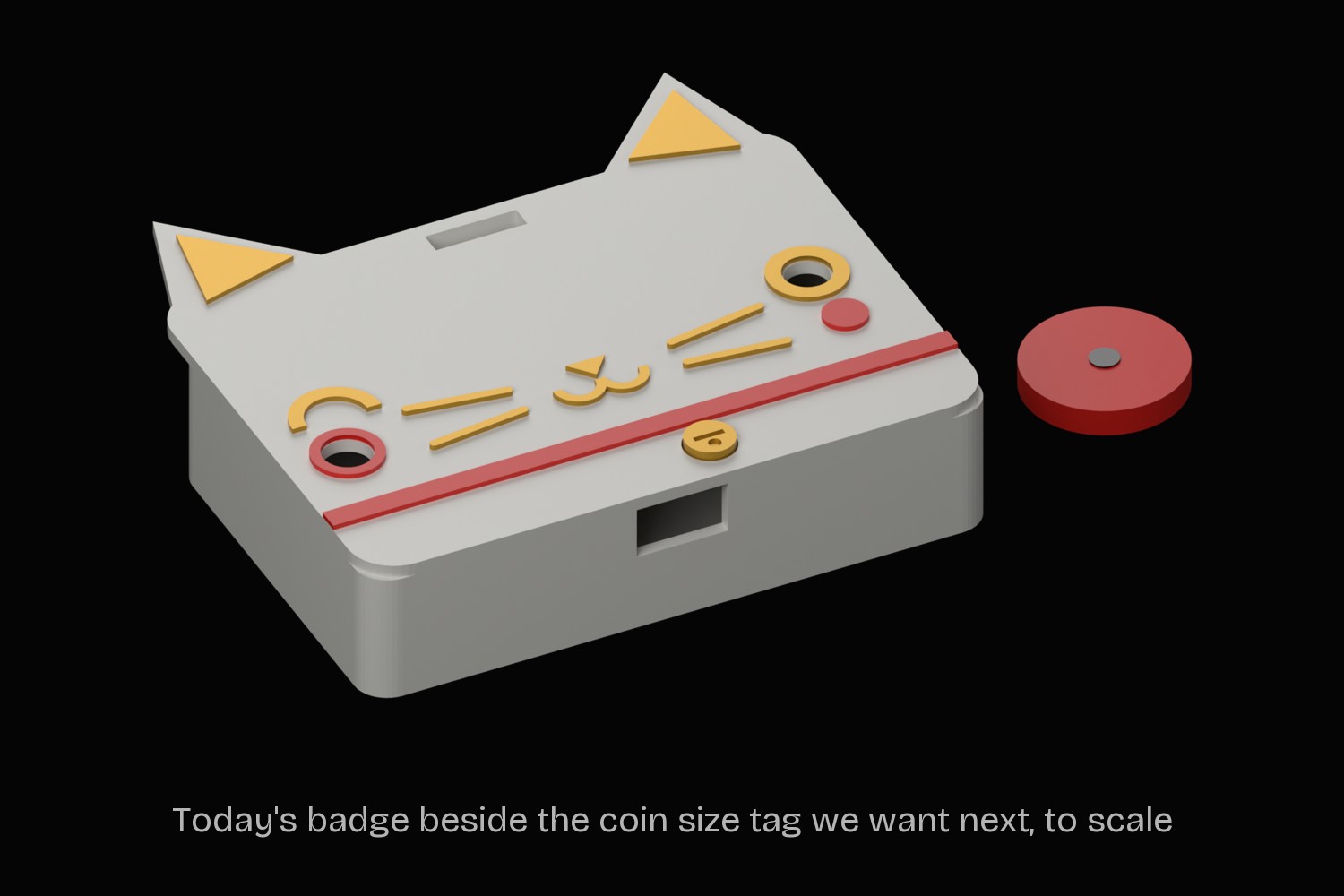
Today's badge beside the coin size tag we want next.
-
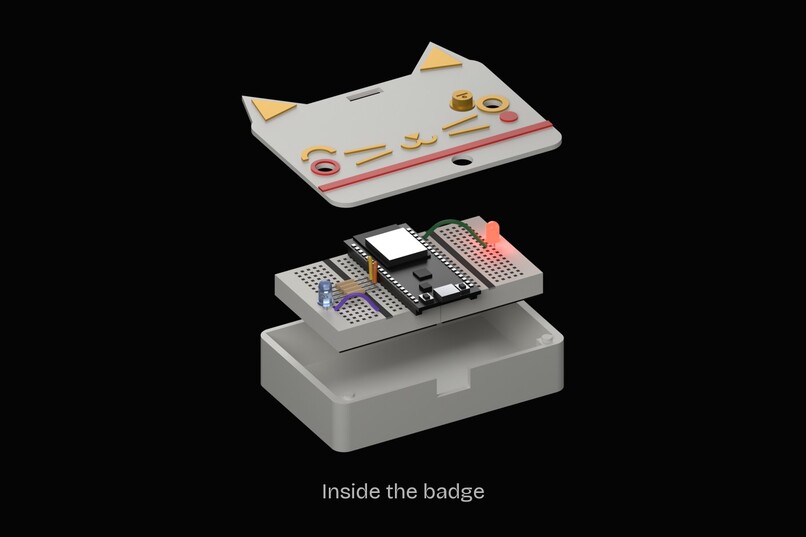
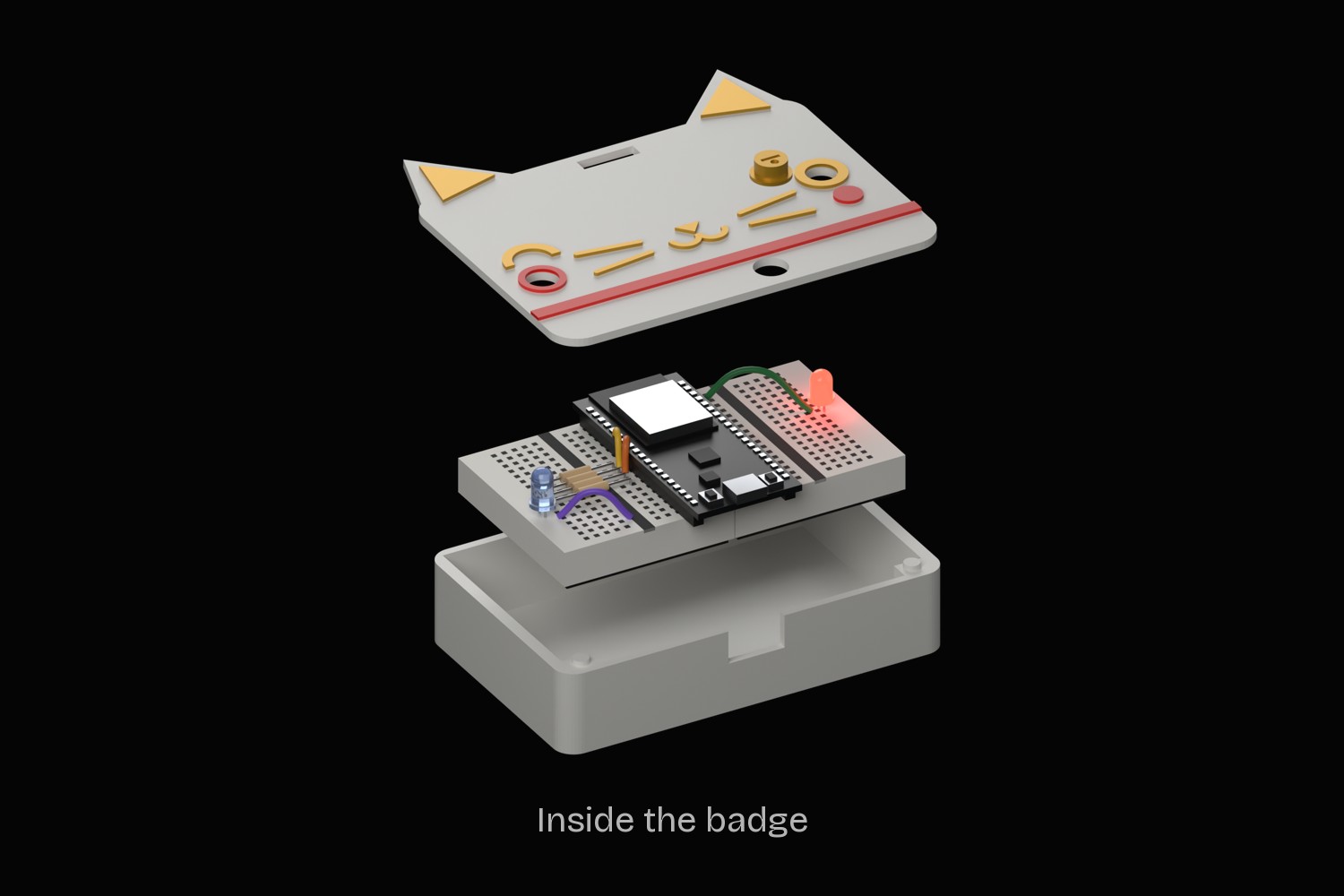
Inside the badge.
-
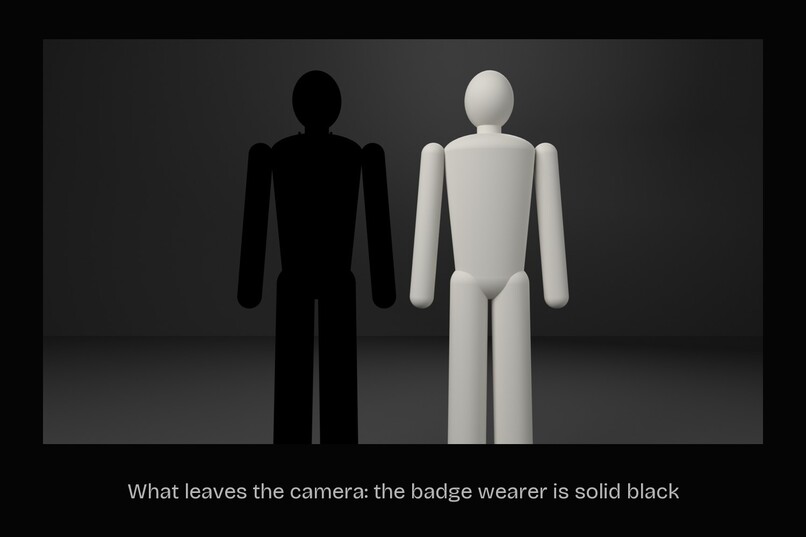
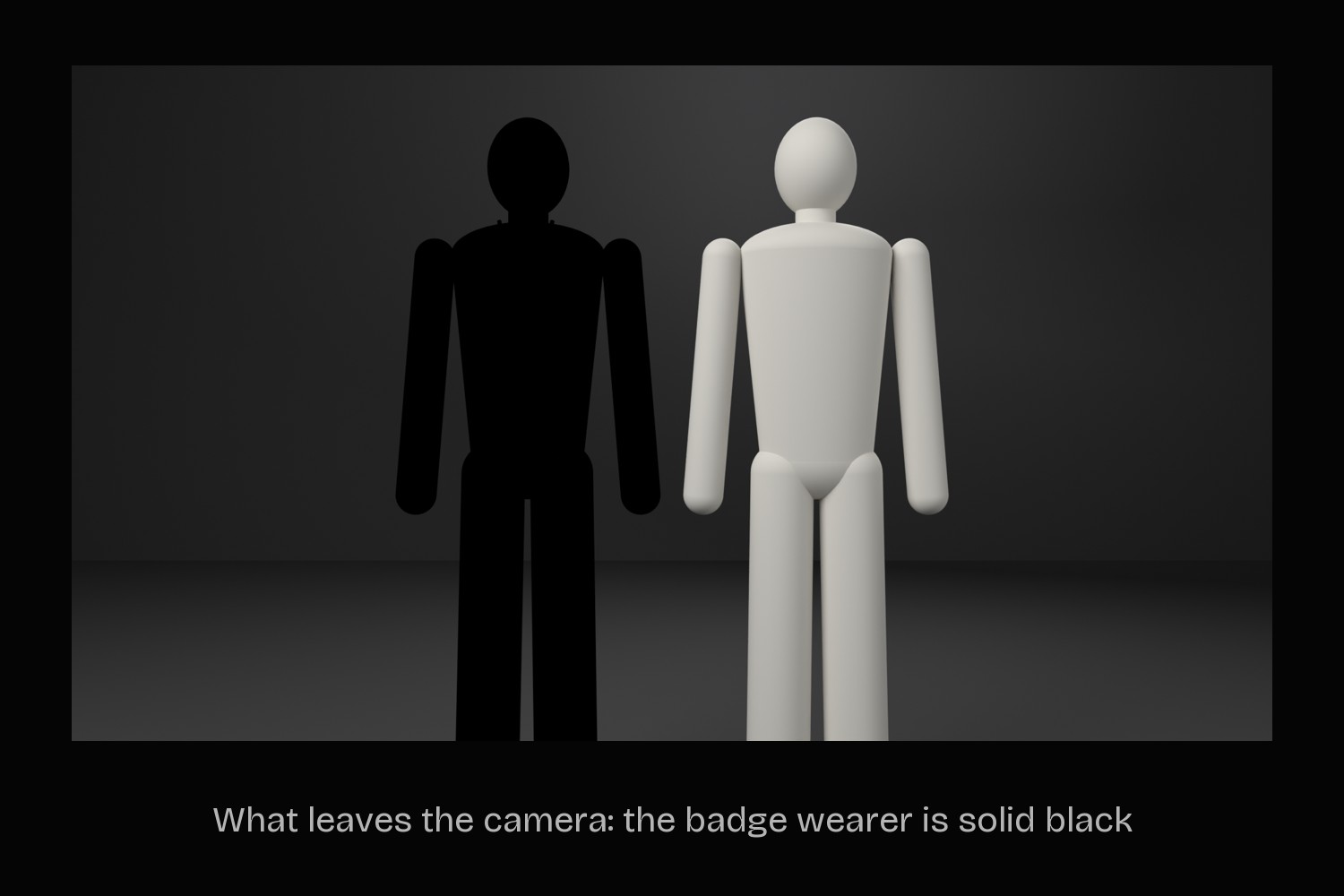
What leaves the camera: the badge wearer is solid black.
Inspiration
Every yearbook has a line that says "not pictured". We wanted people to be able to choose it.
Cameras are moving onto faces and into homes. In 2025, Meta and its glasses partner sold more than 7 million pairs of camera glasses. Home robots with cameras are next. The person who buys one agreed to be filmed. The people standing in front of it did not, and they have no way to say no.
Our prompt was to build a guardrail that helps improve data privacy. Most privacy tools protect data after it is collected. We wanted one that works earlier, inside the camera, before the video exists anywhere else. This fits UN Sustainable Development Goal 16, which includes protecting people's basic freedoms.
What it does
Blackout has two parts: a tag that asks to be left out, and camera software that does it.
A room tag covers a whole room. Plug one in on a classroom wall and any camera running Blackout hides every person in view. Nobody has to wear anything.
A badge covers one person. It says "someone here wants out" over Bluetooth and blinks an infrared light that people cannot see. The camera finds that light, works out who is wearing it, and paints that person solid black. The person next to them is untouched.
This happens inside the camera, before any video is saved or sent. The video runs 2.5 seconds late, so the erase also covers the moment before the badge was read.
The camera follows three rules:
- If it matched a badge to a person, it erases that person.
- If it can hear a badge but cannot see its light, for example when the wearer turns their back, it hides everyone in view.
- If a frame would cover fewer people than asked, or the software stops, it shows nothing.
The badge has no serial number and no account, and its code changes every five minutes, so it cannot be used to follow someone.
How we built it
The badge is an ESP32 board running MicroPython. It blinks one of 8 codes on an infrared LED that we took out of a TV remote, and announces which code it is using over Bluetooth. A room tag is the same board with no light.
The camera unit is a Raspberry Pi 5 with two cameras. A USB webcam films the room. A Raspberry Pi infrared camera sits behind the dark plastic window from the same TV remote, so it sees little except the badge's light. Our Python code tracks each bright dot, reads its blink pattern, and only accepts patterns that a badge has announced over radio, so a flickering lamp cannot pass as a badge.
To find people we use MediaPipe: one model finds each person, one cuts out their outline, and one finds faces. That runs on its own thread so the video keeps moving.
The Pi serves a small web page that shows the only video that leaves the camera.
We designed the camera housing and the badge cases in Blender with Python scripts and printed them. The cat badge prints in three colors, and the bell on its collar is the on and off button.
There are 54 automated tests for the blink reader, the matching rules and the badge firmware.
Accomplishments that we're proud of
It works on real hardware, and we measured it. In one walk test indoors in daylight:
- The badge was matched 100% of the time at 1, 2 and 3 metres, and 96% at 4 metres.
- At 5 metres it was matched 43% of the time, and the wearer was still hidden 96% of the time because the camera fell back to hiding everyone.
- With the wearer's back turned, they stayed hidden 100% of the time.
- With two people side by side, exactly one was erased 100% of the time.
- It ran at 39 frames a second on the Pi.
In 7 of 832 checks, all at 4 to 5 metres, the wearer was left uncovered for a moment. We found the cause and added the third rule above. We have not re-measured since that fix.
What we learned
Bluetooth worked the first time. Getting a camera to pick one small blinking LED out of a bright room took most of the weekend.
Deciding early that the camera should always hide too much instead of too little made a lot of later choices easy.
We also learned to measure a part before designing around it, and how to read a pinout, flash a board and run a Raspberry Pi, starting from nothing.
What's next
- A stronger light, for more range than 4 metres.
- A badge the size of a coin, on its own small board with a battery.
- One open signal that any camera maker can follow. California already fines companies that ignore a browser's "do not sell my data" signal. Cameras have nothing like it yet.
Sources
- More than 7 million Meta camera glasses sold in 2025: https://uploadvr.com/meta-essilorluxottica-sold-7-million-smart-glasses-in-2025/
- California fined Sephora 1.2 million dollars in 2022, in part for ignoring a browser privacy signal: https://iapp.org/news/a/california-attorney-general-announces-first-ccpa-enforcement-action
Built With
- blender
- bluetooth
- esp32
- mediapipe
- micropython
- opencv
- python
- raspberry-pi

