-
-
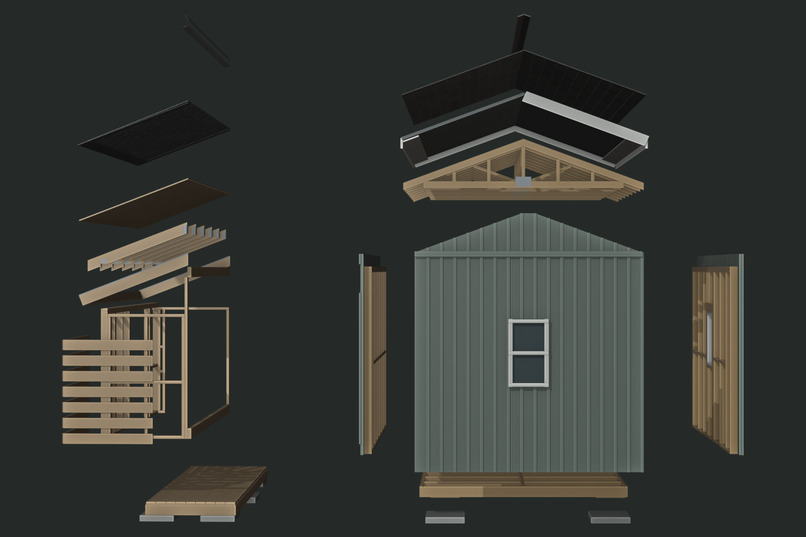
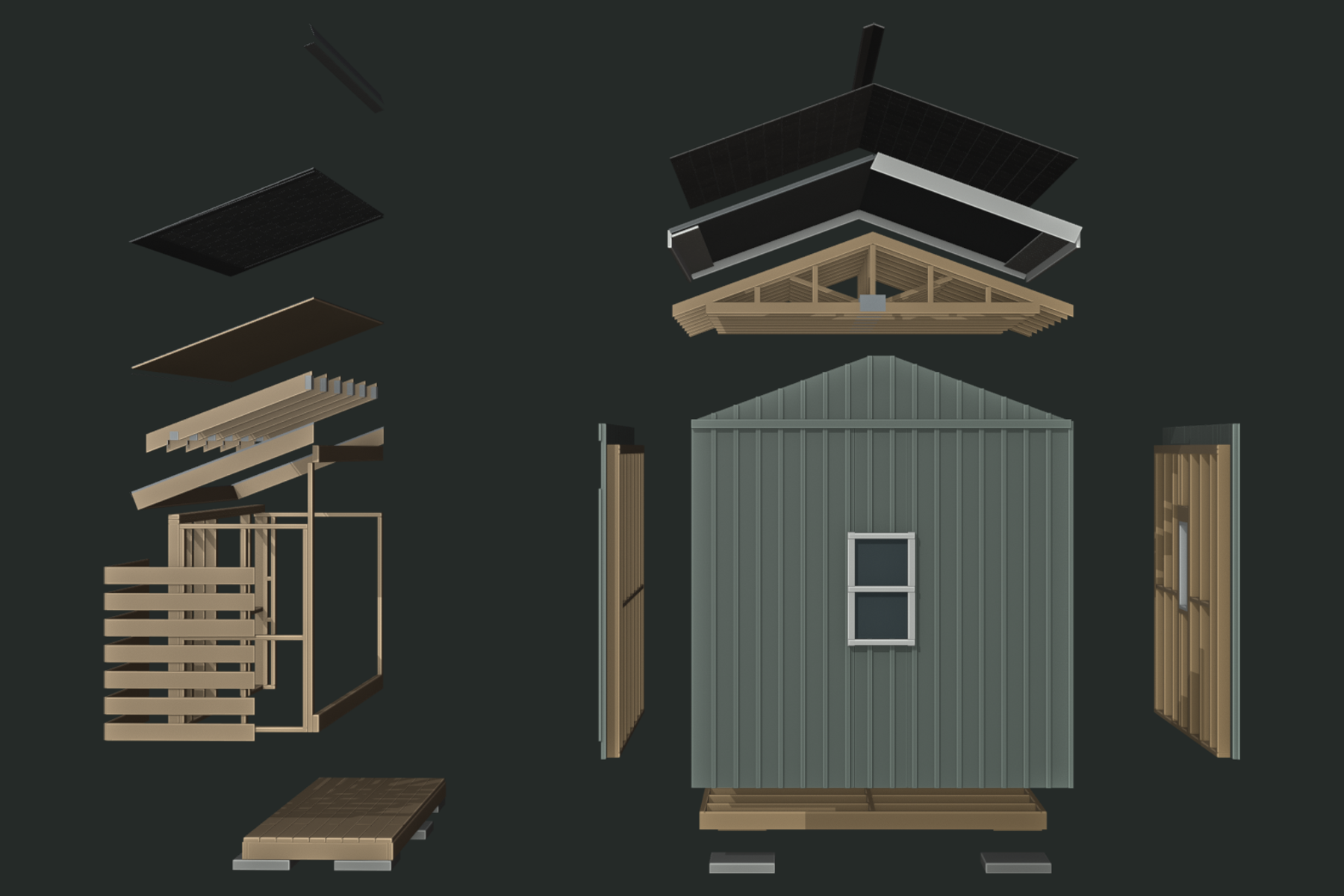
Woodshed: authored assembly layers from the editable Blender model.
-
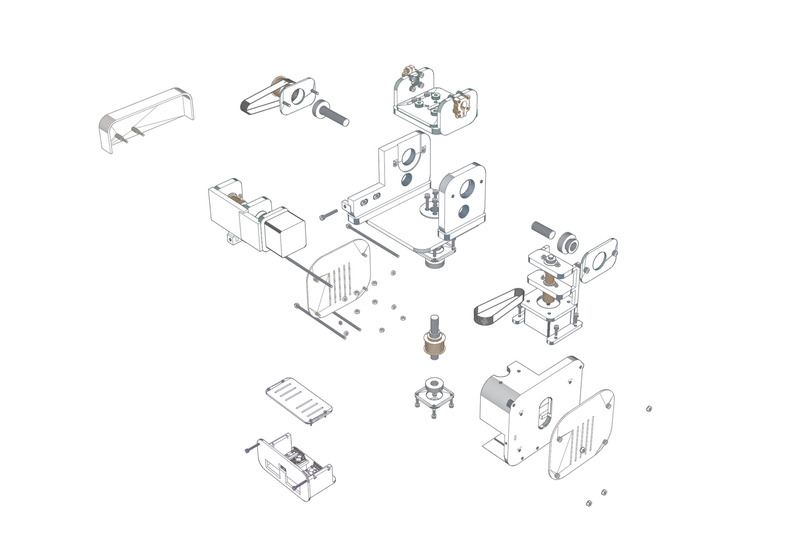
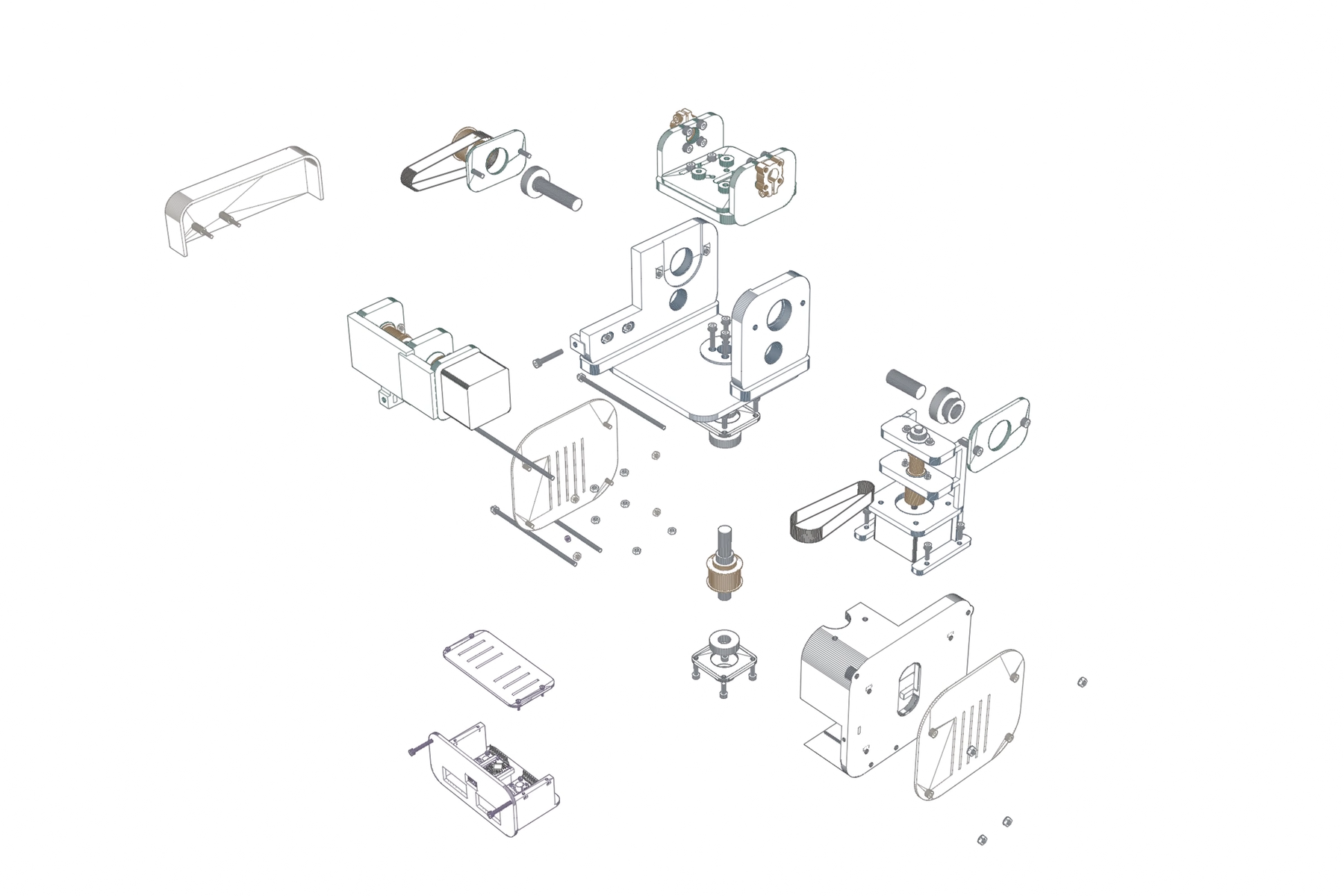
PTZ rig: components and connections in an exploded native render.
The problem
A design agency or hardware team can have a detailed 3D model and still need specialist production work to explain the product. Parts must be organised, motion directed, materials chosen and revisions checked. Generative video offers new visual possibilities, but can also change the very object it is meant to show.
Blackblend connects that existing design work to a finished visual explanation. The first customer is a studio producing product films and assembly presentations for hardware clients.
What Blackblend does
Turn a 3D assembly into a product film. Keep the source beside the result.
In one browser workspace:
- Inspect and direct: select or isolate parts, review supported chat edits, and choreograph camera, explosion and reassembly motion.
- Render: export a preview animation, or import one rendered in Blender.
- Finish: add visual direction and reference images, review the price and generate a treatment.
- Compare: play source and result together with a split, blend or breathing transition. Keep the preferred take with its project.
The woodshed, PTZ rig and combine show the workflow across construction and mechanical assemblies. Each take keeps its source animation for comparison. Chat edits can be previewed, applied and undone.
Why this matters
The near-term value is a shorter path from an existing assembly to a product film, with fewer tool handoffs and a direct way to inspect the AI result. Pilots will measure production time, correction effort and total cost per accepted deliverable.
The larger opportunity is agentic CAD: agents helping people prepare and revise the digital models used throughout a product’s life. The same part identities, relationships and revisions could support sales, assembly instructions, service and, eventually, simulation preparation. That continuity is the product thesis.
Physical AI makes usable representations of real objects increasingly valuable. Blackblend starts with visualization and builds toward richer model authoring. Simulation and connected digital twins require additional physical properties, tested behavior and data from the asset.
Business model
Three proposed offers serve the same customer at different levels: a Studio subscription, commissioned production, and expert design/engineering engagements. Generation and compute are separately priced usage. Expert projects can identify preparation and review work worth automating for repeat customers.
The next commercial step is a paid pilot with a design studio, followed by another product revision to test repeat use. Pricing will account for generation, compute and review.
We’re evaluating Metronome, a usage-based billing platform, to turn generation and compute usage into customer charges. Stripe would collect payment. This supports a Studio subscription with usage charges and tailored enterprise agreements. The billing integration is in sandbox.
How it is built
React, TypeScript, vinext and Three.js power the Studio and browser MP4 export. OpenAI’s Agents SDK coordinates Sol’s scene proposals. fal’s MiniMax H3 Max 3D-to-video endpoint turns authored animation and references into a visual treatment.
Blender is the agent’s native 3D workbench. The hosted prototype takes an agent-requested geometry change through Blender execution, export and review. The result is a new editable model revision, available for Preview, Apply and Undo. Blender 5.1 runs in a temporary, offline OpenAI-hosted container.
The next step gives models broader, sandboxed access to Blender’s modeling and animation tools. A request could then become a change to the design itself, with the updated source ready for another film, assembly explanation or engineering review.
Clerk is the partner integration: verified sessions identify the owner of each private project, scene, file and job. Server-side checks enforce those boundaries in Cloudflare Workers, D1 and R2. Provider keys remain on the server. Paid jobs require an approved account and price confirmation; saved job IDs prevent duplicate submissions during recovery.
Challenges and lessons
An attractive generated shot can alter dimensions, parts or motion. Keeping the native source available for comparison became a central design choice. Stable camera framing, reversible edits and recoverable jobs are equally important to a dependable workflow.
The roadmap extends from broader Blender authoring to assembly documentation, simulation preparation and digital twins. Inference research includes evaluating compatible video models on alternative hardware such as Tenstorrent Blackhole, measuring quality and cost on the same product shots.
Prior work and AI use
The woodshed, PTZ rig, Massey-Harris models and earlier visualization experiments predate Build Week. During the event, the work built and consolidated the Studio, browser animation capture, scene proposals, comparison, account boundaries and hosted generation workflow around those assets.
OpenAI Codex assisted development. The demo includes AI-generated video, OpenAI narration and Suno music; the PTZ editorial image is identified as an AI concept. Native renders are identified separately. Third-party code retains its notices.
The public repository includes application code, tests and migrations. Private models, photos and credentials are excluded.
Built With
- blender
- clerk
- cloudflare
- codex
- ffmpeg
- gpt-6.1-sol
- javascript
- node.js
- typescript

Log in or sign up for Devpost to join the conversation.