Inspiration
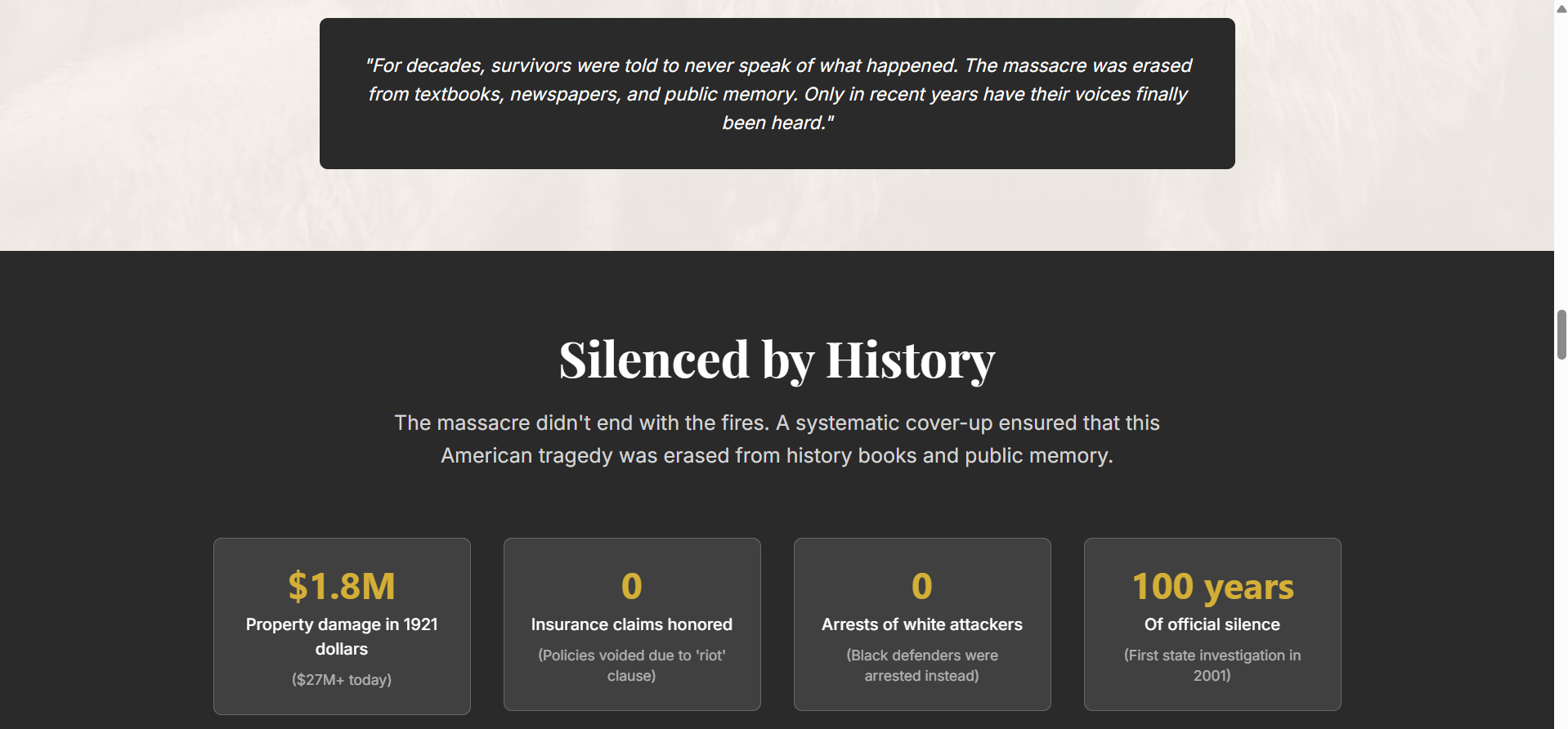
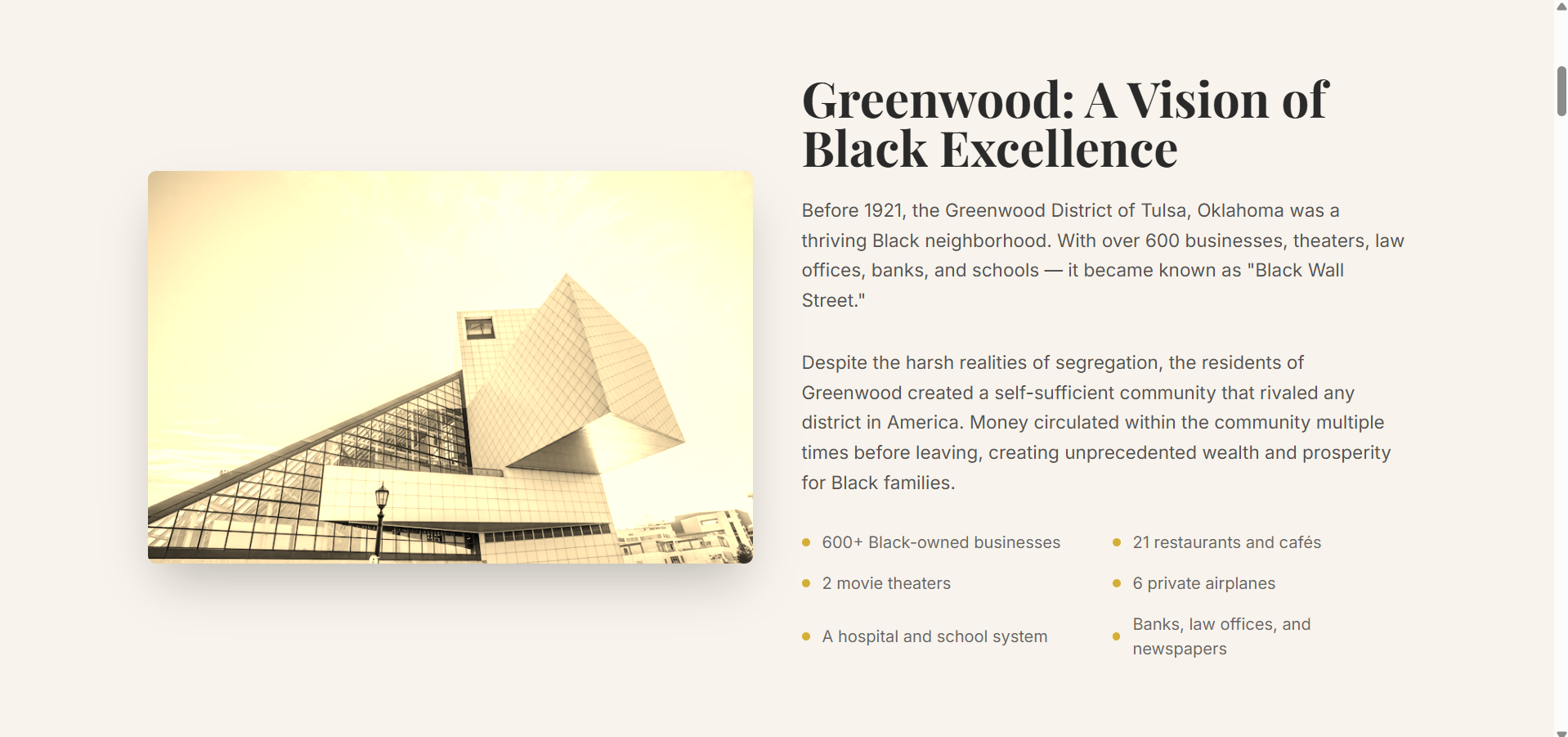
The inspiration came from the realization that the Tulsa Race Massacre of 1921 remains one of the most underrepresented tragedies in American history. Despite being one of the worst incidents of racial violence in U.S. history, where a thriving Black community known as "Black Wall Street" was destroyed in less than 24 hours, this story has been systematically silenced for over a century. As a solo developer participating in Hackstory 2025, I felt compelled to create a digital space that honors the victims, educates the public, and ensures their stories live on.
What it does
The Black Wall Street Memorial serves as:
An interactive educational platform that tells the complete story of Greenwood District's rise and fall A digital memorial honoring the victims and survivors of the massacre A comprehensive resource featuring historical timelines, survivor testimonies, and archival materials An accessible way for people worldwide to learn about this crucial piece of history A platform that highlights the ongoing fight for justice and reparations
How I built it
As a solo project, I focused on creating an emotionally resonant yet technically robust platform:
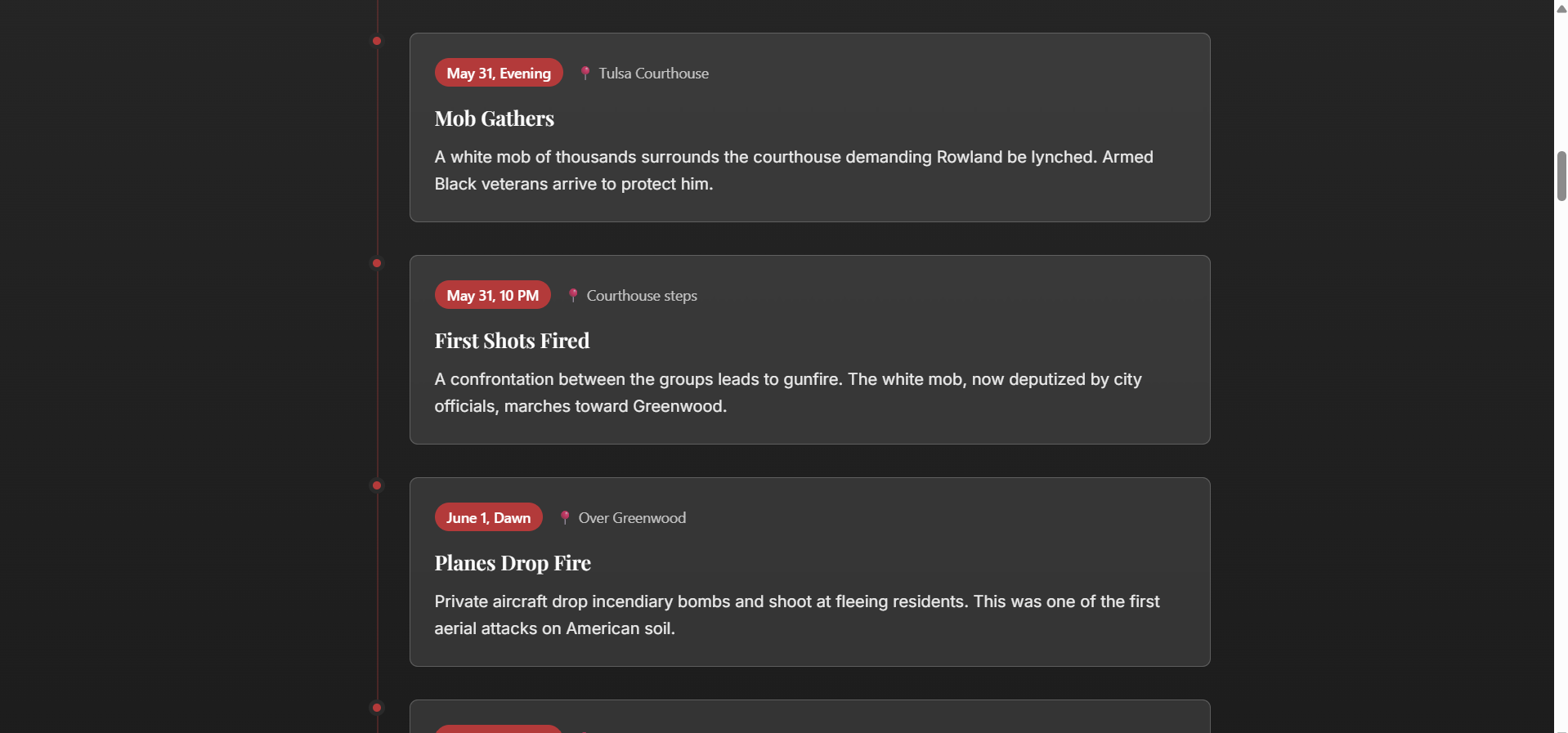
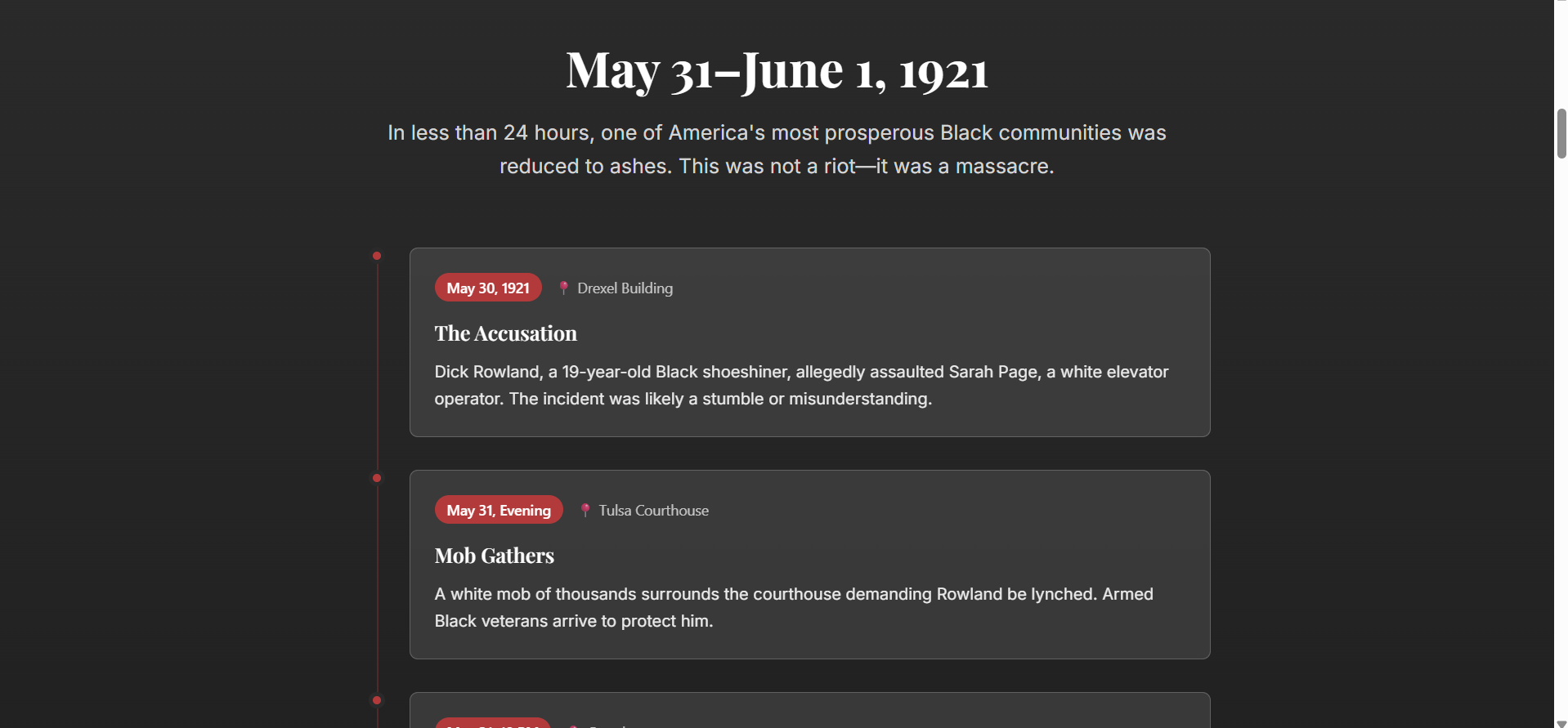
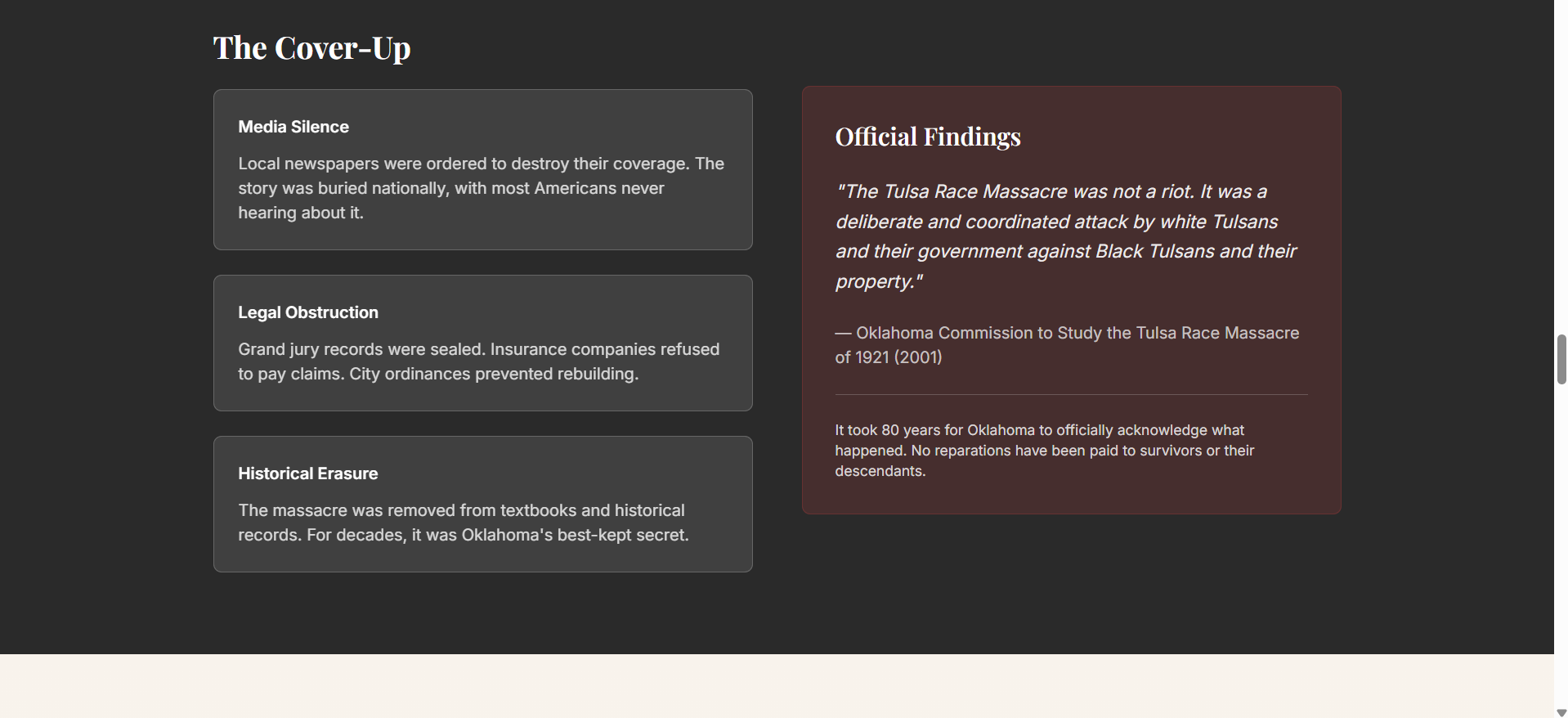
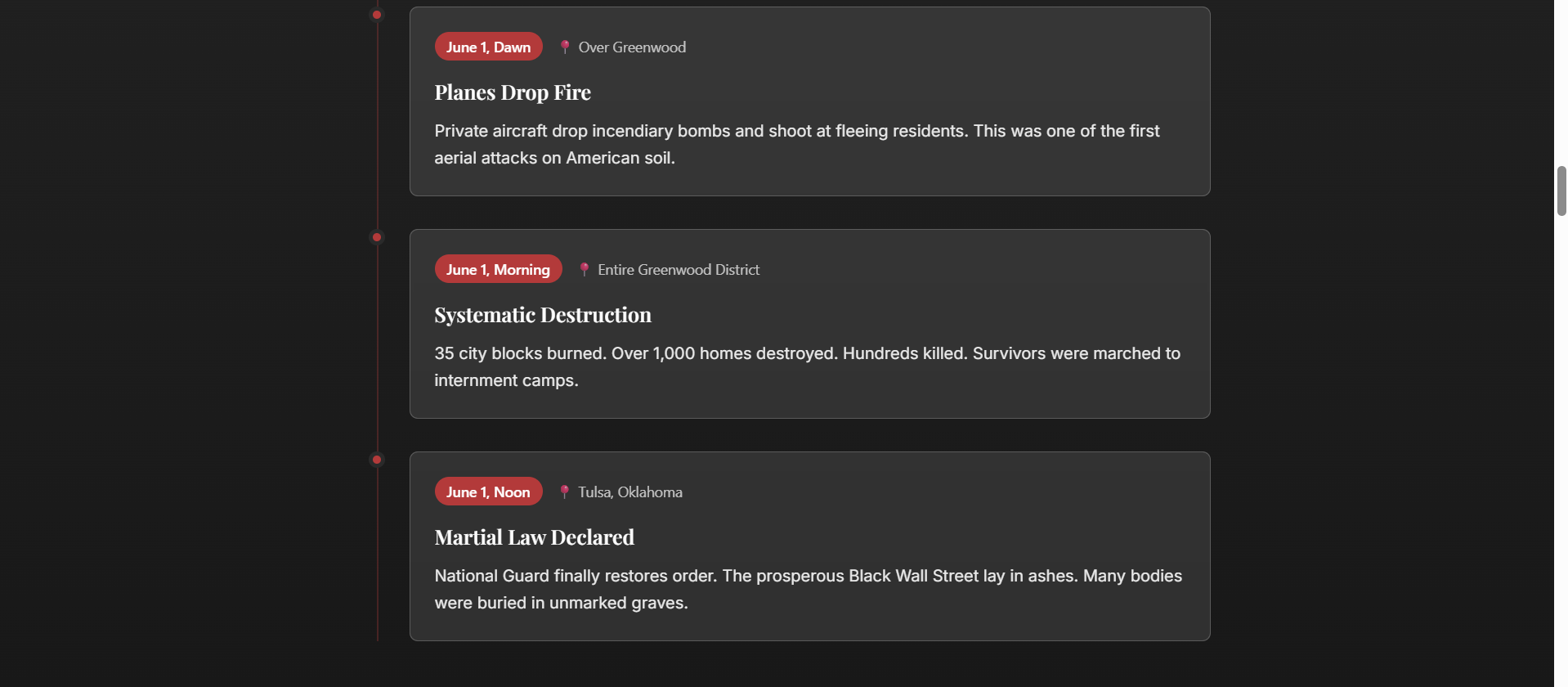
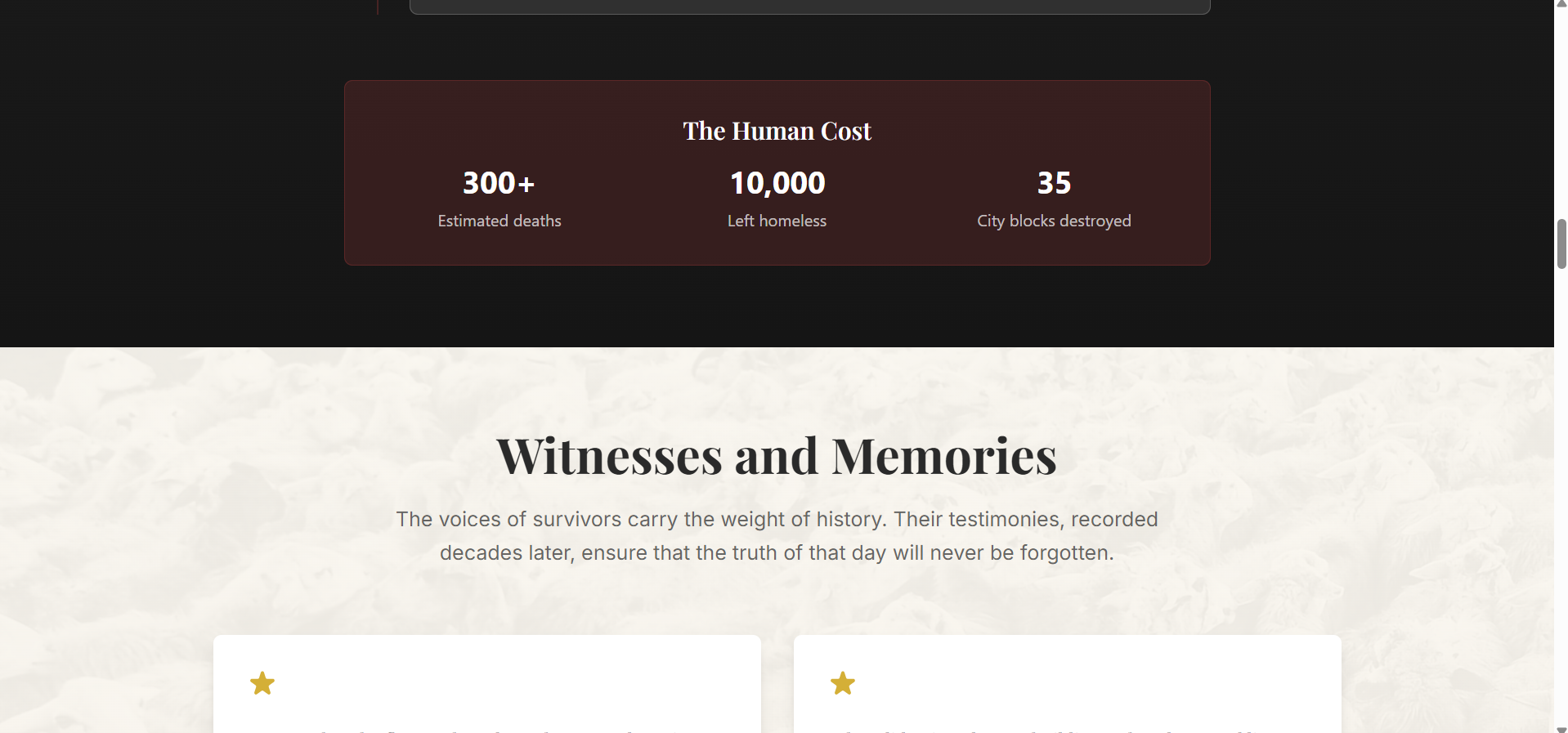
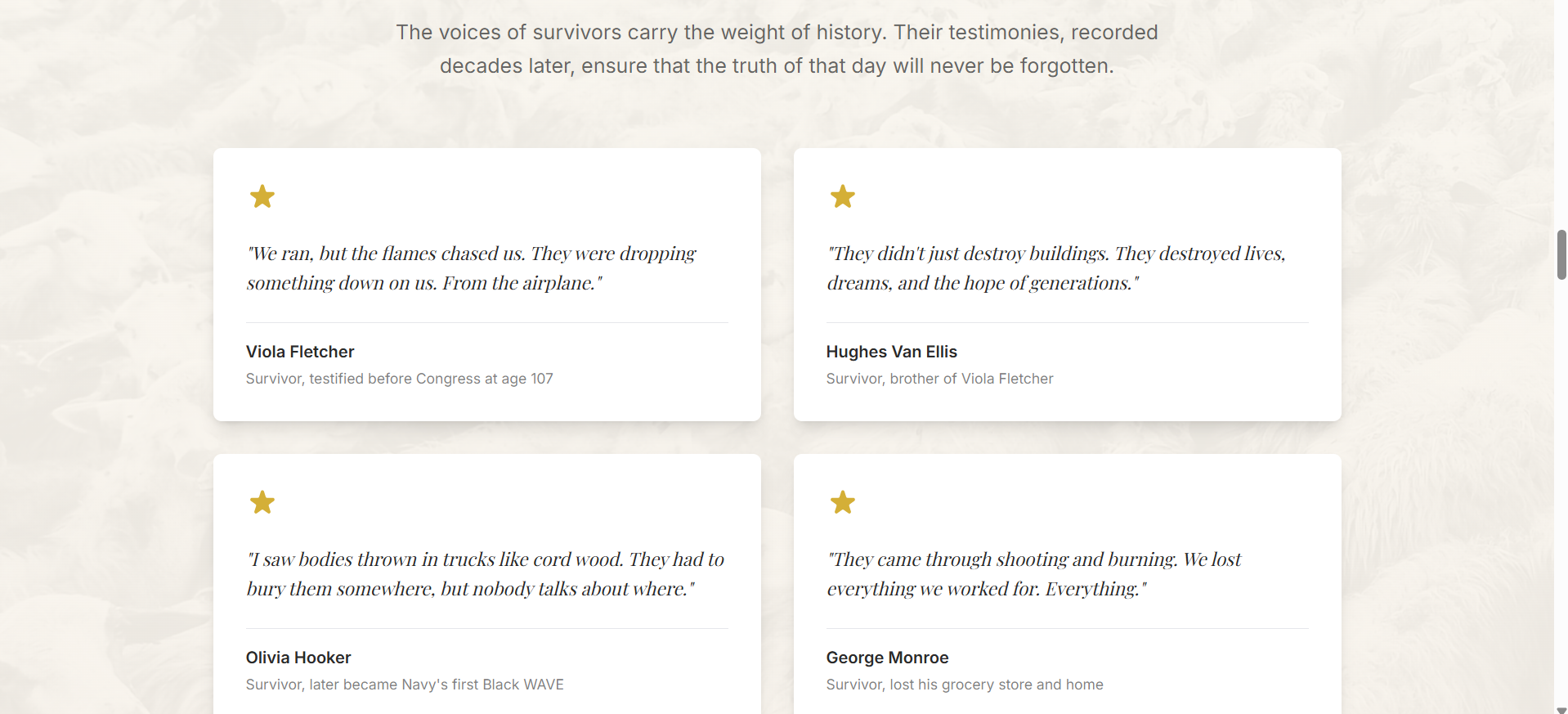
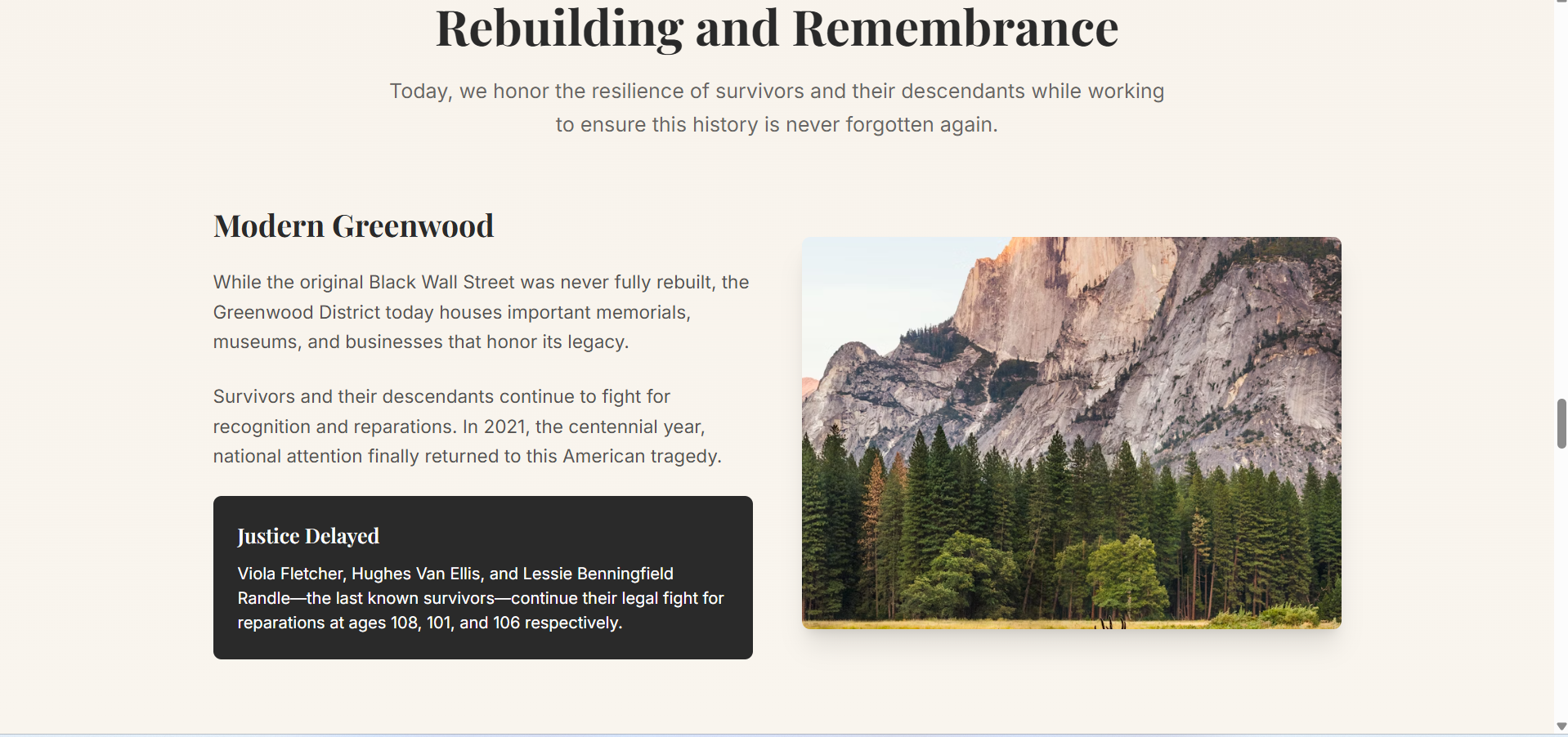
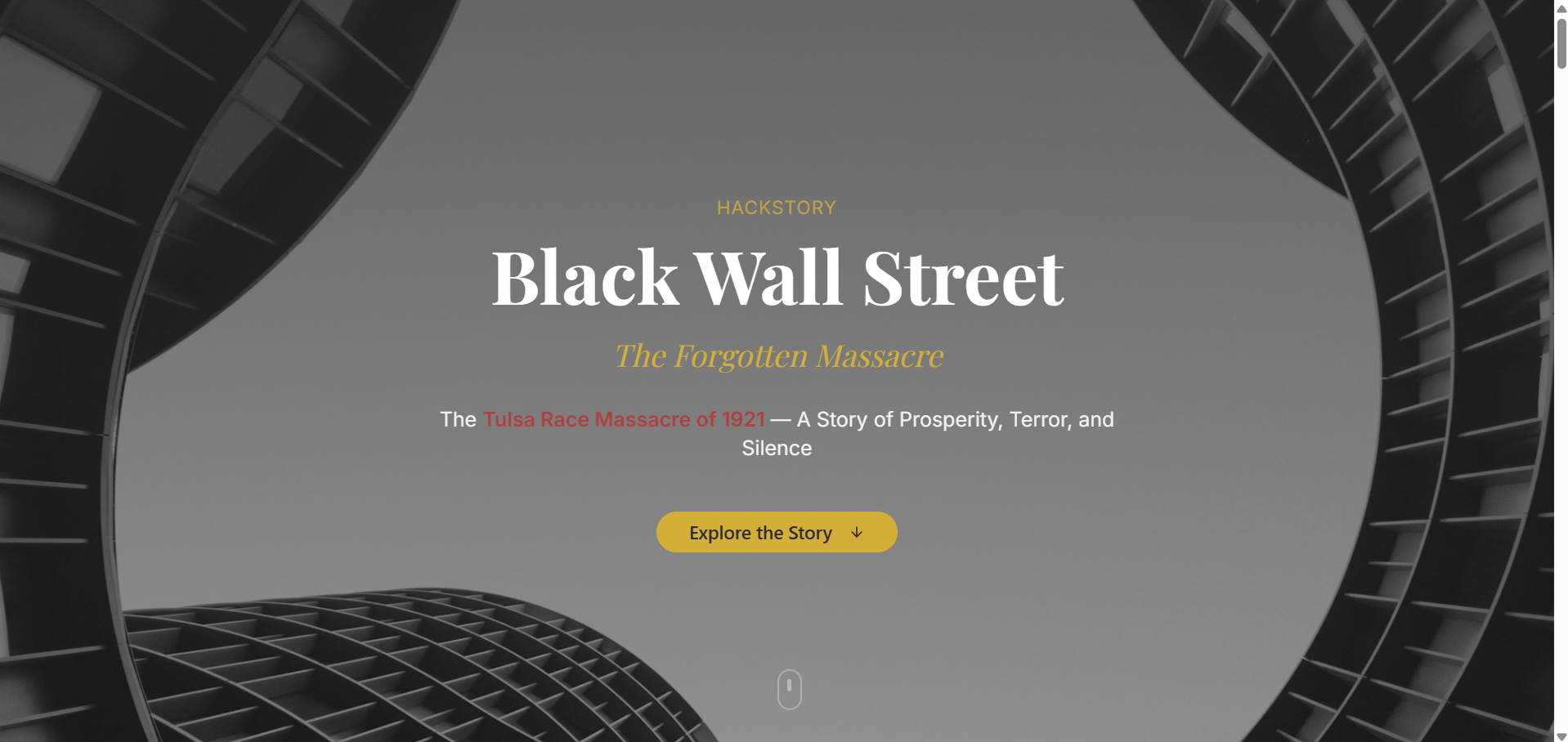
Designed with a respectful color palette using deep charcoal, antique gold, and warm parchment tones Implemented smooth scroll animations and interactive timelines for immersive storytelling Used responsive design principles to ensure accessibility across all devices Integrated historical photographs and documents with proper citations Created multiple content sections: Hero, Black Wall Street history, massacre timeline, survivor voices, aftermath, remembrance, and comprehensive references
Challenges I ran into
Balancing the gravity of the subject matter with engaging web design Ensuring historical accuracy while creating compelling narrative flow Managing the emotional weight of the content while maintaining educational value Creating a respectful tribute that doesn't exploit the tragedy Working solo meant handling all aspects: research, design, development, and content creation Finding the right tone that honors victims while educating visitors
Accomplishments that i'm proud of
Created a comprehensive digital memorial that tells the complete story from prosperity to destruction to ongoing legacy Designed an emotionally impactful user experience that respects the gravity of the subject Built an educational resource that makes this history accessible to a global audience Implemented smooth, professional animations and interactions that enhance rather than distract from the content Successfully balanced historical documentation with modern web design principles Created a platform that serves both as memorial and educational tool
What I learned
The importance of thorough historical research and fact-checking when dealing with sensitive historical events How design choices (color, typography, spacing) can significantly impact the emotional resonance of content The responsibility that comes with telling stories of historical trauma and injustice The power of web technology to preserve and share important historical narratives The ongoing relevance of the Tulsa Race Massacre to contemporary discussions about racial justice and reparations
What's next
Partner with educational institutions to integrate the platform into curricula Add more interactive elements like virtual reality experiences of historic Greenwood Expand survivor testimony section with more audio and video content Create educational resources for different age groups Develop mobile app version for broader accessibility Collaborate with Tulsa Race Massacre survivors and their descendants Add multilingual support to reach international audiences Implement user feedback system for continuous improvement

Log in or sign up for Devpost to join the conversation.