-
-
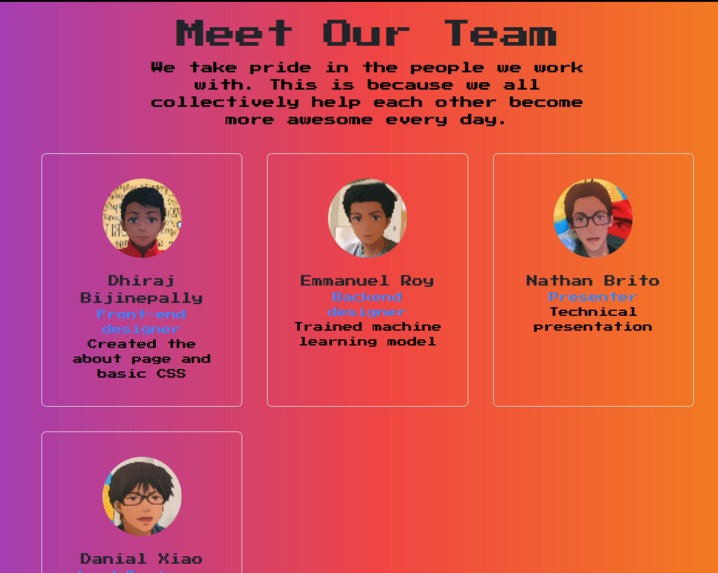
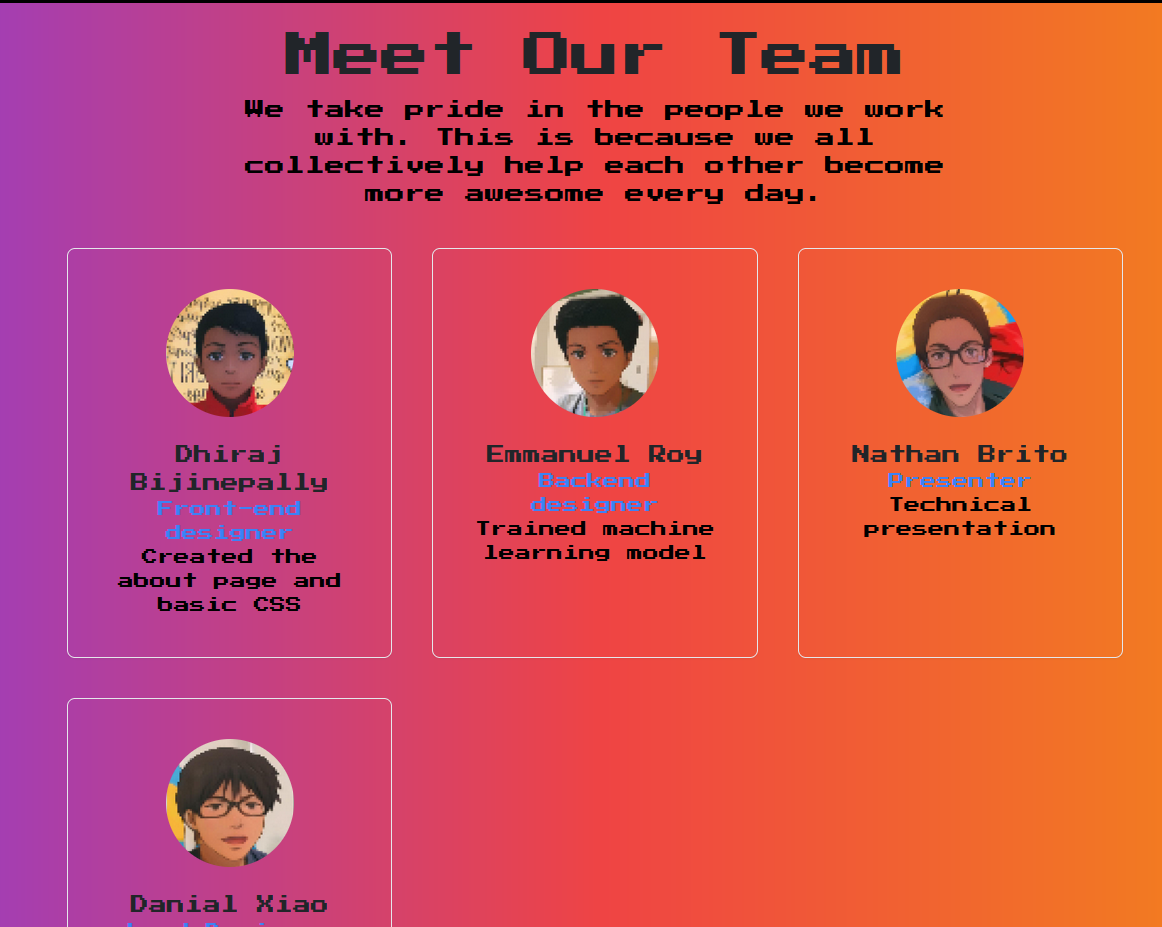
About page.
-
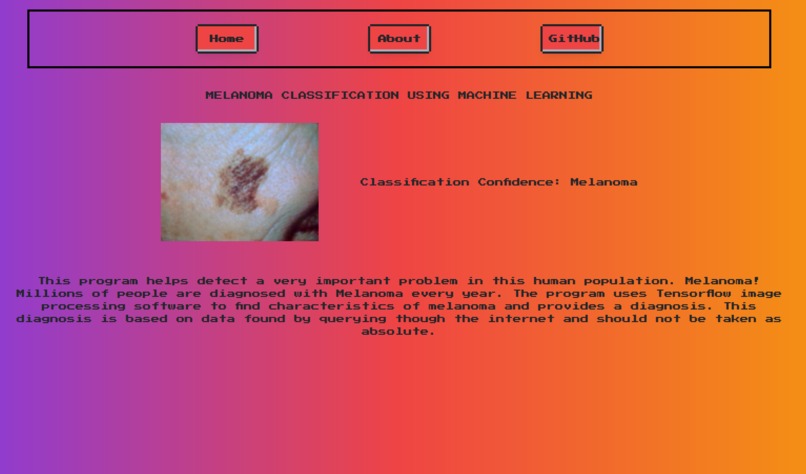
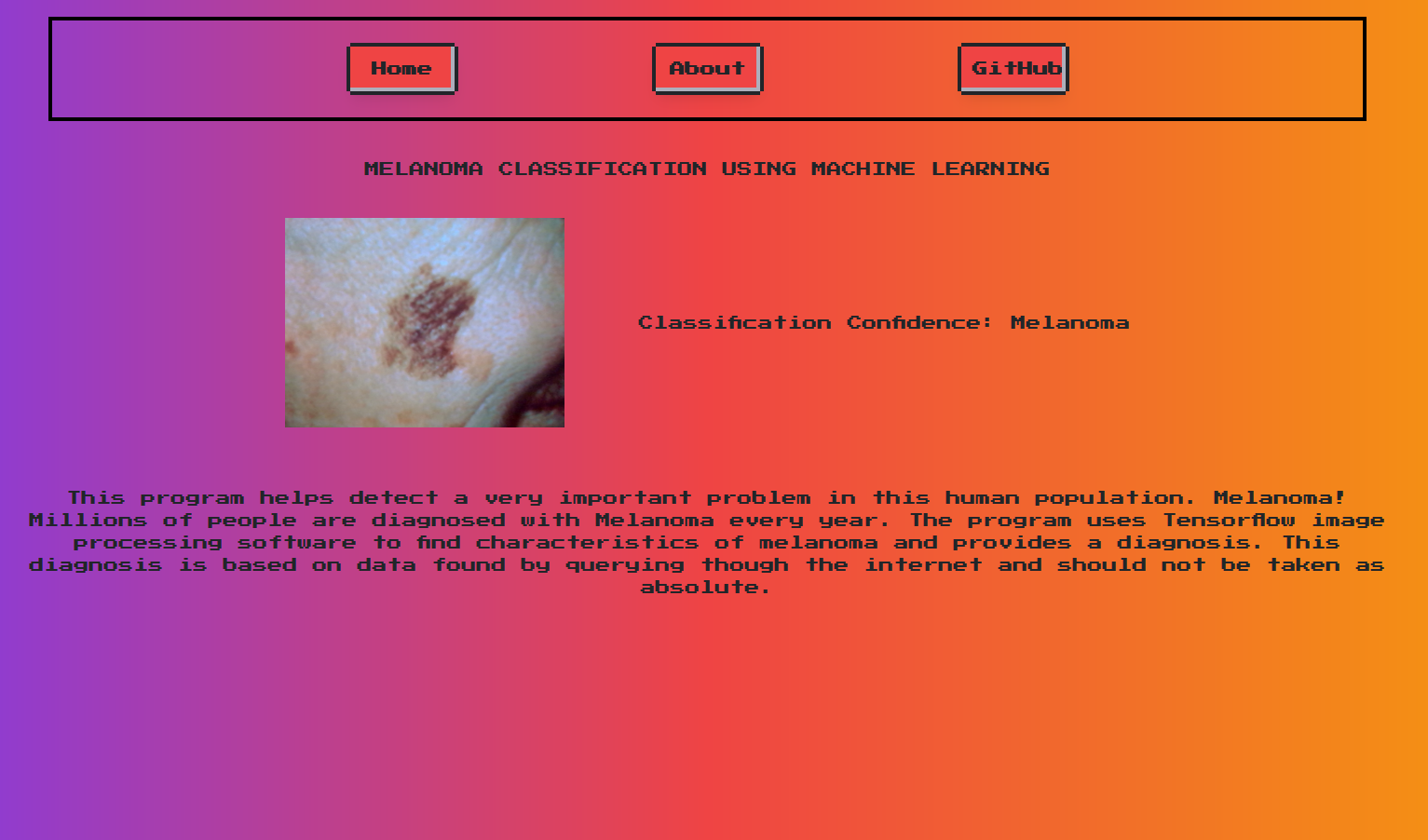
Melanoma detection page.
Inspiration
As stated in the video, cancer is one of the most dangerous diseases on the planet. According to seer.cancer.gov, there are predicted to be over 106,110 new cases of melanoma in 2021, with 7,180 of those new melanoma’s leading to death. This is around 5.6% percent of all new cancer cases found and around 1.2% of all cancer deaths.Melanoma is also relatively common, with estimations that around 2.3 percent of people will be diagnosed with it at some point in their lifetimes. However, the amount of people who get Melanoma is only projected to increase, so we decided to make this project to diagnose Melanoma before they become fatal. It is still very important to note that our information is not to be compared to that of a doctor, but rather to act as an indicator in case a user is worried if anything is wrong.
What it does
To explain what our project is in lay terms, it is a website that uses a machine learning model in order to detect whether a mole or anything you may input is a melanoma or not. We used various technologies in order for this to happen including tensorflow, react.js, tailwind CSS, and html. To explain how it works, the site created with react.js and tailwind CSS gets the model, metadata, and weighting files we gained from tensorflow, sends a webcam input into the tensorflow files, and then gets a result back which is displayed for the user.
How we built it
Our model was made with around 50 images of melanoma and around 50 more items of “not melanomas”, think images of moles and users, in order to ensure that the data was as accurate as we could reasonably get it within the time sprain of the competition. While it may not be accurate enough to use in a practical way, we believe with a lot more data it could assist dermatologists in real world situations.
Challenges we ran into
The biggest challenge we ran into was integrating everything together into the website. Making the code work just in an HTML file would have been extremely easy, but it would have been very hard to use and ugly. We are proud of the final solution we made and think it looks fantastic, although it takes a little to long to load.
Accomplishments that we're proud of
We are proud of the way we integrated all of the different frameworks we used together, it truly was a challenge and we think our website looks much better for it.
What we learned
We learned how to use node.js, tailwind CSS, TensorFlow, and a couple others in conjunction to make a beautiful website. There also was a large amount of teamwork involved which helped teach us collaboration strategies in big projects.
What's next for Black Spot - Diagnosing Skin Cancer
To conclude, in the future we want to get much much more data to make the project more accurate. We also want to reduce bias in our data set to make the program much more accessible and accurate towards all people, not just those recorded in the data set images. Lastly, we would like to update the website to make it even more user friendly. We also would be interested in hosting the domain in order to make it truly accessible towards anyone on any device.
Built With
- github
- html
- machine-learning
- ml5
- nes-css
- node.js
- react
- tailwind
- tensorflow


Log in or sign up for Devpost to join the conversation.