Inspiration
Black ice is one of the most dangerous road hazards because it is nearly invisible and often forms before drivers realize conditions are unsafe. I wanted to build a system that could detect and forecast black ice risk using real environmental signals rather than relying on air temperature alone. The goal was to create something practical, explainable, and usable in real time.
What it does
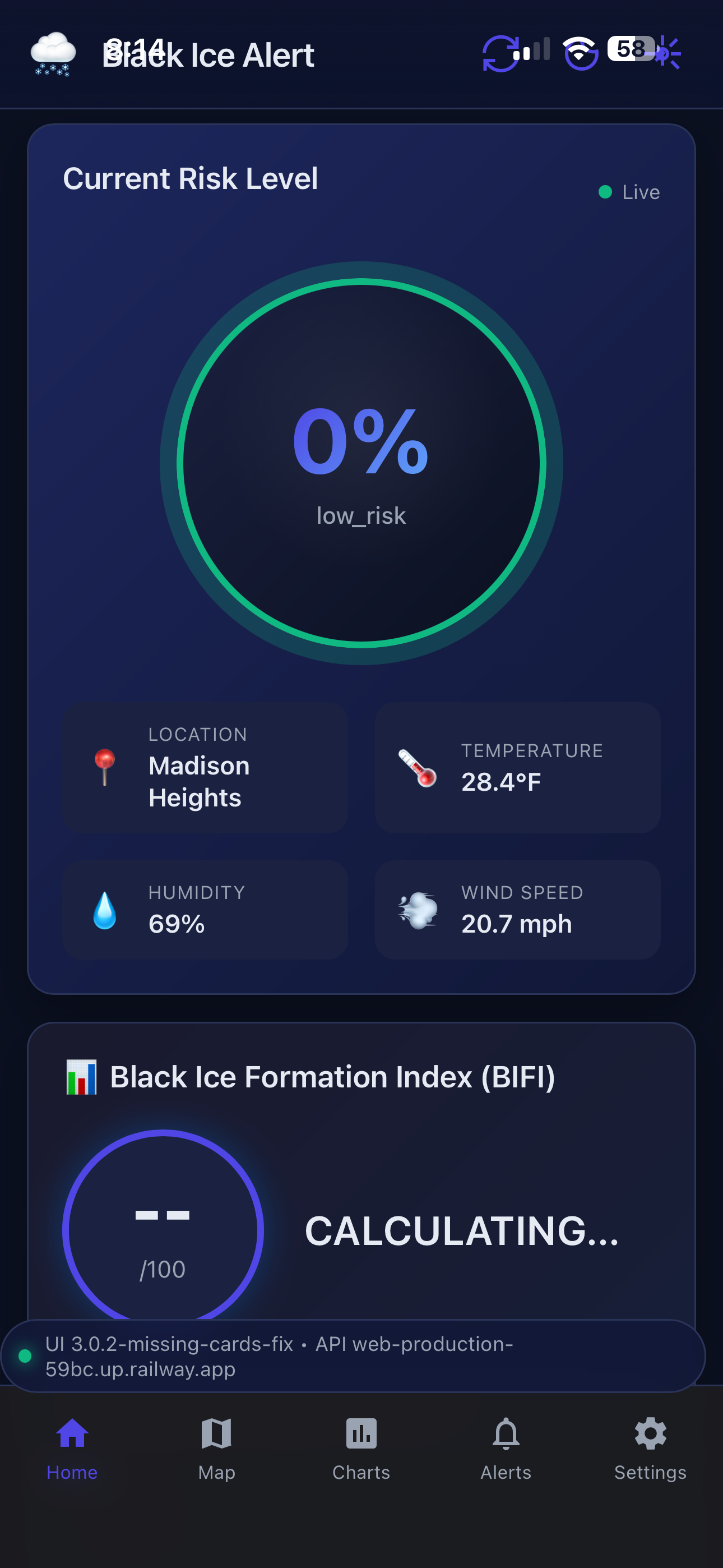
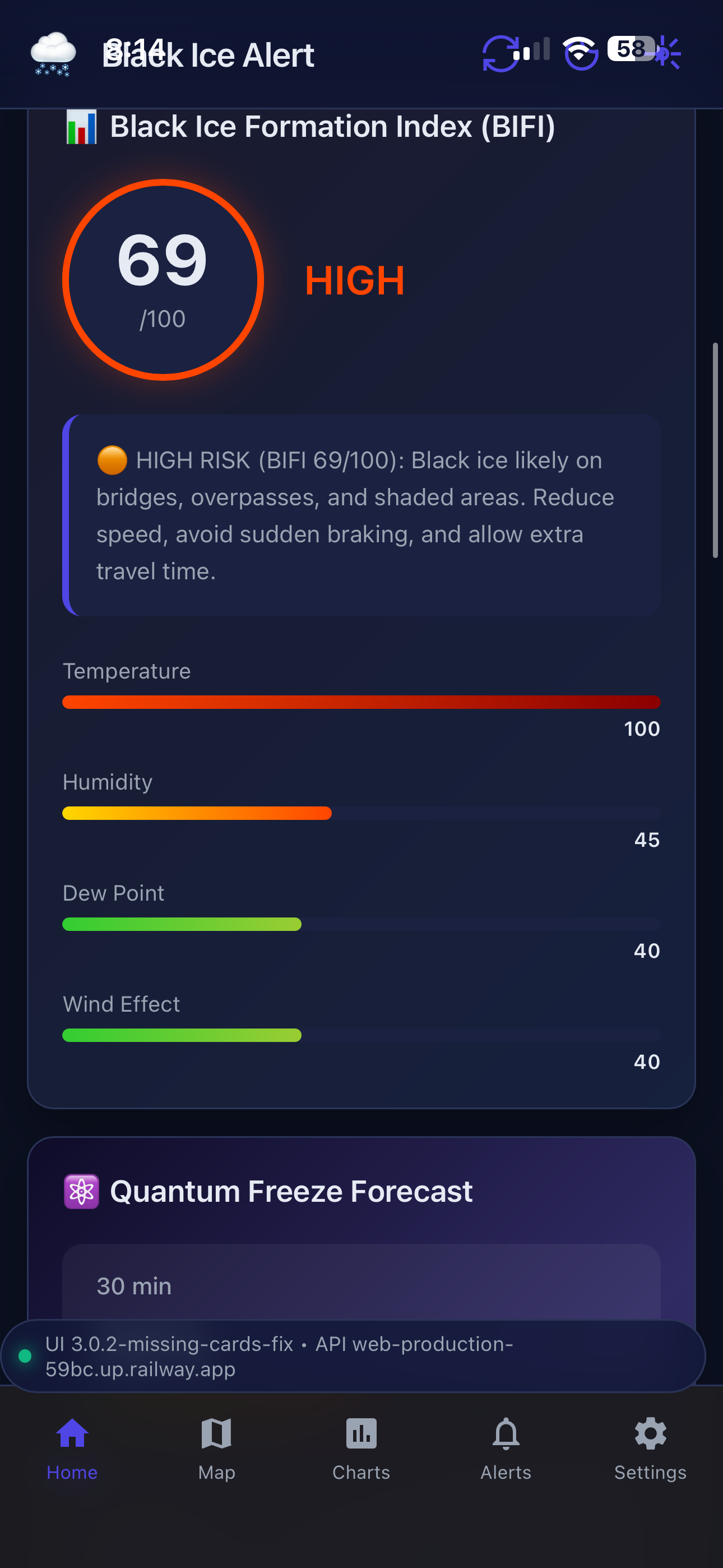
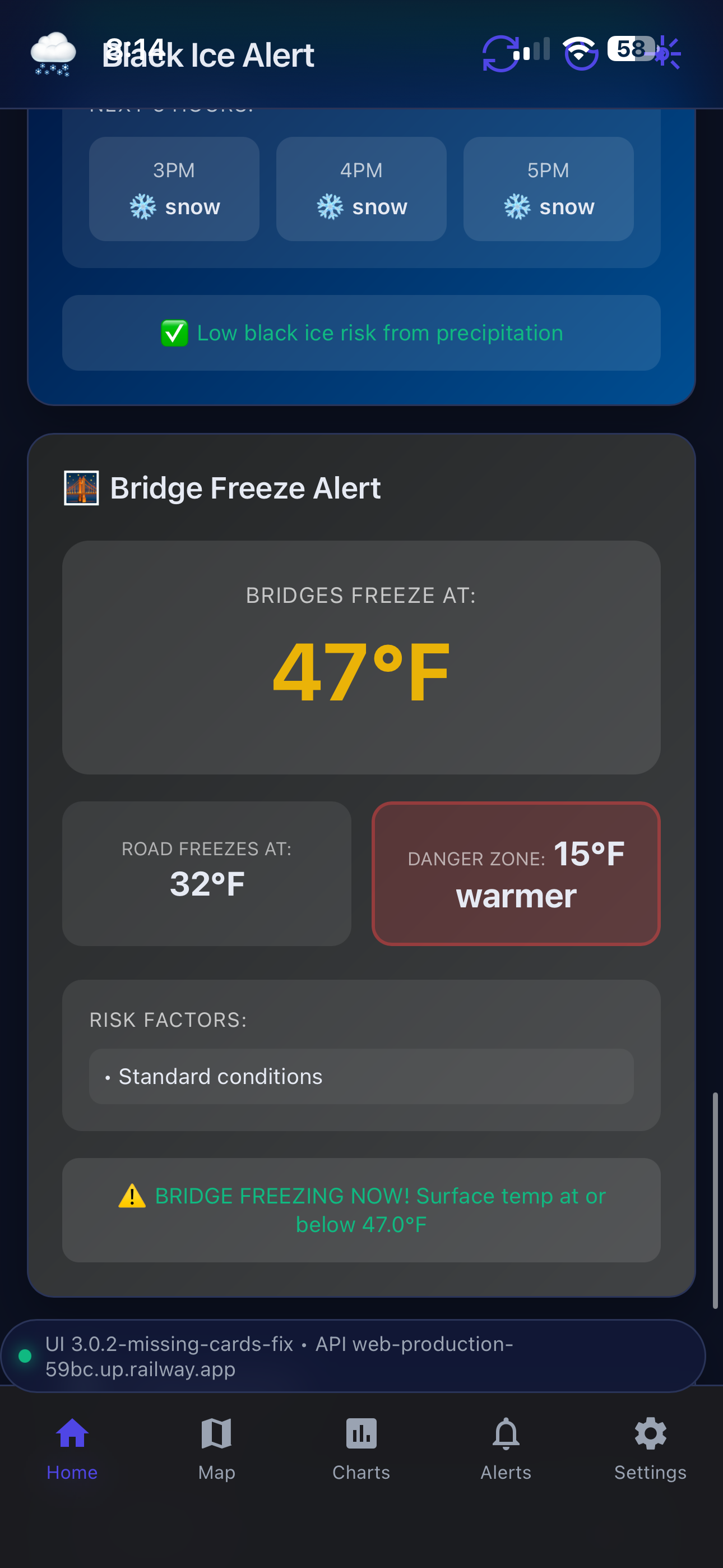
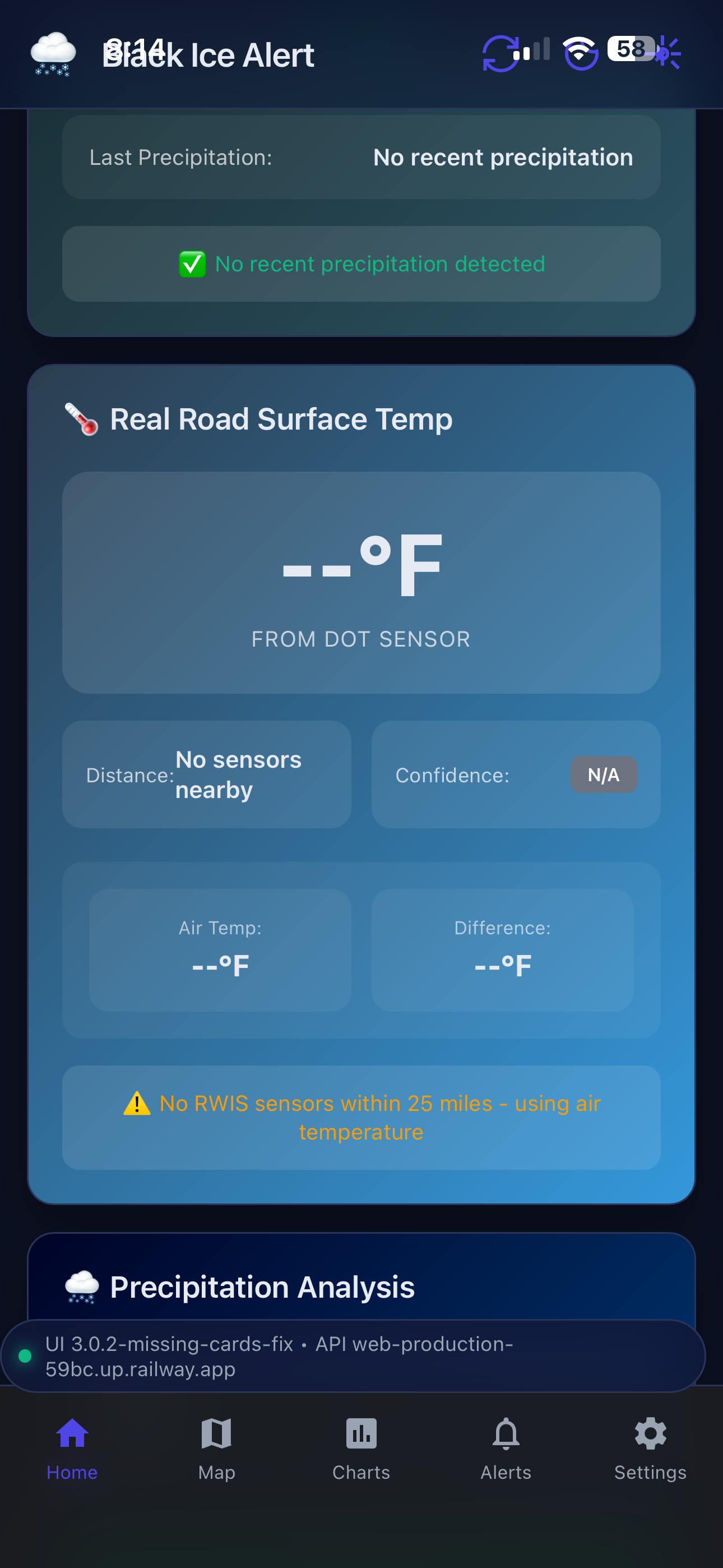
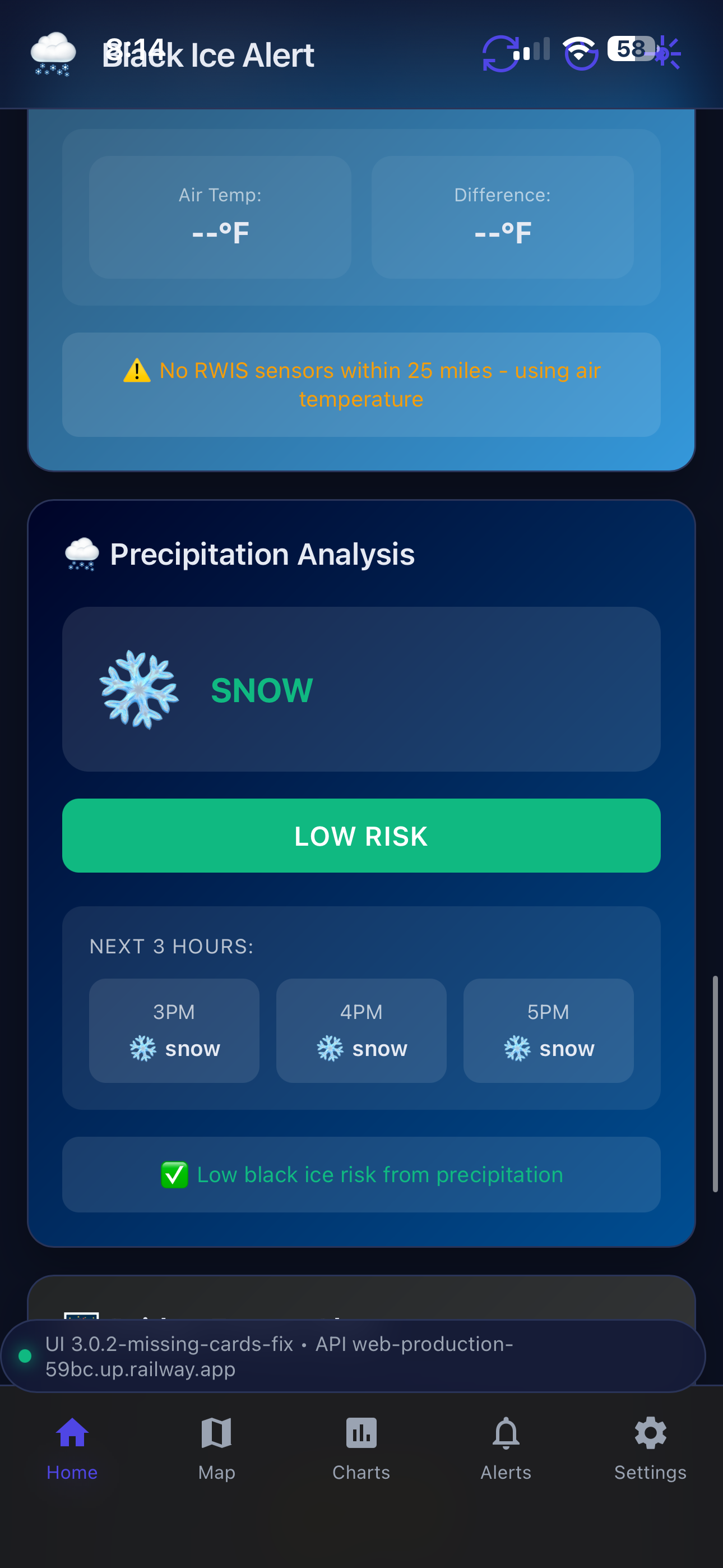
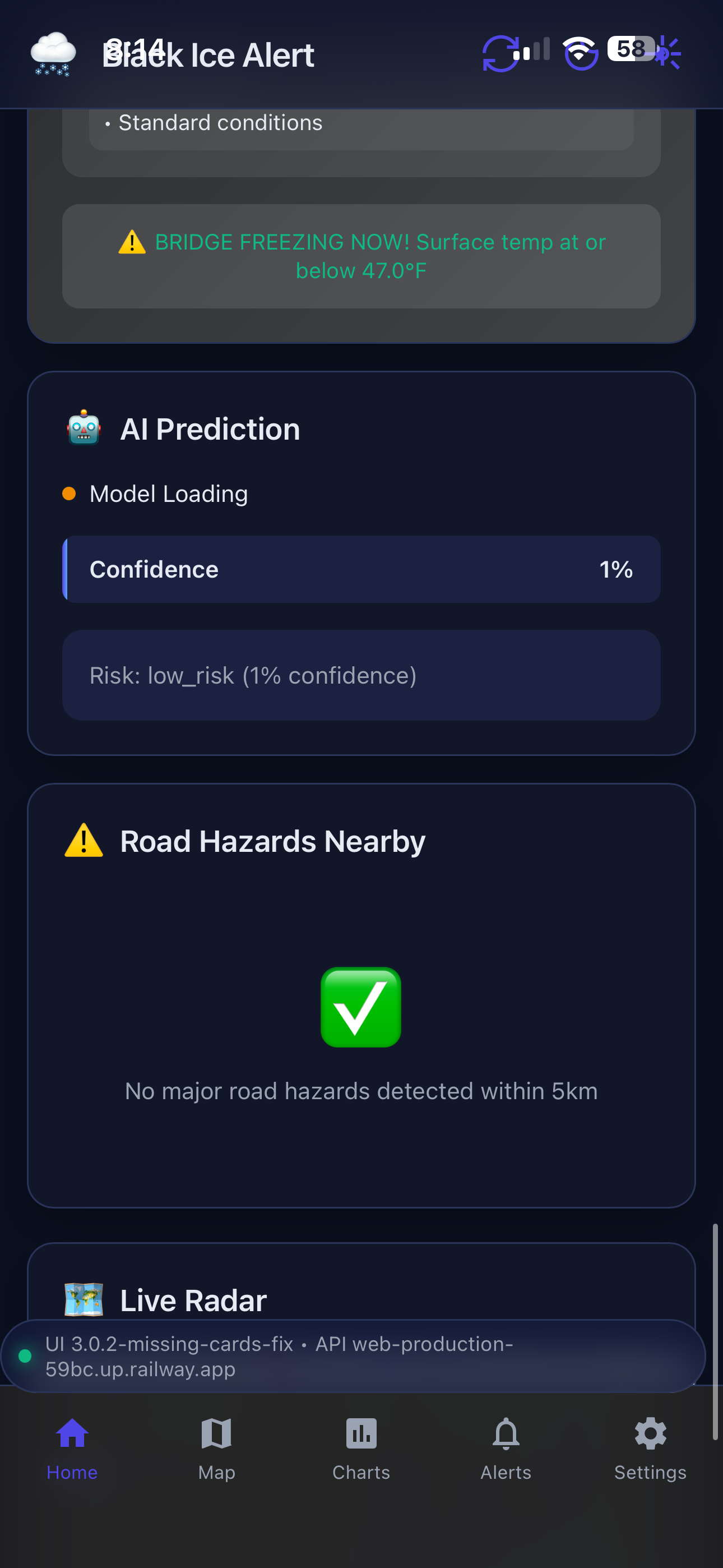
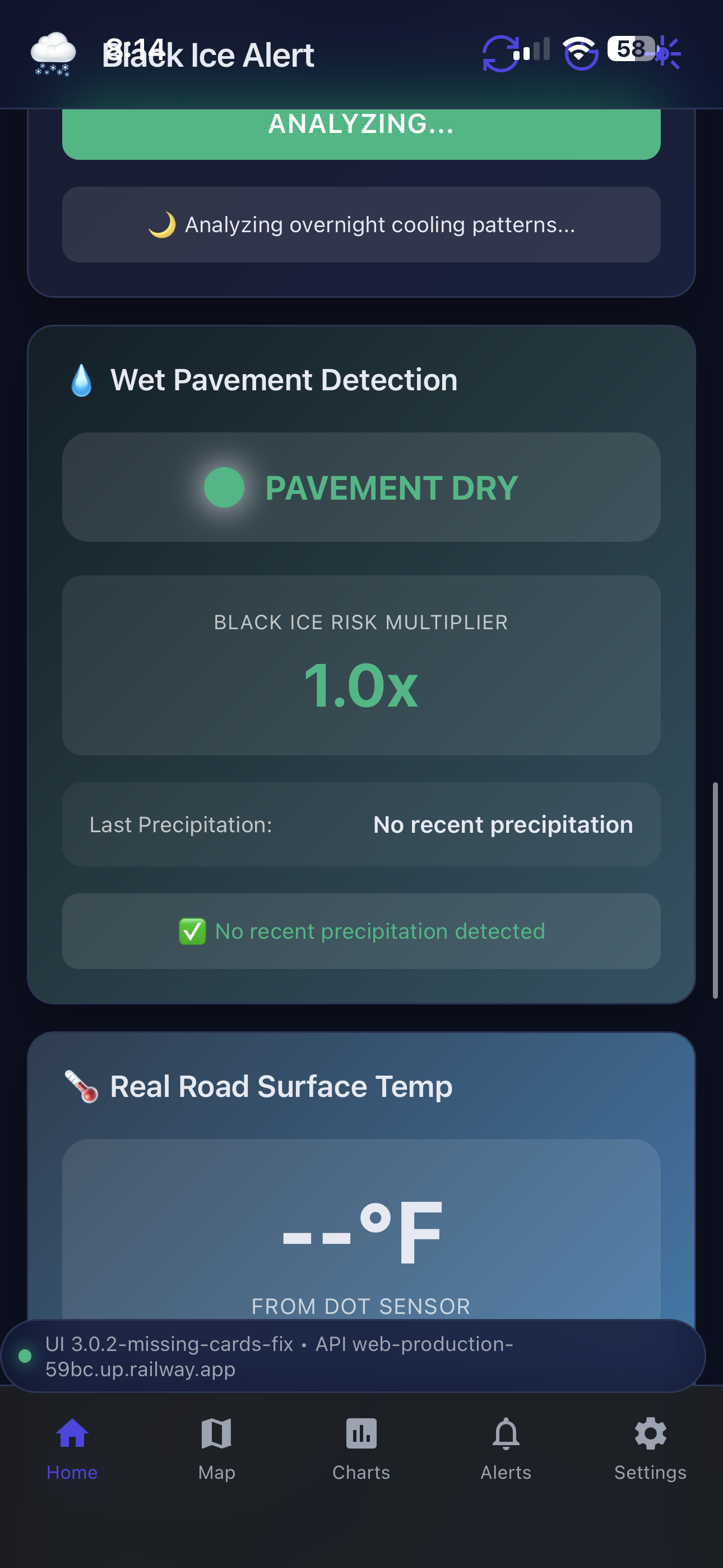
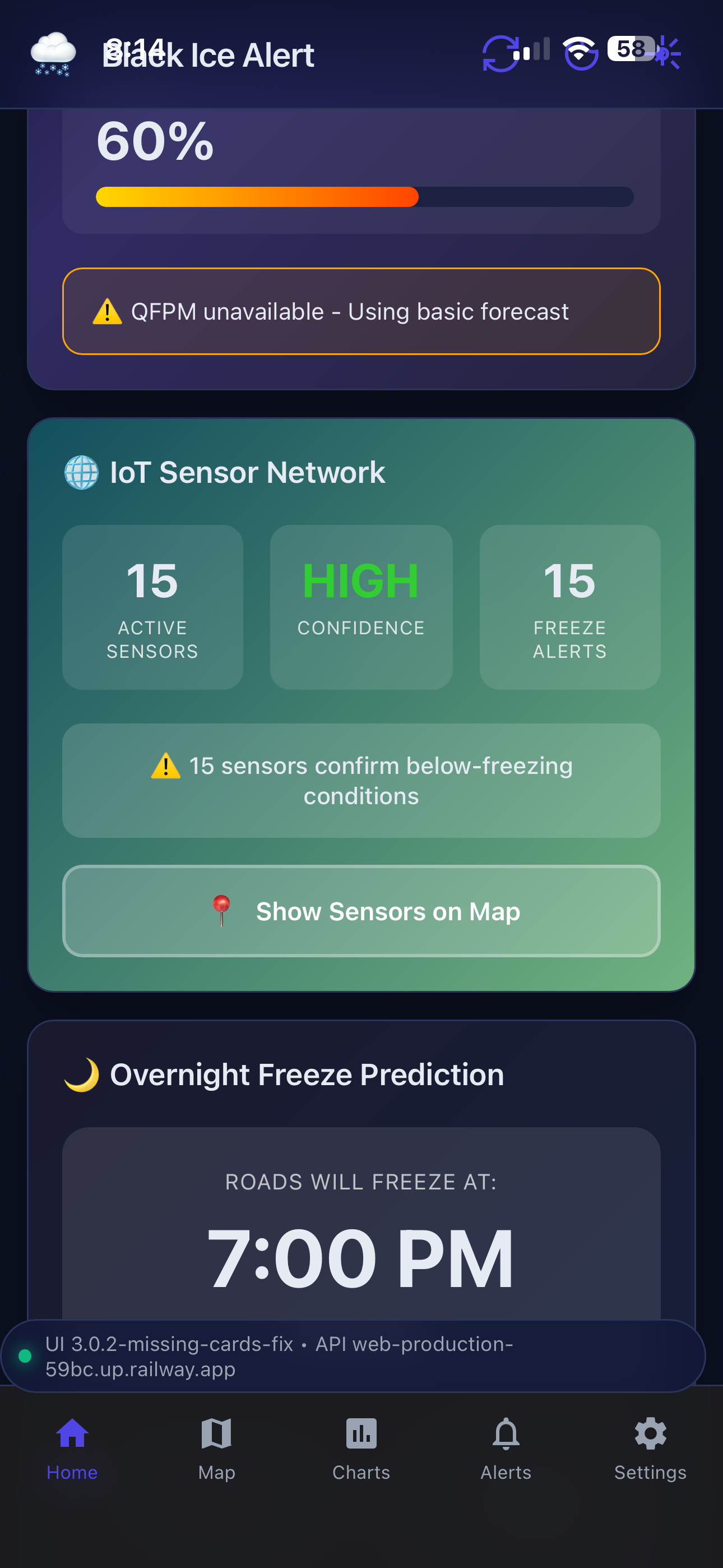
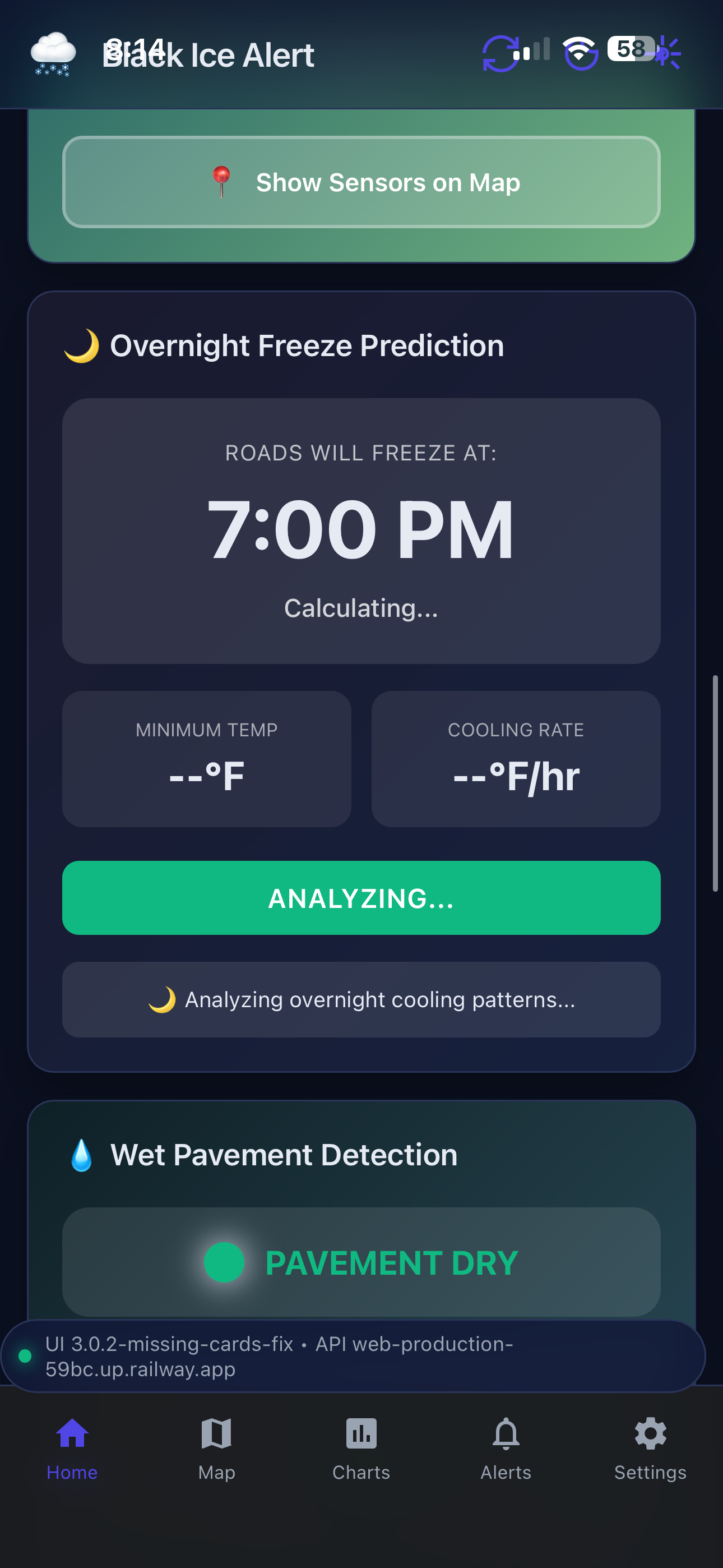
This project is a real-time black ice detection and forecasting system that analyzes weather conditions, road surface data, and environmental factors to estimate black ice risk. It provides live risk levels, bridge freeze alerts, wet pavement detection, overnight freeze predictions, and a Black Ice Formation Index (BIFI) that explains why conditions are hazardous.
When road surface sensors (RWIS / DOT) are unavailable, the system automatically falls back to meteorological modeling using air temperature, cooling rates, and recent precipitation with reduced confidence.
How I built it
I built this project end-to-end as a solo developer. The backend aggregates live weather data, precipitation history, wind effects, humidity, dew point, and available road surface sensor data. These signals are combined using an explainable, ML-inspired risk inference model based on known black ice formation behavior rather than a black-box trained neural network.
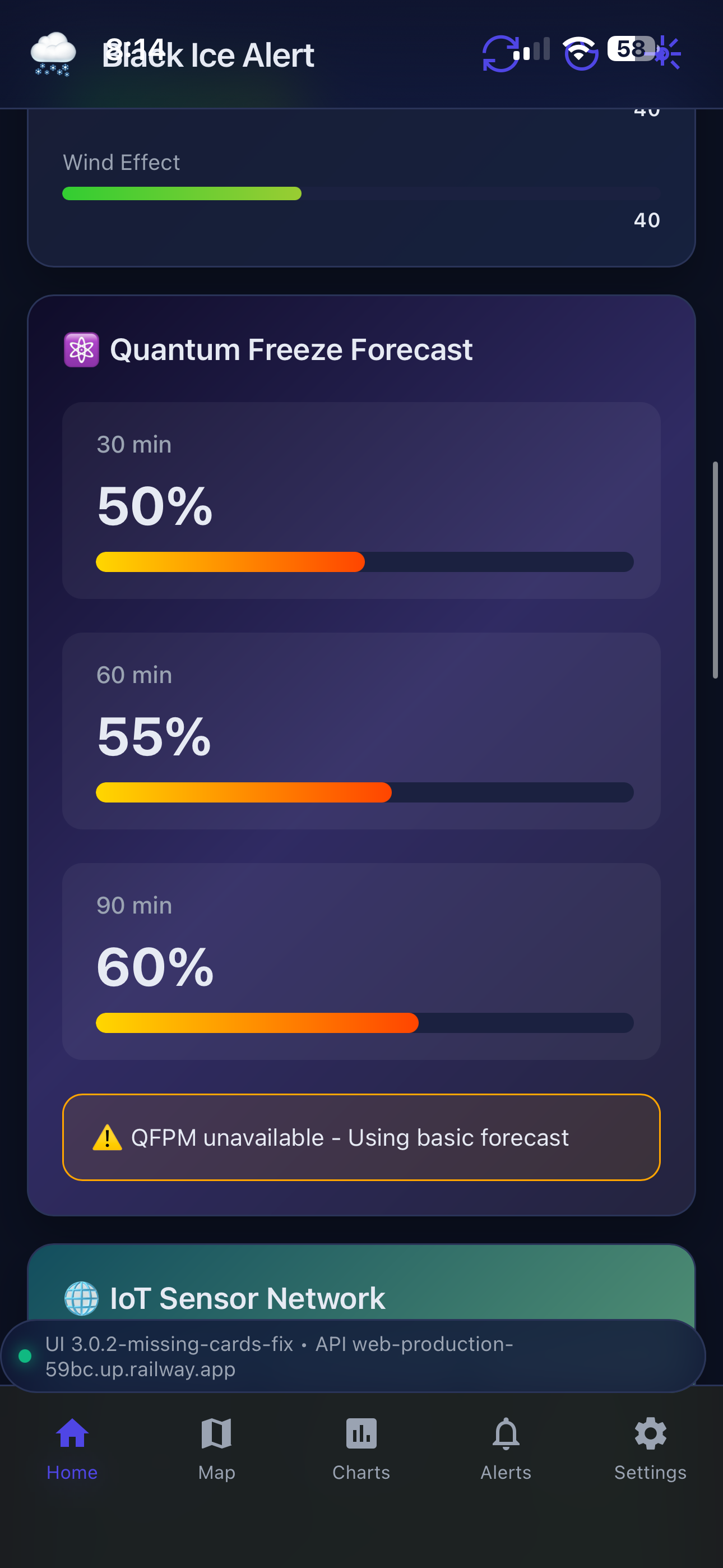
The “quantum” component is a simulation-inspired approach that models multiple possible freeze states evolving over short time horizons to handle uncertainty. This is a conceptual probabilistic simulation, not real quantum hardware or trained qubits.
The frontend is a mobile-first web interface designed to clearly communicate risk levels, confidence, and contributing factors. The application is deployed live using Railway.
I used an AI coding assistant briefly for initial code scaffolding, but all system design, modeling logic, API integration, and deployment decisions are my own.
Challenges I ran into
One of the biggest challenges was dealing with incomplete or missing road sensor data. I solved this by designing fallback logic that estimates surface freezing risk using environmental conditions while clearly reducing confidence. Balancing accuracy with transparency was also important the system needed to explain why a warning was shown, not just display a number.
What I learned
Through this project, I learned how to design an explainable risk model, integrate multiple real-time data sources, and deploy a production-ready application. I also gained a deeper understanding of how factors like bridge cooling, wind exposure, and dew point play a major role in black ice formation.
Built With
- api-rate-limt
- css
- database
- dotreadsenorsdata
- express.js
- flask
- force-sim-mode
- google-maps
- html
- javascript
- mesowest
- mobliefirstwebapp
- node.js
- openweathermap
- railway
- rwis
- sentry-dsn

Log in or sign up for Devpost to join the conversation.