-
-
-
-
-
-
-
WhatsApp User
-
WhatsApp Admin Approval Flow
-
WhatsApp Admin Catalog Upload Flow
Inspiration
Small businesses in India run on WhatsApp. A tile dealer, a web design studio, a dental supplier: they all get their leads there, and they all lose money the same way. A customer asks for a price at 9pm, the owner is closing up or asleep, and by morning that customer has bought elsewhere. These businesses cannot afford a salesperson to sit on WhatsApp all evening, so the inquiry just goes cold.
We did not want to build a chatbot that answers FAQs. We wanted an AI that does the job: qualifies the lead, prices it from the real catalog, produces a proper quotation, issues an invoice, and chases the payment.
What it does
BizOperator AI is an AI employee that operates a business over WhatsApp.
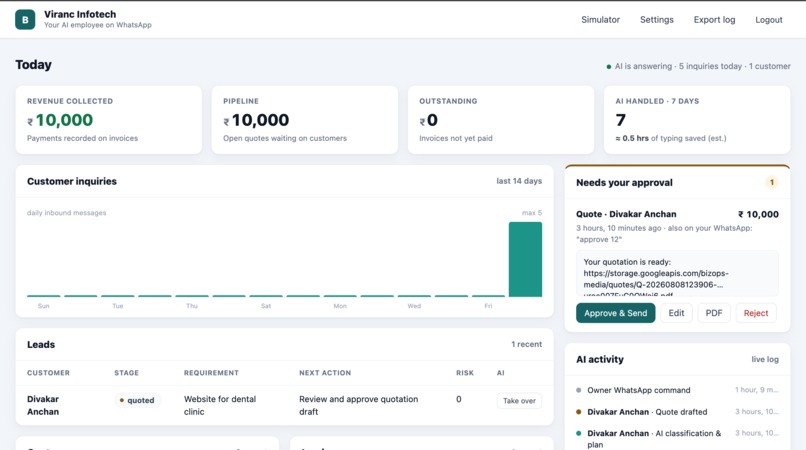
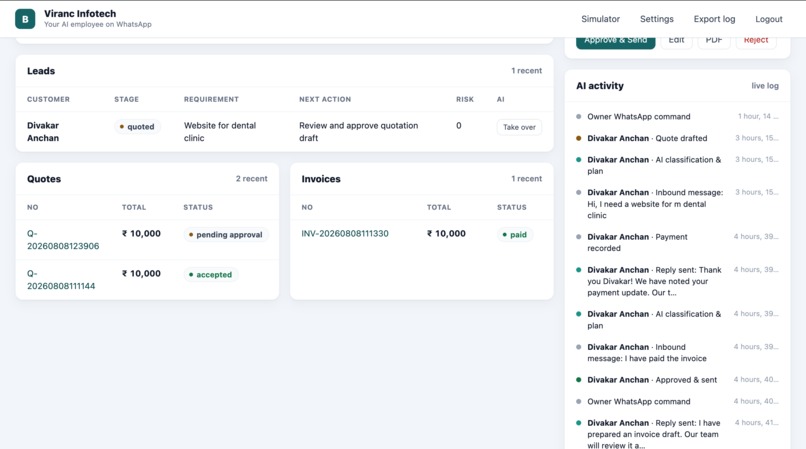
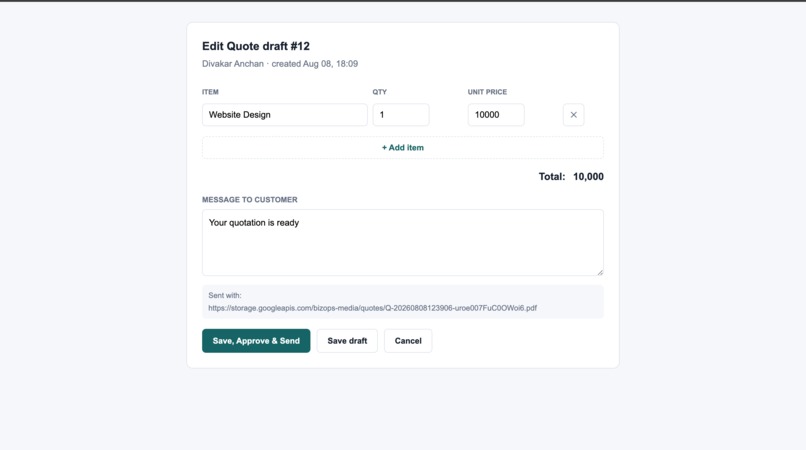
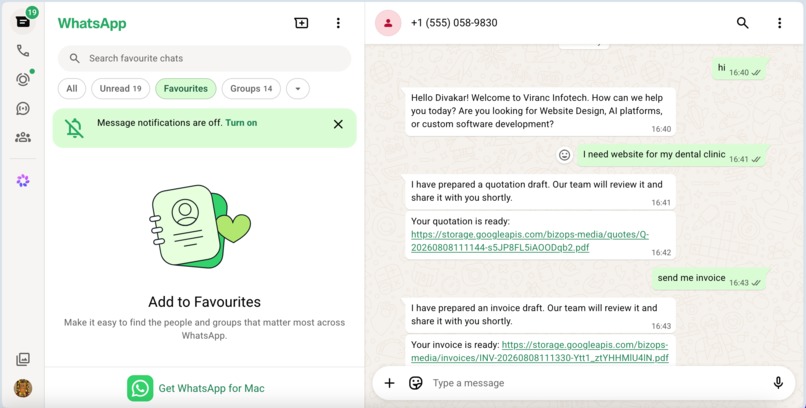
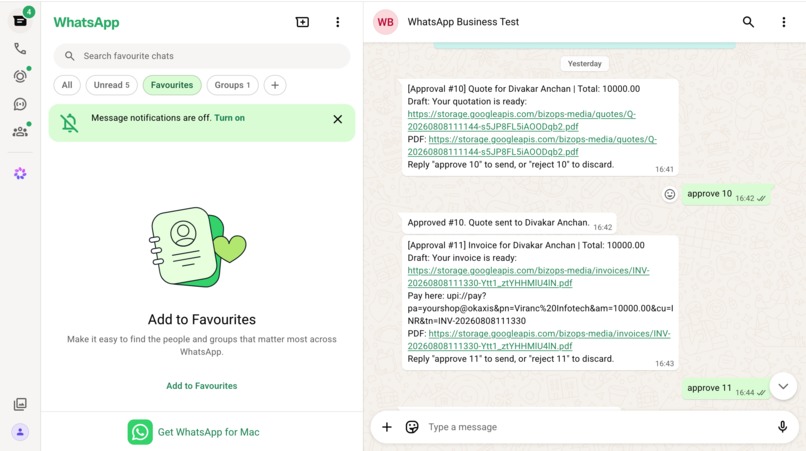
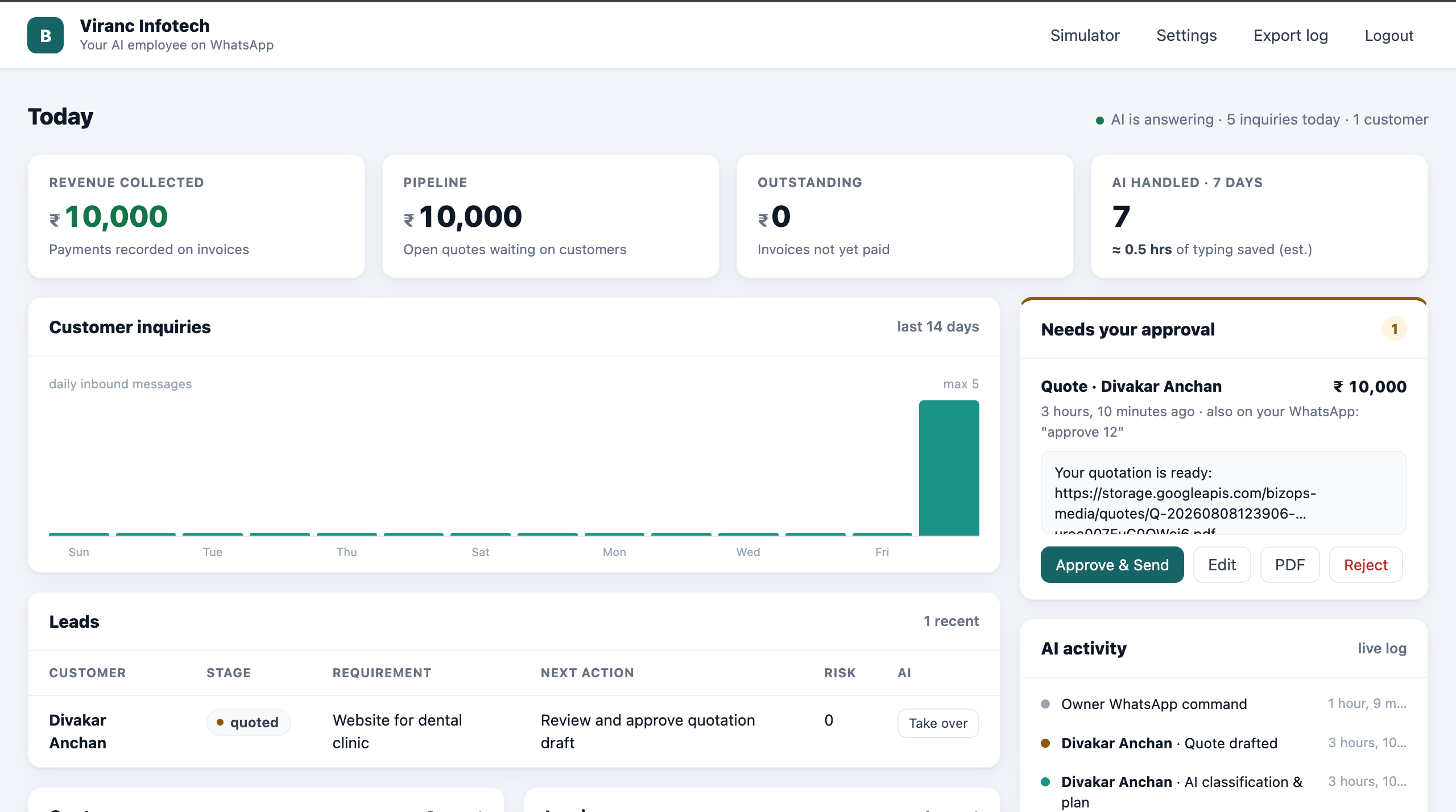
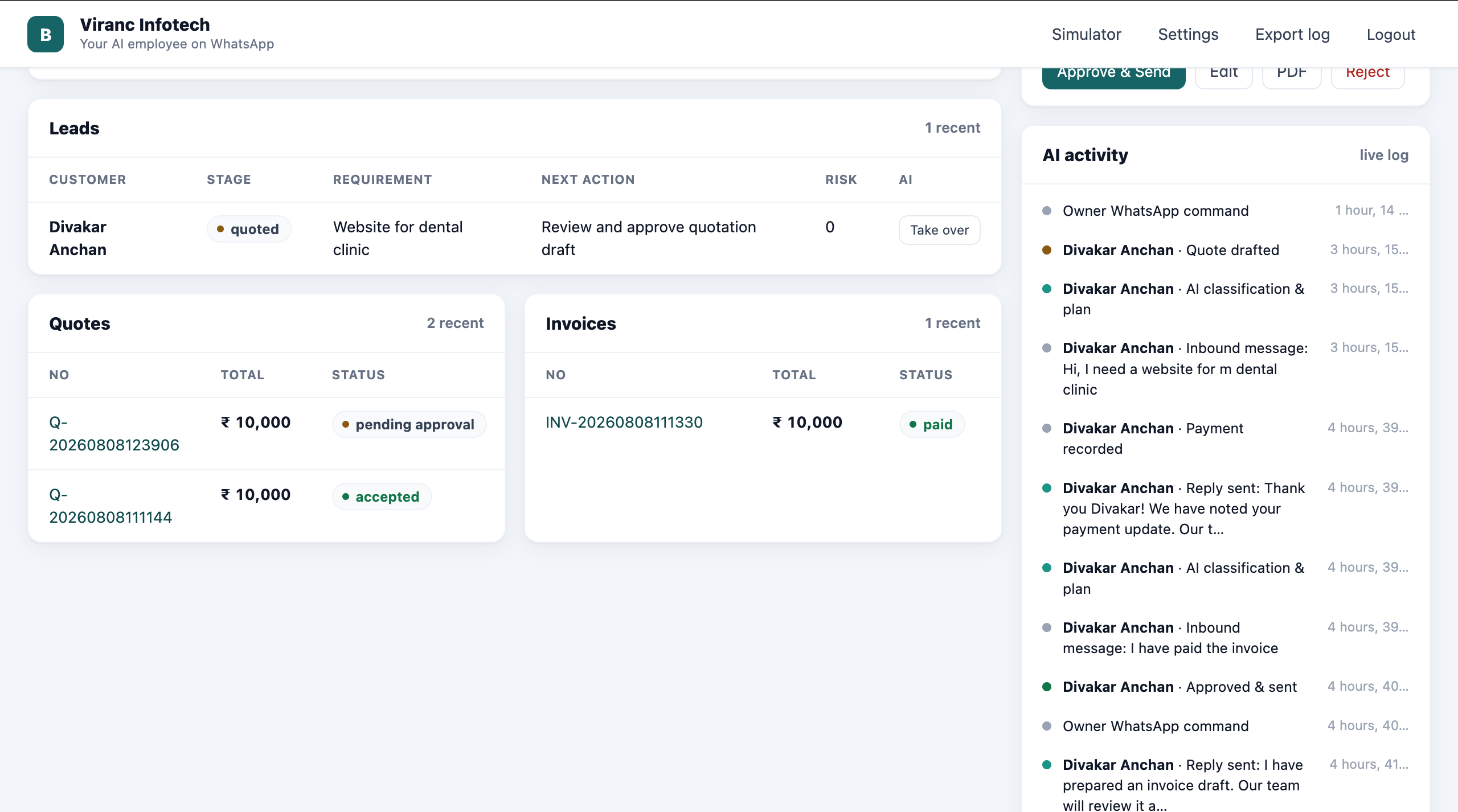
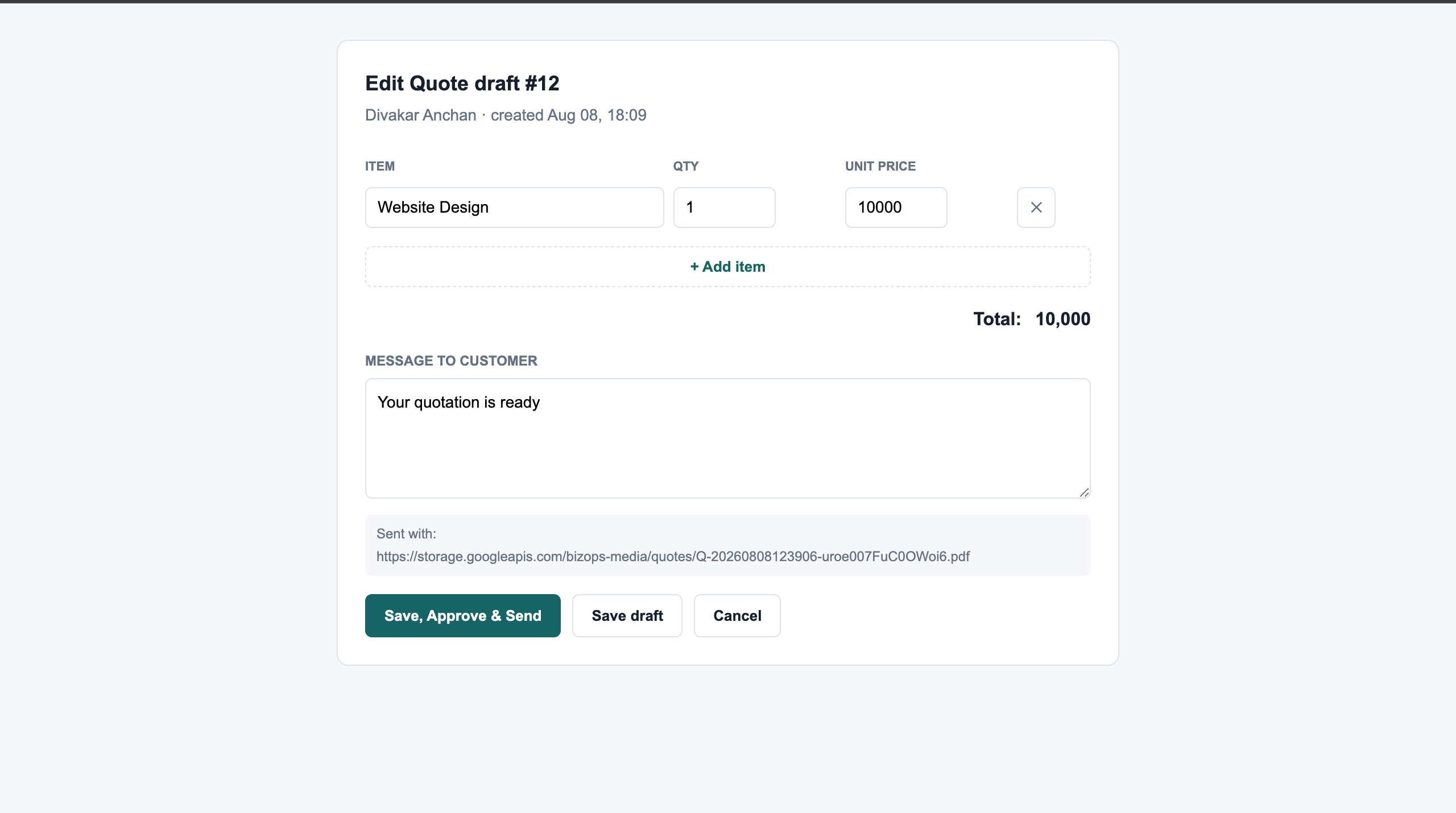
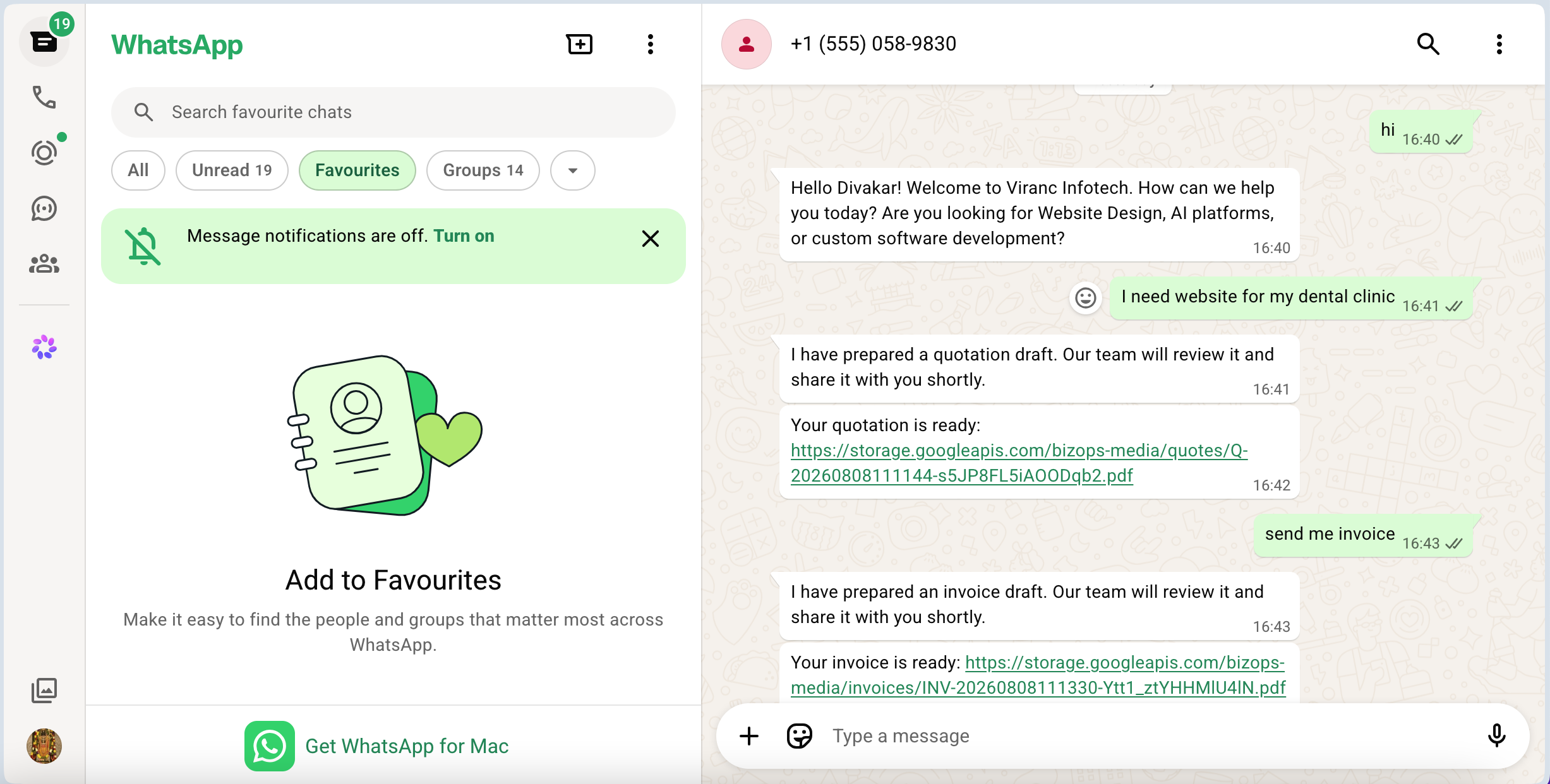
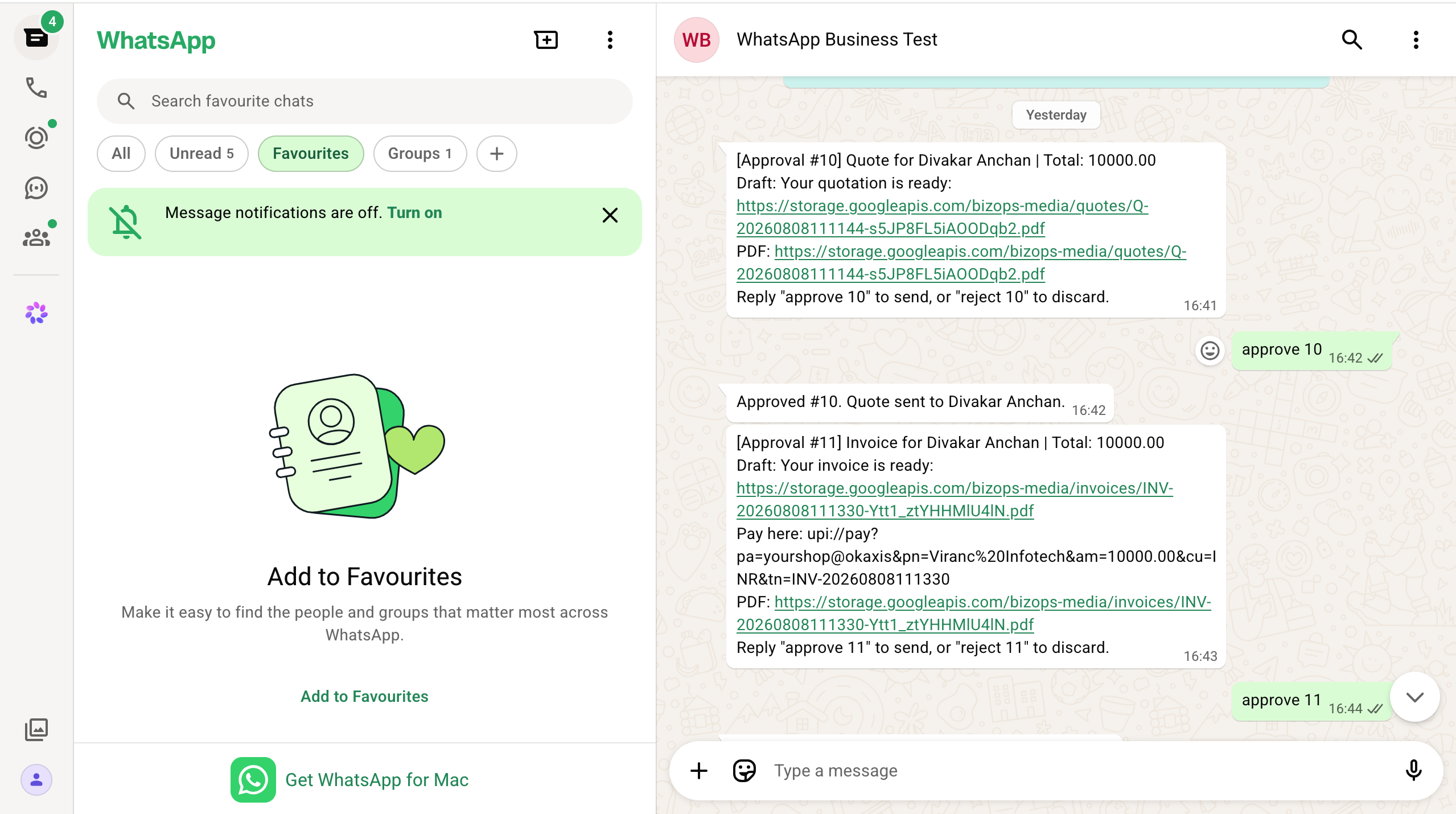
A customer messages the business number. Gemini classifies the intent, extracts the requirement, budget and timeline, and answers from the business's own catalog and policies, never from invented facts. When the customer is ready to buy, the AI drafts a quotation PDF priced from the catalog and sends it to the owner's WhatsApp for approval. The owner replies approve 1.
The customer receives the quotation. On acceptance, the AI generates an invoice with a scan-to-pay UPI QR code. The owner replies paid 3, and revenue is recorded, the lead marked won, and a receipt sent to the customer.
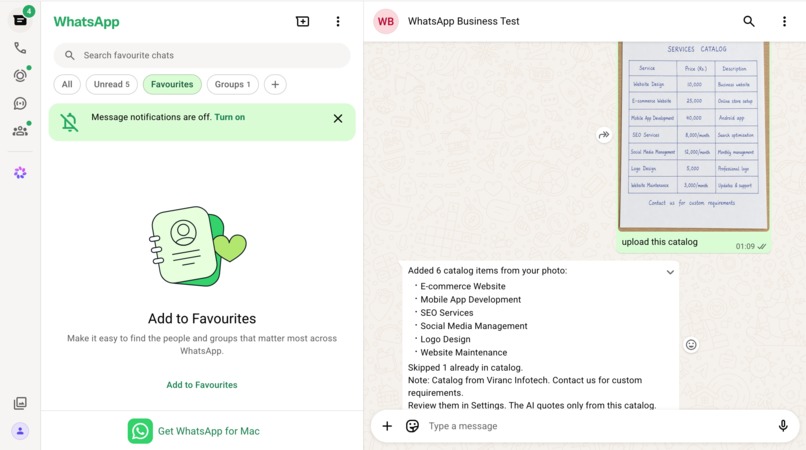
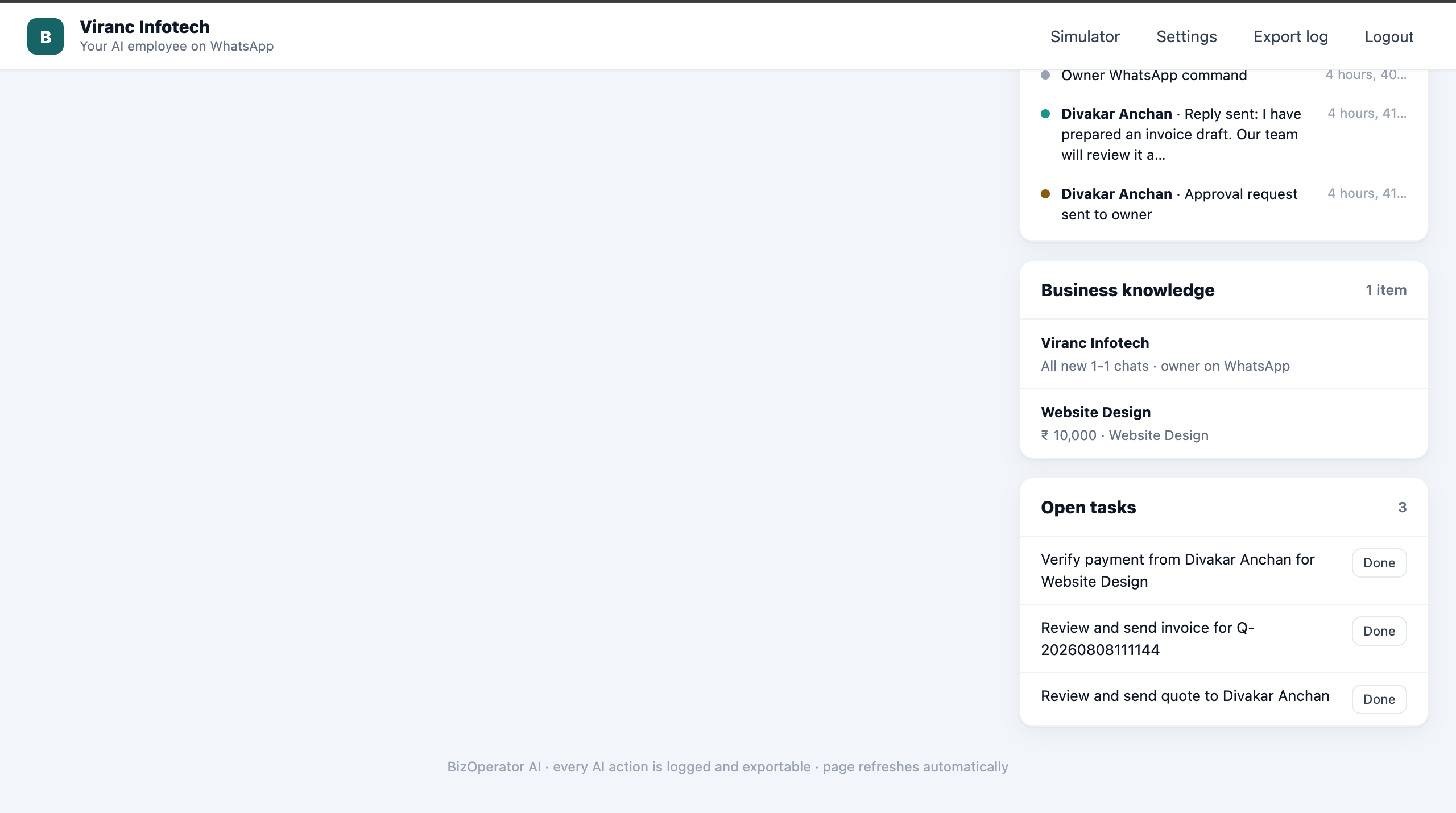
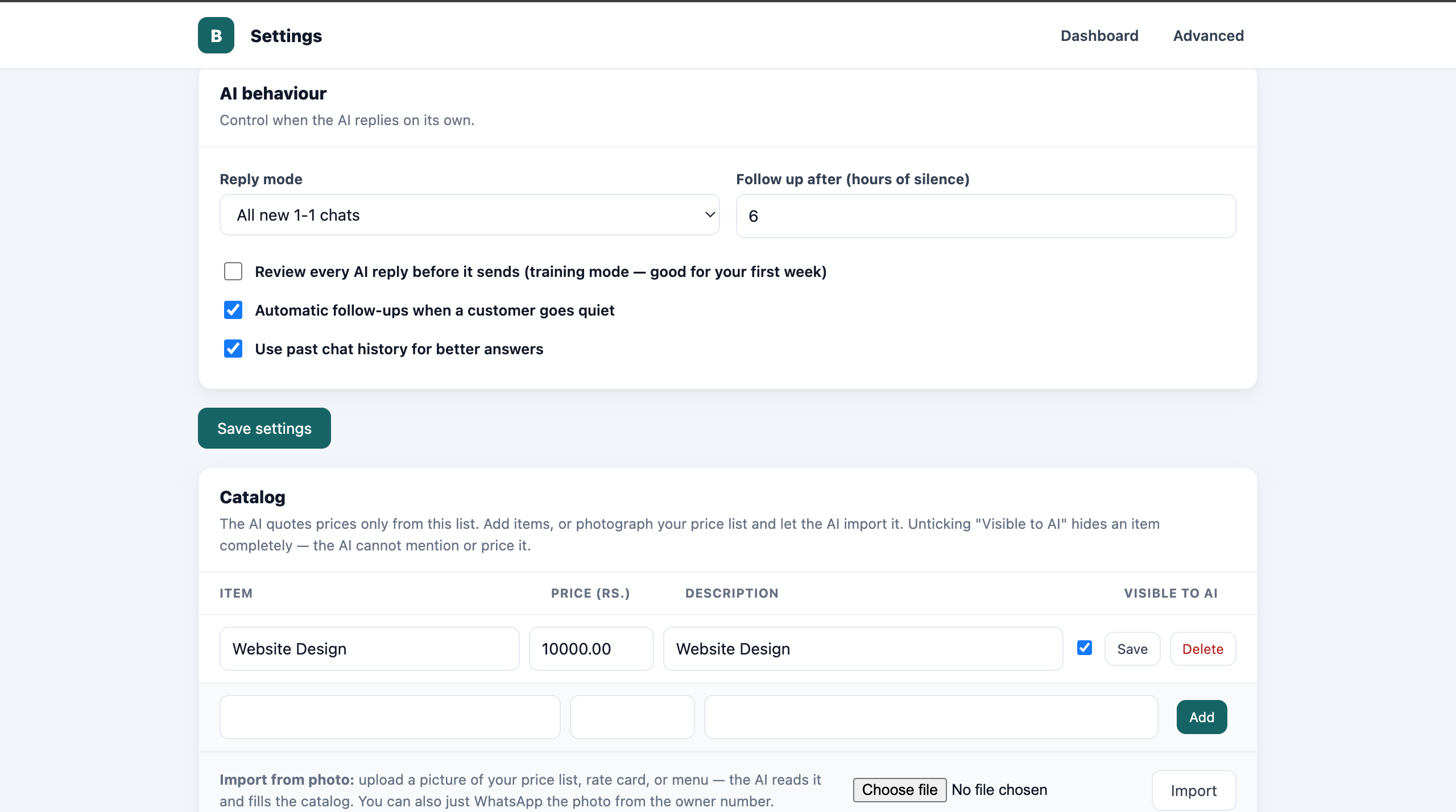
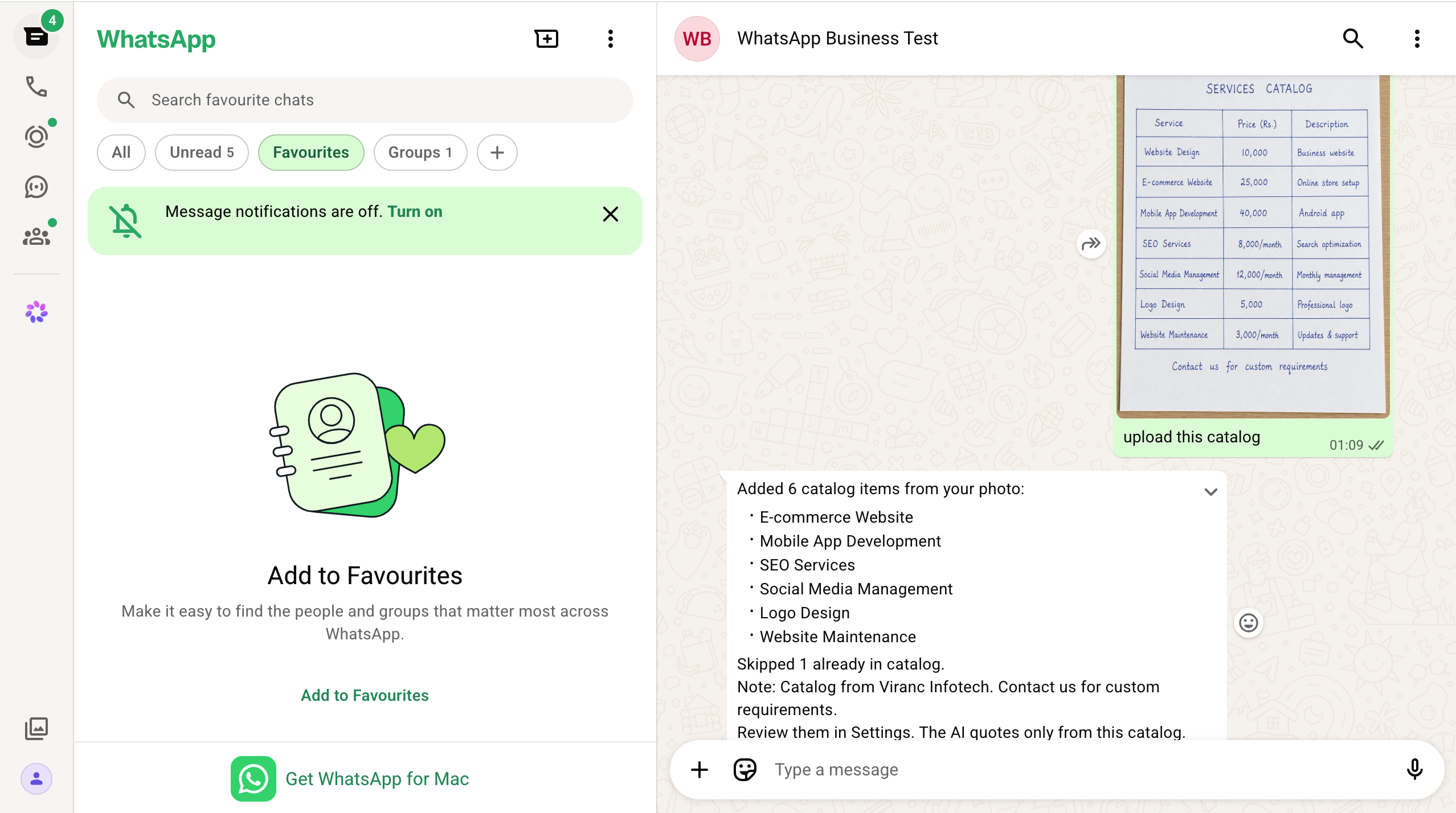
Between conversations it keeps working. It follows up automatically when a customer goes quiet, sends the owner a daily business summary each evening, and learns a business's entire price list from a photograph of it using Gemini's vision capability.
The owner never opens a laptop. Every command works from WhatsApp: approve, reject, edit 3 total 12000, edit 3 reply <new wording>, paid, summary.
How we built it
Django 6 on Cloud Run, Cloud SQL for PostgreSQL, Cloud Storage for generated PDFs, Secret Manager, Cloud Scheduler for autonomous jobs, and Gemini on Vertex AI through its OpenAI-compatible endpoint, authenticated with the Cloud Run service account's own credentials so there is no API key to leak. PDFs are generated with ReportLab including a live UPI QR. WhatsApp uses the official Business Cloud API with HMAC signature verification on every webhook.
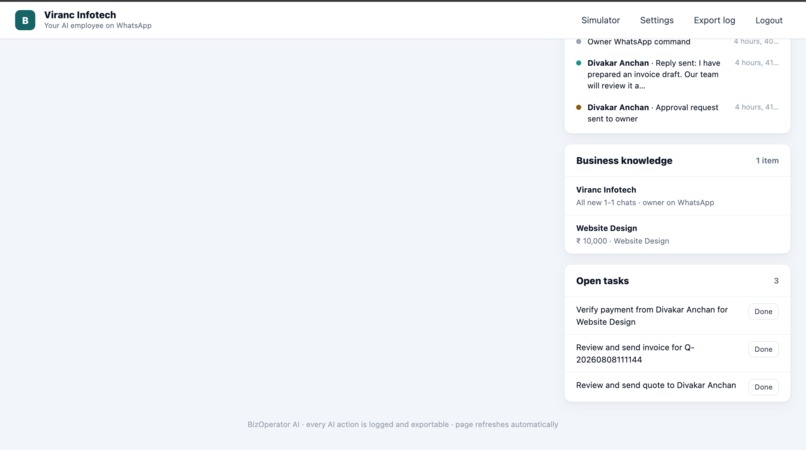
Every AI decision is written to an ActionLog with model name, token usage and latency, exportable as CSV: an audit trail of the AI operating the business.
Challenges we ran into
The hard problems were all production-only. A credential stored with an invisible trailing character silently broke authentication, and the webhook returned 403 while every value looked correct. Generated documents were written to the container's ephemeral disk instead of through the storage backend, so Cloud Storage reported files missing that the database insisted existed. Absolute storage URLs were being prefixed a second time, producing links no customer could open.
The subtler challenge was deciding what the AI may do alone. Our answer became blast radius: informational replies go out instantly, and anything creating a financial commitment needs one word from a human.
Accomplishments that we're proud of
An AI that does not just talk but produces the actual commercial artifacts of a business (priced quotations, tax-ready invoices, payment collection) running in production against real customers on real infrastructure.
What we learned
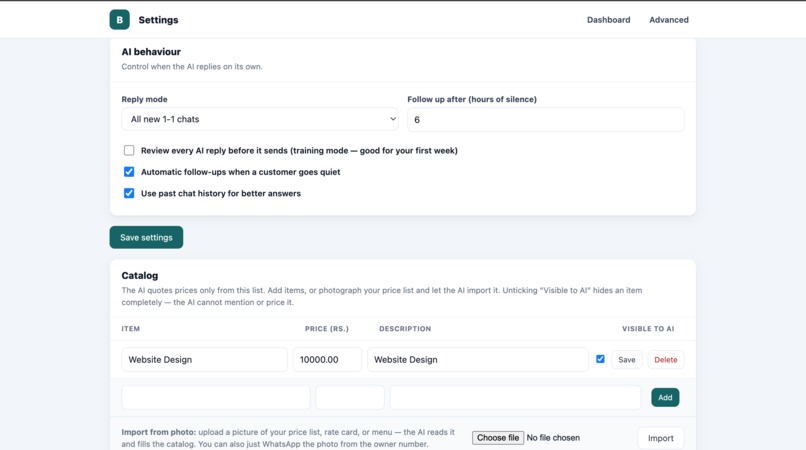
The constraint on AI adoption for small business is not intelligence, it is trust. The "review every reply" training mode, where the owner approves everything for the first week, converts skeptical shop owners better than any feature we built.
What's next for BizOperator AI
Multi-tenancy, WhatsApp template messaging for out-of-window follow-ups, and appointment booking for clinics and salons. Commercially, a white-label channel: because each business runs as its own isolated deployment, software firms, digital agencies and WhatsApp service providers can resell BizOperator to their existing customer base under their own brand.
How we build and run this business with AI
I run a software business in Mumbai. BizOperator AI is our product for small businesses that sell over WhatsApp, and AI is not a feature we added to it. AI is how we build the software, how we review it, and how the business it powers actually runs.
AI in how we build. The engineering work of this company is AI-operated. I design the architecture and make the product decisions. AI writes the majority of the implementation, reviews every change for correctness and security before it ships, and writes the verification that proves it works. That review loop runs on all code, not only the parts a human happens to be worried about. It is exhaustive in a way people are not at the end of a long day, and it is the reason a team this size can ship a production system handling payments, document generation, and an auditable decision log.
The same applies to operations. Our Google Cloud deployment runbook, the configuration audit that caught two missing production variables before launch, and the diagnosis of live incidents are all done with AI in the loop. Problems that would have cost a day of guesswork get isolated in minutes, because the AI can reason across the whole system at once rather than one file at a time.
I want to be precise about the division. AI does not decide what to build. It does the volume of the work, and it is very good at the kind of exhaustive checking humans skip.
AI in how the business runs. Our product is an AI employee, and it does the operational labour of the businesses that use it. Gemini reads every inbound customer message, classifies intent, and decides whether it is a pricing question, a purchase intent, a support issue, or something to hand to a human. It extracts structured facts from unstructured, often Hinglish, messages, including requirement, budget and timeline, and writes them into the CRM. It selects catalog items, computes totals, generates quotation and invoice PDFs, attaches a UPI payment QR, and writes the message that carries them. When a customer goes quiet it decides whether to follow up and drafts a nudge referencing their actual requirement. Every evening it writes the owner's business summary. When a shop photographs a handwritten price list, it reads the prices and builds the catalog from the image.
We run our own inbound inquiries on our own product.
What humans do. Humans set policy, not output. We decide pricing rules, curate what the AI may say by maintaining the catalog and business knowledge, and approve anything that creates a financial obligation, such as a quotation or an invoice, with a single word on WhatsApp. Humans handle the conversations where a person genuinely matters: negotiation, complaints, and the relationships that turn a first order into a repeat customer. And humans sell, walking into businesses, understanding how they actually work, and onboarding them.
The dividing line we settled on is blast radius. An answer about business hours costs nothing if imperfect, so it goes out in seconds. A quotation carries commitment, so a human authorizes it. This is not a limitation we are working to remove. It is the design that makes owners willing to switch it on at all. We also ship a training mode where the owner reviews every reply for the first week, because trust, not capability, is the real adoption constraint.
Jobs and economic opportunity. The honest framing matters here. In most businesses we sell to, we are not replacing an employee. We are supplying a capability they could never afford. A two-person shop was never going to hire a full-time salesperson to answer WhatsApp at nine at night. What the AI does is capture revenue that was previously lost and return the hours an owner spent retyping the same quotation. When a small business captures more of its inbound demand, its capacity to hire goes up, not down. We are candid that this is not universally true. In a business already employing someone to handle WhatsApp, the AI changes that person's job rather than purely adding to it, moving them from typing quotations to handling the conversations that need a human.
Beyond our customers, the model creates work directly. Every deployment requires onboarding: understanding the business, digitizing its catalog, configuring its policies, and coaching the owner through the first week. That is a real, teachable role, an AI onboarding specialist, and it is inherently local work, best done by someone who can walk into the shop and speak the owner's language. It is the first role we intend to hire for, and we want to train people in the neighbourhoods we sell into rather than centralize it. The skill required is not engineering. It is understanding a small business well enough to teach an AI to represent it, which is a job that did not exist before and can be learned by someone without a technical background.
That structure extends into a partner economy. Because each business runs as its own isolated deployment, the product is designed to be resold. Local operators, digital agencies, IT service firms and WhatsApp solution providers can deploy and support BizOperator for businesses in their own market, under their own brand, and earn recurring revenue from it. For a small agency that today sells one-off websites, this converts a project business into a recurring one. That is how this reaches thousands of businesses without us hiring thousands of people, and the opportunity accrues largely to the partners rather than to us.
The story. We began with three separate prototypes: a business command center, a quote helper, and an autonomous operator. The most important decision we made was to delete two of them. The product that survived was the narrowest one, the thing a shop owner feels the loss of every single day.
From there the discipline was to stop building. Ship it, deploy it on Google Cloud, and spend the remaining time in front of business owners rather than in an editor. That proved right for an unglamorous reason. What a product like this gets wrong is never what you predict in development. Real messages from real numbers, arriving at real businesses, set the roadmap far better than any planning session.
That is the pattern we would carry into any AI business. Let AI do the volume of the work, both building it and running it. Keep humans on the decisions that carry consequence. And get it in front of real users early enough that reality, not imagination, sets the roadmap.

Log in or sign up for Devpost to join the conversation.