Inspiration
The journey from a business idea to a functional entity is often stalled not by a lack of vision, but by the "friction of fragmentation." Entrepreneurs and non-profit founders are frequently overwhelmed by the sheer number of disconnected resources they must navigate, from searching for industry-specific mentors on SCORE to deciphering California’s business registration PDFs and hunting for localized grants.
BizLaunch Navigator was inspired by the need for a unified "Command Center" that collapses this complexity. The goal was to build an agentic system that doesn't just provide links, but actively performs the research and retrieval tasks on behalf of the user.
How I built it
The project is built on a modern FastAPI backend and a React frontend, tied together by an intelligent orchestration layer.
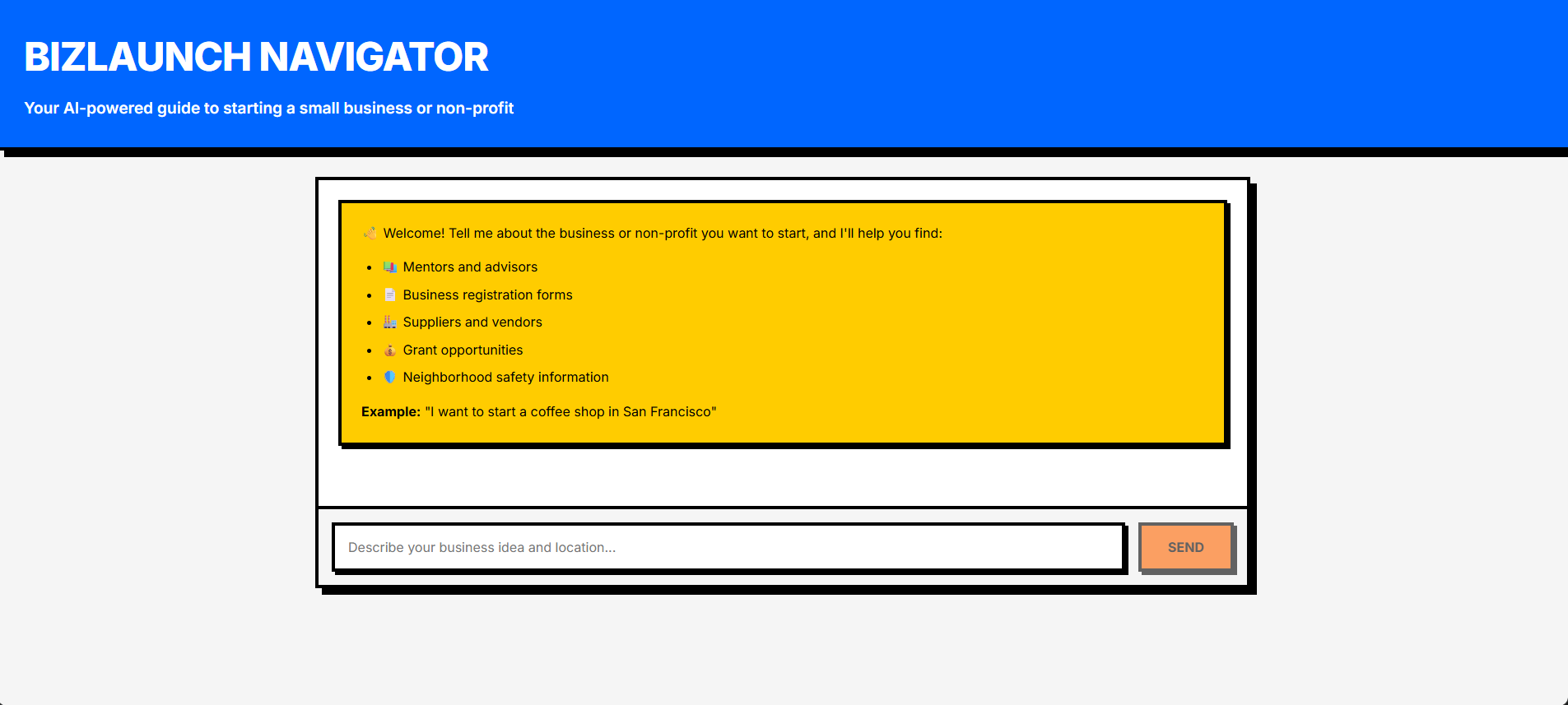
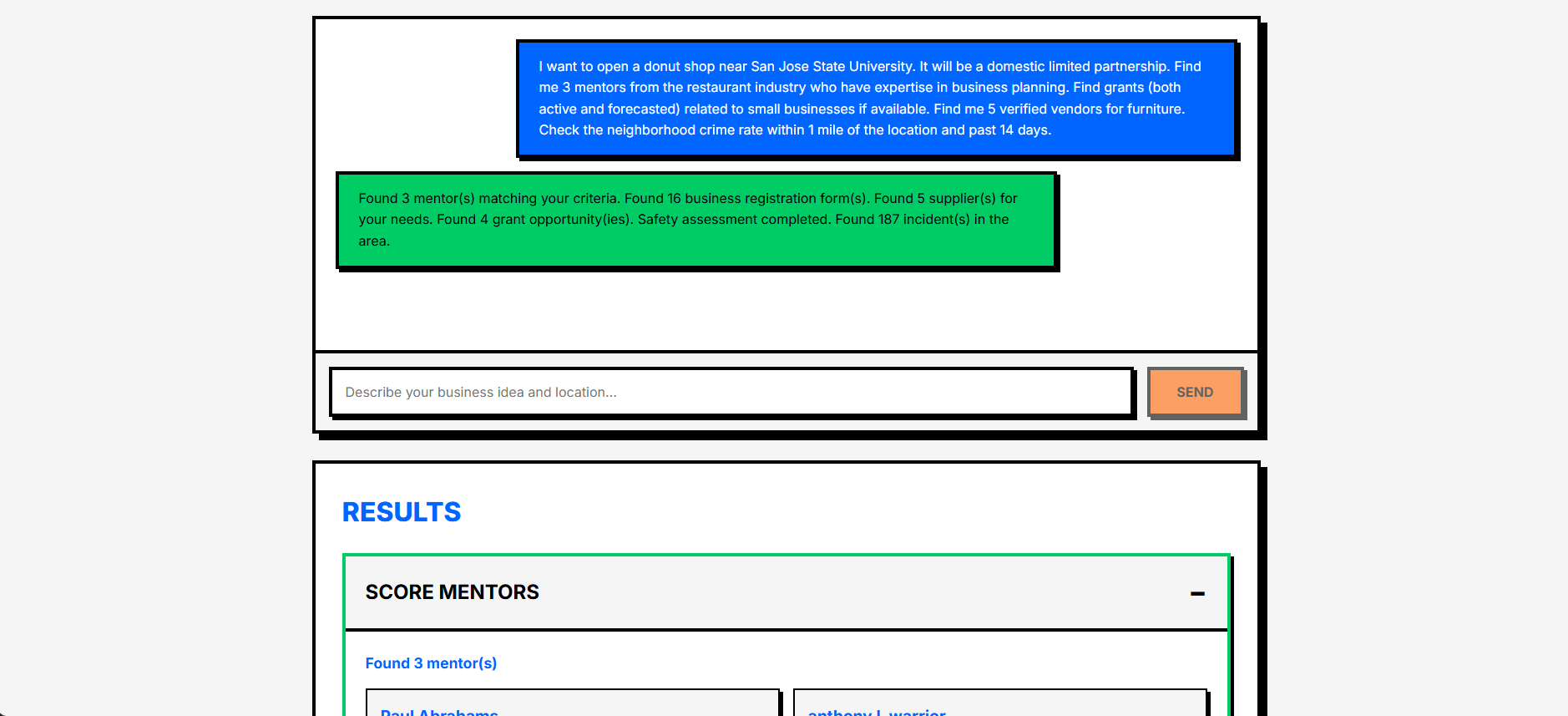
A. Intent & Parameter Extraction: I use Google Gemini to parse natural language queries (e.g., "I want to start a coffee shop in San Francisco"). The LLM extracts entities like business_type, location, and needs.
B. Parallel Skill Orchestration: Once the intent is identified, the system determines which of the 5 custom Browser Use skills to trigger. These are executed in parallel to optimize performance.
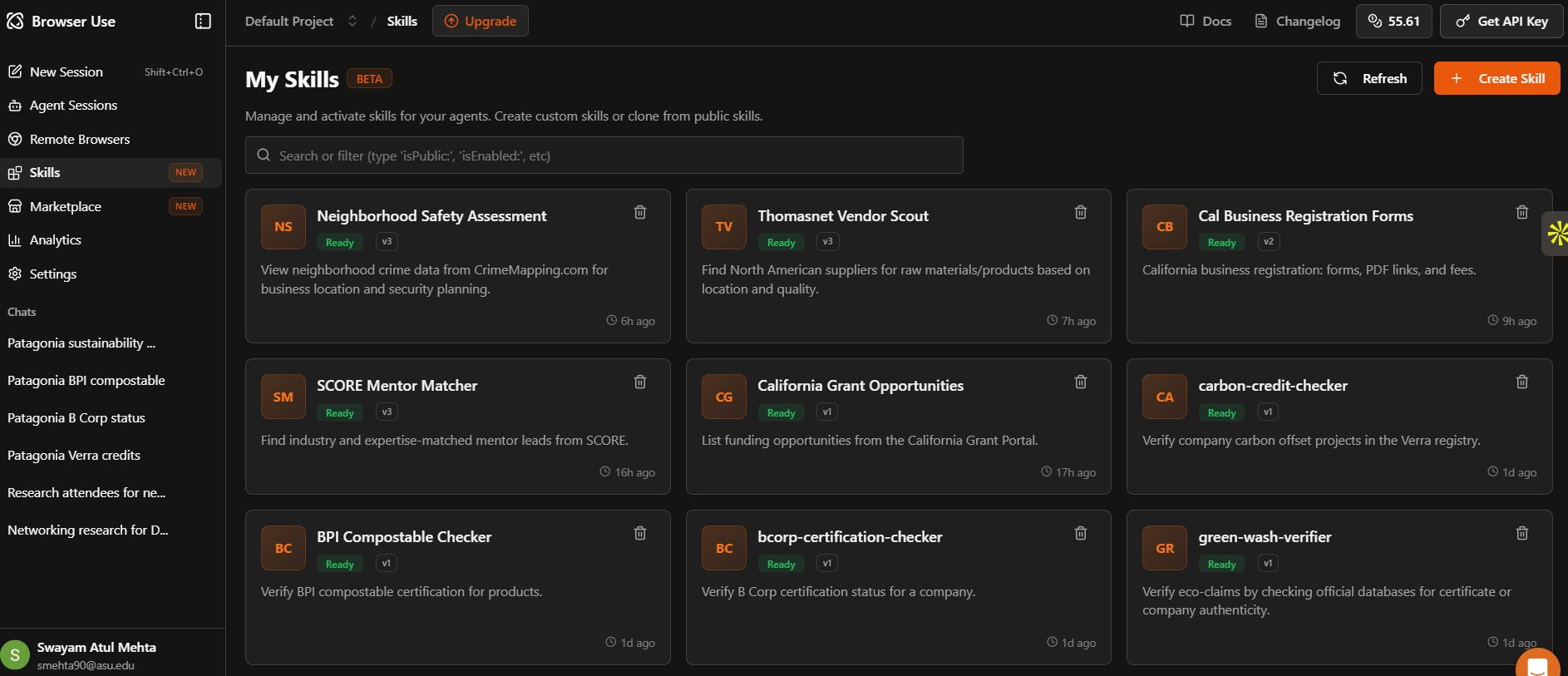
C. Refined Browser Use Skills: The core of the project lies in the refinement of browser-based agents. Rather than general-purpose browsing, I created precise Skill Goals and Agent Instructions for:
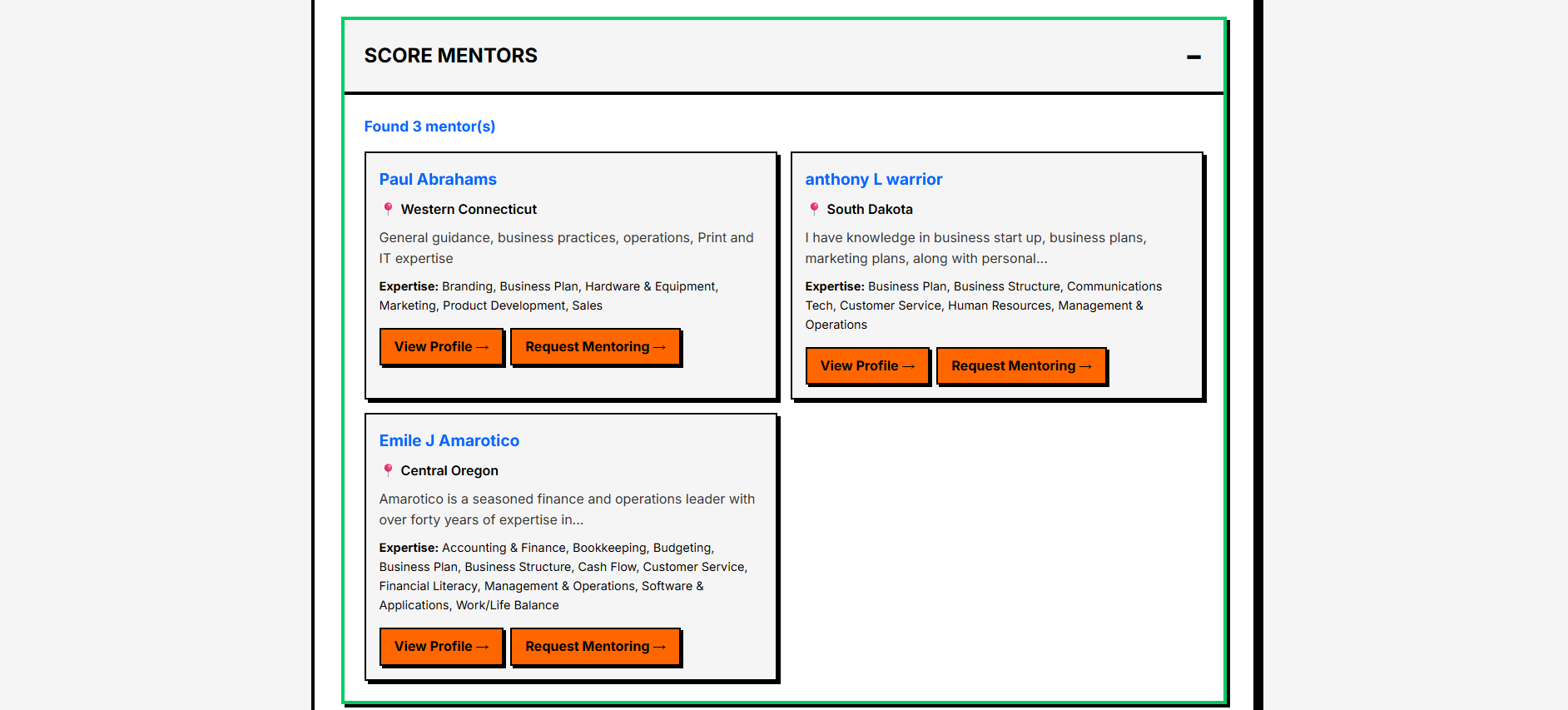
1. SCORE Mentors: Navigating expert matching filters.
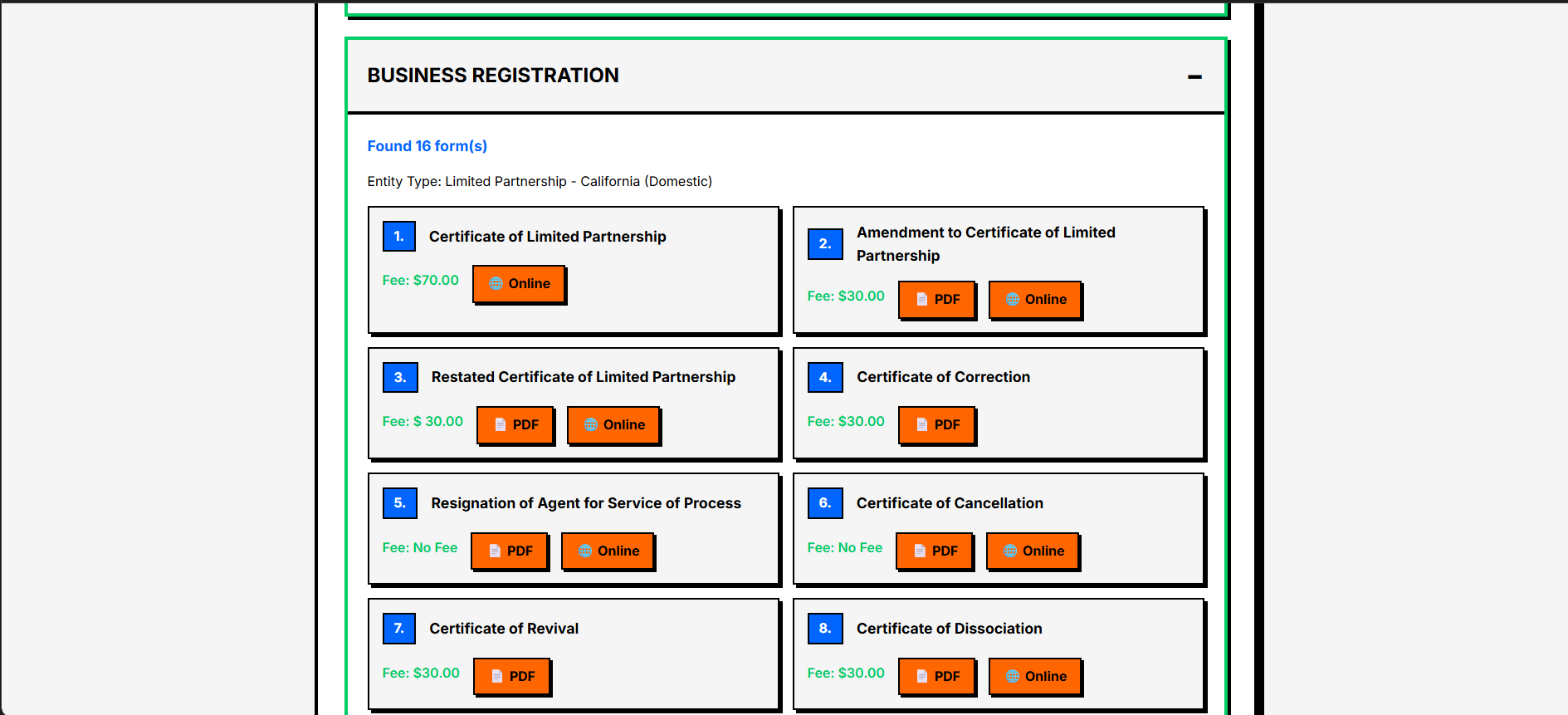
2. Cal Business: Interacting with registration portals to fetch specific PDFs.
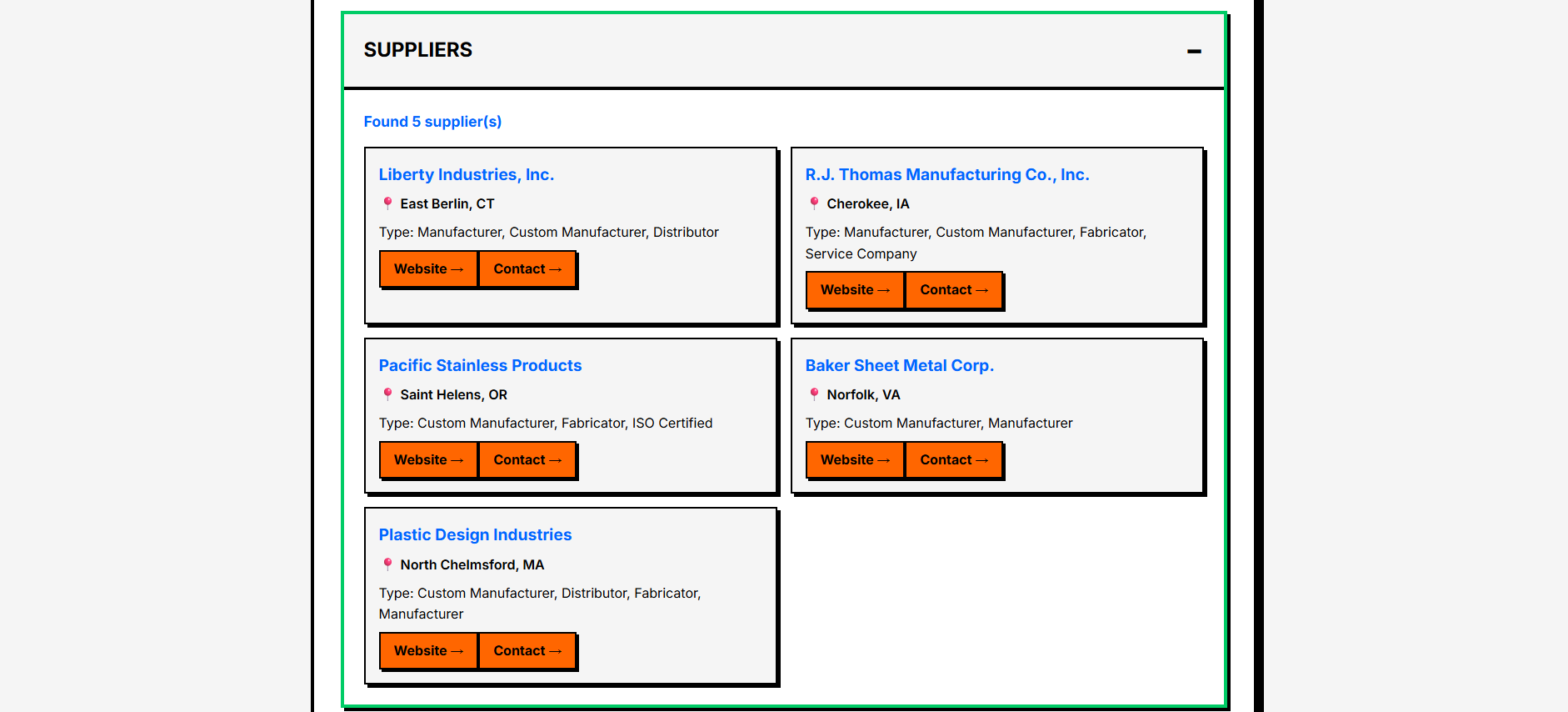
3. Thomasnet: Scouting verified North American suppliers.
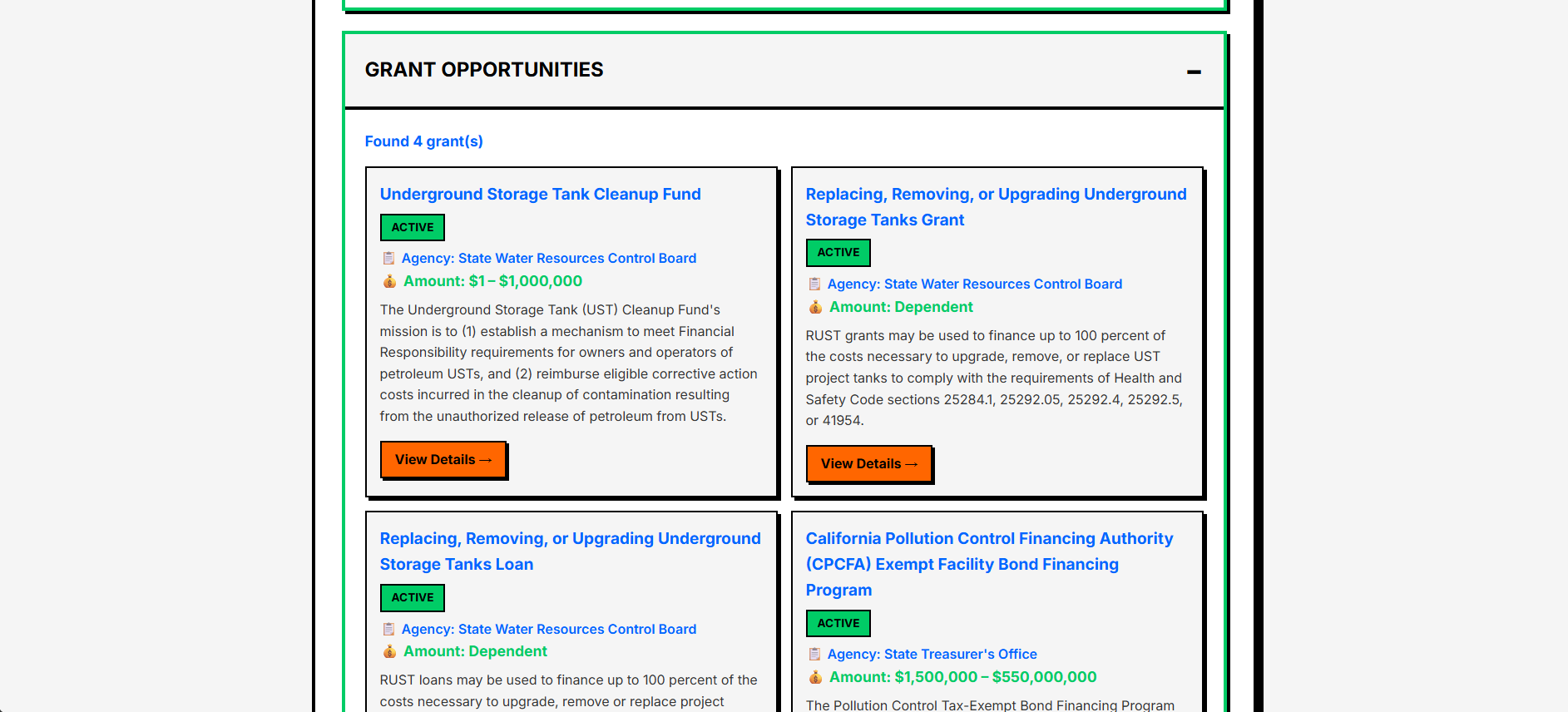
4. CA Grants: Monitoring the state grant portal for active opportunities.
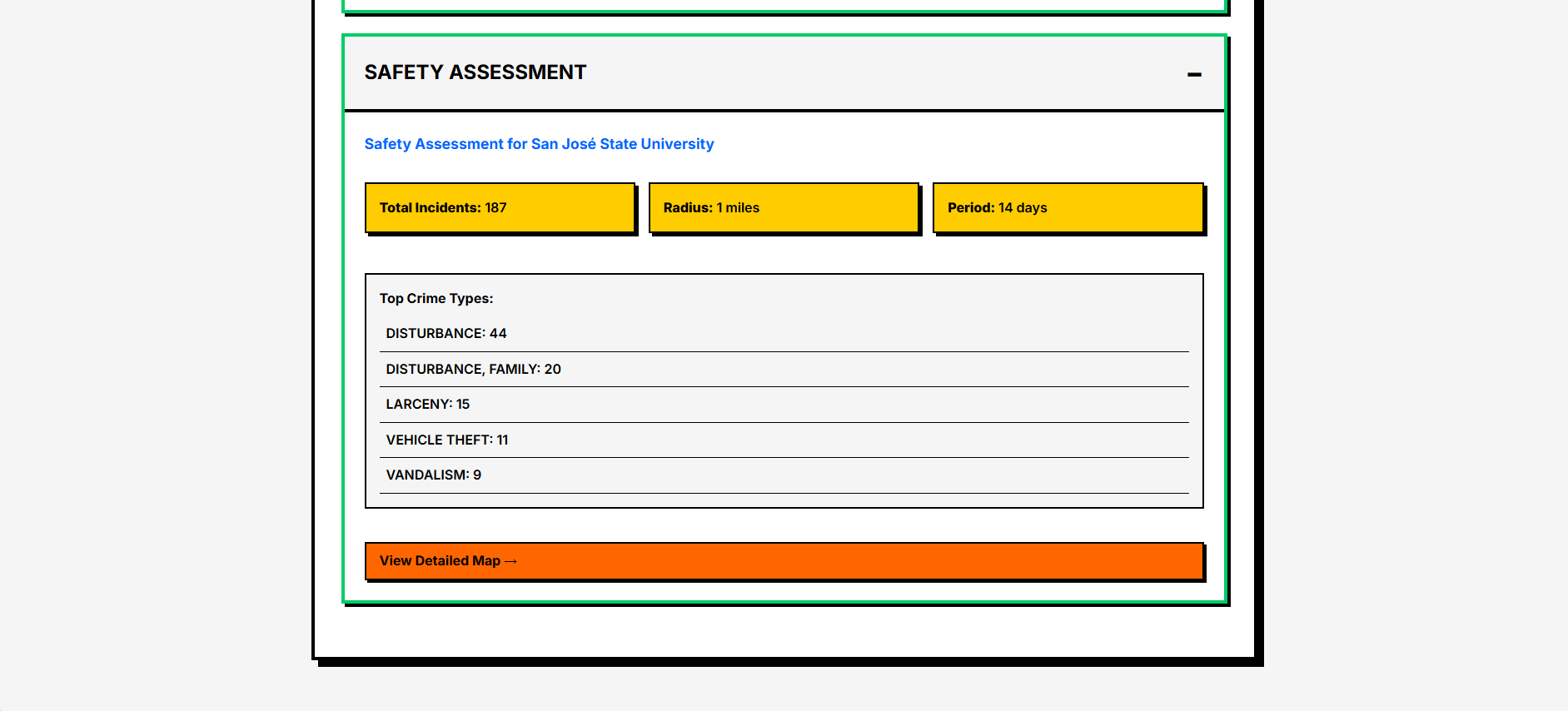
5. Safety Assessment: Scraping hyper-local crime data for site planning.
Challenges I ran into
1. Agent Reliability: Web environments are dynamic. I learned that agents require precise "guardrails." For example, the SCORE mentor skill initially failed when a user provided an industry name that didn't perfectly match the site's dropdown. I solved this by building an LLM-powered Industry Matcher that acts as a retry logic, mapping user input to the closest valid site category.
2. Anti-Bot Navigation: Sites like Thomasnet employ sophisticated protection (e.g., DataDome). A significant challenge was ensuring the Browser Use SDK could maintain session integrity and handle cookies correctly during these deep-search tasks.
3. Asynchronous State Management: Managing multiple live browser sessions required careful handling of the BrowserUse client to ensure that a failure in one skill (like a timeout on the grant portal) didn't crash the entire request.
4. UX of "Wait Time": Since browser agents take longer than traditional APIs, I utilized a Neubrutalism UI design system to provide high-contrast, clear feedback states to the user while the "digital workers" were active.
What I learned
Through this project, I discovered that the future of the web isn't just about better search, but about agentic interoperability. By treating websites as "skills" rather than just "pages," we can create tools that truly bridge the gap between human intent and administrative execution.
What's next for BizLaunch Navigator
Incorporate more skills that fill bureaucratic, legal and financial gaps in starting a new business.

Log in or sign up for Devpost to join the conversation.