Inspiration
We were inspired by other optimization algorithms that increase the efficiency of complex taxi or public transportation services.
What it does
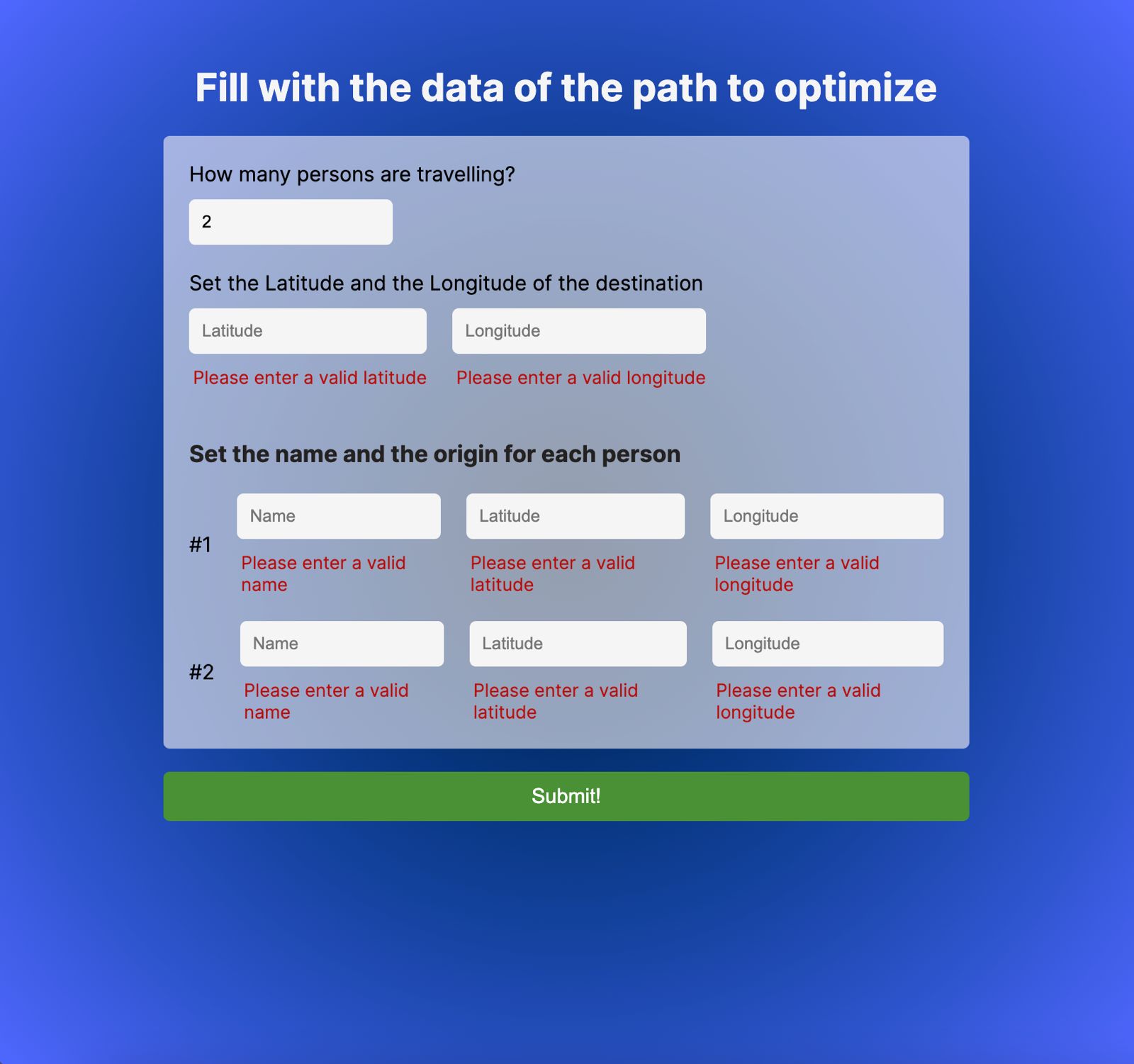
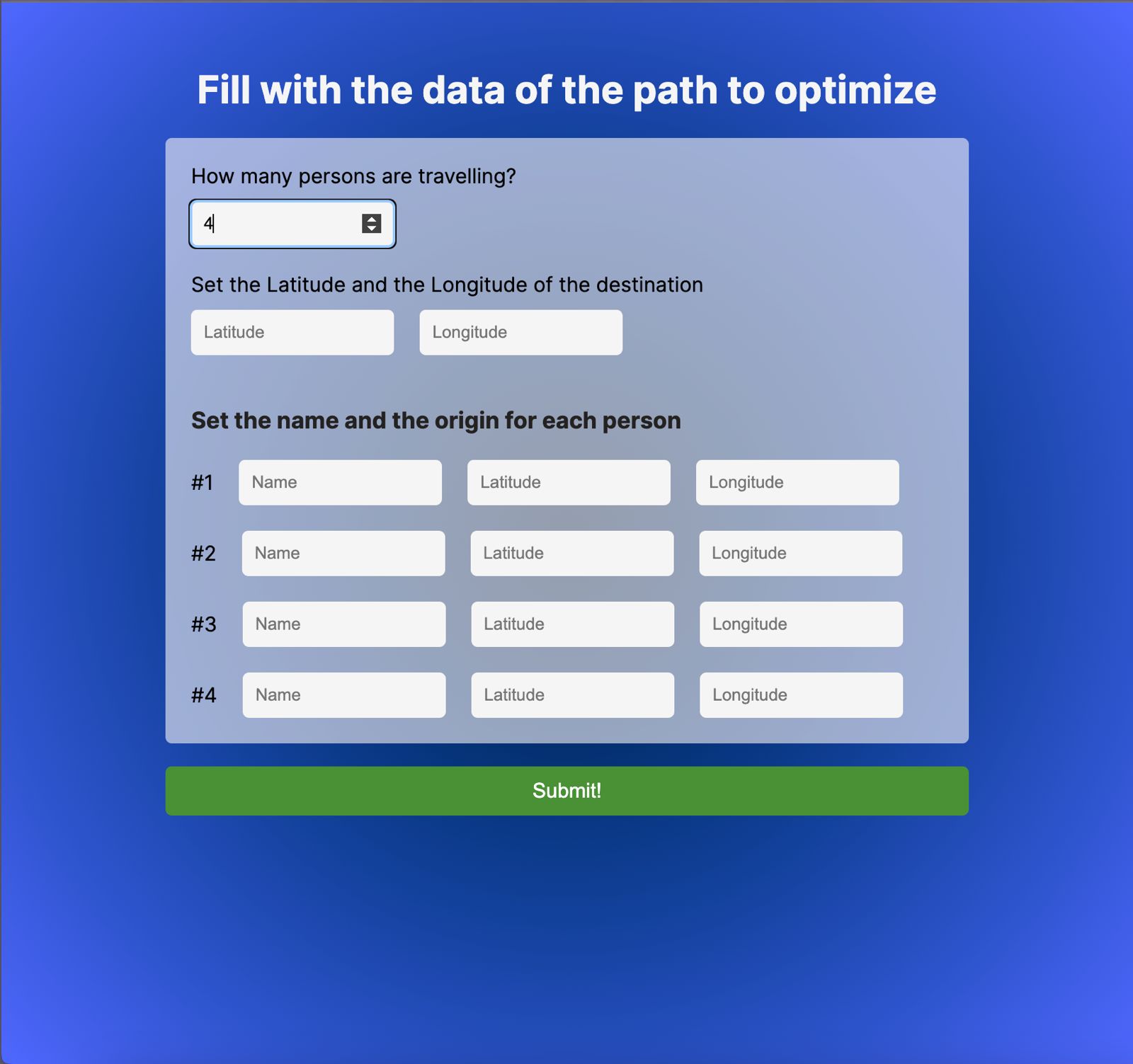
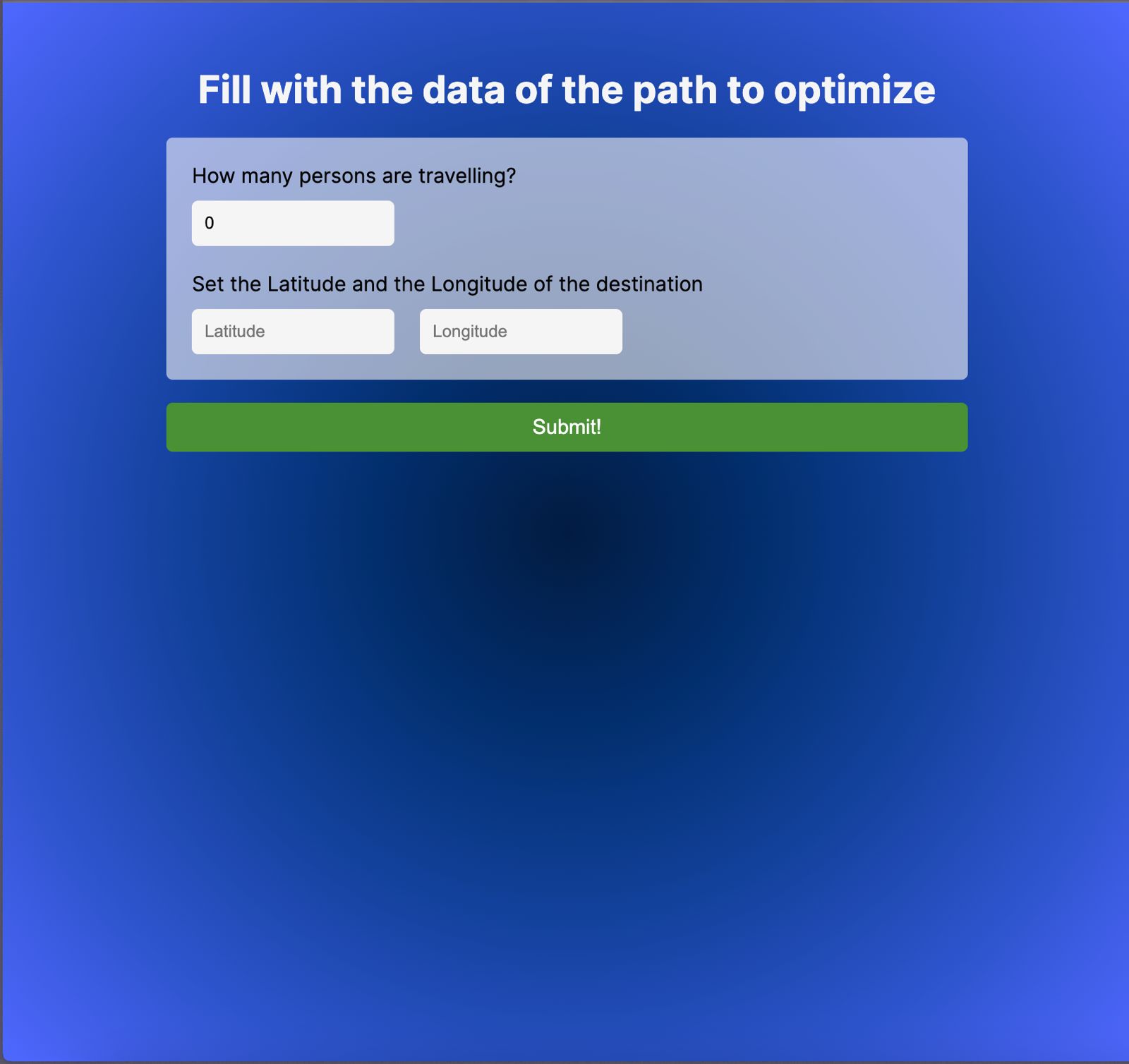
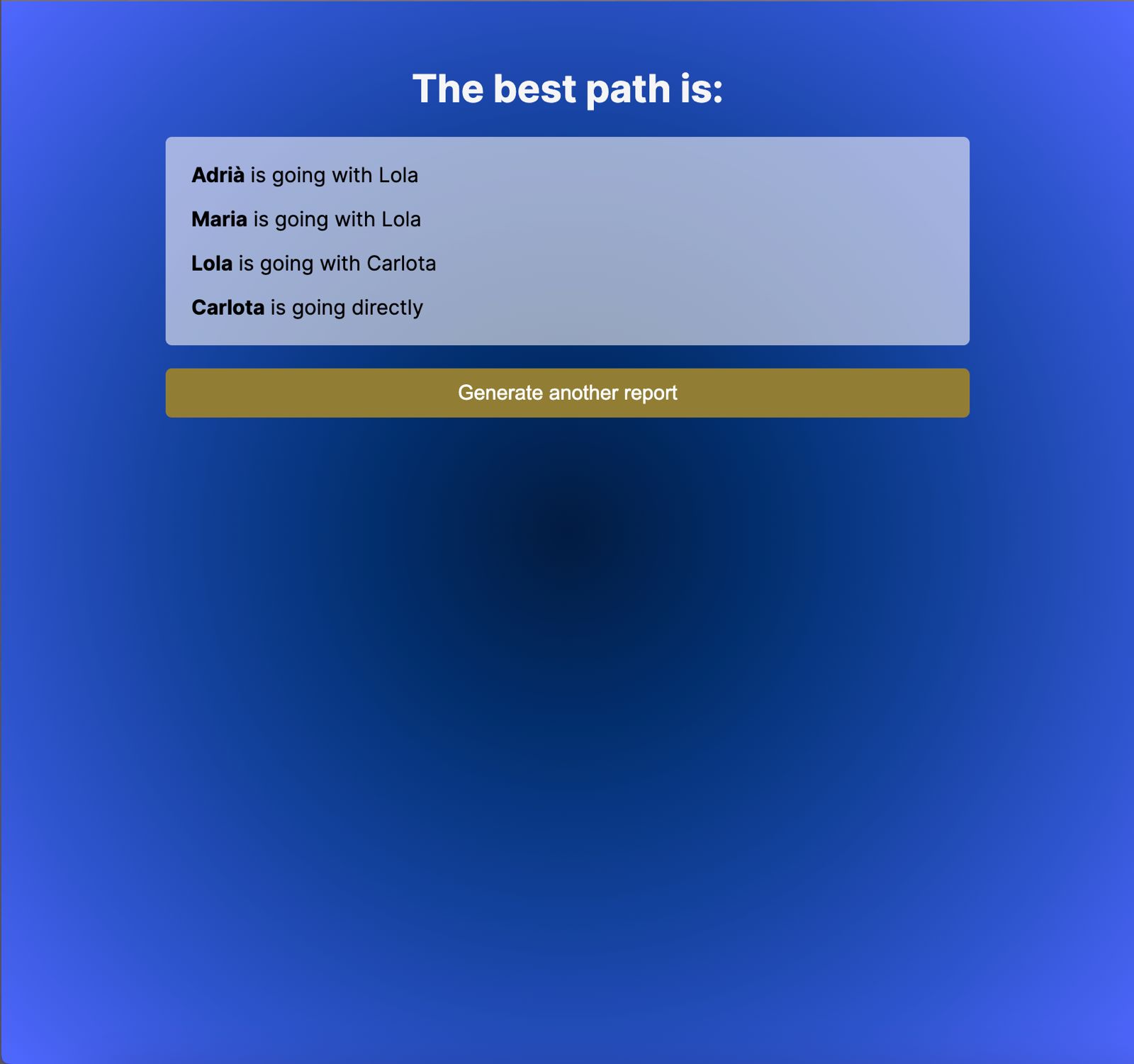
Firstly, the client enters the number of employees that he wishes to mobilize and where they have to reunite (an airport, a train station...), as well as from which exact point each of them is starting the route. Once this is done, the algorithm computes the distance between each person and the reunion point, and the distance between every pair of people. From there, cars are assigned to groups of ideally 5 people (could be less) who live close to each other, minimizing the number of cars used and therefore the amount of CO2 emissions released into the environment.
How we built it
The first thing that popped into our minds when we heard about the challenge, were optimization and routing algorithms. From this starting point, we developed a frontend with Next.js framework and the backend with flask.
What we learned
We learnt to work with Next.js to develop the frontend. Additionally, we did an extensive research on optimization algorithms, growing in popularity thanks to AI. It was very interesting to dive deeper into these types of solutions that can be used to solve many kinds of problems.
What's next for Bizamaps - A Bizaway project
We would have liked to develop further the destination features, implementing Google Maps' API for precision in terms of departure times or locations. Of course, if we had more time, we would include other types of vehicles (buses, boats, trains...).
Built With
- css
- flask
- json
- next.js
- python
- typescript

Log in or sign up for Devpost to join the conversation.