-
-
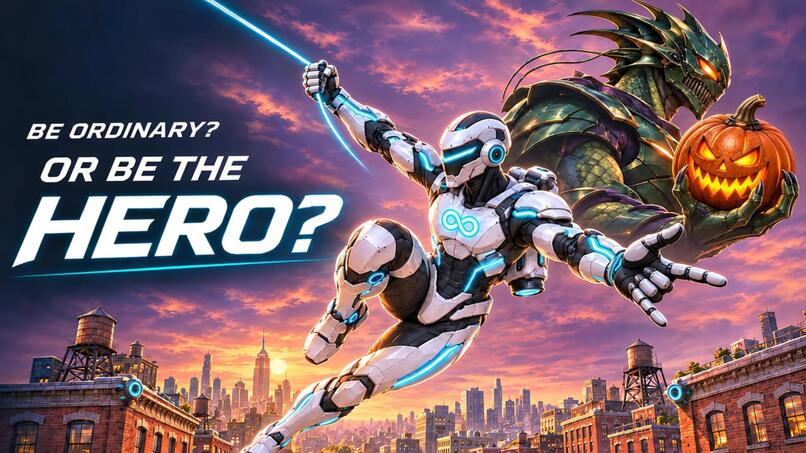
Brand New Universe - Mobius Cover
-
Your hand, Your Power!
Inspiration
What if becoming a superhero started with raising your hands?
We wanted to capture the excitement of swinging between buildings and unleashing superpowers through natural hand gestures. Combining that freedom with music gave us the idea for Brand New Universe – Mobius: a VR rhythm-action adventure where your hands become your weapons, your movement controls, and your connection to the world.
We also wanted it to be easy to enter. Built for Meta Quest, the game runs directly in the headset’s browser—no installation required.
What it does
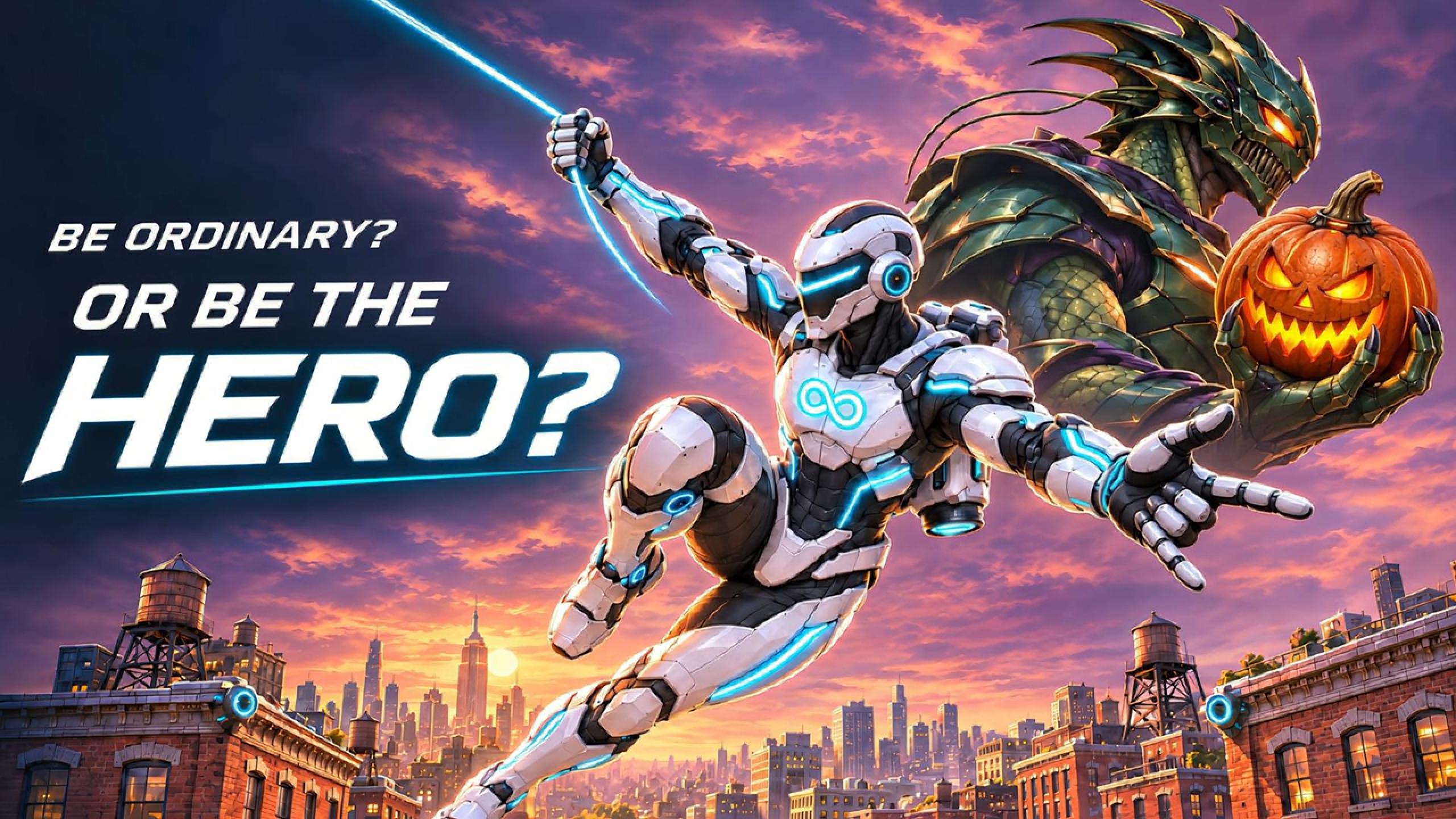
You become Mobius, a hero equipped with light-web armor, and face Green Maniac, who attacks from his bat-shaped flying machine.
The game brings together three experiences:
- Story Mode: Suit up, leave your apartment, swing through Dala City, and pursue Green Maniac into a factory rhythm battle.
- Arcade Mode: Destroy incoming pumpkin bombs to the beat using light webs, throwable Light Bombs, and coordinated hand gestures.
- World Chase: Pursue Green Maniac through eight distinct environments, collect Bitcoins, intercept attacks, and bring down his defenses.
Hand tracking is central to the experience. Gestures let you fire light webs, swing between anchors, throw energy weapons, and defend yourself. The game supports English and Traditional Chinese.
How we built it
We built the game with three.js, WebXR, and Meta’s Immersive Web SDK, bringing 3D environments, hand tracking, spatial interfaces, and gameplay together in a browser-based experience.
We developed character and prop designs, prepared and optimized 3D assets, and added character rigging and animation to bring the encounters to life. Gesture recognition connects the player’s hand movements to traversal and combat abilities.
For city traversal, we adopted an endless, modular world-generation approach. The game generates sections ahead of the player and recycles sections behind them, creating continuous swinging routes while keeping the active environment manageable.
For rhythm combat, we worked on music, beat timing, incoming pumpkin patterns, and audiovisual feedback so that a successful hit feels connected to the song.
Testing on Meta Quest helped us refine performance, gesture usability, movement, and combat readability.
Challenges we ran into
Our first environments aimed for AAA-style visual richness, with detailed models and expansive scenery. Bringing those scenes to a standalone headset required us to rethink how much geometry and visual complexity could be active at once.
We spent considerable effort simplifying models and restructuring the world around reusable, continuously generated sections. The challenge was preserving the excitement of a large city while keeping traversal responsive.
This was also our first game designed primarily around hand gestures. An exciting superpower idea still needs a gesture that players can understand, perform comfortably, and trigger reliably. Balancing different gestures while the player is moving became an important part of development.
Our early characters lacked animation, which made encounters feel unnatural. We invested time in rigging and motion so that Green Maniac’s actions could communicate intention and make the world feel alive.
Music introduced another challenge: timing alone was not enough. We had to explore how sound, effects, target movement, and hit feedback work together to make destroying a pumpkin satisfying.
All of these systems had to work together inside a web browser. Building the experience around three.js gave us flexibility, but also required us to handle many of the systems that a dedicated game engine would normally provide.
Accomplishments that we're proud of
We’re proud of creating a superhero experience that players can enter through a browser and control with their hands.
We brought together swinging traversal, gesture-based combat, animated characters, and music-driven encounters in one game. We also expanded World Chase to eight environments, from forest ruins and redrock canyons to moonlit cities, ice castles, and volcanic fortresses.
Along the way, we hid Easter eggs celebrating movies and games that inspired us. Those small discoveries make the world feel more personal and give curious players another reason to explore.
Most of all, we’re proud of adapting our original visual ambitions into a playable standalone VR experience.
What we learned
We learned that designing for VR means designing around the player’s body, attention, and comfort—not just what looks good on a screen.
Hand gestures need clear feedback. Fast movement needs readable environments. Rhythm combat needs visual and audio cues that agree with each other. Character animation helps players understand an attack before it reaches them.
We also learned to treat performance as part of the design process. Reusable assets, modular environments, and careful choices about where to spend visual detail helped us build a larger-feeling world within the headset’s constraints.
The project taught us how closely art, animation, music, interaction, and engineering depend on one another.
What's next for Brand New Universe - Mobius
We plan to expand the game with:
- An armor upgrade system that gives players new ways to develop Mobius’s abilities.
- Global leaderboards for comparing scores and chase performances with players around the world.
- Cooperative multiplayer, letting friends face Green Maniac together.
- More gesture-based superpowers that deepen combat and create new ways to play.
We’ll continue refining the experience through player feedback, improving gesture recognition, comfort, performance, and the satisfaction of every swing and hit.
