-
-

Logo
-
Banner
-
Accessible in every country
Inspiration
First inspiration.....was that I lost money to DeFi complexity back in 2021 (Did a 2 minutes piece on that here https://youtu.be/daOztI1KsS8?si=6Pipr23QdASQE6VD)
We started building bitsave.io in 2022 because in emerging markets, millions of people practice informal group savings, rotating thrift systems, cooperatives, or “ajo.” Yet these systems remain manual, but at the same time, DeFi offers yield opportunities, but it's too complex, risky, or inaccessible for the average saver.
Bitsave was born to bridge that gap; to bring traditional saving culture onchain using low-risk DeFi strategies. When we saw Vitalik’s recent essay on Low-Risk DeFi as Ethereum’s backbone, it reinforced our conviction that SaveFi savings-powered decentralized finance is the next big narrative.
What it does
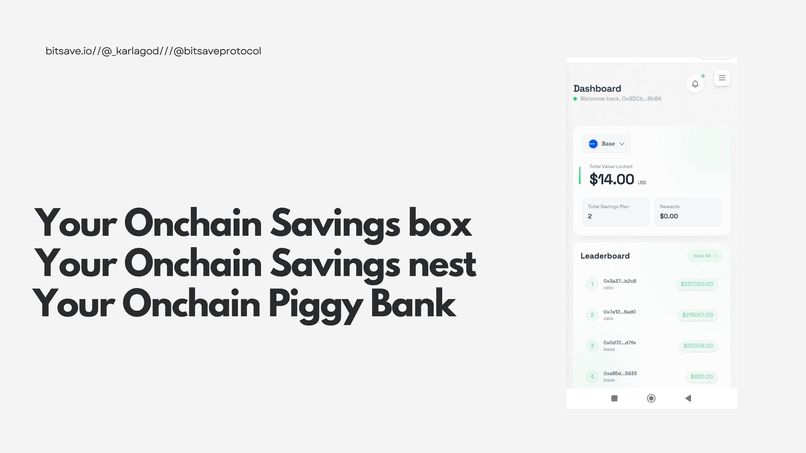
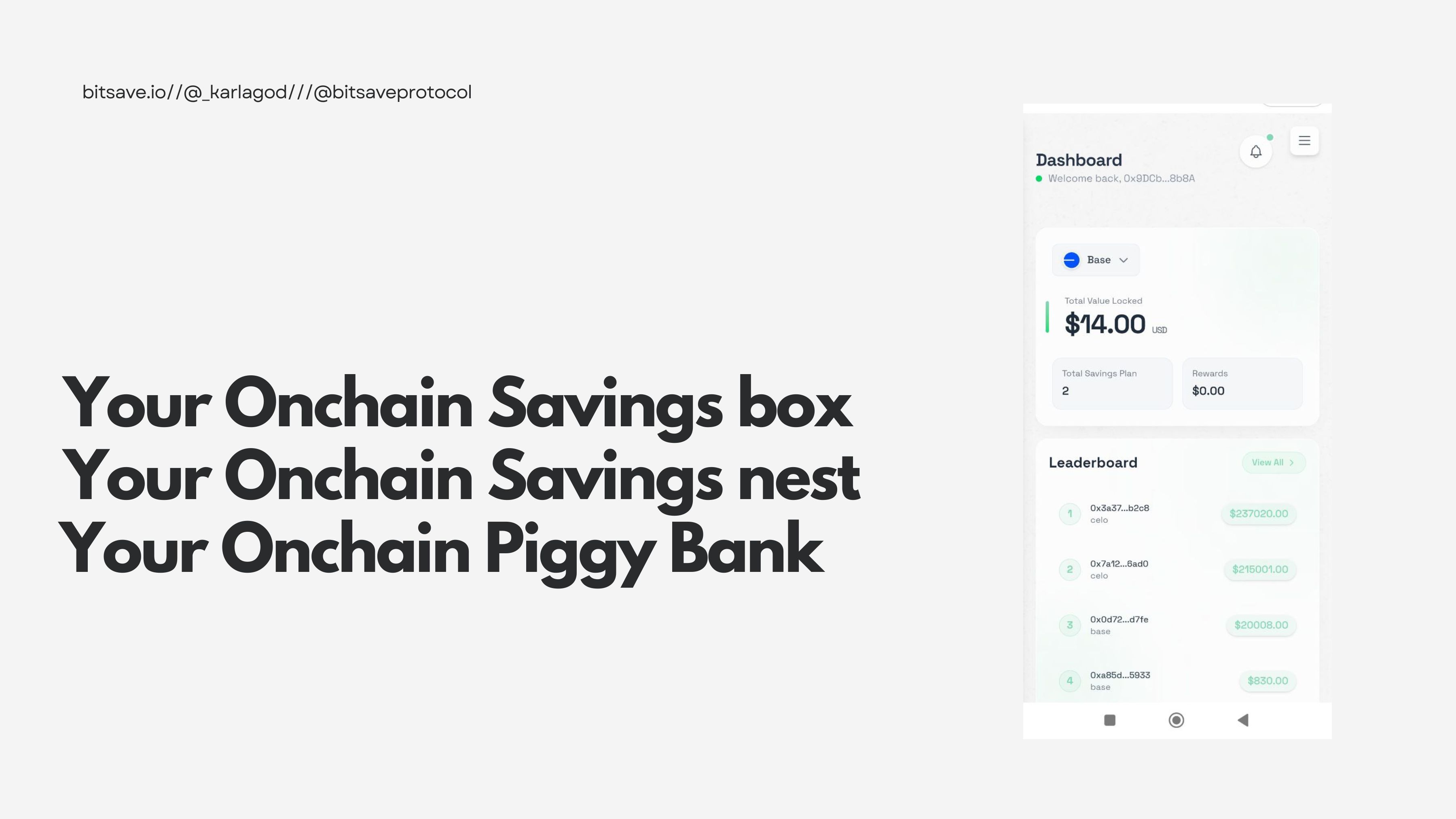
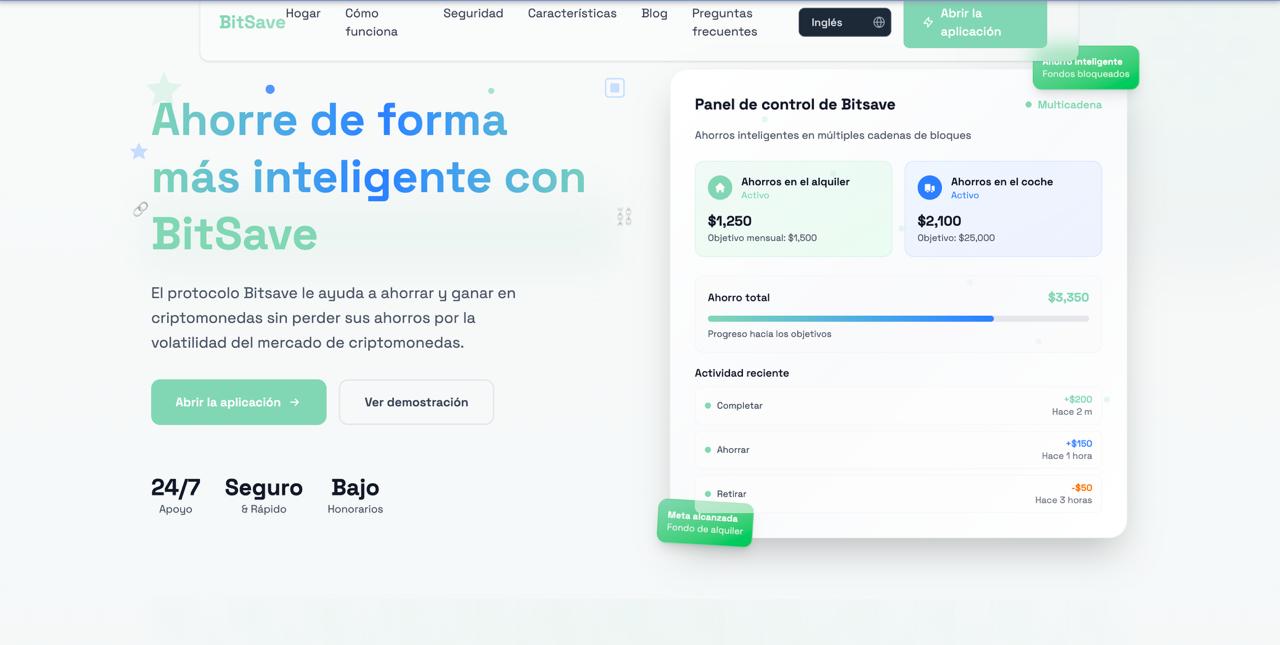
Bitsave Protocol is a non-custodial SaveFi system that lets users and communities save stablecoins, earn sustainable yield, and build transparent savings groups onchain.
🏦 Personal & Group Savings: Users can save individually or in a group, setting goals and tracking contributions transparently.
💸 Low-Risk Yield: Funds are deployed to verified DeFi protocols that prioritize security and capital preservation.
🔐 Non-Custodial Architecture: Each user’s funds are stored in a child contract linked to a parent Bitsave manager contract, ensuring no central custody.
🌍 Cross-Border Access: Local stablecoins like cNGN or cUSD can be used to save, making DeFi accessible to non-USD economies.
🪙 SaveFi Rewards: Savers earn $BTS points, which can be used to borrow against their savings or invest in tokenized assets in future versions.
How we built it
- Built using Cairo and Starknet’s smart contract framework for scalability and verifiable computation.
- Leveraged ERC-4626-like vault logic for modular yield strategies.
- Integrated Account Abstraction (AA) for gasless group transactions and automated contributions.
- (Not complete yet) Frontend powered by React + Starknet.js, with wallet support for Argent X and Braavos
- Deployed a parent–child contract model to manage user savings independently while syncing contribution data to the parent registry for leaderboard, yield, and group tracking.
Challenges we ran into
Front-end integrations took longer than expected
Accomplishments that we're proud of
- Successfully deployed a non-custodial savings vault with modular yield logic on Starknet.
- Built a working prototype of group savings pools where users can transparently track contributions and goals.
- Integrated Account Abstraction to make saving onchain frictionless.
- Recognized as a 2nd place winner in Base’s Onchain Summer Awards, validating Bitsave’s real-world potential.
- Contributed to the growing Low-Risk DeFi (SaveFi) narrative, aligning with Ethereum’s vision of sustainable finance.
What we learned
- Starknet’s scalability and validity proofs make it ideal for financial coordination apps that need low fees and verifiable transparency.
- DeFi doesn’t have to be complex or speculative — simplicity and sustainability are what drive real adoption.
- The future of financial inclusion lies in localized stablecoins and transparent group finance — both of which fit Starknet’s mission of accessible onchain finance.
What's next for Bitsave Protocol
- Launch Bitsave v2 enabling users to borrow against their savings and buy tokenized local bonds and stocks with $BTS or local stablecoins. (We talked about it here https://youtu.be/OG6NC_6_9Oo?si=b18e2q3rwE8kJhNI)
- Deploy SaveFi on Starknet Mainnet, expanding access to low-risk DeFi saving opportunities.
- Collaborate with Starknet ecosystem protocols to integrate real yield strategies, stablecoin bridges, and local DeFi primitives.
- Build out SaveFi APIs to let other dApps plug into Bitsave’s saving engine.

Log in or sign up for Devpost to join the conversation.