Inspiration
Following Geo-Compliance Regulations is a hard but important task.
What it does
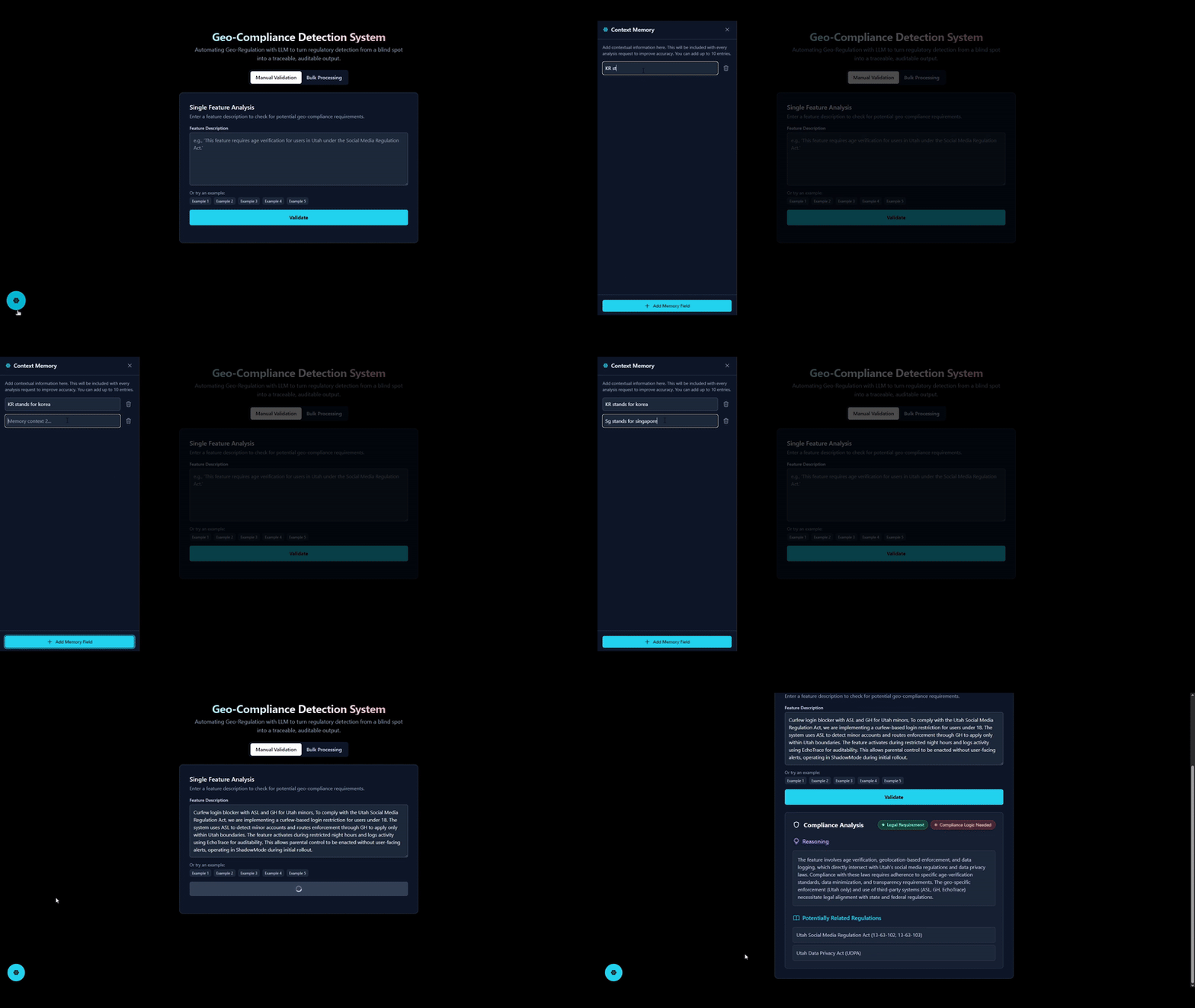
This project implements a Retrieval-Augmented Generation (RAG) pipeline with a fine-tuned model using FastAPI for the backend and React for the frontend. The backend handles document processing, question answering, and integrates with various language models and vector stores. The frontend provides a user interface for interacting with the backend services.
How we built it
Retrieval-Augmented Generation (RAG) Pipeline
In order to provide accurate and contextually relevant answers to user queries, we have implemented a Retrieval-Augmented Generation (RAG) pipeline.
The RAG pipeline documents consist of several types of documents:
- Legal documents (e.g., regulations, laws)
- Business documents (e.g., company-specific terms/jargon)
The documents are processed and indexed using FAISS, a popular vector store, to enable efficient retrieval based on semantic similarity.
Models
We decided to use Qwen3-8B as our main LLM model for generation (the largest model we could load locally). This model was finetuned on a custom dataset to better handle domain-specific queries. The finetuning process involved:
- Generating synthetic data using Gemini 2.5 Flash
This attempts to perform supervised fine-tuning (SFT) and knowledge distillation (KD) to enhance the model's performance on specific tasks by learning from high-quality data and a teacher model.
Pydantic
By using Pydantic, we are able to ensure the output of the LLM is structured and adheres to a predefined schema. This greatly helps in parsing and utilising the generated content effectively.
Pre and Post Guardrails
Query Rewriting
To ensure that user queries are well-formed and relevant, we implemented a query rewriting step using Ollama's LLM. This step reformulates the user's question to improve clarity and context before passing it to the retrieval and generation components. This helps in reducing ambiguity and enhancing the quality of the retrieved documents.
Hallucination Check
To mitigate the risk of hallucinations in the generated responses, we incorporated a hallucination check step. This step evaluates the generated answer against the retrieved documents to ensure factual accuracy. If the confidence score of the answer is below a certain threshold, the system flags it for review or requests additional information.
It will retry the generation step up to 3 times if the hallucination confidence is below the threshold.
Audit Ready Transparency
To maintain transparency and accountability, we log all interactions with the RAG pipeline. This includes:
- User queries (timestamp, feature, feature description, answer)
Since the log cannot be tampered with by users, it provides an audit trail for all interactions, which is crucial for compliance and review purposes.
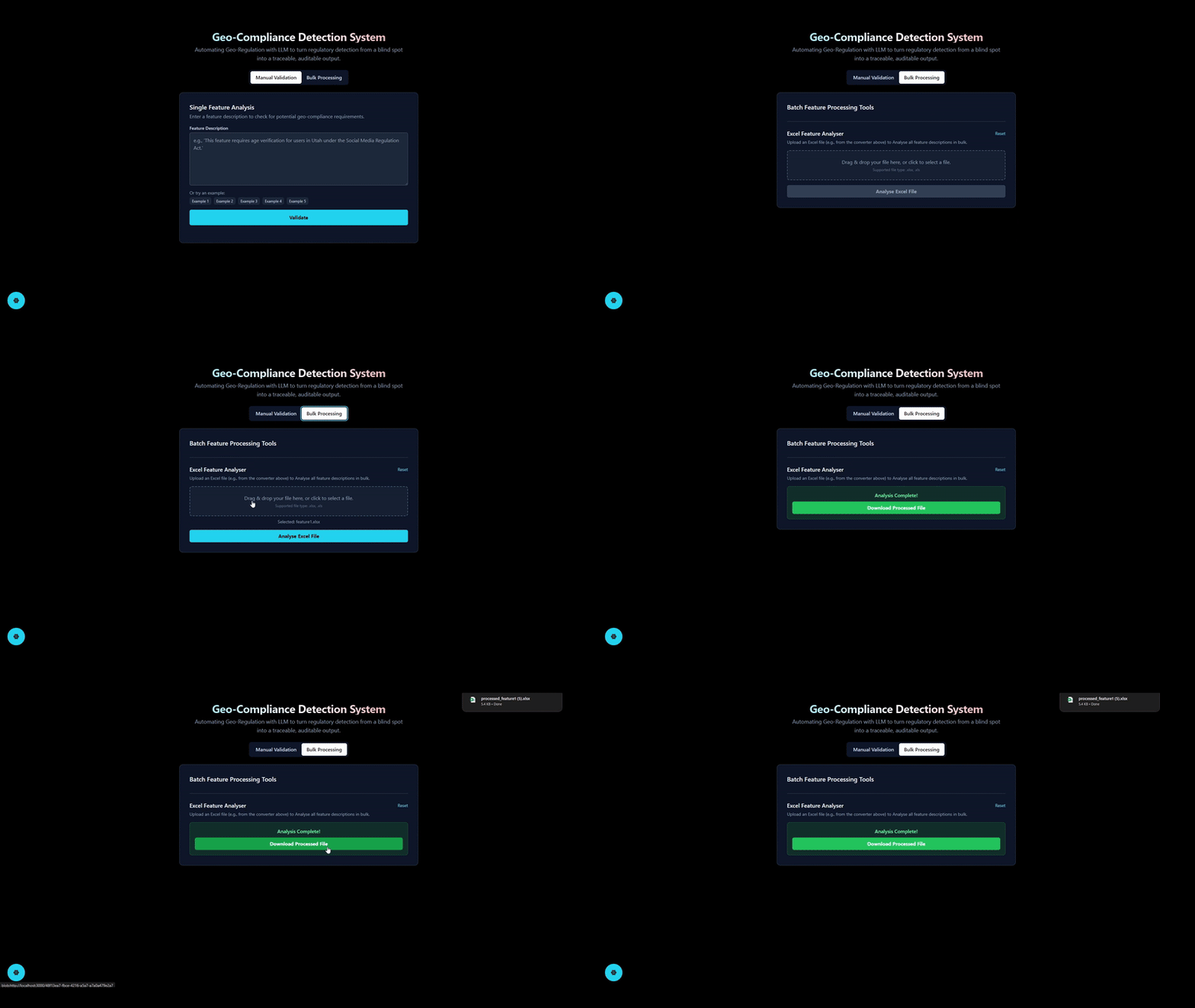
Single and Batch Processing
The RAG pipeline supports both single-question answering and batch processing of multiple queries. This flexibility allows users to efficiently handle large volumes of questions, making it suitable for various applications.
Users would also be able to verify single features without having to upload a CSV file.
Memory Integration
By allowing users to provide additional context or memory, the RAG pipeline can generate more informed and relevant answers.
The pipeline can be improved by users without having to retrain or modify the model.
Technologies Used
Frontend
- React
- Tailwind CSS
Backend
- FastAPI
- LangGraph
- Ollama
- Pydantic
- FAISS
- Qwen
- NOMIC
Finetuning
- PyTorch
- Unsloth (Transformers, BitsAndBytes, etc.)
- Qwen
Development tools
- Visual Studio Code
- Git
- Linux
- Windows
- WSL2
API and Assets
- Gemini 2.5 Flash - used to generate synthetic data for finetuning
Challenges we ran into
- Lack of resources for a good teacher model
- Lack of resources to finetuning a model perfectly
Accomplishments that we're proud of
We successfully developed an AI agent that self-corrects its outputs and dynamically performs tasks based on its internal checks. We also managed to fine-tune a small model, proving that we can achieve results even with limited time and resources.
What we learned
We learn that finetuning is something that can help improve a model quite easily. Using LangGraph and function calling, we can actually achieve an AI agent with tools to perform tasks.
What's next for Bits&Bytes
You will definitely see us again!
Built With
- fastapi
- langgraph
- qwen
- react
- unsloth


Log in or sign up for Devpost to join the conversation.