-
-
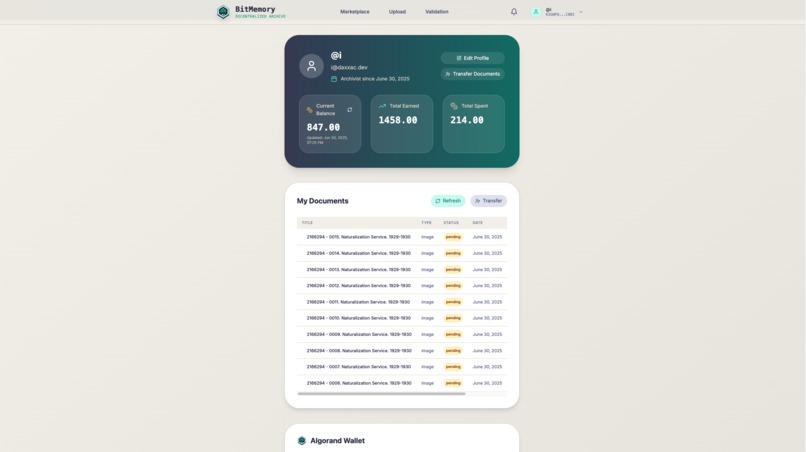
BitMemory Profile page
-
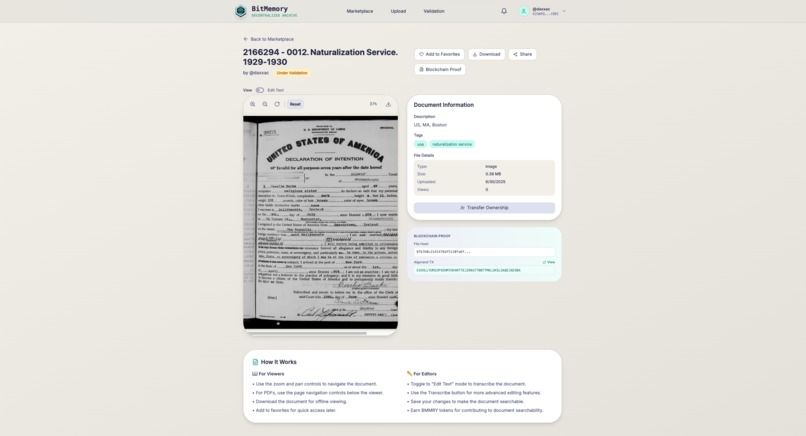
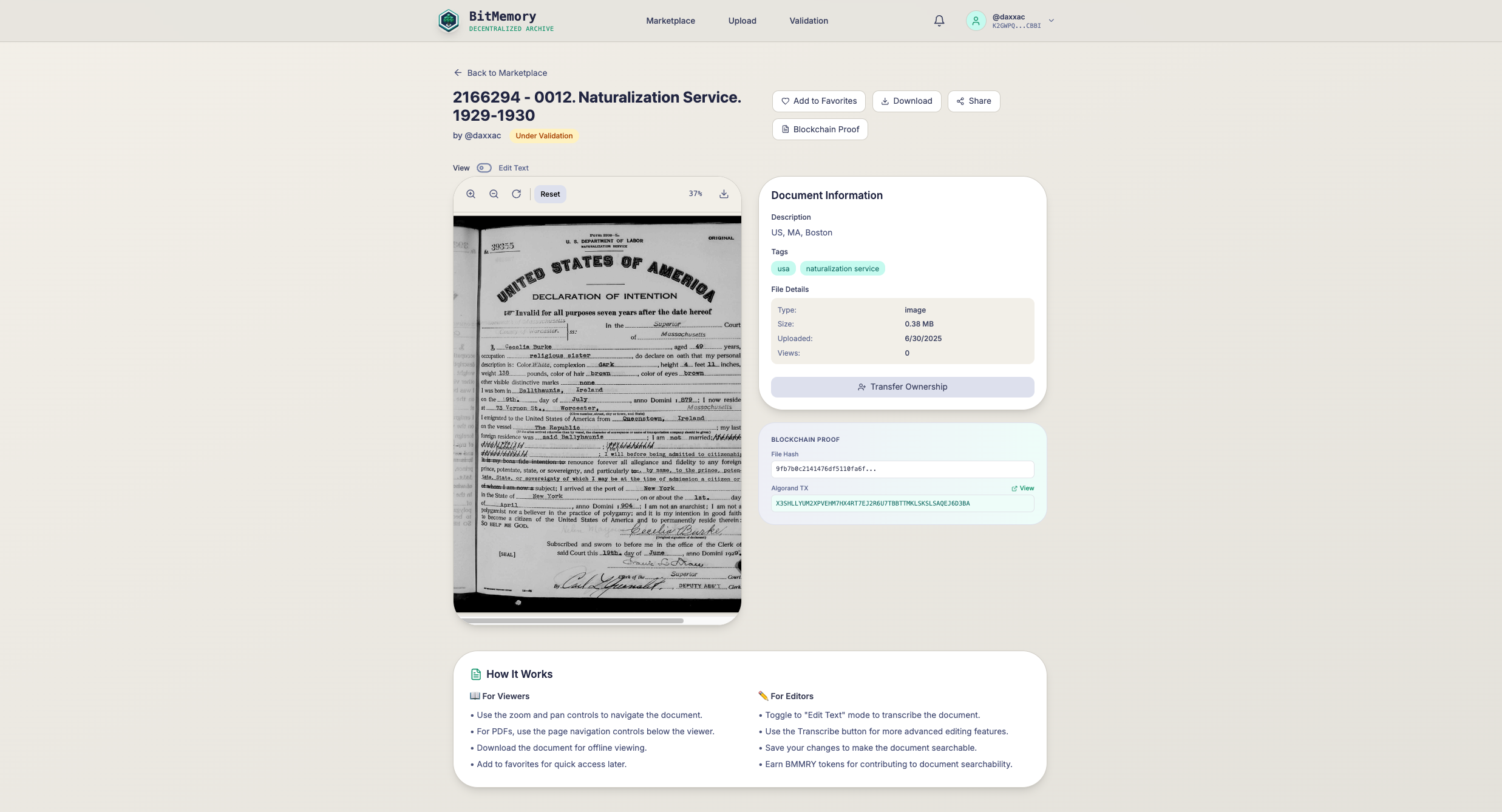
BitMemory Document details page
-
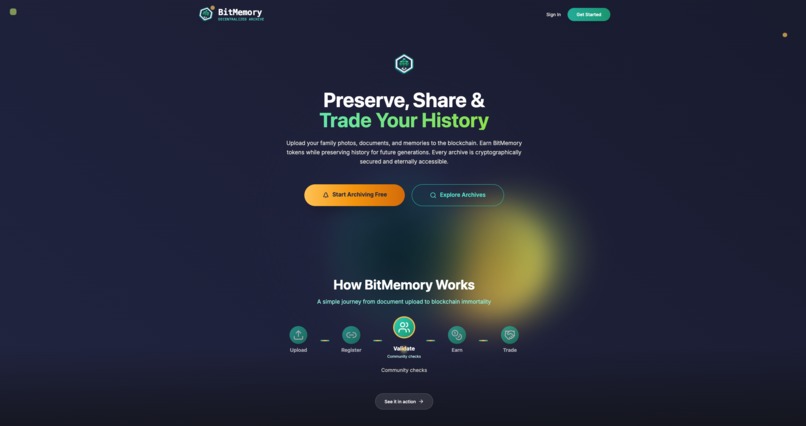
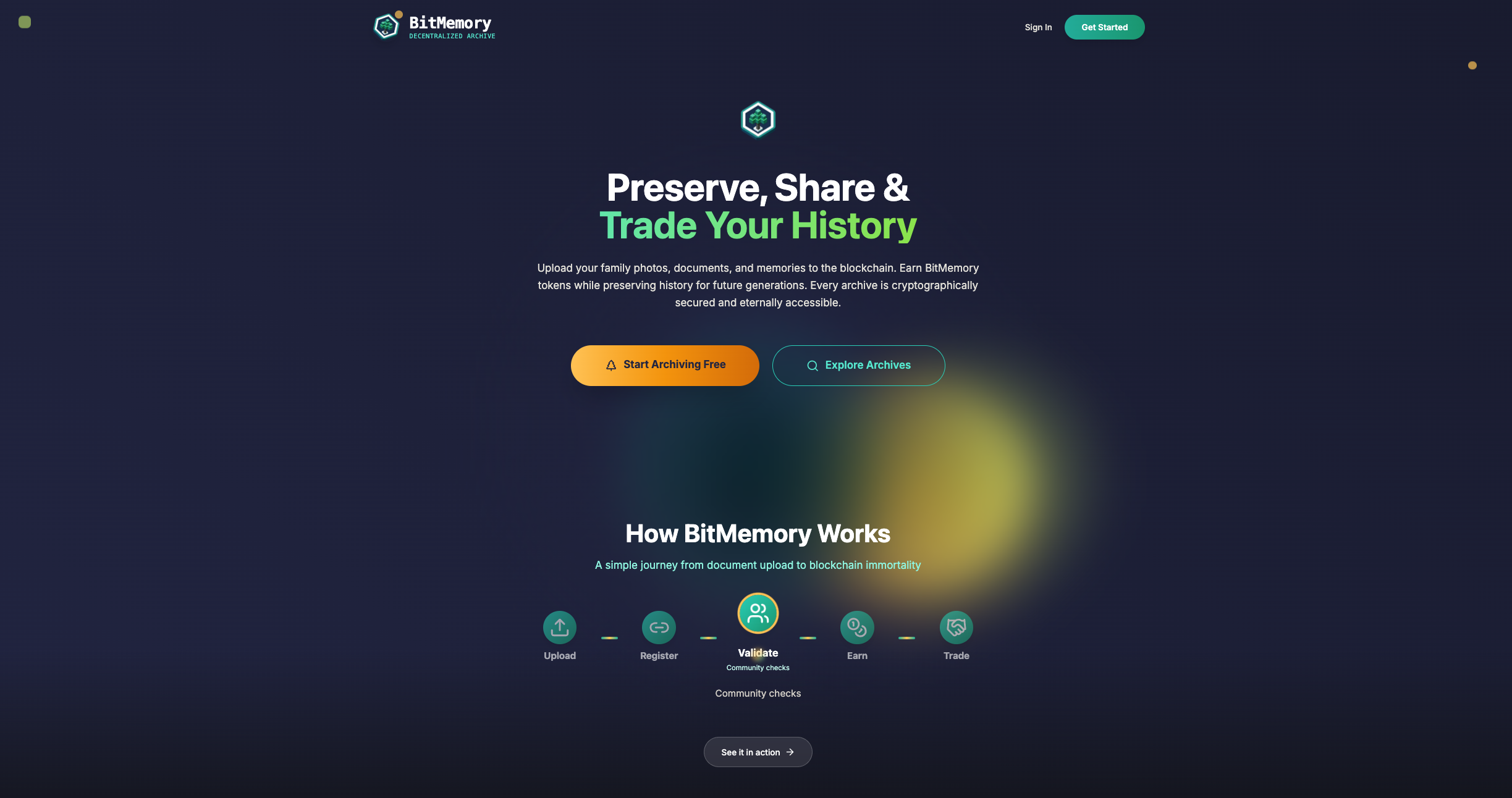
BitMemory Landing
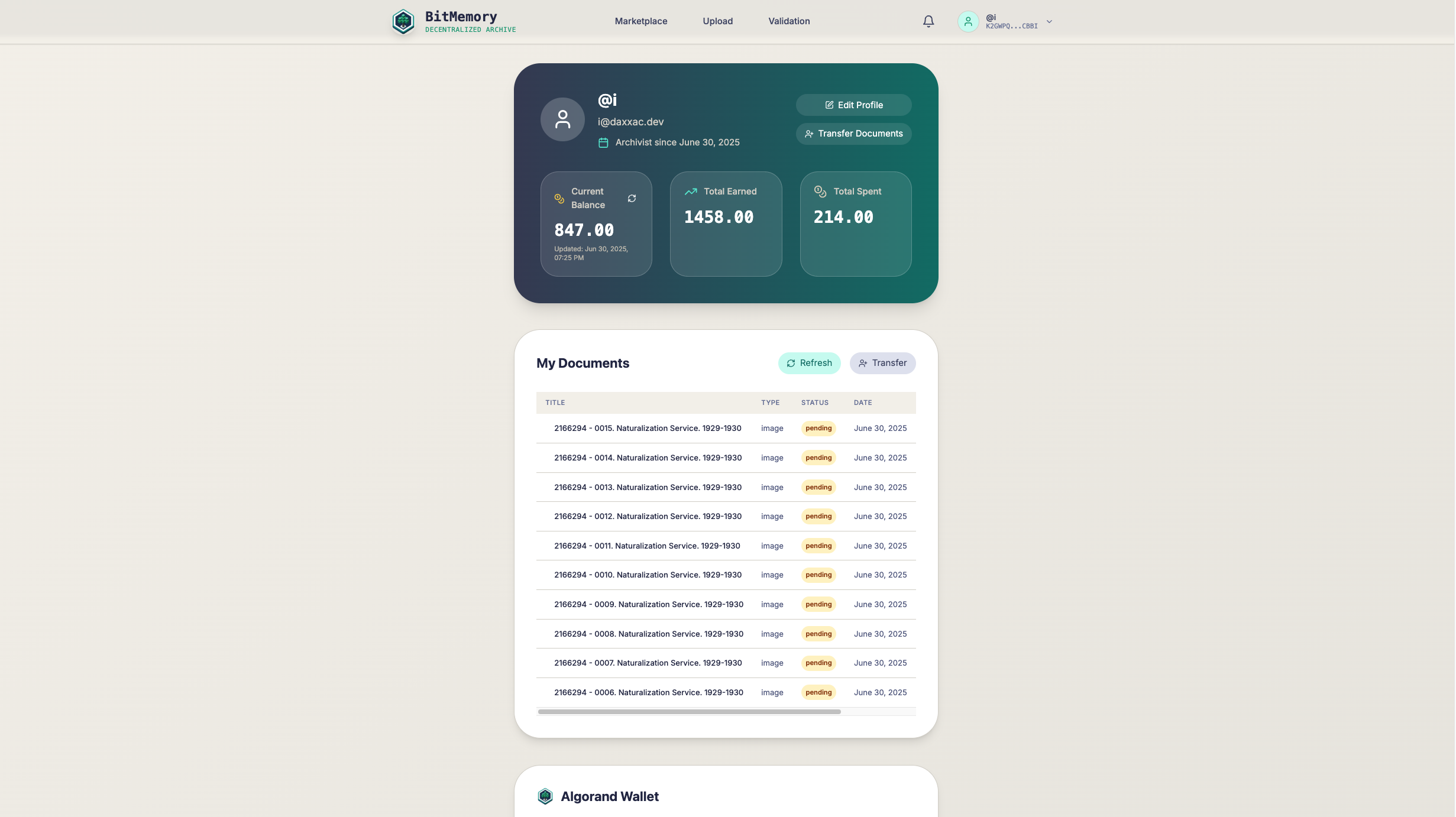
Inspiration
As a genealogist, I often saw families lose their stories, documents, and even entire histories due to wars, censorship, or simple neglect. Centralized archives are easily hacked, deleted, or rewritten — and history vanishes forever. I wanted to build something different: a permanent, open, and censorship-proof archive, where anyone could safely store and truly own their documents.
What I Learned
- How to combine Web2 (Supabase) and Web3 (Algorand, Arweave/IPFS) for real-world user onboarding
- How decentralized storage and blockchain can work together for both security and usability
- The real-world complexity of identity, proof, and trust in archival systems
How I Built It
- Frontend: React, TypeScript, Vite, Tailwind CSS
- Backend & DB: Supabase (PostgreSQL, Edge Functions for serverless logic)
- Blockchain: Algorand (using TEAL+, Python, algosdk, AtomicTransactionComposer)
- Storage: IPFS for decentralized file storage
- AI Tools: mostly Bolt.new, Roo AI, Recraft AI
Challenges
- Extreme Deadline: The biggest challenge was time. I discovered the hackathon only three days before the submission deadline, so everything — from idea to code to demo — had to be done at top speed. There was no time for overthinking, just building and shipping.
- Bolt.new Rollercoaster: Bolt.new was an amazing accelerator at the start, letting me bootstrap the whole project lightning-fast. But as the deadline came closer, I spent the last 24 hours fighting endless bugs, edge cases, and mysterious errors. I learned a lot about both my patience and my debugging skills.
Built With
- algorand
- bolt
- bolt.new
- ipfs
- postgresql
- python
- react
- recraft.ai
- roo
- roo.ai
- supabase
- tailwind
- typescript
- vite


Log in or sign up for Devpost to join the conversation.