-
-
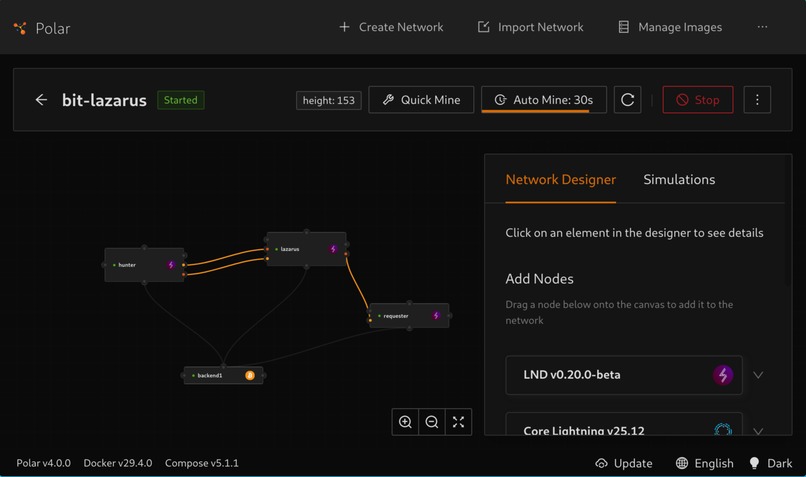
Polar Bitcoin Setup for Demo
-
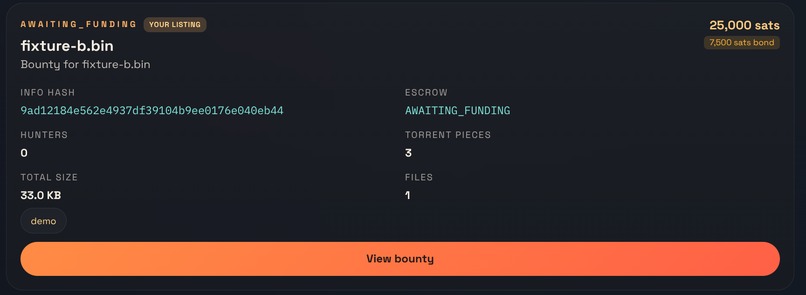
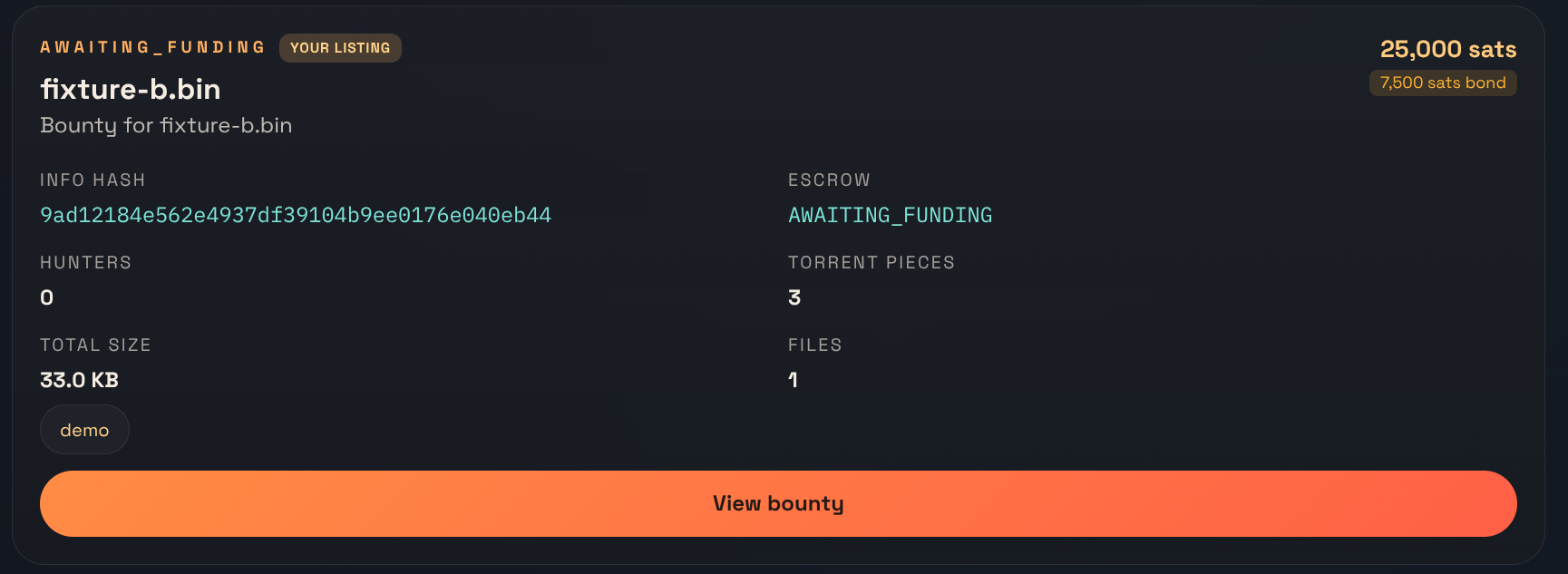
Torrent information screen
-
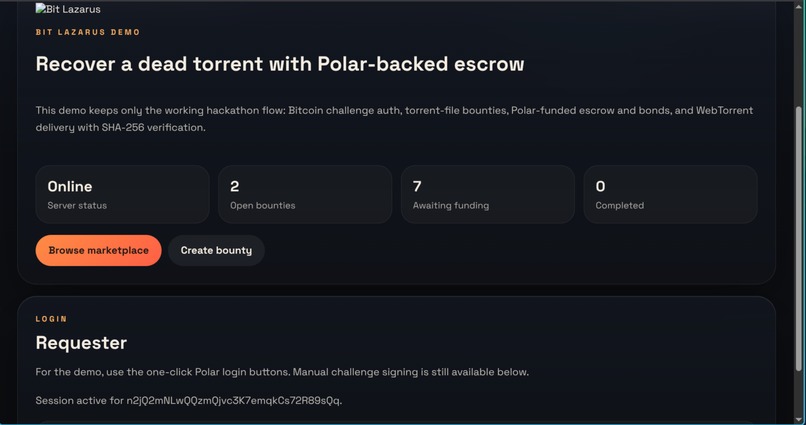
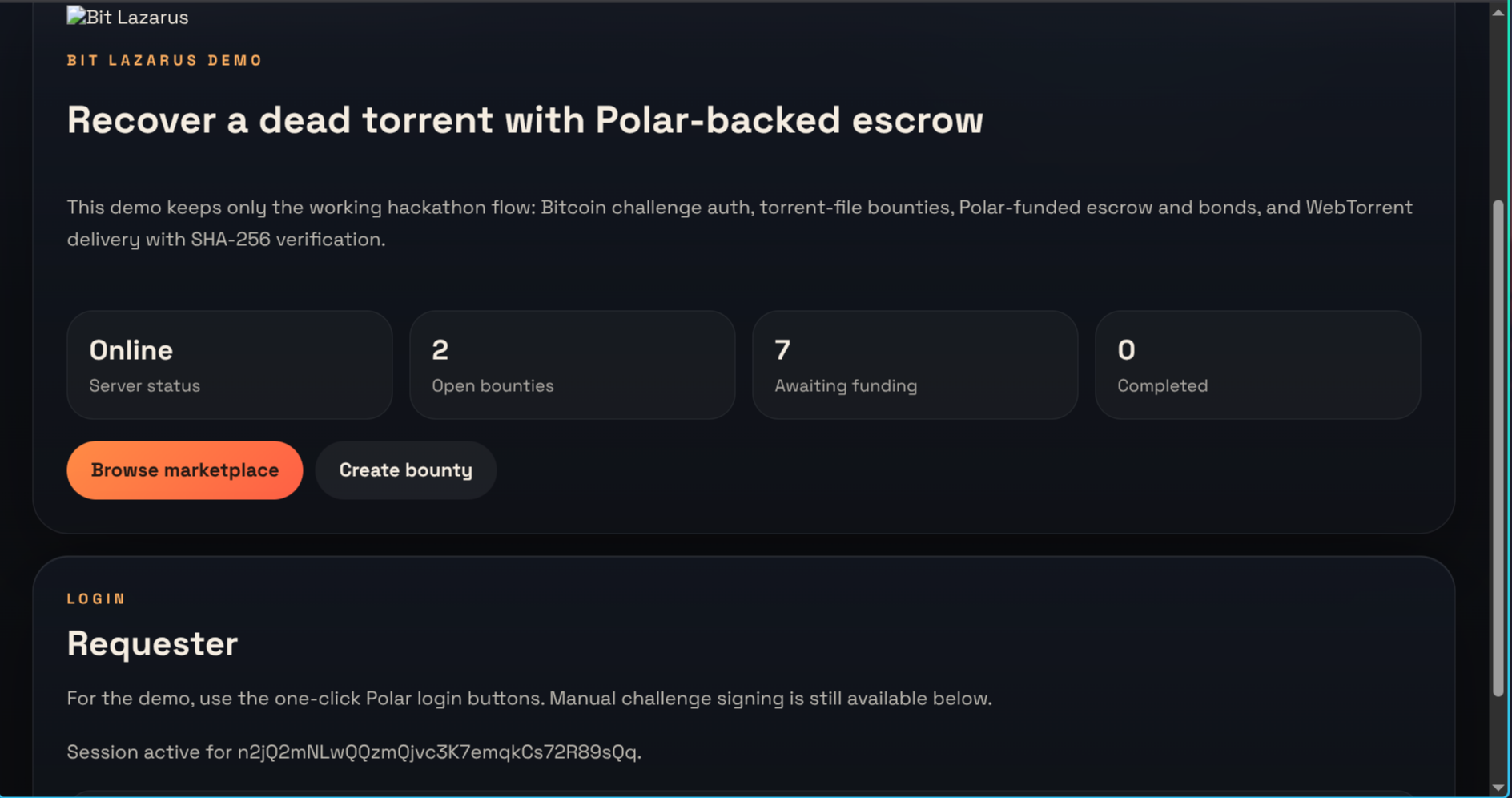
Home Page
-

Logo

Inspiration
We've all hit a dead torrent. The file you need is right there in the listing but zero seeders, no one online, the data is gone. If you've ever tried to get it back, you know the drill : hunt down private trackers, beg for invites to forums, post reseed requests that nobody reads. There's no incentive for anyone to help. We wanted to fix that with economics: put up a reward, and suddenly someone has a reason to dig that file out of cold storage.
What it does
Bit Lazarus is a bounty marketplace for dead torrents. You post a bitcoin reward on a torrent that's gone dark, specifying which pieces are missing. Hunters who have the data join the bounty,seed the files back to you, and get paid instantly through Lightning. The payment is locked in a hold invoice (HTLC) with collateral bonds on both sides, so neither party can cheat. If the hunter doesn't deliver, the money returns automatically. No accounts, no passwords - you log in by signing a challenge with your bitcoin wallet. Most importantly, it's not just about getting one file back. Every bounty that gets fulfilled means that data is alive again on the network for everyone.
How we built it
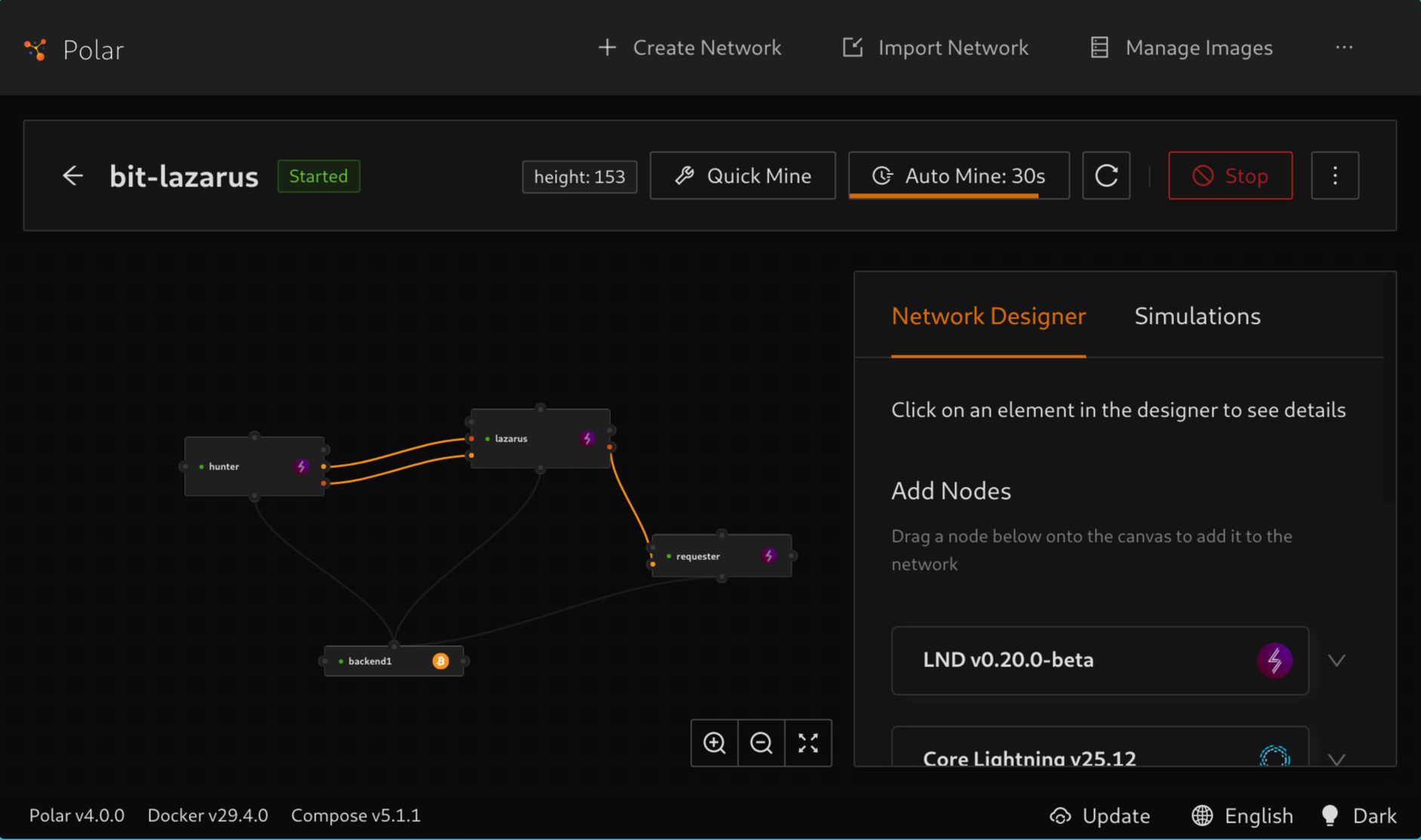
We started by mapping out the trust problem — what happens when the payer lies, what happens when the hunter lies, what happens when nobody shows up. Every scenario needed a clean resolution without a human arbitrator. From there we installed Polar to simulate a Lightning network locally and built the escrow system around LND hold invoices. The backend is Node.js with Express, handling wallet authentication (BIP-322 and Nostr/Alby), bounty management, and the full verification protocol — proof challenges, delivery contracts, collateral bonds, and signed piece receipts. The frontend is React with a Three.js hero scene, a marketplace with search and filtering, a bounty creation flow, and per-bounty detail pages. Everything talks through a REST API with session tokens derived from wallet signatures.
Challenges we ran into
Our original goal was fully decentralized — no escrow server at all, just pure cryptographic proofs between peers. We explored zero-knowledge verification so a hunter could prove file possession without revealing the data, but doing that on-chain was prohibitively expensive and the ZK circuits for torrent piece verification don't exist yet in any practical form. We also tried a workaround using SHA-1 piece hashes directly as commitment schemes, but the computational proof-of-file approach got complicated fast and we couldn't get it reliable within the time limit. We stepped back, accepted a lightweight server role for escrow coordination, and focused on making that system genuinely trustworthy through collateral bonds and cryptographic receipts rather than chasing full decentralization we couldn't ship.
Accomplishments that we're proud of
We built a working escrow system with collateral bonds on both sides — verification sessions, delivery contracts, signed piece receipts, bond slashing, and automatic expiry handling. The Lightning integration runs end-to-end on Polar: create a hold invoice, fund it, settle or cancel. The marketplace frontend is functional — browse, search, filter, create bounties, view details. Our initial idea of fully trustless on-chain verification didn't pan out, but we slowed down, simplified, and shipped something that actually works. We're proud of the effort we put in, proud we met like-minded people along the way, and proud we learned when to let go of a perfect idea and build a real one instead.
What we learned
Work division matters more than talent. Don't aim for the moon on day one , get a working MVP first and build into it. We wasted time early chasing full decentralization before we had a functioning bounty flow. Also: don't vibe code everything. Talking to mentors and other teams made us question our assumptions and that saved us from building the wrong thing. # The best technical decisions came from conversations, not from staring at code.
What's next for BitLazarus
The immediate next step is moving from our simulated Lightning network to real Bitcoin mainnet — the LND client is already written, it's a config change. After that, better UI for the delivery and verification flow, mobile wallet support via Nostr Wallet Connect, and QR code invoice fallbacks for users without Alby. Longer term, we want to revisit the cryptographic file verification problem — whether through ZK proofs, verifiable computation, or some other scheme that lets a hunter prove file possession without a coordinating server. The escrow works. Now we want to remove the need for it.
Built With
- bencode
- bip-322
- bip322-js
- bitcoin-lightning-network-(lnd-rest-api)
- express-5
- javascript
- node.js
- nostr-(nip-07)
- polar
- react-19
- react-router
- three.js
- vite
- webtorrent


Log in or sign up for Devpost to join the conversation.