Inspiration
Food labels are confusing, receipts are ignored, and health insights are often locked behind expensive tracking apps that require manual input or invasive bank access. We realized that receipts already contain a complete, honest record of what people actually eat; however, not many people think of actually using them.
BiteWise was inspired by the idea that health feedback should be more immediate and easily accessible to people. Instead of asking users to log meals or connect financial accounts, we wanted to transform something people already have, their grocery and restaurant receipts, into actionable and tangible health insights.
What it does
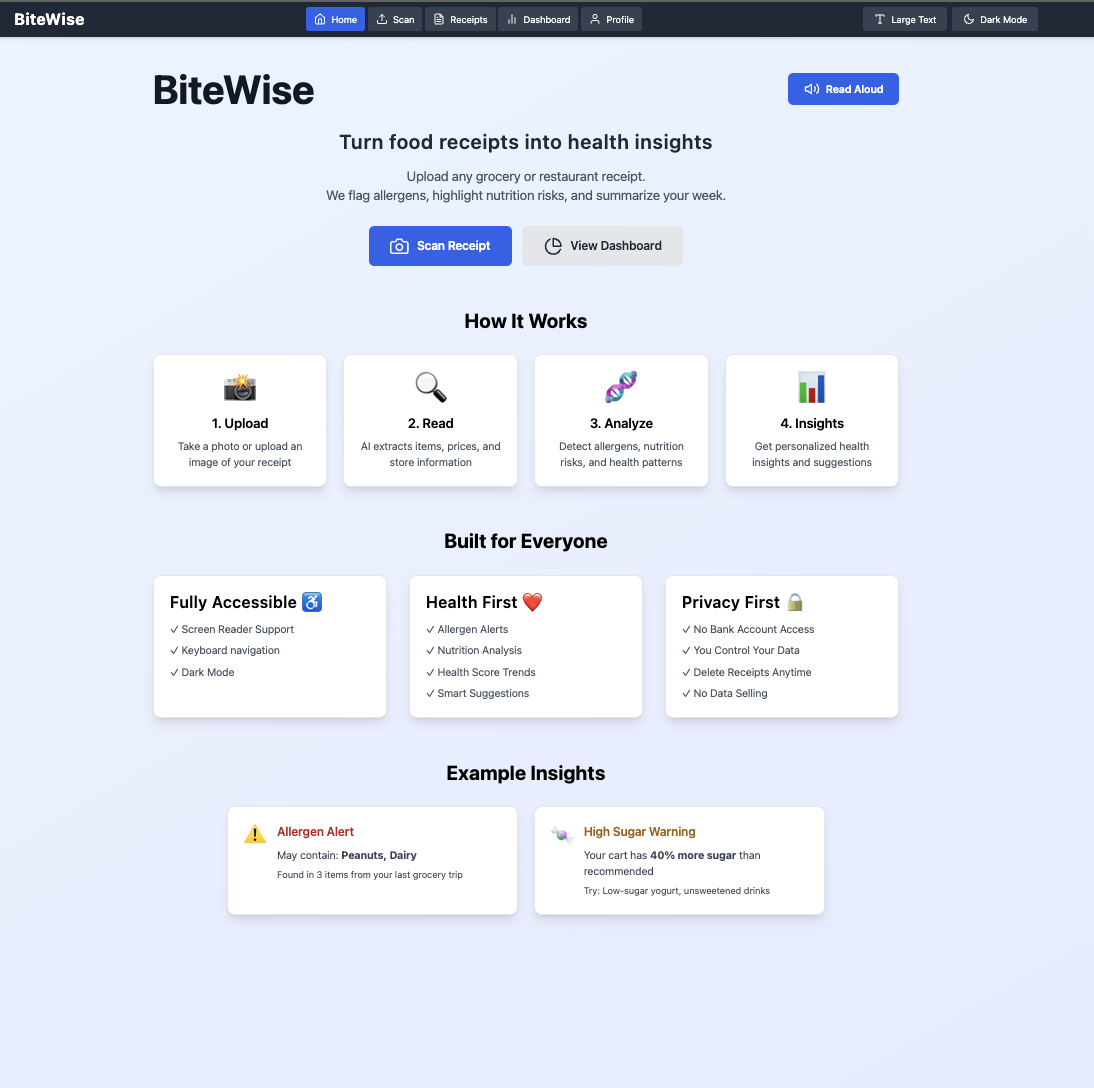
BiteWise turns food receipts into health insights.
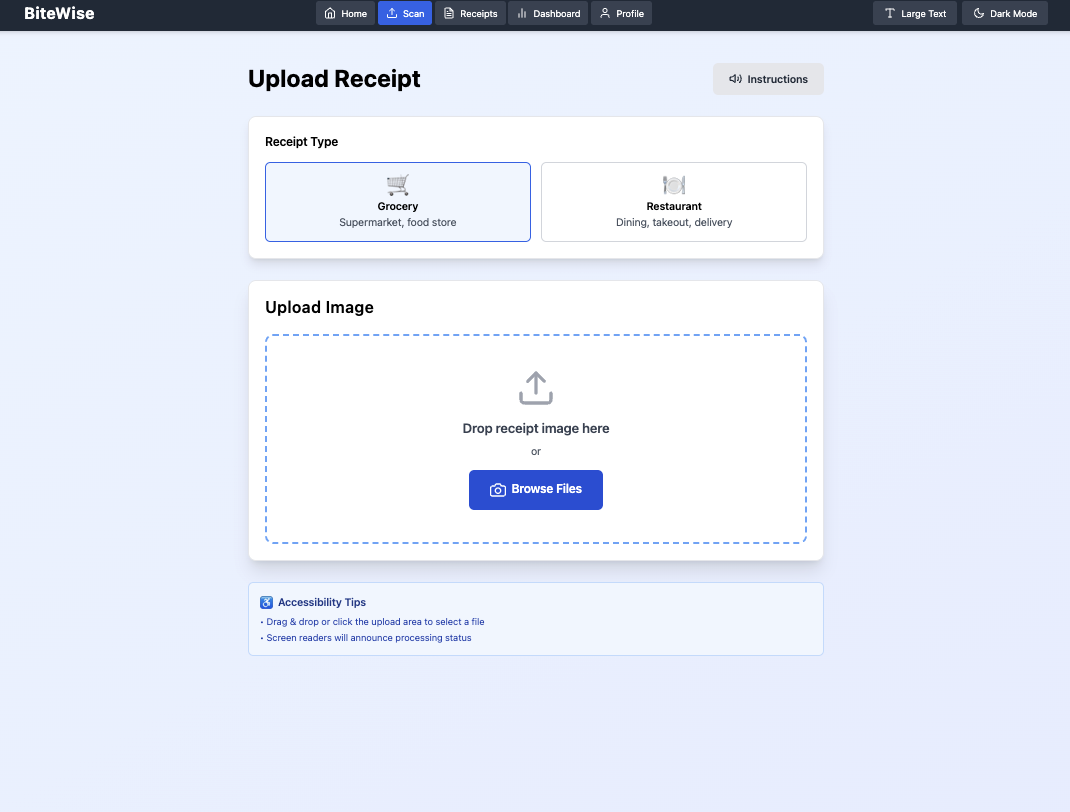
Users upload or scan any grocery or restaurant receipt, and BiteWise:
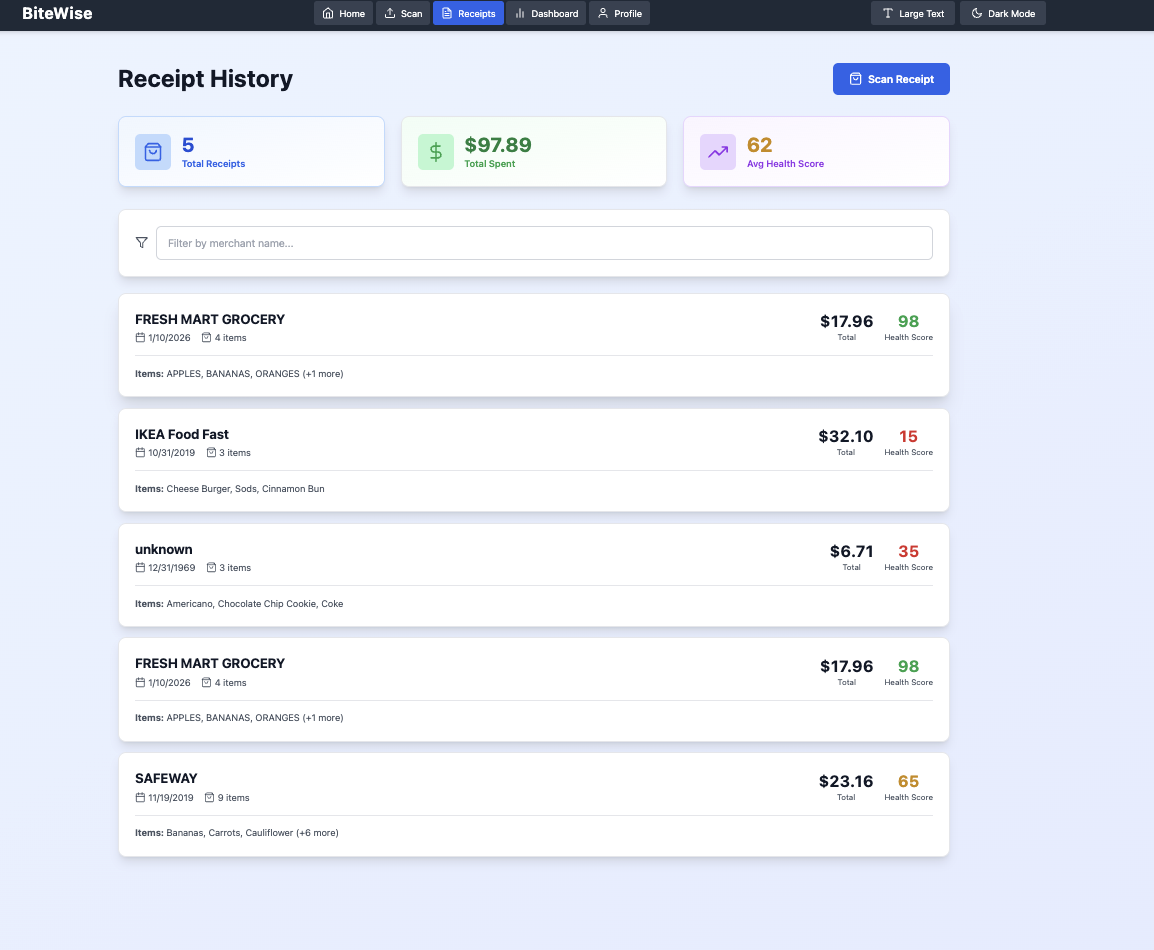
- Extracts purchased food items directly from the receipt
- Flags allergens (e.g., dairy, peanuts, gluten), with high-risk warnings based on user preferences
- Identifies nutrition risks like high sugar, high sodium, or highly processed foods
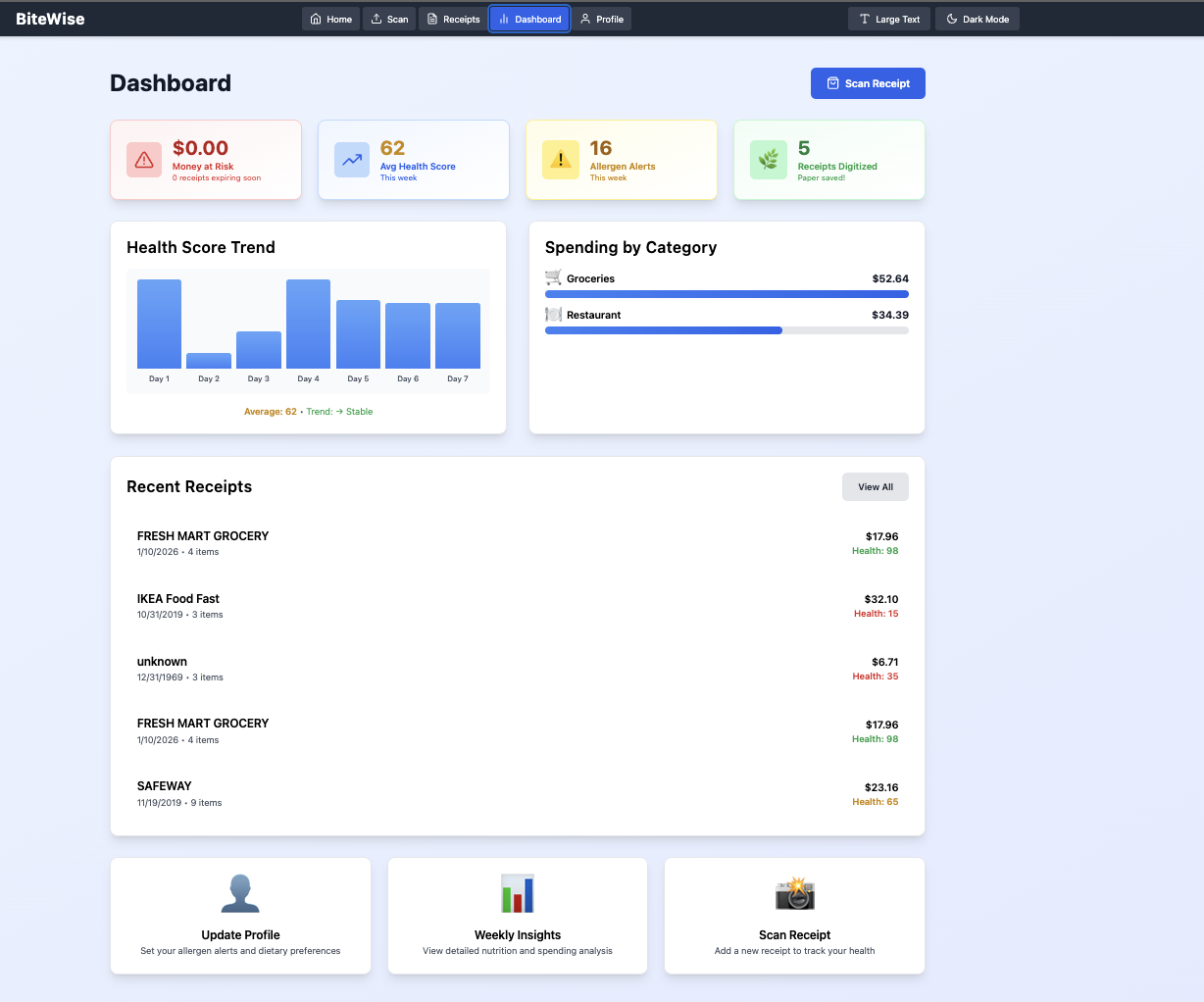
- Generates a clear health summary and score (0–100) with explanations
- Offers smart suggestions, such as healthier swaps and next-time tips
- Graphs insights into a weekly dashboard with trends, alerts, and summaries
How we built it
We built BiteWise using Figma for design, a Next.js frontend, a FastAPI (Python) backend, MongoDB Atlas for data storage, and the Google Gemini API for AI-powered analysis.
Challenges we ran into
- Some receipts have messy formats, so it is difficult to scan them and successfully output the correct format
- Many receipts list shortened or unclear product names, making classification difficult
Accomplishments that we're proud of
- Built an end-to-end receipt-to-health pipeline that works for both grocery and restaurant data
- Made the website accessible for people who have trouble reading (with the audio feature) as well as a text enlargement feature
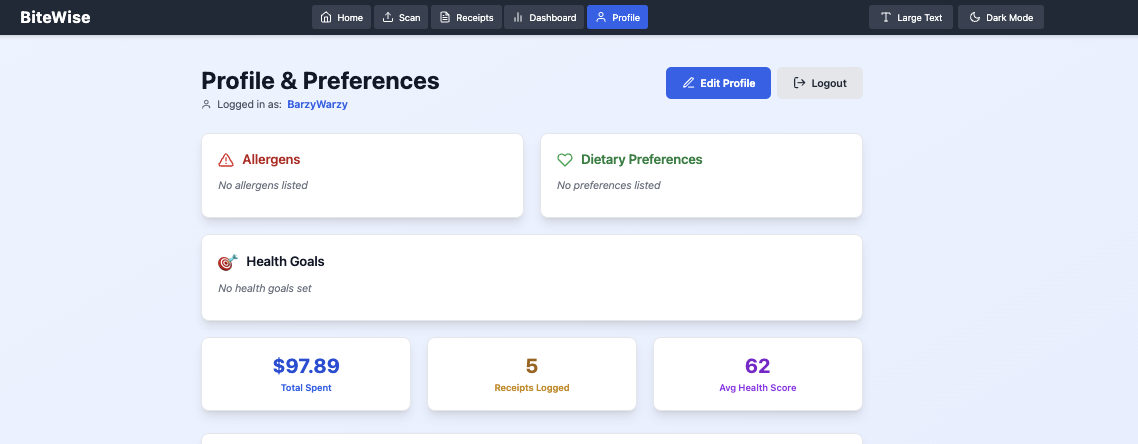
- Designed a clear and organized website that prioritizes allergens and safety first
- Created a health score with explanations, not just a black-box number
What we learned
- Designing clear user flows and interfaces using Figma
- Building a responsive frontend with Next.js, TypeScript, and Tailwind CSS
- Structuring React components
- Using FastAPI (Python) to build and organize backend APIs
- Storing and querying semi-structured data with MongoDB Atlas
- Integrating Google Gemini API to parse OCR output and generate health insights
What's next for BiteWise
- Deeper nutrition analysis using branded product databases
- Optional integrations with other types of apps (for example: wellness apps)
- Meal-level pattern detection across multiple receipts
Built With
- backend:-fastapi
- gemini-api
- mongodb-atlas.-python-frontend:-next.js
- react
- tailwind-css
- typescript
- web-speech-api


Log in or sign up for Devpost to join the conversation.