-
-
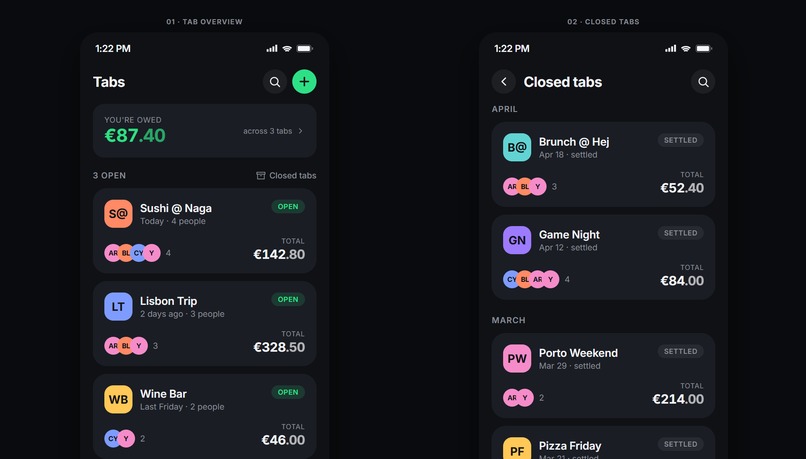
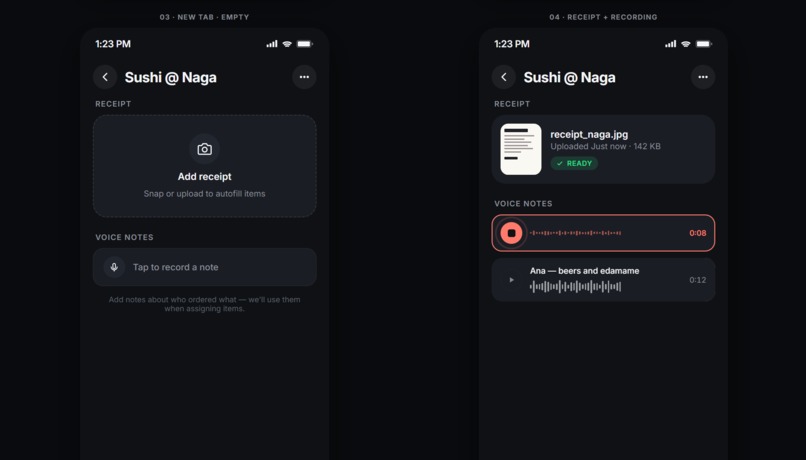
Tabs overview
-
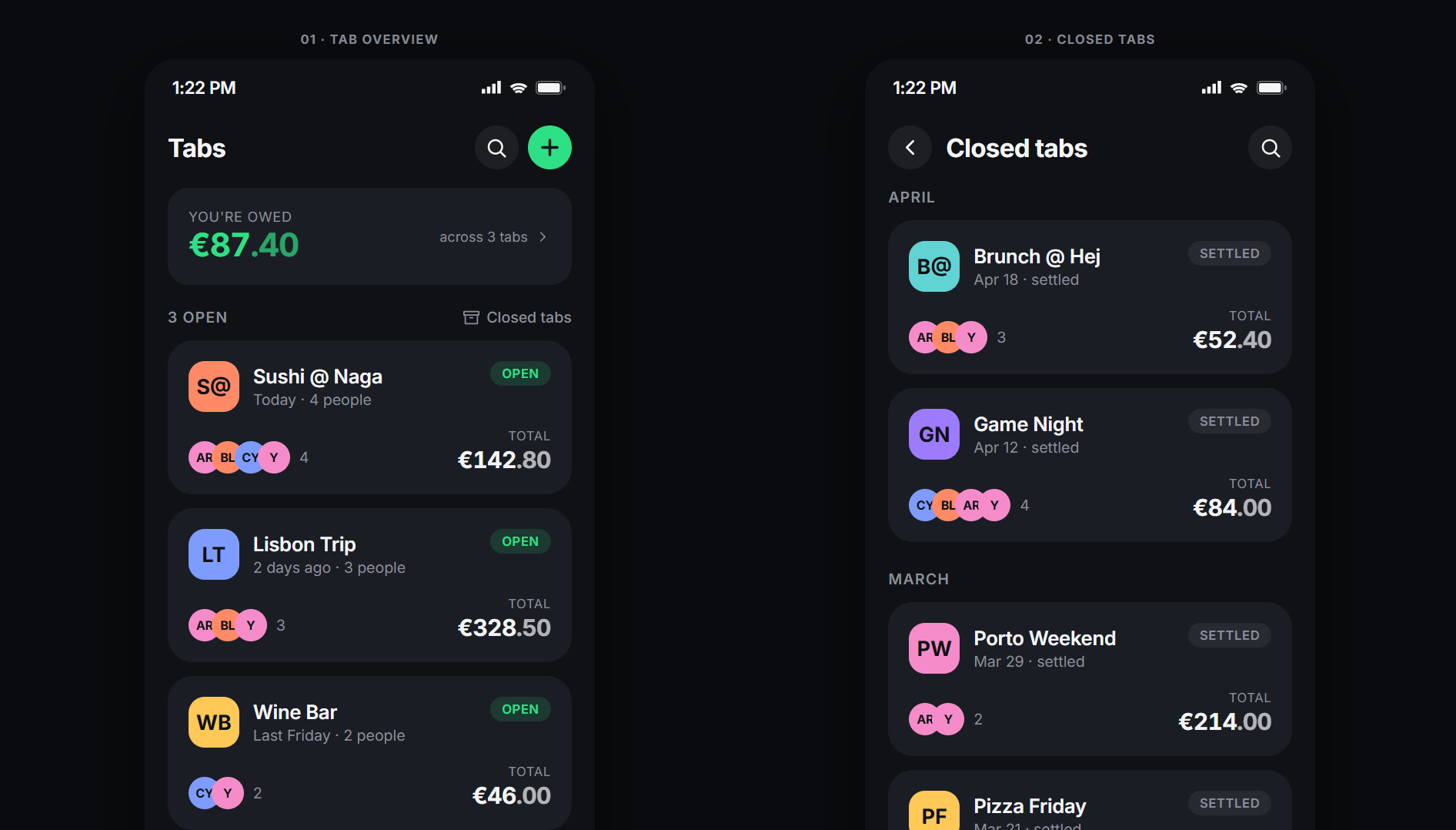
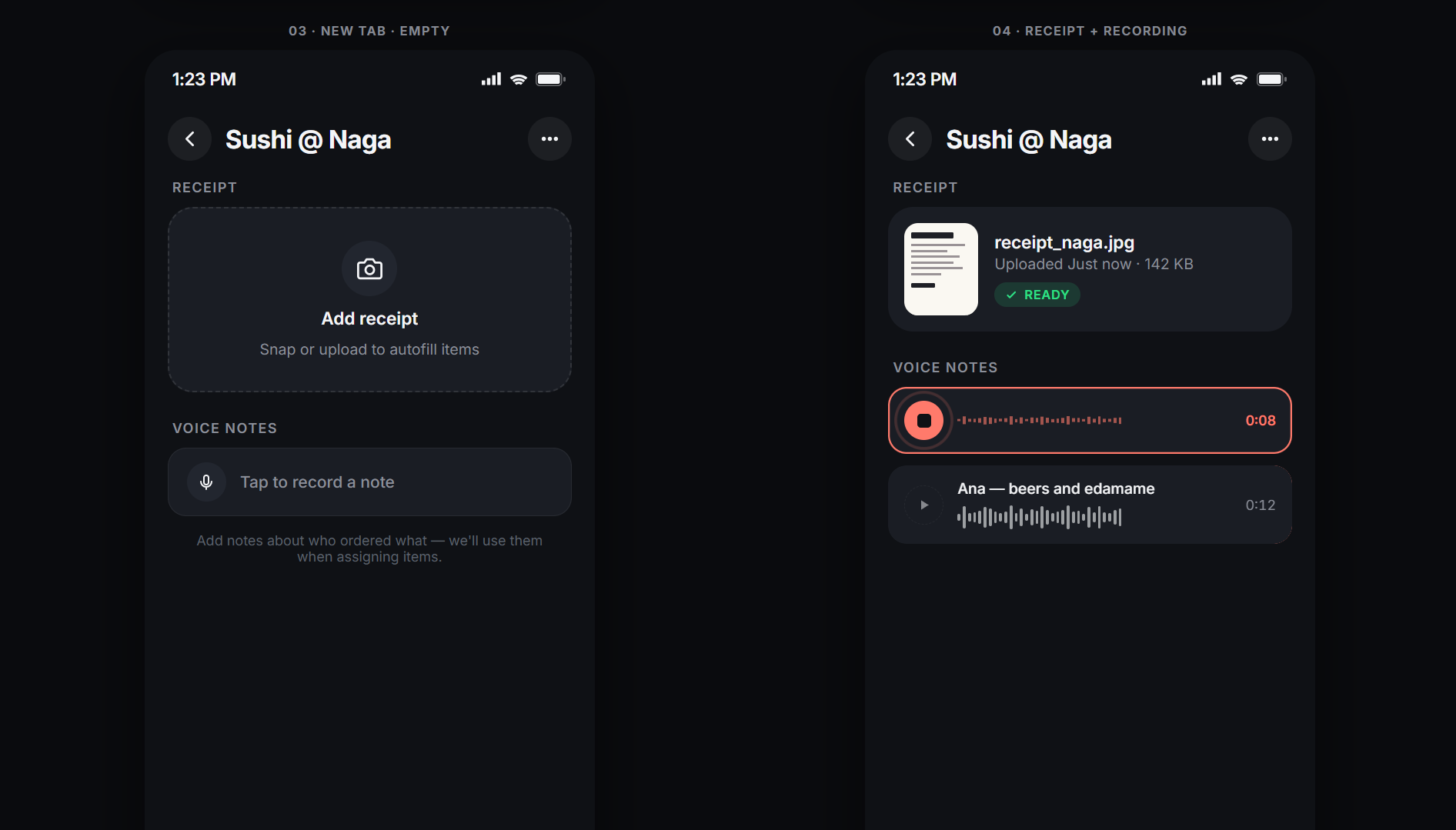
Receipt & voice upload screen
Inspiration
Splitting a restaurant bill is still weirdly painful. The receipt is messy, everyone remembers the meal differently, and one person always becomes the unofficial accountant. We wanted to expand the bunq experience from simply requesting money to understanding the whole social context of a shared meal: receipt, people, voice notes, corrections, and payment status.
What It Does?
BiteSplit AI lets users create a shared tab, upload a receipt photo, add people, and record natural voice notes like “Ana had the burger, Mark had ramen, Lisa and I split the nachos.” The app analyzes the receipt and notes, proposes an item-level split, and lets users quickly fix anything by changing quantities, dragging unassigned items, or adding missing people. Once the split is confirmed, it creates payment requests or payment links and tracks who has paid, how much has been received, and what is still outstanding.
How We Built It?
We built a Next.js mobile-style frontend with a FastAPI backend. The flow is session-based: users create a tab, upload receipt/audio data, process it, review the generated split, confirm it, and send payment requests. The backend has structured models for receipts, participants, transcripts, split assignments, validation warnings, and payment requests. Receipt extraction is designed around AWS Textract, audio transcription around AWS Transcribe, and the split logic can use Claude to convert receipt data plus natural-language context into a structured JSON split. We also built validation so totals are recalculated from receipt items instead of blindly trusting generated AI output.
Challenges We Ran Into
The hardest part was making AI output feel useful without pretending it is always perfect. Real bills have shared items, quantities, tax, service charges, missing context, and people who change their story halfway through. We had to design both the data model and the UI around correction: unassigned items, quantity controls, drag-and-drop reassignment, and warnings. Another challenge was keeping the payment flow flexible, because not every participant has the same contact information or payment route.
Accomplishments That We're Proud Of
We are proud that the demo feels like a real product flow, not just an AI prompt wrapped in a button. Users can go from receipt and voice notes to a reviewable split, make fast corrections, send payment requests, and track settlement. We are also proud of the human-centered interaction design: instead of forcing users to fill out a spreadsheet, they can explain dinner naturally and clean up the result with simple gestures. Additionally, the design is very modern and fits within Bunq's brand voice.
What We Learned
We learned that the best AI finance experiences need strong structure around the model. The AI is great at interpreting messy human context, but money requires validation, clear states, and user review. We also learned that the correction experience is just as important as the generation experience. If fixing a mistake is easy, users can trust the system more.
What's Next For BiteSplit AI
Next, we would expand the use to accumulating spending over time - perhaps during a trip. Users could combine their spendings throught the vacation and then split it all together conveniently.
Built With
- amazon-web-services
- awstextract
- claude
- fastapi
- html
- nextjs
- pydantic
- python
- uvicorn


