-
-
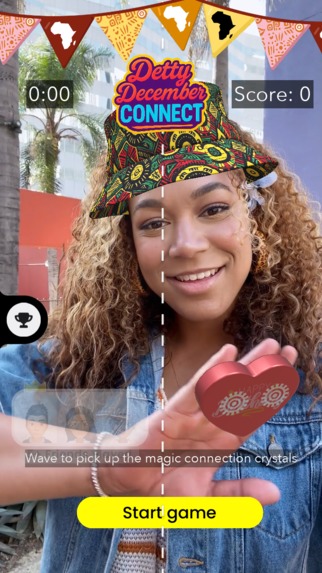
Welcome Screen
-
-
-
-
Inspiration
Detty December Connect game was born from a simple observation: African celebrations have never been solo affairs. From village gatherings to modern street parties, our greatest moments happen when we move together. But scrolling through last year's Detty December, I saw thousands of individual posts, individual dances, individual joy. Where was the "we"? I wanted to create an AR experience where African heritage wasn't just decoration, but the foundation of gameplay. The "connect" theme resonated deeply because our continent has always understood this truth. From the proverb "when spider webs unite, they can tie up a lion" to Ubuntu philosophy, connection is our superpower. I set out to prove that AR could make cultural wisdom feel alive and shared for Gen everyone.
What it does
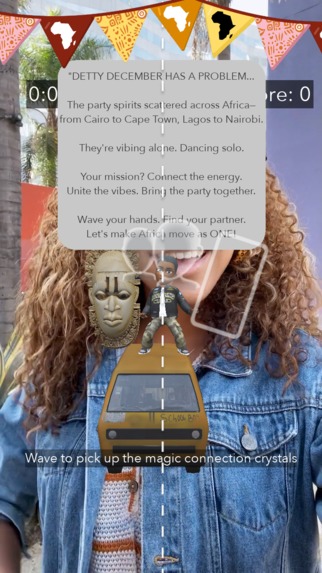
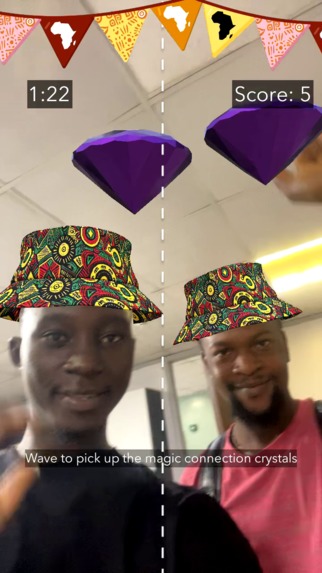
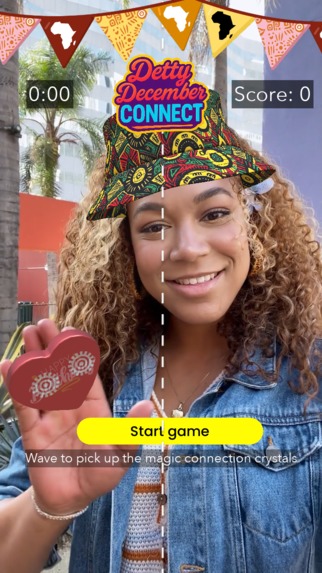
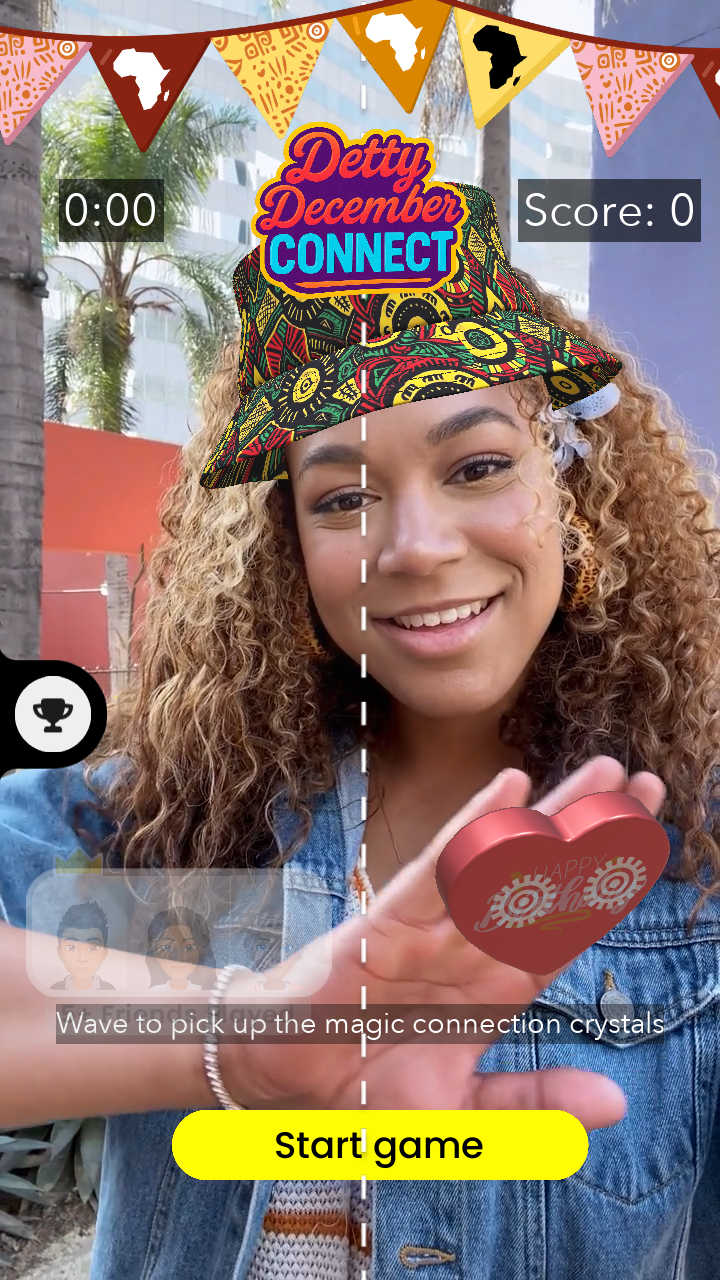
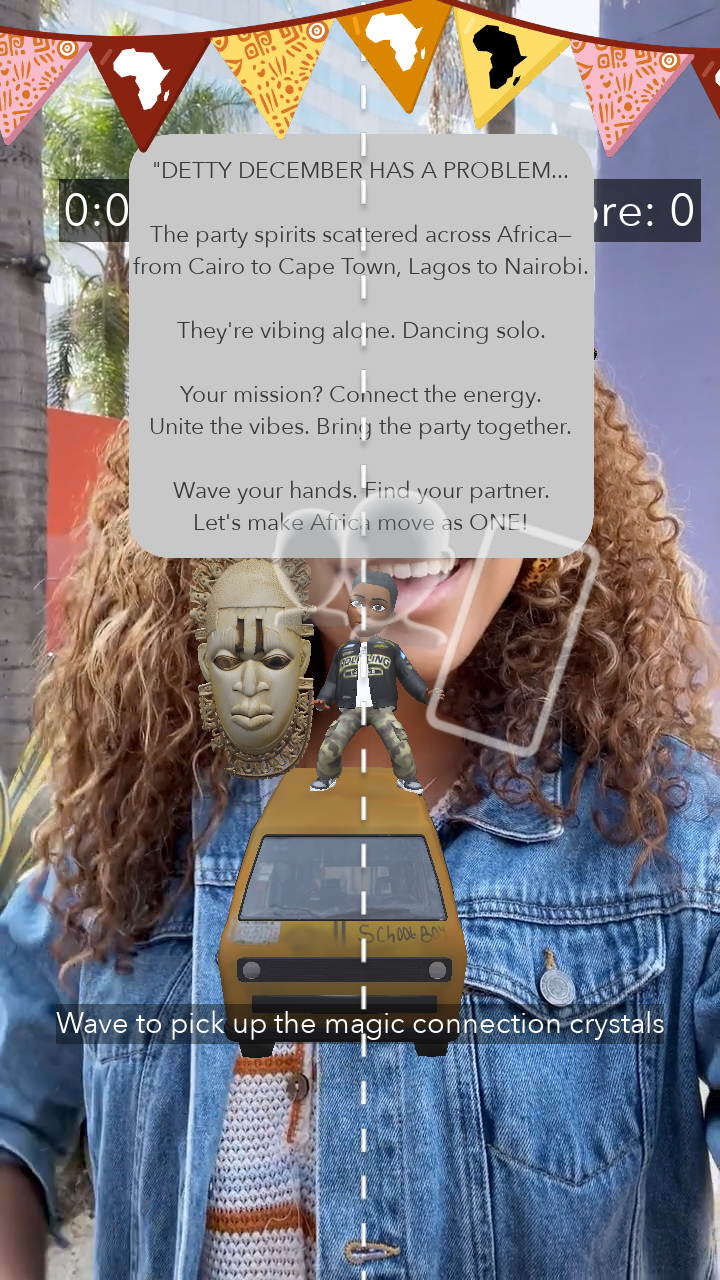
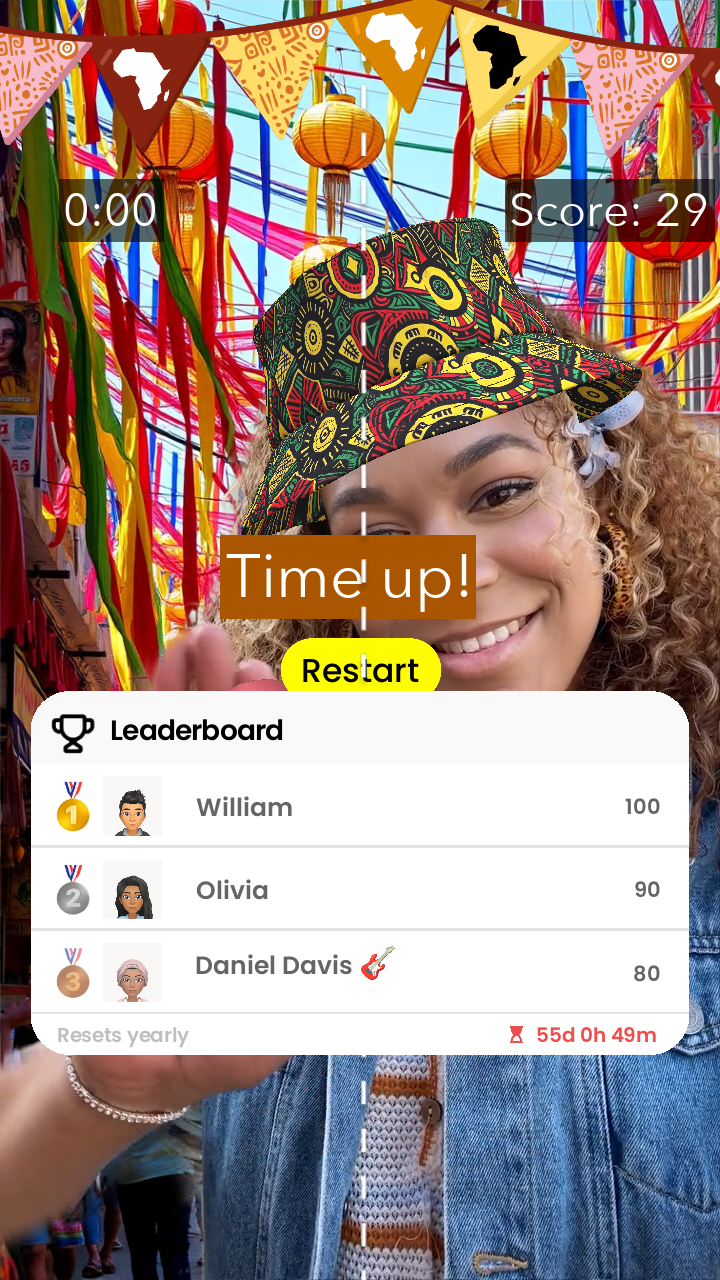
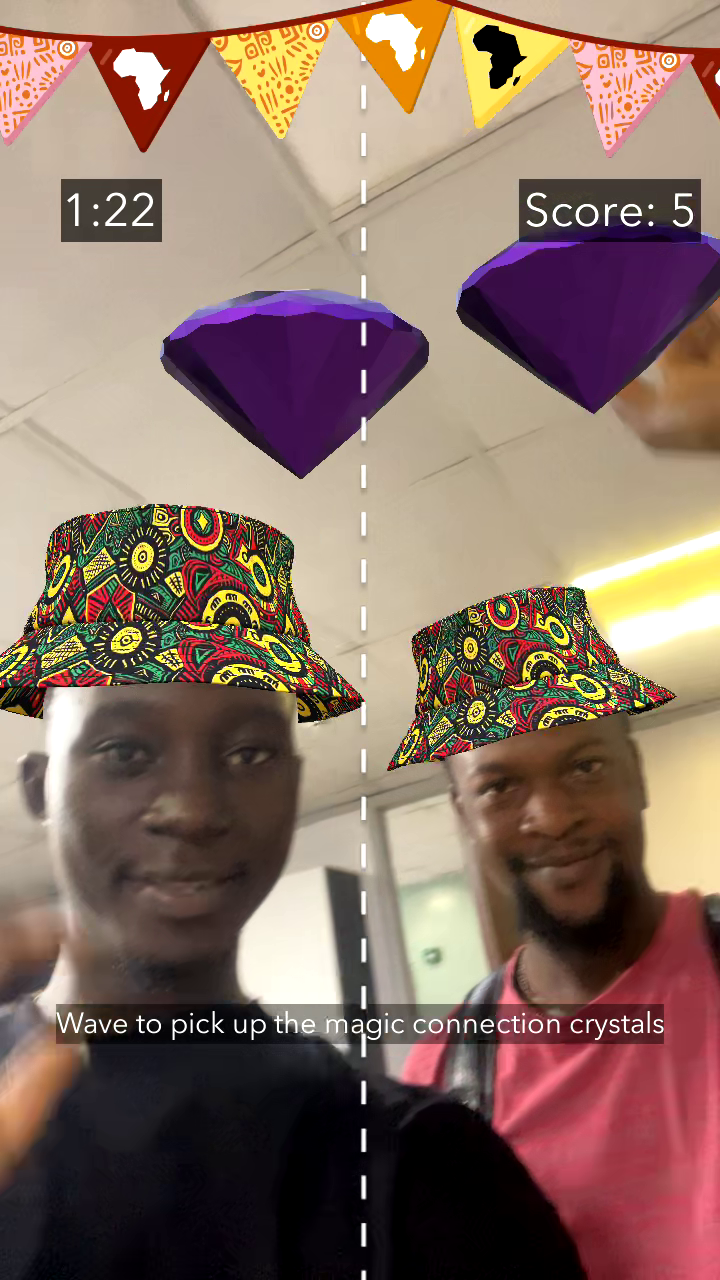
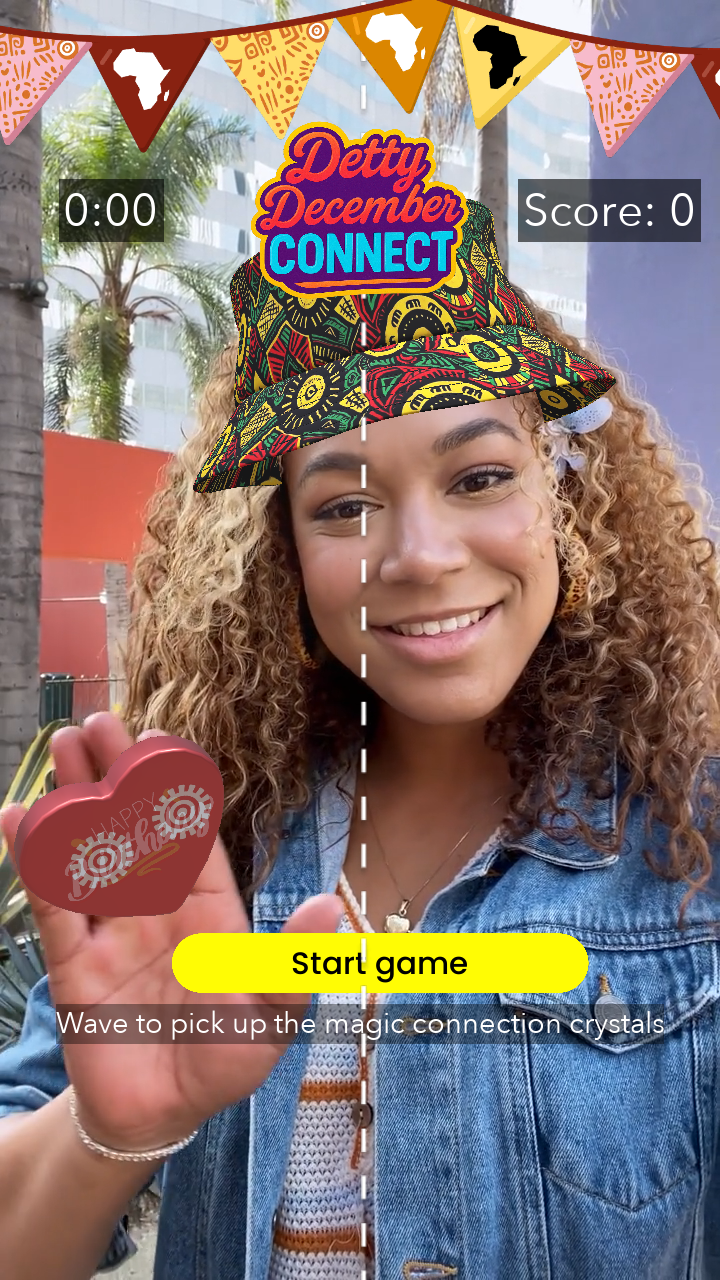
Detty December Connect transforms African philosophy into multiplayer gameplay using advanced hand-tracking. Players begin with "Ubuntu Awakening," an immersive prologue where iconic African landmarks such as the FESTAC mask artifacts and Lagos's Danfo bus materialize and pulse with light as your Bitmoji interacts with them. Text and visual cues reveal Africa's heritage of unity, establishing the emotional foundation for gameplay. Then, two players simultaneously hand-track to collect cultural crystals spawning in a shared AR space. A countdown timer adds urgency as players race to beat the high score. Players earn bonuses by coordinating movements and synchronizing timing. The crystals respond with authentic African drum sounds and vibrant particle effects when collected, creating emergent moments of genuine connection. Players develop hand signals, laugh when they collide, and physically experience Ubuntu philosophy. In this game, players do not just read "we are stronger together," they prove it against the clock.
How we built it
The game was built in Lens Studio using custom JavaScript for hand-tracking and game state management. Dual ObjectTracking3D components support independent hand detection for two players, while rotation-locked transforms ensure that visual indicators follow hand position in 3D space without jarring spins. Euler angles were converted to quaternions, and world rotation locks are applied every frame. The spawning system manages crystal lifecycles, including generation, physics, collision detection, and destruction, with progressive difficulty increasing spawn frequency based on collected crystals. The game loop required extensive debugging to ensure smooth state transitions and proper crystal cleanup. "Ubuntu Awakening" combines Lens Studio's timeline with scripted triggers, optimized 3D landmark models, emissive materials, and choreographed animations that sync with UI text. Performance optimization was critical: object pooling, particle limits of 500 simultaneous, spatial partitioning for collision detection, and cached transform references ensured smooth gameplay at 30+ fps. The billboard effect for UI elements facing the camera required significant troubleshooting to work correctly with hand-tracking. The leaderboard UI integration presented major challenges with layout conflicts and update timing that required multiple iterations to resolve.RetryClaude can make mistakes. Please double-check responses.
Challenges we ran into
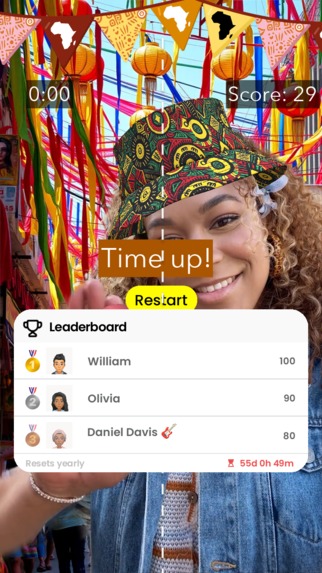
Several challenges arose during development. Implementing a persistent leaderboard caused significant issues with frame rates and UI layout conflicts. Despite exploring different approaches and update timing strategies, the leaderboard integration created conflicts that compromised gameplay performance. Ultimately, I had to simplify the leaderboard implementation to maintain the experience's core: immediate, physical connection between two people in the same space. Hand-tracking precision was also challenging. Raw data is noisy, with micro-movements, occlusions, and varying hand sizes. I implemented smoothing algorithms, balancing lag and jitter to achieve reliable detection. The billboard effect for UI elements required extensive troubleshooting to ensure they faced the camera correctly while hand-tracking remained stable. Building all scripts from scratch was demanding, as I had to architect the entire system without relying on pre-built templates or libraries. The game loop presented unexpected difficulties with state management and crystal lifecycle handling, requiring careful debugging to prevent memory leaks and ensure smooth transitions. Tweening animations for smooth object movement and UI transitions proved particularly tricky, requiring custom interpolation logic to achieve the fluid motion I envisioned. Early iterations overloaded players with cultural text and landmark animations, but playtesting revealed that seamless integration, not exposition, drives engagement. The final version allows players to absorb heritage through atmosphere, sound, and visual design rather than reading paragraphs.
Accomplishments that we're proud of
I'm incredibly proud of creating a lens that proves African culture can drive innovative AR gameplay—not just decorate it. The "Ubuntu Awakening" sequence has genuine emotional weight; testers told me they felt connected to something larger than themselves before even starting the game. The dual hand-tracking with rotation lock works flawlessly, creating a smooth, intuitive experience that anyone can jump into. Watching two people laugh, coordinate, and celebrate together while learning Nigerian phrases and seeing African landmarks—that's when I knew I'd built something special. I'm proud that this lens is both educational and entertaining. Players leave knowing an African proverb, recognizing continental landmarks, and having experienced the philosophy of Ubuntu through gameplay, not lectures. The technical achievement of smooth multiplayer AR hand-tracking combined with cultural depth feels like a genuine innovation. Most importantly, I created something that makes people want to connect—with each other, with African culture, and with the joyful chaos of Detty December.
What we learned
The project offered profound lessons. I gained technical mastery of Lens Studio’s hand-tracking APIs, quaternion mathematics for rotation control, and mobile AR optimization. Cultural design requires research, restraint, and accessibility; I consulted friends across Nigeria, Ghana, Kenya, and South Africa to ensure authenticity. Constraints, such as removing the leaderboard, often improve design, highlighting what truly matters. Detty December Connect demonstrates that digital connection is most meaningful when it enhances real-world interaction, allowing coordinated action and shared physical presence.
What's next for Detty December Connect
Looking ahead, the plan is to bring global scoring into the game using updated architecture that preserves performance. The cultural scope will expand to include North, East, South, and Central African landmarks and traditions, making the experience richer and more diverse. A slower “Heritage Mode” will let players explore landmarks individually, with interactive annotations and storytelling through well-designed animations, letting culture unfold naturally rather than through text. Accessibility features such as voice-activated collection, head-gaze tracking, single-hand mode, and adjustable spawn heights will make the experience inclusive for all players. Future versions may extend the concept to other cultural festivals, allowing AR to preserve and celebrate living traditions across the continent. The ultimate goal is to create “Heritage AR,” where storytelling, interactive gameplay, and expressive animation connect players to African culture while fostering shared, physical moments of joy and discovery.
Built With
- bitmoji
- friendscomponent
- handtracking
- javascript
- leaderboardcomponent


Log in or sign up for Devpost to join the conversation.