-
User Curator Image
Inspiration Digital art often feels static and lacks a sense of place in the modern infinite-scroll era. We created Bit Museum to give digital creativity a living, nostalgic environment where AI and 8-bit charm intersect.
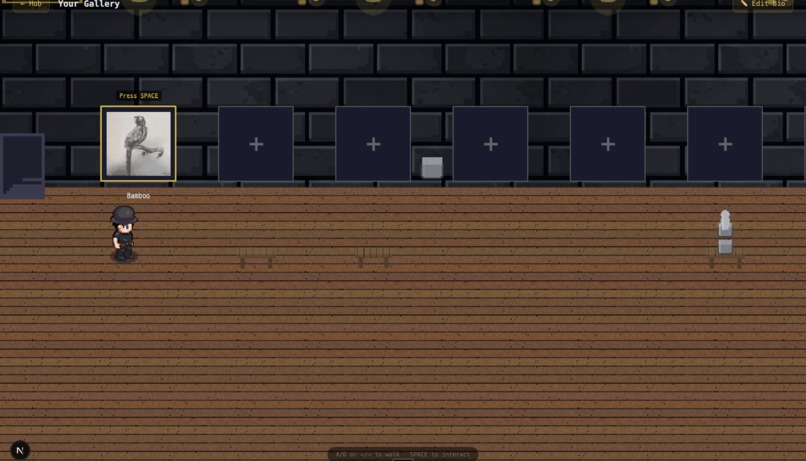
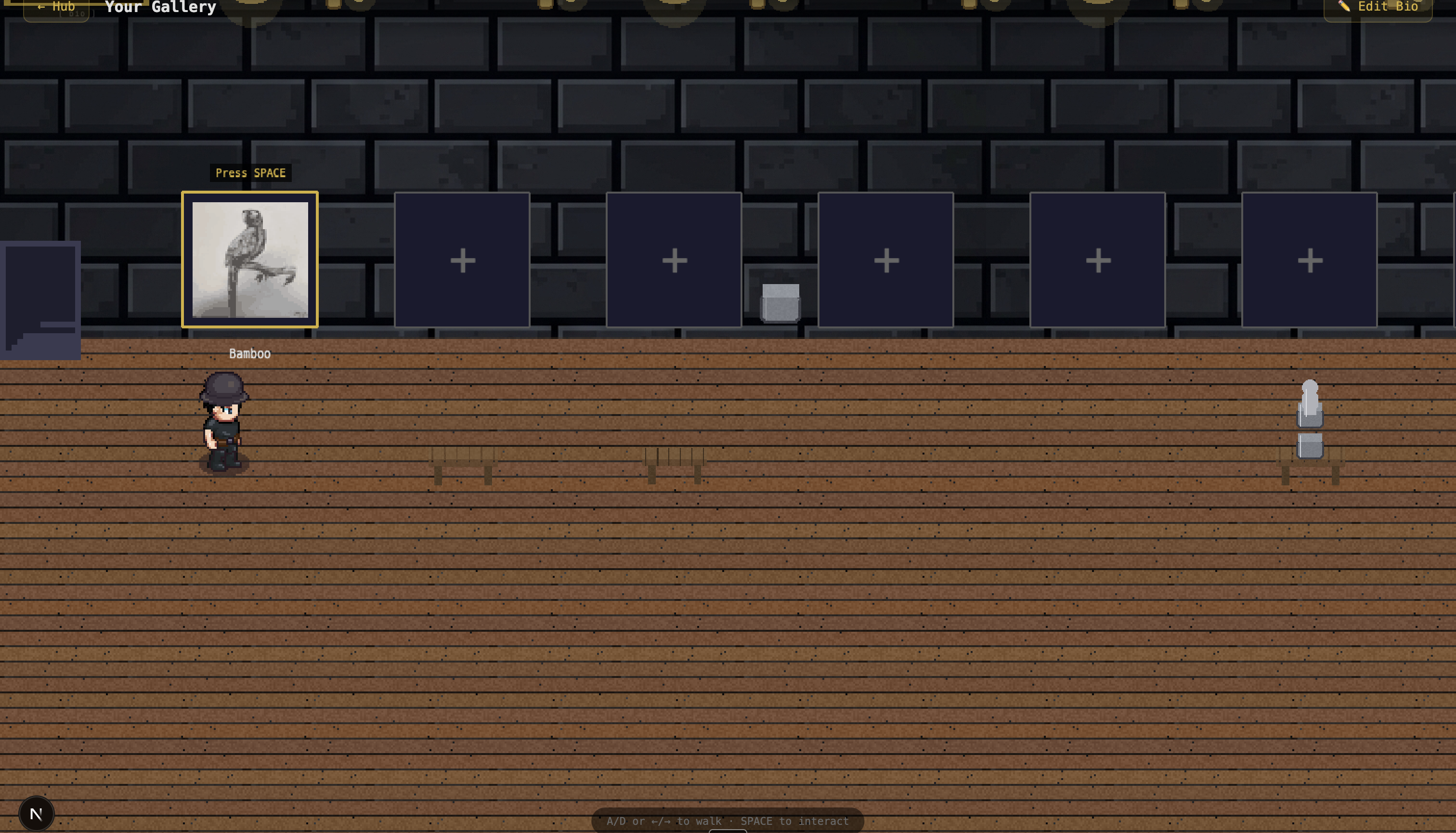
What it does This interactive 2D gallery allows players to explore rooms and chat with a RAG-powered AI Wizard for smart curation. Every artwork is also paired with a GPT-4o Vision agent that provides real-time, expert-level analysis.
How we built it We integrated Next.js 14 with the Phaser 3 game engine to create an immersive and responsive frontend experience. The backend uses FastAPI and OpenAI to drive our custom pixelation service and AI-driven social features.
Challenges we ran into Bridging the high-frequency Phaser game loop with React’s declarative state was a complex technical hurdle for the team. We also focused heavily on optimizing the latency of our Vision AI to ensure expert insights felt instantaneous.
Accomplishments that we're proud of We are incredibly proud of our automated pipeline that seamlessly transforms high-res uploads into 8-bit sprites. Seeing the Wizard NPC successfully guide users through rooms based on their specific "vibes" was a major victory.
What we learned Our team mastered a fast-paced parallel workflow between game physics, AI orchestration, and glassmorphic UI design. We also gained deep expertise in directing multi-modal Vision models to act as professional museum curators.
What's next for Bit Museum We plan to launch interactive sharing features that let artists export their 2D rooms as live, embeddable portfolios. Future iterations will include Web3 integration to turn these galleries into secure, blockchain-verified NFT marketplaces.
Built With
- api
- fast
- gpt
- next
- phaser.js

Log in or sign up for Devpost to join the conversation.