Cyber Sentience Watchtower
Inspiration
The inspiration for Cyber Sentience Watchtower came from the growing complexity of network security threats in today's digital landscape. As cyber attacks become more sophisticated and frequent, traditional security monitoring tools often fall short in providing intuitive, real-time visibility into network activity. I was particularly inspired by the concept of "security through visibility" - the idea that being able to clearly visualize and understand network traffic patterns is the first step in identifying and mitigating potential threats.
The increasing adoption of IoT devices, cloud services, and remote work has expanded the attack surface for many organizations, creating a need for more advanced monitoring solutions. I wanted to create a tool that could bridge the gap between complex security data and actionable insights, making network security monitoring more accessible and effective.
What it does
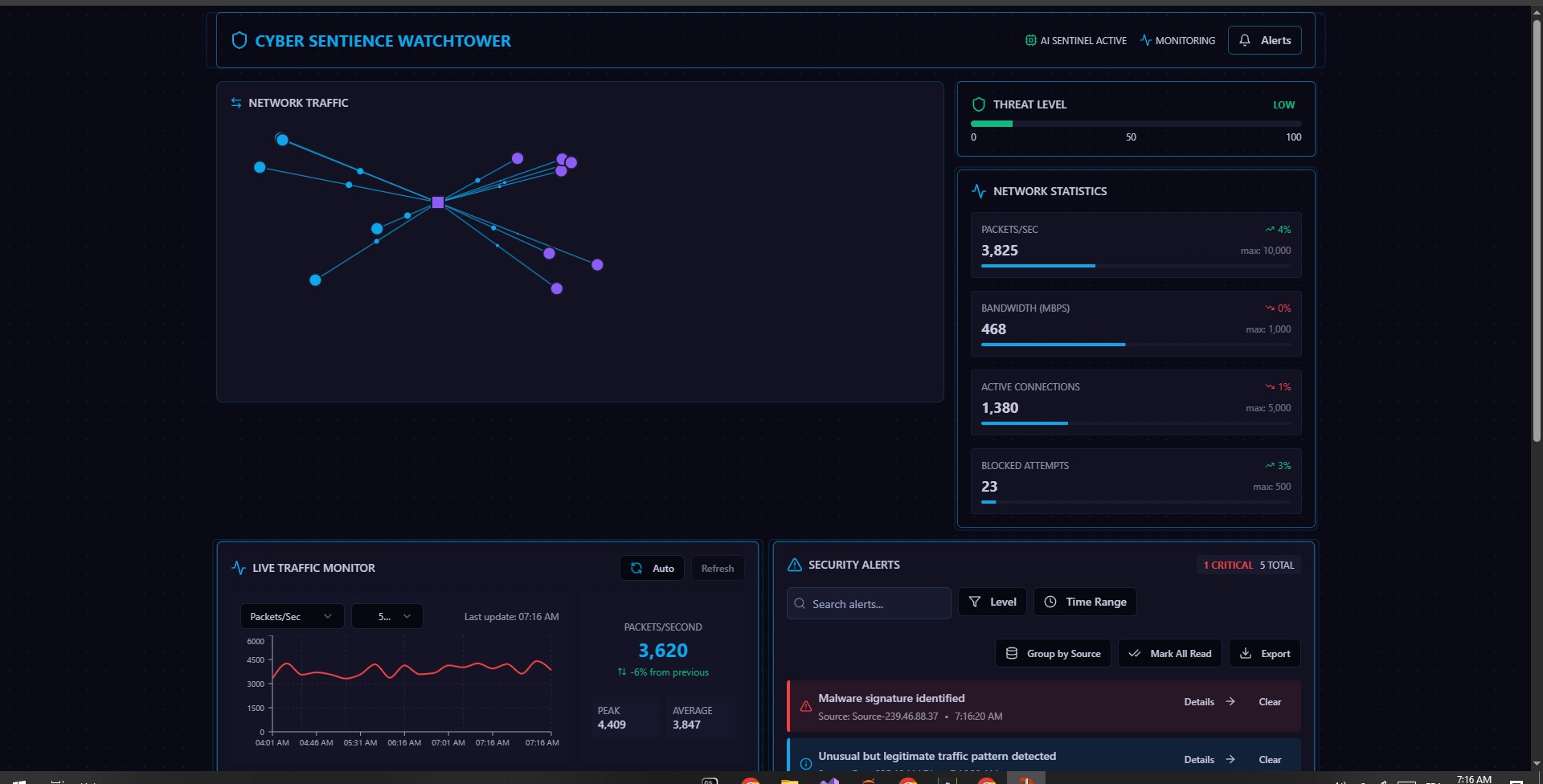
Cyber Sentience Watchtower is a real-time network security monitoring and threat detection system that provides visual insights into network traffic patterns and potential security threats. The platform offers:
Real-time network traffic visualization: Interactive graphical representation of network topology and traffic flows, making it easy to spot unusual patterns or connections.
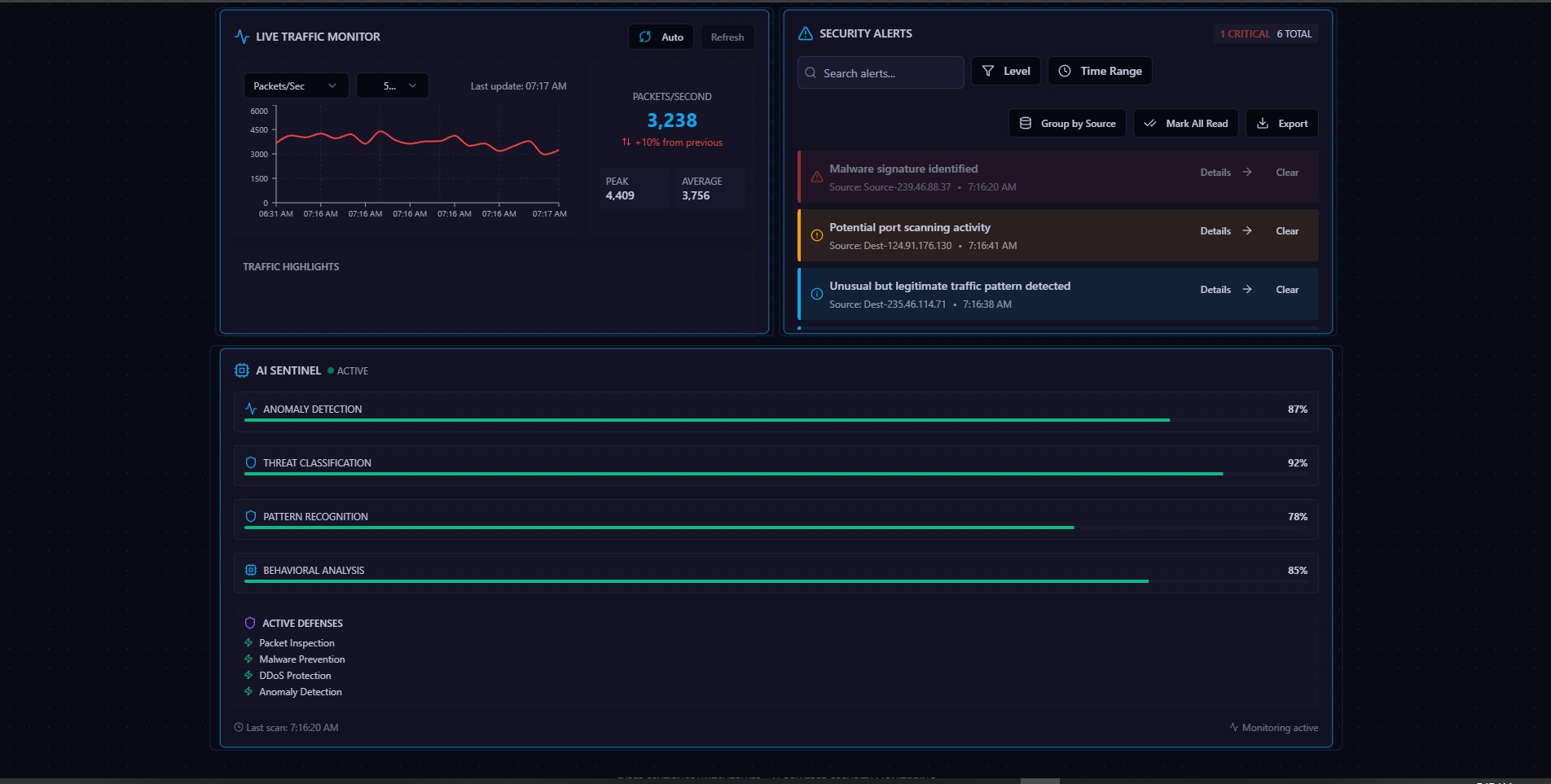
Automated threat detection and classification: AI-powered analysis that can identify and categorize potential security threats based on traffic patterns and known attack signatures.
Live traffic monitoring: Continuous monitoring of network traffic with detailed metrics on packets, bandwidth usage, and connection status.
Security alert management: Comprehensive system for tracking, prioritizing, and responding to security alerts generated by the system.
System metrics tracking: Monitoring of key performance indicators and security metrics to provide an overall view of network health and security posture.
Interactive network topology mapping: Visual representation of network nodes and connections that updates in real-time as the network changes.
How I built it
I built Cyber Sentience Watchtower using a modern tech stack designed for performance, scalability, and real-time capabilities:
Frontend
- React.js: For building a responsive and interactive user interface
- D3.js: For creating dynamic and interactive data visualizations
- Recharts: For rendering time-series data in the traffic monitoring component
- Tailwind CSS: For styling with a utility-first approach
- Vite: As the build tool for faster development experience
Backend
- Node.js with Express: For creating a robust and scalable API server
- TypeScript: For type safety and better code organization
- Socket.IO: For enabling real-time bidirectional communication between client and server
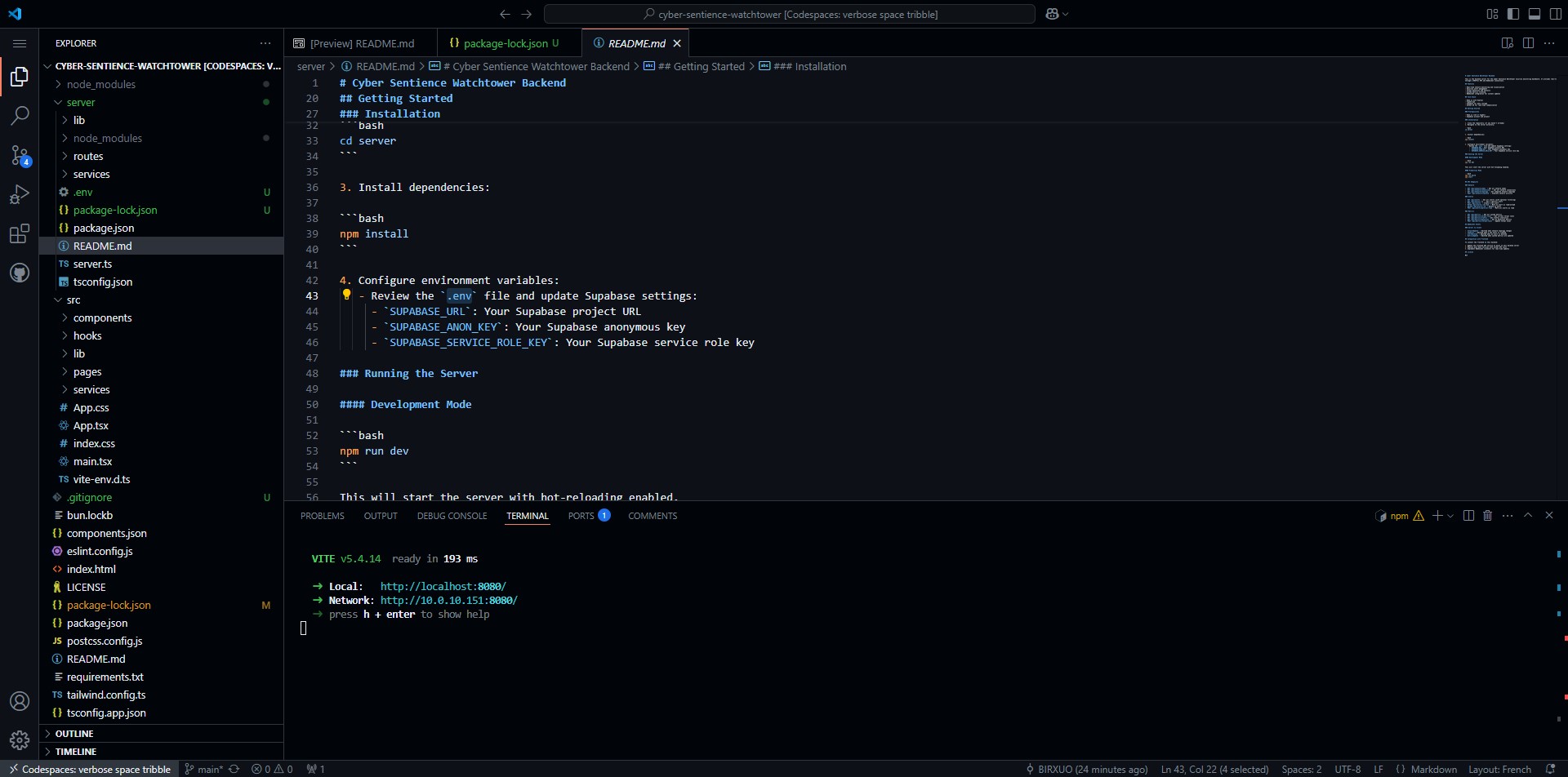
- Supabase: For data storage and authentication
Architecture
The application follows a client-server architecture with real-time communication:
- The backend server collects and processes network data, performs threat analysis, and manages alerts
- WebSocket connections (via Socket.IO) enable instant updates to be pushed to connected clients
- The frontend visualizes the data through interactive components like the NetworkGraph and LiveTrafficMonitor
- RESTful API endpoints provide structured access to network topology, alerts, and system metrics
I implemented a modular component structure in the frontend to ensure maintainability and separation of concerns. Each visualization component (like NetworkGraph and LiveTrafficMonitor) is self-contained but can communicate with other parts of the application through a centralized state management approach.
Challenges I ran into
Building Cyber Sentience Watchtower presented several significant challenges:
Real-time data visualization: Creating smooth, performant visualizations that could update in real-time without overwhelming the browser was technically challenging. I had to carefully optimize the rendering process, especially for the network graph component.
Data simulation for development: Without access to real network traffic data during development, I needed to create realistic mock data services that could simulate various network conditions and security scenarios.
Balancing information density: Security monitoring interfaces often suffer from information overload. Finding the right balance between providing comprehensive information and maintaining usability required multiple iterations of the UI design.
WebSocket reliability: Ensuring reliable real-time updates across different network conditions and handling reconnection scenarios properly required careful implementation of the Socket.IO integration.
Threat detection accuracy: Developing algorithms that could accurately identify potential threats while minimizing false positives was a complex challenge that required continuous refinement.
Accomplishments that I'm proud of
Despite the challenges, I'm particularly proud of several accomplishments in this project:
Intuitive visualization of complex data: Successfully translating complex network traffic data into intuitive, actionable visualizations that make security monitoring more accessible.
Responsive real-time updates: Creating a system that can handle and display real-time updates smoothly, even with high volumes of network traffic data.
Modular and maintainable architecture: Designing a clean, modular codebase that separates concerns and makes the system extensible for future enhancements.
Cross-disciplinary integration: Successfully bringing together expertise from network security, data visualization, and web development to create a cohesive product.
User-centric security interface: Developing a security monitoring interface that prioritizes user experience without compromising on technical capabilities.
What I learned
This project was a significant learning journey across multiple domains:
Advanced React patterns: I deepened my understanding of React's component lifecycle, hooks, and state management strategies for complex applications.
Data visualization techniques: Working with D3.js and canvas-based rendering taught me valuable lessons about optimizing visualizations for performance and clarity.
Real-time application architecture: I gained practical experience in designing and implementing real-time systems with WebSockets and handling the unique challenges they present.
Network security concepts: Researching and implementing the security monitoring features expanded my knowledge of network security principles, threat detection methodologies, and security metrics.
TypeScript best practices: Using TypeScript throughout the project improved my understanding of type systems and how they can enhance code quality and developer experience.
Full-stack integration: The project reinforced my skills in creating cohesive full-stack applications where frontend and backend components work seamlessly together.
What's next for Cyber Sentience Watchtower
Looking ahead, I have several exciting plans for the future development of Cyber Sentience Watchtower:
Enhanced AI capabilities: Implementing more advanced machine learning models for predictive threat detection and anomaly identification.
Expanded visualization options: Adding more visualization types and customization options to cater to different security monitoring needs and preferences.
Integration with security tools: Developing connectors for popular security tools and SIEM systems to create a more comprehensive security ecosystem.
Automated response capabilities: Adding features that can automatically respond to certain types of threats based on predefined rules and policies.
Mobile companion app: Creating a mobile application that provides on-the-go alerts and basic monitoring capabilities for security professionals.
Community threat intelligence: Implementing a system for sharing anonymized threat intelligence across instances to improve overall detection capabilities.
Compliance reporting: Adding features to generate compliance reports for various regulatory frameworks based on the security monitoring data.
The vision is to evolve Cyber Sentience Watchtower from a monitoring tool into a comprehensive security operations platform that can serve as the central nervous system for network security efforts.
Built With
- javascript
- next.js
- node.js
- postgresql
- react
- supabase
- typescript
- vercel
- vue.js


Log in or sign up for Devpost to join the conversation.