-
-
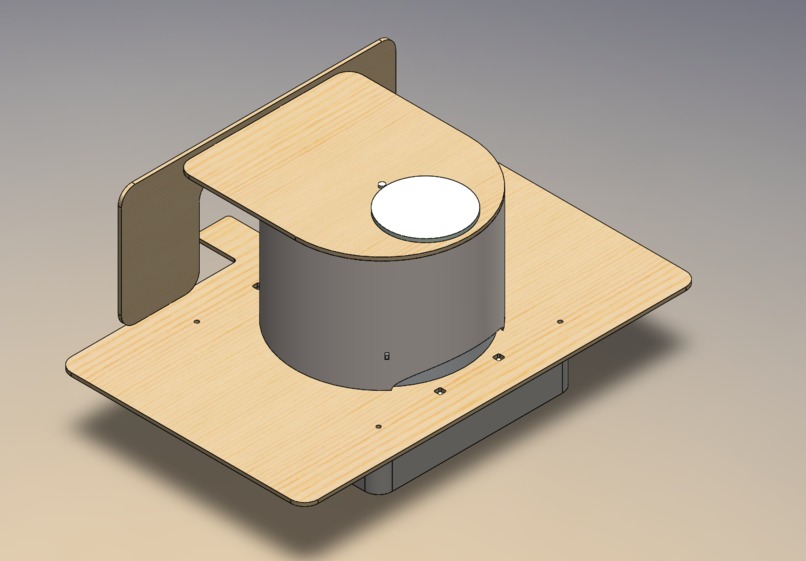
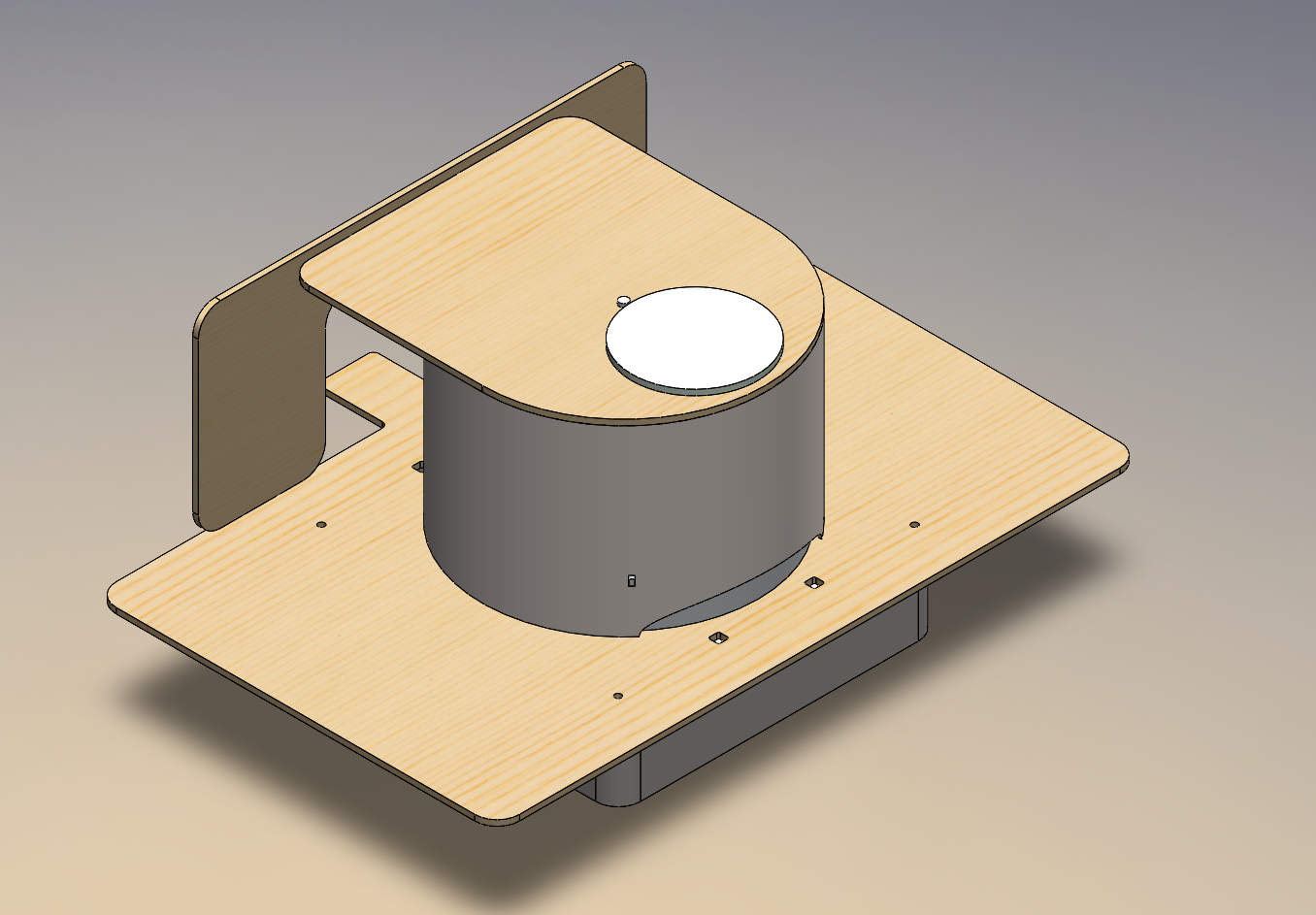
Solidworks Prototype Angled View
-
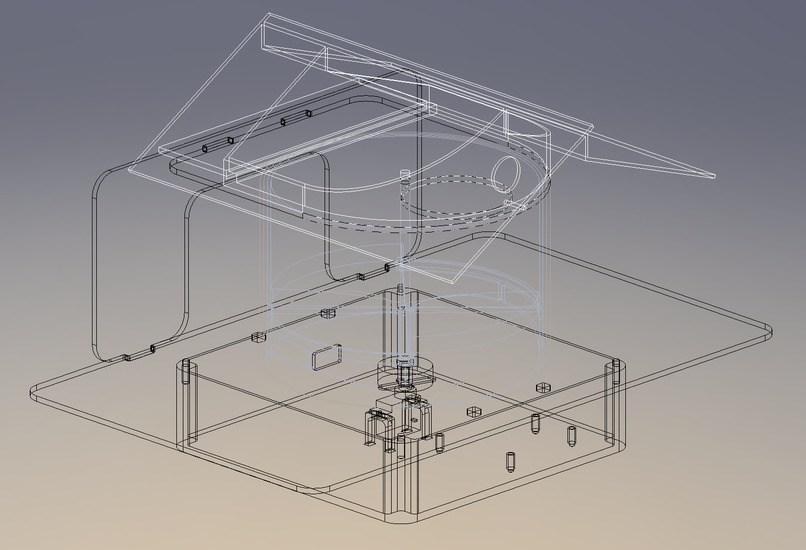
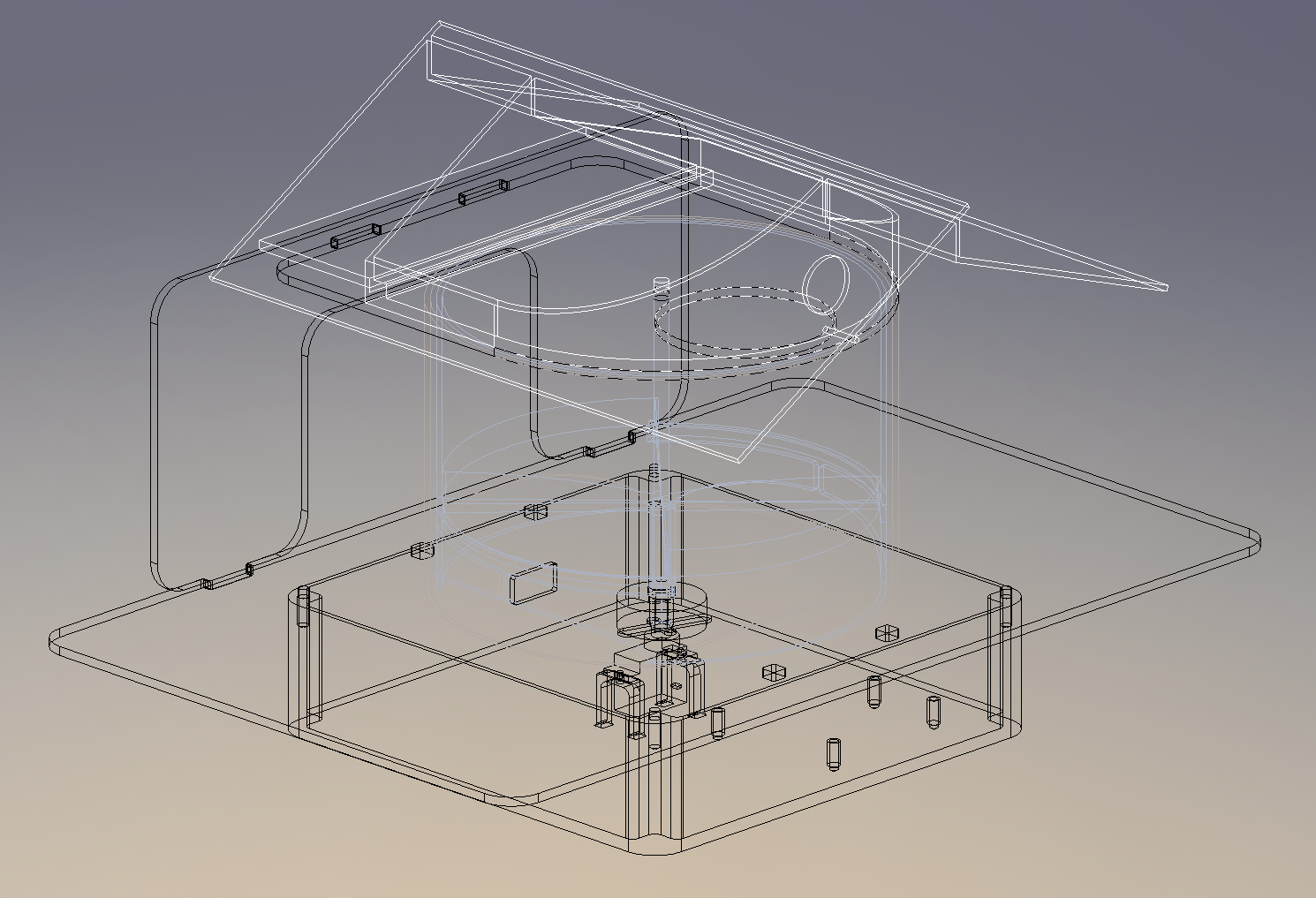
Solidworks X-ray with Roof Concept
-
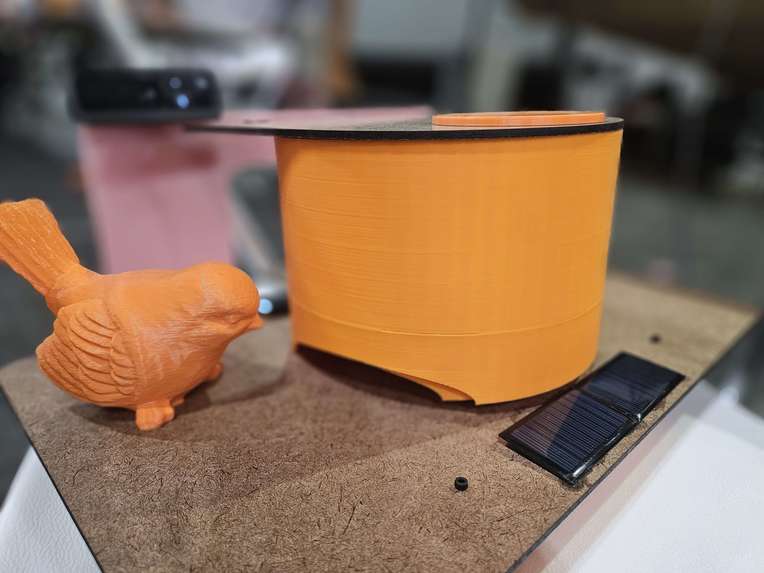
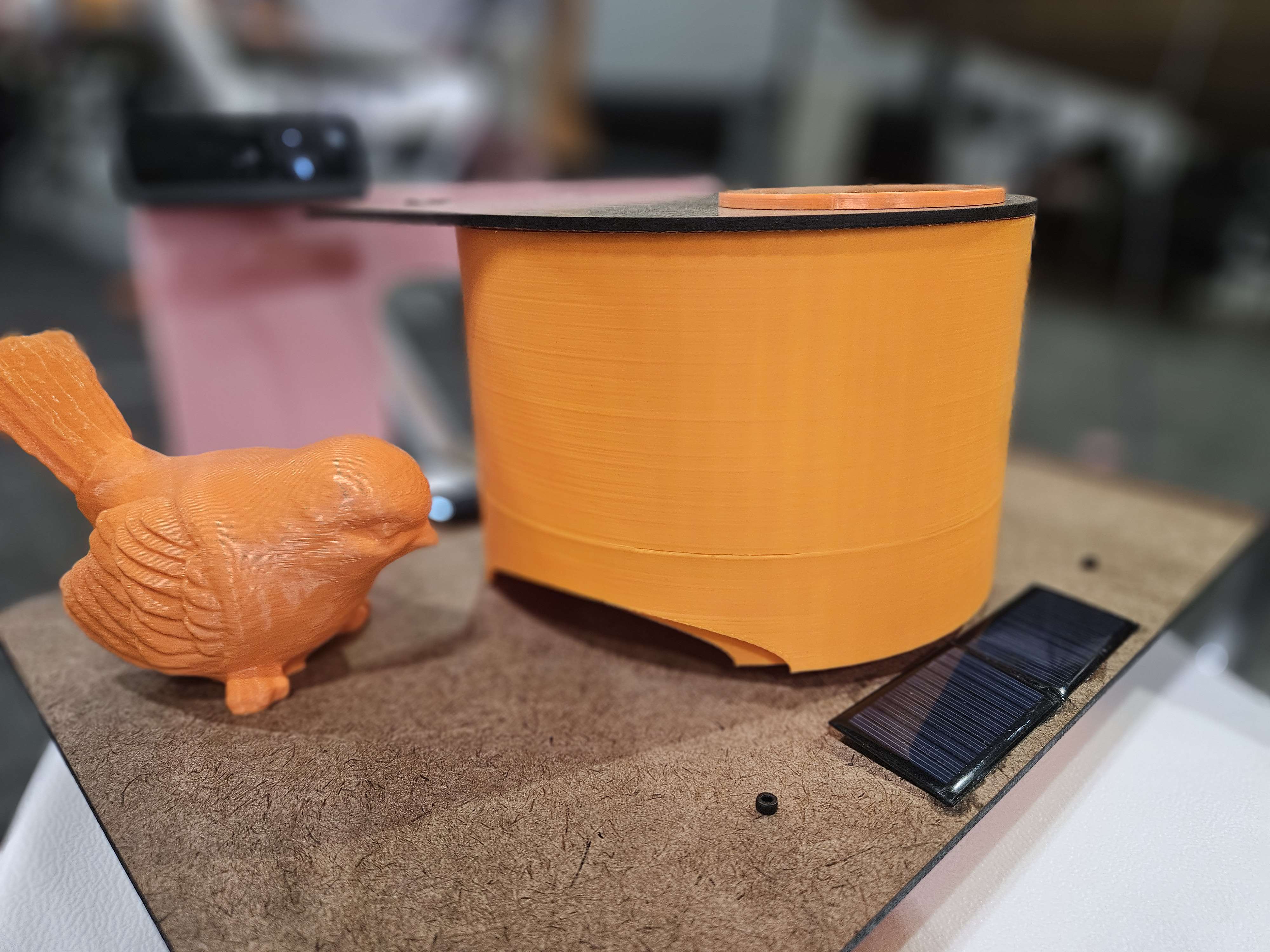
Feeder Angled View (with Bird Model)
-
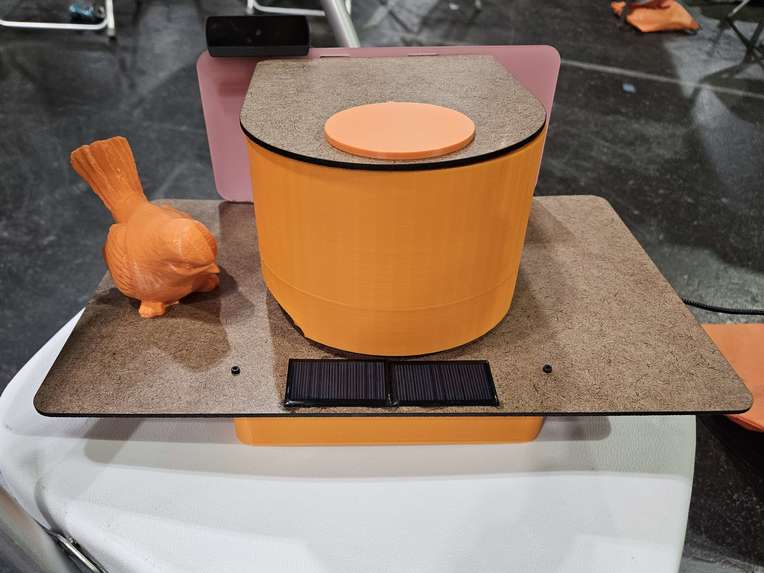
Feeder Front View
-
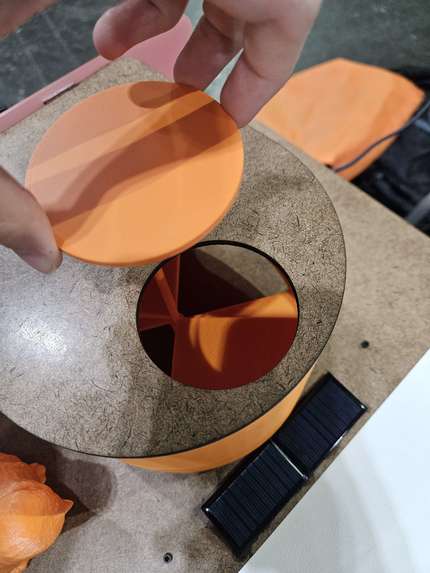
Inside View - Open Position
Inspiration
Some of our loved ones are avid birders, and like any fan of birds, they feed birds. Unfortunately, the food meant for our avian friends is frequently enjoyed by squirrels. Although they can be quite cute at times, squirrels are typically pests driven solely by malice. Chewing through cables, throwing acorns at whoever treads below, and the worst of all: stealing bird feed! We knew this problem was quite nuts.
What it does
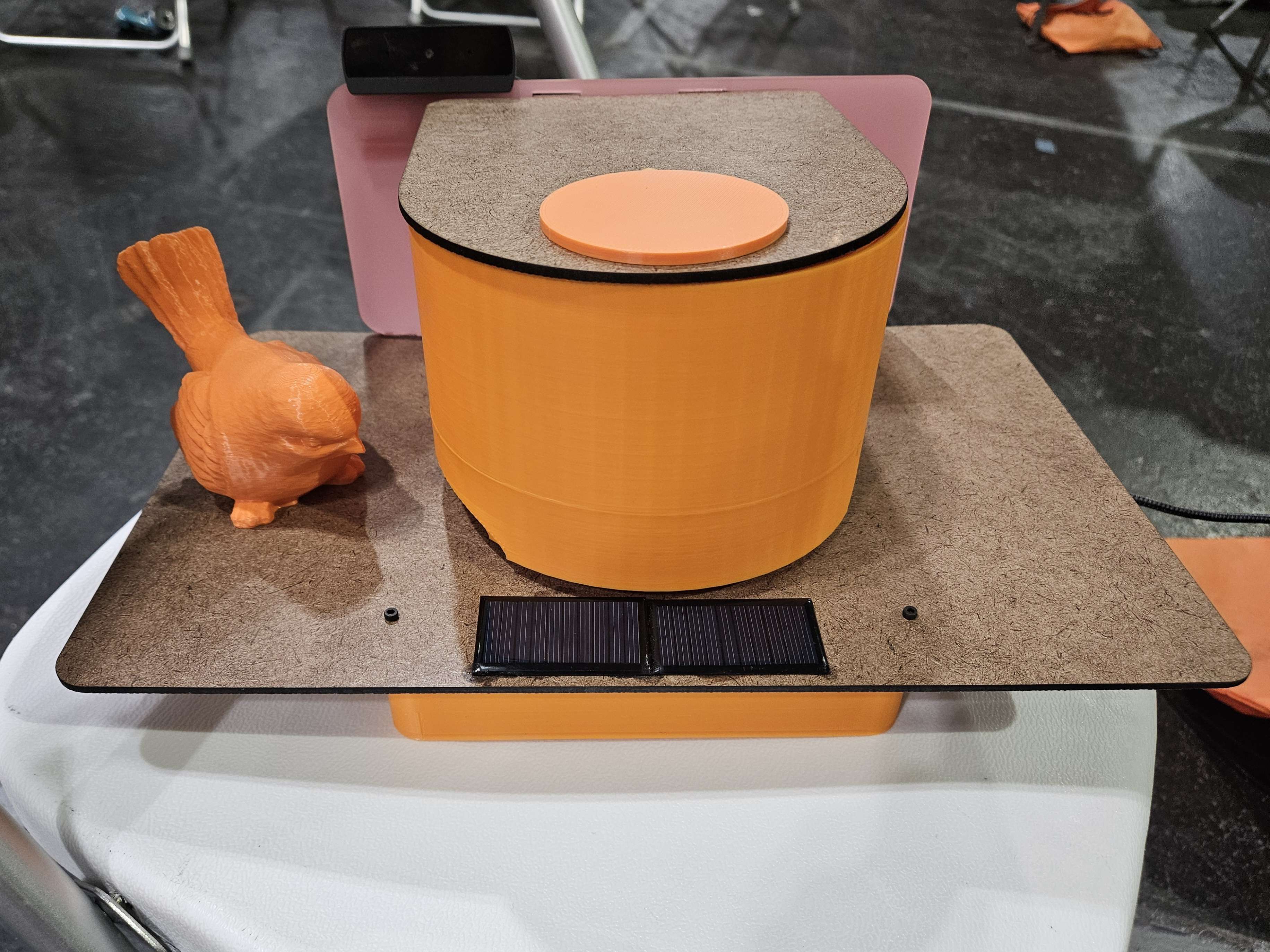
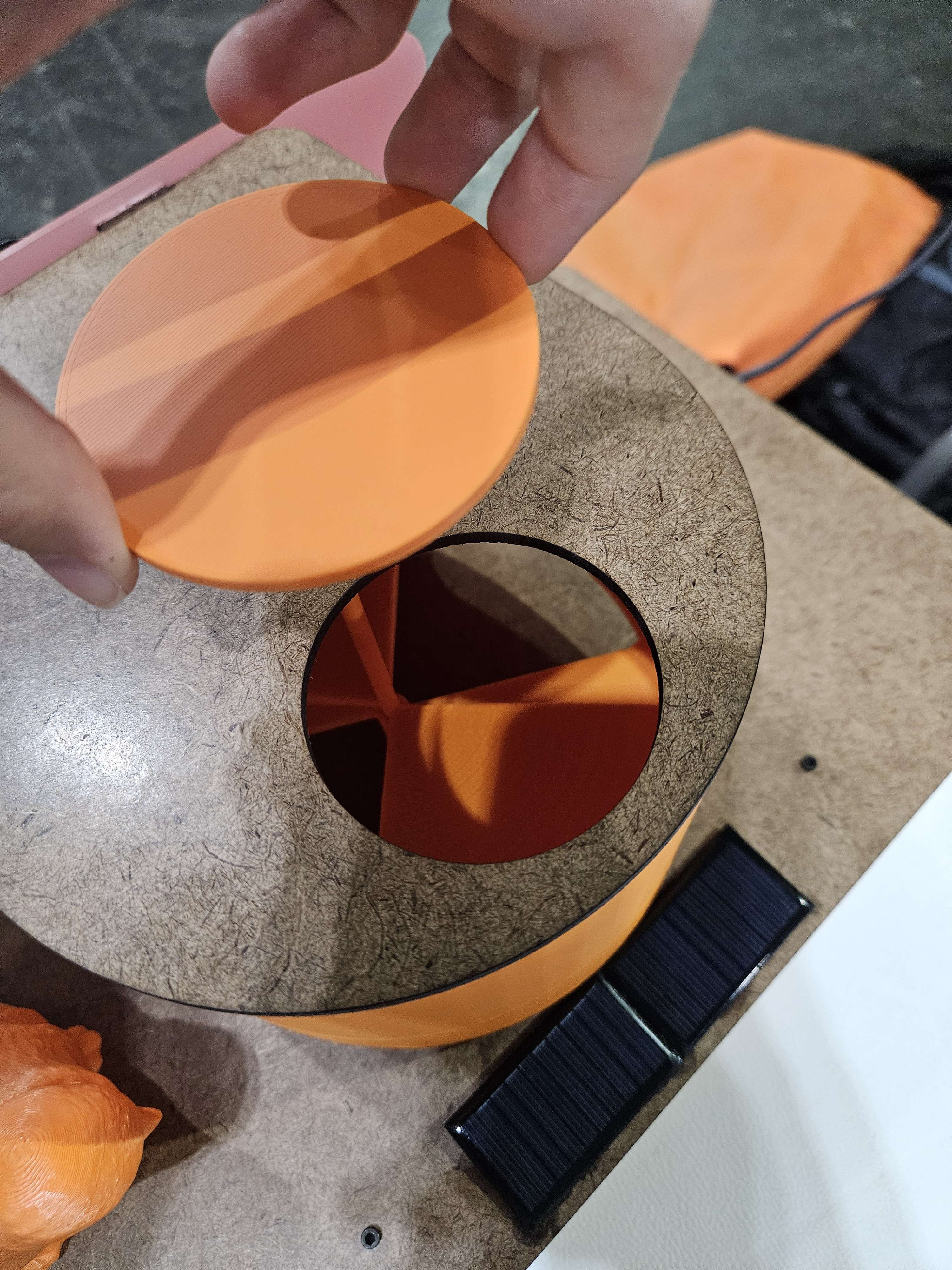
To protect the bird's food & deter squirrels we've designed a clever revolving gate system to keep squirrel paws out. Using a custom built CV Model & Camera we could intelligently detect when a squirrel was near the feeder and twist it shut to lock them out.
How we built it
Powering the project is an Arduino Uno Q running our custom model on board. The efficiency & power of the Qualcomm Dragonwing is where our Edge-AI Device really came to life. Being able to run the CV Model locally allowed us to significantly cut down on latency between image capture & recognition. Additionally, keeping things on one device is appealing to both hobbyists & consumers alike.
Challenges we ran into
Learning to work with a lot of new (to us) hardware was by far the greatest challenge. Our team was most familiar with the Raspberry Pi family of devices but realized the Arduino Uno Q was the best bet for our needs at the beginning of the hackathon. Unfortunately, late into the hackathon we realized our Raspberry Pi mindset didn't align with the design constraints set by Arduino. After testing our python scripts through an SSH Terminal session, compiling with the Arduino App CLI would result in package mismatches & missing libraries. After a few hours of troubleshooting we realized it would be easier to use an ESP32-S3 DevKit to handle the tasks intended for the MCU on the Uno Q Board. This was certainly a curveball but the added functionality of wireless communication would allow us to scale the BirdHaus project into a much larger modular piece of home equipment if desirable.
Accomplishments that we're proud of
We are exceptionally pleased with the CV model's ability to communicate wirelessly with the servo controller based purely off of visual input. Additionally, we were particularly impressed with how well the 3d prints fit with our hardware, all making for a nice snug fit. After some brief learning we were quite fond of the accessibility of interfacing with the ESP32-S3 from via HTTP requests, which saved us from troubles with the Uno Q's dual chip headache. Finally, our team of Electrical Engineers excelled with the circuit integration of a "global ground" which made power supply management much easier to understand for the non-EE majors alongside giving Bird Haus solar power capabilities!
What we learned
Our entire team believes the best way to learn is by doing, and with an opportunity like StarkHacks, we decided to dive head first into several topics we weren't experienced with. Throughout, we learned valuable skills, such as developing & training a CV model, building an efficient & renewable-powered circuit, & perhaps most importantly, designing modular parts that not only look nice, but serve a valid engineering purpose. They say pressure makes diamonds, and in our case we formed and solidified new skills that will enable us to continue developing gems in whatever field we aim to make an impact.
What's next for BIRD HAUS
This project is truly just beginning. There are currently plans for a sleek web app that allows users to interface with their feeder, enabling a live video feed & manual feeder control. Additionally, we'd like to implement an "Invasive Species Defender" which will add known invasive species in your area to your blocklist to help the native species regrow their foothold in your community.


Log in or sign up for Devpost to join the conversation.