Inspiration
In our everyday life, we often notice birds hopping around, scavenging for food, or soaring overhead. While these feathered friends are a familiar sight, and we might snap a photo of a particularly colorful one, we often don't realize how much our simple observations can contribute to conservation and awareness. Our app aims to bridge this gap, encouraging users to connect more deeply with nature. By making birdwatching engaging and informative, we hope to inspire environmental awareness and foster a sense of stewardship for our shared environment.
What It Does
When users spot a bird, they can use the app to capture and preserve that memory forever. Users can photograph birds, with AI to identify the species. It automatically records location, time, and environmental data, allowing users to create their own personal and interactive collection of birds they have seen. Alongside this, the app provides educational insights into each species, inspiring users to learn more about their local bird populations and the ecosystems they inhabit. By raising more awareness of the animals that share the environment with us, we hope to inspire more environmentally friendly habits and community conservation efforts.
How We Built It
Flutter uses a modern tech stack to combine powerful visualization with advanced backend processing. The frontend, built with React, TypeScript, and React Three Fiber, provides an immersive 3D experience of bird behaviors. Tailwind CSS ensures a responsive and intuitive design.
Supabase powers our backend, offering real-time updates and secure authentication. Bird species classification is handled by a machine learning pipeline built with TensorFlow, with Databricks and Apache Spark enabling efficient data analysis and Machine Learning model training. Our Databricks pipeline ingested data from AWS S3, trained the model using MobileNetV2, and deployed it using Databricks ML Flow. We used Terraform to set up our Infrastructure specifically AWS S3 buckets and Databricks. The interactive mapping system, powered by Mapbox, allows users to visualize bird sightings geographically.
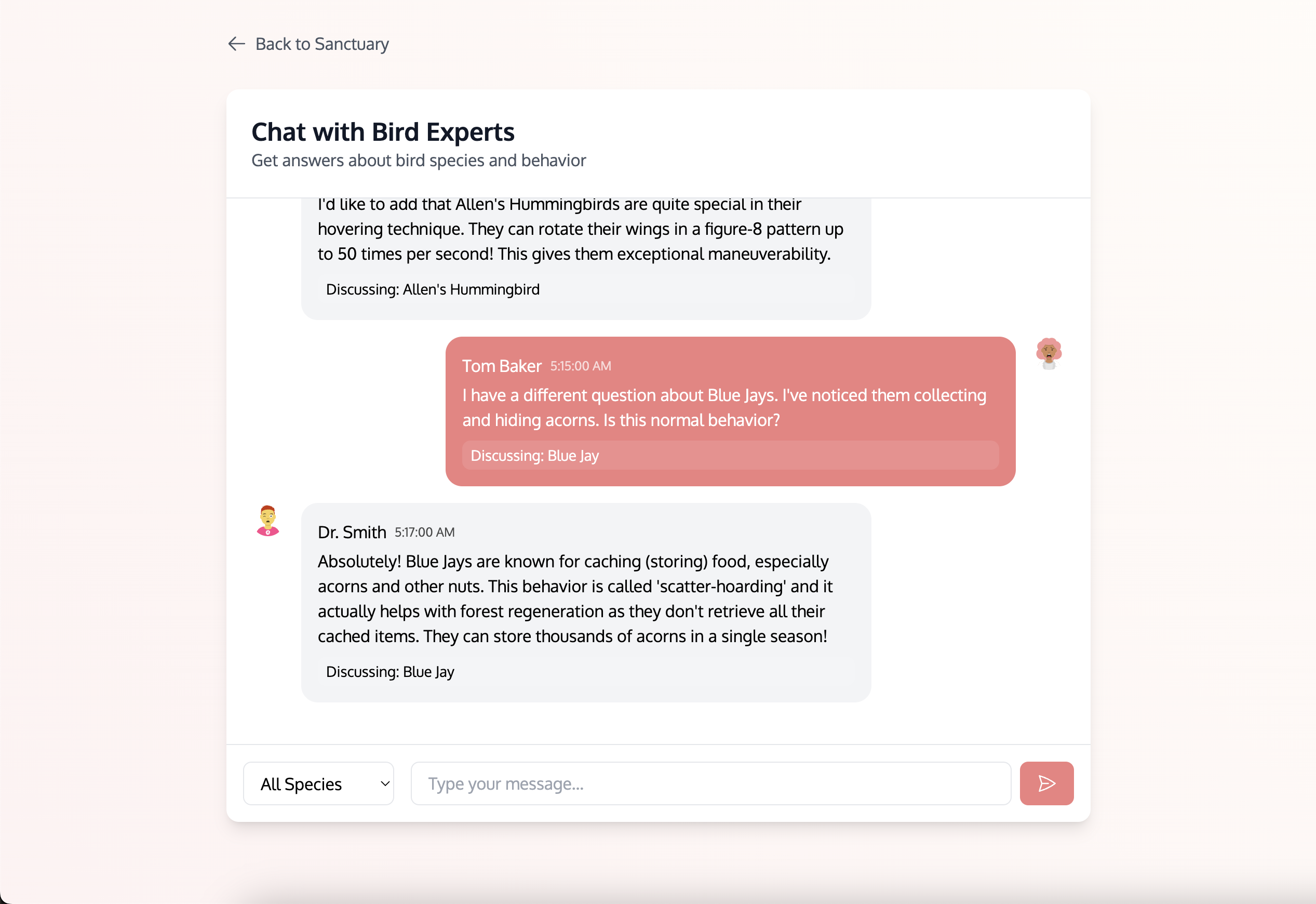
We provide an expert chat feature for ornithological discussions, a data transformation layer for smooth communication between components, and gamified tools that engage casual bird watchers and researchers alike. Real-time synchronization ensures that all users see the latest information instantly, creating a seamless platform for both bird enthusiasts and researchers.
Challenges We Ran Into
Integrating computer vision models into the app was challenging due to the diversity of bird species and their varying environments. We also faced issues in optimizing data pipelines for real-time processing without compromising user experience. Ensuring accuracy for species identification, especially for visually similar species, demanded extensive model training.
Accomplishments That We're Proud Of
We successfully implemented an AI system that accurately identifies birds from user photos. We built a seamless pipeline that turns user observations into valuable scientific data. We're proud of creating an app that makes science accessible and meaningful, encouraging users to contribute actively to conservation efforts.
What We Learned
We learned about optimizing machine learning models for diverse and dynamic datasets, as well as scaling real-time data pipelines. We also gained insights into balancing user experience with data accuracy and how to design an engaging interface that encourages ongoing contributions.
What's Next for Flutter
We plan to expand our AI capabilities to identify more bird species across different regions. We aim to add community features, such as local leaderboards and collaborative challenges, to foster a community of bird watchers. We also plan to partner with conservation organizations to amplify the impact of user-contributed data.

Log in or sign up for Devpost to join the conversation.