Inspiration
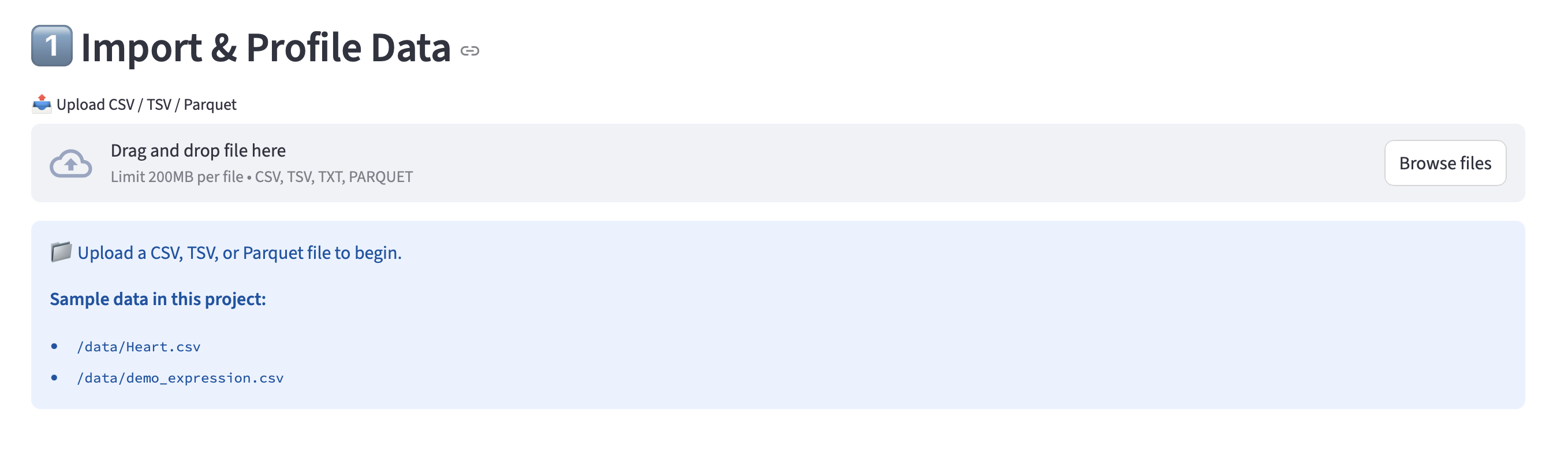
We have always had friends studying biology and biotechnology, and they often explained how difficult it was for them to apply dimensionality reduction methods in practice. These techniques usually require programming skills, installing packages, and understanding complex workflows, which can be a major barrier. From those conversations, we got the idea of building a web-based tool where, with just a few clicks, users can explore their data. No coding, no package installation, only the dataset is needed, and the analysis is ready to run.
What it does
In the future, we would like to extend BIOVIS Studio with additional methods, more advanced evaluation metrics, and improved support for large datasets. We also plan to further develop the AI assistant to provide more adaptive and data-specific guidance, making the tool more useful for both teaching and exploratory analysis
How we built it
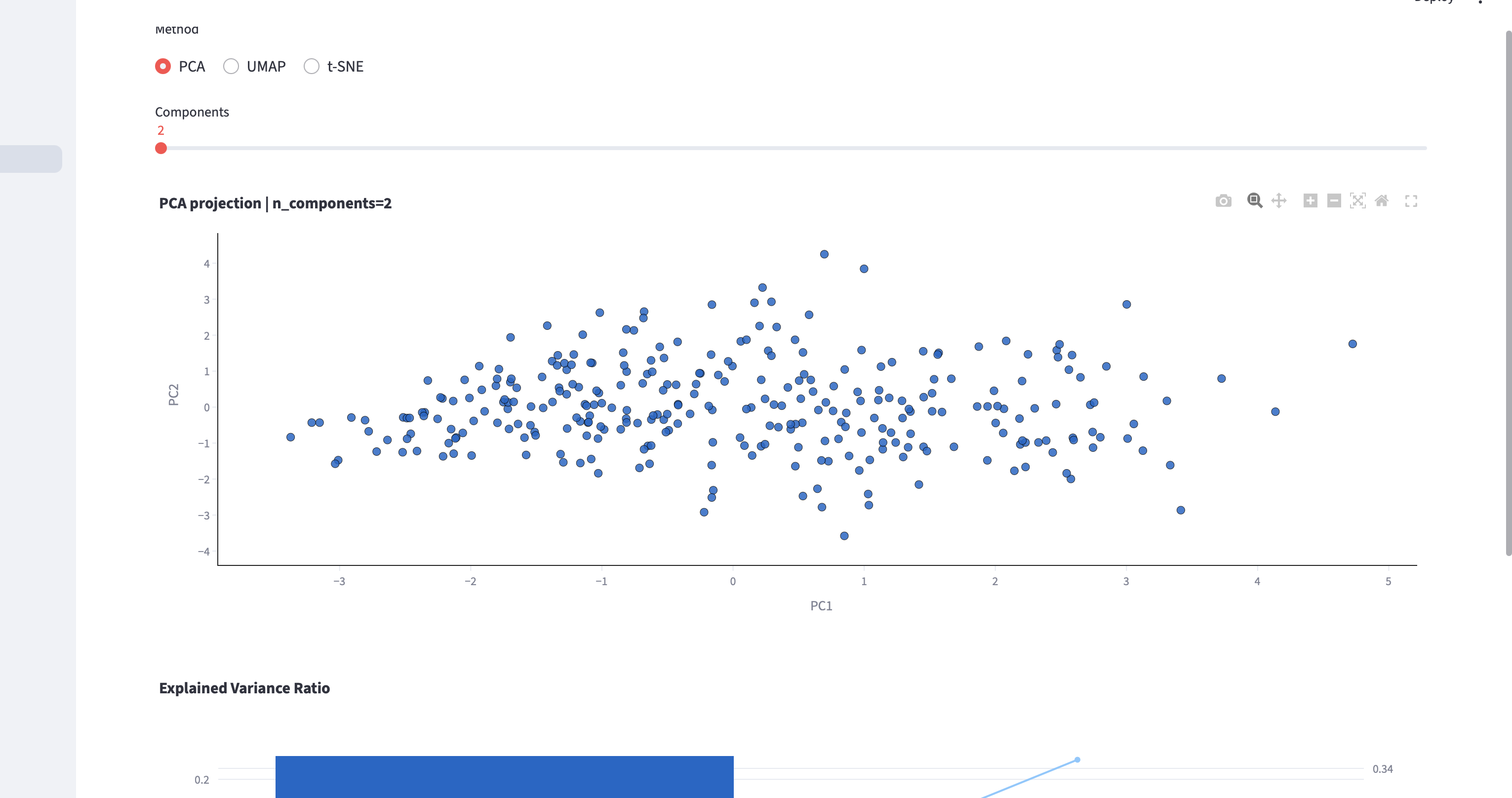
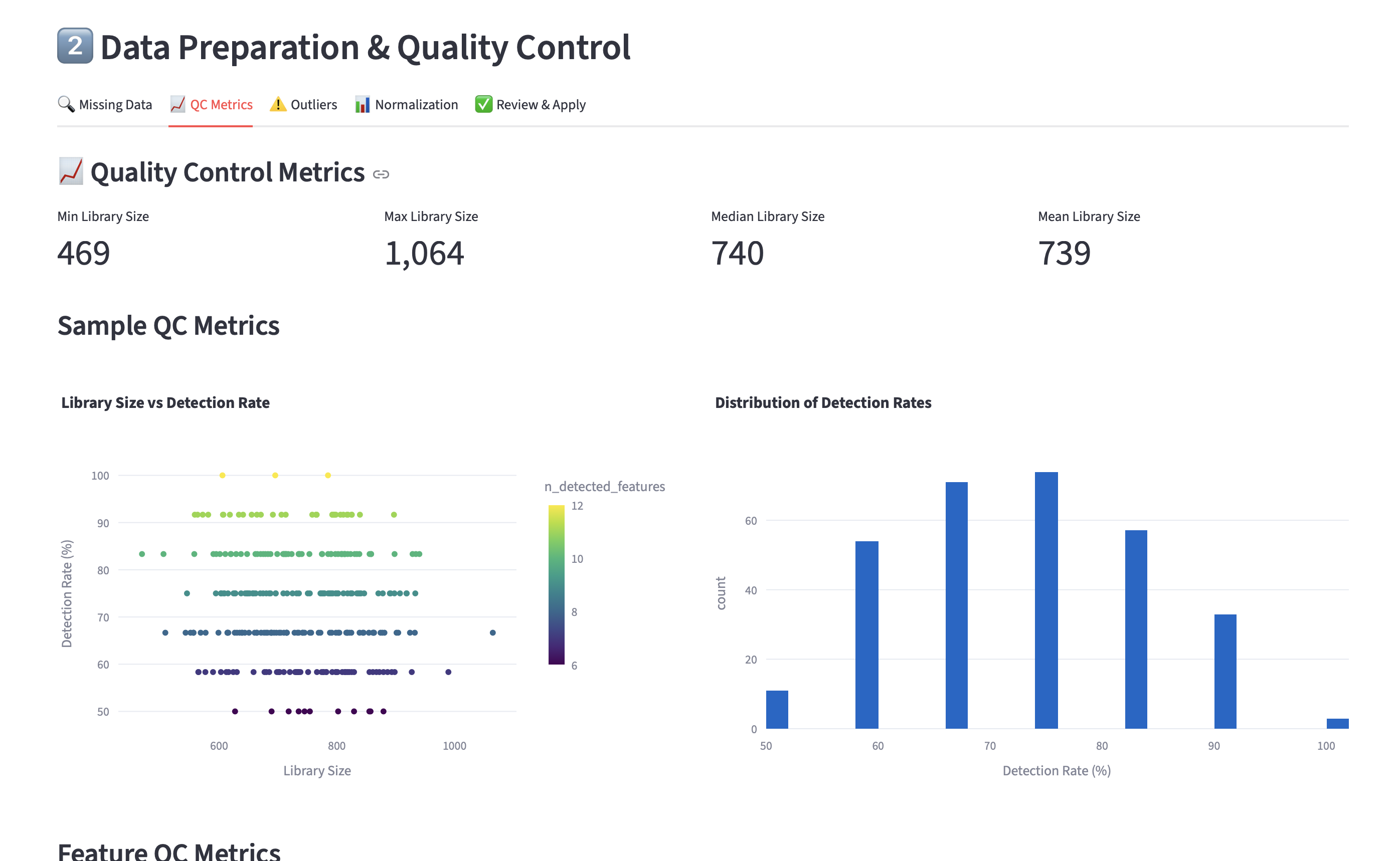
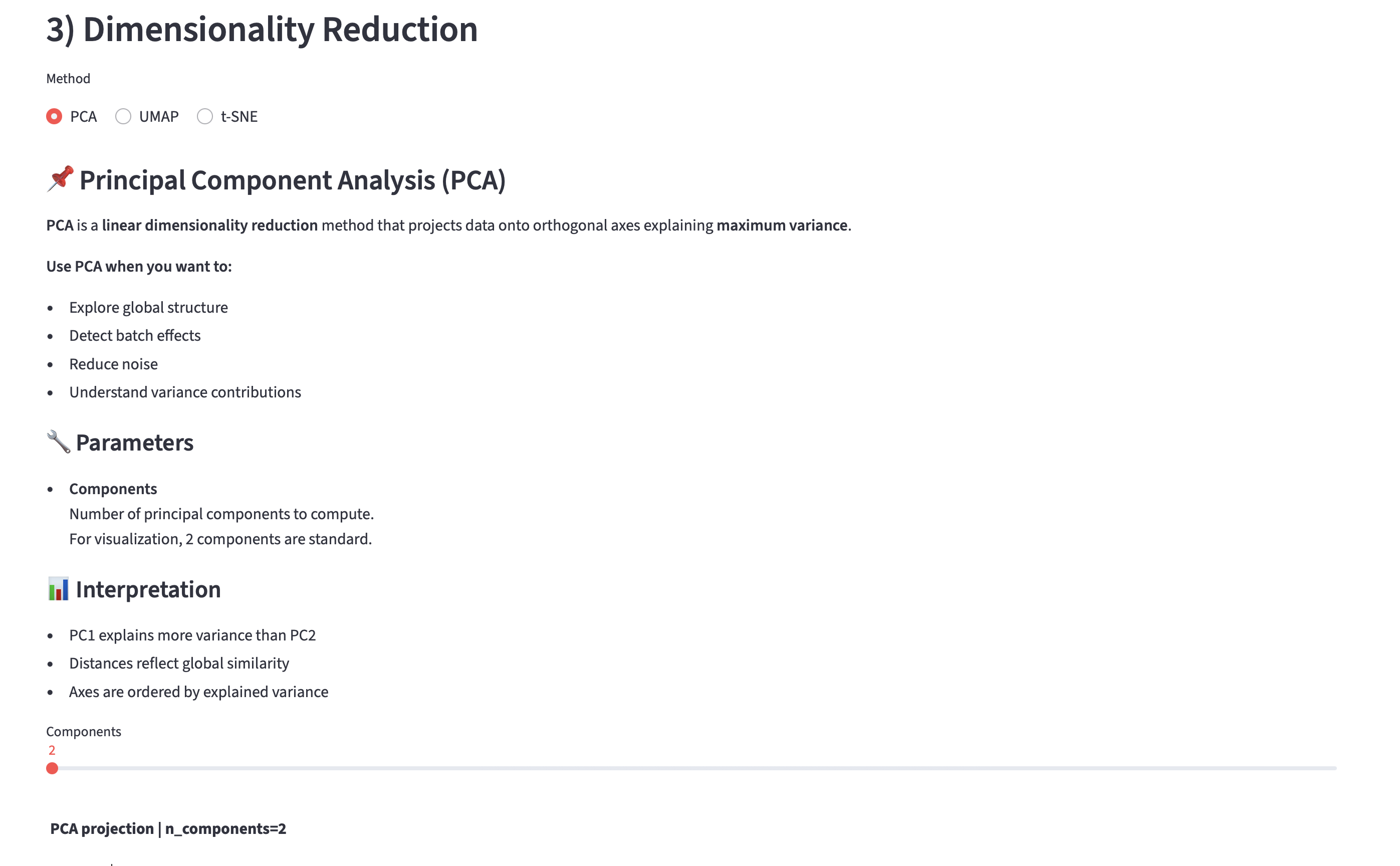
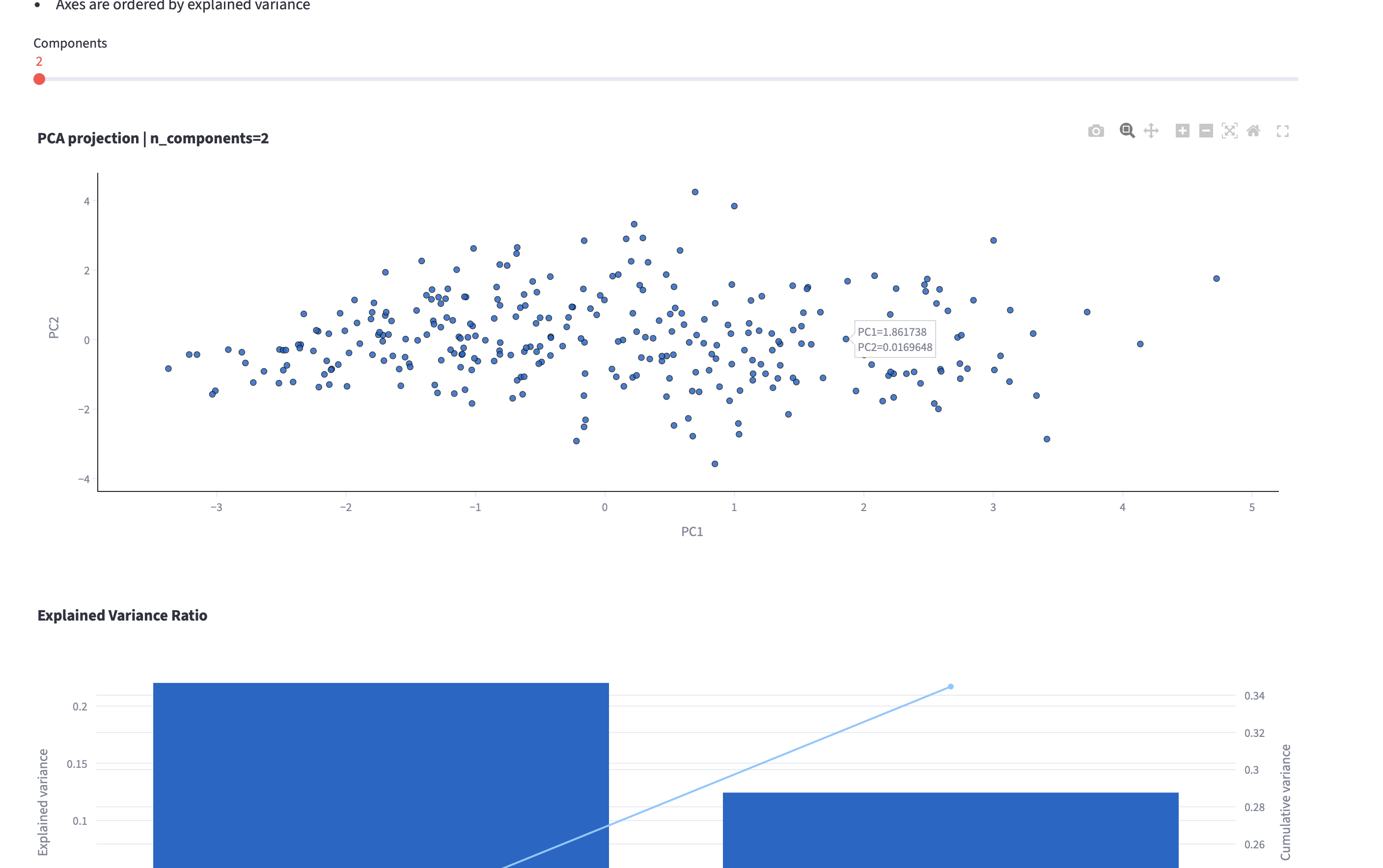
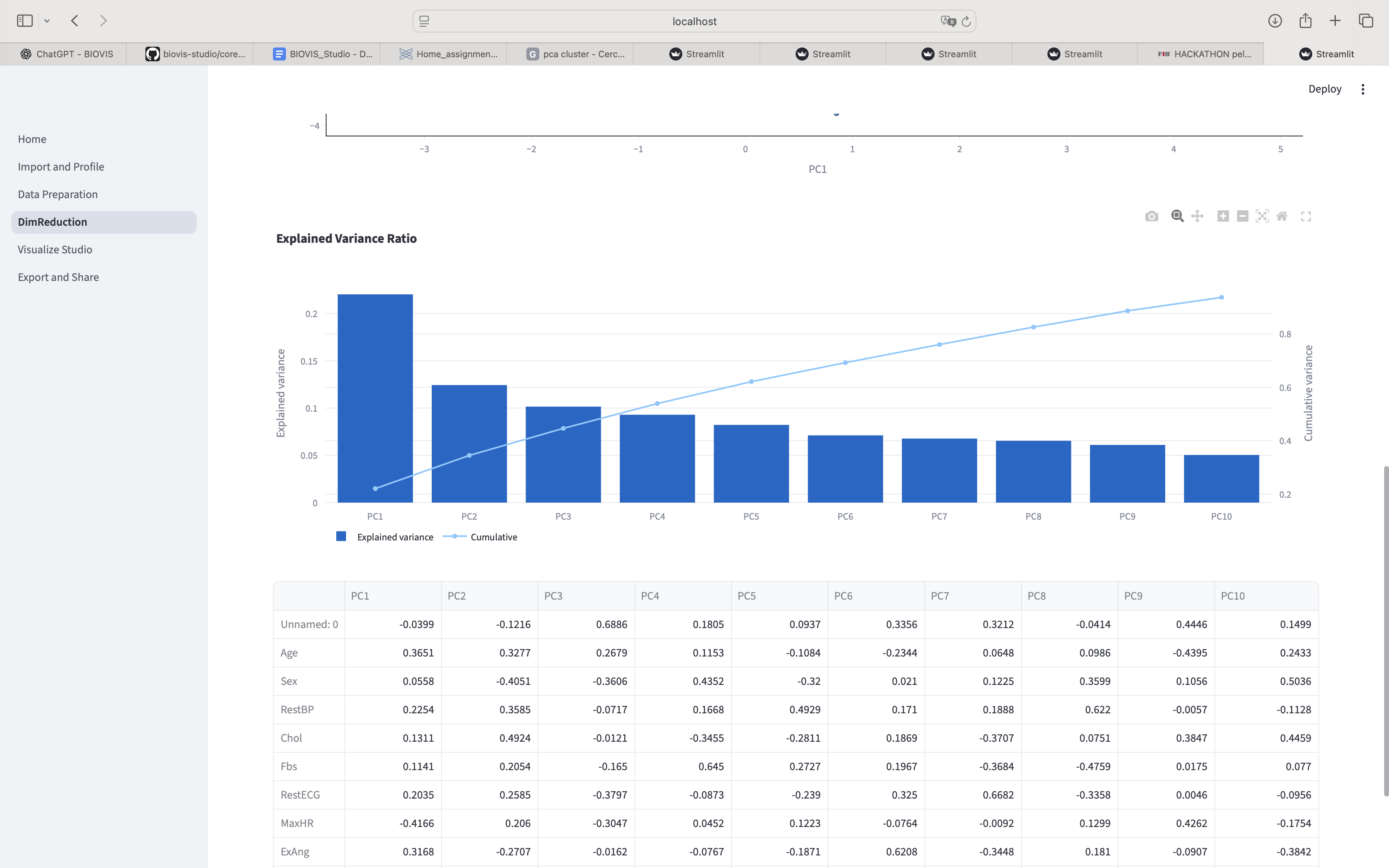
We built the project using Python and Streamlit, structuring the code into modular components for preprocessing, dimensionality reduction, visualization, and evaluation. We implemented PCA, UMAP, and t-SNE with user-controlled parameters and designed a unified visualization system to ensure comparable plots across methods. The AI assistant was added to provide contextual explanations directly within the interface.
Challenges we ran into
One of the main challenges was ensuring that the visualizations were both interactive and scientifically meaningful. Handling different data types, preserving metadata through preprocessing steps, and implementing confidence ellipses consistently across methods required careful design. We also had to balance flexibility for advanced users with clarity for less experienced ones.
Accomplishments that we're proud of
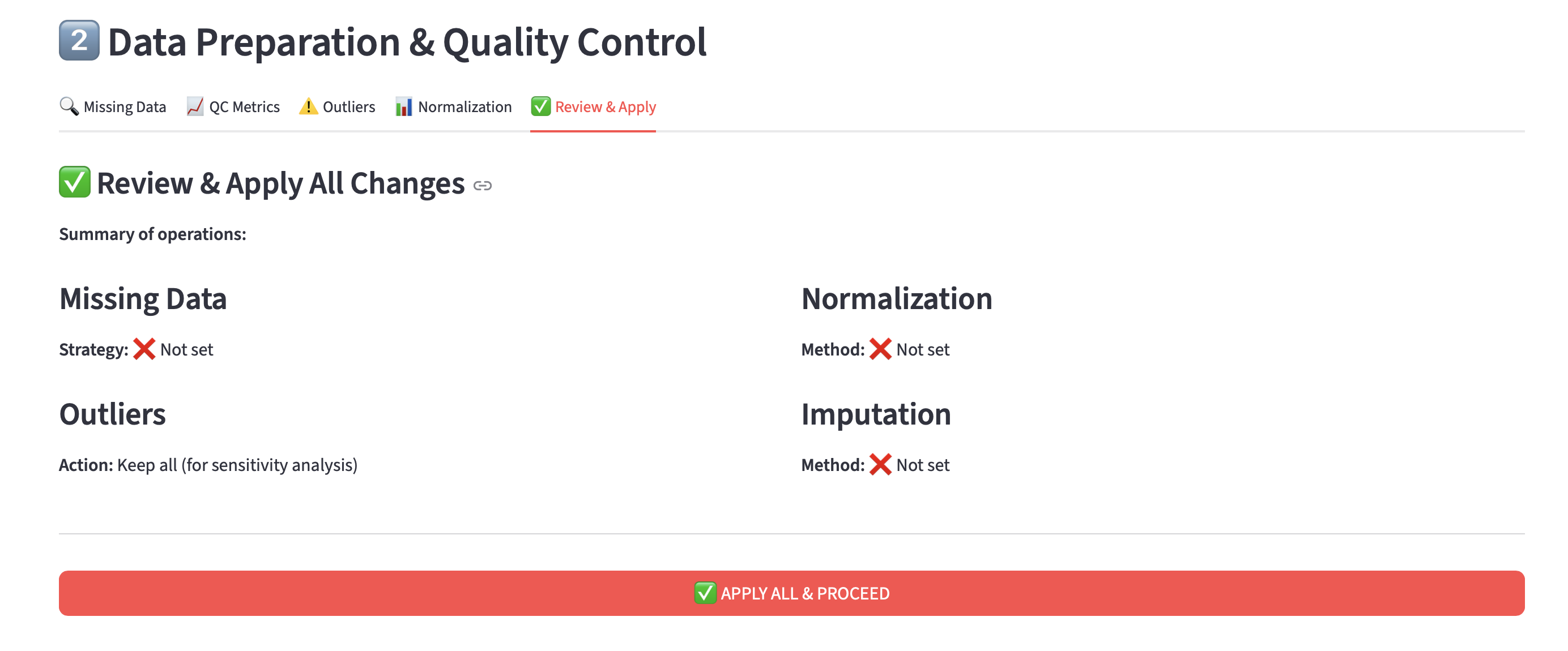
We are proud of building a tool that goes beyond plotting and encourages proper interpretation of dimensionality reduction results. Integrating preprocessing, evaluation metrics, and an AI assistant into a single coherent workflow was a key achievement, as was maintaining a clean and modular codebase.
What we learned
Through this project, we gained a deeper understanding of how dimensionality reduction methods work, what their limitations are, and how sensitive they can be to preprocessing and parameter choices. We also learned the importance of reproducibility, clear visualisation design, and user guidance when working with complex data.
What's next for BIOVIS Studio
Through this project, we gained a deeper understanding of how dimensionality reduction methods work, what their limitations are, and how sensitive they can be to preprocessing and parameter choices. We also learned the importance of reproducibility, clear visualization design, and user guidance when working with complex data.

Log in or sign up for Devpost to join the conversation.