-
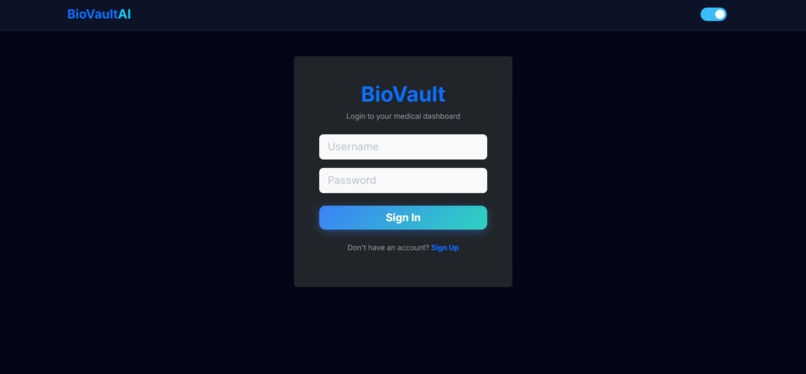
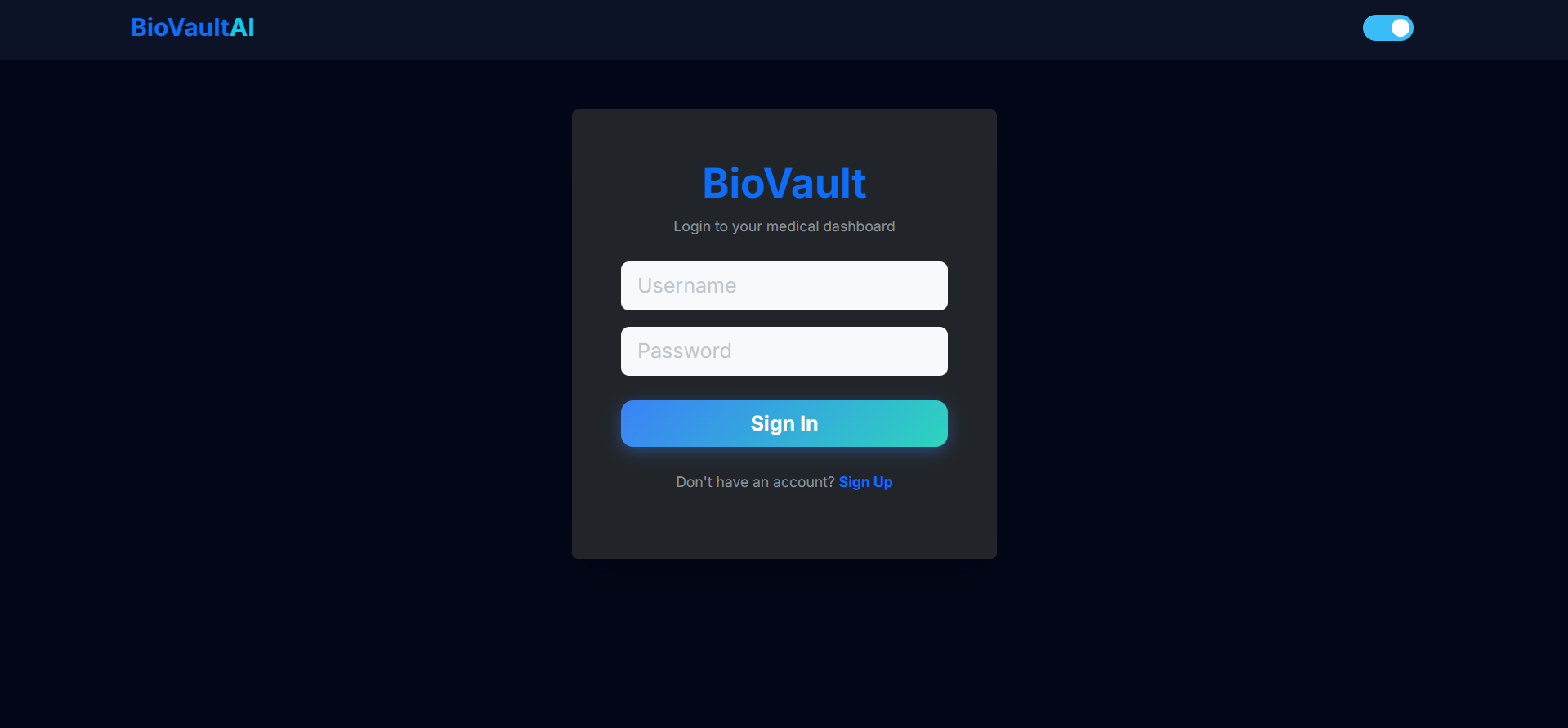
the login page
-
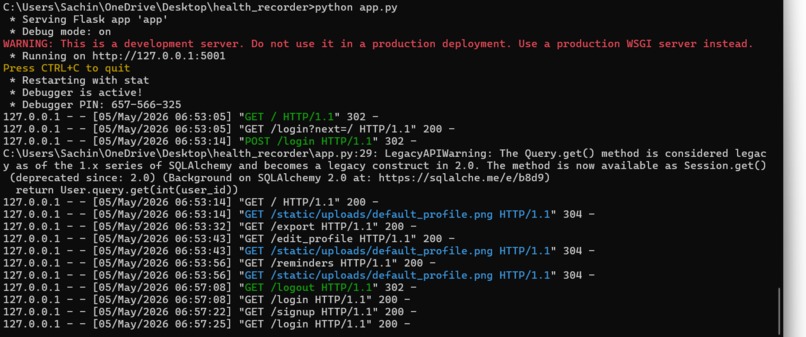
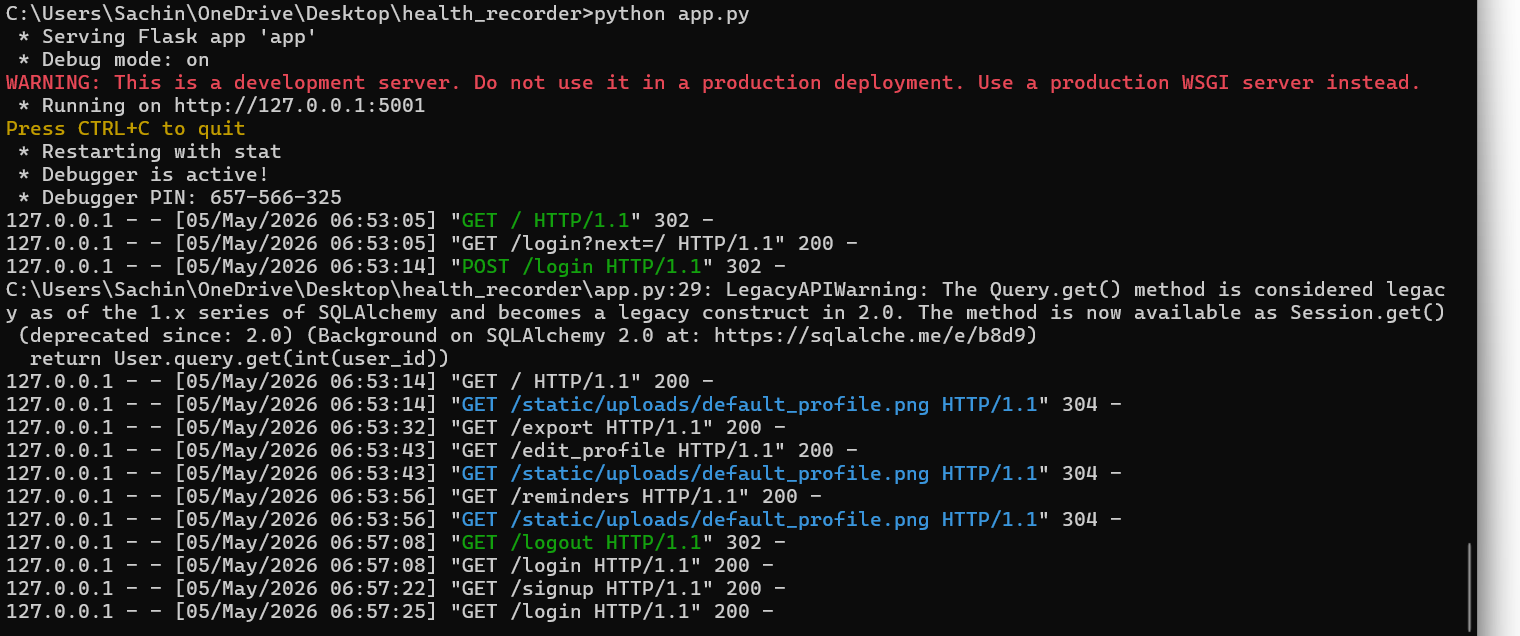
The program running in the cmd
-
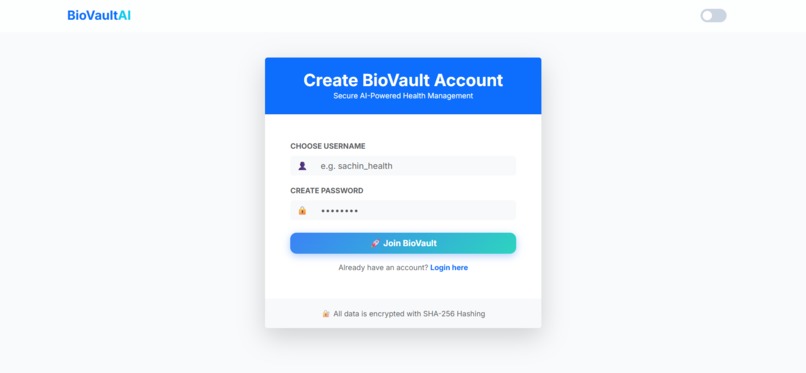
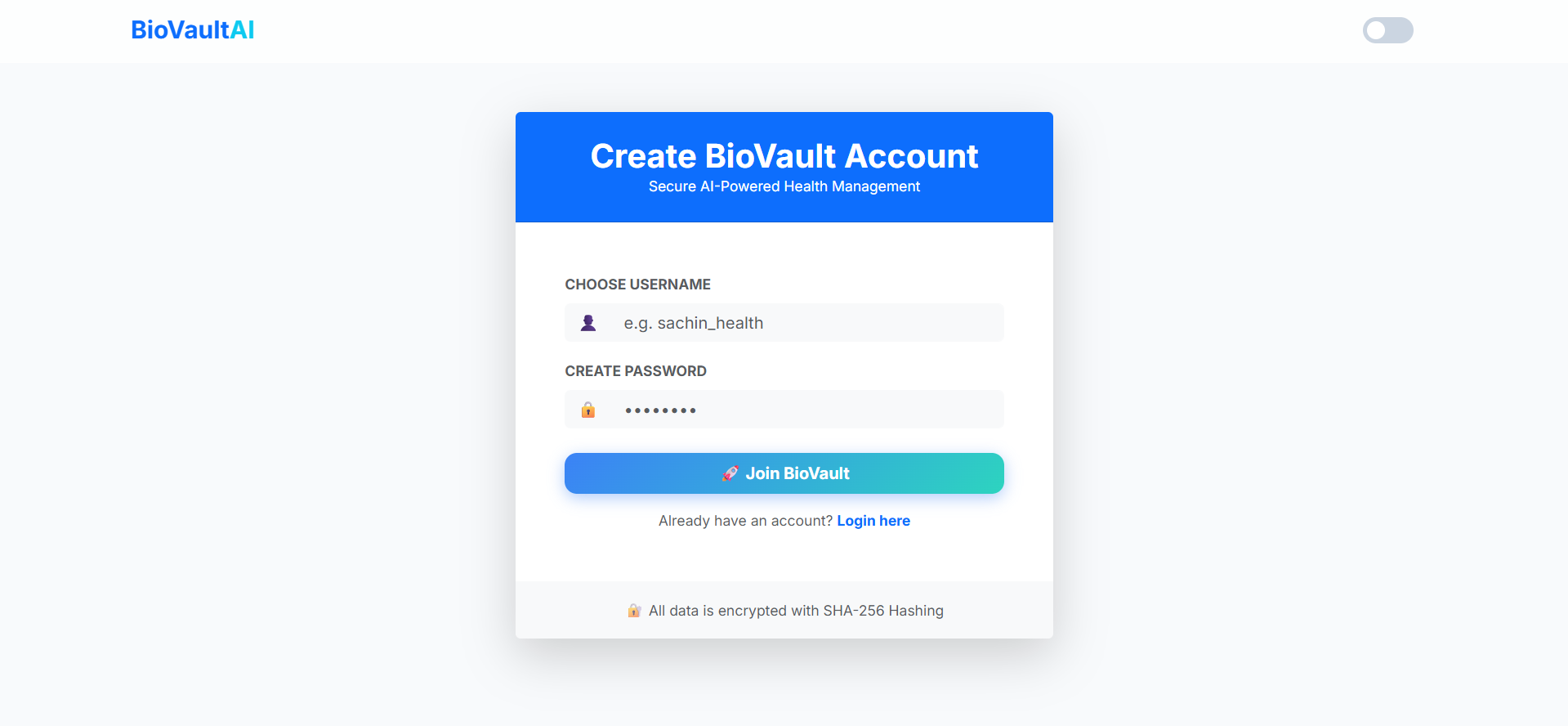
the sign up page
-
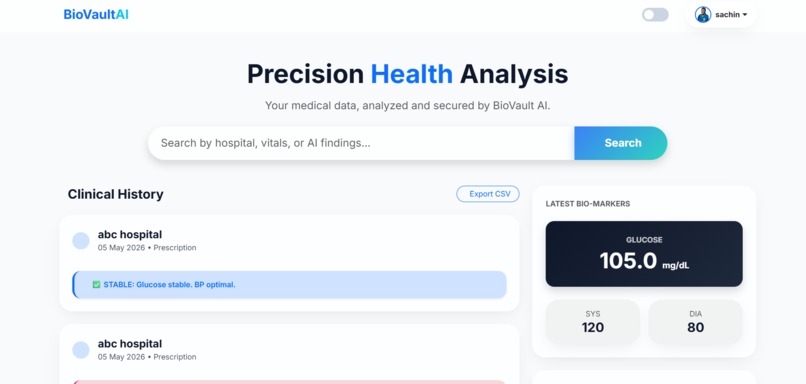
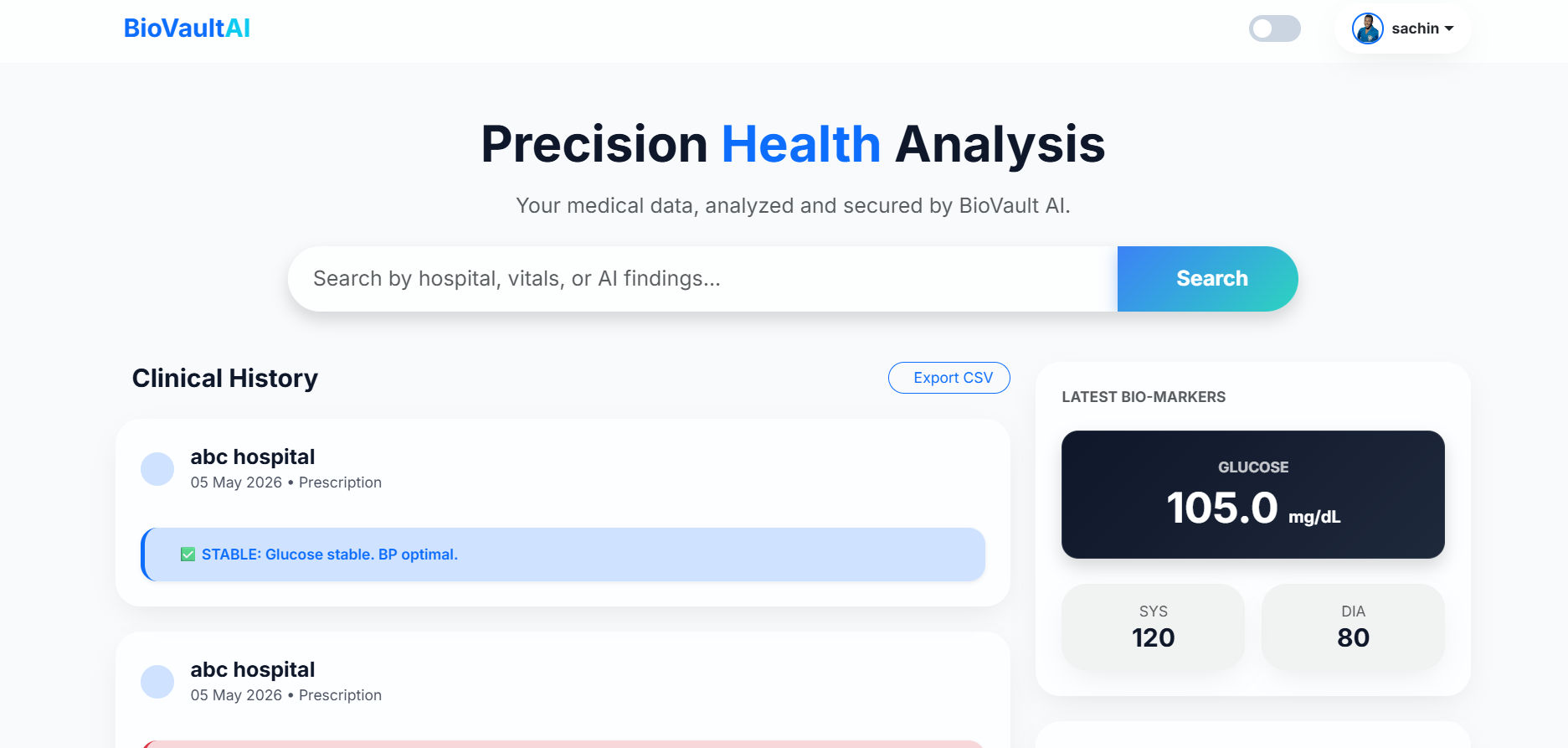
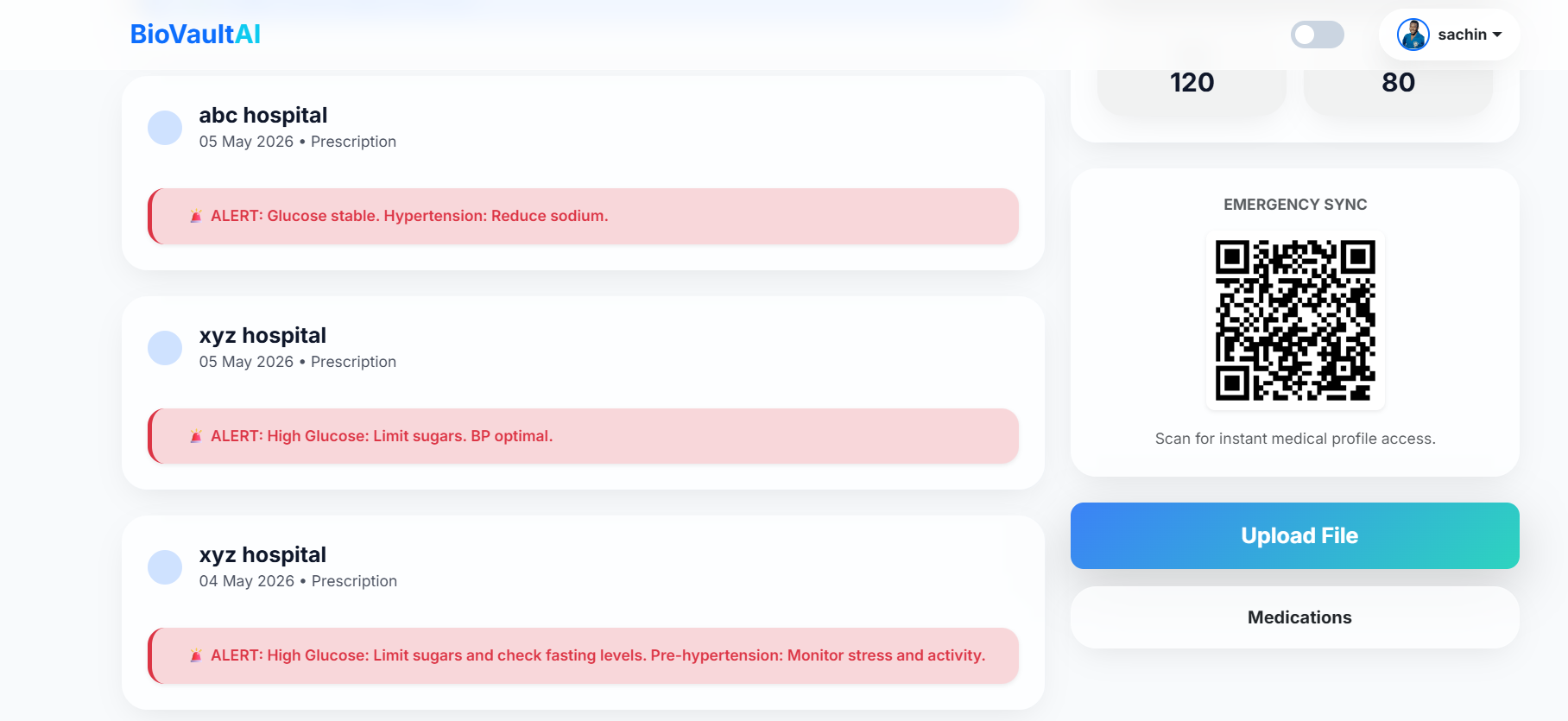
main dashbaord
-
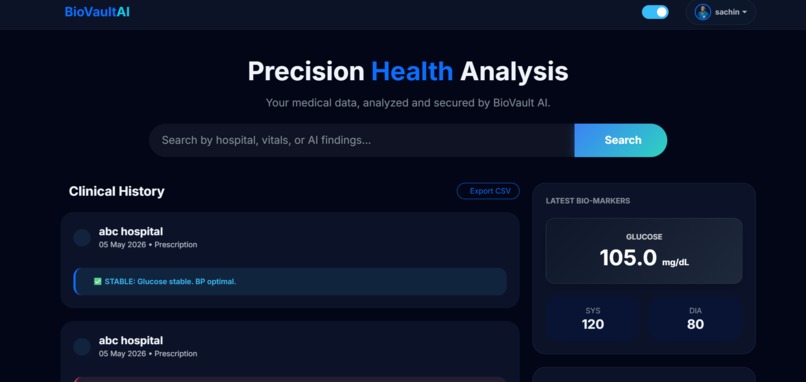
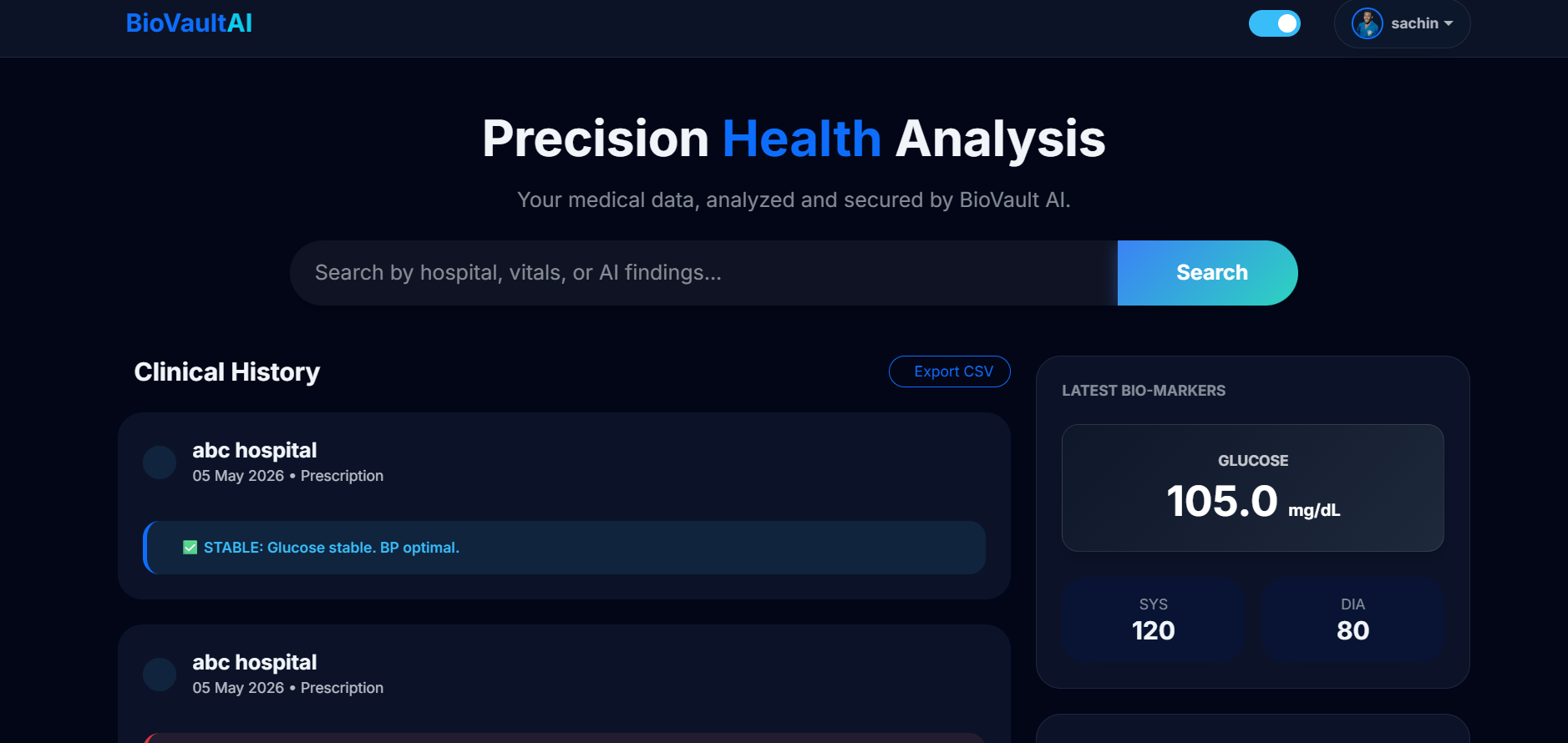
main dashboard in dark mode
-
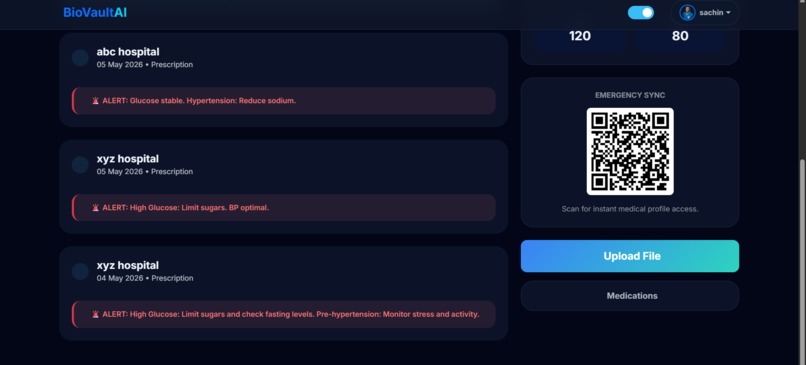
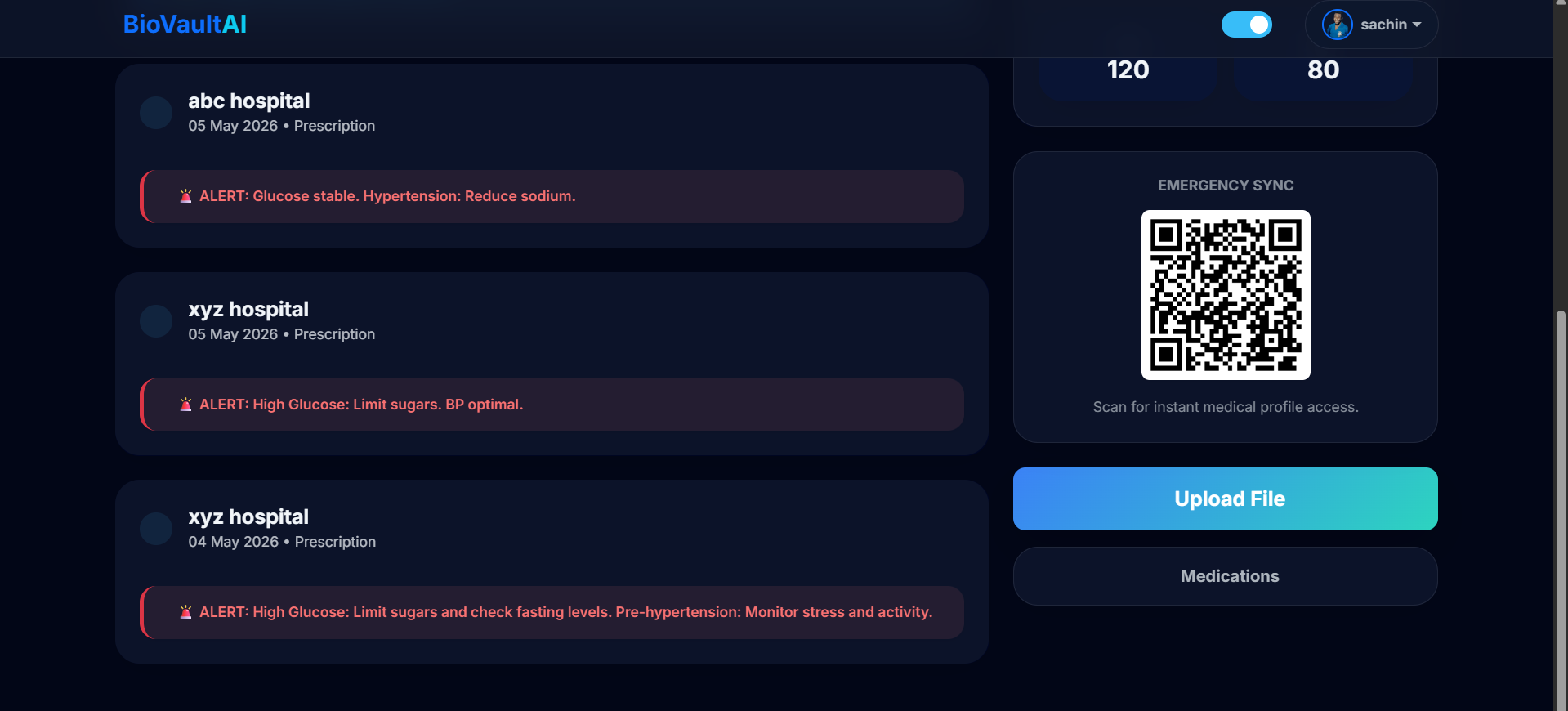
emergency qr code with data storage with insights in dark mode
-
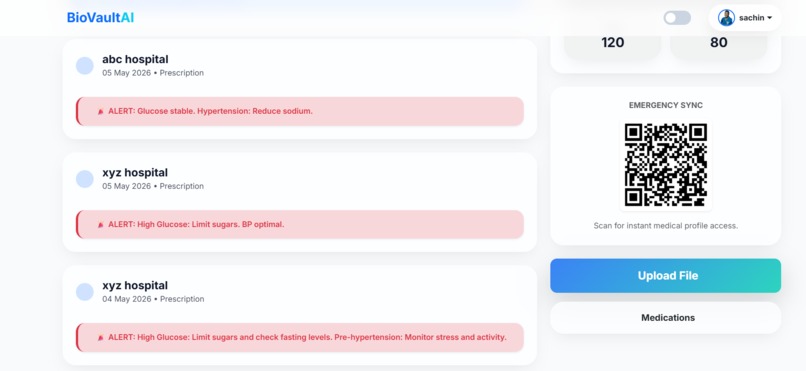
emergency profile qr code with medical data with insights
-
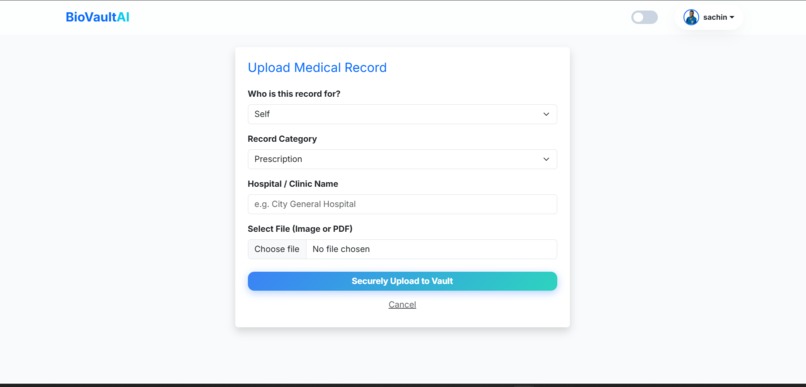
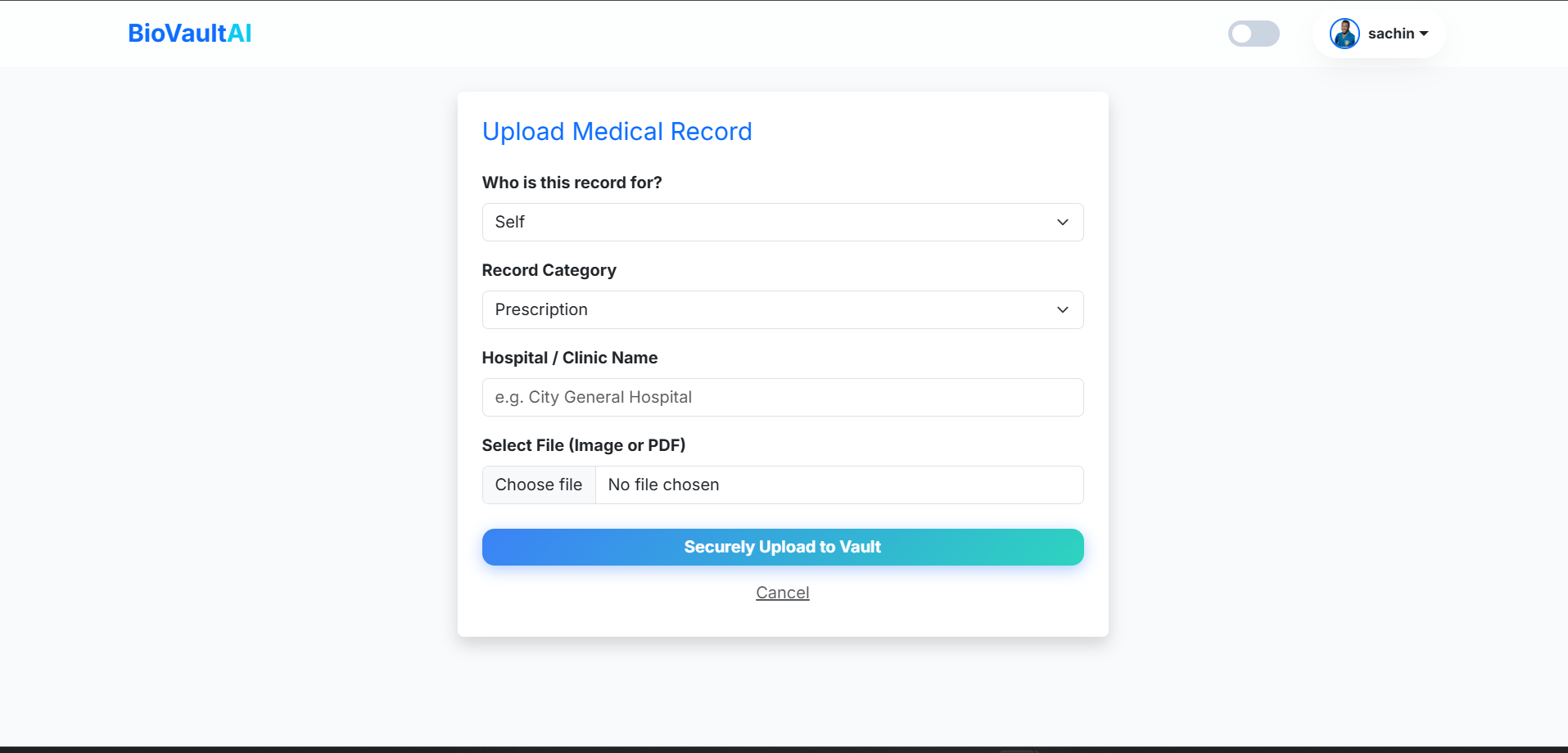
uploading medical data
-
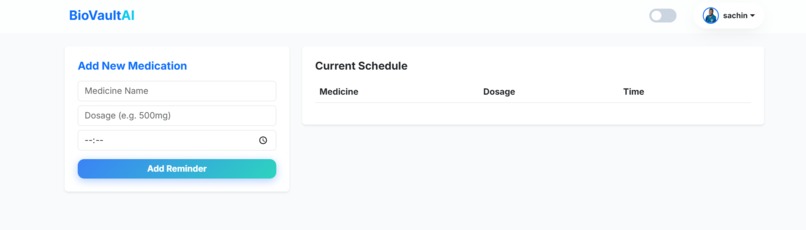
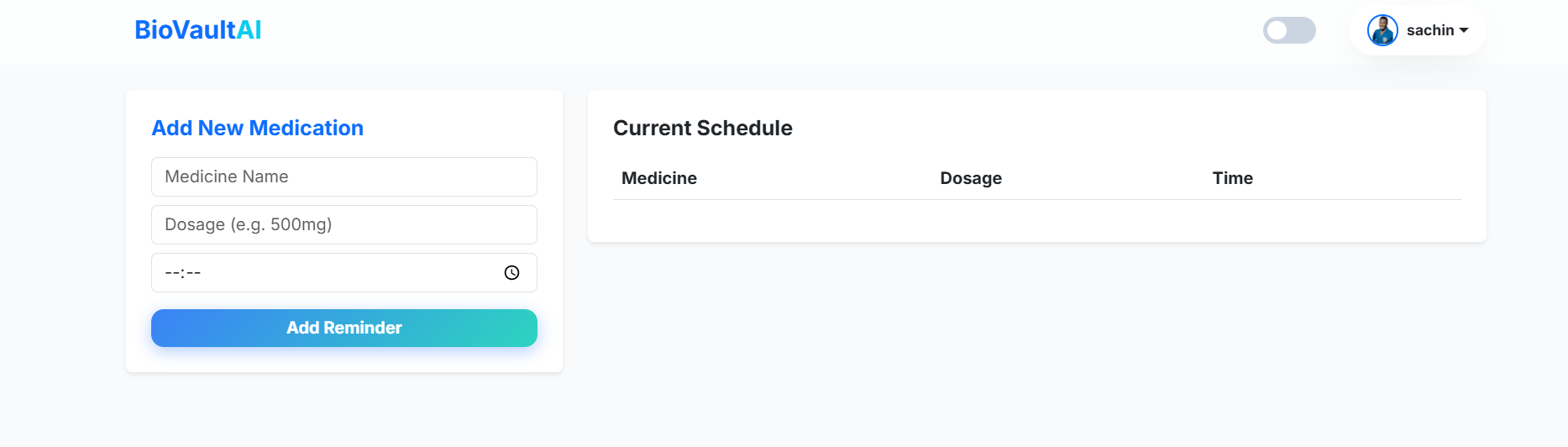
medical remainder
-
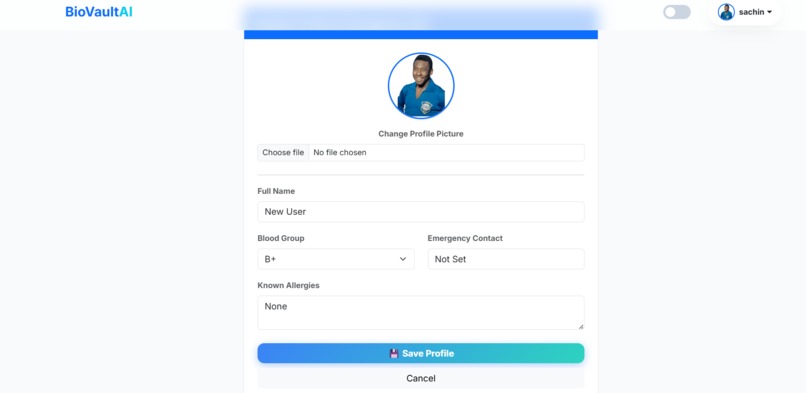
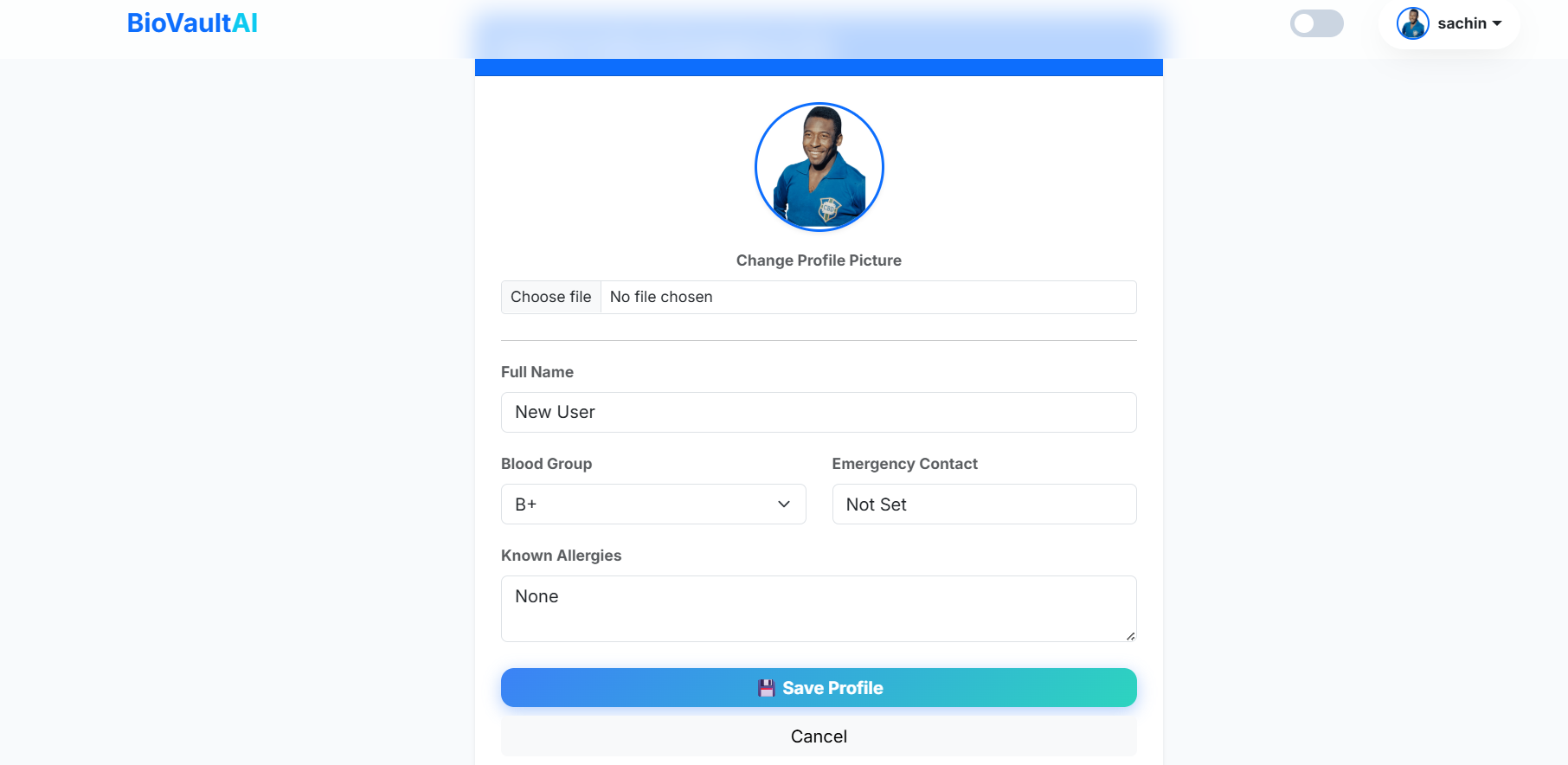
the main profile editable page
Inspiration
BioVault AI was born from the realization that personal health data is highly fragmented and static. Critical medical information is often trapped in physical prescriptions, siloed in different hospital portals, or uninterpretable to the patient until a follow-up appointment. We were inspired to build a centralized, "intelligent" digital vault that not only secures this data but transforms it into actionable health intelligence for both the patient and emergency responders.
What it does
BioVault AI is a secure, intelligent dashboard that consolidates a user's medical history and vitals.
AI-Powered Uploads: A user can upload an image of a prescription or lab report. The system automatically extracts key vitals (like glucose and blood pressure) using OCR and Regular Expressions.
Automated Interpretation: Our analysis engine interprets the raw numbers to provide an immediate "ALERT" or "STABLE" status with personalized lifestyle suggestions.
Emergency Response Sync: It dynamically generates a dynamic QR Code containing the user’s critical data, such as blood group and allergies, providing instant information to first responders.
Health Management: Includes search functionality for past records, a full CSV export feature, and a medication reminder system.
How we built it
We utilized a robust Python-based stack designed for medical data processing.
Backend: Flask for routing and user session management, and SQLAlchemy (SQL toolkit/ORM) to manage the secure SQLite database.
AI & OCR: Tesseract OCR (pytesseract) to convert document images into text, and Python's Regex (Regular Expressions) library to isolate and extract numerical clinical data.
Frontend: HTML5 with Jinja2 templates, styled with Bootstrap 5 to create the highly legible, high-contrast "Midnight UI" (dark mode dashboard).
Specialized APIs: The QRServer API for dynamic QR generation.
Challenges we ran into
One of our biggest hurdles was configuring Tesseract OCR for varied inputs. Medical documents often have messy handwritten notes, different font sizes, or low-resolution scans. Ensuring that our Regex accurately and consistently extracted the glucose and blood pressure numbers from this "noisy" raw text, rather than picking up dates or hospital phone numbers, required significant tuning of the pattern matching logic.
Accomplishments that we're proud of
We are incredibly proud of successfully integrating dynamic data flow from a "dumb" image upload to a live, analyzed dashboard view. We managed to create a smooth workflow where a user uploads a prescription, and moments later, the dashboard's "Latest Bio-Markers" card and the "AI Insight" field are both automatically updated. Having a working proof-of-concept for the Emergency QR Sync that changes in real-time is also a major win for us.
What we learned
We gained significant practical experience in building multi-user applications and handling sensitive clinical data types. We learned that data extraction is only useful if it's accompanied by robust error handling—handling cases where OCR fails or detects values outside of a logical medical range. Most importantly, we learned that the biggest "AI" value in healthcare isn't just advanced prediction, but simple, immediate data interpretation for the user.
What's next for BioVault AI
The hackathon prototype is just the beginning. The future roadmap includes:
Large Language Model (LLM) Integration: Instead of just rule-based alerts, integrating a proper medical-tuned LLM to provide deeper context and summaries of full lab reports.
IoT Synchronization: Allowing users to sync continuous glucose monitors (CGMs) or smartwatches directly to the dashboard for longitudinal tracking, not just prescription snapshots.
Enhanced Interoperability: Adding FHIR (Fast Healthcare Interoperability Resources) support to allow official data exports that doctors can import into their systems.

Log in or sign up for Devpost to join the conversation.