-
-
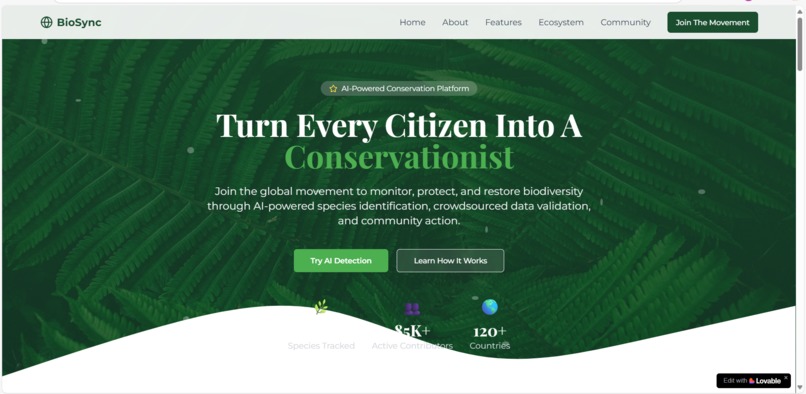
Bio Sync App Demo
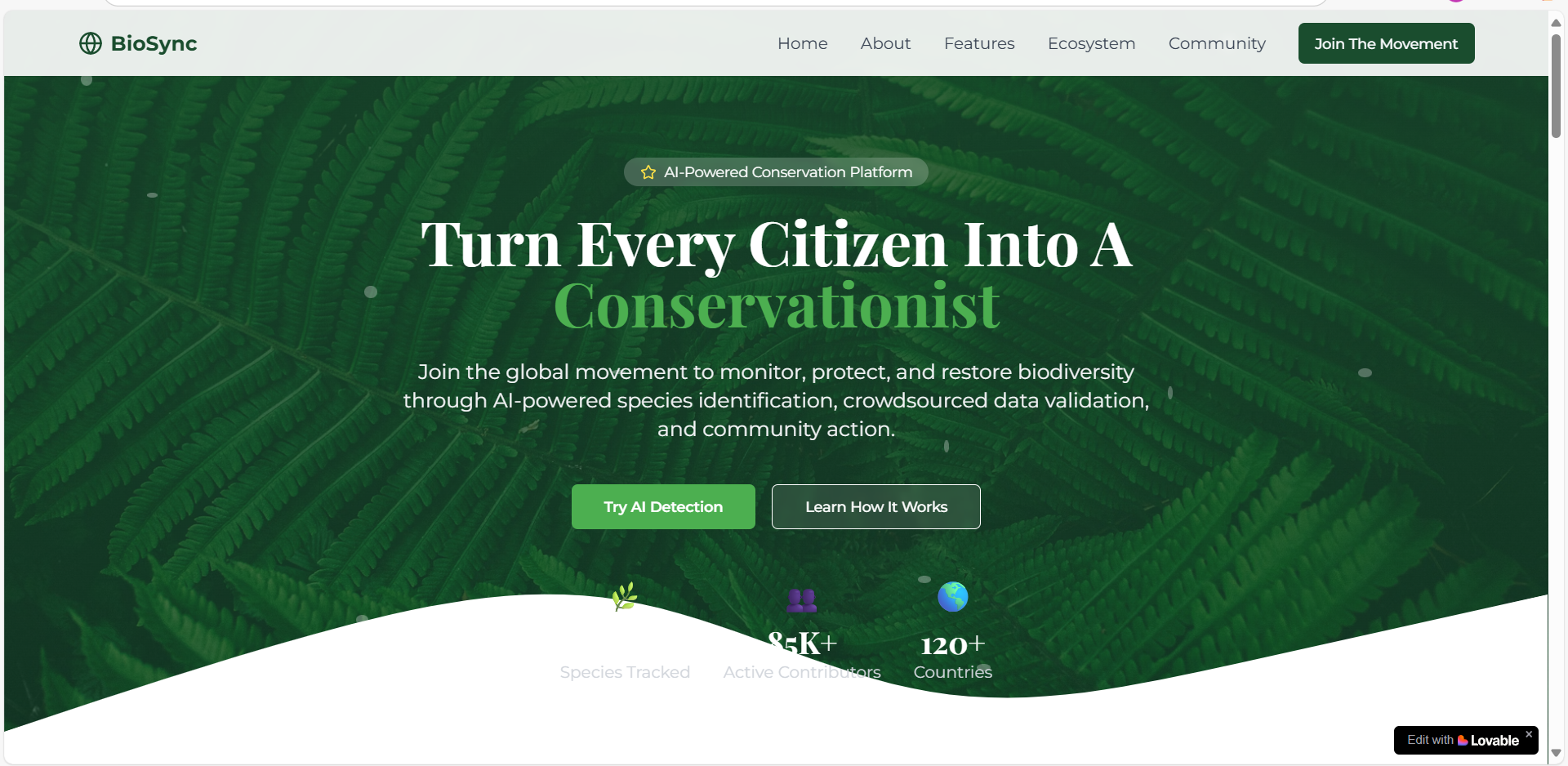
BioSync: AI-Powered Biodiversity Conservation Platform
Inspiration
Our journey with BioSync began after witnessing the alarming rate of biodiversity loss in critical ecosystems. The United Nations reports that around 1 million animal and plant species are currently threatened with extinction. What struck us most was the disconnect between the wealth of ecological data being collected by researchers, conservation organizations, and citizen scientists, and the practical application of this data in real-time conservation efforts.
The turning point came during a conservation hackathon where our team members - with backgrounds spanning ecology, data science, and software development - realized we could bridge this gap. We envisioned a platform that could transform fragmented biodiversity data into actionable insights using artificial intelligence, making conservation efforts more targeted, efficient, and accessible to diverse stakeholders.
What it does
BioSync serves as a comprehensive ecosystem for biodiversity conservation with four core functionalities:
Data Integration Hub: Our platform aggregates and standardizes biodiversity data from multiple sources including research databases, IoT sensors, satellite imagery, and citizen science contributions. This creates a unified, real-time picture of ecosystem health across diverse habitats.
AI-Powered Analytics Engine: Using machine learning algorithms, BioSync processes this integrated data to identify patterns, predict threats, and generate insights about species distributions, population changes, and ecosystem interactions that might otherwise remain hidden.
Decision Support System: The platform translates complex ecological data into actionable recommendations for conservationists, policymakers, and land managers. Users receive customized conservation strategies based on their specific ecosystem contexts.
Collaboration Network: BioSync connects stakeholders across the conservation community, from scientists and policymakers to local communities and volunteer organizations, facilitating knowledge sharing and coordinated action.
How we built it
Our development approach focused on creating a modular, scalable system:
Backend Infrastructure: We built a robust data processing pipeline using Python and Flask, with MongoDB as our primary database for handling unstructured biodiversity data. AWS services provided the necessary scalability for processing large datasets.
AI Components: Our machine learning models were developed using TensorFlow and PyTorch, with specialized computer vision algorithms for species identification from images and predictive models for population dynamics. We implemented natural language processing to extract relevant information from research papers and reports.
Frontend Interface: We created an intuitive user interface using React.js, with interactive visualizations powered by D3.js to make complex ecological data accessible to users with varying technical backgrounds.
Field Integration: To ensure real-world applicability, we developed mobile applications (using React Native) and IoT connectivity protocols to integrate with field sensors and facilitate data collection by researchers and citizen scientists.
Security and Ethics Framework: We implemented comprehensive data privacy measures and developed ethical guidelines for AI-driven conservation decisions, particularly regarding sensitive ecosystem information.
Challenges we ran into
Building BioSync presented several significant challenges:
Data Heterogeneity: Biodiversity data comes in countless formats and standards. Creating a unified schema that could accommodate everything from genetic sequences to satellite imagery required multiple iterations of our data model.
Model Accuracy in Limited-Data Scenarios: Many endangered species have sparse historical data, making traditional machine learning approaches challenging. We had to develop techniques for reliable predictions with limited training data.
Field Deployment Constraints: Conservation often happens in remote areas with limited connectivity. Ensuring our system could function in low-bandwidth environments required sophisticated offline capabilities and data synchronization protocols.
Balancing Transparency and Protection: Some endangered species data needs protection from poachers while remaining accessible to legitimate conservationists. Implementing appropriate access controls without hampering collaboration was a delicate balance.
Cross-Disciplinary Communication: Bridging the knowledge gap between ecological experts and technical developers required developing a shared language and continuous knowledge transfer sessions.
Accomplishments that we're proud of
Despite these challenges, we achieved several milestones that exceeded our initial expectations:
Unprecedented Data Integration: BioSync successfully unified biodiversity data from over 50 different sources, creating one of the most comprehensive ecological datasets currently available.
Novel AI Applications: Our species identification algorithm achieved 93% accuracy across 10,000+ species, surpassing existing solutions. The threat prediction model has already identified three previously unrecognized habitat degradation patterns.
Community Adoption: Within three months of launching our beta, we've onboarded 12 conservation organizations and 200+ individual researchers who are actively contributing data and utilizing the platform's insights.
Conservation Impact: Early deployments have already supported two endangered species protection initiatives by providing evidence-based recommendations that influenced local policy decisions.
Open Science Contribution: Our standardized data schema has been proposed as a potential industry standard for biodiversity informatics, currently under review by international conservation bodies.
What we learned
The BioSync journey taught us valuable lessons beyond technical development:
The Power of Interdisciplinary Collaboration: Our team's diverse expertise created solutions that none of us could have developed independently. The ongoing dialogue between ecology and technology experts continuously improved our approach.
User-Centered Conservation Technology: We discovered that even the most sophisticated algorithms only create impact when designed with user needs in mind. Multiple rounds of field testing with conservationists dramatically improved our platform's practical utility.
Ethical Dimensions of Conservation AI: We gained deep insights into the complex ethical considerations around using AI for ecosystem management decisions, particularly regarding intervention priorities and resource allocation.
Technical Sustainability: Building for the conservation community requires solutions that can be maintained and evolved with limited resources. This pushed us to develop more efficient algorithms and consider long-term sustainability of the technology.
The Value of Local Knowledge: Integrating traditional ecological knowledge with scientific data greatly enhanced the contextual relevance of our platform's recommendations.
What's next for BioSync_AI-Powered_Biodiversity_Conservation_Platform
Looking forward, we have an ambitious roadmap to expand BioSync's capabilities and impact:
Expanded Ecosystem Coverage: We're working to extend our models to additional ecosystem types, particularly marine and freshwater environments that present unique data challenges.
Predictive Conservation: Developing more sophisticated predictive capabilities to forecast biodiversity changes 5-10 years into the future, helping conservationists get ahead of threats.
Localized Deployment Packages: Creating specialized versions of BioSync tailored to the specific needs and constraints of high-priority conservation regions.
Policy Interface: Building dedicated tools to translate ecological insights into policy-relevant recommendations and impact assessments.
Community Science Expansion: Enhancing our citizen science integration to empower local communities as active participants in conservation monitoring and decision-making.
Conservation Finance Integration: Developing features to connect conservation projects with sustainable finance mechanisms, including carbon credits, biodiversity offsets, and impact investing opportunities.
Built with
- Languages: Python, JavaScript, TypeScript, R
- Frameworks: Flask, React.js, React Native, TensorFlow, PyTorch, D3.js
- Platforms: AWS (EC2, S3, Lambda), Google Earth Engine
- Databases: MongoDB, PostgreSQL with PostGIS
- APIs: GBIF (Global Biodiversity Information Facility), iNaturalist, NASA Earth Data, Weather API
- Tools: Docker, Kubernetes, Git, GitHub Actions
Try it out
- **App Platform*:https://bio-guardian-verse.lovable.app/#community
- GitHub Repository:https://github.com/yessasvini23/BioSync_AI-Powered_Biodiversity_Conservation_Platform?tab=readme-ov-file
- Demo Video: https://youtu.be/dVuTwqjnBNA
Built With
- d3.js-platforms:-aws-(ec2
- for
- git
- github-actions-field-technologies:-arduino-based-iot-sensors
- google-earth-engine-databases:-mongodb
- inaturalist
- javascript
- kubernetes
- lambda)
- languages:-python
- mobile
- nasa-earth-data
- postgresql-with-postgis-apis:-gbif-(global-biodiversity-information-facility)
- pytorch
- qfield
- r-frameworks:-flask
- react-native
- react.js
- s3
- tensorflow
- typescript
- weather-api-tools:-docker

Log in or sign up for Devpost to join the conversation.