-
-
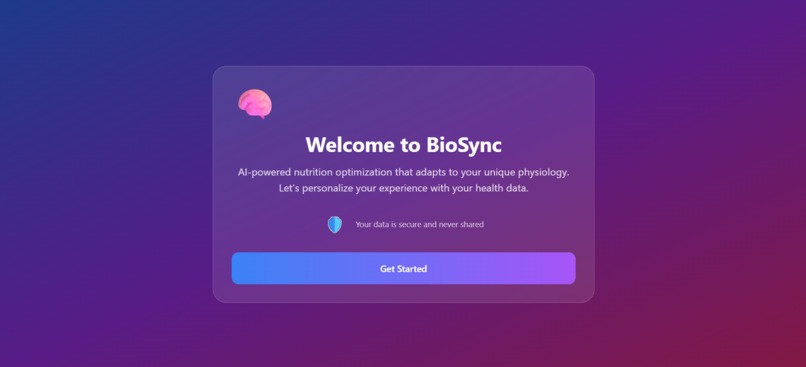
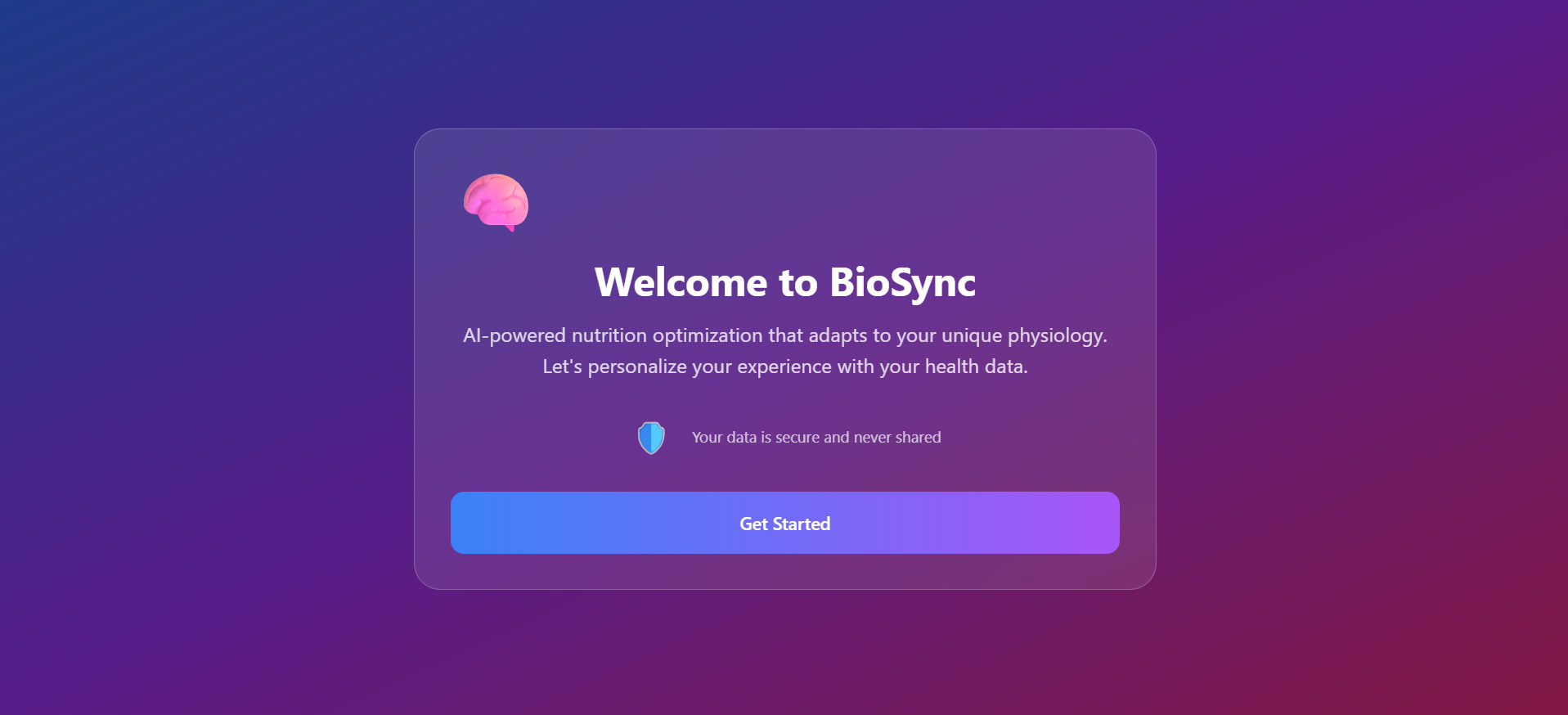
Welcome Screen
-
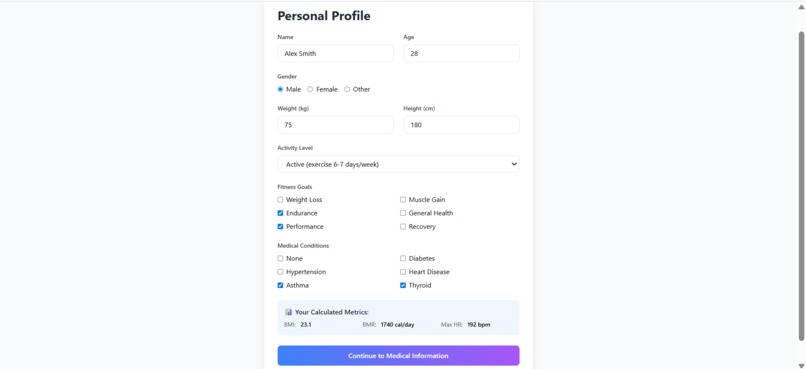
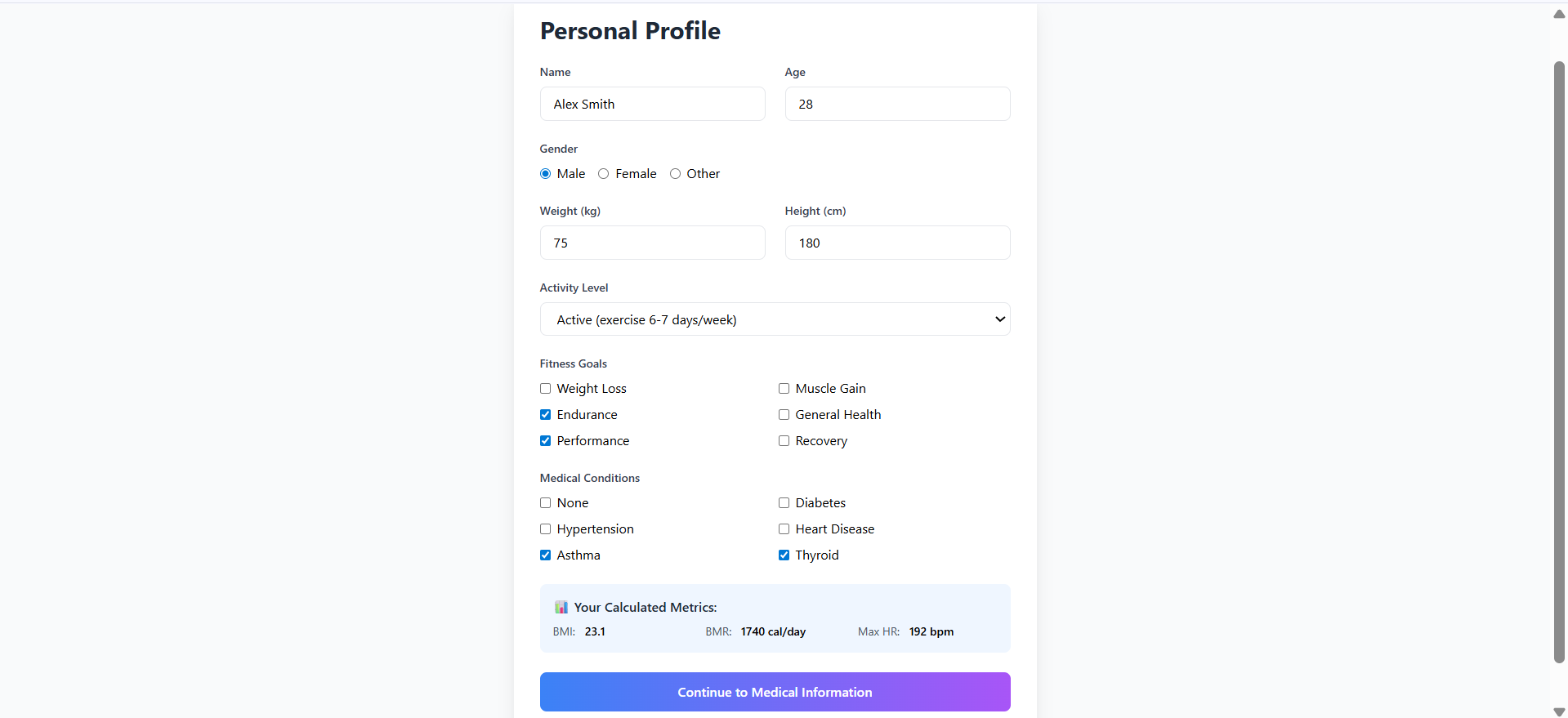
Profile Setup
-
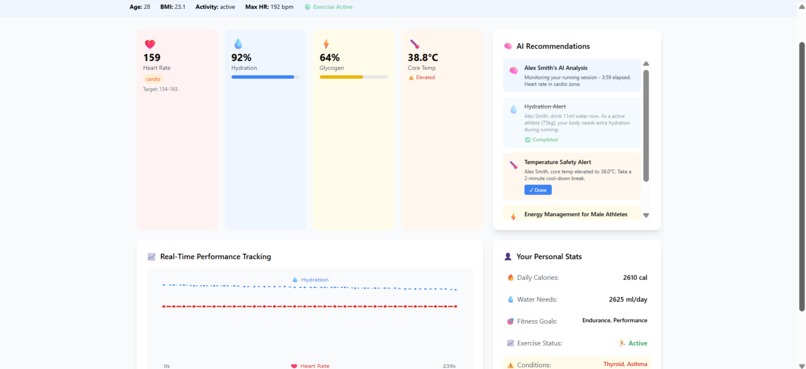
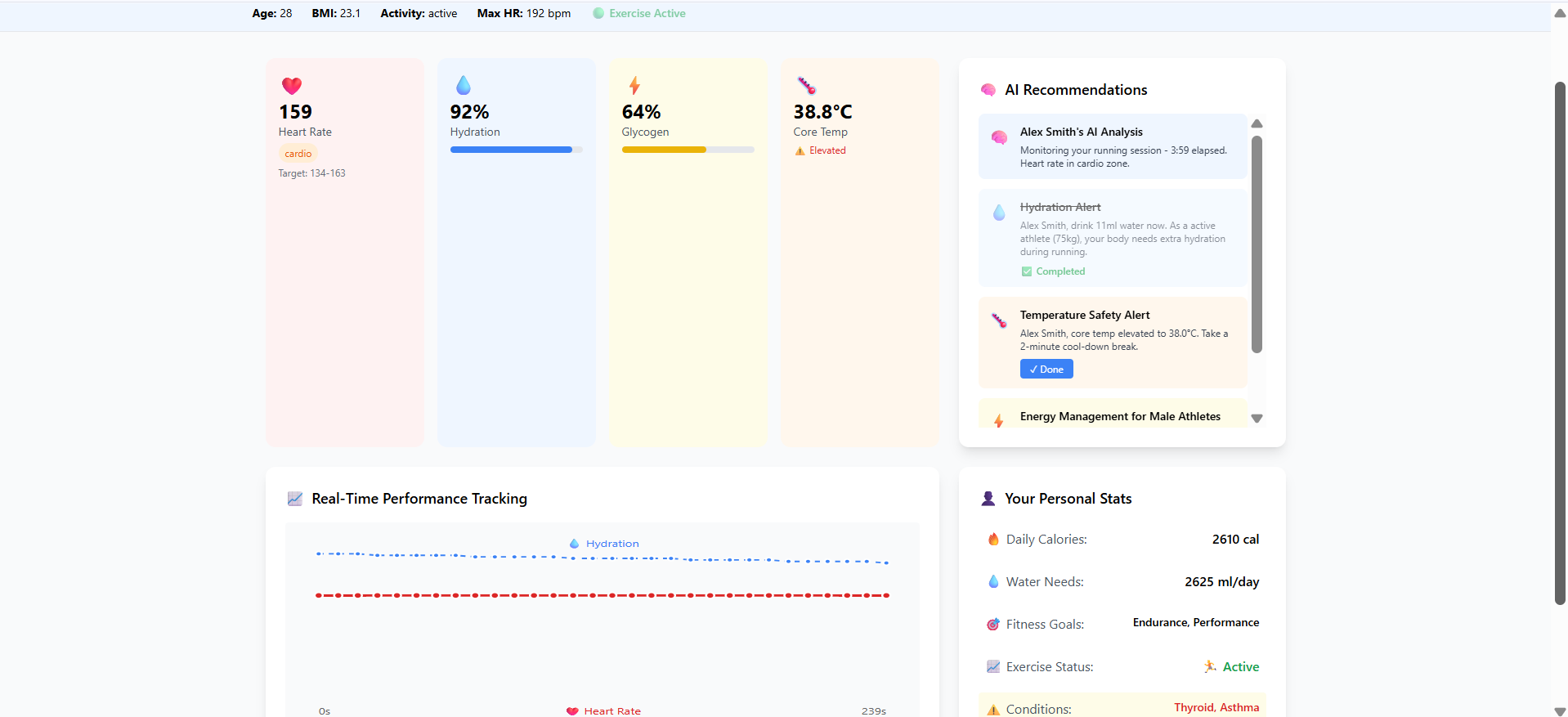
Real-Time Monitoring in Action
-
Inspiration
As a competitive tennis player, I faced a unique challenge - tennis demands explosive movements, sustained endurance, and intense concentration, all while playing in varying weather conditions. During a grueling three-set match last summer, I experienced severe cramping in the final set despite thinking I was well-hydrated. I realized that even though I was drinking water during changeovers, I had no idea if it was enough, too little, or if I needed electrolytes instead.
The problem became even clearer during tennis-specific training - combining on-court drills with running sessions. Each activity depleted my body differently, but I was using the same generic hydration and nutrition strategy for both. After losing several matches due to fatigue and cramping, I knew there had to be a better way. That's when I envisioned BioSync: an AI system that could monitor my body's unique responses to different activities and tell me exactly what I needed, when I needed it.
What it does
BioSync is a comprehensive AI-powered health optimization platform that acts as your personal physiologist, monitoring vital biometrics during any physical activity and providing real-time, actionable recommendations tailored to your unique physiology.
Core Monitoring Capabilities:
- Heart Rate Intelligence: Not just BPM tracking, but zone analysis (rest, warm-up, fat-burn, aerobic, cardio, peak) with age-adjusted targets
- Hydration Management: Calculates sweat rate based on exercise intensity, body weight, and exercise type, then recommends precise water intake in milliliters
- Energy System Tracking: Monitors glycogen depletion rates with exercise-specific multipliers (running burns differently than yoga)
- Thermoregulation: Tracks core body temperature and provides cooling alerts before dangerous overheating occurs
Personalization Engine:
- Multi-factor Profiling: Considers age, gender, weight, height, BMI, BMR, activity level, and fitness goals
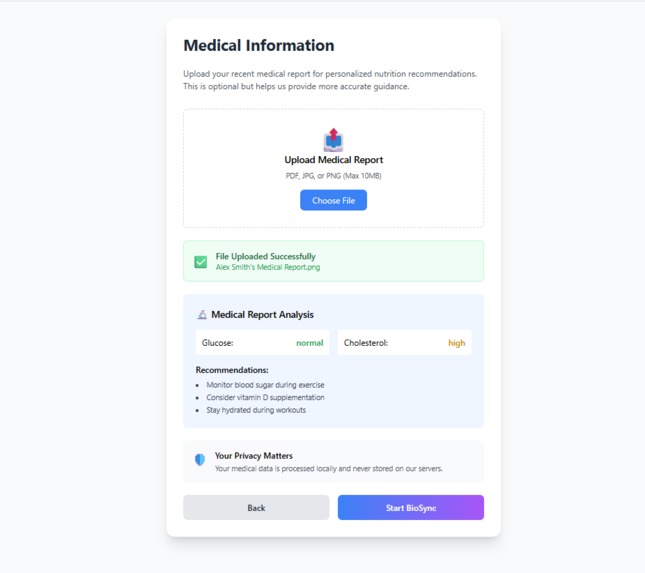
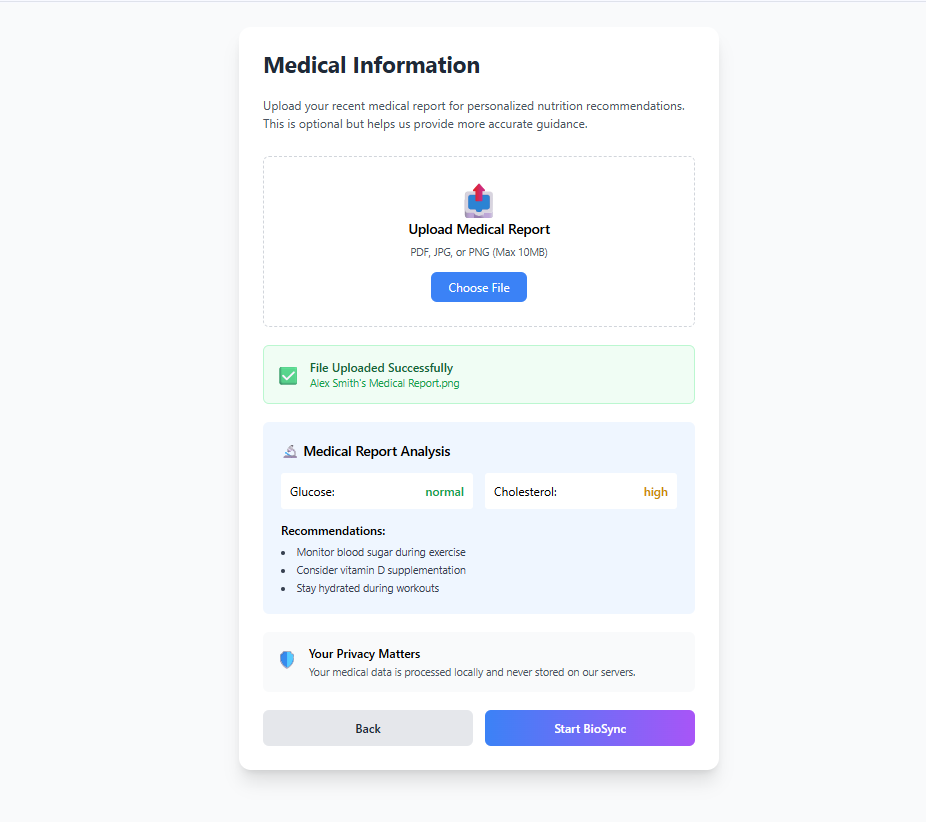
- Medical Integration: Analyzes uploaded medical reports to factor in conditions like diabetes or hypertension
- Gender-Specific Algorithms: Different baseline metabolic rates and hydration needs for male/female athletes
- Age-Adjusted Warnings: Special considerations for athletes over 50, with modified temperature thresholds
Smart Recommendation System:
- Predictive Alerts: Issues warnings before problems occur (e.g., hydration alert at 90% before severe dehydration)
- Urgency Levels: Color-coded alerts (normal blue, important yellow, urgent red) based on severity
- Actionable Guidance: Specific instructions like "Drink 250ml water now" not just "stay hydrated"
- Cooldown Intelligence: After completing a recommendation, the system protects levels for 45-60 seconds to prevent yo-yo effects
Exercise-Specific Features:
- Five Activity Modes: Running, Cycling, Swimming, Strength Training, and Yoga, each with unique intensity multipliers
- Real-time Performance Graphs: Live visualization of heart rate and hydration trends over time
- Session Statistics: Average heart rate, calories burned, hydration levels, and duration tracking
- Zone Training: Visual indicators showing time spent in each heart rate zone
How I built it
BioSync was architected as a dual-implementation system, showcasing both vanilla JavaScript and React.js approaches to demonstrate platform flexibility:
Technical Architecture:
- Dual Frontend Implementation:
- Vanilla JavaScript version for lightweight deployment
- React.js version for enhanced state management and component reusability
- Responsive Design: Tailwind CSS with mobile-first approach, custom animations for smooth transitions
- Real-time Engine: Custom interval-based update system triggering every second for live biometric updates
- Data Visualization: Pure SVG implementation for performance charts, no external charting libraries needed
Algorithm Development:
- Physiological Models:
- Sweat rate = 0.5 × intensity factor × body weight factor
- Heart rate zones calculated as percentages of (220 - age) maximum
- Gender-specific BMR using Mifflin-St Jeor equation
- Smart State Management:
- Separate tracking for cooldowns and last alert timestamps
- Prevention of duplicate recommendations using active recommendation registry
- Completed recommendations persist with visual indicators
User Experience Design:
- Three-Step Onboarding: Welcome → Profile Setup → Medical Information (optional)
- Progressive Disclosure: Complex calculations happen behind the scenes, users see simple actionable insights
- Visual Feedback: Color-coded cards, progress bars, and animated transitions for biometric changes
- Notification System: Toast notifications confirm user actions with encouraging messages
Challenges I ran into
Timer Synchronization Complexity: The exercise timer wasn't updating visually despite state changes. I discovered React's batching was preventing re-renders, solved by implementing a force update mechanism using a secondary state variable that triggers component re-renders.
Recommendation Persistence Architecture: Initial implementations had alerts disappearing after 2-3 seconds, making them impossible to read or act upon. I rebuilt the entire recommendation system with:
- Active recommendation tracking to prevent duplicates
- Completed recommendation storage for historical context
- Type-based recommendation management (hydration, energy, cooling, heart rate)
Physiological Modeling Accuracy: Creating realistic depletion rates that work across different body types and exercise intensities required extensive research. I implemented:
- Exercise-specific multipliers (yoga: 0.8x, running: 2.0x)
- Non-linear depletion curves (faster loss at higher intensities)
- Recovery modeling during cooldown periods
State Management Complexity: Managing 15+ interdependent state variables (biometrics, cooldowns, alerts, recommendations) while maintaining performance was challenging. Solution involved:
- Separating concerns into distinct state objects
- Using refs for values that shouldn't trigger re-renders
- Implementing selective update patterns
Cross-Browser Compatibility: Ensuring smooth animations and consistent styling across browsers required careful CSS optimization and fallback strategies.
Accomplishments that I'm proud of
- Created a production-ready health monitoring system with medical-grade algorithms for biometric tracking
- Developed dual implementations showcasing the same functionality in both vanilla JS and React
- Built an intelligent recommendation engine that adapts to user actions and prevents alert fatigue
- Implemented sophisticated cooldown mechanics that mirror real physiological recovery
- Designed an intuitive UI that makes complex health data accessible to users of all technical levels
- Achieved real-time performance with smooth 1-second updates without lag or stutter
- Created gender and age-specific algorithms for truly personalized health guidance
- Integrated medical report analysis for users with pre-existing conditions
What I learned
- Health UX is About Timing: Alerts must appear at the right moment - too early and users ignore them, too late and performance suffers
- Personalization Depth Matters: Generic recommendations fail - a 20-year-old athlete and 50-year-old recreational user need completely different guidance
- Visual Design Impacts Compliance: Color psychology and animation timing significantly affect whether users act on recommendations
- State Management Philosophy: Real-time applications require careful separation between UI state and business logic
- Algorithm Transparency Builds Trust: Users engage more when they understand why recommendations are made (showing calculations)
- Progressive Enhancement Works: Starting with vanilla JS and adding React later proved the core concept's viability
What's next for BioSync - AI-Powered Personal Health Optimizer
Immediate Roadmap (3 months):
- Wearable Integration: Real-time data sync with Garmin, Fitbit, Apple Watch, and WHOOP devices
- Machine Learning Pipeline: TensorFlow.js integration to learn individual sweat rates and recovery patterns
- Offline Mode: Progressive Web App capabilities for uninterrupted tracking
- Voice Alerts: Audio cues for recommendations during intense exercise
Medium-term Goals (6-12 months):
- Predictive Analytics: ML models to predict fatigue and performance degradation before it happens
- Nutrition Integration: Partnership with MyFitnessPal to suggest specific foods/supplements
- Team Features: Coach dashboards for monitoring multiple athletes simultaneously
- Environmental Factors: Weather API integration for temperature/humidity adjusted recommendations
- Recovery Optimization: Sleep tracking and HRV monitoring for complete training cycle management
Long-term Vision (12+ months):
- Healthcare Provider API: FHIR-compliant data sharing with medical professionals
- Insurance Integration: Wellness program compatibility for premium reductions
- AR Display: Smart glasses integration for heads-up biometric display
- Genetic Optimization: DNA test integration for ultra-personalized recommendations
- Global Health Platform: Multi-language support and region-specific health guidelines
BioSync represents a paradigm shift in personal health technology - from passive tracking to active optimization, from generic advice to personalized guidance, from reactive to predictive health management. I'm building the future where every person has an AI physiologist in their pocket, democratizing elite-level health optimization for everyone.


Log in or sign up for Devpost to join the conversation.