Inspiration
The spaces we move through every day constantly shape how we feel, our focus, energy, and calm. A crowded street can feel overwhelming, while a quiet park can feel restorative. Yet these influences remain largely invisible.
Inspired by the quantified self movement, we asked a simple question: what if we could quantify the ambience of places the same way we quantify steps, sleep, or heart rate?
Just as early fitness trackers imagined sensing the body in new ways, we wanted to explore the next frontier of self-knowledge, a tool that reveals how environments interact with our wellbeing.
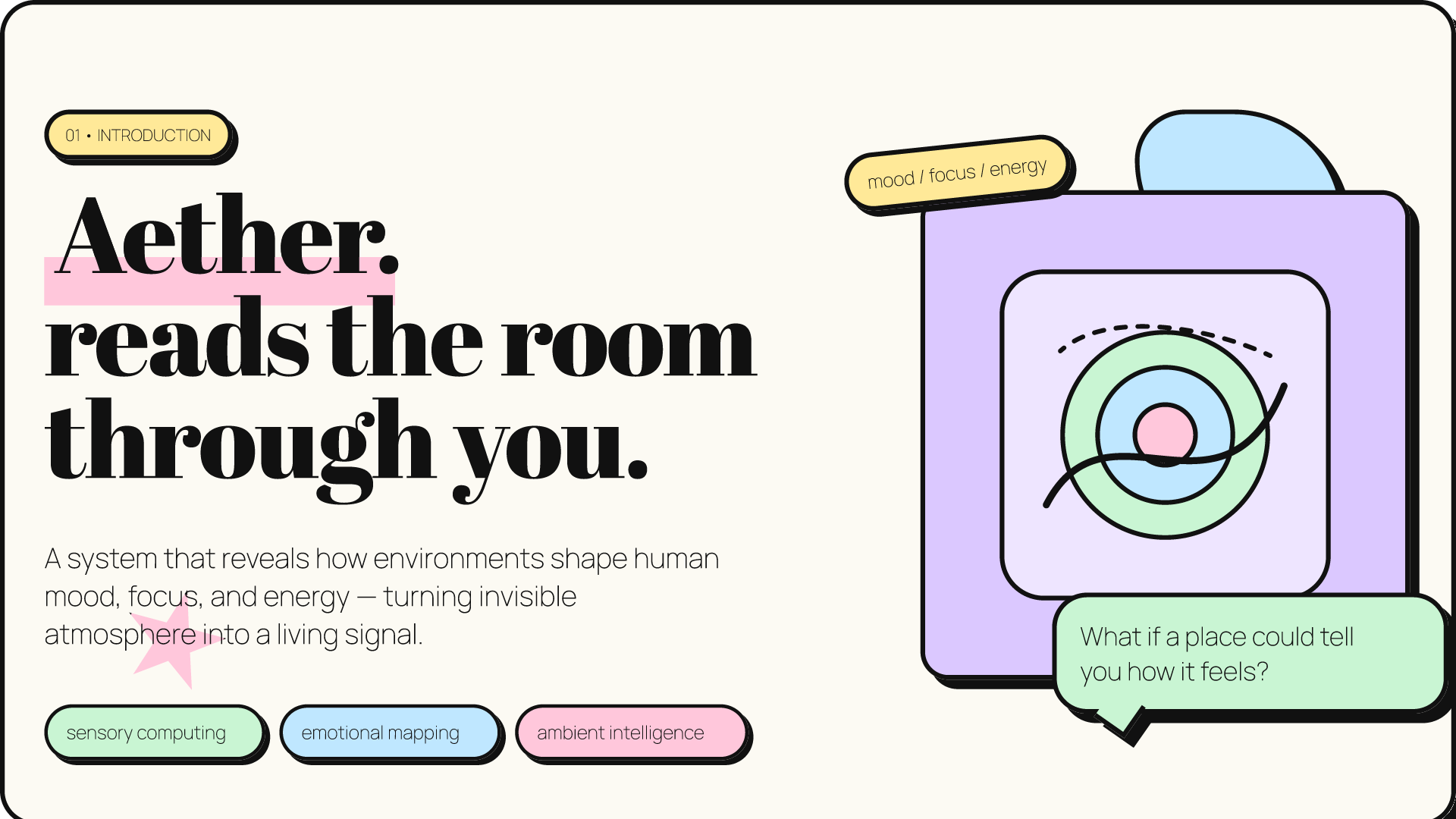
That idea led to Aether, a speculative system that gives users a new sense: the ability to see how the spaces around them affect their mood, focus, and energy.
What it does
Aether reveals the hidden ambience of the world around you and helps you discover where you truly thrive.
The system combines environmental signals with physiological responses from wearables to understand how different places affect a person’s wellbeing.
Key features include:
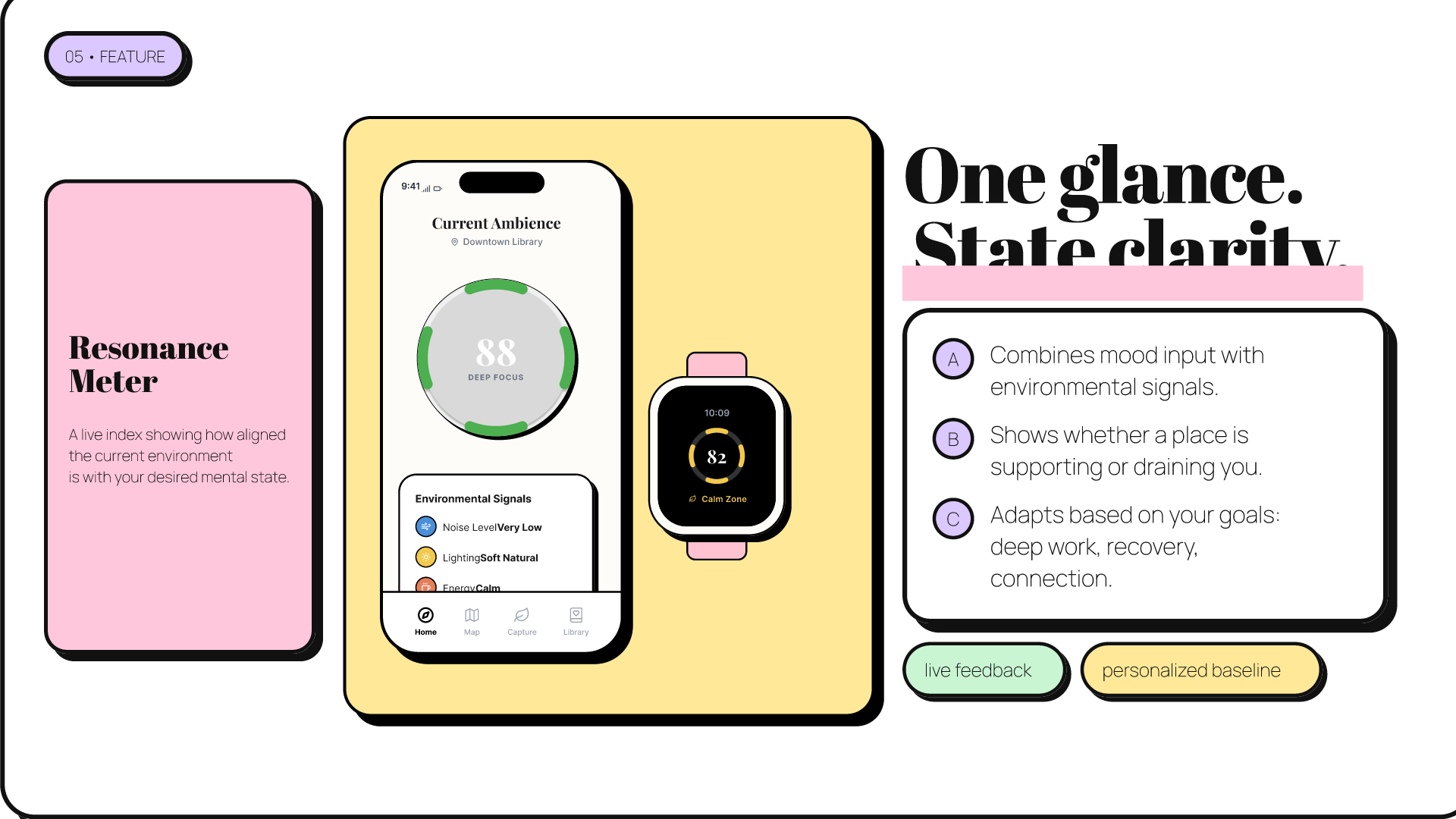
Resonance Meter – When a user enters a space, Aether interprets the surrounding ambience and shows how that environment interacts with the user’s emotional and cognitive state.
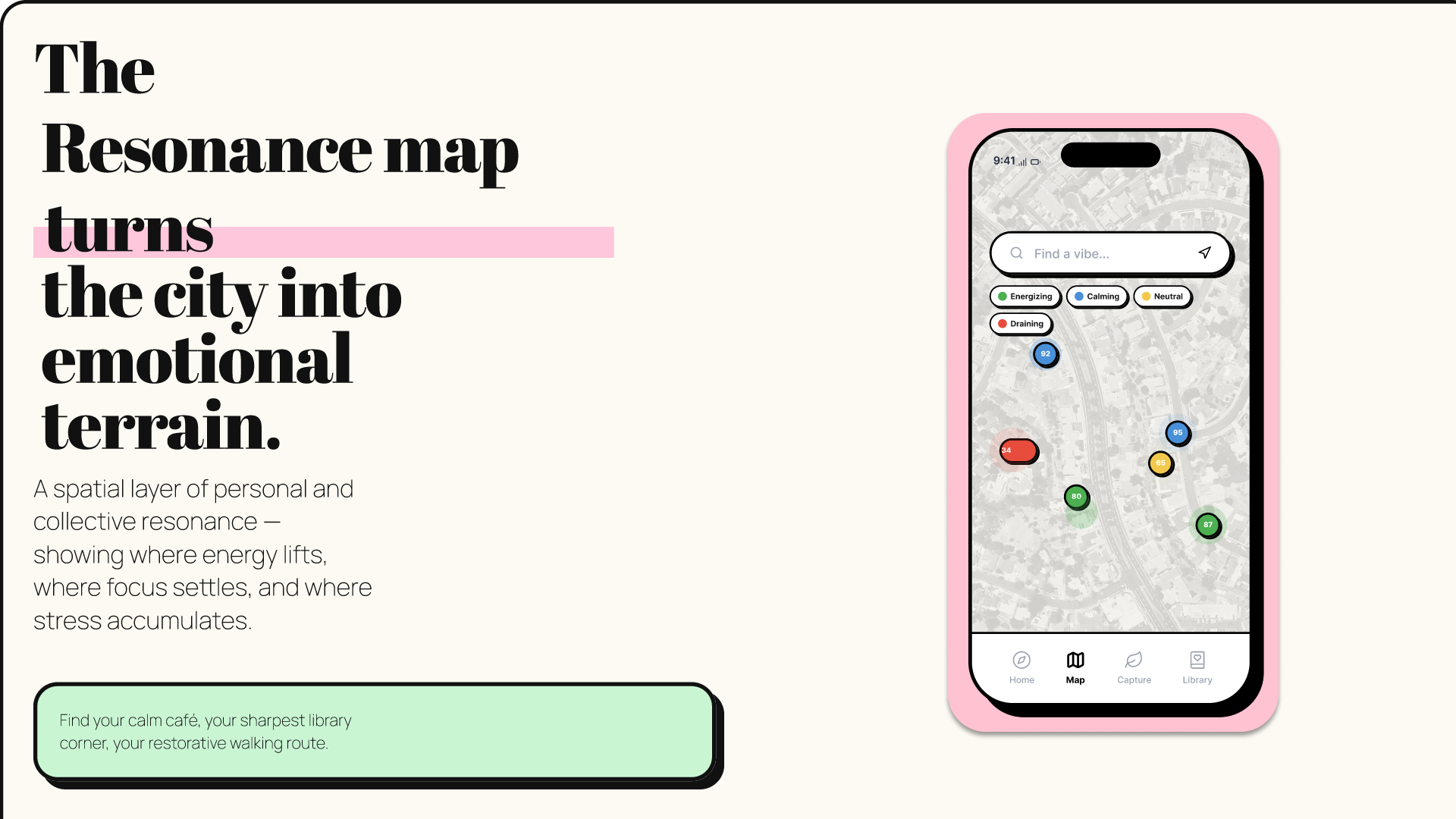
Resonance Map – Over time, Aether builds a personalized map of places based on how they affect the user. Calm zones, energizing spaces, and draining environments gradually appear across the city.
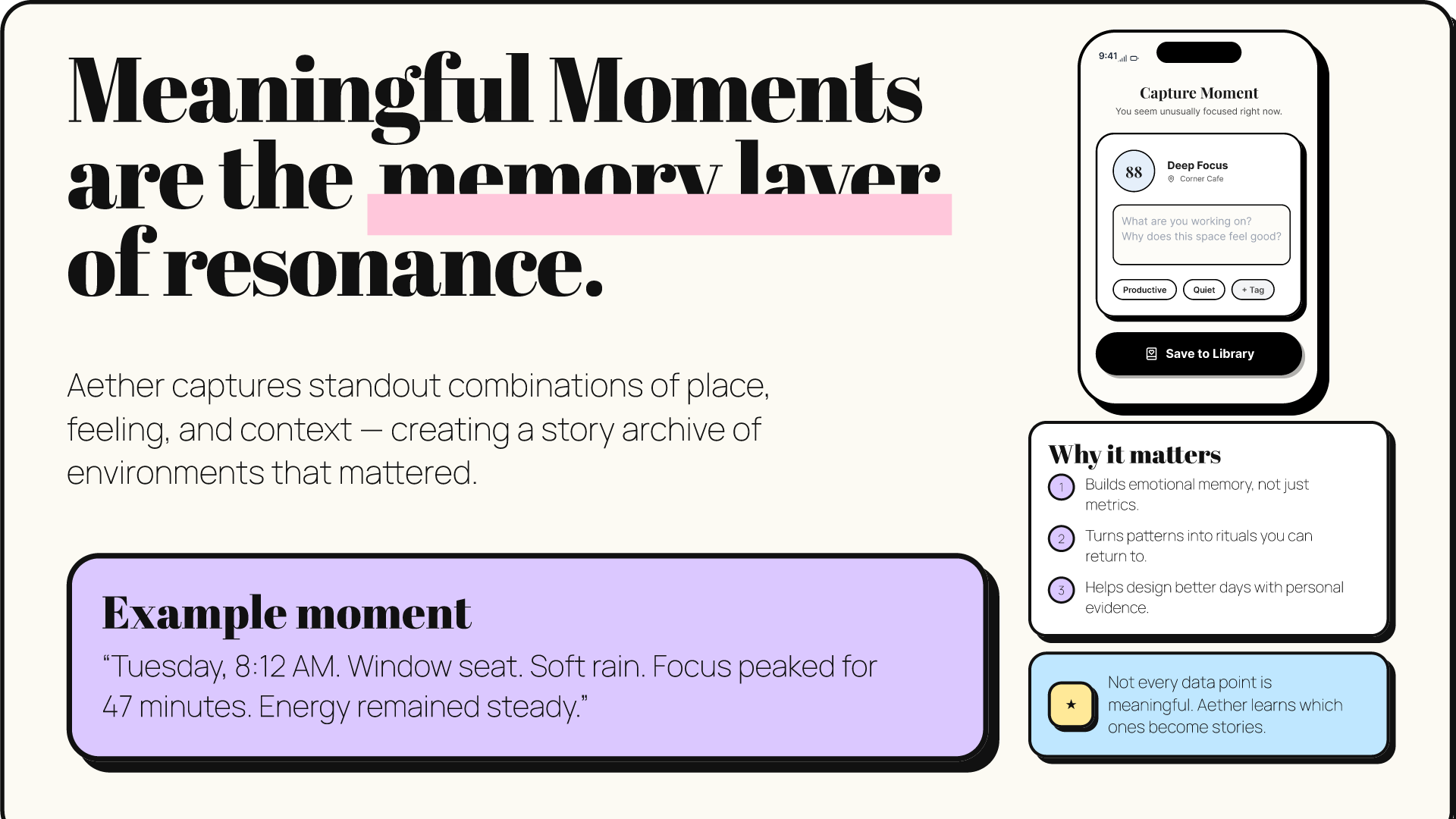
Meaningful Moments – When Aether detects moments where the user feels especially calm, focused, or energized, it prompts them to capture the moment, building a personal archive of environments where they thrive.
Together, these tools help users choose environments that support their wellbeing instead of working against it.
How we built it
We approached Aether as a speculative design project focused on experience and interaction design.
The project was built using:
- Figma to design the user interface and interactive prototype
- Design exploration to visualize how ambience and environmental signals could be represented through color and spatial mapping
- Narrative storytelling and video prototyping to demonstrate how the system would function in everyday life
The interface was designed around clarity and minimal cognitive load, ensuring that complex environmental data is translated into intuitive signals users can understand instantly.
Challenges we ran into
One of the biggest challenges was designing a system that interprets something as abstract as ambience without overwhelming the user with data.
We had to carefully balance:
- Simplicity vs. complexity: environmental data can be noisy, so we focused on clear signals instead of raw metrics.
- Meaningful experiences vs. constant tracking: we introduced the idea that locations only appear on the resonance map after a user spends meaningful time there, ensuring that the data reflects real experiences rather than brief encounters.
Another challenge was designing visualizations that feel intuitive and emotionally meaningful, not just analytical.
Accomplishments that we're proud of
We’re proud of creating a concept that transforms something intangible, the ambience of a place, into a clear and meaningful sensory experience.
In particular, we’re proud of:
- Designing a city-scale resonance map that visualizes how environments affect individuals.
- Creating an interaction model that feels natural and human-centered, rather than data-heavy.
- Crafting a narrative that demonstrates how Aether could genuinely help people make better decisions about the spaces they inhabit.
What we learned
This project showed us how powerful speculative design can be when exploring new forms of human perception.
We learned that designing a new “sense” is not just about sensing data — it’s about translating complex signals into something intuitive, meaningful, and actionable for users.
We also learned the importance of designing systems that respect privacy, consent, and emotional wellbeing, especially when dealing with personal physiological data.
What's next for Aether
If Aether were developed further, the next steps would include:
- Exploring new sensing methods for capturing environmental ambience more accurately
- Integrating with wearables and smart devices to improve contextual awareness
- Expanding the system to help people optimize personal environments such as homes, workspaces, and shared public spaces
- Studying how aggregated insights could help cities design healthier and more supportive environments
Ultimately, we imagine a future where tools like Aether help people understand the hidden influence of their environments and choose spaces that support how they want to feel, think, and live.
Built With
- figma
- ui/ux


Log in or sign up for Devpost to join the conversation.