-
-
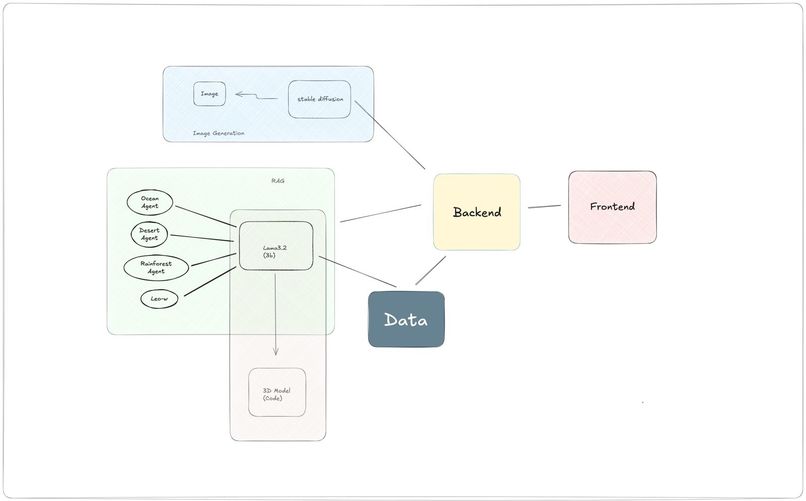
Architecture
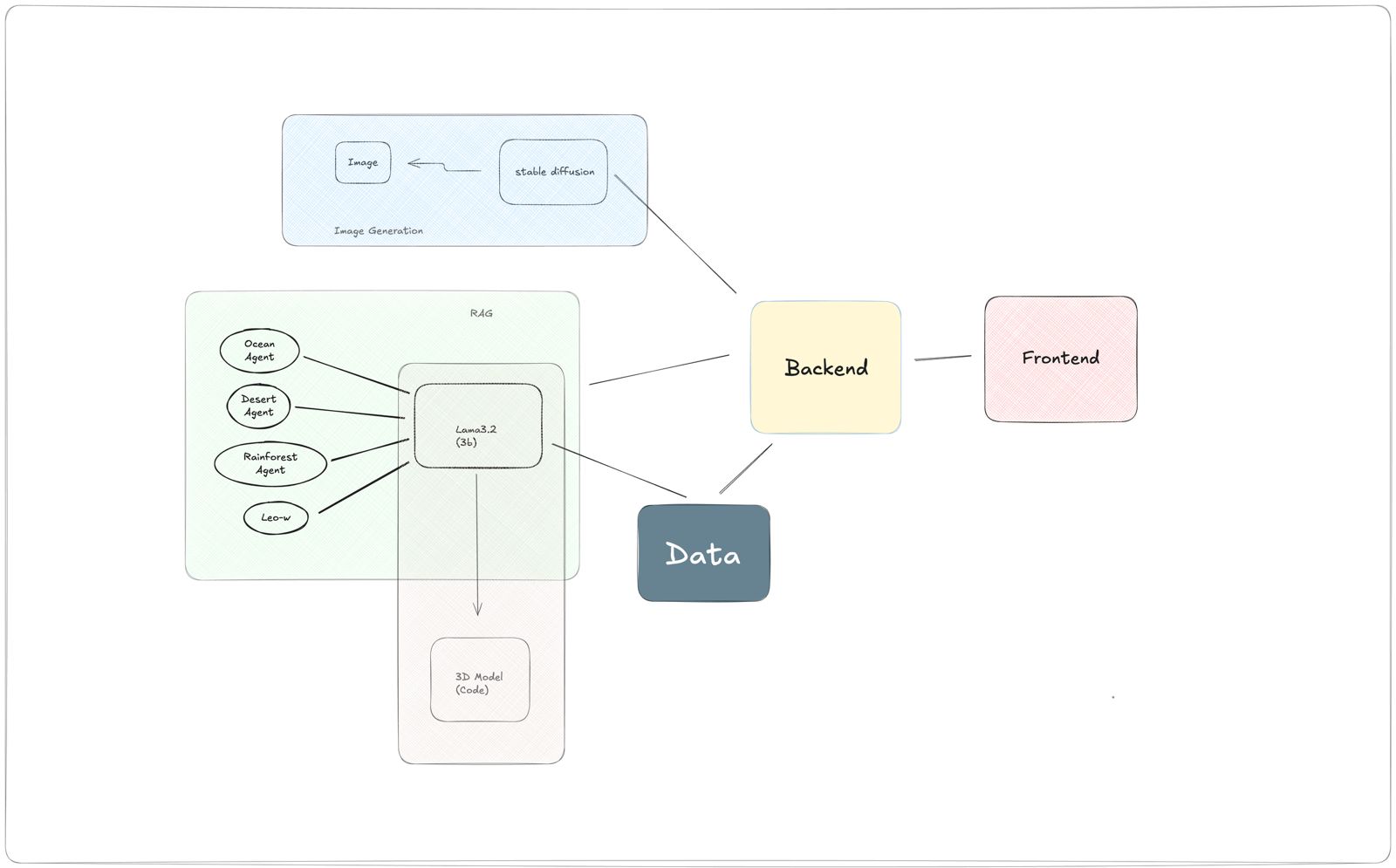
Inspiration
The inspiration behind BioSphereAI stems from our fascination with ecological systems and the immense potential of AI-powered simulations. BioSphere 2, an ambitious research facility dedicated to understanding Earth's environment, provided the perfect foundation for us to create an interactive platform that bridges scientific exploration with modern AI and visualization tools. We wanted to build a tool that allows users to simulate, analyze, and interact with ecological data dynamically while fostering collaboration and data-driven insights.
What it does
BioSphereAI is an AI-powered, interactive BioSphere 2 Explorer that integrates:
- Conversational AI (RAG): Allows users to query and analyze environmental data using natural language.
- 2D and 3D Visualization: Generates interactive models and real-time visualizations of environmental changes.
- Automated Image Generation: Uses AI to create environment-based imagery for better insights.
- Multi-Agent Collaboration: Enables multiple users and AI models to interact in real time to explore and interpret ecological data.
- Environmental Parameter Simulation: Adjusts conditions like temperature, humidity, and CO₂ levels to understand their effects dynamically.
How we built it
We developed BioSphereAI using:
- Streamlit & FastAPI for an interactive and seamless user experience.
- AI-powered Retrieval-Augmented Generation (RAG) to enhance data interpretation.
- Matplotlib and Plotly for dynamic time-series visualizations.
- Three.js and Blender (headless mode) for real-time 3D environment rendering.
- Hugging Face APIs for text-based AI interactions and automated image generation.
- Docker & Cloud Hosting to ensure smooth deployment and multi-user accessibility.
Challenges we ran into
- 3D Model Integration: Initially, rendering BioSphere 2 locations interactively in a browser was challenging. We overcame this by optimizing our approach with Three.js and Blender's headless mode.
- Multi-Agent System Design: Enabling multiple AI agents to interact in real-time required careful design to prevent conflicting responses and maintain coherence.
- Environmental Data Complexity: Processing vast datasets and ensuring accurate AI-driven insights took significant effort in data cleaning, preprocessing, and AI tuning.
- API Latency Issues: Some AI and visualization tools introduced delays, requiring optimization and efficient caching strategies to improve response times.
Accomplishments that we're proud of
- Successfully integrating AI-powered environmental analysis with real-time 3D visualizations.
- Creating an interactive and scalable multi-agent AI system that allows for natural language exploration of ecological datasets.
- Enabling users to simulate and analyze environmental conditions dynamically to gain actionable insights.
- Seamlessly merging AI-generated images, dynamic charts, and real-time models into a unified experience.
What we learned
- The power of AI-driven Retrieval-Augmented Generation (RAG) for improving ecological data exploration.
- The importance of efficient API design and backend optimizations to ensure smooth user experience.
- Advanced techniques in 3D rendering and real-time visualization to create interactive scientific tools.
- How to design a collaborative AI-driven platform that enables seamless multi-user interactions.
- The challenges of scaling AI applications for real-time environmental simulations and handling large datasets effectively.
What's next for BioSphereAI
- Enhanced AI Capabilities: Improve AI responses with better contextual awareness and multimodal inputs.
- Expanded Environmental Datasets: Integrate more real-world climate and ecological datasets.
- Advanced 3D Visualizations: Improve realism and interaction within the 3D environment.
- Real-time Environmental Simulations: Develop predictive models to simulate future ecological scenarios.
- User-Customized Simulations: Allow users to modify parameters and explore personalized ecological experiments.
- Integration with IoT Sensors: Connect with real-world biosphere sensors to provide live environmental data updates and enhance simulation accuracy.
With BioSphereAI, we aim to revolutionize the way researchers, educators, and environmental enthusiasts explore and interact with ecological data, bringing AI-powered insights into environmental science.
Built With
- fastapi
- llama3.2
- ollama
- python
- rag
- stablediffusion

Log in or sign up for Devpost to join the conversation.