Inspiration
The Biosphere Simulator was inspired by my fascination with nature’s ecosystems and their interconnectedness. The idea to simulate a self-sustaining ecosystem came from my love of nature documentaries and a deep curiosity about how animals, plants, and their environments work together in complex systems. I wanted to create an interactive, visual tool where users could witness the impact of environmental changes on species survival, resource availability, and biodiversity. This passion led me to explore the world of ecosystems through a digital lens using React.
What it does
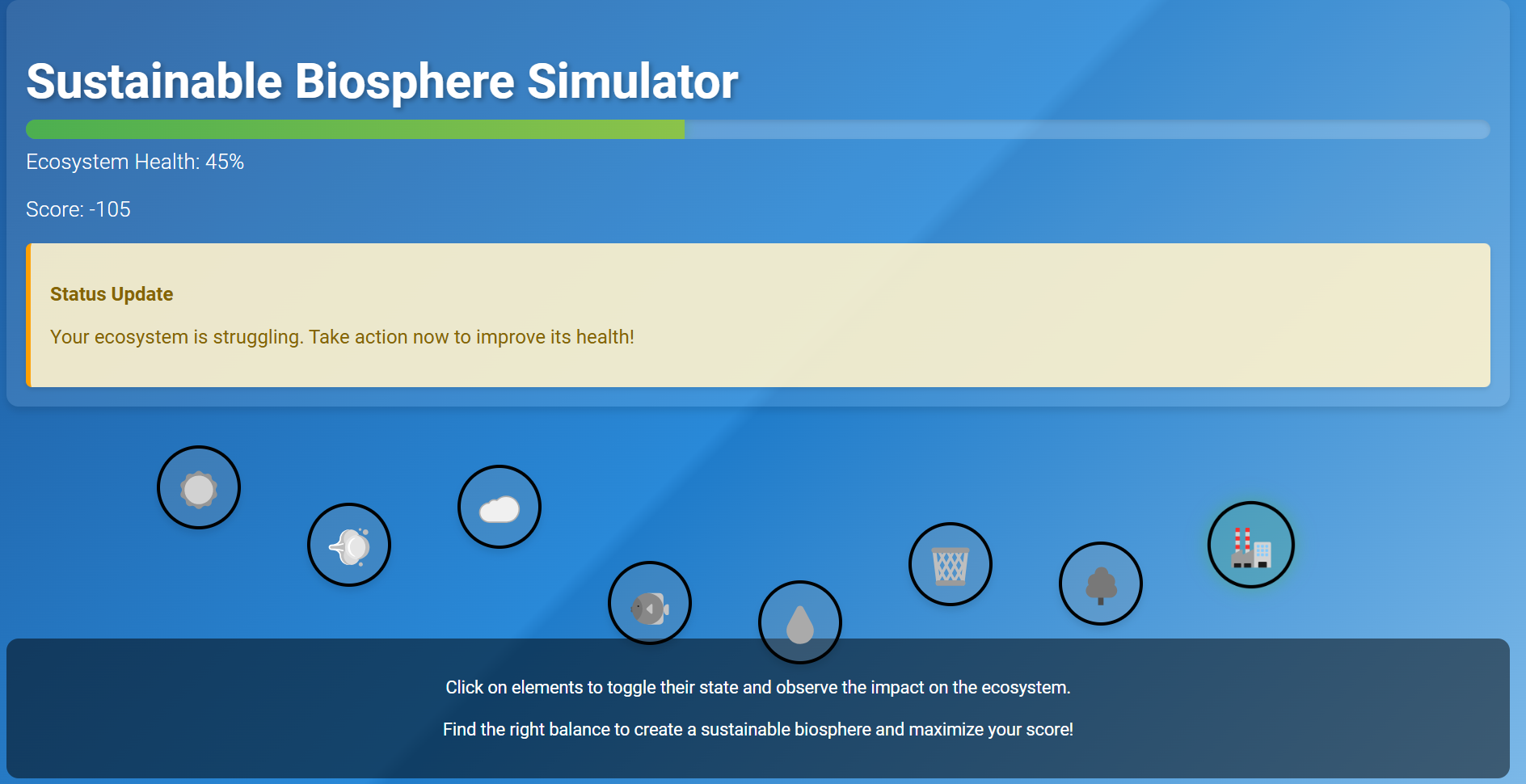
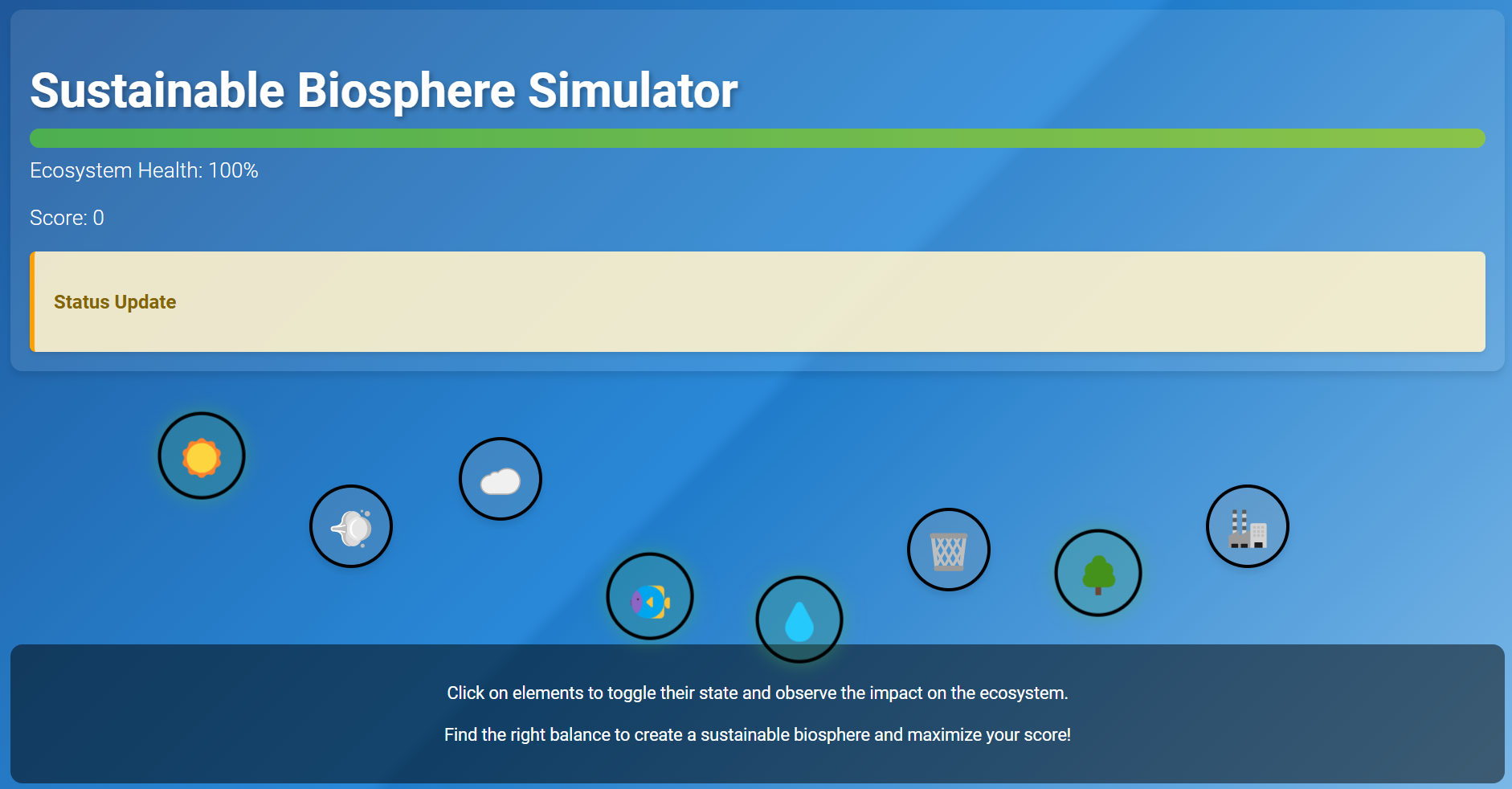
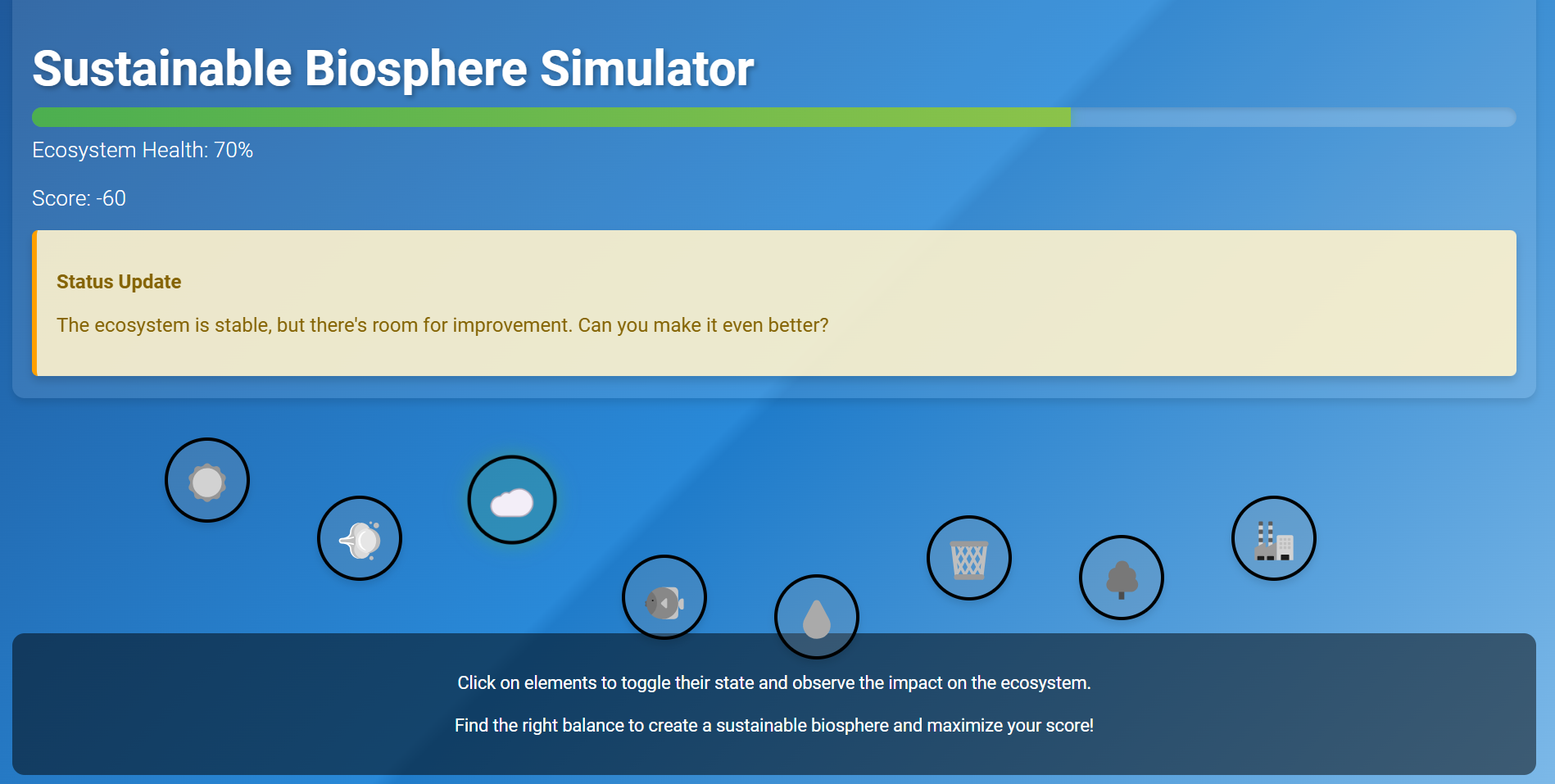
This Sustainable Biosphere Simulator is a React-based interactive simulation that allows users to manage and maintain the health of a virtual ecosystem by toggling various elements like the sun, trees, water, fish, factories, and more. The key functionalities include real-time updates on ecosystem health, scoring based on user actions, and dynamic feedback through status messages.
Key Features of the Simulator: Ecosystem Elements: The app features different elements such as the sun (☀️), trees (🌳), water (💧), fish (🐠), factories (🏭), and others. Each element is represented as a React component called BiosphereElement.
These elements have positions on the screen (defined by percentage values for x and y coordinates), making them movable on the page. Users can click on each element to toggle its state (active/inactive). Ecosystem Health:
The app calculates the overall health of the ecosystem based on the states of the elements. If harmful elements like the factory or trash are active, the ecosystem health decreases. On the other hand, beneficial elements like wind and clouds improve the health. The health is shown visually through a HealthBar component and as a percentage. Dynamic Messages:
Based on the ecosystem's health, the app provides feedback through a status message. For example, if the health is high (above 80%), the message encourages the user that their ecosystem is thriving. As health decreases, the messages warn the user to take action to prevent collapse. Scoring System:
The user earns or loses points depending on how the ecosystem health changes over time. The score is updated every time the health changes, allowing users to track their performance in maintaining a sustainable biosphere. Interactivity:
The user can interact with the simulation by clicking on the various elements to toggle their state, such as activating or deactivating the sun, adding or removing factories, etc. These actions directly impact the health of the ecosystem, and the results are shown in real time. Real-Time Updates:
The app uses the useEffect hook to continuously calculate ecosystem health every 2 seconds, ensuring the simulation remains dynamic and responsive to user interactions. The health is recalculated based on which elements are active or inactive, ensuring that changes in the ecosystem are reflected immediately.
How we built it
Research and Planning I started with researching ecosystems and the essential components of biospheres. Key ecological models such as the Lotka-Volterra equations for predator-prey dynamics and principles of population ecology helped me lay the foundation for how species would interact.
Frontend Design with React I chose React.js to build the user interface because of its component-based structure and ability to manage complex state updates seamlessly. Each organism and environment element was represented as a React component, and their interactions were handled using state and props.
Components: I structured the project into modular components like Species, Ecosystem, and Environment. This approach allowed each species to act independently, making it easier to update behaviors like reproduction, foraging, and migration.
State Management: I used React hooks such as useState and useEffect to manage real-time updates to species populations and environmental conditions. This ensured the app remained responsive, recalculating changes in ecosystem balance based on user input (e.g., adding species, adjusting climate).
- Interactive Features The goal was to allow users to manipulate the biosphere in real time, so I built interactive controls where users could:
Add or remove species to the ecosystem Adjust environmental variables like temperature, rainfall, and resource availability Monitor population growth and resource consumption over time These features were achieved by binding the controls to React’s state management, triggering updates in the ecosystem simulation when changes occurred.
Challenges we ran into
Accomplishments that we're proud of
Interactive Ecosystem Simulation: We successfully built an engaging, real-time ecosystem simulation using React, where users can interact with different elements like the sun, trees, water, and factories. The ability to toggle elements and see the immediate impact on ecosystem health is a huge achievement in creating an educational and fun experience.
Real-Time Ecosystem Health Monitoring: We implemented a dynamic health monitoring system that continuously updates the ecosystem's health based on user actions. The live feedback through health bars and status messages helps users understand the consequences of their decisions.
Scoring and Feedback Mechanism: By introducing a scoring system and status updates, we managed to make the experience both competitive and informative. The feedback messages encourage users to make more sustainable choices, aligning the simulator's goals with real-world environmental challenges.
Responsive Design: The simulator is fully responsive, ensuring a smooth and visually appealing experience across different devices. This was a key accomplishment in making the project accessible to a wider audience.
Modular and Scalable Codebase: We developed a flexible architecture that allows for easy expansion of the biosphere. Whether it’s adding new ecosystem elements or adjusting health calculations, the project is designed to scale and evolve over time.
What we learned
This project was a valuable learning experience in both React.js and ecological modeling. I enhanced my skills in React hooks and state management while creating dynamic components to simulate real-time ecosystem behaviors. I also learned about functional programming principles and the importance of reusability and scalability in a React-based project.
From an ecological perspective, I deepened my understanding of population dynamics, food chains, and environmental feedback loops. Implementing these into code required me to study how organisms interact with one another and their surroundings, and translate those relationships into a responsive, data-driven UI.
What's next for Biosphere Simulator
- Introduce More Ecosystem Elements Animals: Add more animals like birds, mammals, and insects to represent biodiversity. Users can toggle their presence and see how it affects the ecosystem. Pollution and Clean Energy: Introduce elements like pollution sources (e.g., cars, factories) and clean energy solutions (e.g., solar panels, wind turbines). These could impact ecosystem health differently, giving users more complex challenges. Seasons and Weather: Include seasons or weather conditions (e.g., rain, drought) that influence elements like plants and water, adding another layer of strategy.
- More Complex Interactions Between Elements Element Dependencies: Make certain elements dependent on others. For instance, fish might need water, and trees might require sunlight to thrive. Deactivating or activating one element could directly affect others, creating a more realistic and challenging simulation. Chain Reactions: Introduce chain reactions where turning off a single element (like trees) could lead to cascading effects on other parts of the biosphere (like increased pollution, decreased oxygen).
- Time-Based Challenges Events and Disasters: Introduce random events like wildfires, floods, or pollution spills. Users must respond quickly to mitigate damage to the ecosystem. Day/Night Cycle: Implement a day/night cycle where certain elements (like the sun) are only active during the day, while others (like nocturnal animals) become active at night.
- Improved Scoring System Achievements and Goals: Add specific goals or achievements for users, like keeping the ecosystem stable for a certain time, or maintaining a specific balance of elements. Leaderboards: Implement a scoring system where users can compare their performance with others through a leaderboard.
- Advanced Ecosystem Health Calculations Complex Health Metrics: Include additional metrics like air quality, biodiversity index, or water purity. These could provide users with more insights into how their actions affect the ecosystem beyond a single health score. Gradual Deterioration: Allow for slower, more gradual changes in ecosystem health, giving users more time to react and balance their decisions.
- Visual and UI Enhancements Improved Graphics and Animations: Add animations to show the movement of animals, flow of water, or smoke from factories. This would make the simulator more visually engaging. Zoom and Pan Features: Allow users to zoom in and explore different areas of the biosphere or pan across a larger ecosystem map for a more detailed experience.
- User Customization Custom Ecosystem Creation: Let users create their own biosphere from scratch by choosing which elements to include. This adds a sandbox mode for experimentation. Themes and Difficulty Levels: Add different themes (e.g., desert, forest, ocean biosphere) and difficulty levels where the environment has varying levels of resilience.
- Multiplayer Mode Collaborative Ecosystem Management: Implement a multiplayer mode where multiple users work together to manage a single ecosystem. They would have to collaborate and communicate to maintain balance. Competitive Mode: Introduce a competitive mode where players can compete to maintain the healthiest ecosystem over a set period of time.

Log in or sign up for Devpost to join the conversation.