-
-
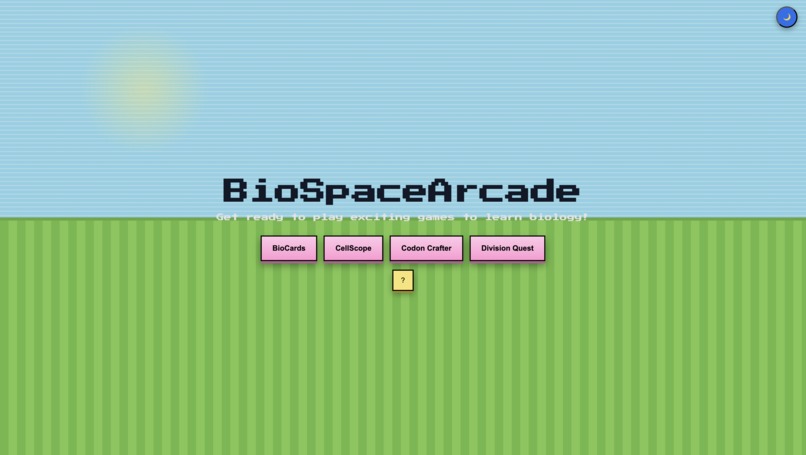
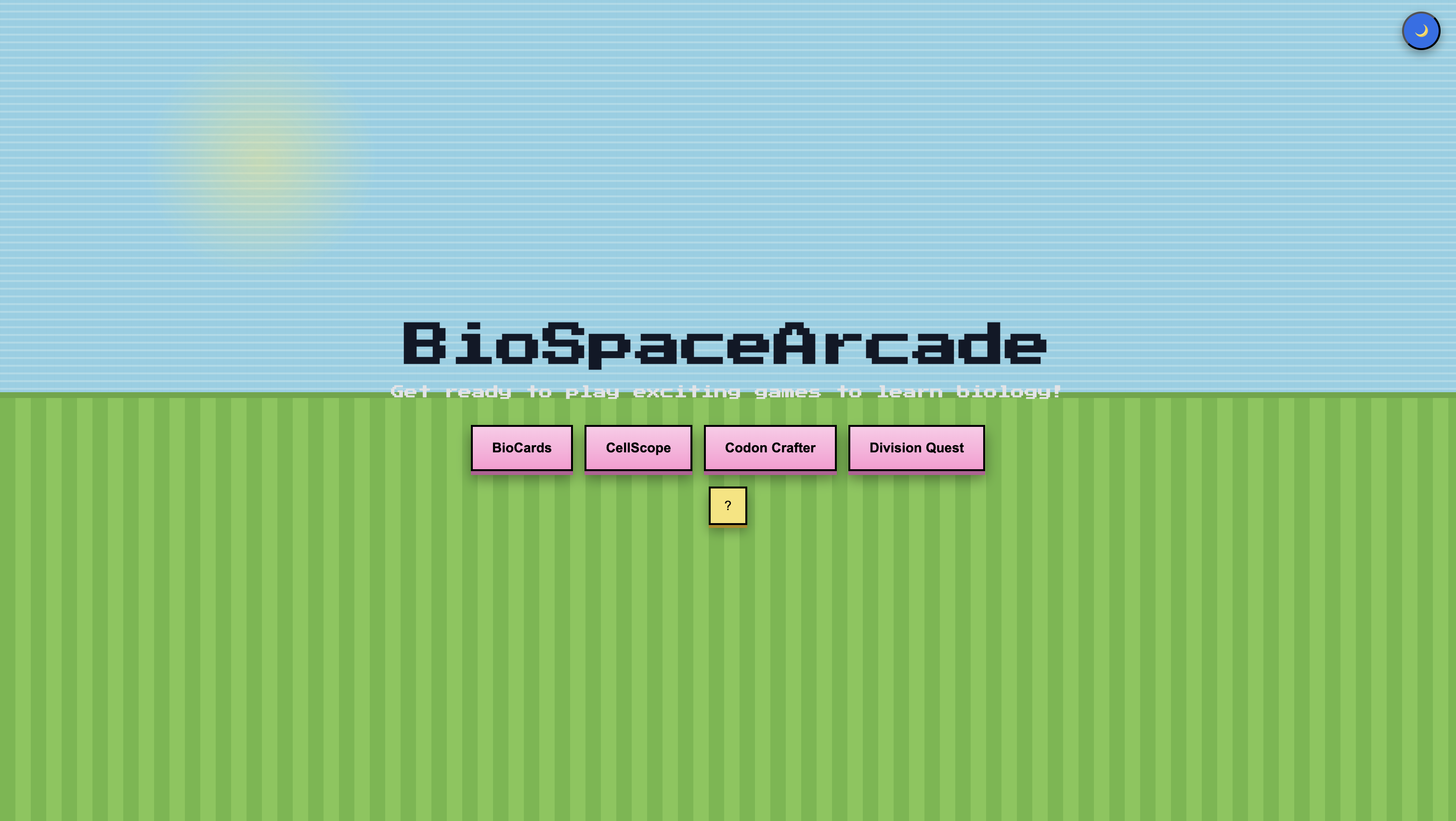
Home Page (Light Mode)
-
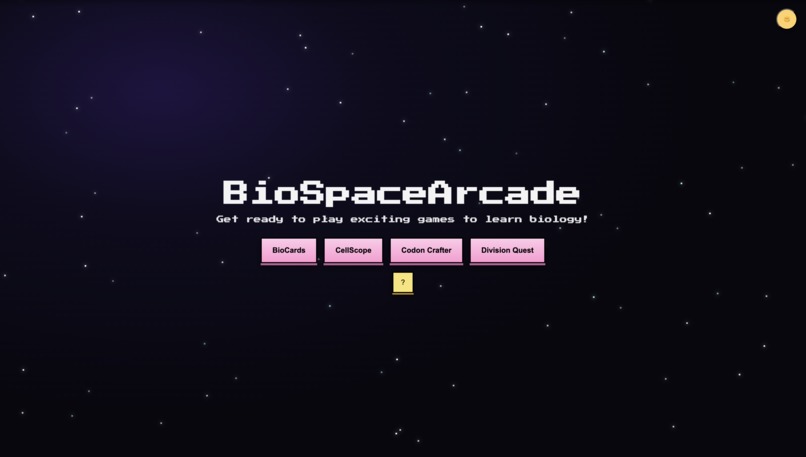
Home Page (Dark Mode)
-
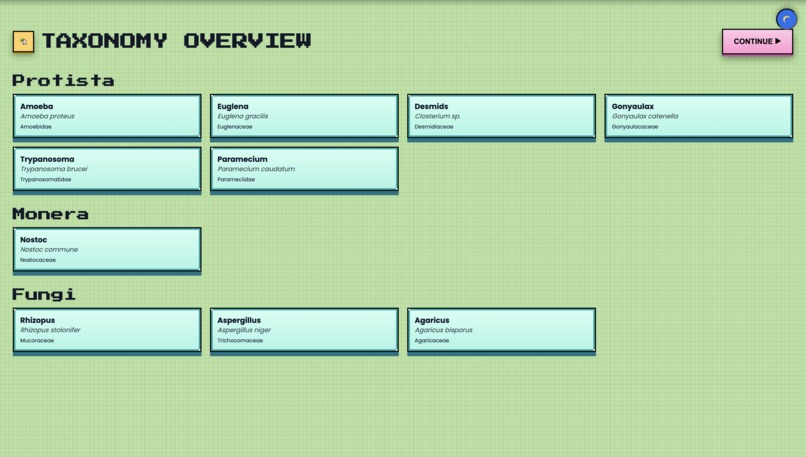
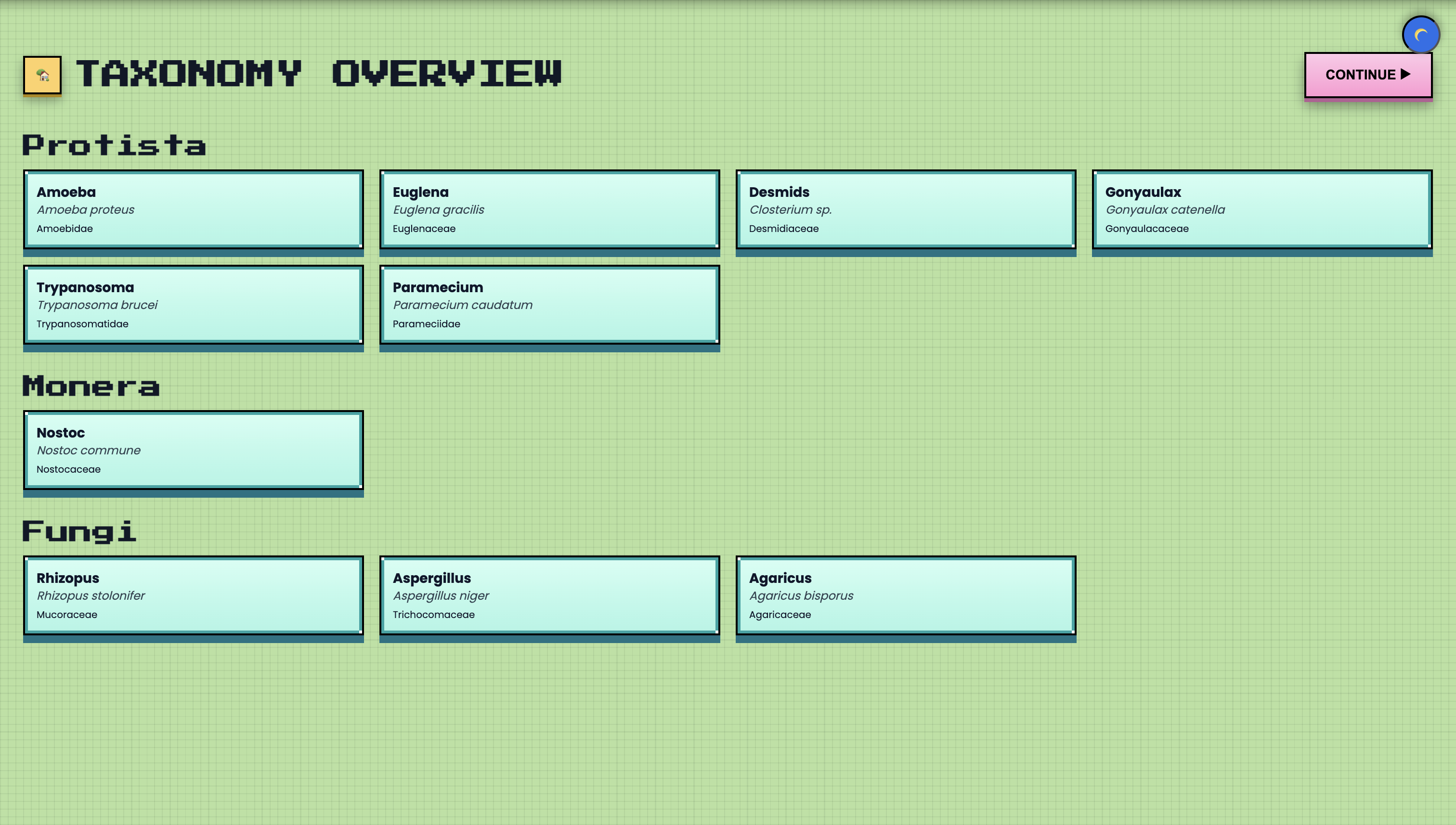
Taxonomy Overview
-
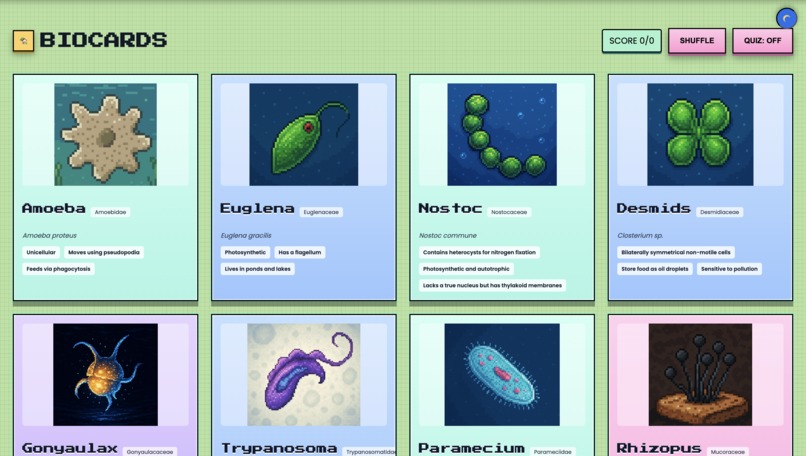
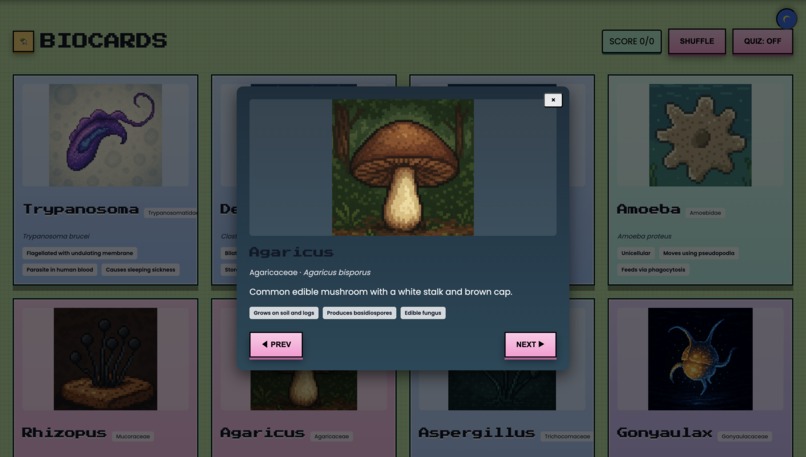
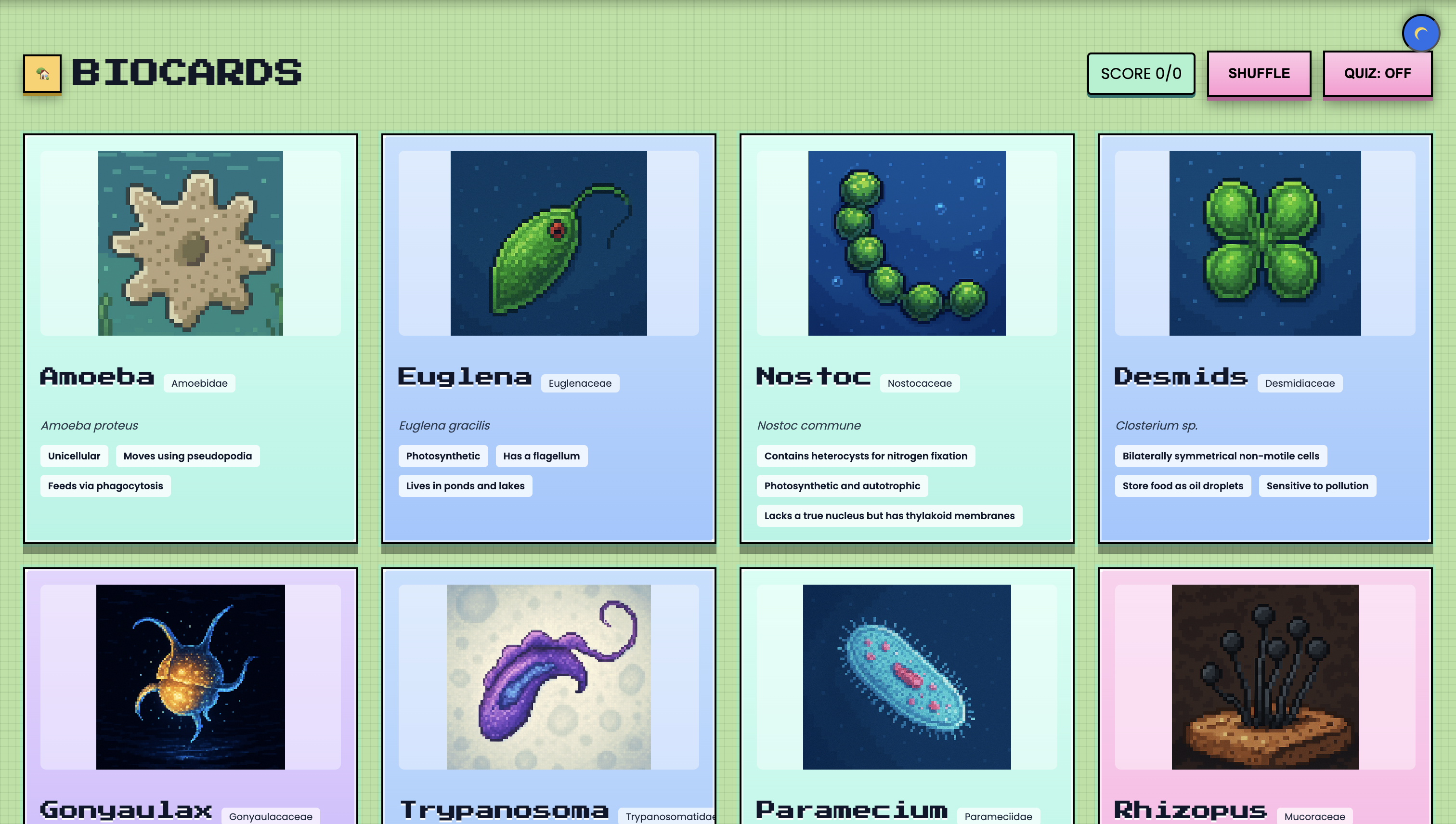
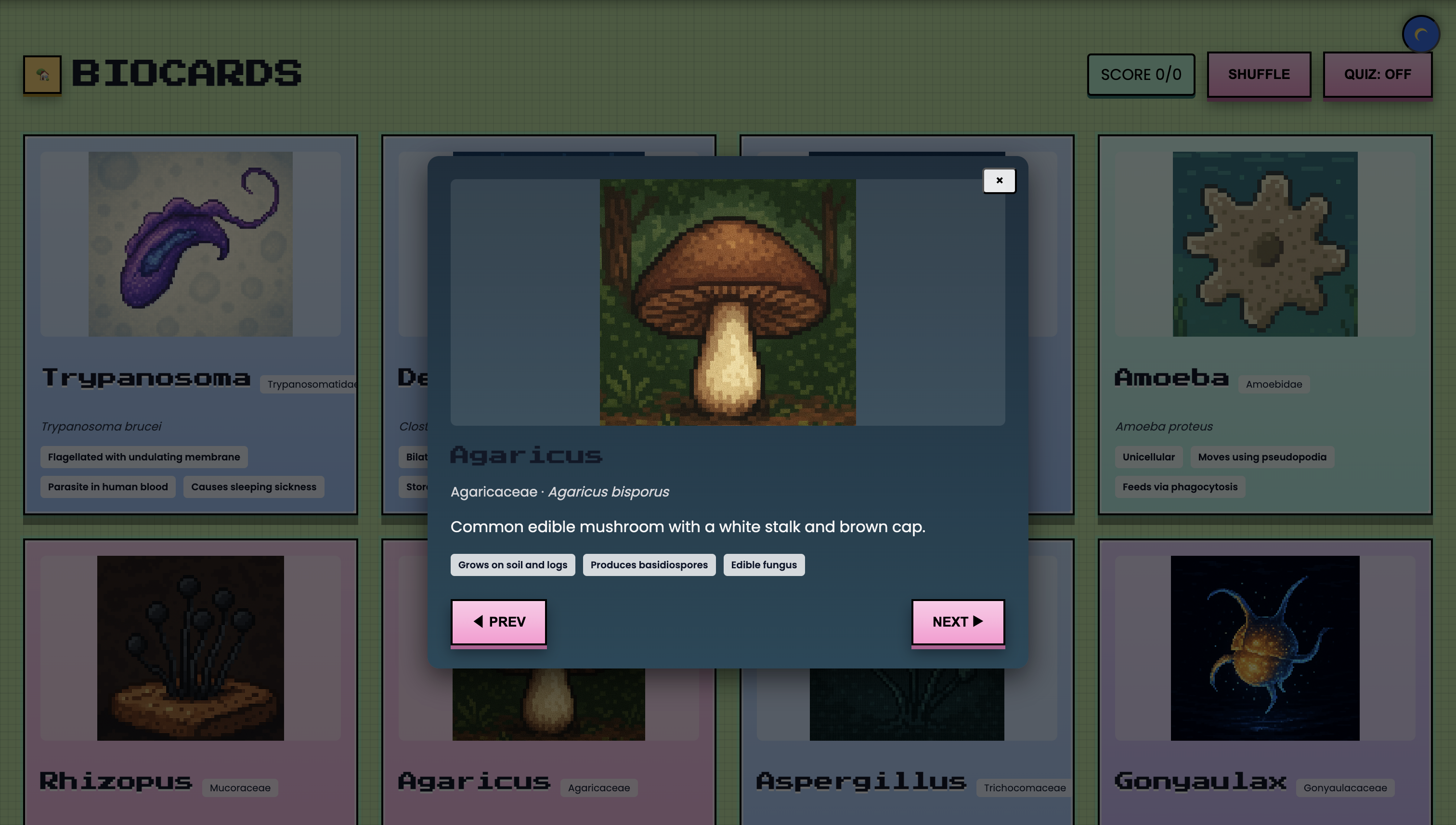
BioCards
-
-
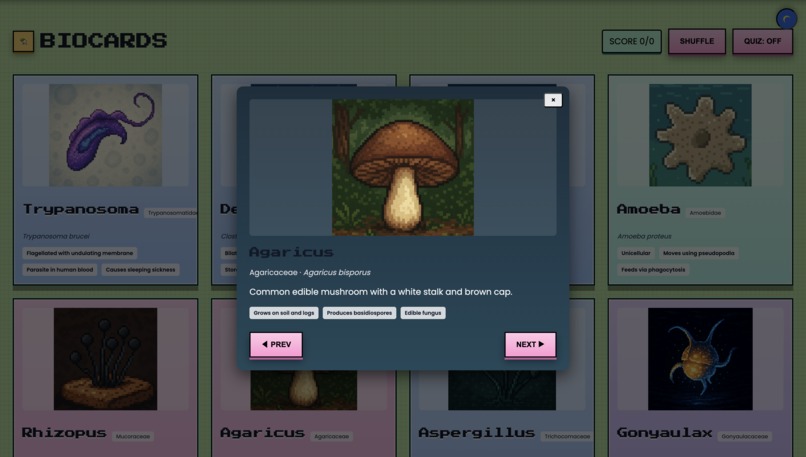
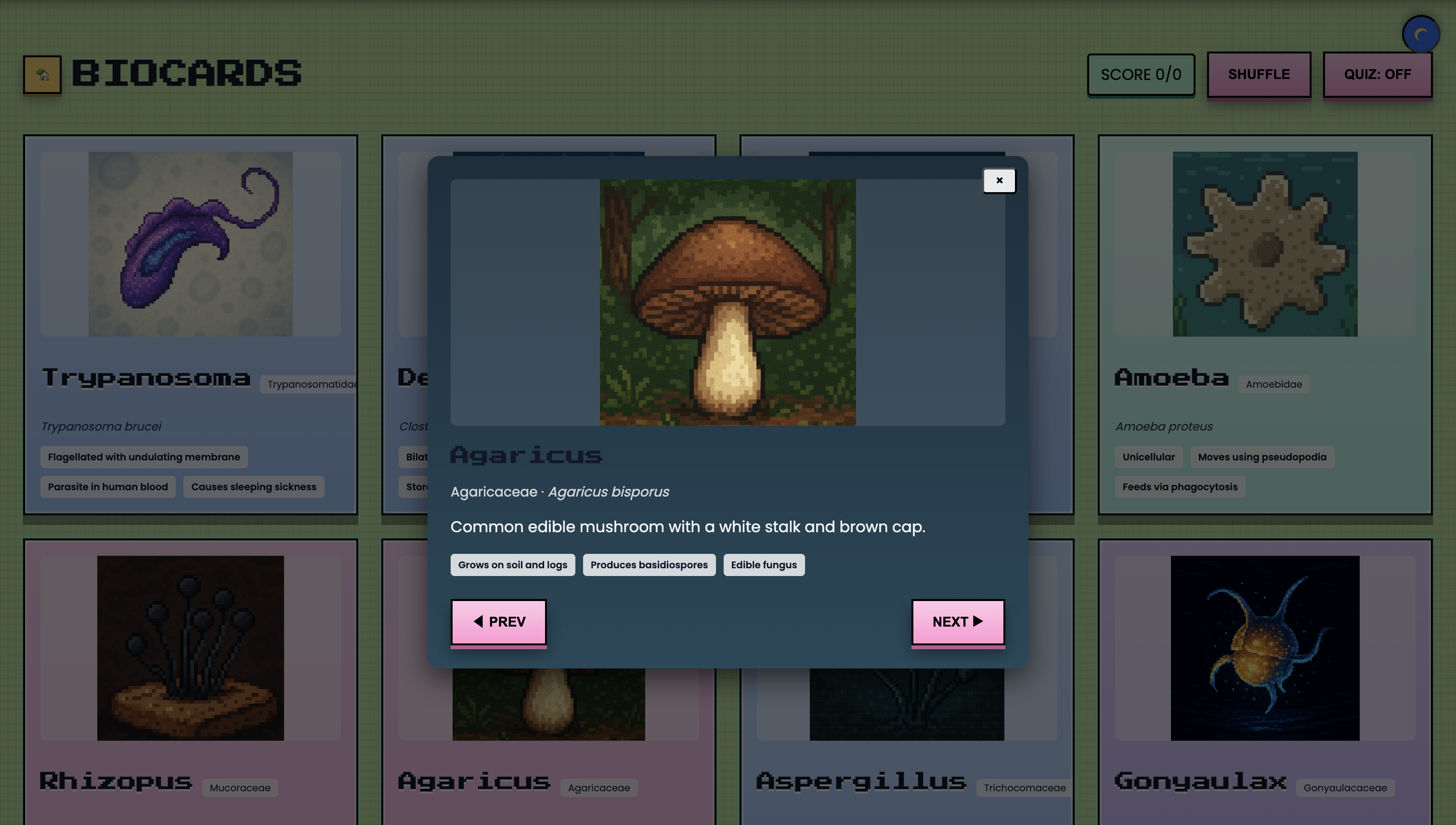
BioCard Test
-
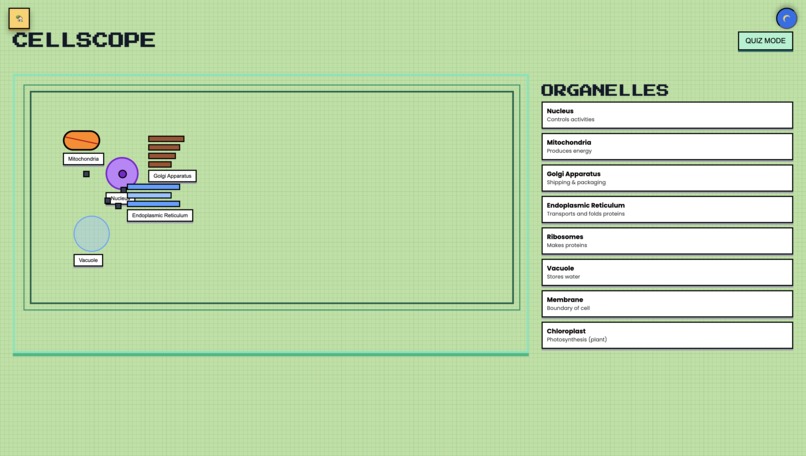
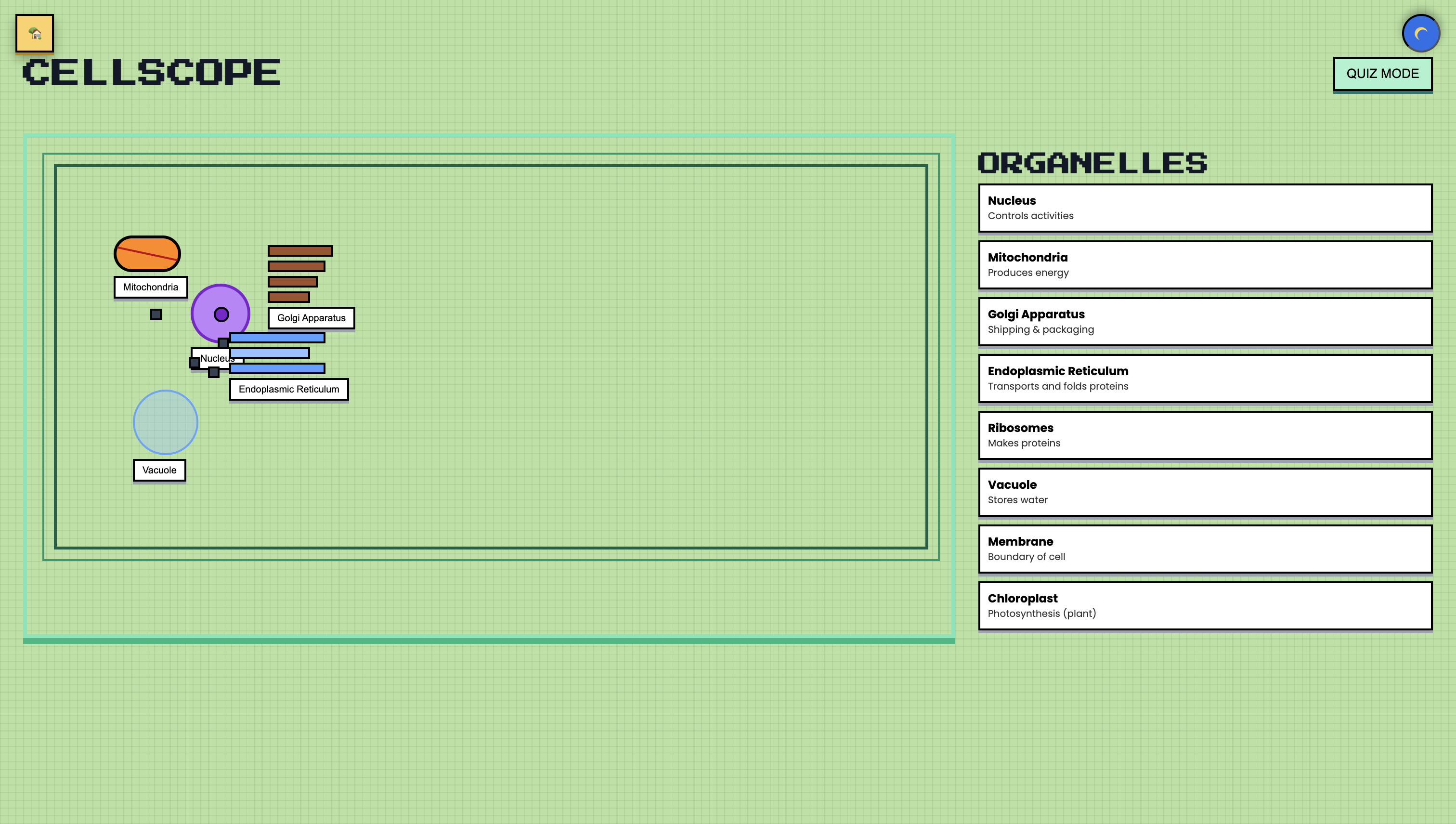
CellScope
-
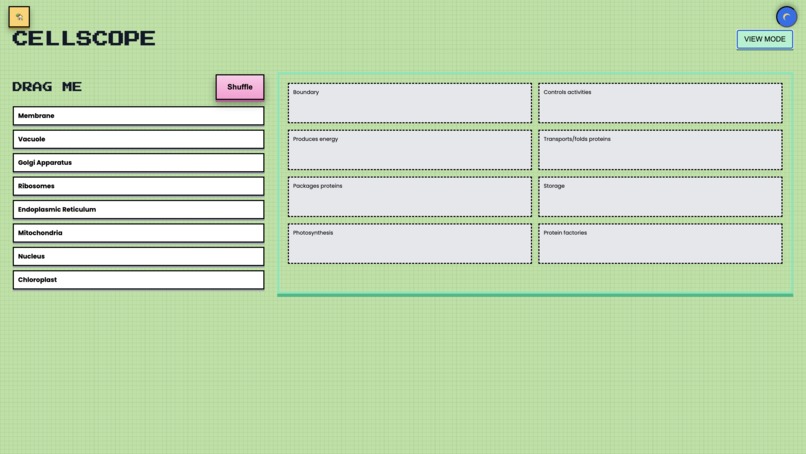
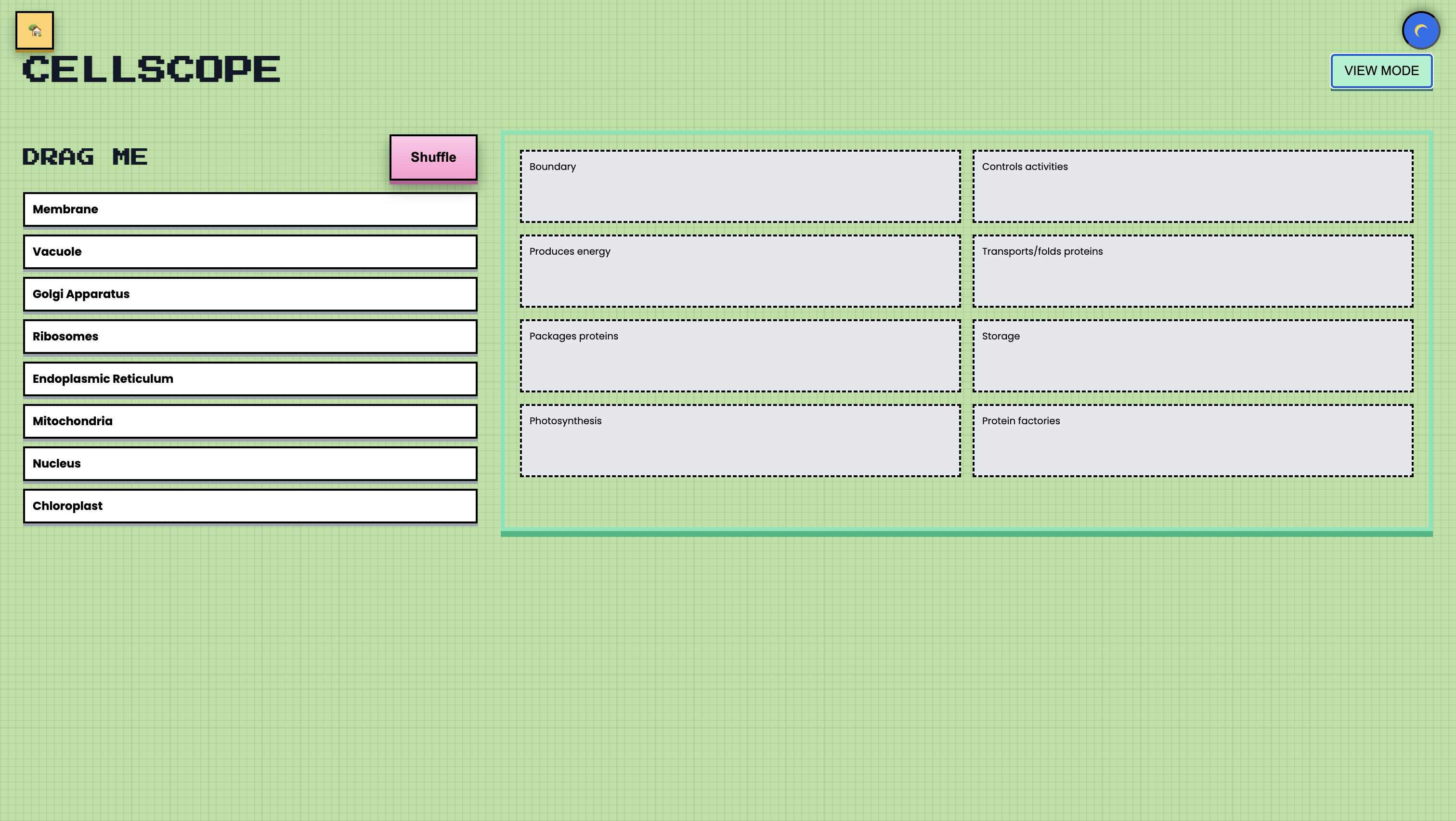
CellScope Testing
-
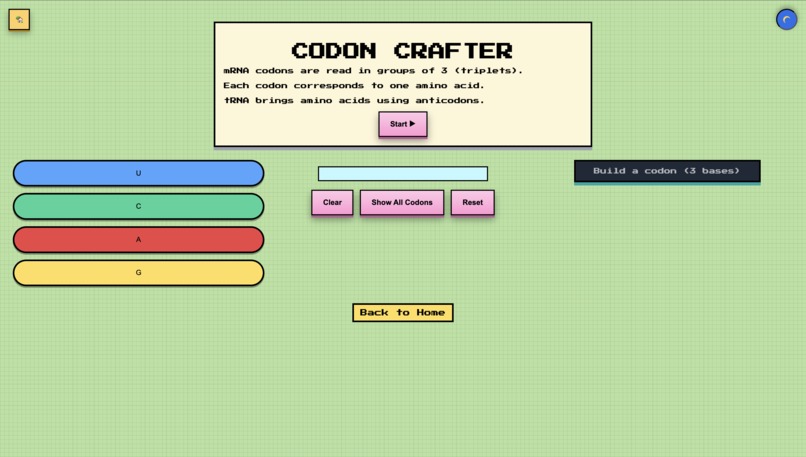
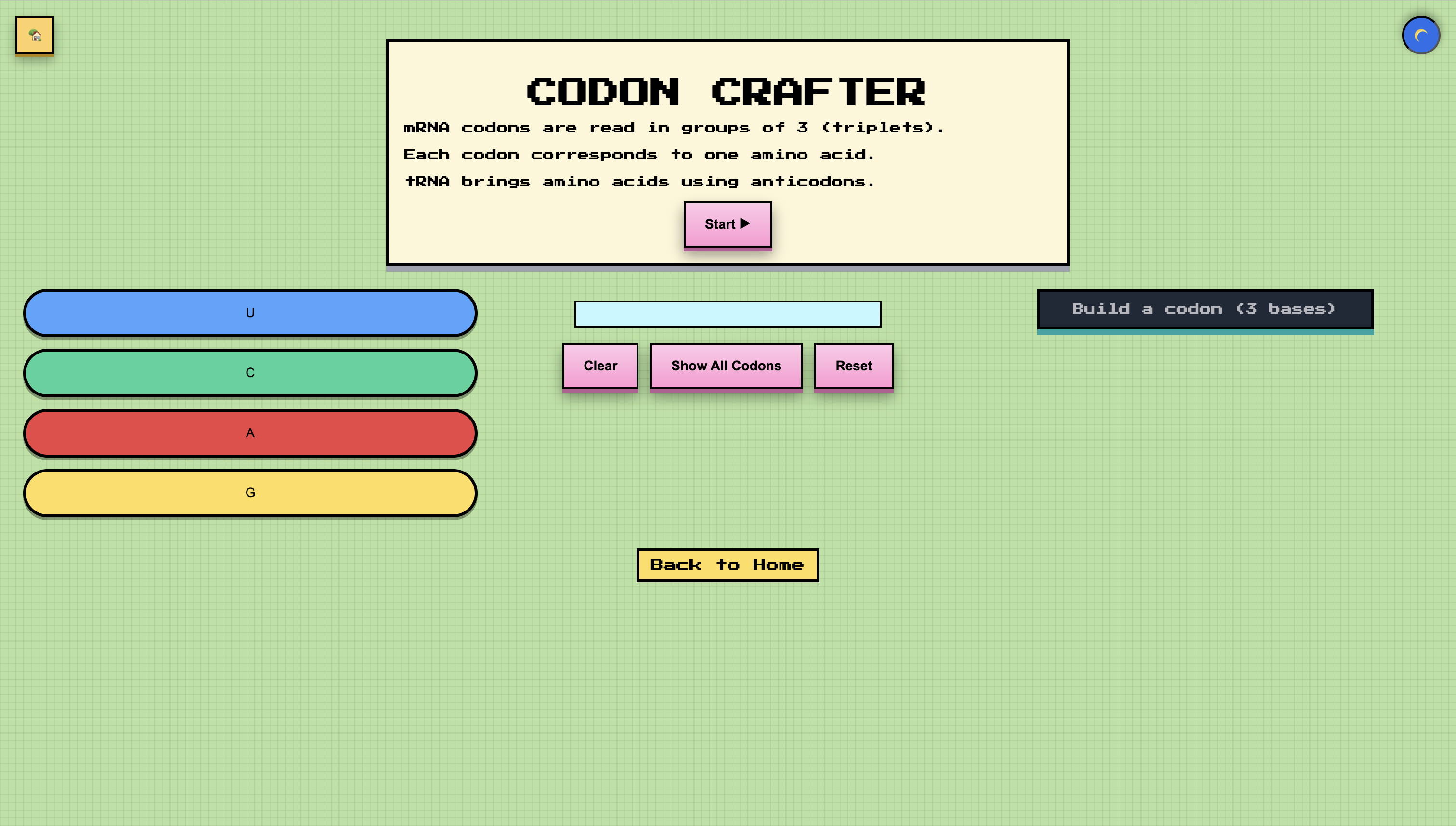
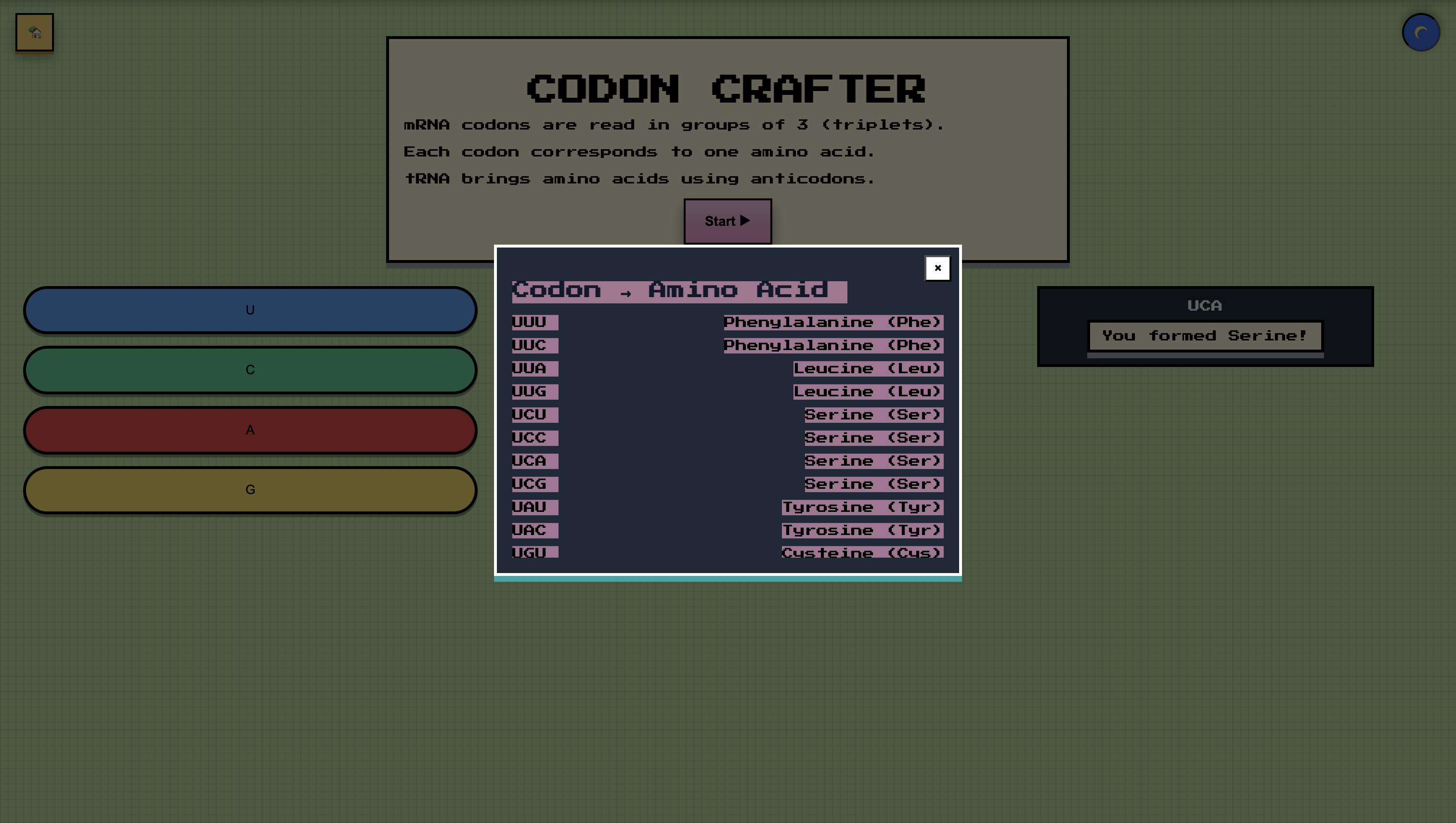
Codon Crafter
-
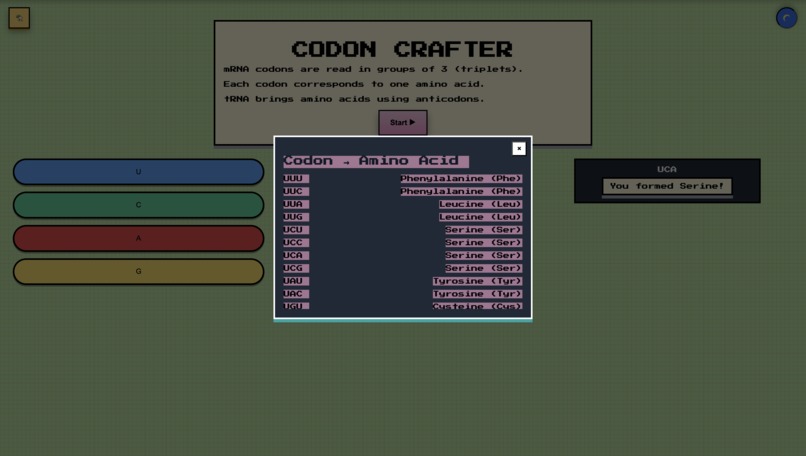
Codon Crafter Testing
-
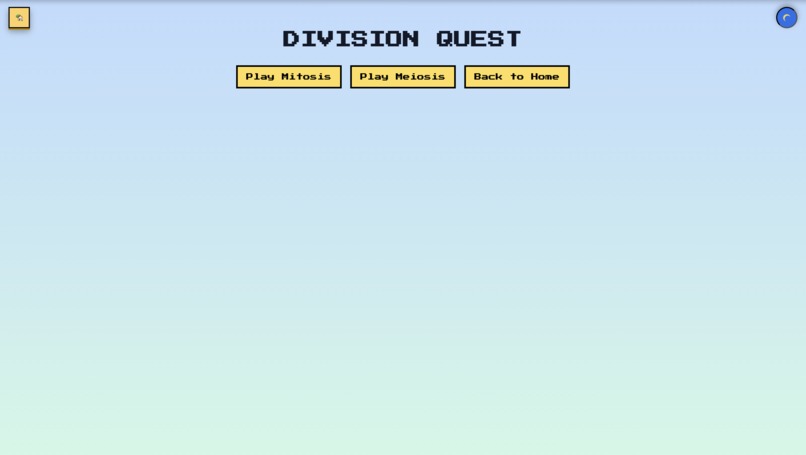
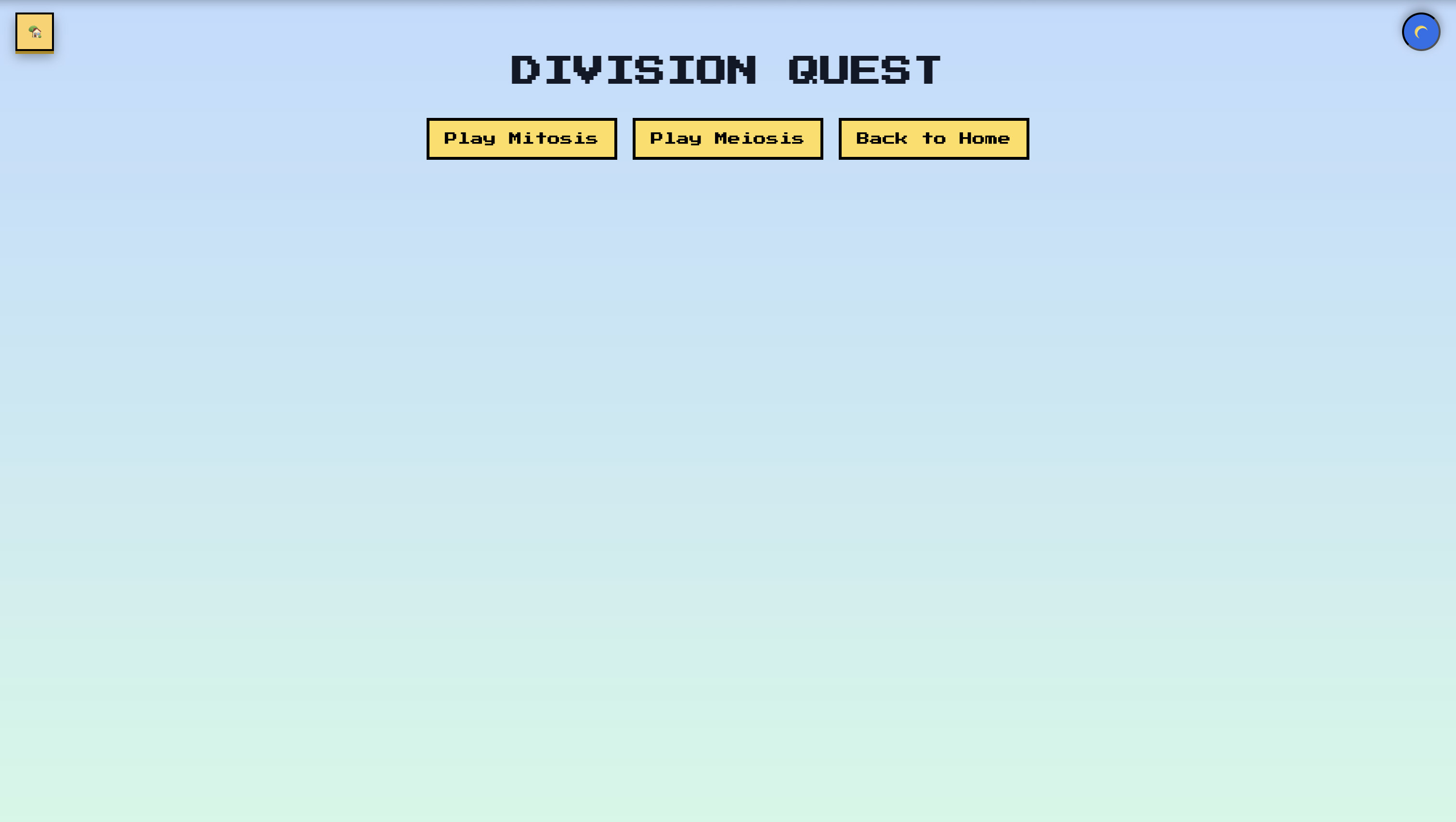
Division Quest
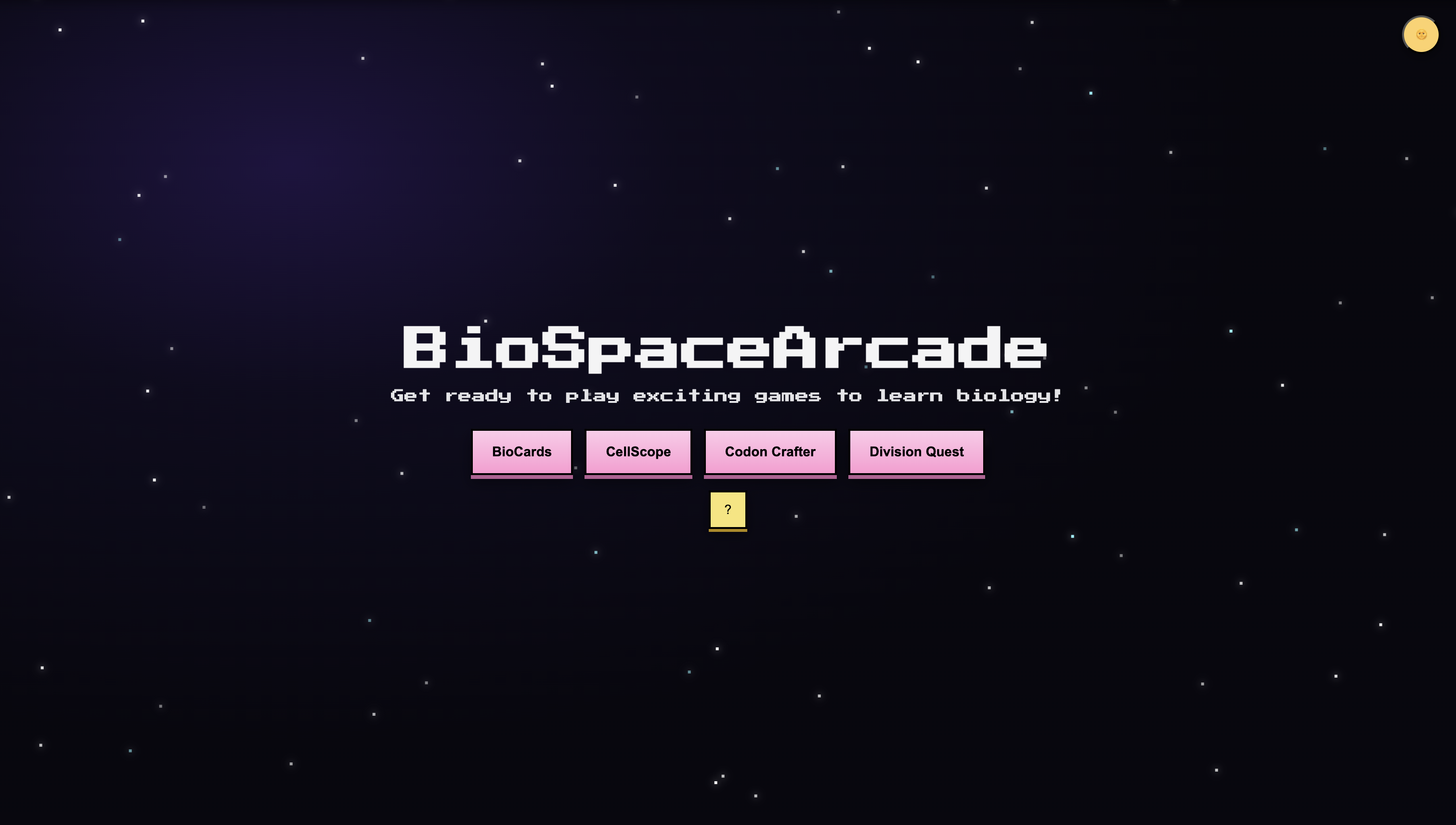
Project Title & Summary
Project Title: BioSpaceArcade
Summary:
BioSpace Arcade is an interactive web platform that transforms traditional biology learning into a fun, visual, and gamified experience.
Traditional biology education often relies on rote memorization and static textbook content, making it difficult for students to truly understand or visualize concepts. BioSpaceArcade bridges this gap by combining play-based learning with visual exploration - allowing students to learn by seeing, interacting, and engaging directly with biological concepts.
The platform currently features four immersive mini-games designed to simplify key topics like species classification, cell structure, protein synthesis, and cell division. Through interactive challenges, animations, and instant feedback, learners build conceptual clarity before memorizing facts.
By merging science education with game design, BioSpace Arcade creates a learning experience that is both effective and enjoyable - helping students understand, retain, and connect ideas better.
Problem Statement
Traditional biology learning focuses heavily on memorization rather than understanding. Students often read and recall facts without truly visualizing how biological processes work. This approach makes learning repetitive, abstract, and uninspiring - leading to low engagement and weak conceptual understanding.
There is a clear gap in biology education: the lack of interactive, visual, and hands-on learning tools that make complex topics accessible and enjoyable.
Target Audience / Beneficiaries
The primary audience includes:
- Students who struggle with memorization or find traditional biology classes uninspiring.
- Educators and institutions seeking interactive supplementary tools to make classrooms more engaging.
Proposed Solution
BioSpaceArcade offers an alternative approach to learning - through interactive and gamified experiences that encourage exploration and understanding before memorization.
Students can visually interact with biological structures, processes, and organisms through immersive mini-games.
The platform currently features:
- BioCards – Dynamic flashcards that make species classification interactive.
- CellScope – A drag-and-drop game exploring cell organelles and their functions.
- Codon Crafter – A coding-style challenge demonstrating how mRNA codons form amino acids.
- Division Quest – A visual representation of mitosis and meiosis, helping learners understand each stage through guided interaction.
BioSpaceArcade stands out for its gamified learning design, use of animation-driven visualization, and modular scalability, allowing future subjects and games to be easily added.
Technical Approach & Tech Stack
Frontend: React.js, Tailwind CSS
Backend: Node.js, Express.js
Database: MongoDB
Animations: GSAP
Development Tools Used:
Intelligent coding assistants and GenAI tools such as ChatGPT and Cursor were used during development to streamline coding, refine UI/UX design, and improve overall functionality.
This stack was chosen for its scalability, performance, and ability to deliver a responsive, visually dynamic user experience.
Impact & Feasibility
BioSpace Arcade encourages curiosity, understanding, and retention instead of rote memorization.
Its gamified learning approach makes biology approachable and exciting, improving comprehension and long-term memory.
Feasibility is high due to the use of open web technologies and modular architecture. The project can scale easily — supporting more games, subjects, and interactive modules. Educators can integrate it into classrooms as a supplementary tool to make teaching more effective.
Challenges & Learnings
Challenges Faced:
- Backend currently runs locally and is not yet deployed for global access.
- No existing system to track cumulative student progress.
- UI and animation smoothness can be improved.
- Designing engaging yet educational gameplay required careful balance.
Key Learnings:
The project reinforced how visual and gamified learning significantly boosts student engagement and conceptual clarity compared to traditional study methods.
References & Credits
Datasets / References: NCERT Biology Textbook (for factual and conceptual content).
Frameworks / Libraries: React.js, Tailwind CSS, Node.js, Express.js, MongoDB, GSAP.
Code Assistance & Tools: Cursor AI, ChatGPT (for coding suggestions, UI refinement, and optimization).
No external mentors or collaborators were involved in the project.
Built With
- gsap
- mern
- tailwind

Log in or sign up for Devpost to join the conversation.