-
-
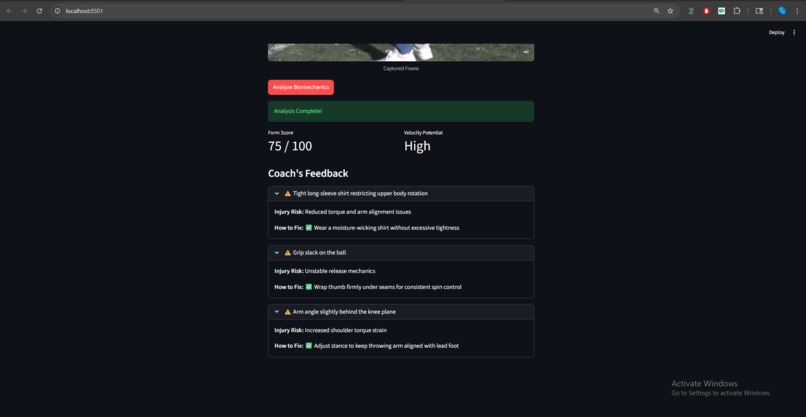
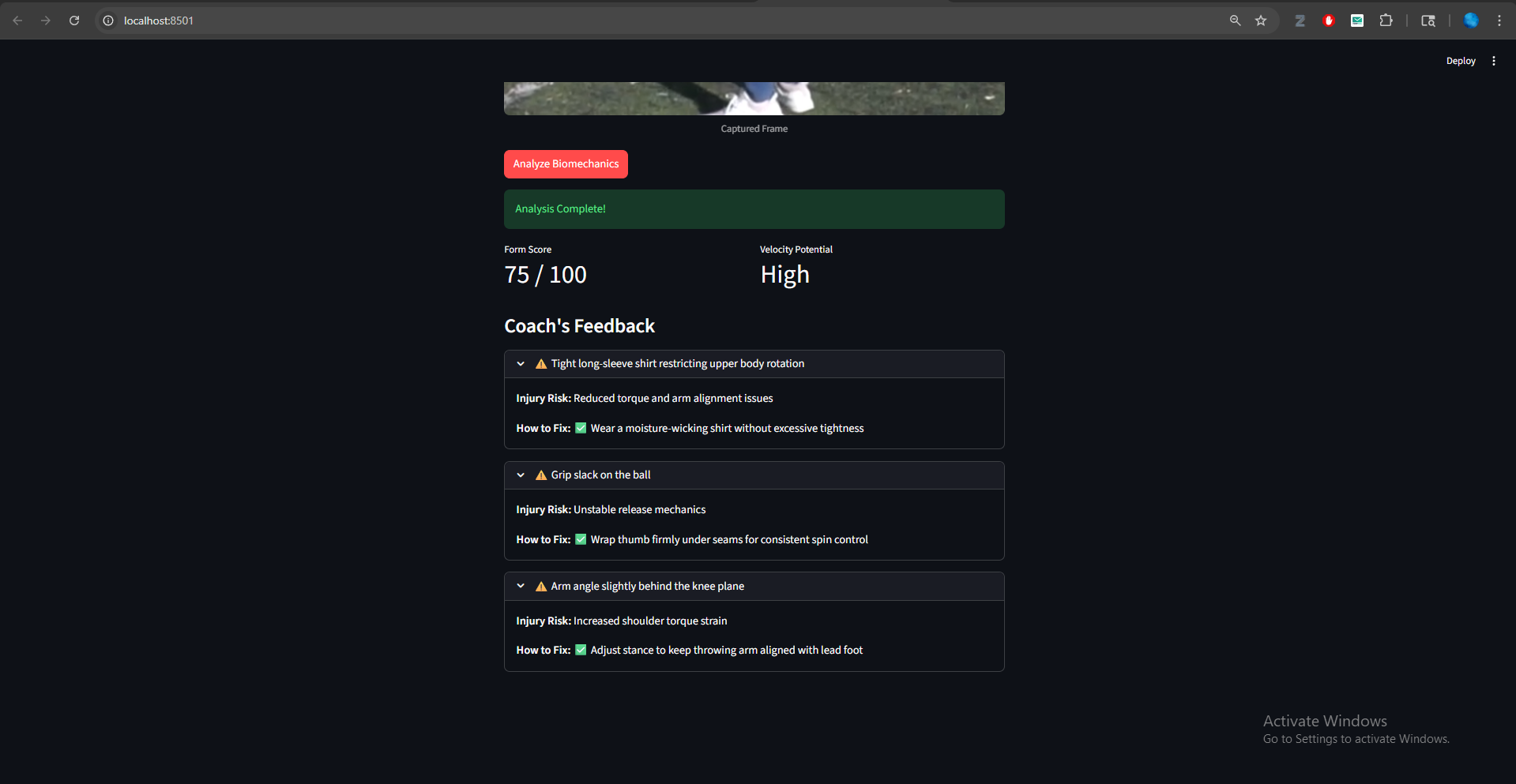
Reviewing the AI-generated form score, velocity potential, and targeted injury-prevention feedback.
-
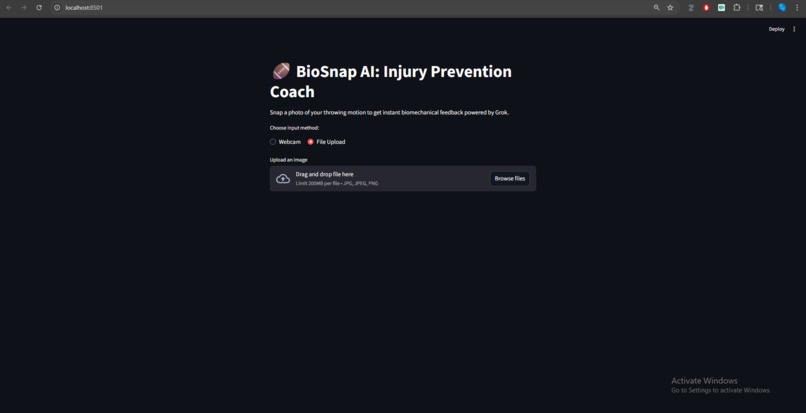
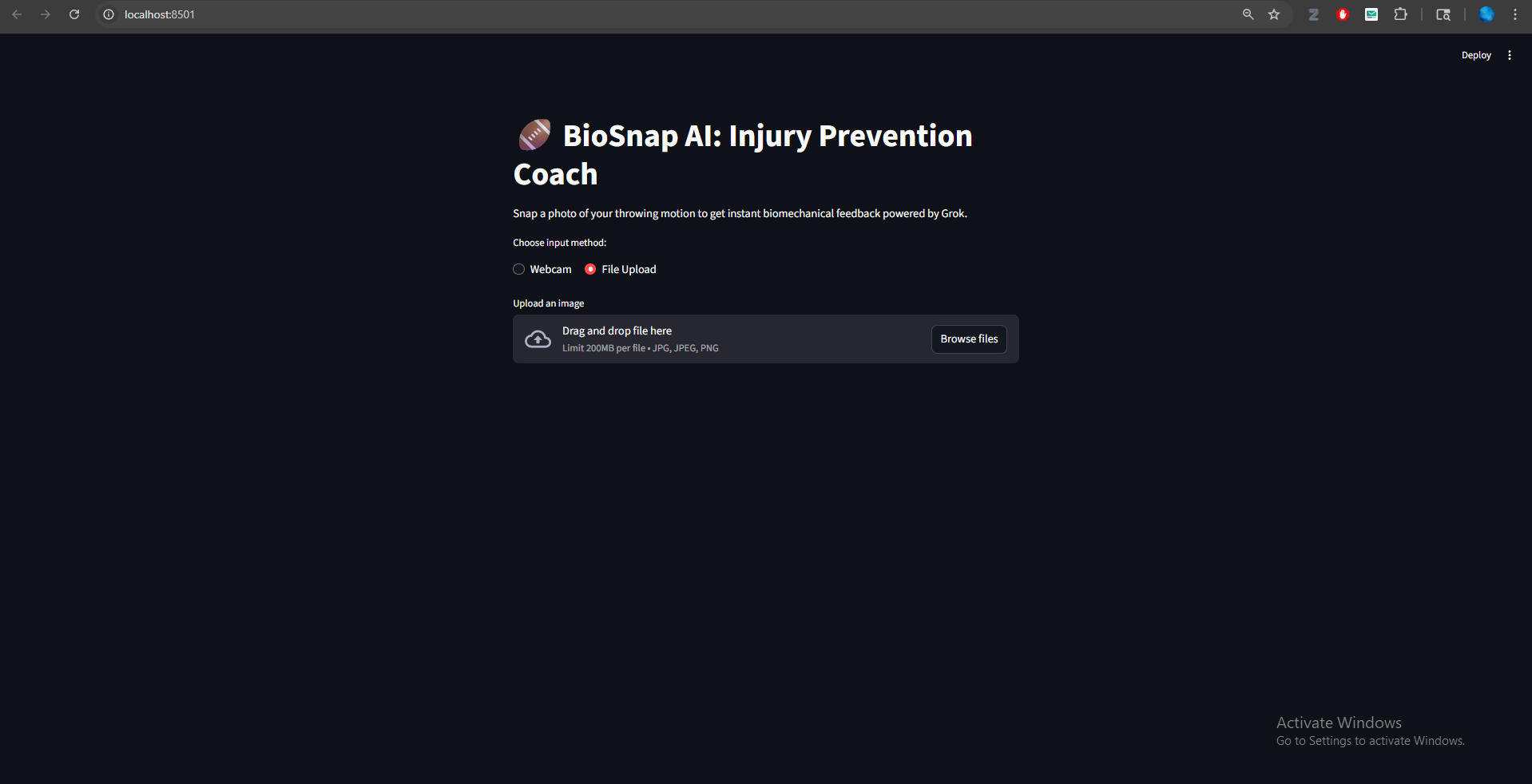
Selecting the file upload option to submit a pre-recorded image for evaluation.
-
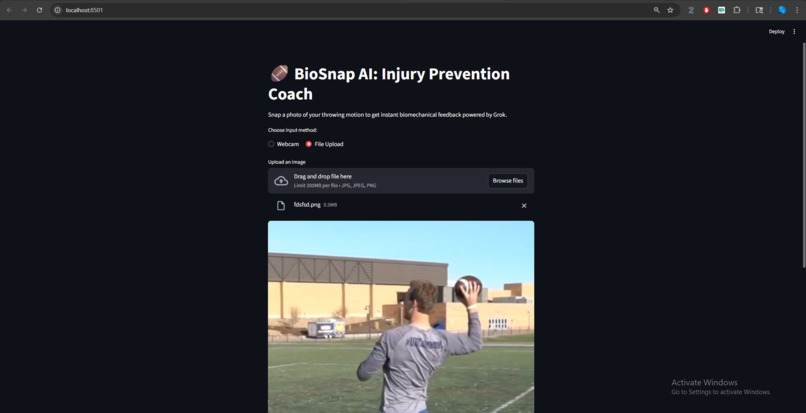
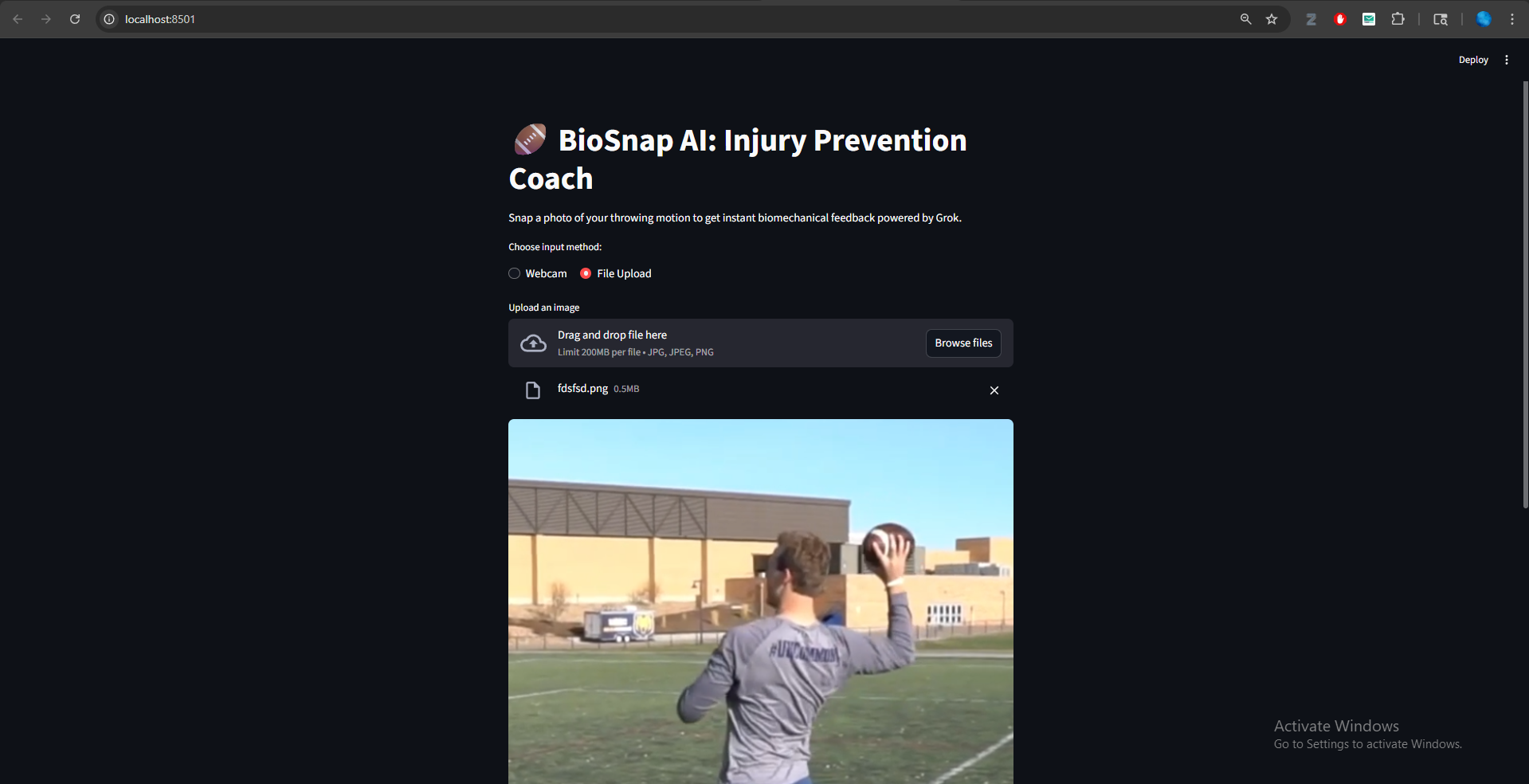
Uploading a snapshot of a throwing motion into the interface for processing.
-
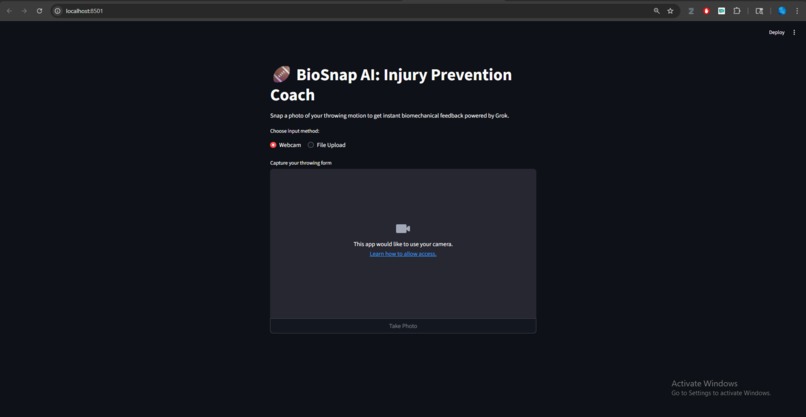
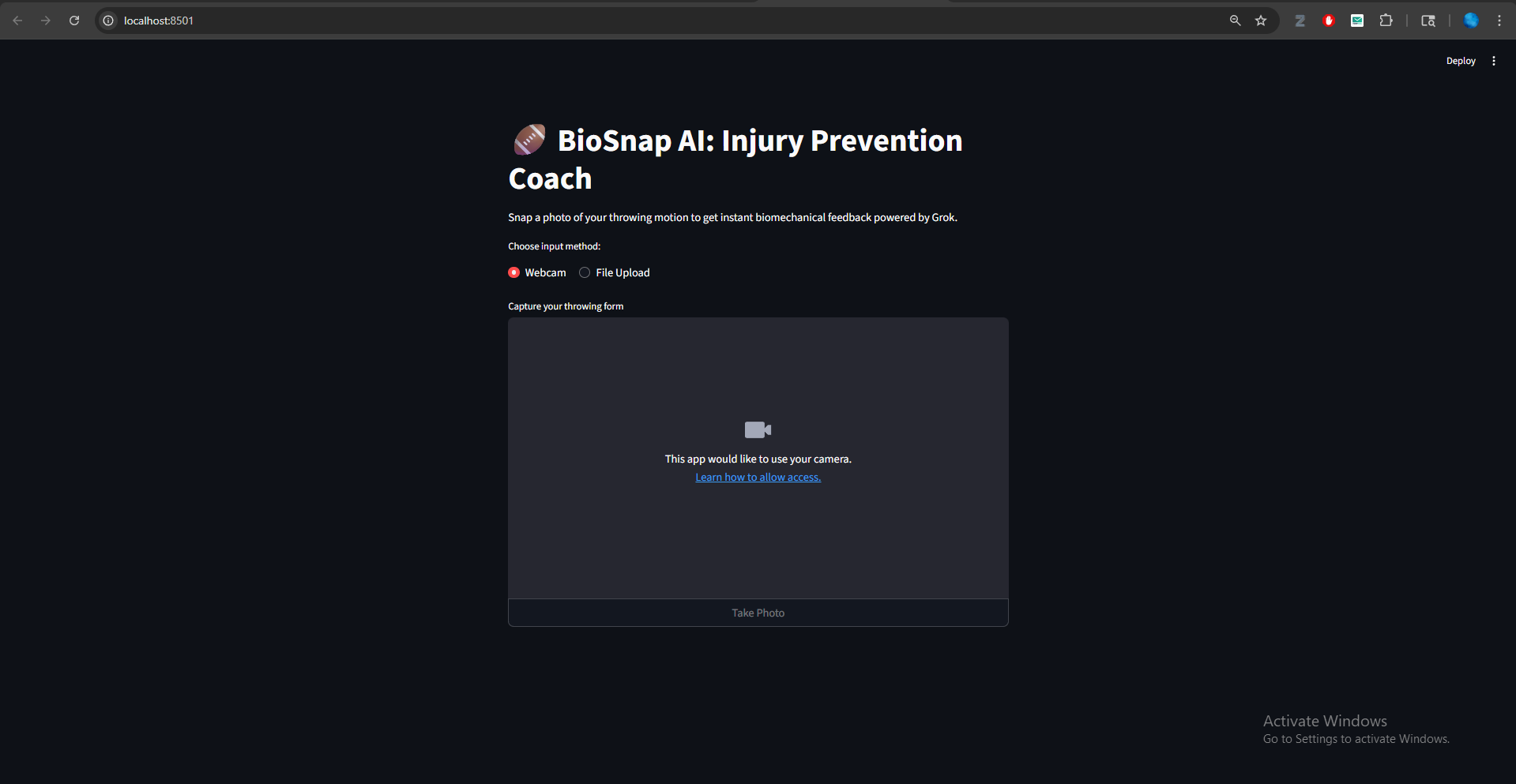
Initiating real-time biomechanical analysis using the application's webcam capture feature.
Inspiration
BioSnap AI started because we are, frankly, obsessed with the mechanics of throwing sports—whether it's firing a football down the field or pitching a fastball. We live for the strategy, the speed, and the sheer physicality of the game. But there’s a dark side to that pursuit of velocity: catastrophic arm injuries. We’ve watched too many players undergo season-ending Tommy John surgeries or tear their UCLs because of repetitive, poor mechanics. It’s heartbreaking because many of these injuries are entirely preventable.
We realized that "toughness" isn't a shield, but biomechanical data could be. We wanted to move past the old-school "just throw it harder" mentality and create a system that notices when an athlete's kinetic chain is breaking down before the actual "snap" of a ligament happens. BioSnap AI was born from the idea that if we can analyze how an athlete's body is aligned in real-time, we can spot the fatigue-driven or habitual mistakes that lead straight to the ER.
What it does
At its core, BioSnap AI is a guardian for your throwing arm. It’s an injury-prevention web app that acts as an elite, pocket-sized pitching and quarterback coach.
Instead of just measuring how fast you throw, the system looks at how safely you throw. You simply snap a photo using your webcam or upload a frame of your throwing motion. BioSnap AI analyzes the image, mapping your joint angles, posture, and kinetic chain alignment. It then generates a comprehensive biomechanics report. It flags specific mechanical issues (like an elbow dropping below the shoulder line), explains the exact injury risk associated with that flaw, and provides immediate, actionable fixes to correct your form. It’s about quality and longevity of movement over raw, reckless speed.
How we built it
We went the DIY-meets-Pro route, building the entire interface in Python using Streamlit for a clean, highly responsive UI. For the "brain" of the coach, we integrated the nvidia/nemotron-nano-12b-v2-vl:free vision-language model via the OpenRouter API.
The goal was precision. We engineered a highly constrained prompt system so the AI doesn't just give generic advice, but strictly formatted JSON data that our app can parse into metrics like "Form Score" and "Velocity Potential." We focused heavily on the physics of the throwing motion. For instance, we know that if a player's shoulder abduction angle deviates from the optimal range, the varus torque τ applied to the Ulnar Collateral Ligament increases dangerously. We look for postural deviations where:
τ = Iα + (r × F)
If the model detects a collapsed elbow, the moment arm r shifts unfavorably, spiking the torque τ. The app instantly catches this, warning the athlete before the standard deviation of their mechanics leads to a tear.
Challenges we ran into
The biggest headache was LLM unpredictability. In theory, vision models are brilliant. In practice, getting an AI to consistently output a strict, parsable JSON object without markdown backticks or conversational fluff when analyzing an image is incredibly difficult. It took rigorous prompt engineering and string-cleaning logic to ensure the app wouldn't crash when reading the AI's feedback.
We also struggled with the freeze factor. Vision models take a few seconds to process heavy image payloads. Early on, the entire app would lock up while waiting for the API. We had to implement Python’s threading module to push the API call to the background, writing custom logic to animate a progress bar on the main thread so the user knew the coach was still working. Finding that balance between heavy background computation and a snappy user experience was a major hurdle.
Accomplishments that we're proud of
We’re incredibly proud that we shifted the goalposts from "who throws the hardest?" to "who throws the smartest?" BioSnap AI isn't just an image analyzer; it’s a coach’s second pair of eyes. By successfully wrangling a massive 12-billion parameter vision model into a lightweight, real-time feedback loop, we created a level of accessible sports science that usually costs thousands of dollars. Seeing the system successfully catch a dangerous throwing posture and output the exact physiological fix felt like a massive win for player safety.
What we learned
This project was a masterclass in the human element of technology. We learned that injury prevention isn't just about knowing anatomy—it’s about how you deliver that data to an athlete so they can actually use it.
We also took a deep dive into multimodal AI integration. We learned how to handle live Base64 image data streams, encode payloads for external APIs, and manage asynchronous state in a synchronous framework like Streamlit. Data is only useful if it’s actionable, which is why we focused so hard on turning raw pixel data into clear, physiological patterns.
What's next for BioSnap AI
We’re just getting off the line of scrimmage. The next move is taking BioSnap AI from static images to real-time video processing. We want to implement frame-by-frame analysis to track the full kinetic chain through the entirety of a throwing motion. We’re also looking into building a cloud-based dashboard for coaches, allowing them to track the mechanical consistency of their entire roster over a full season. Long-term, we want this to be the standard tool in every bullpen and locker room—helping athletes train harder by training smarter, and keeping the stars on the field where they belong.

Log in or sign up for Devpost to join the conversation.