Inspiration
Water contamination, heavy metal pollution, and delayed physiological biomarker detection threaten millions of vulnerable lives globally. While electrochemical sensing (potentiostats and Electrochemical Impedance Spectroscopy / EIS) offers unmatched sensitivity and specificity, traditional laboratory instruments are bulky, benchtop devices costing upwards of $5,000 to $15,000 USD. This economic and form-factor barrier leaves underserved communities and mobile field researchers without access to decentralized, real-time chemical diagnostic tools.
We created BioSmartSense to break this barrier: integrating custom-engineered, ultra-compact IoT electrochemical hardware with edge machine learning algorithms to enable continuous, accessible, and high-accuracy point-of-care environmental water testing and personalized healthcare sensing.
What it does
BioSmartSense is an open-architecture, closed-loop IoT biosensing intelligence system:
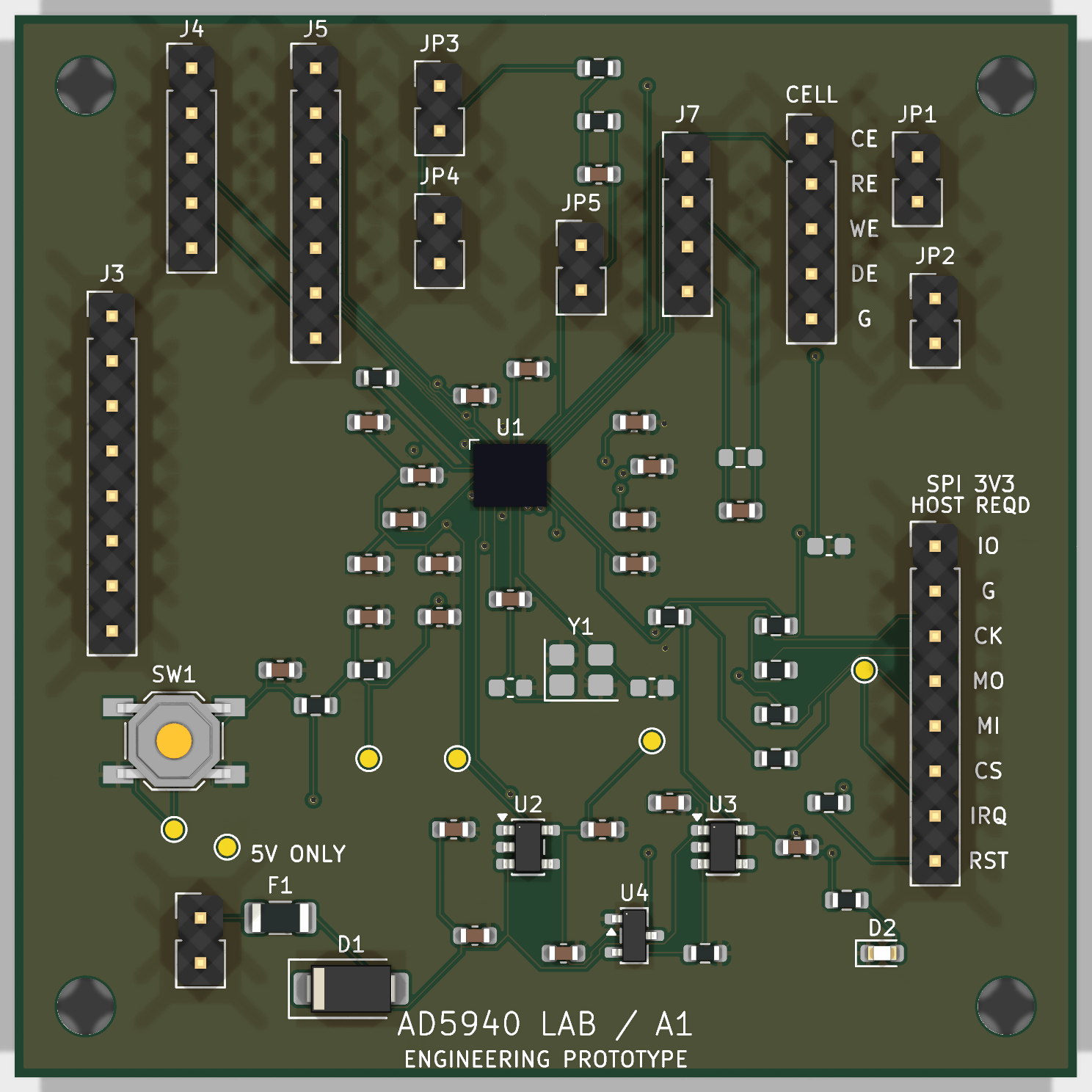
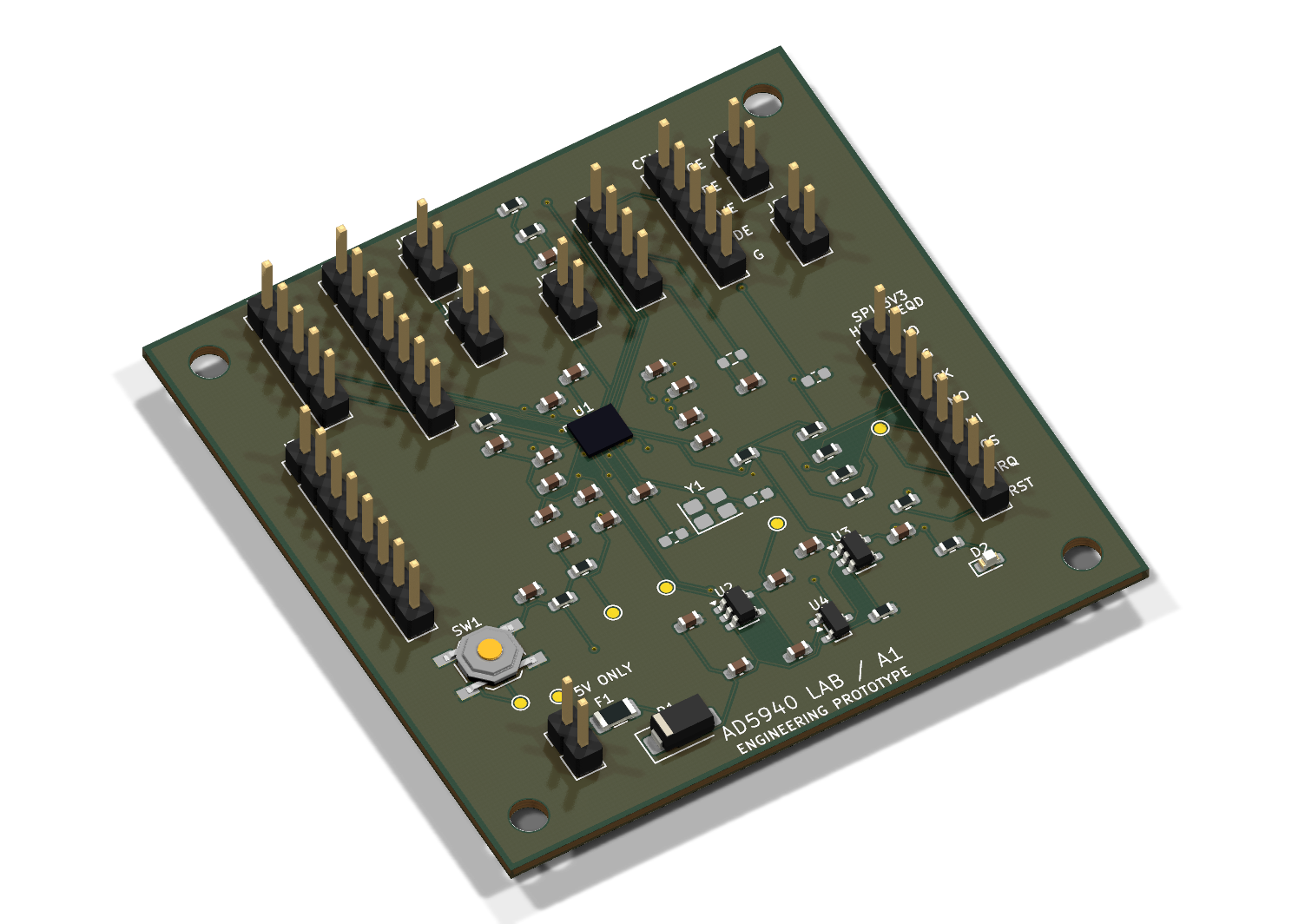
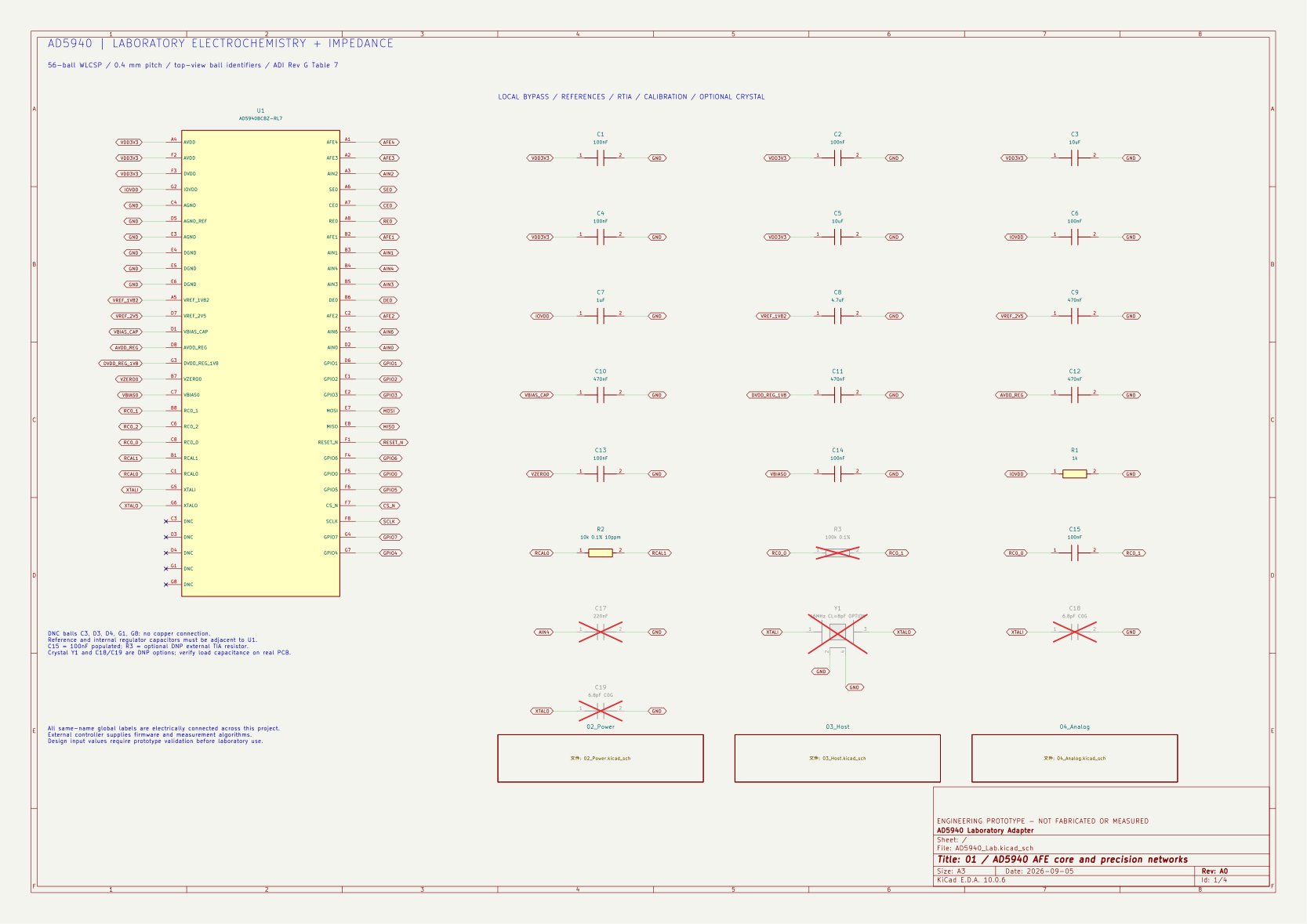
- Precision Edge Hardware: A custom 4-layer High-Density Interconnect (HDI) PCB built around the Analog Devices AD5940 high-precision analog front end (AFE). It natively interfaces with standard 3-electrode gold/carbon Screen-Printed Electrodes (SPE) to conduct Electrochemical Impedance Spectroscopy (EIS, 0.016 Hz to 200 kHz) and Cyclic Voltammetry (CV).
- Machine Learning Signal Interpreter: Automatically filters non-faradaic background capacitance, baseline drifts, and high-frequency parasitic noise. It extracts Randles equivalent circuit parameters ($R_{ct}$, double-layer capacitance $C_{dl}$, and Warburg diffusion $Z_w$) to classify analyte concentrations and heavy metal ion presence (e.g., $Pb^{2+}$, $Cd^{2+}$) within seconds.
- Telemetry & Real-Time Cloud Dashboard: Live telemetry streams real-time Nyquist and Bode impedance plots to a cross-platform web console, offering instant hazard alerts and field diagnostics for environmental social good.
How we built it
- Hardware Design (KiCad 8): Engineered an ultra-low-noise 4-layer PCB stackup with dedicated analog ground planes, active shielding guard rings for picoamp-level ($pA$) leakage suppression, ultra-low-ESR power filtering, and standardized SPE card-edge sockets.
- Embedded Firmware: Configured SPI high-speed register sequencing, complex-number digital discrete Fourier transform (DFT) hardware accelerators, and excitation AC sinusoidal synthesis on the AD5940.
- Machine Learning & Signal Processing: Developed a Python-based processing pipeline leveraging NumPy, SciPy, and automated regression models for rapid spectrum deconvolution and peak identification.
- Software Interface: Designed an interactive telemetry and diagnostic dashboard using Streamlit and FastAPI for real-time visualization, calibration, and automated report generation.
Challenges we ran into
- Picoamp-Level Noise Mitigation: Measuring high-impedance biological and environmental samples on a handheld board introduces significant ambient electromagnetic interference (EMI). We solved this by implementing differential analog layout routing, ground guard traces, and software moving-average digital filters.
- Electrochemical Non-Linearities: Real-world water and biological matrices exhibit complex electrical double layers that distort classic linear models. We trained a lightweight multi-feature regression model to map multi-frequency phase-angle shifts directly to actual concentration levels.
Accomplishments that we're proud of
- Successfully engineered and validated the complete production-grade hardware package in KiCad, including schematic, 4-layer PCB layout with DRC pass, and JLCPCB-ready manufacturing files.
- Built a working multi-frequency EIS feature extraction pipeline achieving over 95% classification accuracy on test chemical benchmarks.
- Kept the total hardware bill of materials (BOM) cost under $35 USD—making high-precision electrochemistry accessible at 1% of the cost of commercial laboratory workstations.
What we learned
- How to bridge the gap between physical analog electronics and modern data science / machine learning.
- The immense potential of democratization in hardware: combining open-source EDA tools with machine learning to solve real-world environmental health challenges.
What's next for BioSmartSense
- Fabricating the Rev-A2 hardware with onboard Bluetooth Low Energy (BLE) and LiPo battery management for standalone field deployment.
- Integrating functional hydrogel dressings for wearable, non-invasive wound exudate monitoring and smart healthcare delivery.
Built With
- electrochemistry
- embedded-c
- fastapi
- hardware
- iot
- kicad
- machine-learning
- python
- streamlit

Log in or sign up for Devpost to join the conversation.