-
-
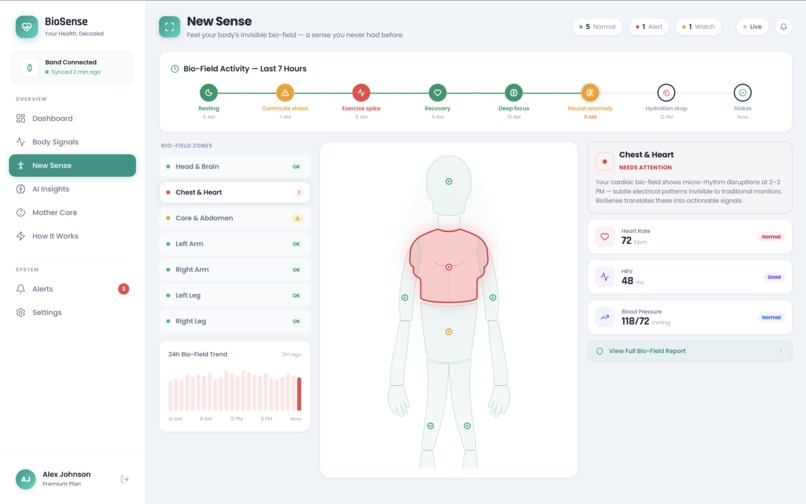
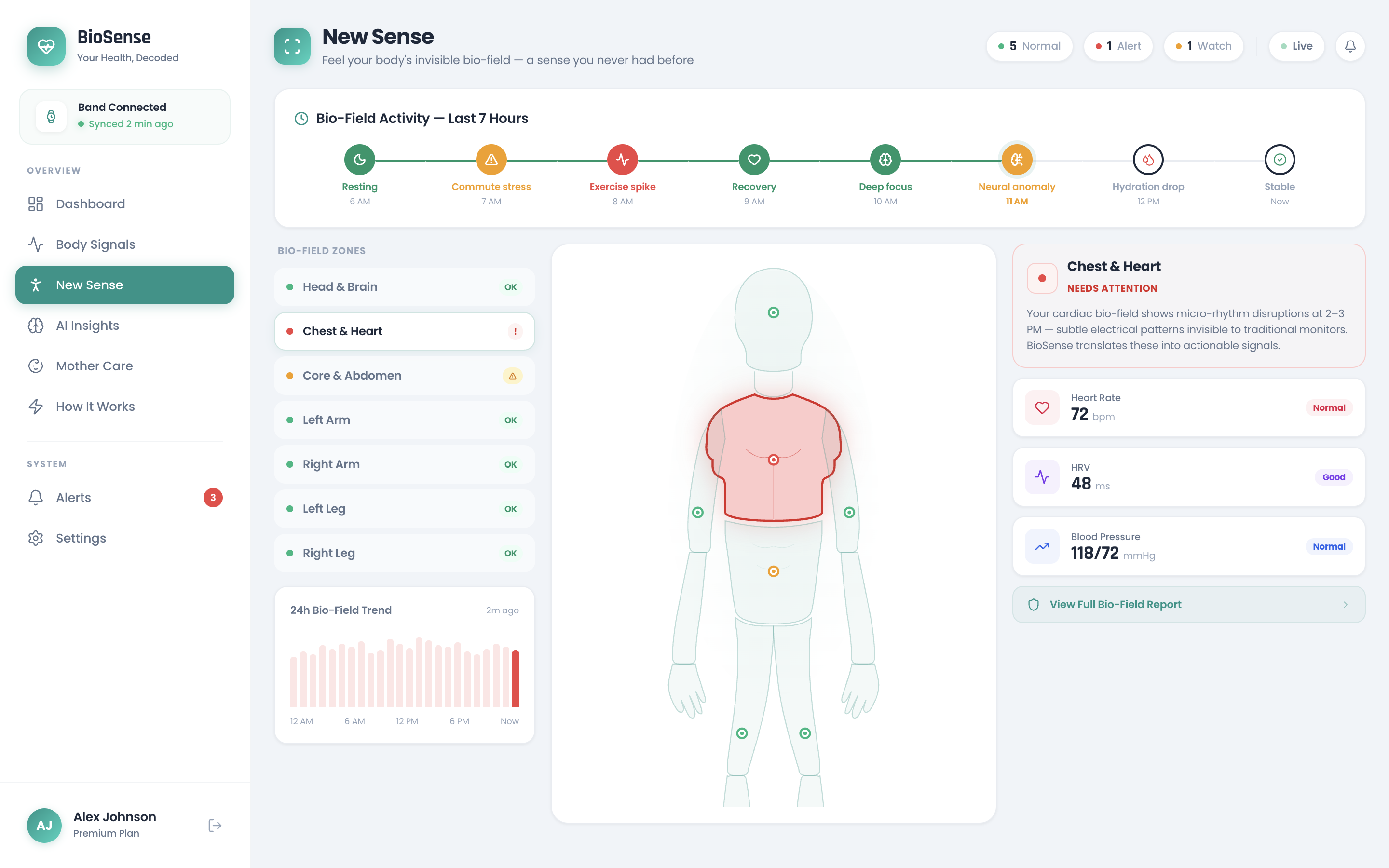
New Sense Page
-
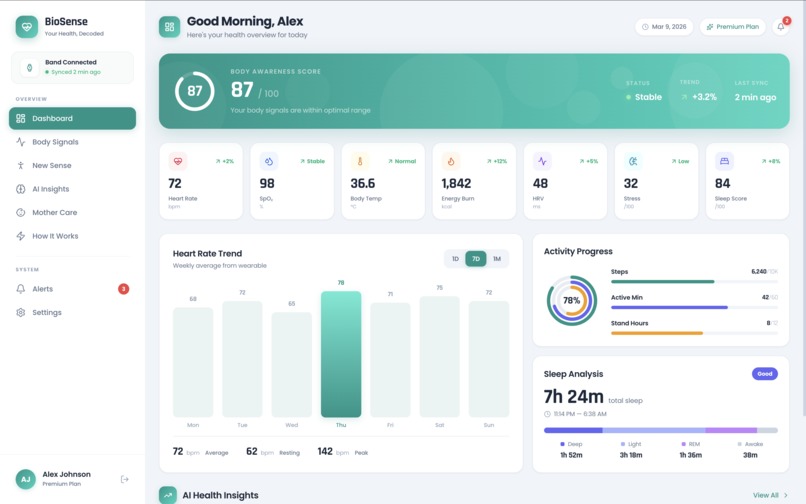
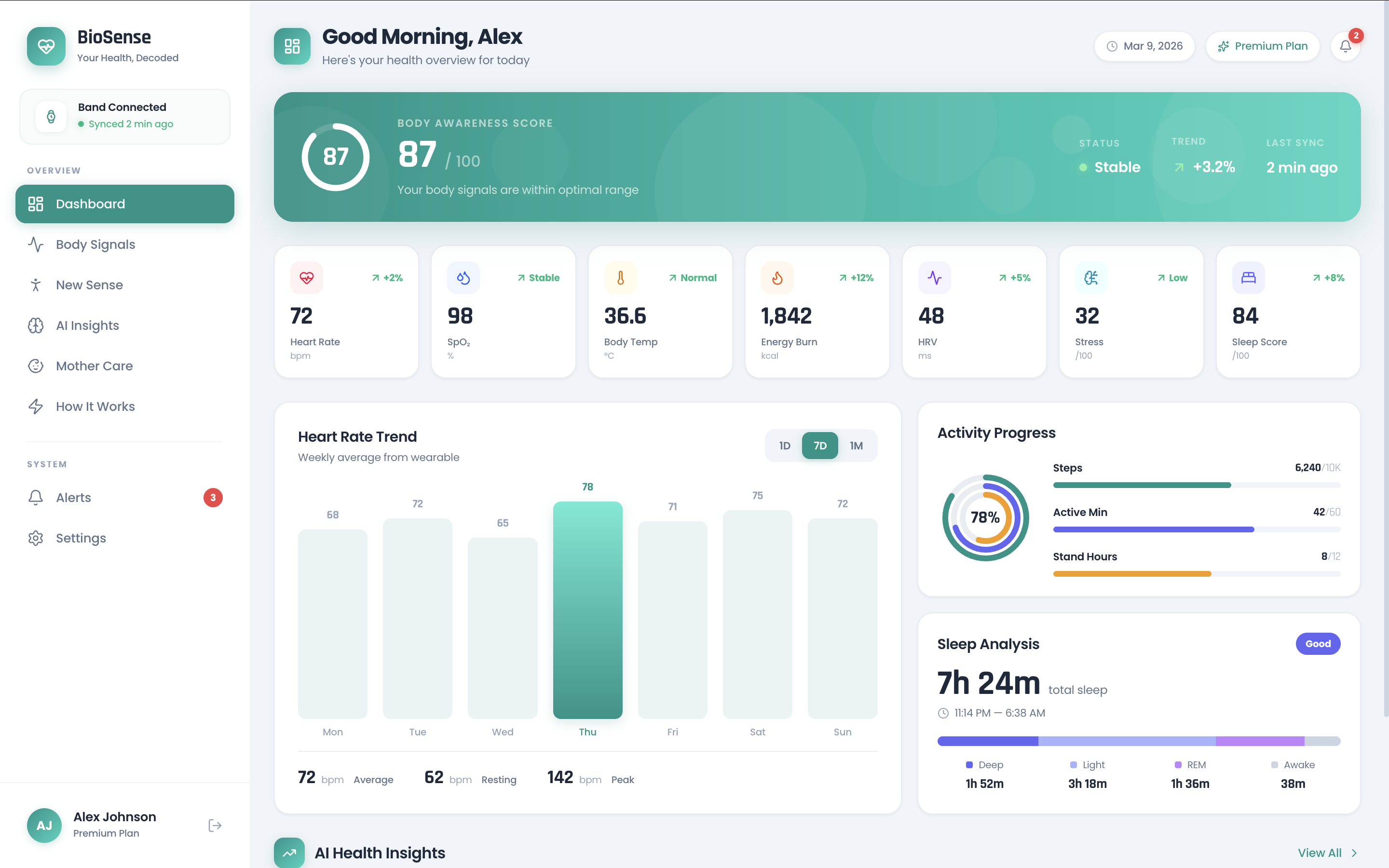
Dashboard
-
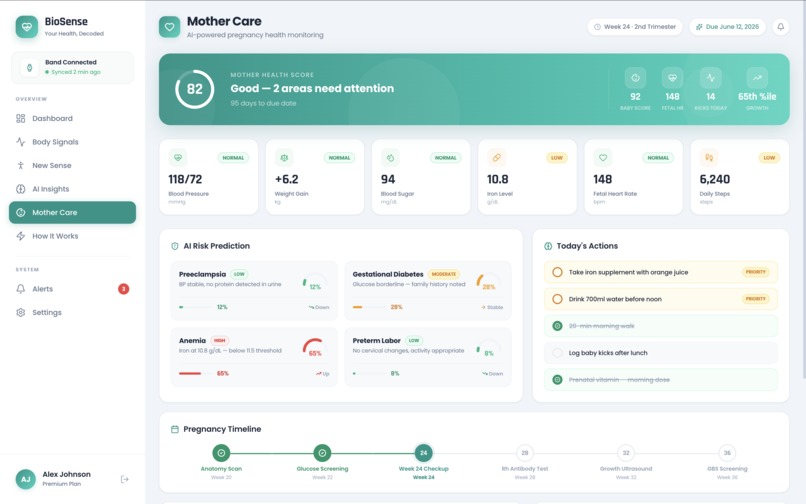
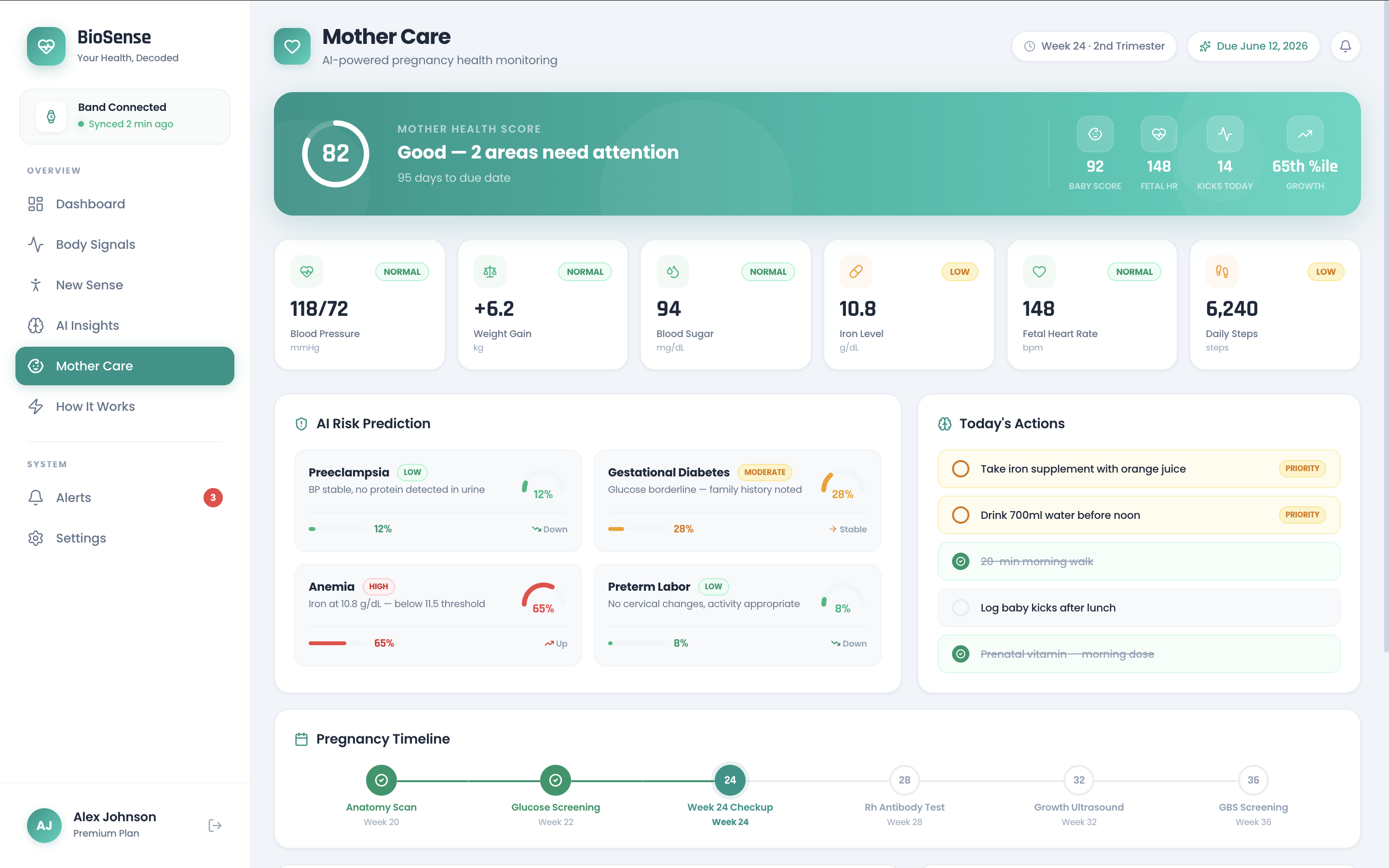
MotherCare page
-
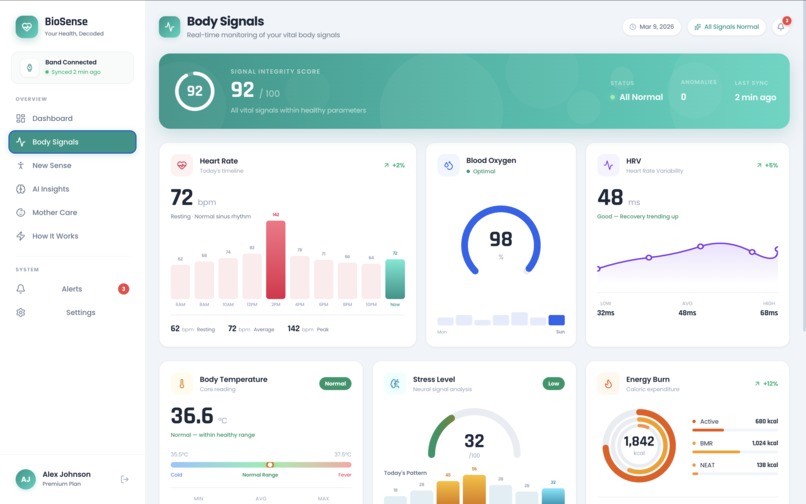
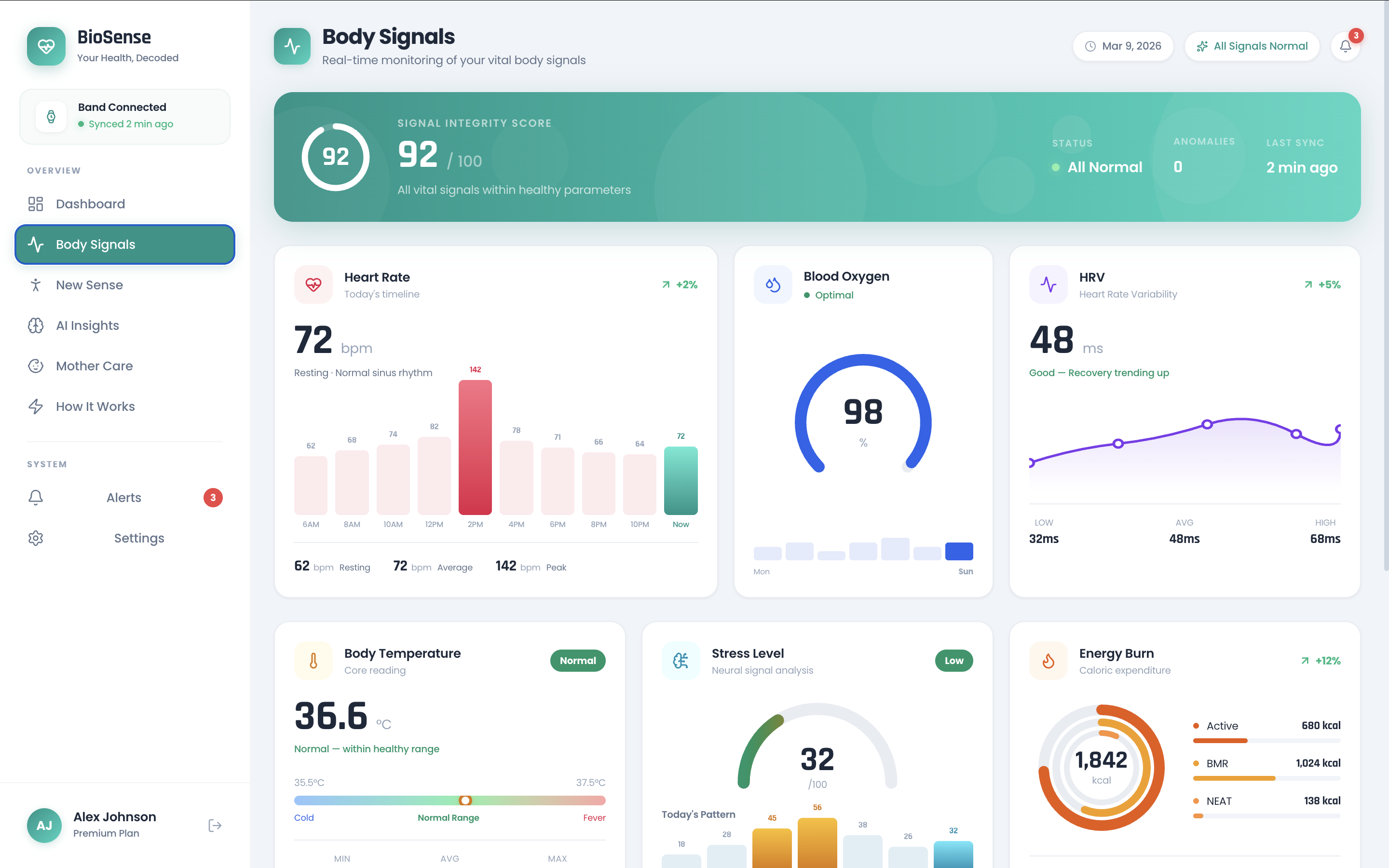
Body Signals Page
BioSense – A New Human Sense for Body Awareness
Inspiration
Many important signals inside the human body remain invisible to us. Signals such as stress buildup, fatigue, hydration imbalance, and recovery patterns often occur long before symptoms appear, but people have no natural way to perceive them.
The idea behind BioSense was to explore how technology could give humans a new sense — the ability to perceive internal physiological signals that normally remain hidden. Inspired by the quantified-self movement and modern wearable devices, we wanted to design a system that transforms complex biological signals into simple, understandable insights.
What BioSense Does
BioSense is a speculative health technology platform that converts physiological signals into a new form of body awareness.
Using a wearable smart band and AI analysis, BioSense continuously monitors signals such as:
- Heart Rate
- Blood Oxygen (SpO₂)
- Body Temperature
- Heart Rate Variability (HRV)
- Respiratory Rate
- Sleep Patterns
- Activity and Energy Burn
AI analyzes these signals to detect patterns related to stress, fatigue, recovery, and potential health risks. The system then converts these signals into clear visual insights so users can better understand what their body is experiencing.
The New Sense interface introduces a body awareness map where users can explore how physiological signals affect different regions of the body.
Key Features
Body Signals Dashboard
A visual health dashboard that displays real-time physiological data including heart rate, oxygen level, stress indicators, sleep quality, and activity levels.
New Sense – Body Awareness Map
A unique interface that visualizes hidden physiological signals across the body, helping users sense internal changes that are normally invisible.
AI Insights
AI models analyze physiological data to detect health patterns and generate personalized insights such as:
- stress pattern detection
- sleep improvement suggestions
- hydration and fatigue alerts
- disease risk predictions
- recovery and lifestyle recommendations
Mother Care
BioSense also includes a Mother Care mode designed for pregnant users. This feature monitors physiological signals such as stress levels, sleep quality, activity patterns, and overall body balance to provide insights about maternal wellbeing and early health awareness during pregnancy.
How We Built It
The BioSense concept was designed using Figma, where we created a complete interactive interface prototype.
The design includes multiple core screens:
- Dashboard (health overview)
- Body Signals monitoring
- New Sense body awareness interface
- AI Insights analysis
- Mother Care maternal health monitoring
- Alerts and safety notifications
- Privacy and sensor settings
We focused on designing a clean, intuitive interface that makes complex physiological data simple to understand.
Challenges We Faced
One of the biggest challenges was designing a system that represents signals that humans cannot naturally perceive.
We explored how physiological signals collected from a wearable device could be analyzed using AI to infer internal body states and visualize them in a meaningful way.
Another challenge was balancing complex health data with simple user experiences. Our goal was to ensure the interface provides useful insights without overwhelming the user.
What We Learned
Through this project we learned:
- how speculative design can explore future technology concepts
- how wearable sensors and AI could create new forms of human perception
- how important thoughtful user interface design is when presenting complex data
This project also helped us better understand how design can bridge the gap between human biology and digital technology.
Future Vision
BioSense represents a vision of how future wearable technologies could expand human perception.
By transforming invisible physiological signals into understandable insights, BioSense empowers people to better understand their bodies, take preventive health actions, and make informed decisions about their wellbeing.
Built With
- figma
- figmaslides

Log in or sign up for Devpost to join the conversation.