-
-
BioResearch AI 01
-
BioResearch AI 02
-
BioResearch AI 03
-
BioResearch AI 04
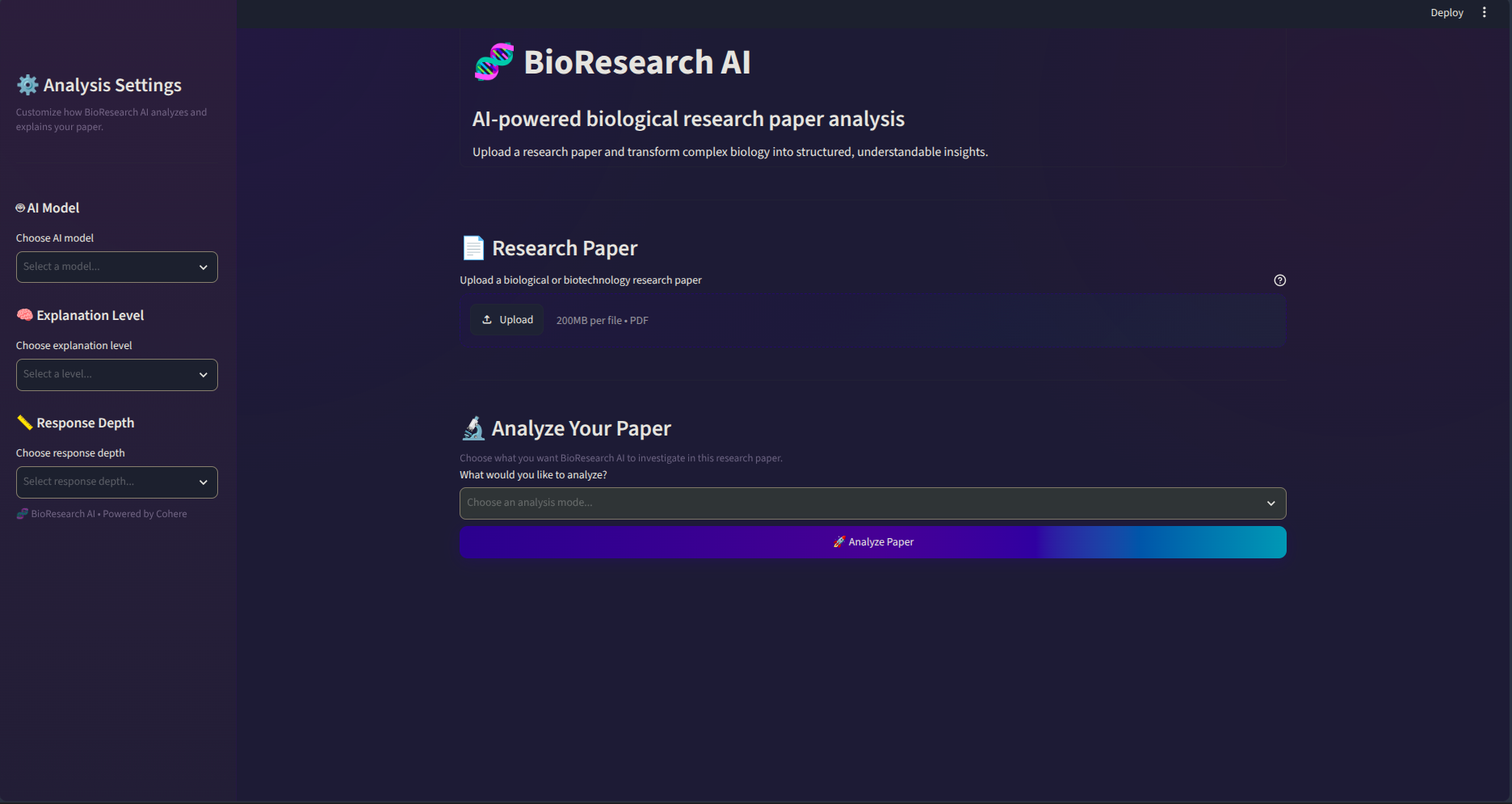
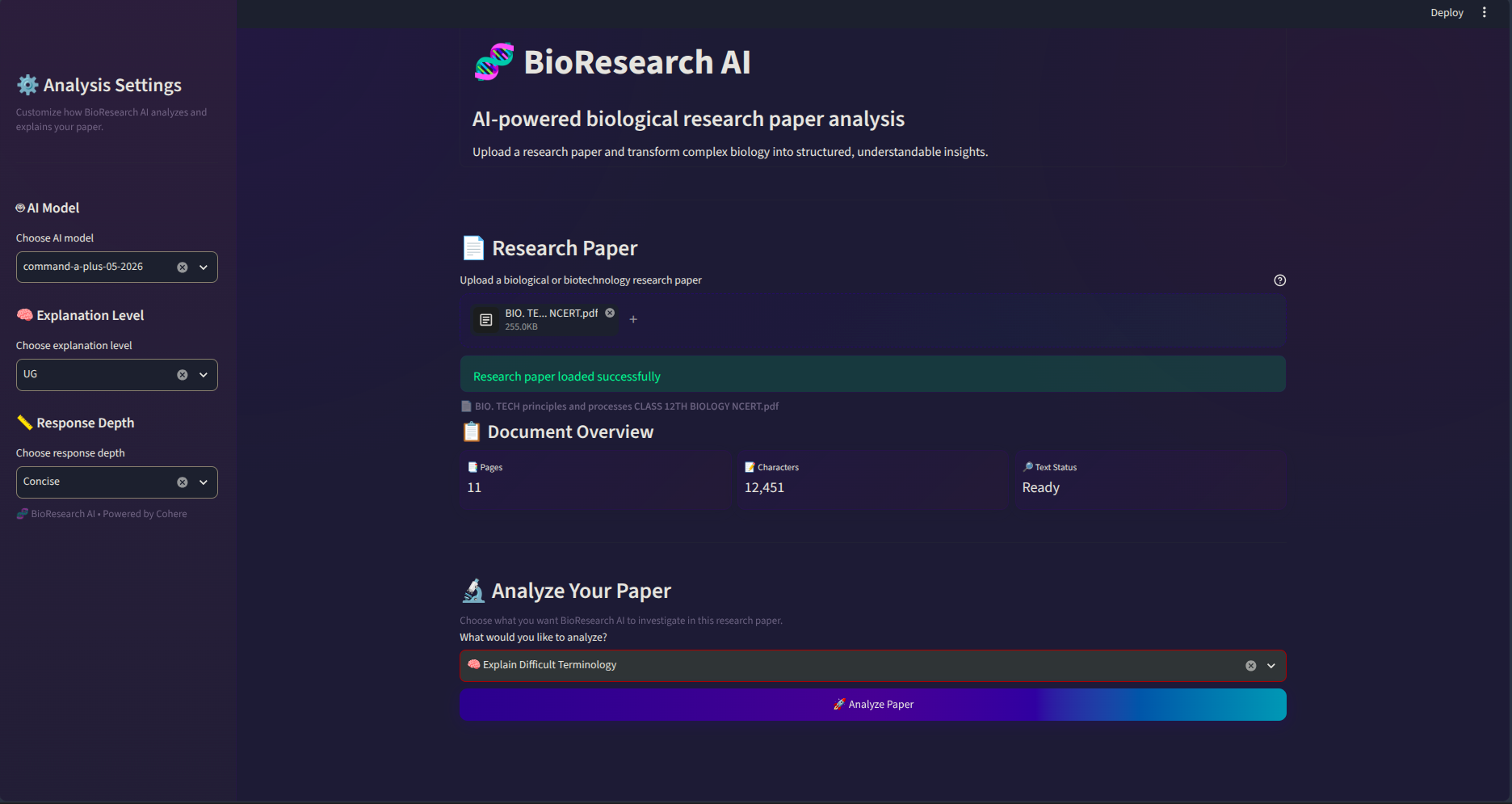
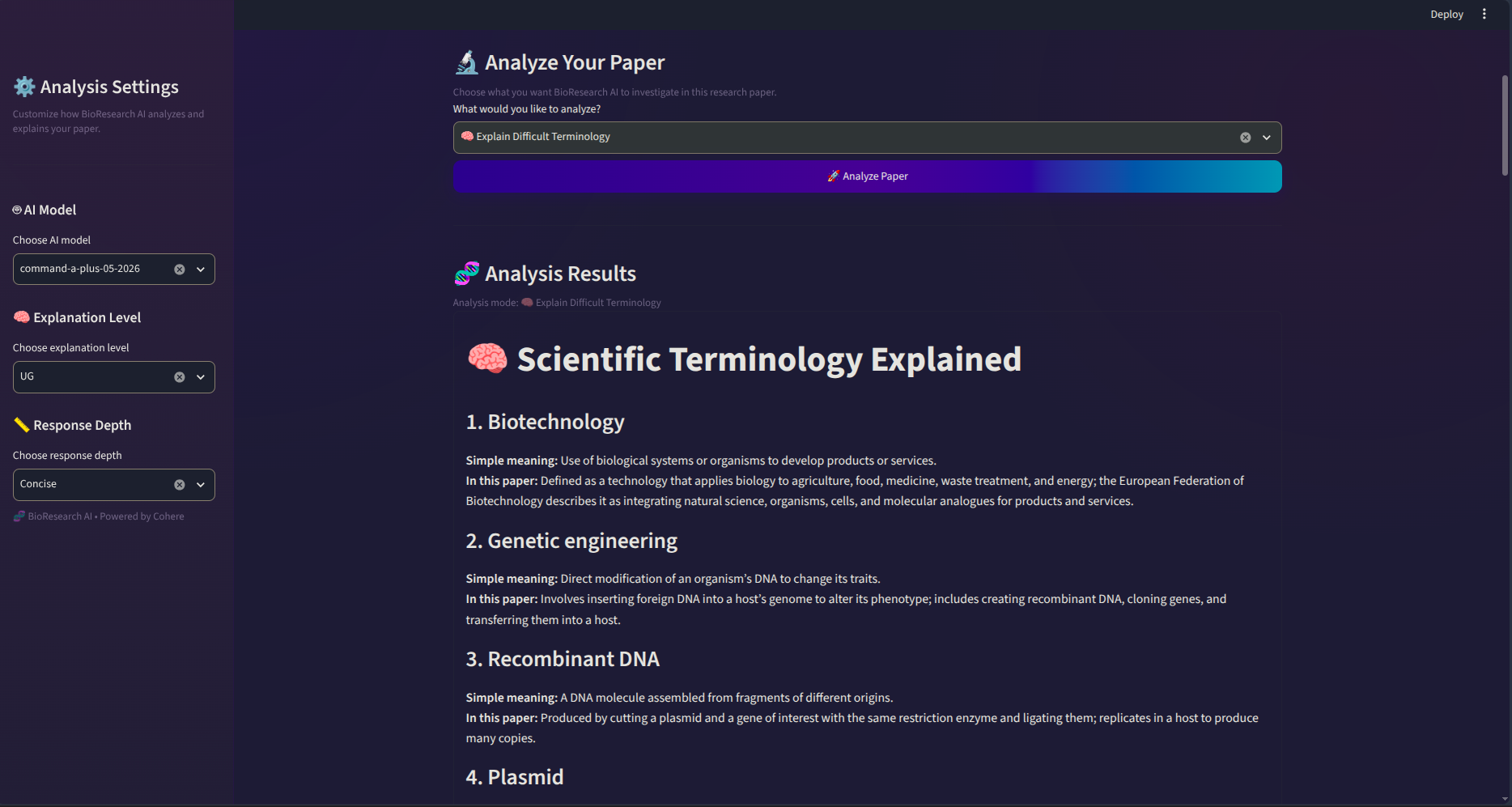
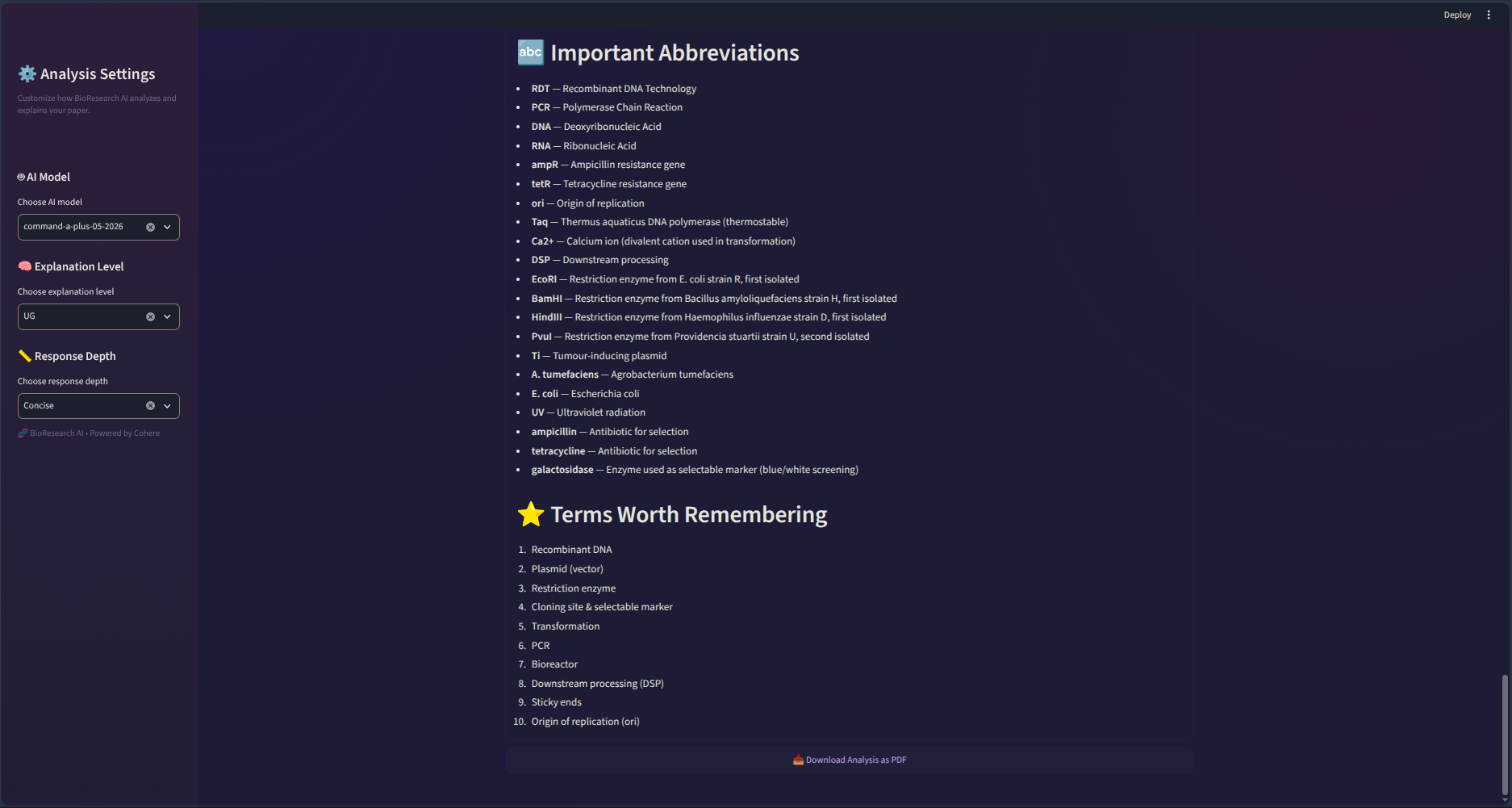
🧬 Why I Built BioResearch AI I am a biotechnology student, and one thing I have noticed while studying biology is that reading an actual research paper is very different from reading a textbook.
Research papers can get overwhelming pretty quickly. There are experimental methods you may have never seen before, unfamiliar genes and proteins, complicated biological mechanisms, technical terminology, and results that can take quite a while to properly understand.
At the same time, I have been learning Python and experimenting with AI APIs and different Python libraries. I wanted to build something where these two interests — biotechnology and programming — actually came together.
That is where the idea for BioResearch AI came from.
Instead of building another general PDF summarizer, I wanted to make something specifically for biological and biotechnology research papers.
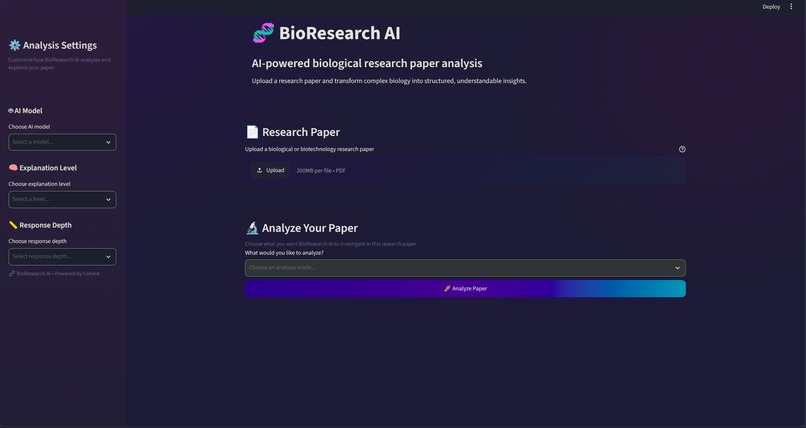
🔬 What It Does BioResearch AI lets you upload a research paper as a PDF and choose exactly what you want help understanding.
For example, you can ask it to:
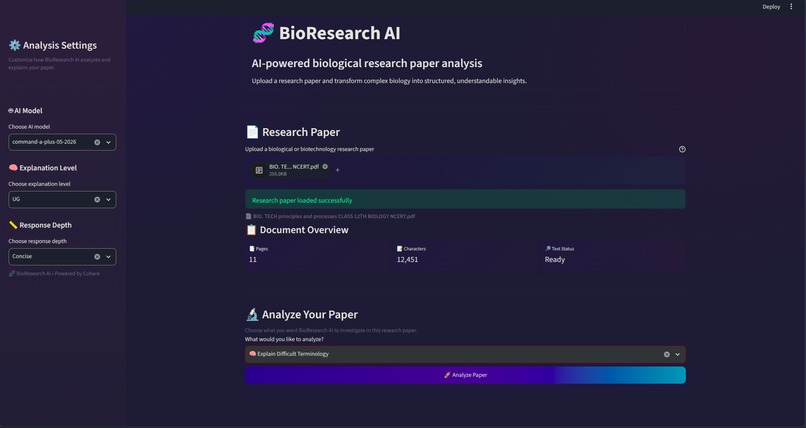
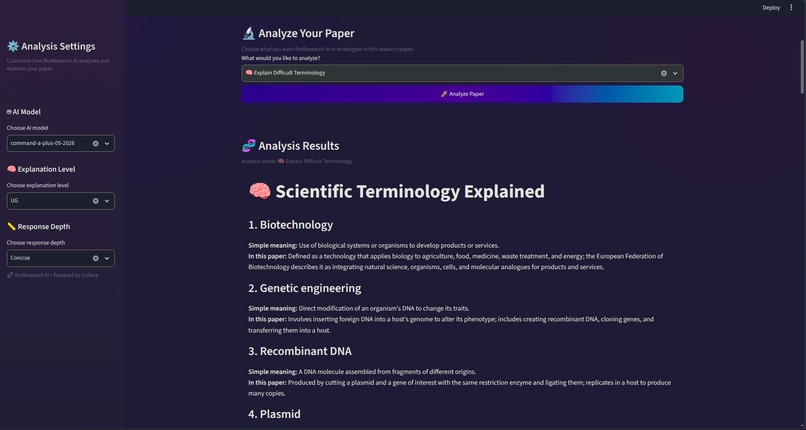
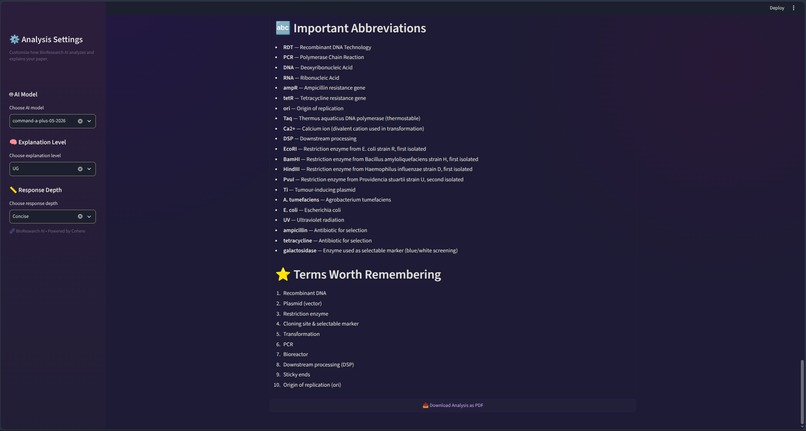
explain biological mechanisms break down experimental methodology interpret results and findings explain difficult scientific terminology generate revision notes create flashcards generate viva questions summarize the research paper The user can also choose the explanation level and response depth. I added this because the same explanation isn't useful for everyone. Sometimes I just want a quick explanation of something, while other times I want to understand it in much more detail.
The generated analysis can also be exported as a PDF.
⚙️ How I Built It The main application is written in Python, with Streamlit handling the interface.
When someone uploads a research paper, I use PyMuPDF to extract the text from the PDF. The application then combines that text with the analysis option and settings selected by the user.
That information is sent to a large language model using the Cohere API, with different instructions depending on what the user actually wants to do with the paper.
The result is then processed and displayed inside the Streamlit interface.
I also used ReportLab for exporting the generated analysis as a PDF and wrote custom CSS to make the interface cleaner and work better across desktop and mobile screens.
So the main stack ended up being:
Python Streamlit Cohere API PyMuPDF ReportLab Custom CSS 😵 What Was Difficult A lot of this project was built while I was still learning the technologies I was using, so debugging became a pretty big part of the experience.
PDF processing was one challenge. A PDF looks like a simple document to us, but extracting useful text from different research papers is not always straightforward.
Working with the AI API also caused problems. I had to understand how responses were structured, how to correctly extract generated text, how to build useful instructions for different analysis modes, and how to handle cases where something went wrong.
Streamlit introduced its own learning curve as well. I had to understand how the application reruns, how UI elements behave, how to validate user input, and how to keep the interface usable as I added more features.
One of the bigger design decisions was also deciding what not to build. I didn't want BioResearch AI to become a generic "upload any PDF and chat with it" application. I wanted its tools to make sense specifically for someone reading biology or biotechnology research.
💡 What I Learned This project taught me a lot more than I expected when I started it.
I got practical experience working with Python libraries, APIs, PDF processing, Streamlit, prompt design, debugging, error handling, Git/GitHub, and building an application from an idea into something that actually works.
But my favorite part was seeing two things I am learning separately come together.
I study biotechnology in college, while programming and AI are things I have been learning outside my main degree. BioResearch AI gave me a chance to combine both instead of treating them as completely separate interests.
🌍 Why I Think It Could Be Useful Research papers contain an incredible amount of knowledge, but for a student, getting access to a paper doesn't necessarily mean being able to understand it.
A student might understand the general topic but get stuck on the methodology, terminology, mechanisms, or interpretation of the results.
BioResearch AI isn't meant to replace reading the original paper, and AI-generated explanations can still make mistakes. I see it more as a learning companion — something that can help a student get unstuck and understand what they are reading.
That is also why the project clearly treats AI analysis as educational assistance rather than a replacement for scientific judgement.
🚀 Where I Want to Take It Next The current version is still a prototype, and there are several things I would like to improve.
Some of the next steps I have in mind are:
better handling of very large research papers OCR for scanned or image-based PDFs citations that point back to the relevant parts of the original paper better understanding of tables and figures improved generated PDF reports eventually allowing deeper interaction with research papers For now, BioResearch AI is my attempt at solving a problem I encountered in my own field while also pushing myself to build something useful with Python and AI.
And I learned a lot building it.
Built With
- cohere
- cohereapi
- dotenv
- pymupdf
- python
- streamlit

Log in or sign up for Devpost to join the conversation.