-
-
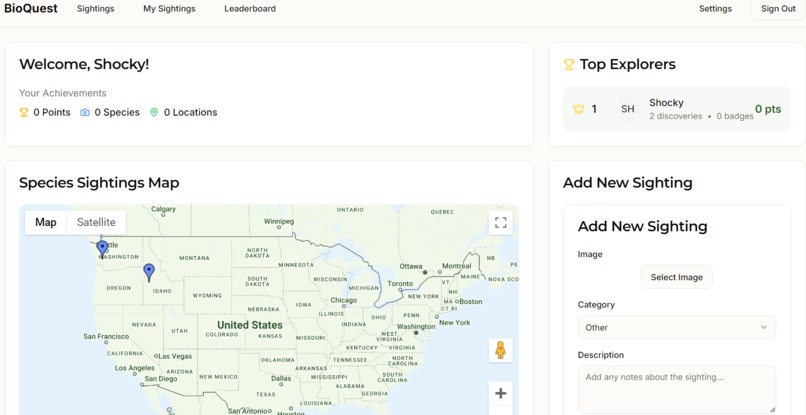
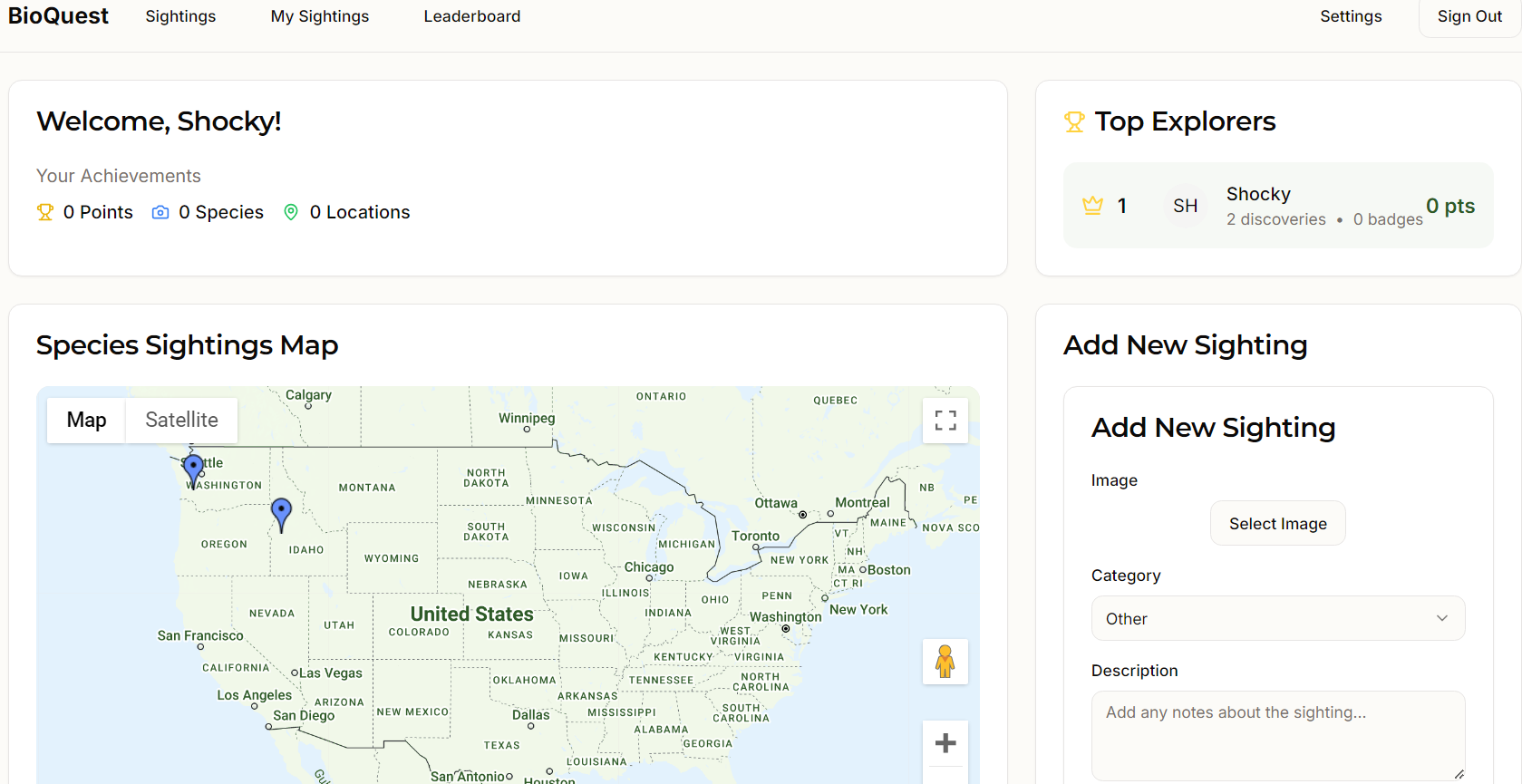
Main Page
-
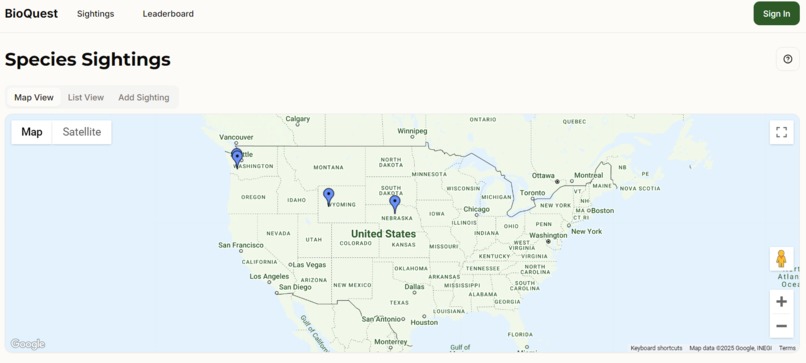
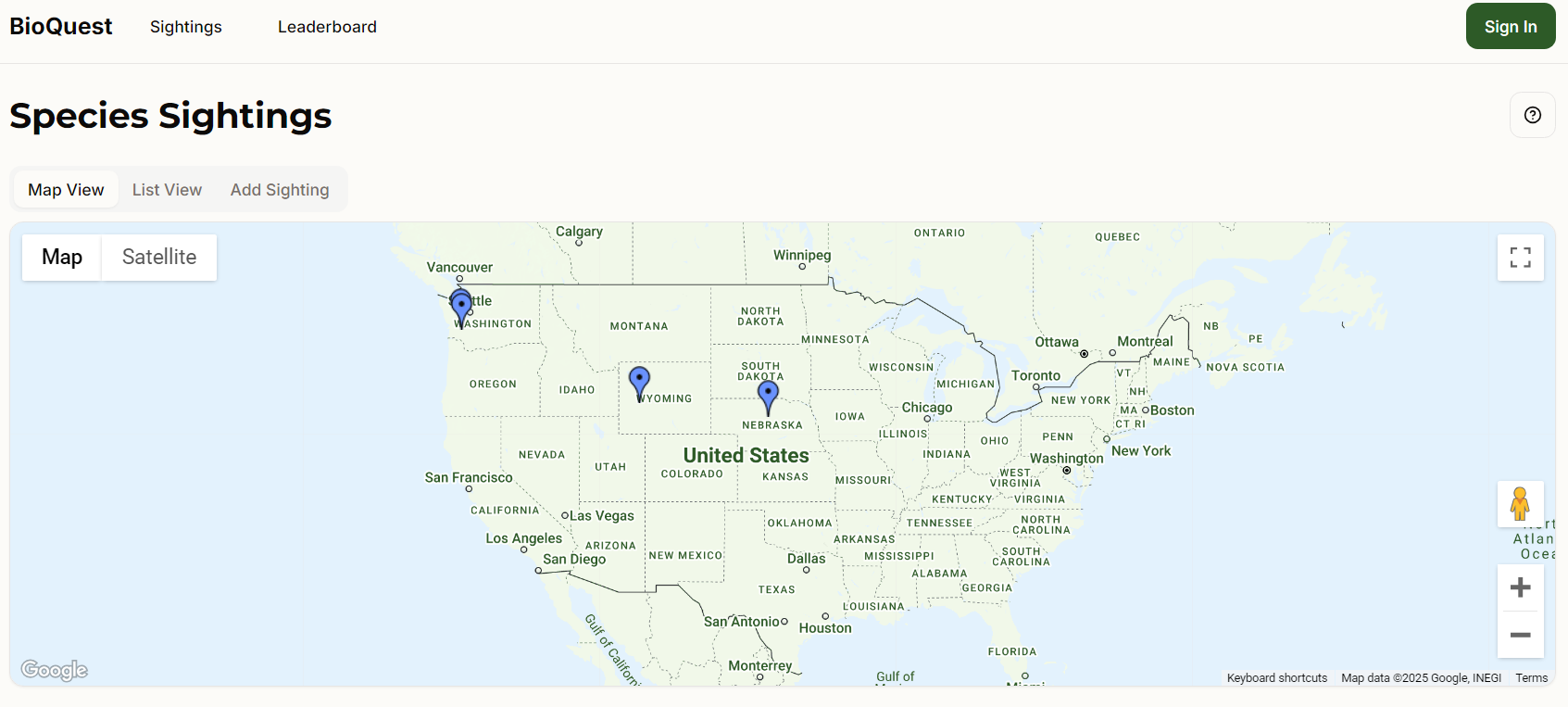
Map View Sightings Page
-
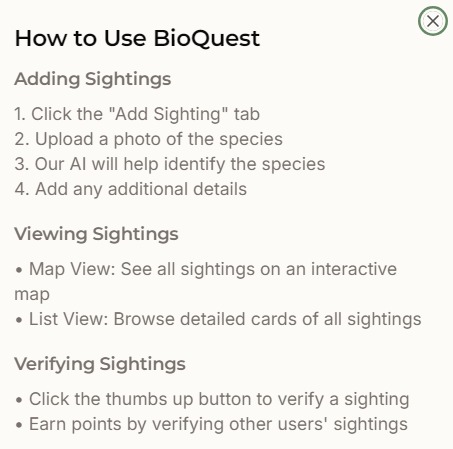
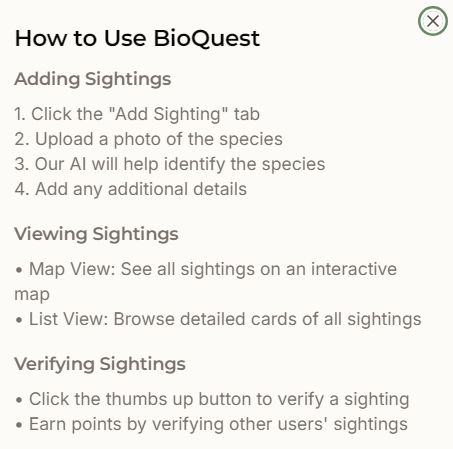
How-to
-
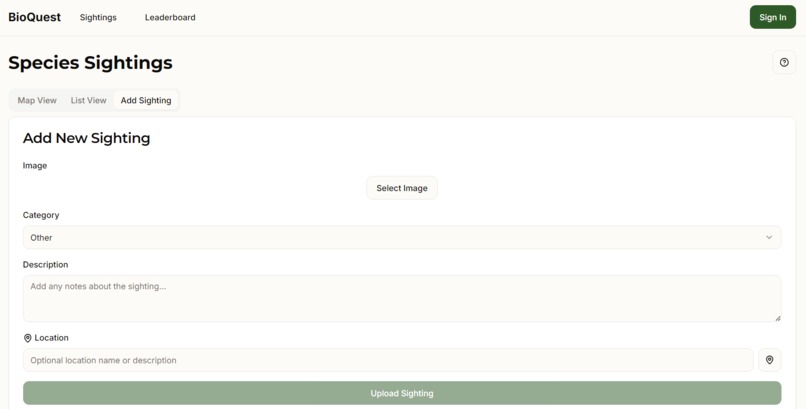
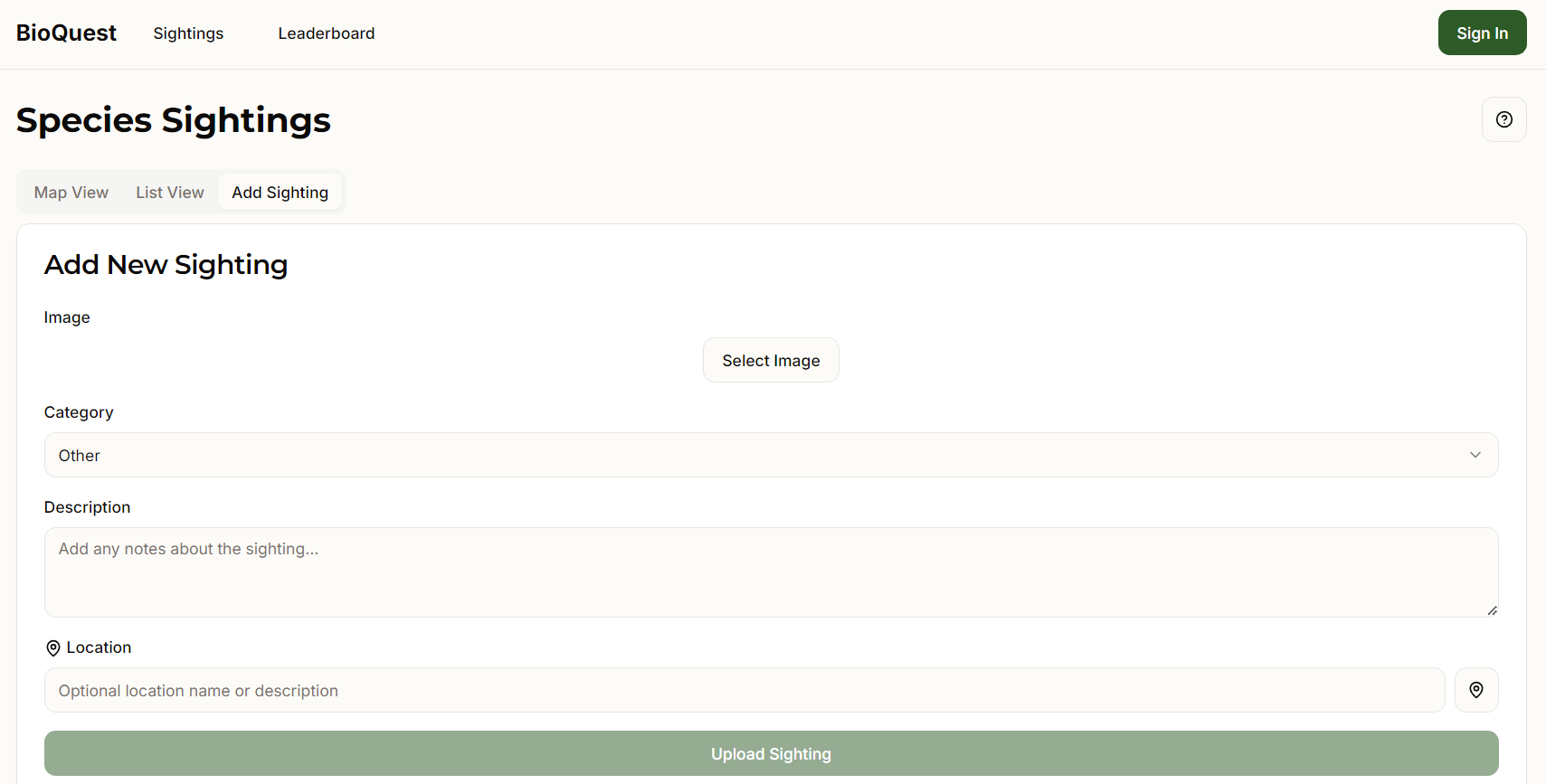
Add New Sighting!
-
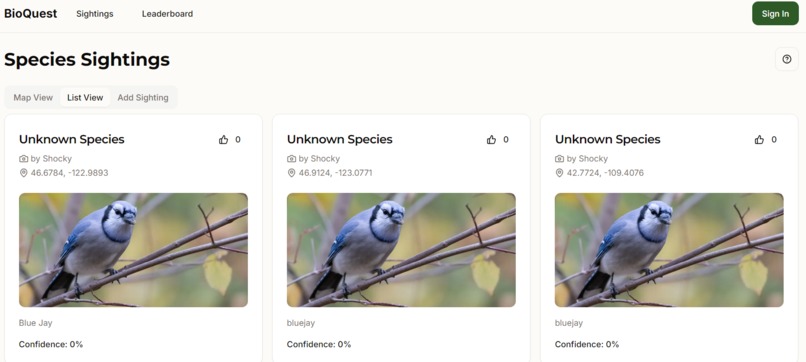
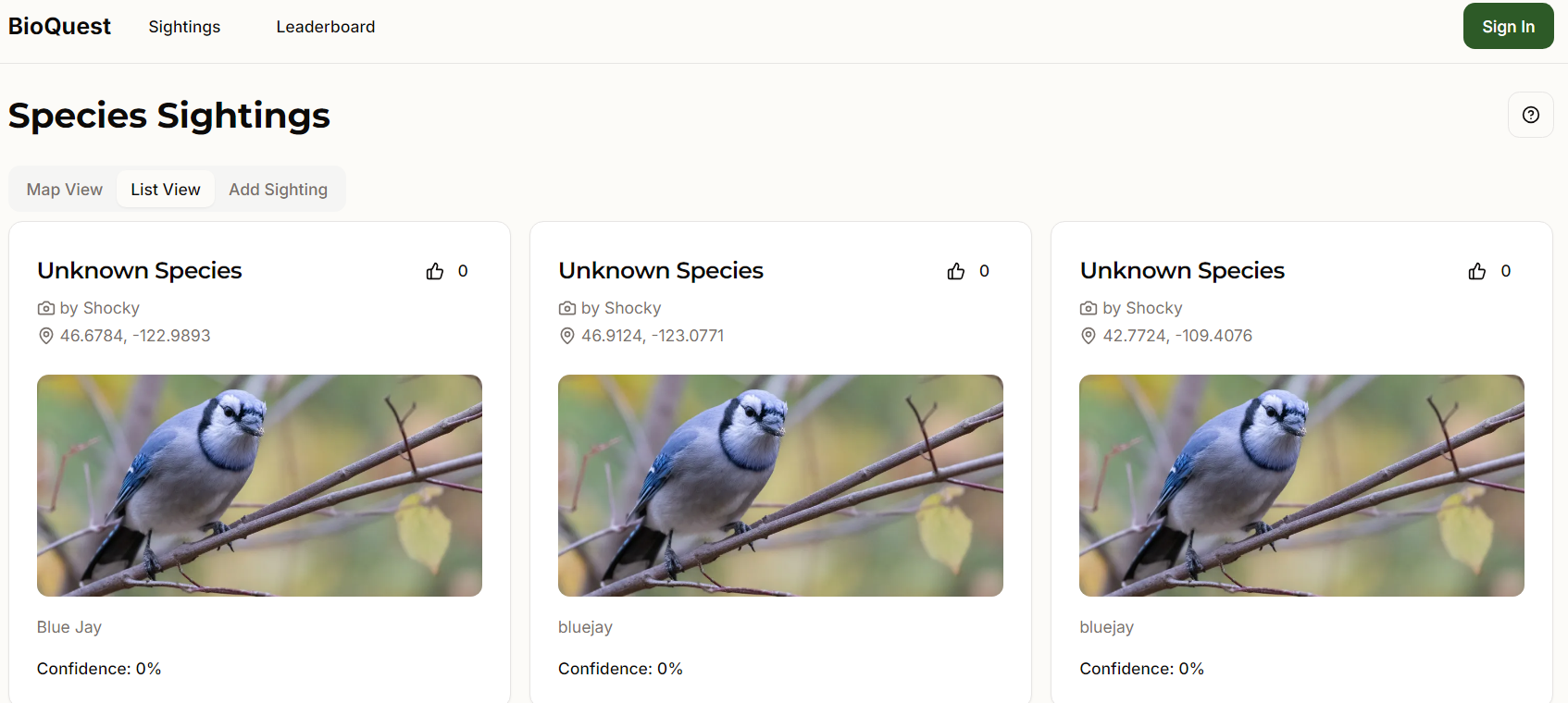
List View Sightings Page
-

Leaderboard
-
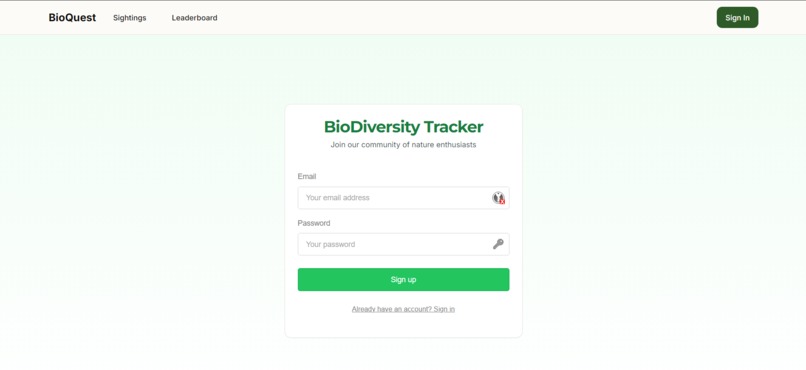
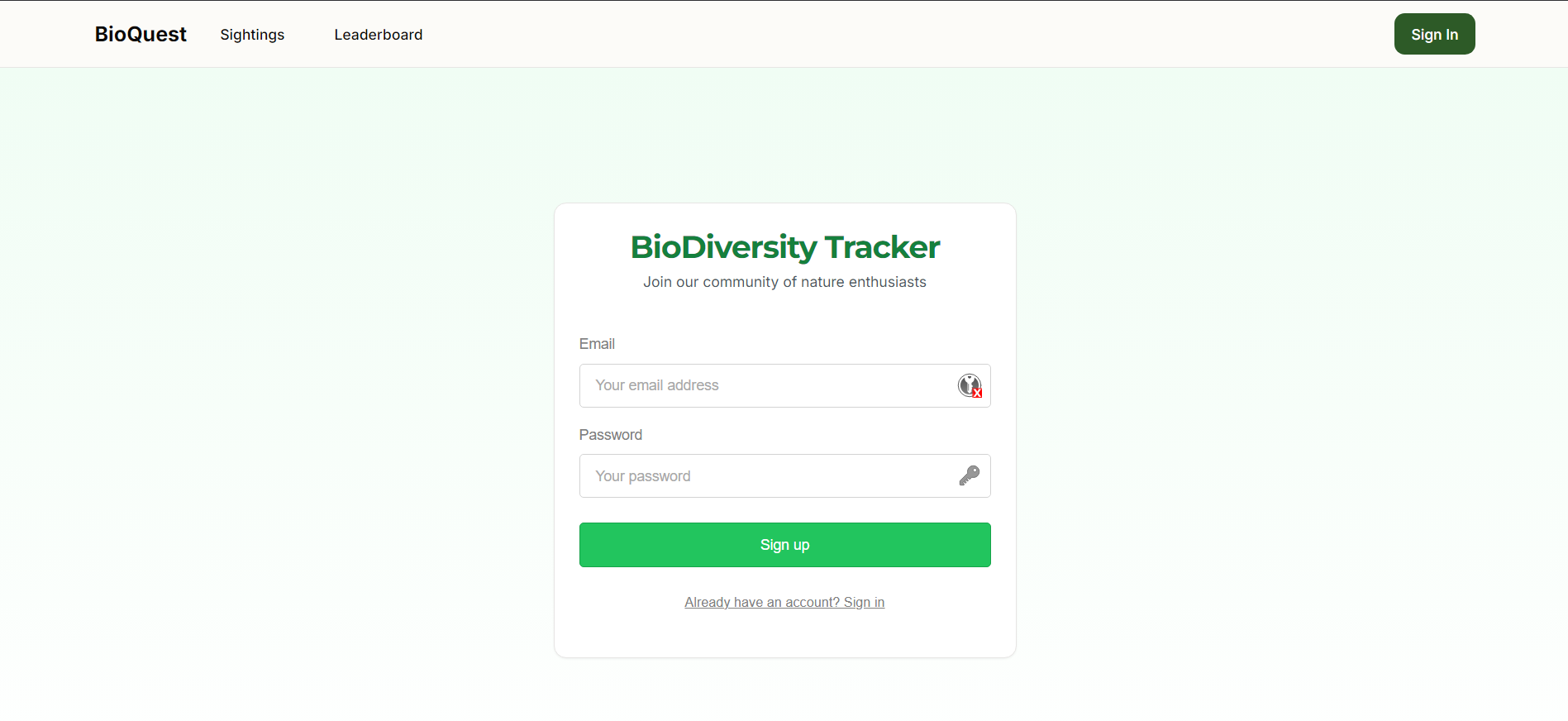
Signin/Register

Inspiration
The growing need for biodiversity preservation inspired BioQuest. We wanted to empower individuals and communities to contribute to conservation through engaging and accessible citizen science tools. By combining AI and gamification, we aimed to make biodiversity tracking exciting and impactful.
What it does
BioQuest is a citizen science app that allows users to identify and log plant and animal species in their surroundings using AI-powered image recognition. The app offers features like species identification, regional biodiversity heatmaps, and gamification through leaderboards and badges. It fosters community engagement while generating valuable data for conservation efforts.
How we built it
- Frontend: Developed with React.js, providing a clean and user-friendly interface.
- Backend: Powered by Node.js and integrated with OpenAI's GPT-4 Vision for species identification.
- Database: Supabase for storing user data, observations, and heatmap information.
- APIs: Google Maps API for heatmap visualization.
- Design: Nature-inspired aesthetics using earthy tones and intuitive navigation.
Challenges we ran into
- Training AI models for accurate species identification required significant effort, especially with limited biodiversity datasets.
- Integrating real-time heatmaps with large data inputs was computationally intensive.
- Ensuring data privacy for user-uploaded images and location-based data was a critical challenge we tackled through robust encryption and secure APIs.
Accomplishments that we're proud of
- Successfully deployed an AI-powered species identification feature with high accuracy.
- Built an engaging user experience that combines learning, gaming, and conservation.
- Integrated community-driven features like leaderboards and badges to incentivize participation.
- Created scalable heatmaps that visualize user contributions to global biodiversity.
What we learned
- The power of AI in enabling real-time identification of ecological data.
- The importance of gamification in increasing user engagement and participation.
- How to design and implement secure, scalable infrastructure for handling large datasets.
- The impact of user-driven data collection on biodiversity conservation efforts.
What's next for BioQuest
- Expand AI Models: Train the AI with more diverse datasets to improve identification accuracy for global regions.
- Community Projects: Launch collaborative challenges to track specific species or ecosystems.
- Mobile App: Develop a mobile version for iOS and Android to expand accessibility.
- Research Integration: Partner with researchers and NGOs to utilize collected data for scientific studies.
- Educational Features: Add interactive modules to teach users about biodiversity and conservation.
Built With
- amazon-web-services
- google-maps
- mongodb
- node.js
- openai-gpt-4-vision
- react.js
- supabase
- tailwindcss
- tensorflow.js


Log in or sign up for Devpost to join the conversation.