Inspiration
Biomedical AI starts with high-quality data, but preparing that data is often slow, repetitive, and difficult. Researchers spend countless hours cleaning biosignals, enhancing medical images, selecting preprocessing techniques, validating results, and documenting every step before training a single model.
We wanted to build an intelligent assistant that automates this entire workflow while remaining transparent, reproducible, and trustworthy. Instead of replacing domain experts, BioPrep AI accelerates their work by generating validated preprocessing pipelines that can be inspected, tested, and deployed.
What it does
BioPrep AI transforms raw biosensor data into production-ready preprocessing pipelines.
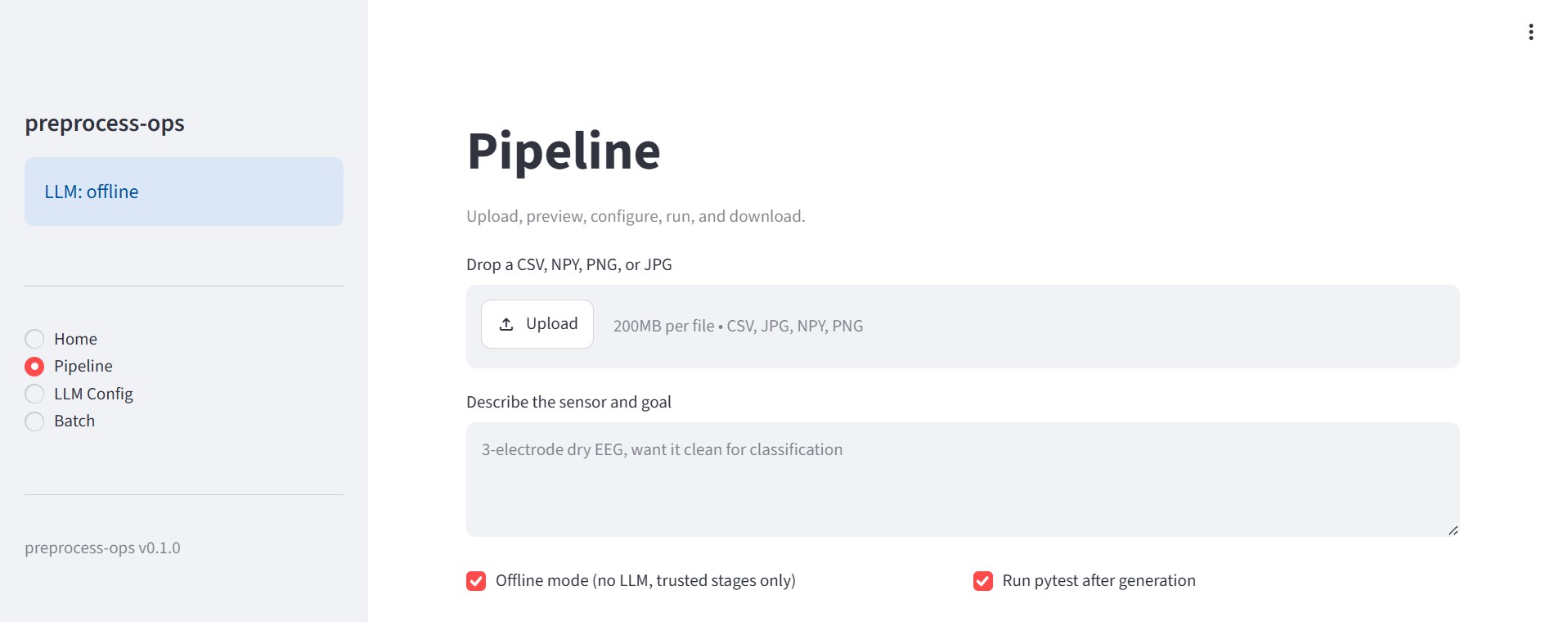
Users simply upload a biosignal (EEG, ECG, EMG, etc.) or biomedical image and describe their objective in plain English. The platform then:
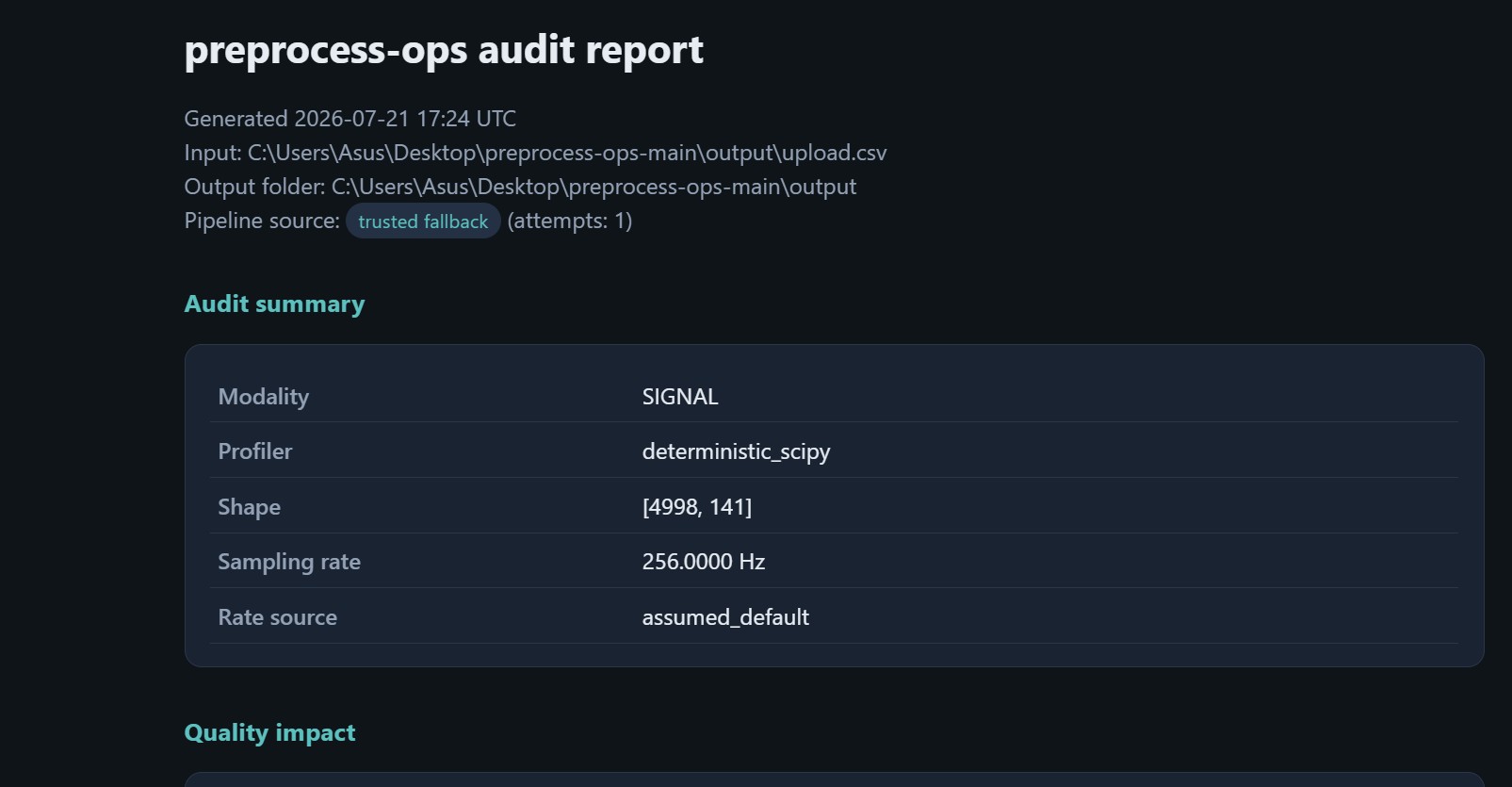
- Audits the input data
- Detects quality issues automatically
- Generates a custom preprocessing pipeline using AI
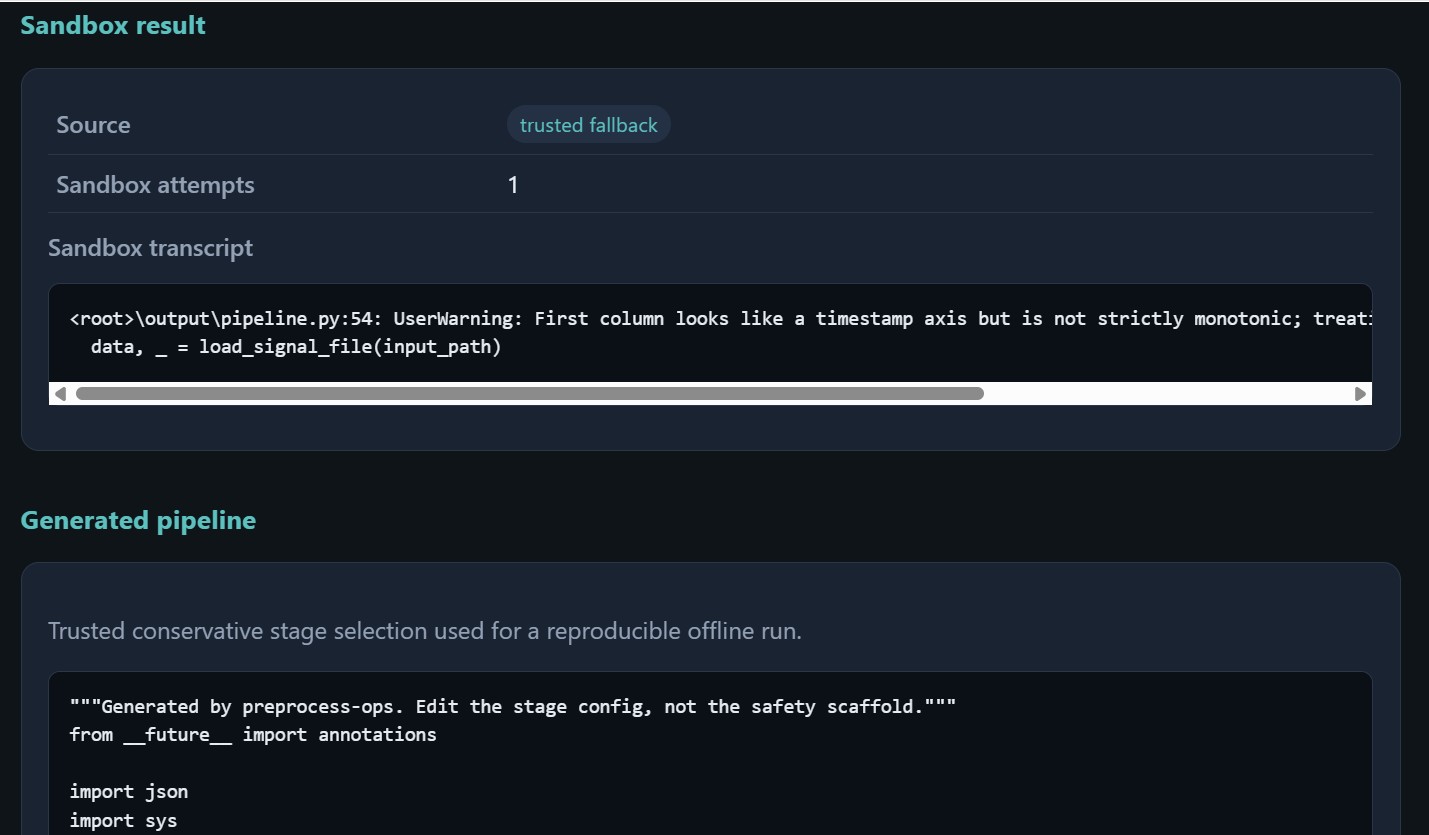
- Executes the generated code in a secure sandbox
- Automatically retries if the pipeline fails
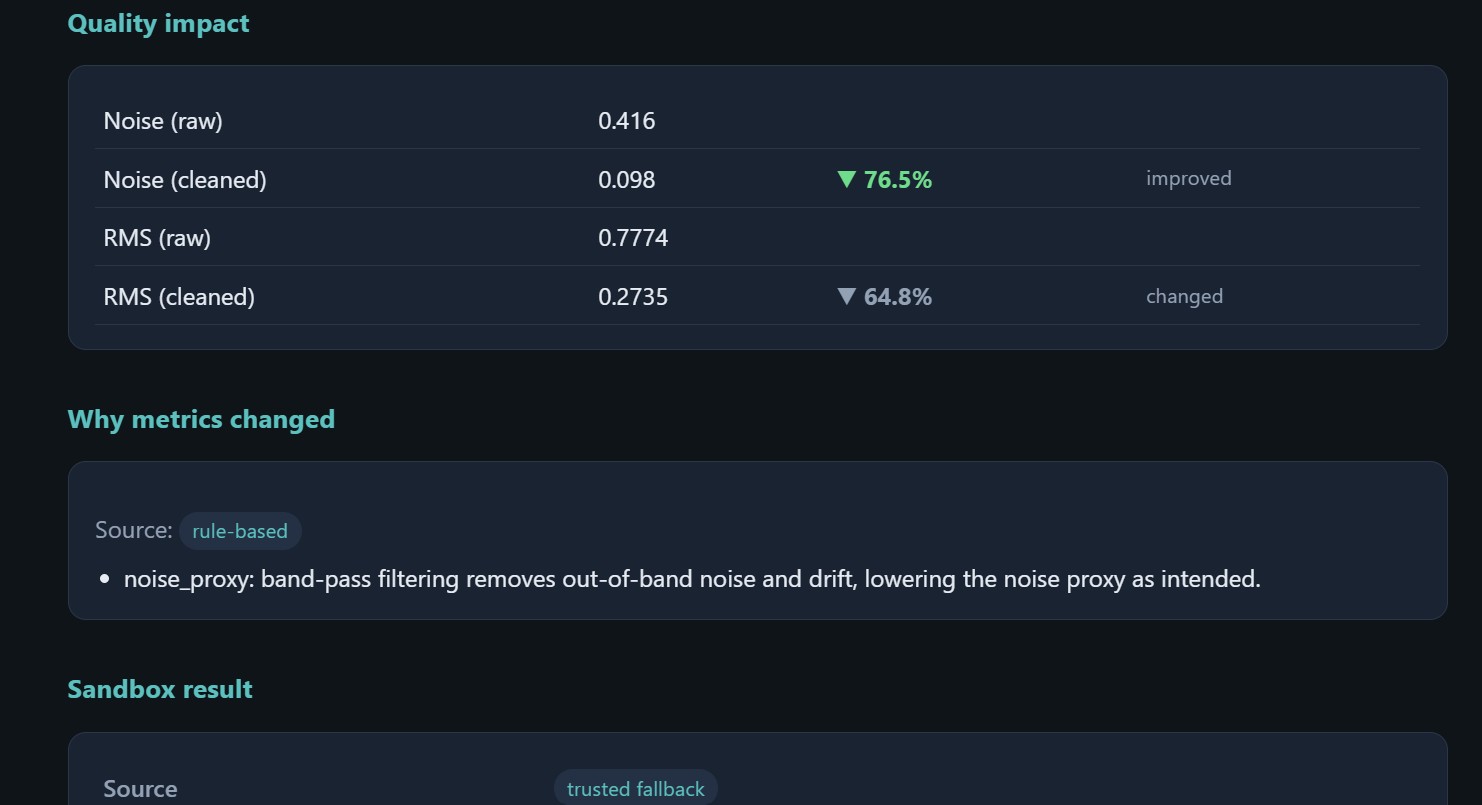
- Computes before-and-after quality metrics
- Explains the improvements
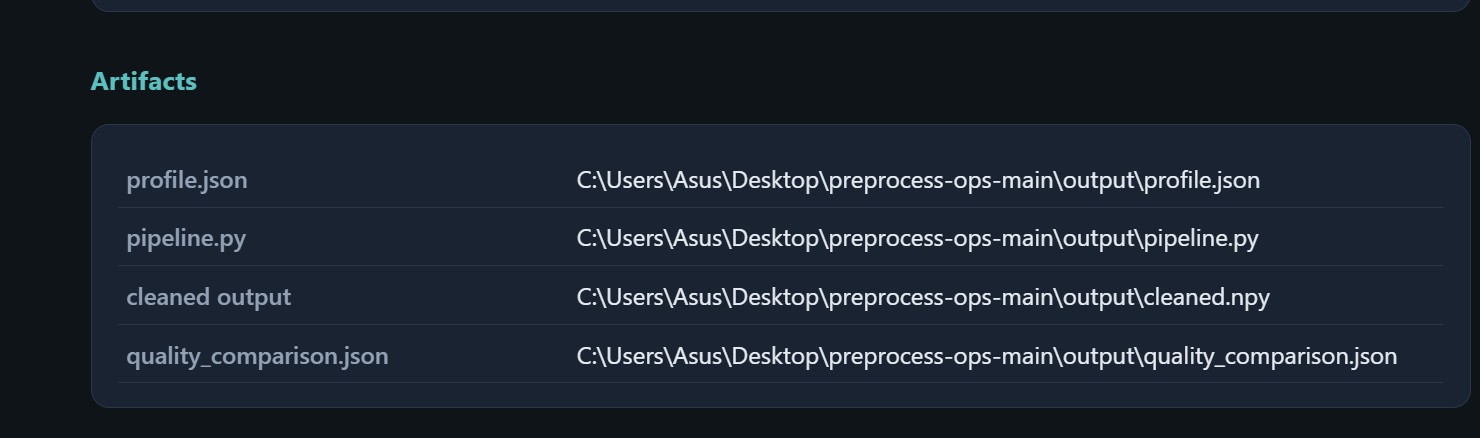
- Generates a complete HTML report
- Produces a Docker-ready deployment package
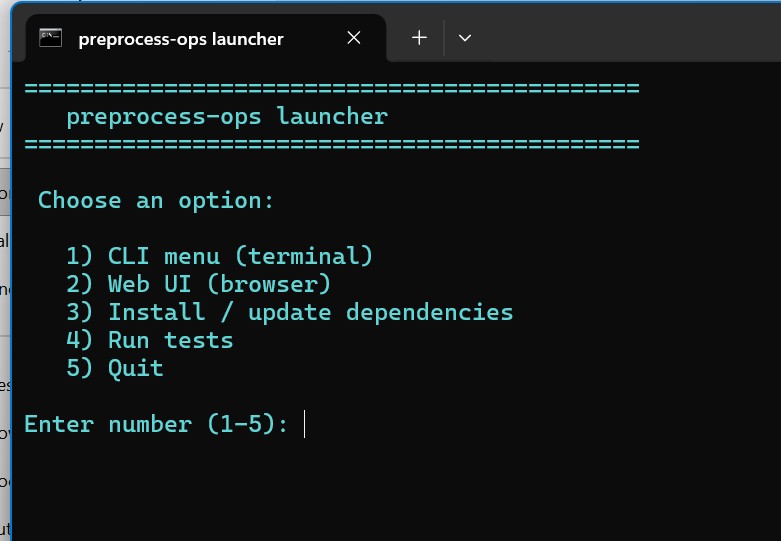
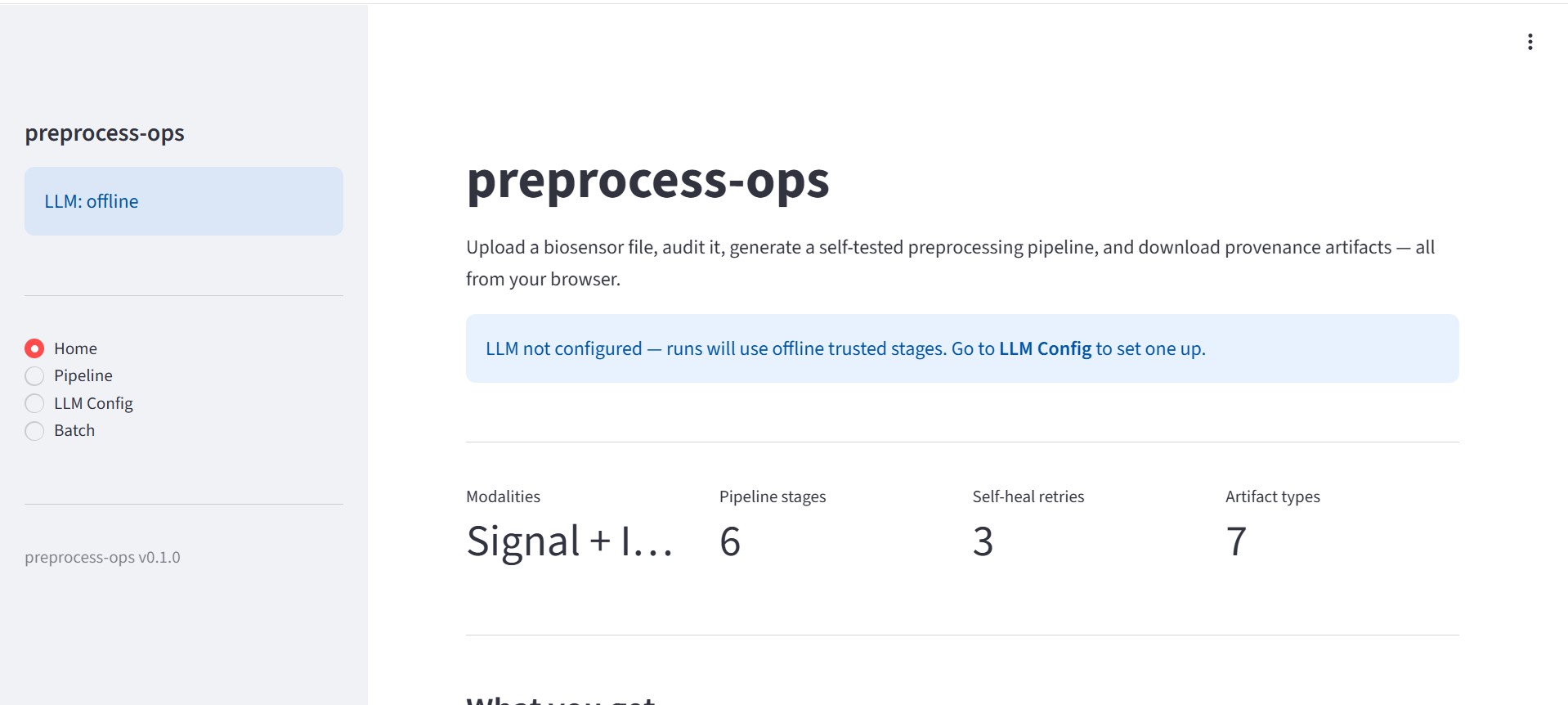
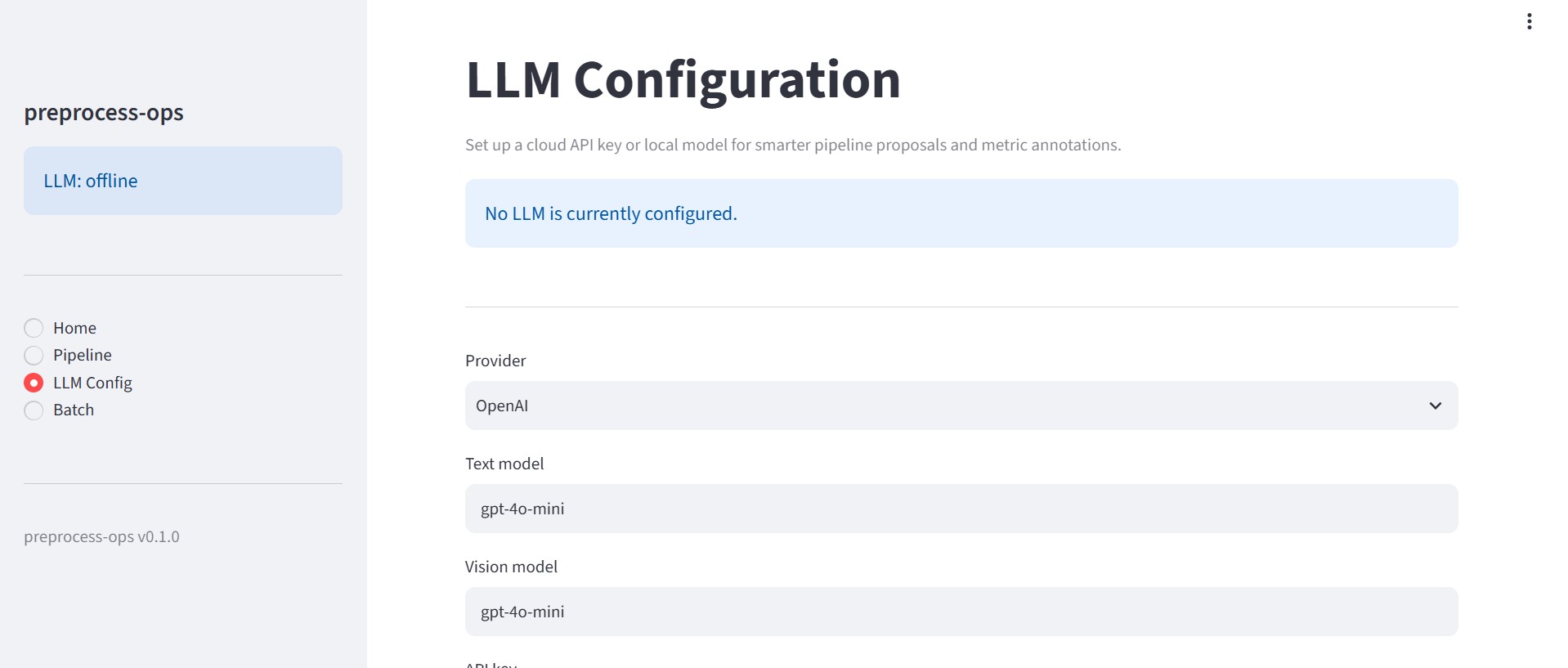
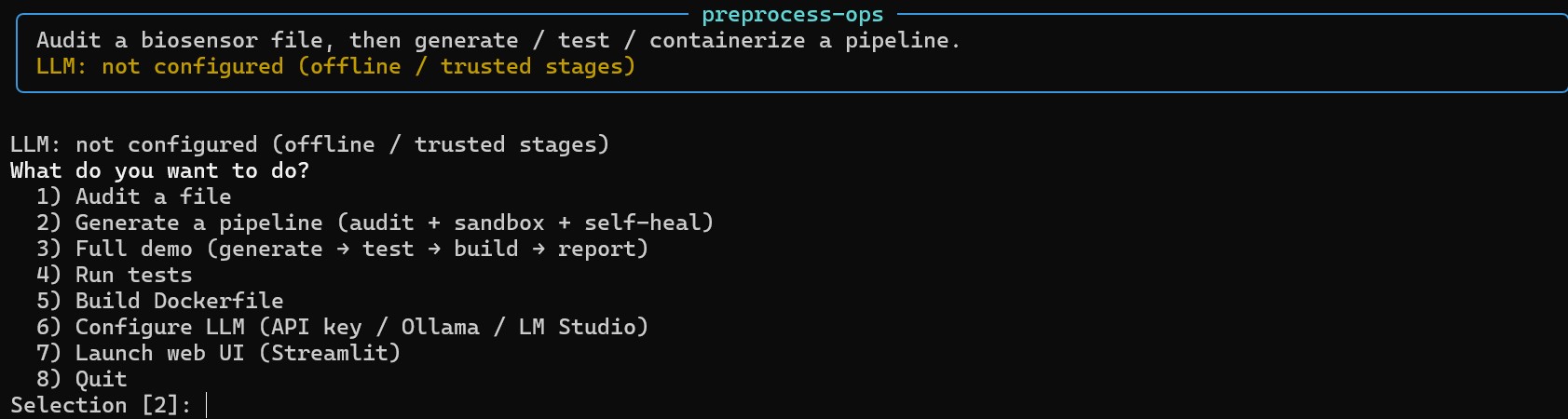
The platform is available through both a command-line interface and an intuitive Streamlit web application.
How we built it
BioPrep AI combines deterministic scientific computing with modern AI.
Our stack includes:
- Python
- OpenAI-compatible models (Codex/OpenAI API)
- Streamlit
- NumPy
- SciPy
- OpenCV
- Pillow
- PyTest
- Docker
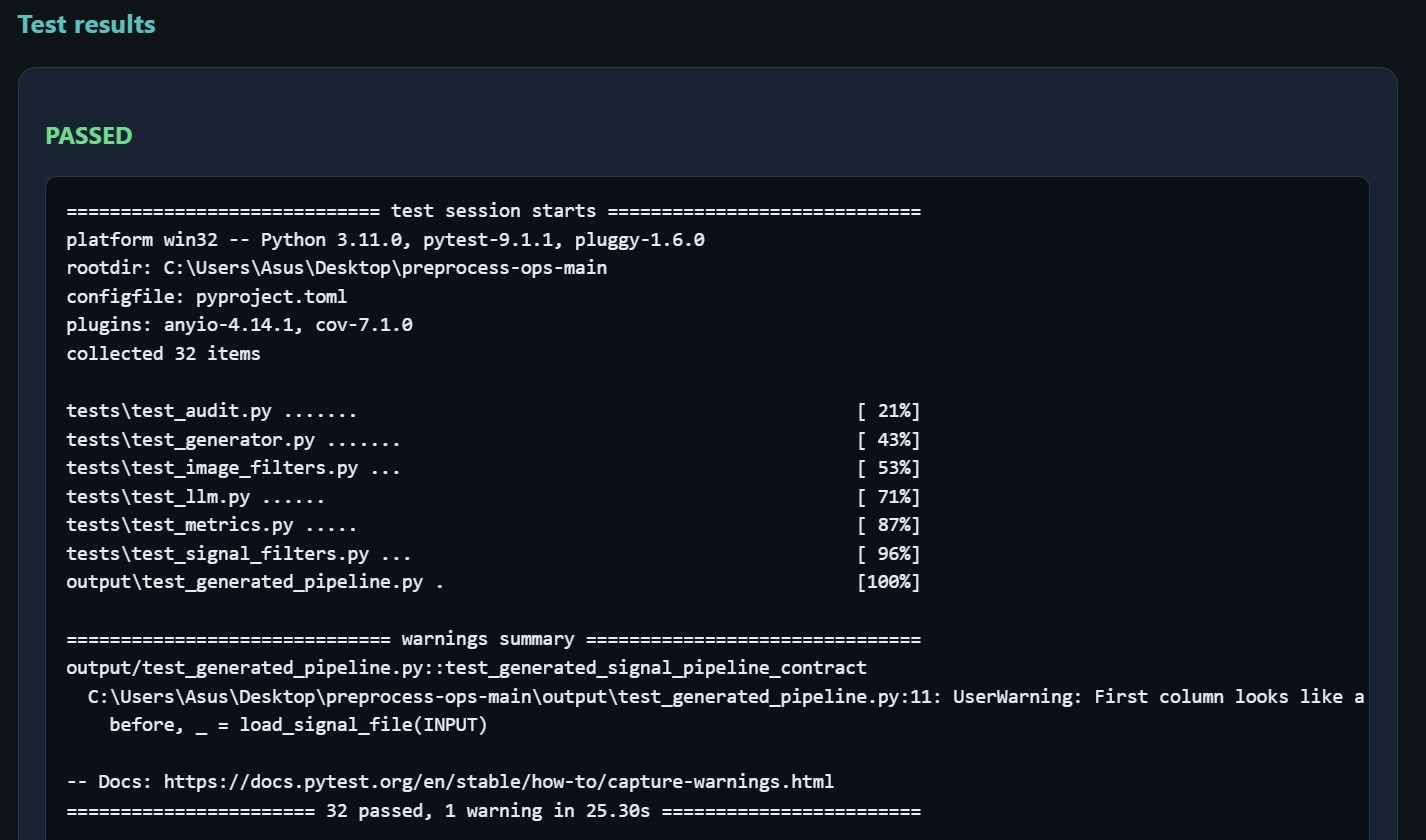
The workflow begins by profiling the uploaded data using deterministic signal processing or computer vision techniques. This profile is passed to an LLM, which generates a preprocessing pipeline constrained by trusted templates. Every generated pipeline is executed inside a sandbox, automatically tested, and repaired if necessary. Finally, quality metrics, reports, and deployment artifacts are generated automatically.
Challenges we ran into
The biggest challenge was making AI-generated code reliable enough for scientific workflows.
Instead of trusting generated code directly, we designed a self-healing execution system that validates every generated pipeline. If execution fails, the system retries using the error context before falling back to trusted preprocessing methods.
Another challenge was creating a unified architecture capable of handling both biosignals and biomedical images while producing consistent reports and outputs.
Accomplishments that we're proud of
- Built a unified preprocessing platform for signals and images
- Automated pipeline generation using AI
- Implemented self-healing pipeline execution
- Added automatic quality evaluation with before/after metrics
- Generated explainable HTML reports
- Created both a CLI and a modern Streamlit interface
- Enabled Docker-ready deployment for reproducible research
What we learned
This project reinforced that AI performs best when combined with deterministic validation rather than being trusted blindly.
We also learned the importance of explainability and reproducibility in scientific software. Researchers need to understand why preprocessing improves data quality, not just receive cleaned outputs.
What's next for BioPrep AI
Our roadmap includes:
- Support for more biosensor modalities
- Automatic hyperparameter optimization
- Integration with cloud storage providers
- Collaboration features for research teams
- Expanded preprocessing libraries
- One-click deployment to cloud platforms
- Integration with downstream machine learning training pipelines


Log in or sign up for Devpost to join the conversation.