About the Project
Inspiration
The aviation industry is under increasing pressure to reduce carbon emissions, and Sustainable Aviation Fuel (SAF) is one of the most promising solutions. However, engineering microorganisms to efficiently convert ethanol into jet-fuel-range hydrocarbons remains a slow, iterative process that relies heavily on manual experimentation, fragmented biological databases, and expert intuition.
We were inspired to build BioPathAI to accelerate this discovery cycle. Our goal was to create an AI-native research platform where autonomous agents, scientific knowledge graphs, and predictive machine learning work together to assist researchers in designing better microbial pathways, prioritizing promising mutations, monitoring fermentation experiments, and continuously learning from new experimental results.
What it does
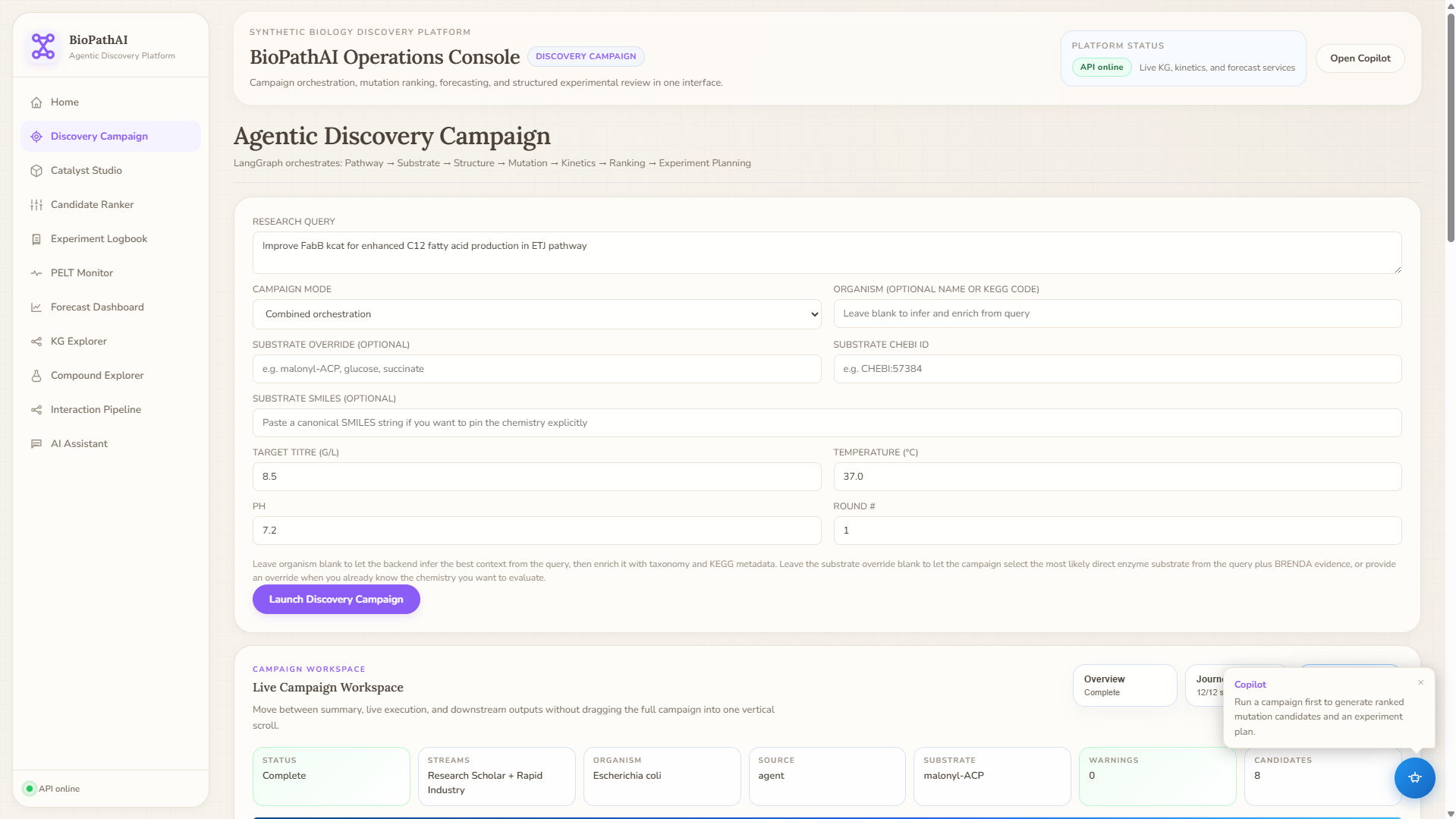
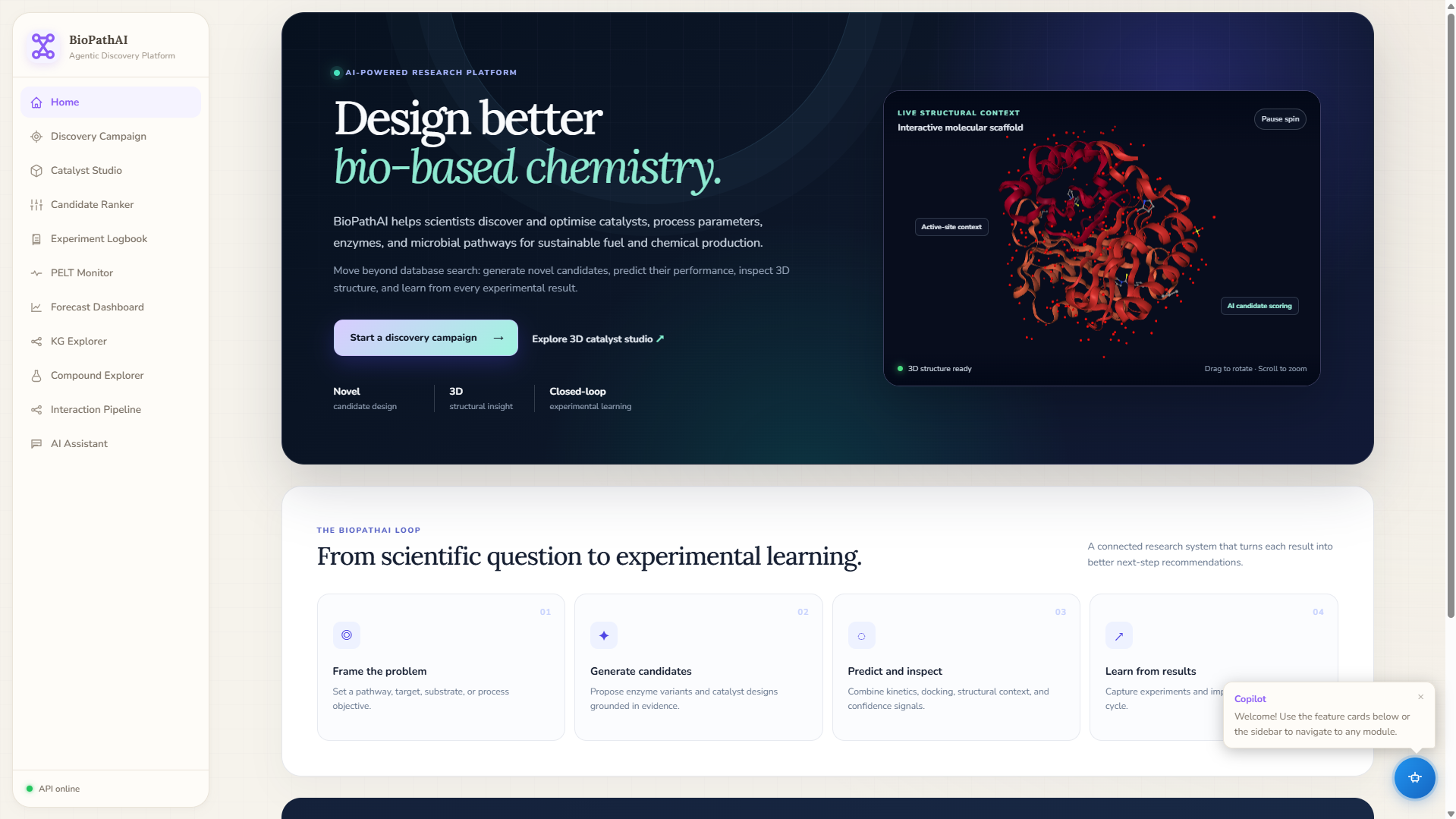
BioPathAI is an agentic AI platform for microbial pathway engineering designed to accelerate enzyme optimization and biofuel research.
The platform enables researchers to:
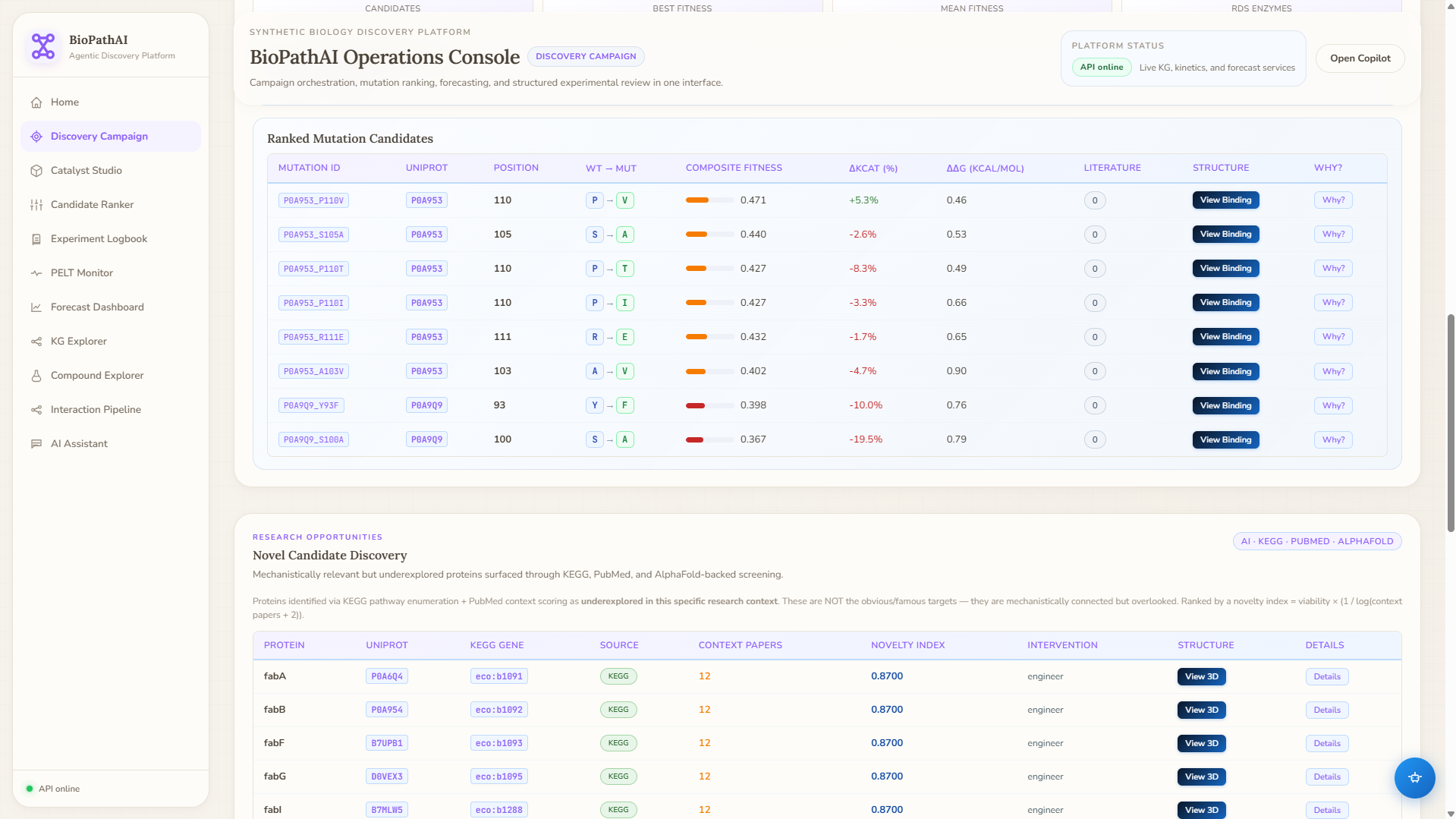
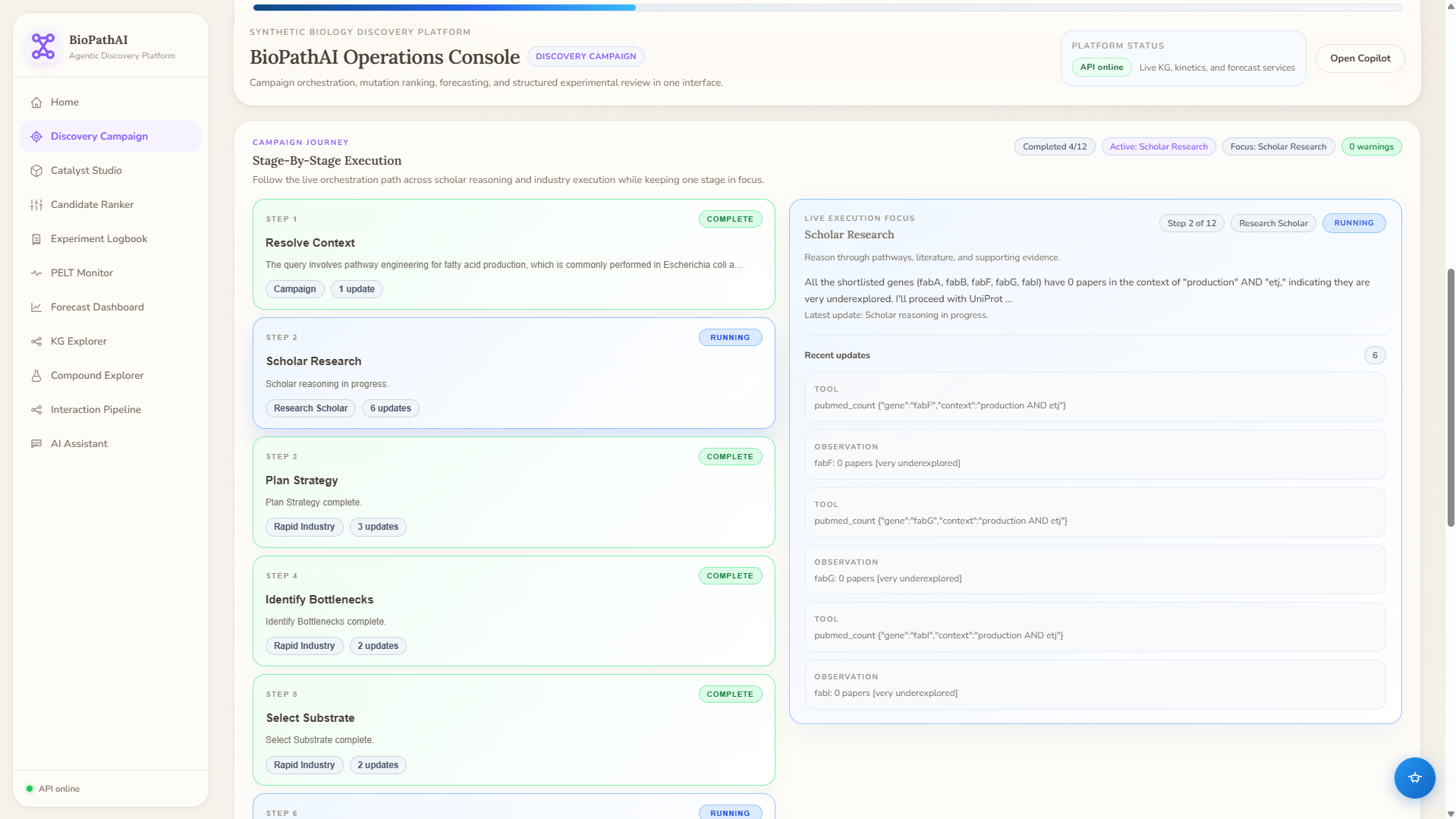
- 🧬 Launch AI-powered discovery campaigns to identify promising enzyme mutations.
- 🤖 Coordinate multiple specialized AI agents for pathway analysis, mutation generation, kinetics prediction, and experiment planning.
- 🕸️ Integrate biological knowledge using a Neo4j knowledge graph enriched with ontology-driven relationships.
- 📊 Detect fermentation anomalies in real time using the PELT change-point detection algorithm.
- 📈 Forecast future experimental outcomes with Temporal Fusion Transformer (TFT) models.
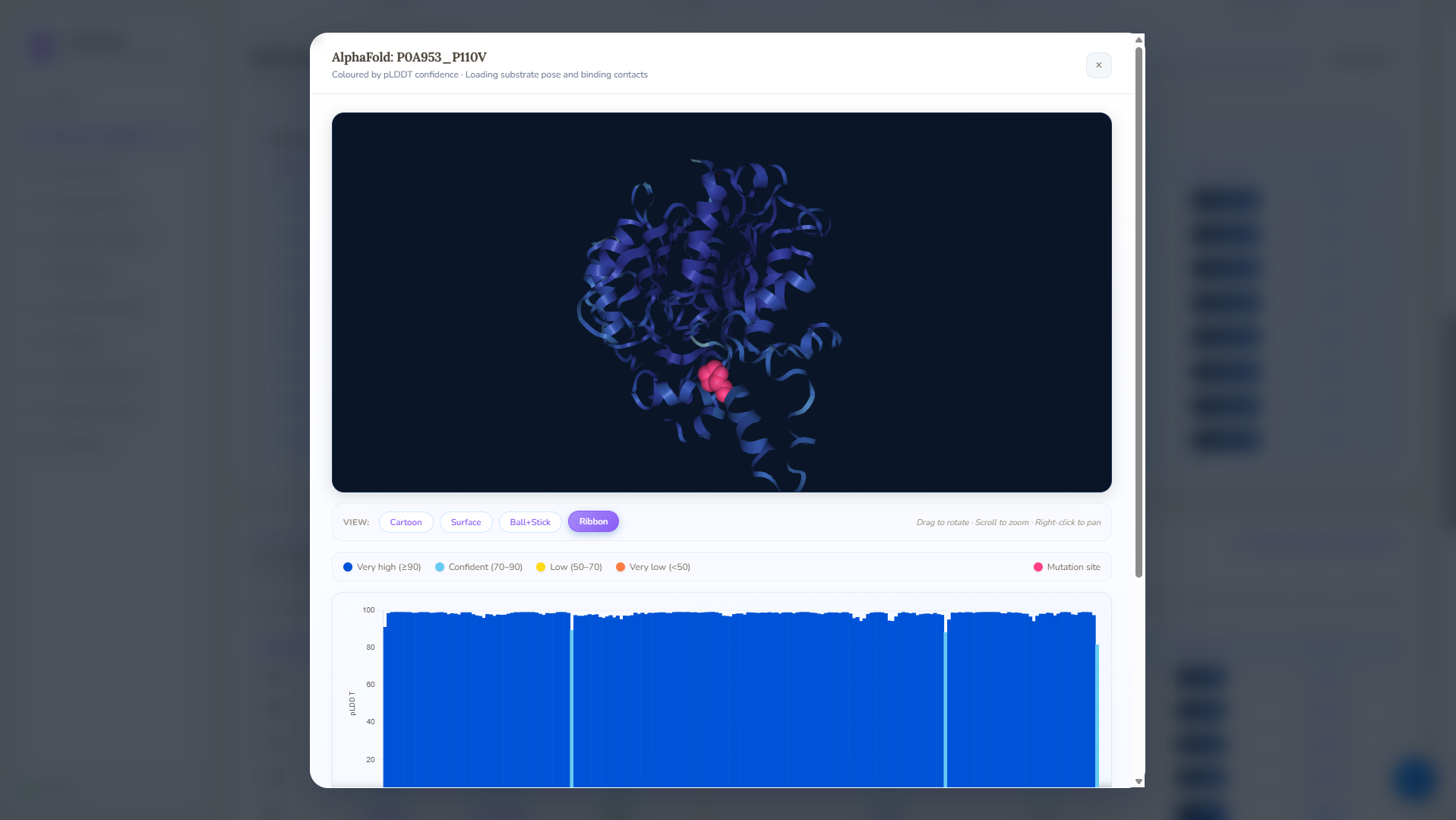
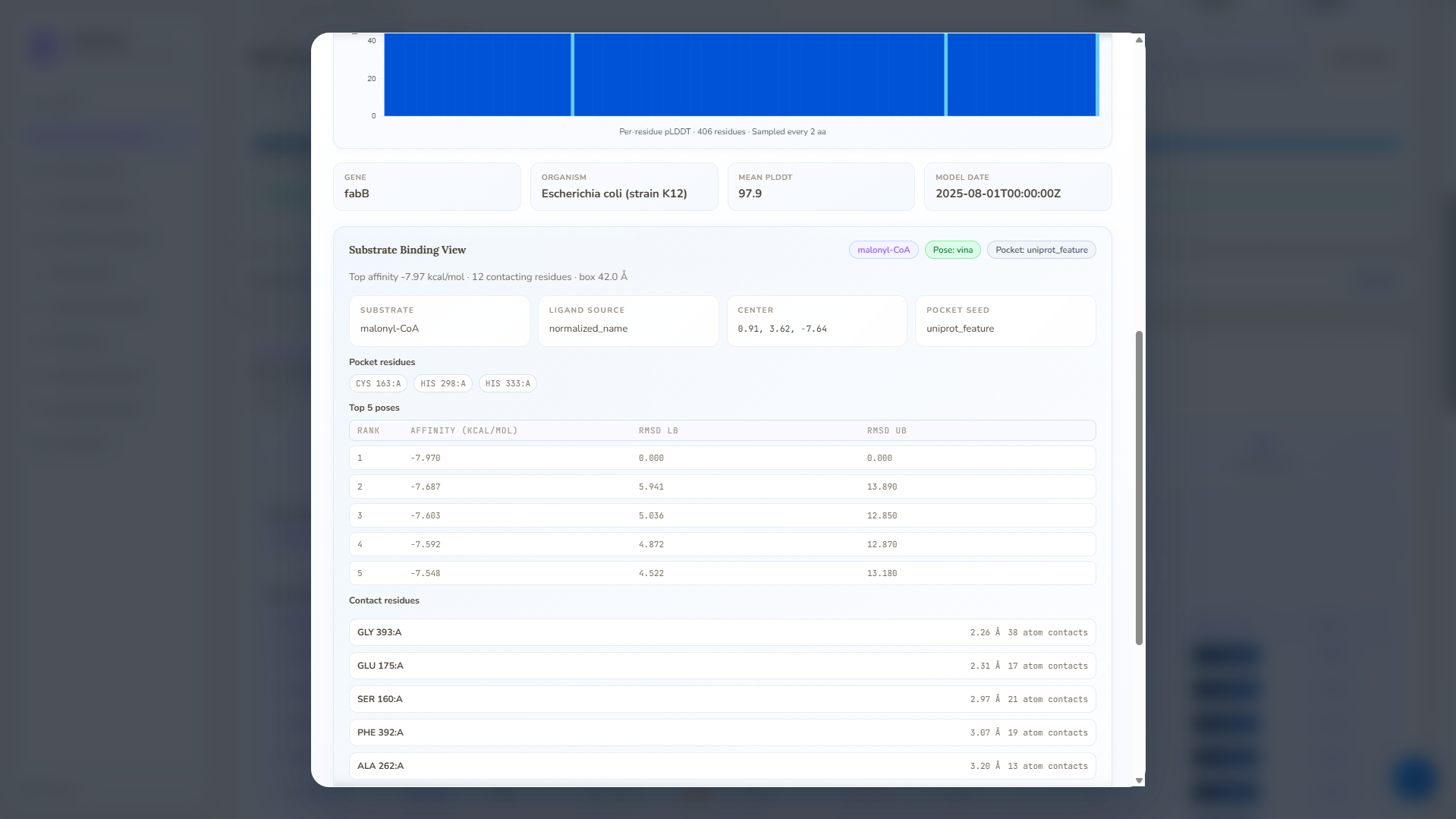
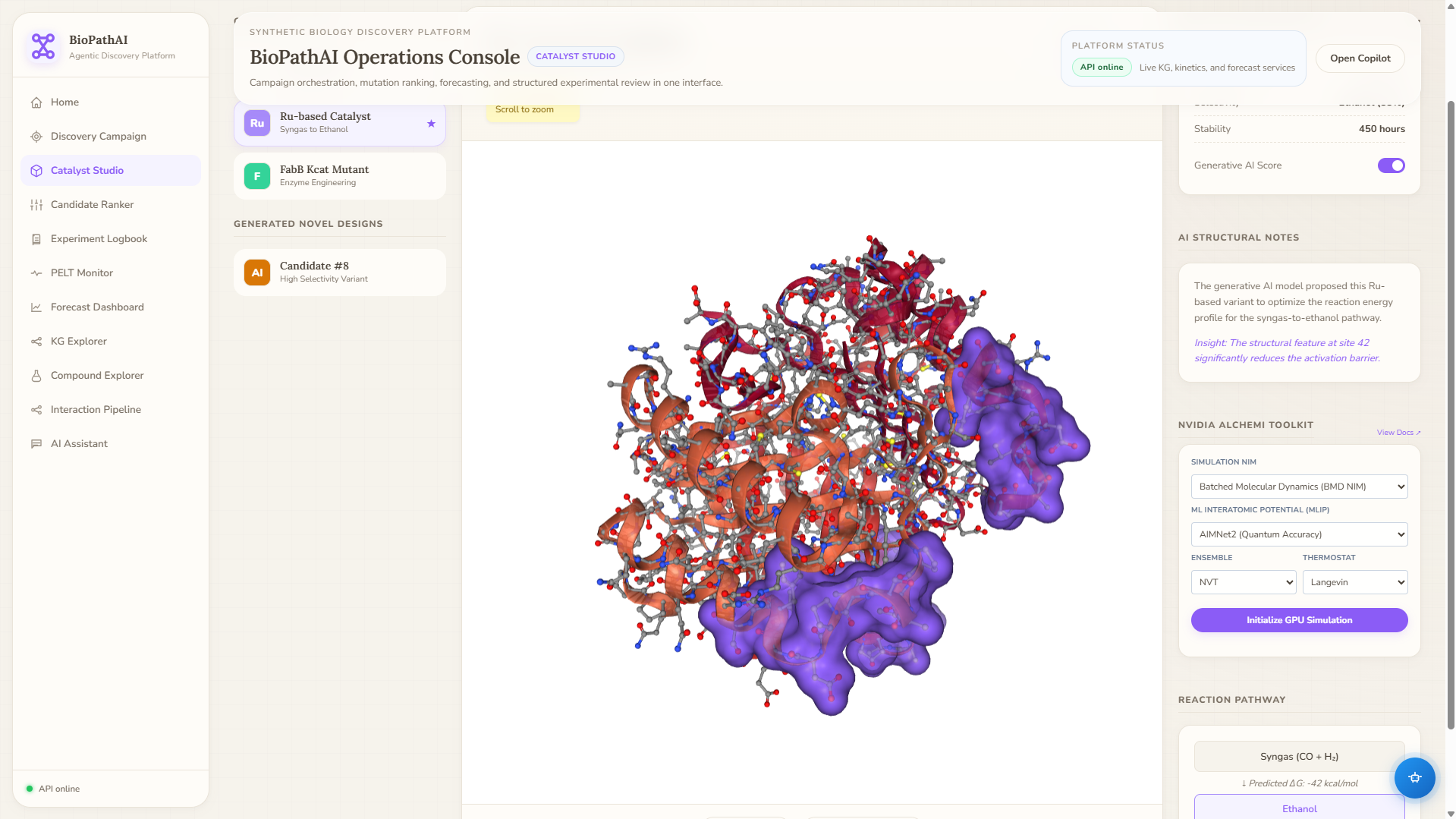
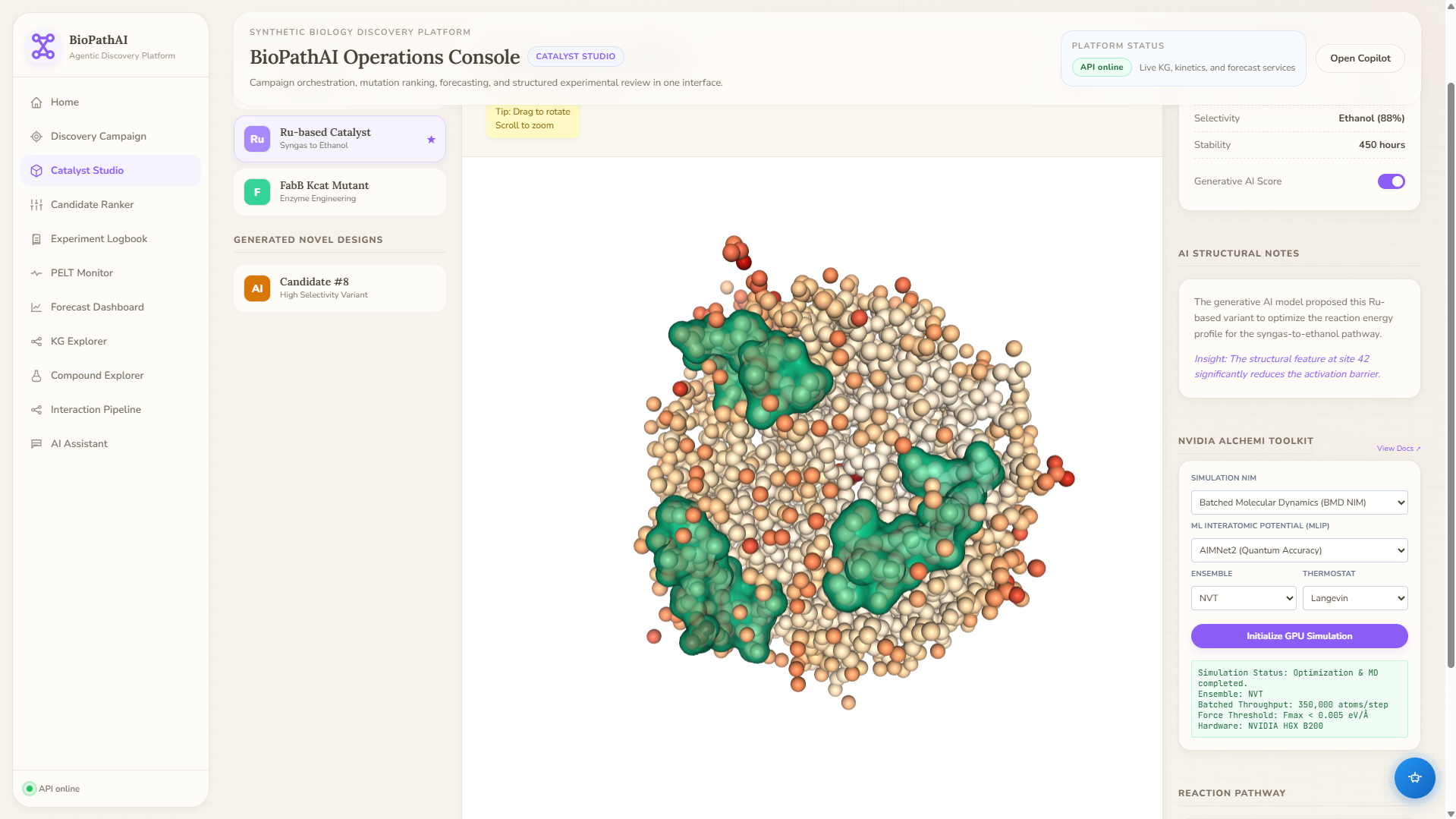
- 🔬 Visualize AlphaFold protein structures and ranked mutation candidates.
- 💬 Interact with an AI research assistant that explains results and provides scientific recommendations.
Rather than functioning as a simple chatbot, BioPathAI acts as an intelligent scientific collaborator that connects biological knowledge, predictive models, and autonomous reasoning into a single research workflow.
How we built it
BioPathAI combines modern AI frameworks with computational biology tools to create an end-to-end research platform.
Our technology stack includes:
- FastAPI for the backend APIs and application server.
- LangGraph to orchestrate multiple autonomous AI agents.
- OpenAI GPT-4o for reasoning, scientific explanations, and workflow planning.
- Neo4j as the central biological knowledge graph.
- PELT (ruptures) for fermentation change-point detection.
- Temporal Fusion Transformer (TFT) for multi-horizon forecasting.
- AlphaFold protein structures for structural visualization.
- HTML, CSS, and JavaScript for the interactive web interface.
- Docker Compose for reproducible deployment.
The platform follows a five-layer architecture:
- Biological ontology foundation
- Knowledge graph integration
- Agentic AI orchestration
- Real-time fermentation monitoring
- Predictive forecasting and continuous learning
Each component feeds information back into the knowledge graph, enabling future campaigns to leverage previous discoveries and experimental evidence.
Challenges we ran into
Building BioPathAI required combining technologies from multiple domains, each with its own challenges.
Some of the biggest challenges included:
- Designing an agent architecture that could coordinate specialized scientific tasks while maintaining shared context.
- Integrating heterogeneous biological resources into a unified knowledge graph.
- Building an intuitive interface capable of visualizing complex biological and AI outputs.
- Combining real-time fermentation analytics with predictive forecasting.
- Balancing scientific accuracy with practical usability for a hackathon prototype.
- Simulating realistic biological workflows without access to large proprietary experimental datasets.
Perhaps the most challenging aspect was transforming numerous independent AI and bioinformatics components into a cohesive research platform rather than a collection of isolated features.
Accomplishments that we're proud of
We are particularly proud that BioPathAI demonstrates an end-to-end AI-assisted research workflow rather than a standalone prediction model.
Highlights include:
- ✅ Built a multi-agent AI system using LangGraph.
- ✅ Integrated a Neo4j biological knowledge graph with semantic relationships.
- ✅ Implemented real-time fermentation monitoring using the PELT algorithm.
- ✅ Added Temporal Fusion Transformer forecasting for experimental planning.
- ✅ Developed an interactive dashboard with multiple scientific workflows.
- ✅ Integrated AlphaFold structure visualization and mutation ranking.
- ✅ Created a context-aware AI research assistant capable of explaining scientific results.
Most importantly, we successfully combined autonomous AI, machine learning, knowledge graphs, and computational biology into a unified platform for accelerating microbial engineering.
What we learned
This project reinforced that solving complex scientific problems requires more than large language models.
We learned the importance of:
- Agent orchestration over single-model interactions.
- Knowledge graphs for long-term scientific memory and provenance.
- Human-in-the-loop AI for trustworthy research workflows.
- Combining symbolic reasoning with statistical machine learning.
- Designing AI systems that explain recommendations instead of producing black-box outputs.
- Building modular architectures that can continuously evolve as new biological knowledge becomes available.
Perhaps our biggest takeaway is that AI can significantly augment scientific discovery when it is designed as a collaborative research partner rather than simply an information retrieval system.
What's next for BioPath
Our vision is to transform BioPathAI into a production-ready AI platform for industrial biotechnology and sustainable fuel research.
Future plans include:
- Integrating live biological databases such as KEGG, UniProt, BRENDA, STRING, and Reactome.
- Expanding the knowledge graph with genome-scale metabolic networks.
- Supporting automated literature mining and GraphRAG for scientific discovery.
- Incorporating molecular docking and molecular dynamics simulations into the AI workflow.
- Enabling laboratory instrument integration for closed-loop experimentation.
- Scaling to additional applications including enzyme engineering, synthetic biology, pharmaceutical research, and industrial biotechnology.
Ultimately, we envision BioPathAI becoming an autonomous scientific research platform that continuously learns from experiments, accelerates biological innovation, and helps researchers bring sustainable technologies from concept to reality.
Built With
- agentic
- agenticai
- biopython
- chatgpt
- css
- javascript
- langgraph
- llm
- meeko
- mlflow
- neo4j
- python
- rdkit
- react
- torch
- zeep

Log in or sign up for Devpost to join the conversation.