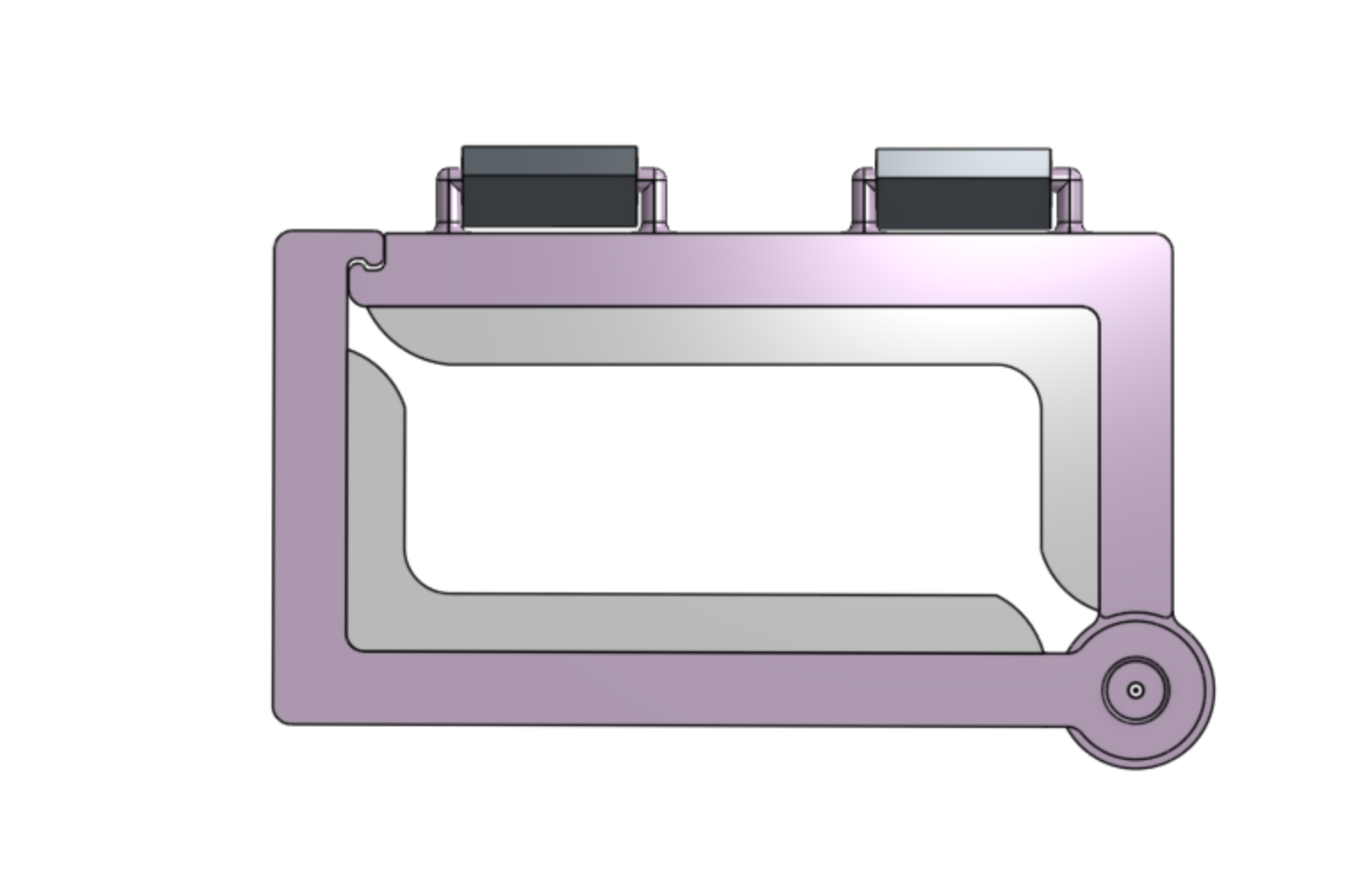
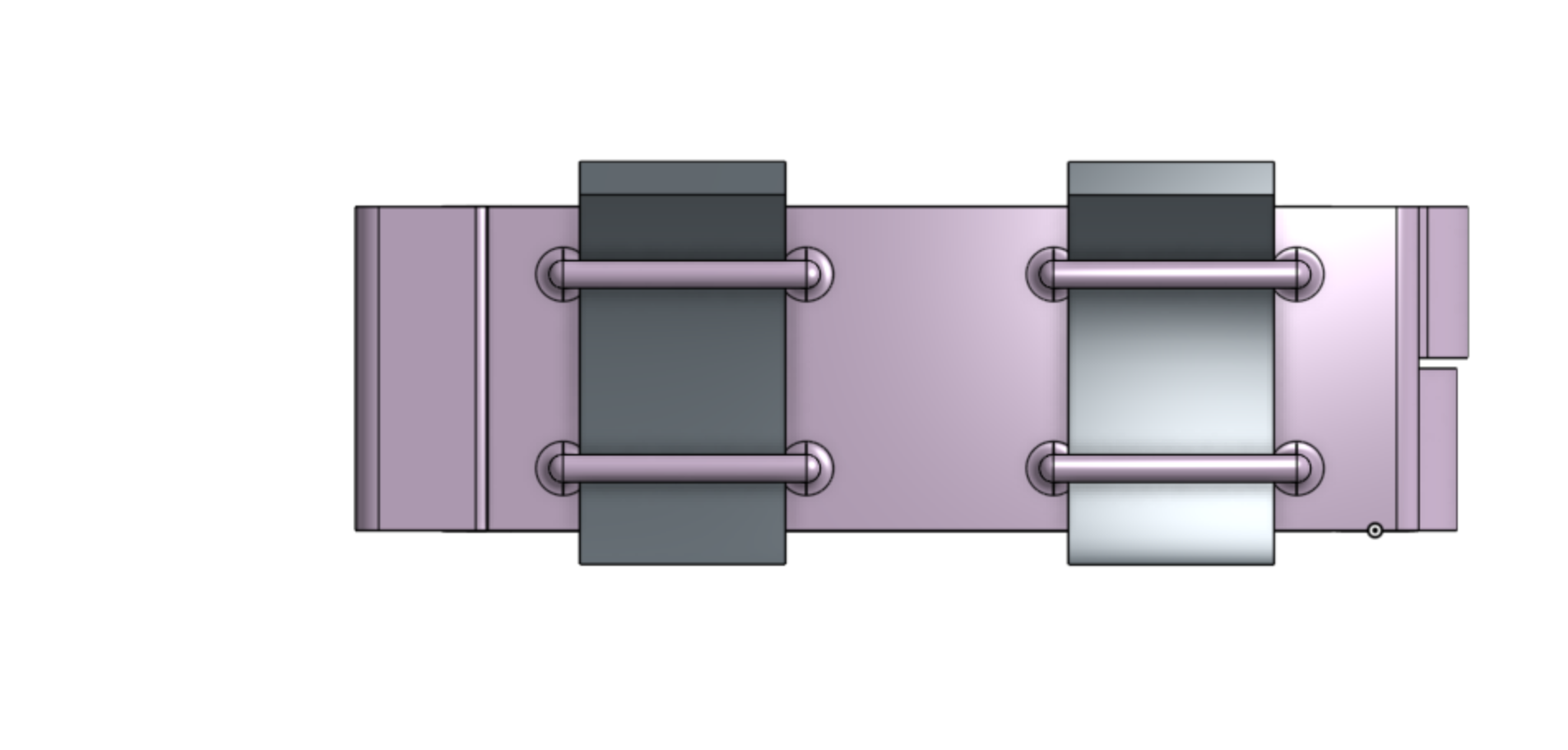
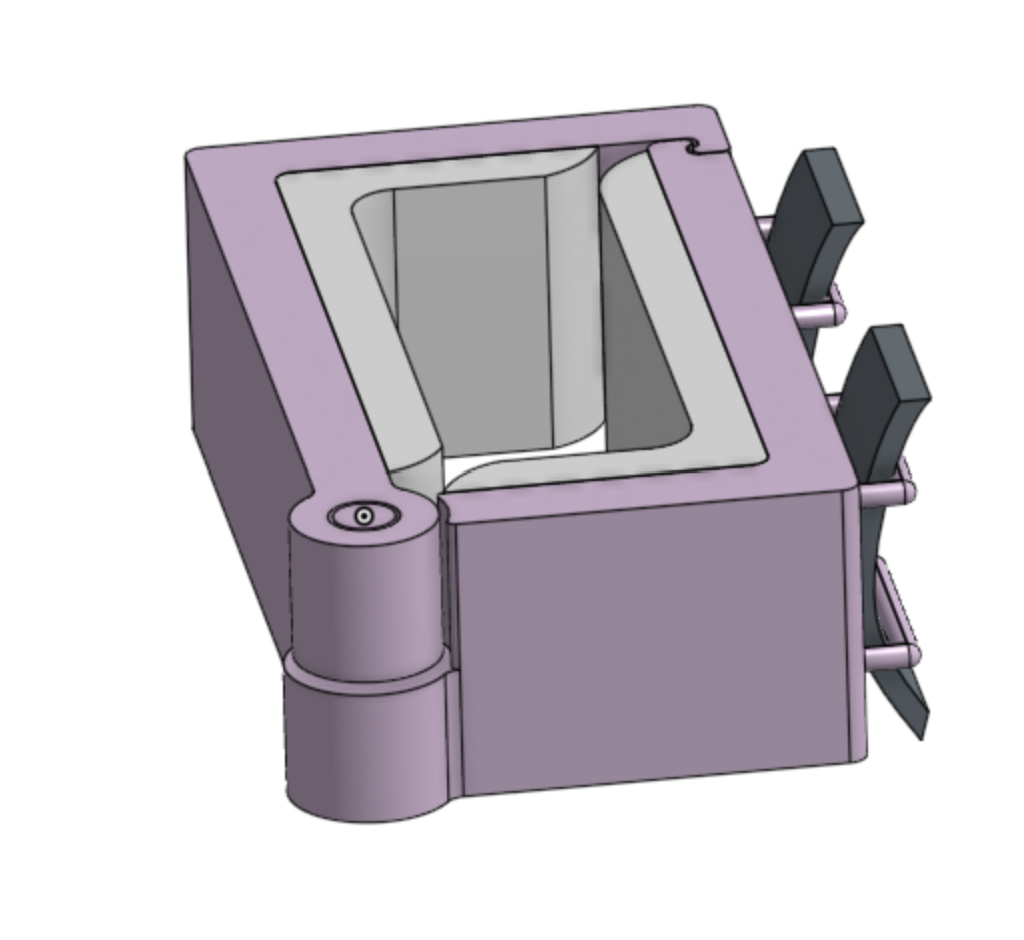
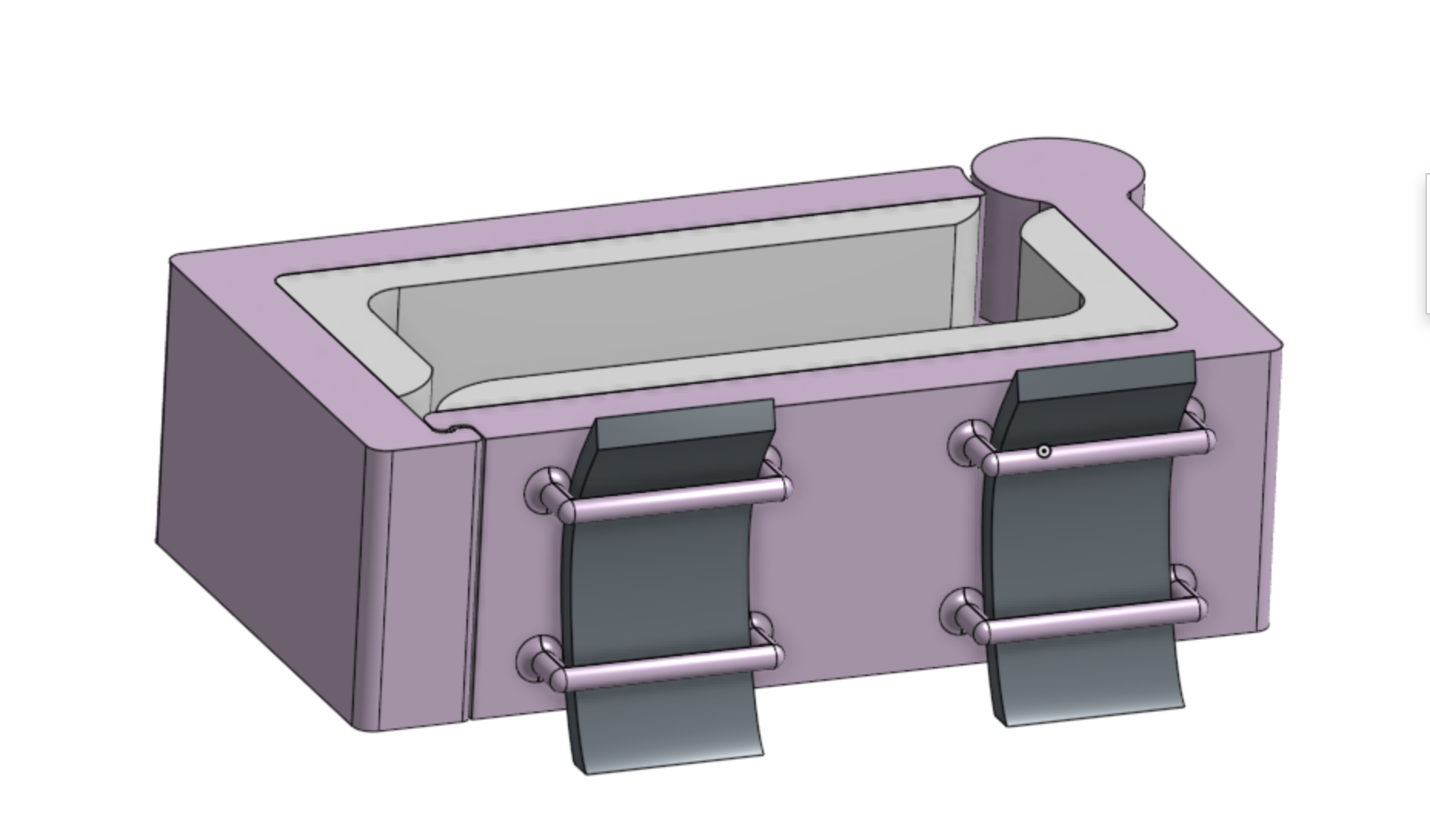
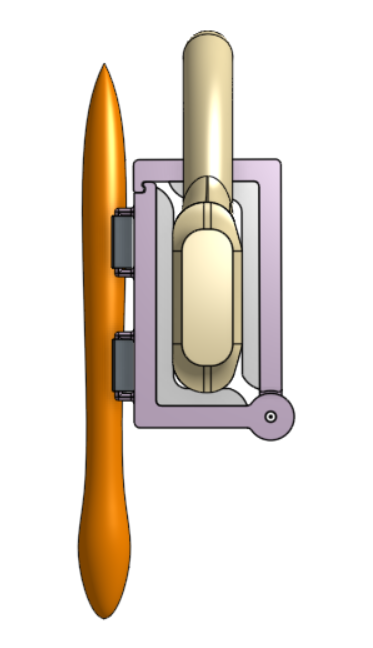
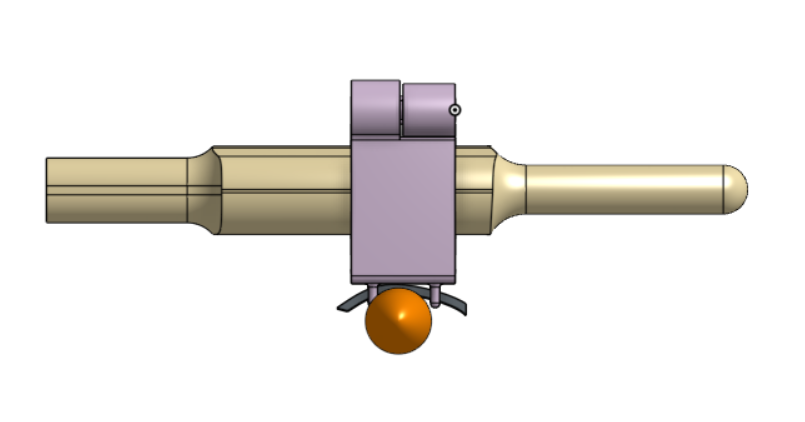
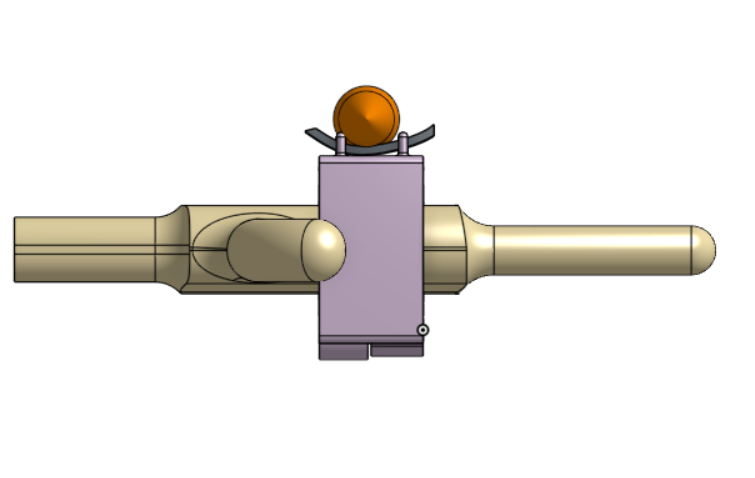
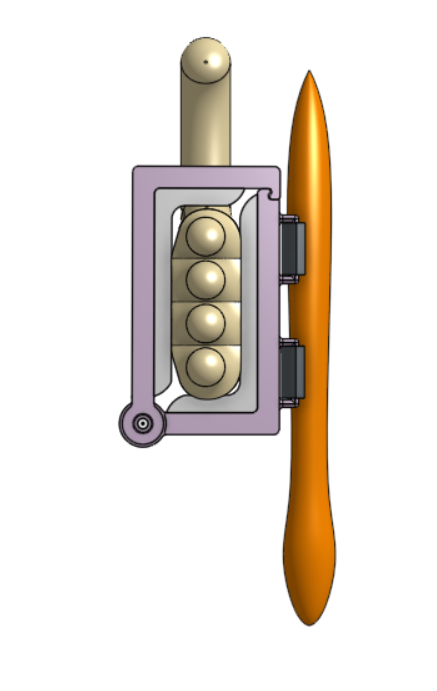
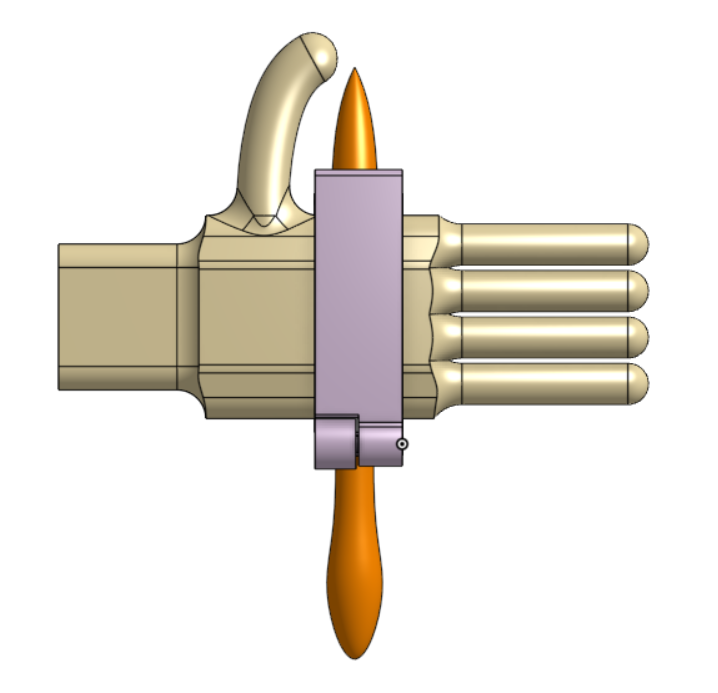
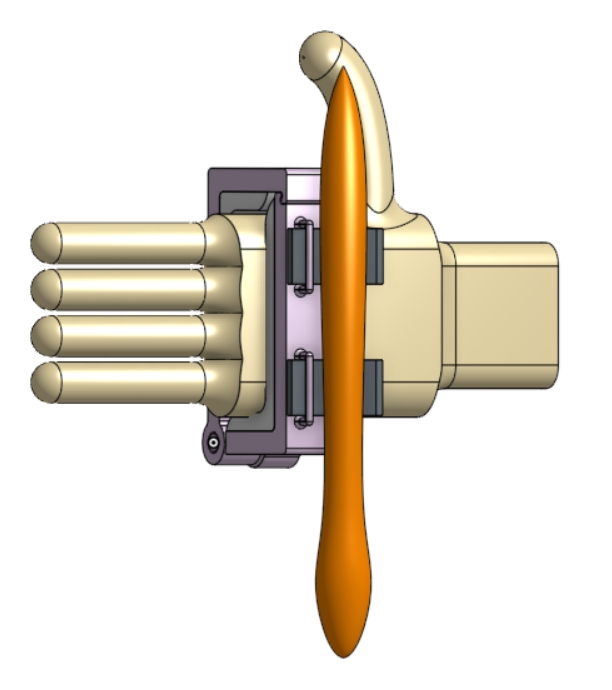
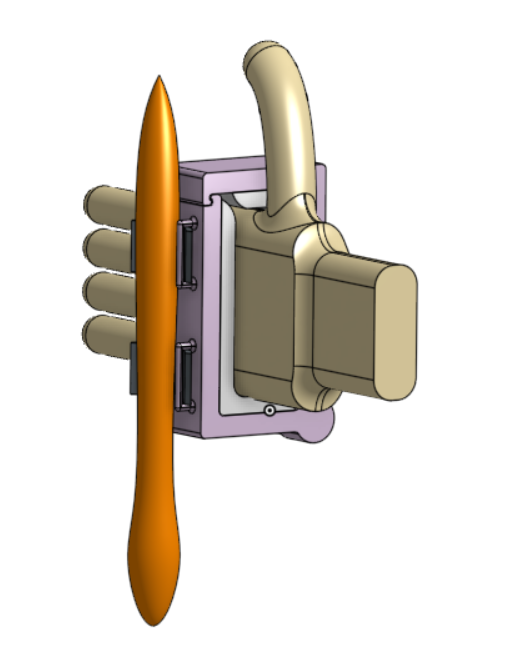
Case 10 was for a patient with limited hand strength who still wanted to have independent control over a paintbrush.
General design: The provided reference video showcased the patient struggling with finger strength, but having adequate wrist and arm mobility. Therefore, our design wraps around the patients palm to best utilize her good wrist and arm control without relying at all on her weak fingers.
The strap around her palm consists of a rigid PLA shell 5/16th inches thick with a hinge and locking mechanism as well as 4 loops on one side to hold pieces of Velcro, explained later. Tolerances for the design are around 1mm, which should be easily 3D printable while keeping a tight enough fit for effective operation. The entire device is printed in place, with supports only needed for the Velcro loops. The hinge mechanism consists of chamfered cylinders such that the mechanism does not fall out during use. The lock is positioned at the opposite corner of the hinge to allow for maximum displacement of the device for ease of use, and minimal risk of pinching, when putting the strap on. The Velcro loops are aligned in a grid pattern, with two vertical and horizontal positions. The vertical positions are to have two points of contact with the paintbrush to maximize stability and the two horizontal positions aim to keep the paintbrush close to the palm for ease of use.
There is a quarter inch layer of memory foam lining the interior walls of the wrist strap to ensure that the device is comfortable when resting on her hand. Additionally, all sharp corners have fillets to minimize risk of the patient accidentally cutting herself when using the device.
Important qualities: The device is was initially scaled for our teammate Sofia's hand, but the model is designed to be adjustable by changing only two values. Once we get accurate values for the width and height of the patient's palm, the model can be easily updated. Additionally, this means that this model can be resized to help any other patient with similar conditions.
The weight of the device is 82 grams, under a fifth of a pound, meaning it should be plenty light for the patient to use effectively. If we find that the patient's wrist is weaker than anticipated, the device can be easily rescaled to fit onto the arm of the patient, which would reduce the weight further and avoid the issue of a weak wrist.
The overall cost of the device is 72 cents. This may seem unreasonable, but when 35 grams of PLA[link](https://a.co/d/06mGyRnm] is 49 cents, a 9inx1.2inx0.25in strip of memory foamlink is 18 cents, and 2in of 3/4in wide Velcrolink is 5 cents, it results in an extremely cost effective product.
Manufacturing: The entire part is 3D printed in place with supports only on the Velcro loops, taking about one hour 15 minutes to print. After printing and some light sanding, the memory foam can be cut to size and glued on using a polyurethane-based adhesive onto the inner faces of the wrist strap. Then, two 1in strips of Velcro are cut and inserted into the Velcro loops.
Use: The device is first opened and placed onto the table. The patient's hand is then pressed against the vertical edge of the device and is hinged shut around the hand. Then, place the paintbrush perpendicular to the Velcro straps and fasten the Velcro around the paintbrush. The patient can now operate the paintbrush independently!
Built With
- onshape

Log in or sign up for Devpost to join the conversation.