Inspiration
BioGuard AI started because my partner and I are, frankly, obsessed with football. We live for the strategy, the speed, and the sheer physicality of the sport. But there’s a dark side to that speed: injuries. We’ve sat through too many games where a player’s season—or even their career—ended because of a split-second collision or a "bad cut" on the turf. It’s heartbreaking because many of these are preventable.
We realized that "toughness" isn't a shield, but data could be. We wanted to move past the old-school "rub some dirt on it" mentality and create a system that notices when an athlete's body is starting to redline before the actual "snap" happens. BioGuard AI was born from the idea that if we can measure how an athlete reacts in real-time, we can spot the fatigue-driven mistakes that lead to the ER.
What it does
At its core, BioGuard AI is a guardian for the gridiron. It’s an injury-prevention system that uses biometric authentication to make sure the data we're looking at belongs to the right person—no mix-ups, no "buddy-punching."
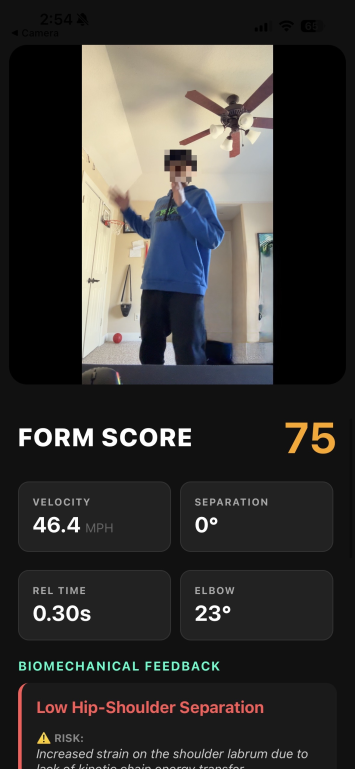
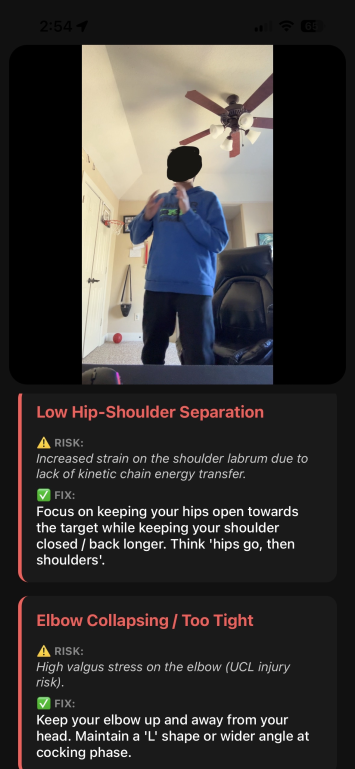
During a drill, the system doesn't just look at how fast an athlete moves; it looks at how consistent they are. We use specific logic to track reaction timing and patterns because a sudden spike in variance is usually the first "check engine light" for physical fatigue. To keep things safe, we even built-in "lockout" and "cooldown" periods. This stops athletes from spamming the sensor or rushing through drills with sloppy, dangerous form. It’s about quality of movement over raw, reckless speed.
How we built it
We went the DIY-meets-Pro route. We powered the brain of the system with a microcontroller and integrated a high-precision biometric sensor module. The firmware we wrote handles everything from identity verification to the "lockout" logic that keeps the drills disciplined.
The goal was modularity. We mapped each biometric ID to a specific profile so we could track an athlete’s progress over a whole month, not just a single afternoon. We focused on calculating the deviation in reaction times to provide a "Readiness Score." If an athlete's average reaction time is $\bar{t}$, we look for deviations where:
$$\sigma = \sqrt{\frac{1}{N} \sum_{i=1}^{N} (t_i - \bar{t})^2}$$
If the standard deviation $\sigma$ starts to climb, the coach knows it’s time to pull that player for a breather.
Challenges we ran into
The biggest headache? Reality. In a lab, sensors work perfectly. On a football field, things get messy. We dealt with the "sweaty finger" problem—trying to get a biometric sensor to read accurately when an athlete is mid-workout and dripping with sweat. It took a lot of tuning and "fail-safe" logic to make sure the hardware didn't frustrate the players.
We also struggled with the "spam" factor. Athletes are naturally competitive, and early on, they figured out they could just "mash" the sensors to get faster times. We had to write complex lockout rules to ensure they were actually reacting to a stimulus rather than just guessing. Finding that balance between a system that felt "snappy" but remained "safe" was a huge hurdle.
Accomplishments that we're proud of
We’re incredibly proud that we shifted the goalposts from "who is the fastest?" to "who is the most controlled?" BioGuard AI isn't just a stopwatch; it’s a coach’s second pair of eyes. By linking every data point to a biometric ID, we created a level of accountability and trust in the data that didn't exist before. Seeing the system successfully block an unsafe, rapid-fire reaction and force an athlete to reset their form felt like a huge win for player safety.
What we learned
This project was a masterclass in the human element of technology. We learned that injury prevention isn't just about how strong your ACL is—it’s about how your brain communicates with your feet when you're tired.
We also learned that in the world of sports tech, "simple and rugged" beats "complex and fragile" every time. If a coach can’t use it in the rain or with gloves on, it doesn't matter how smart the code is. Data is only useful if it’s actionable, which is why we focused so hard on turning raw milliseconds into clear patterns.
What's next for BioGuard AI
We’re just getting off the line of scrimmage. The next move is taking BioGuard AI to the cloud with a full web-based dashboard. We want coaches to be able to see "Fatigue Heatmaps" for their entire roster at a glance. We’re also looking into integrating with wearables to correlate reaction spikes with heart rate recovery. Long-term, we want this to be the standard in every locker room—helping athletes train harder by training smarter, and keeping the stars on the field where they belong.
Built With
- cloudvision
- expo.io
- javascript
- openapi
- react-native
- tensorflow


Log in or sign up for Devpost to join the conversation.