-
-

Home
-
About
-
Quiz
-
Quiz
-
Quiz
-
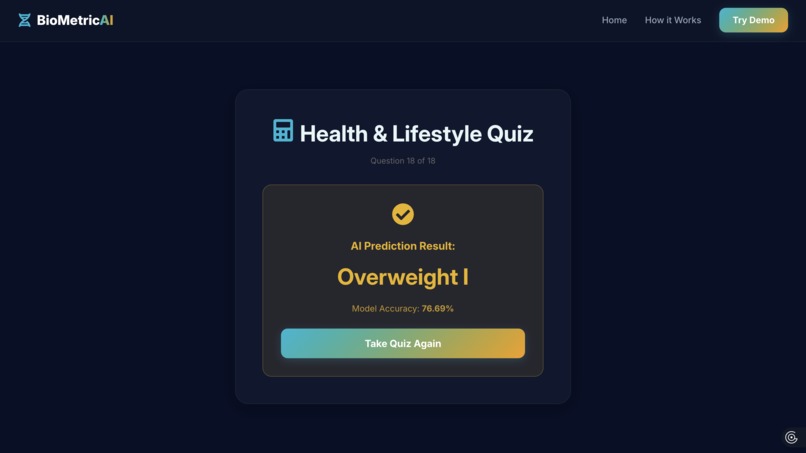
Prediction

Inspiration
The World Health Organization reports that 1 in 8 people live with obesity, a major risk factor for chronic illness. BioMetric AI was inspired by the urgent need to shift healthcare from 'treatment' to 'prevention.' We leveraged advanced Machine Learning to create a tool that makes professional-grade risk assessment free, instant, and accessible to anyone with a browser, removing the barriers between people and their health data.
What it does
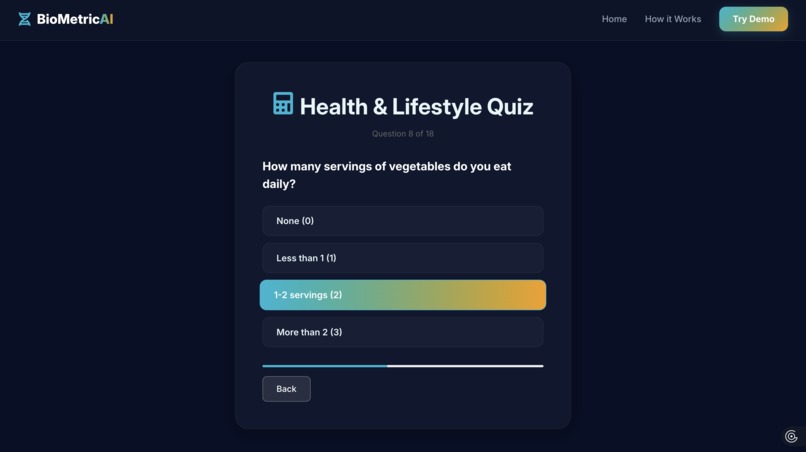
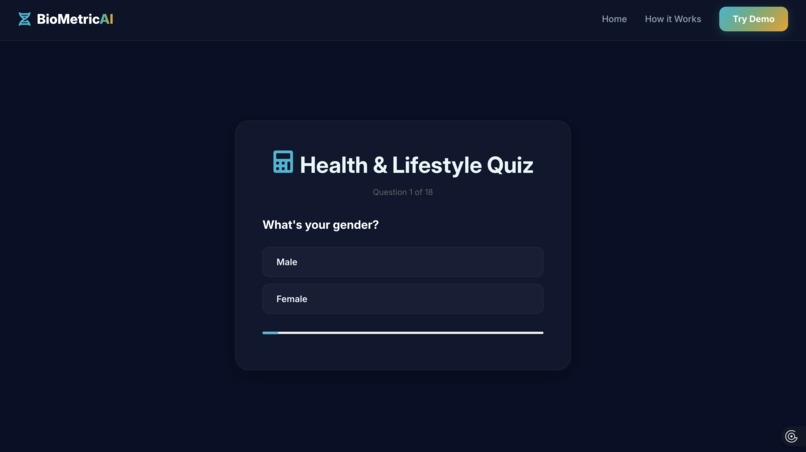
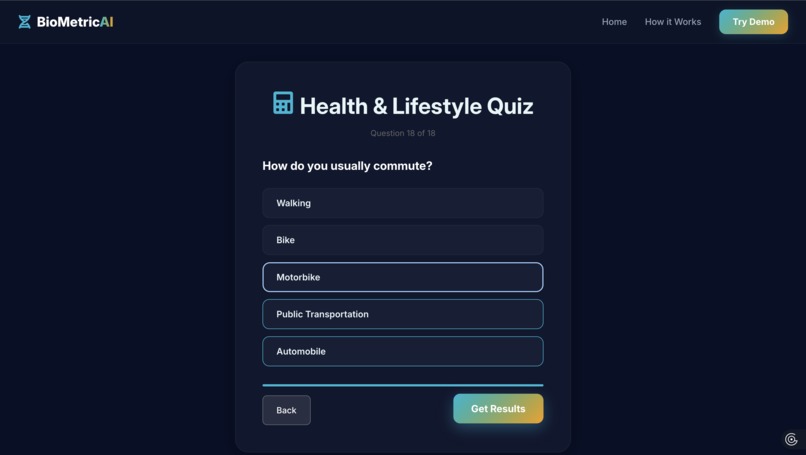
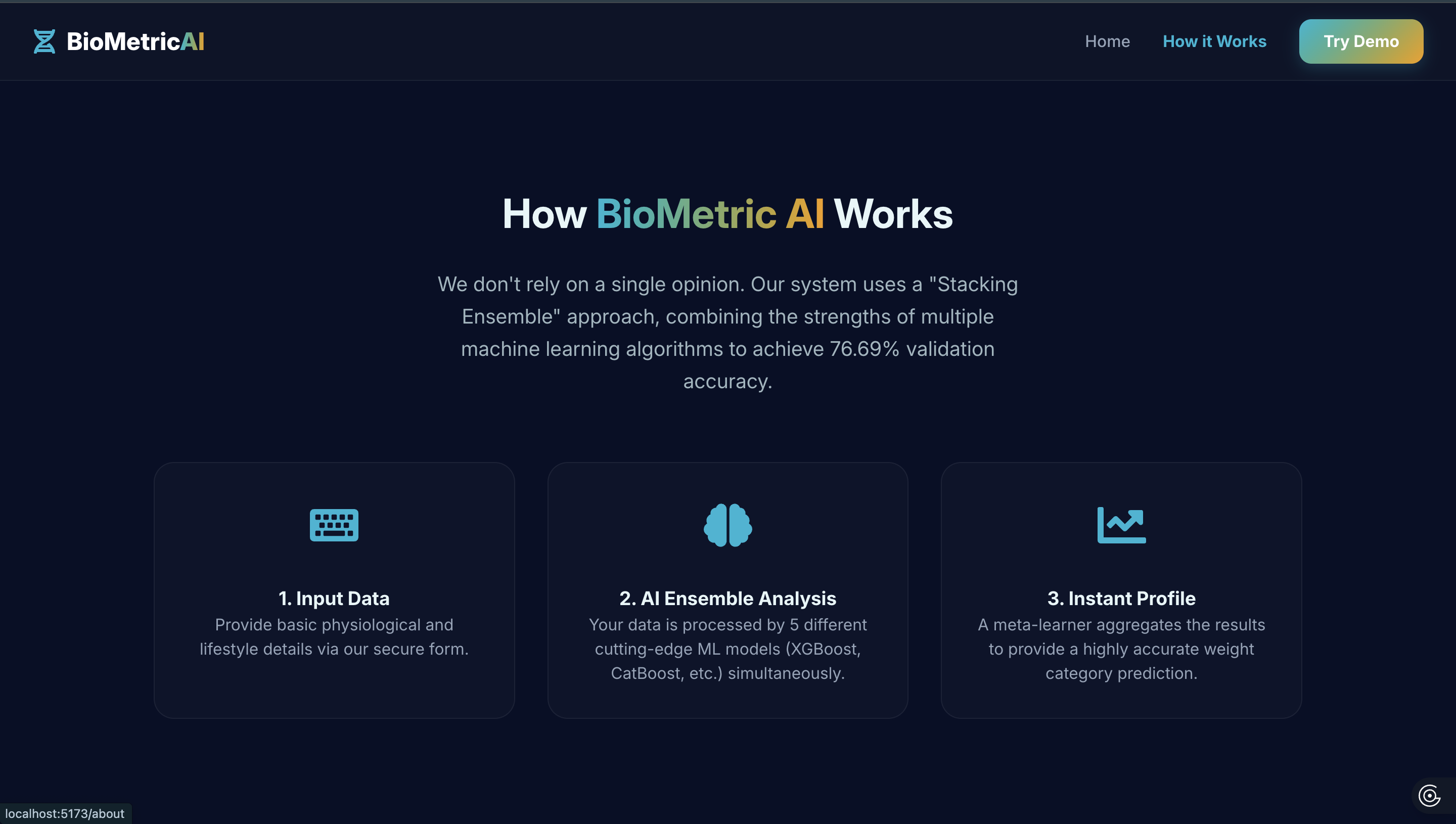
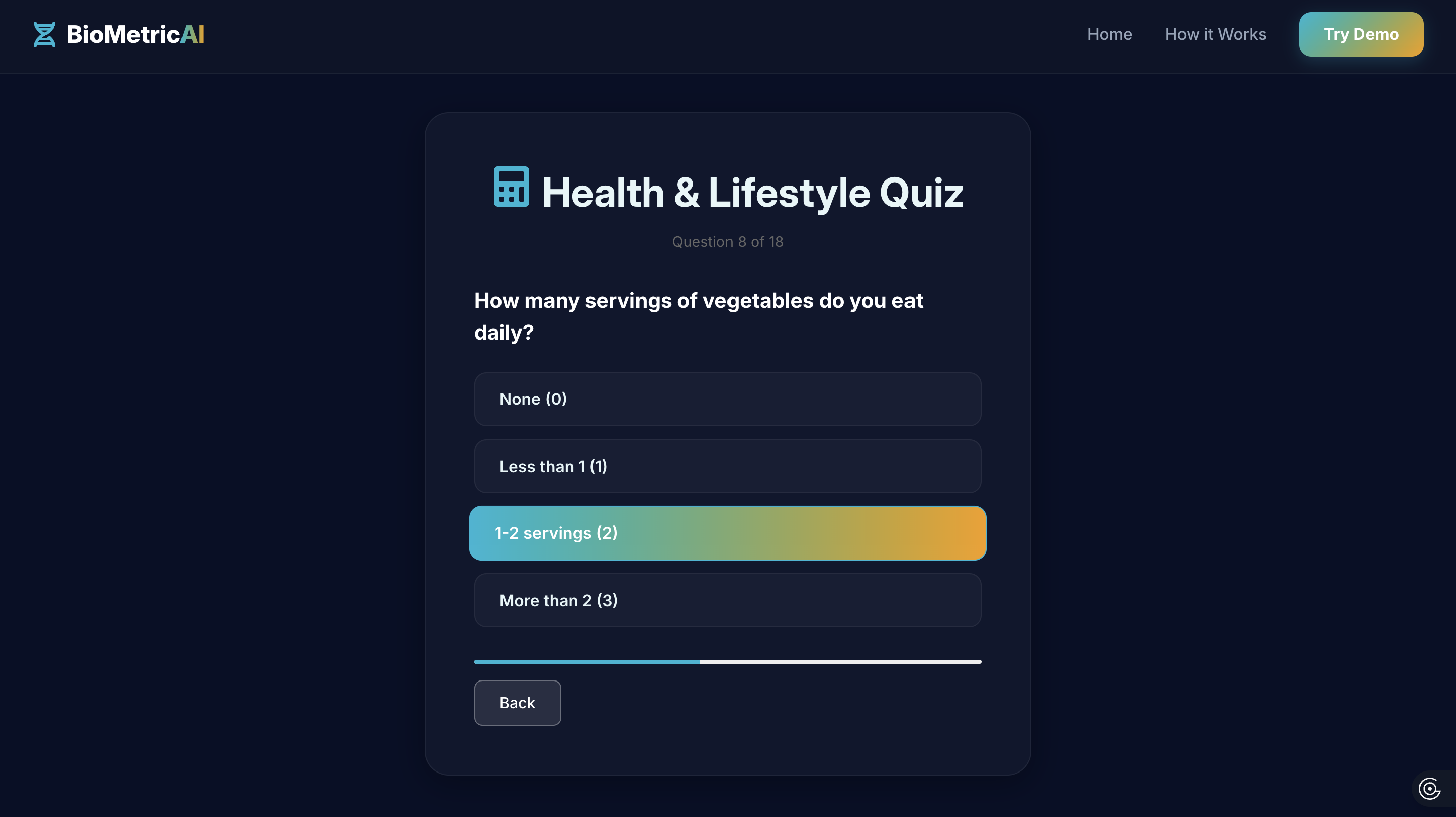
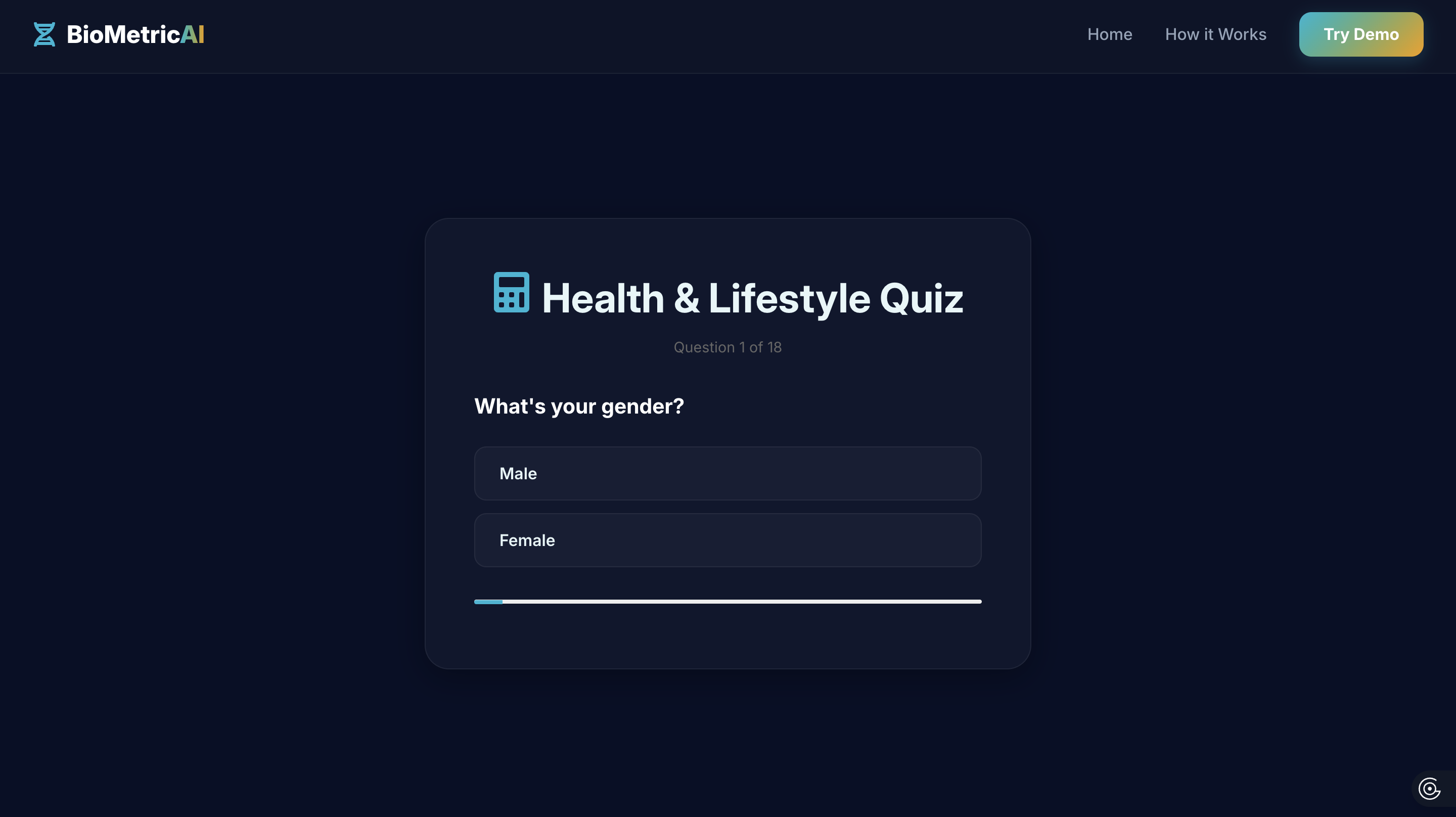
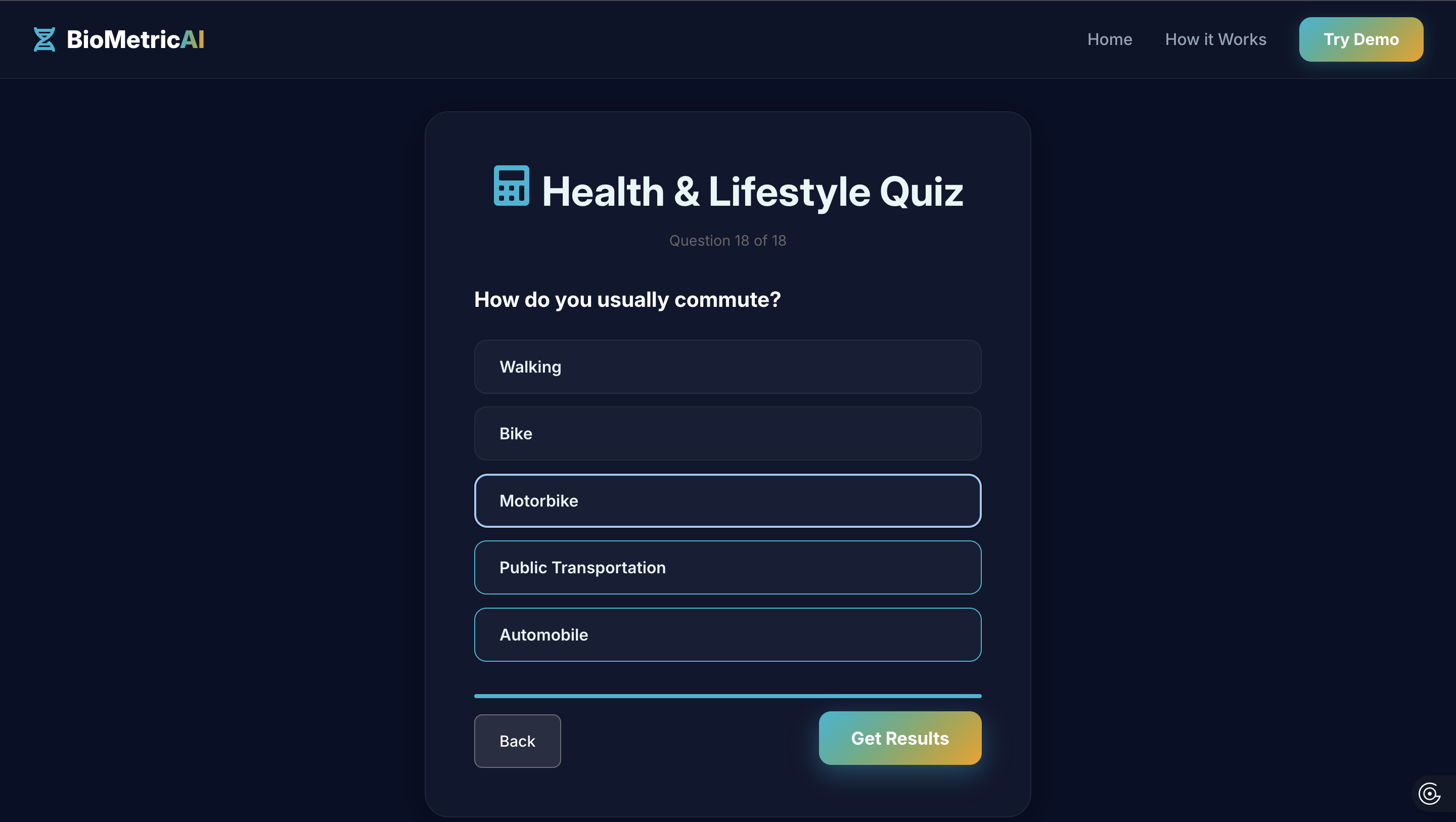
- Collects lifestyle and physiological inputs via a simple form (age, height, weight, diet, activity, comorbidities, etc.).
- Validates and preprocesses inputs using the same deterministic pipeline used during training.
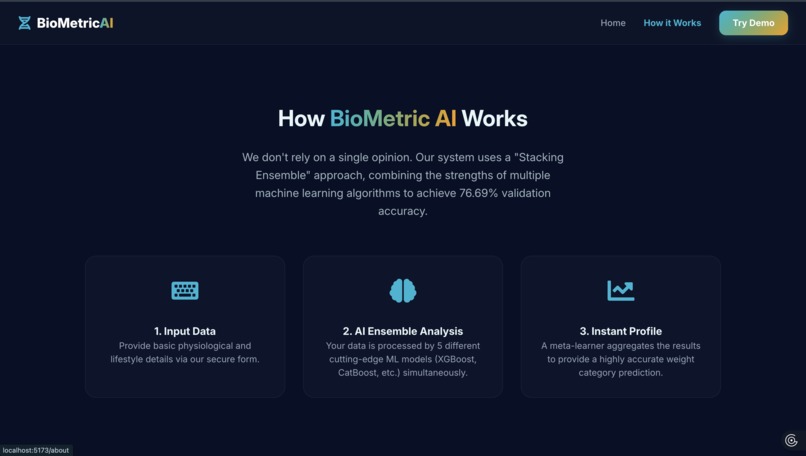
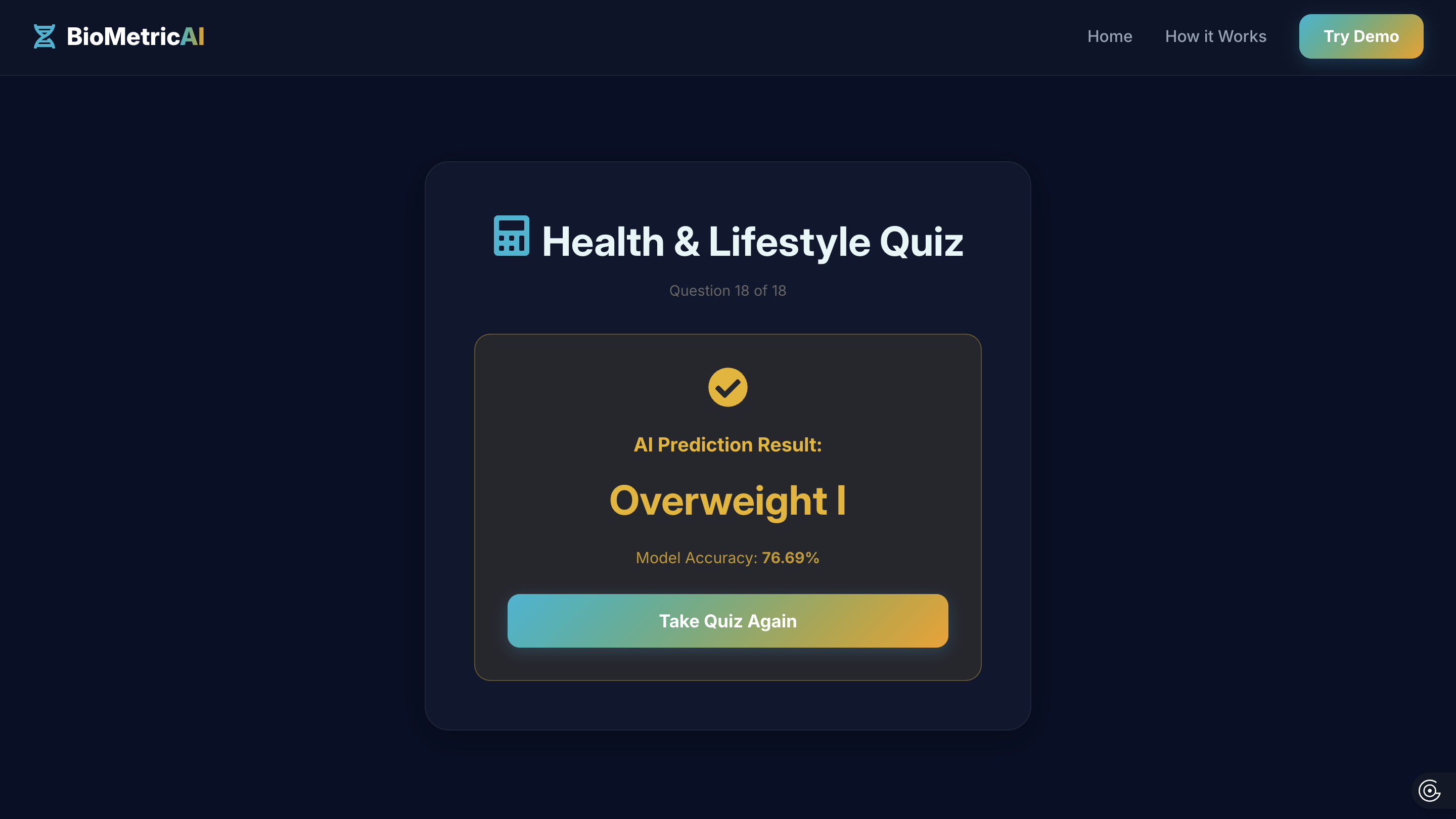
- Runs a Stacking Ensemble model to classify a user's obesity risk and returns risk category.
How we built it
- Data & model: feature engineering and model development were performed using scikit-learn utilities and CatBoost base learners; final model is a stacking ensemble was saved.
- Backend:
FastAPIexposes inference endpoints, performs input validation (Pydantic), and loads preprocessing artifacts at startup for fast prediction. - Frontend: React + Vite provides a responsive UI, form validation, and visualization of prediction scores.
- Dev workflow: artifacts and column-order metadata are versioned; training notebooks and preprocessing scripts are kept for reproducibility.
Challenges we ran into
- Class imbalance and real-world skew — we addressed this using stratified CV, class-weighting and careful calibration.
- Feature drift and schema mismatch — keeping
model_columns.jobliband encoders synchronized between training and serving required strict versioning. - Trade-offs between model complexity and latency — stacking improved accuracy but required careful optimization to keep inference times low.
- Privacy & data minimization — designing the API to avoid storing PII while still providing useful, actionable feedback.
Accomplishments that we're proud of
- A reproducible ML pipeline that produces a robust stacking ensemble with strong cross-validated performance.
- Fast, user-friendly UI that gives immediate, feedback to users.
- Production-oriented API.
What we learned
- Small, careful preprocessing decisions materially affect model stability in production.
- Explainability and communication matter — even accurate predictions need clear guidance to be useful to non-experts.
- Automating artifact versioning (model columns, encoders, scaler) prevents many serving-time issues.
What's next for BioMetric AI - Advanced Obesity Risk Assessment
- Monitoring and model drift detection to automatically flag when retraining is necessary.
- Add explainability (SHAP or similar) to surface feature contributions and increase clinician trust.
- Clinical validation studies and partnerships to evaluate real-world utility and safety.
- Improve accuracy with more data.
Built With
- catboost
- docker
- github-actions
- javascript-(react
- joblib
- node.js/npm
- numpy
- pandas
- pydantic)
- python-(fastapi
- scikit-learn
- uvicorn
- vite)

Log in or sign up for Devpost to join the conversation.