-
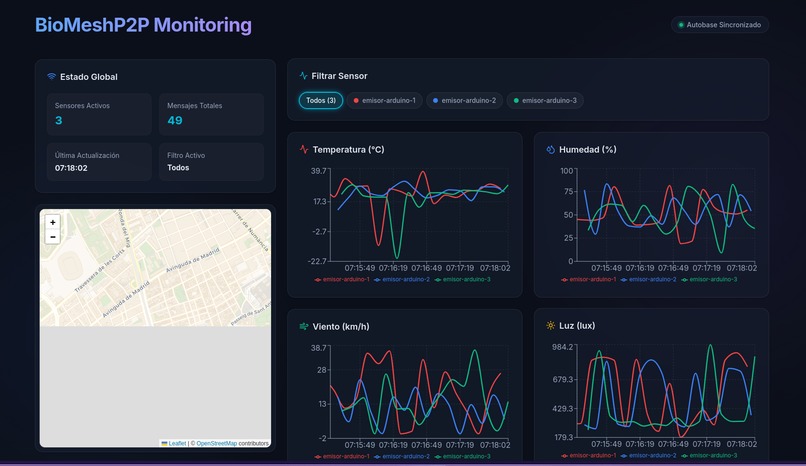
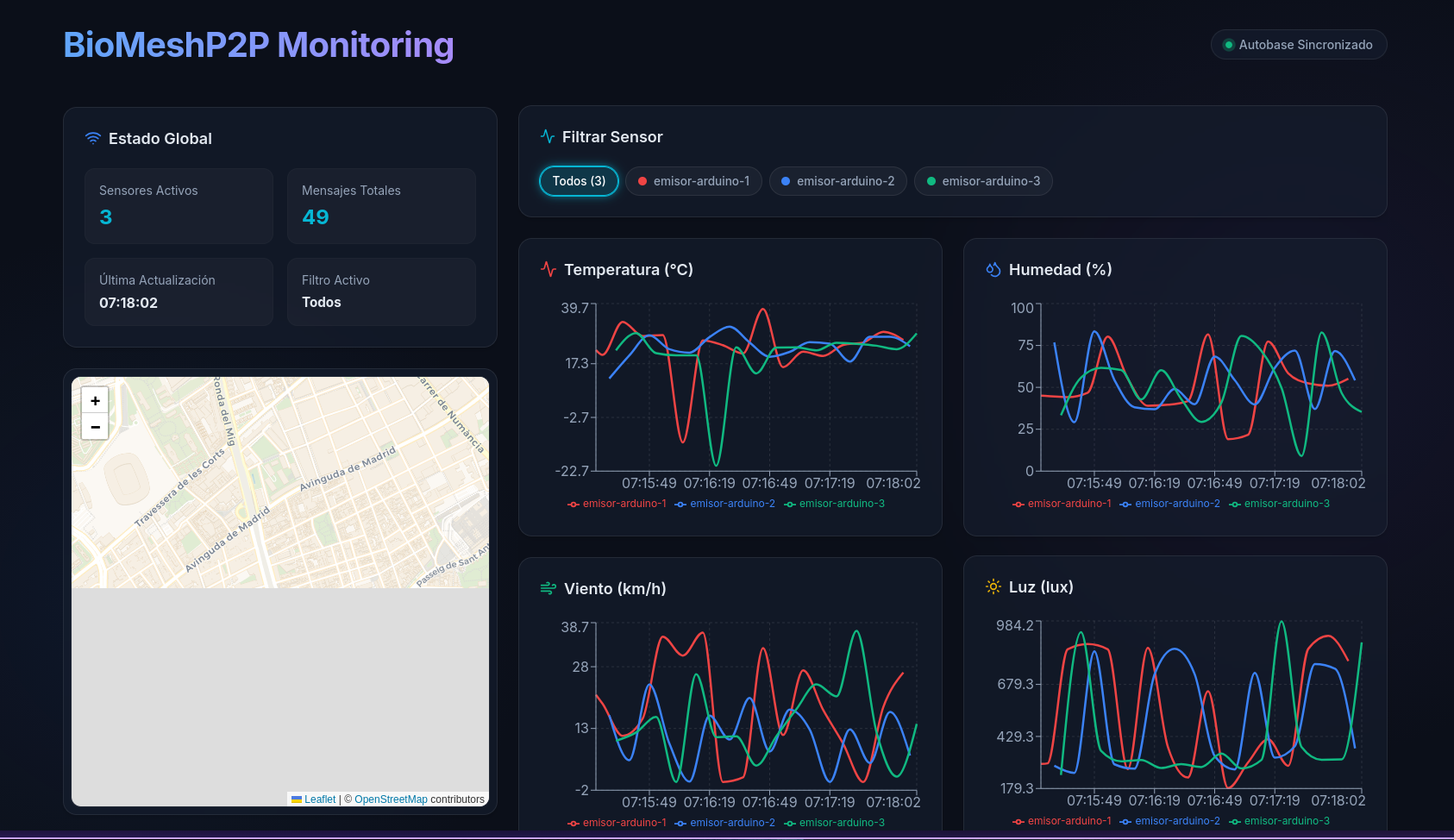
BioMesh Monitoring dashboard, with the real-time metrics of the emissors.
-
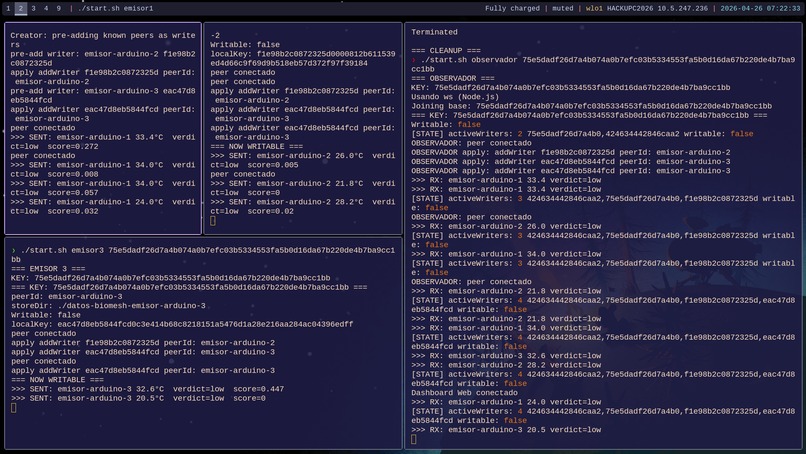
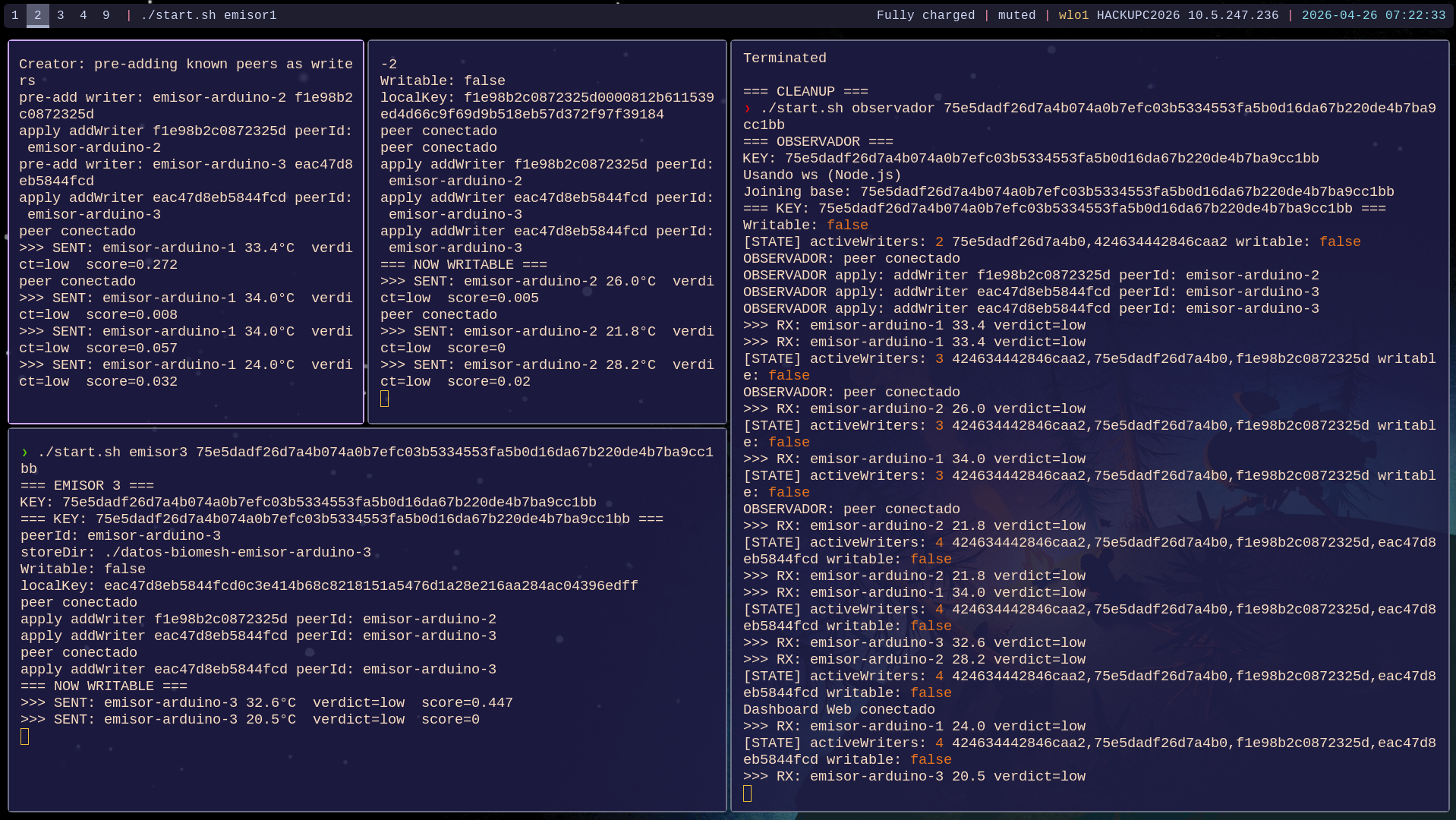
Terminals with the mocks for each of the arduinos, as well as the observer which sends the data to the dashboard
Inspiration
We were initially inspired by the heat-prevention mechanism present in amusement parks, such as Tibidabo. We asked ourselves what it would look like if we automatized the process to prevent the negative effects of heatwaves on the population.
What it does
BioMesh is built in top of a peer-to-peer network, where the different nodes (representing Arduino UNO Q's) monitor climate metrics such as temperature, humidity, air pollution... An AI model running on the MPU of this microcontrollers determines if certain combinations of these metrics are considered 'high risk', and notifies its peers. If a certain number of nodes all decide that there is a high risk situation, they will engage in environment protection actions to regulate temperature and other kind of problems. This actions could range from turning on the AC on buildings, fans which blow water mist, (de)humidifiers... Anything you could attach to a microcontroller.
How we built it
We built a decentralized P2P environmental monitoring network with three Arduino UNO Q emulator nodes running under the Pear runtime, one observer written in Node.js, and a React dashboard. Each emisor generates mock sensor data (temperature, humidity, wind, light, airQuality) and evaluates it through a local TensorFlow.js MLP classifier.
Challenges we ran into
The NAT holepunching was a real headache when trying to run tests in corporate/educational networks such as eduroam, due to the ranomization of standard ports. Also, the DHT swarming has some unexpected behaviors when used in this kind of networks. We had to keep trying with our own mobile hotspots for the tests to be effective.
Accomplishments that we're proud of
As generic as it may seem, we are really proud of how we never gave up with the technologies we wanted to use for this project. Because of the challenges above, we really wasted lots of hours of trial and error, trying different combinations of networks and hotpots trying to make everything all together. We persevered as a team, and our determination paid off in the end.
What we learned
We learned lots of how AI models are actually trained, which was the area we knew nothing about. We had no idea the potential of AI models in monitoring systems was so big, enabling for critical protection with minimal human interaction.
What's next for BioMeshP2P
We hope this Proof of concept could be translated into a more physical version of the project, where actual arduinos are deployed in key points of Barcelona and are connected to real protection mechanisms. Transport this idea not to only protect people from high risk temperatures, but also the biodiversity of the green cores in Barcelona. With models specifically trained to manage, lets say, the optimal conditions for the greenery in the Botanic park, we could regulate air humidity and temperature according to the species of a certain habitat. There is a loot of room to solve real problems. We are very proud of this project.
Built With
- bash
- javascript
- node.js
- pear
- vite

Log in or sign up for Devpost to join the conversation.