-
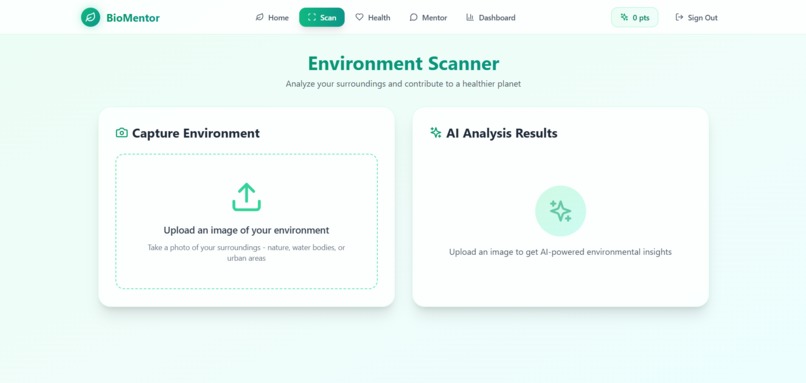
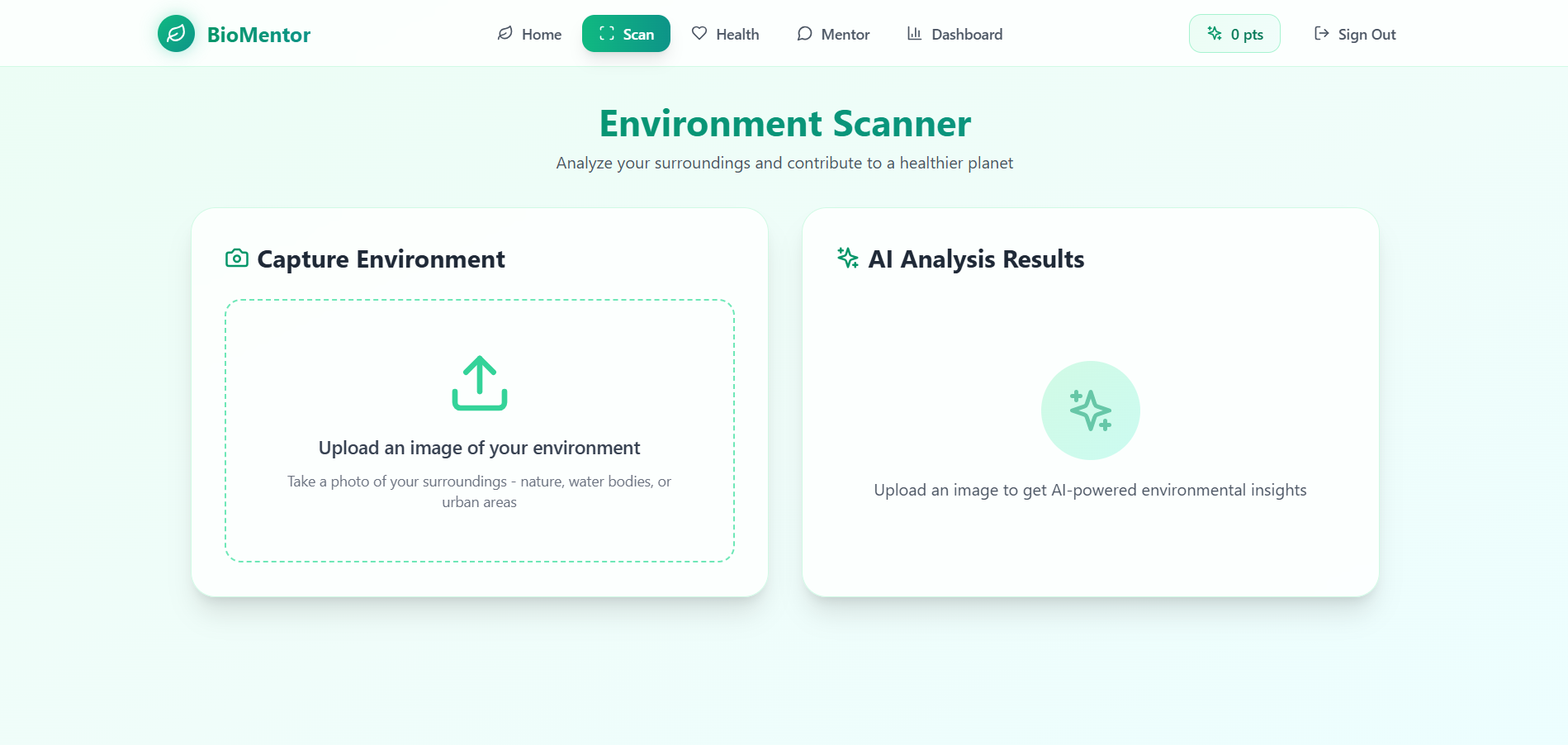
Scan page. Upload an image of your local surroundings—a park, water body, or even the air quality outside your window.
-
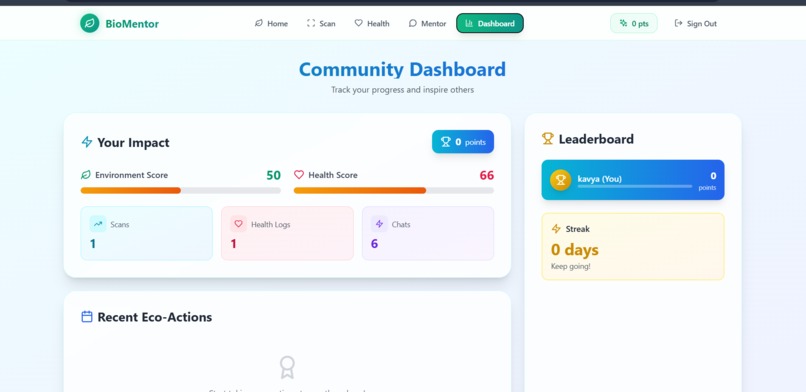
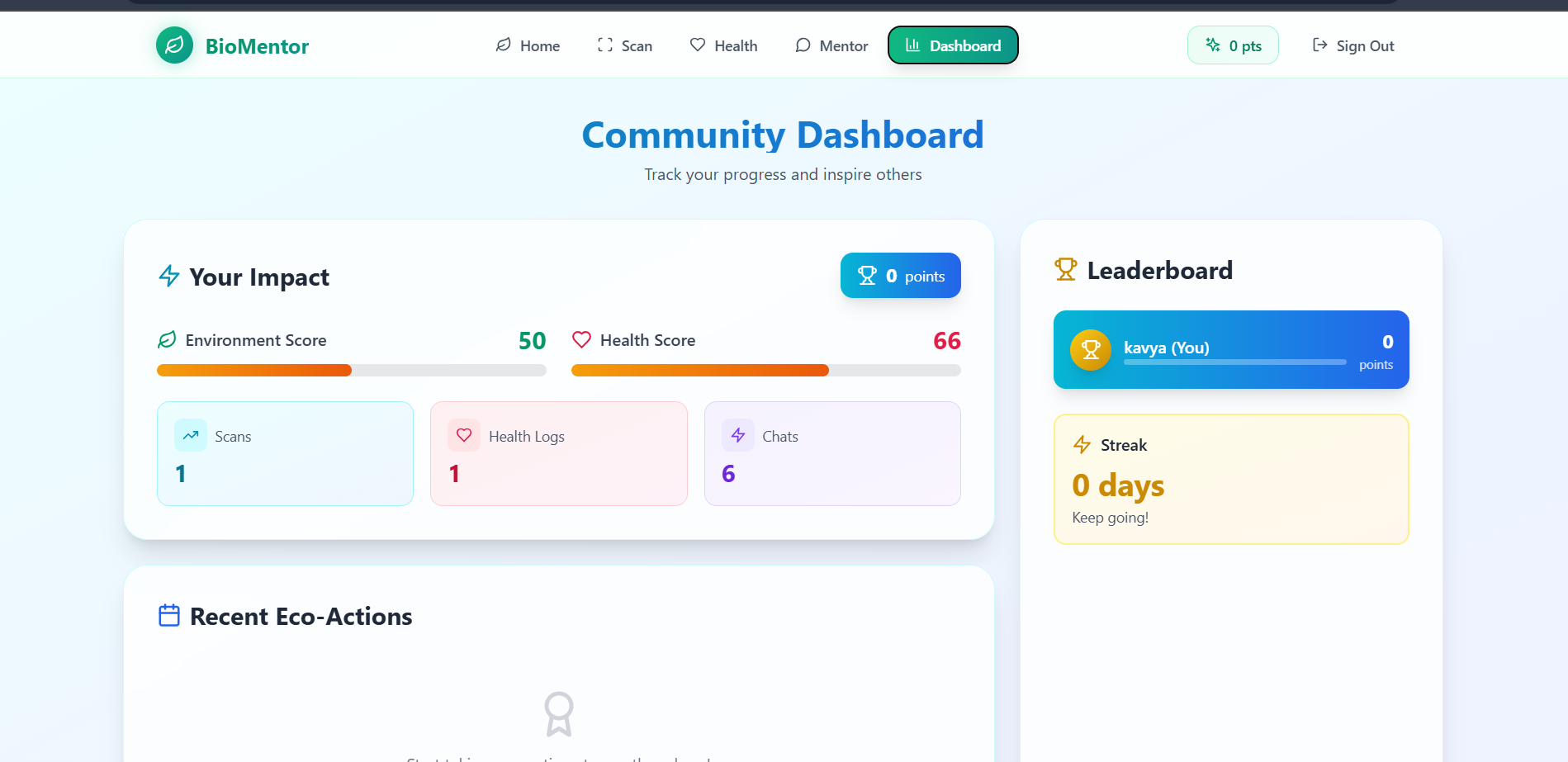
dashboard
-
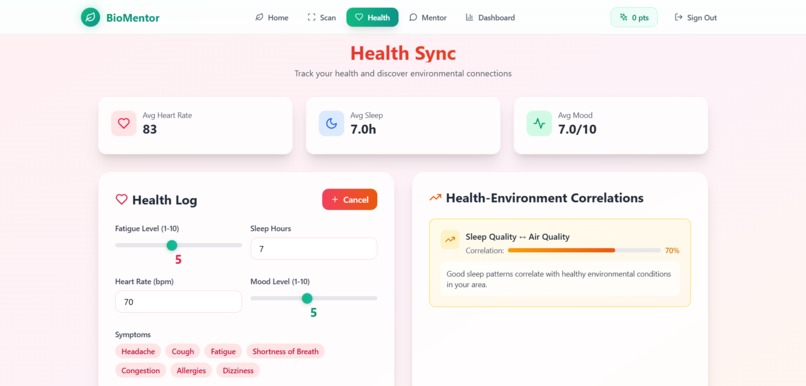
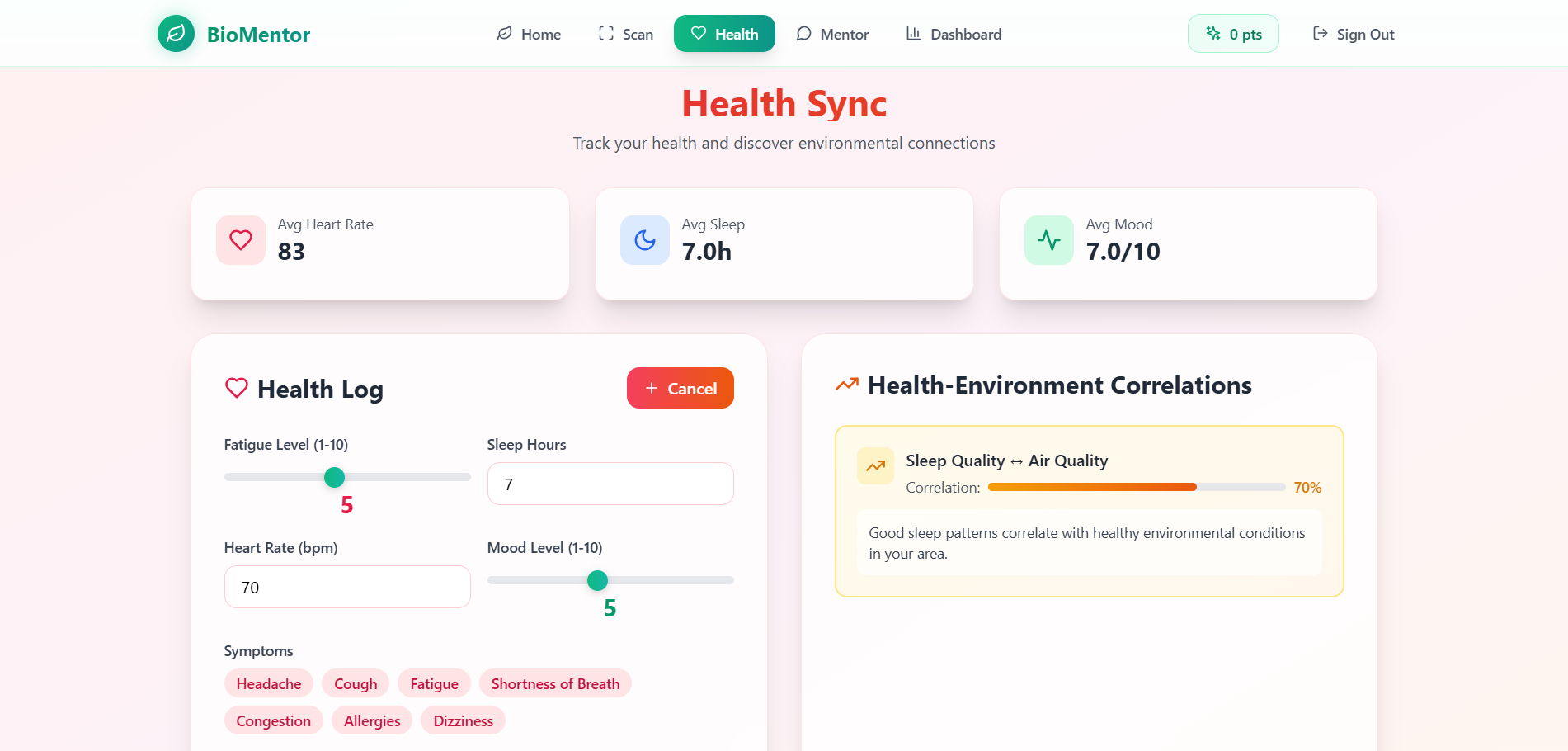
Health Sync Track your health and discover environmental connections
-
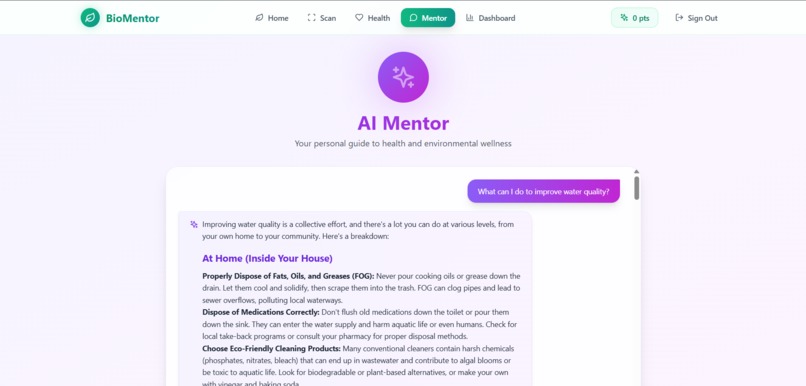
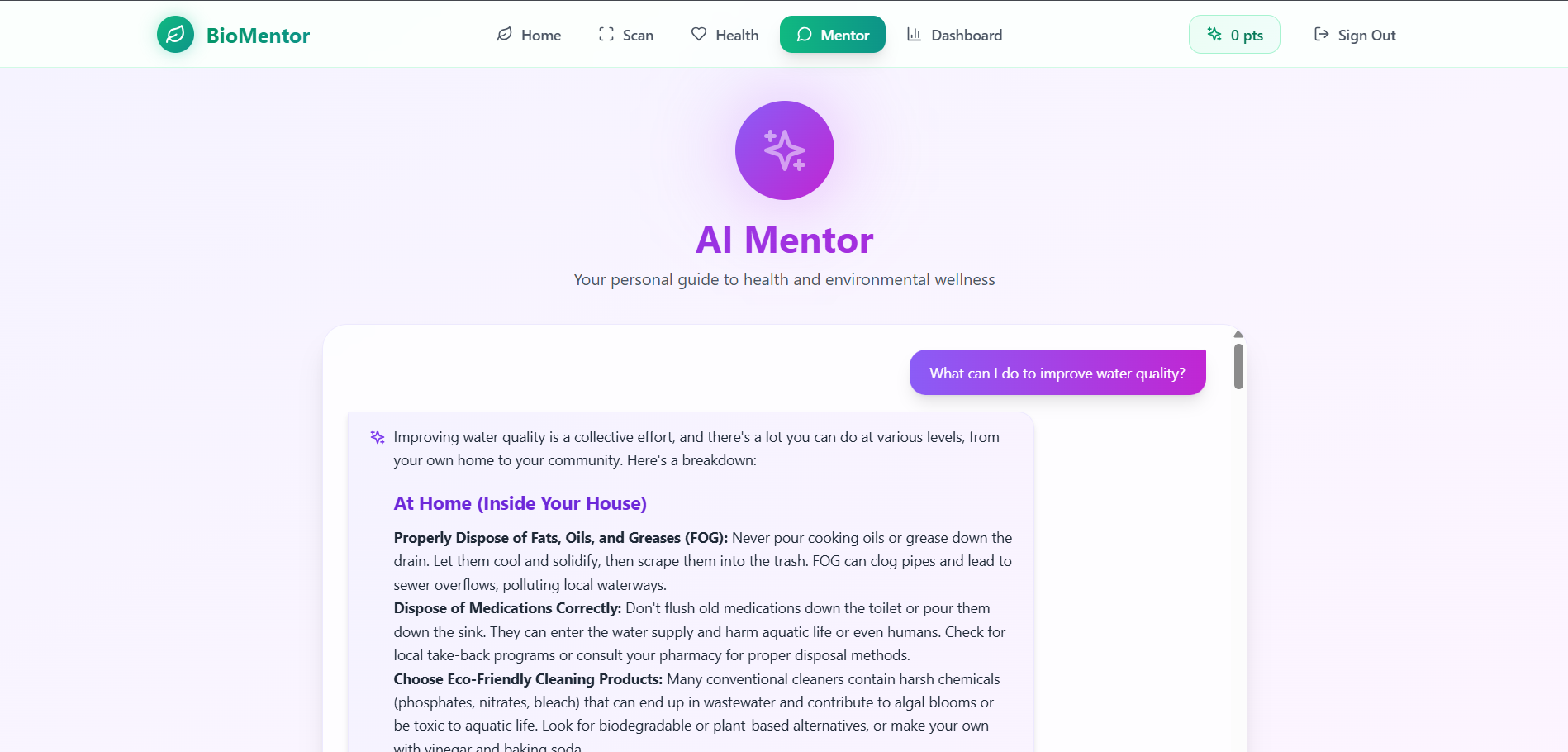
ai mentor page ( ai assistent)
-
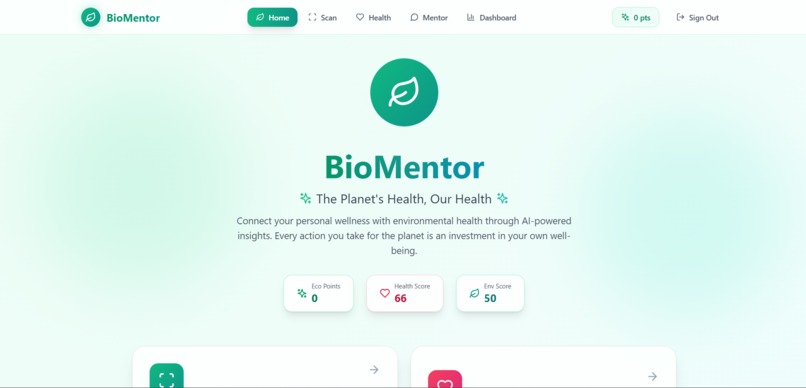
Home page
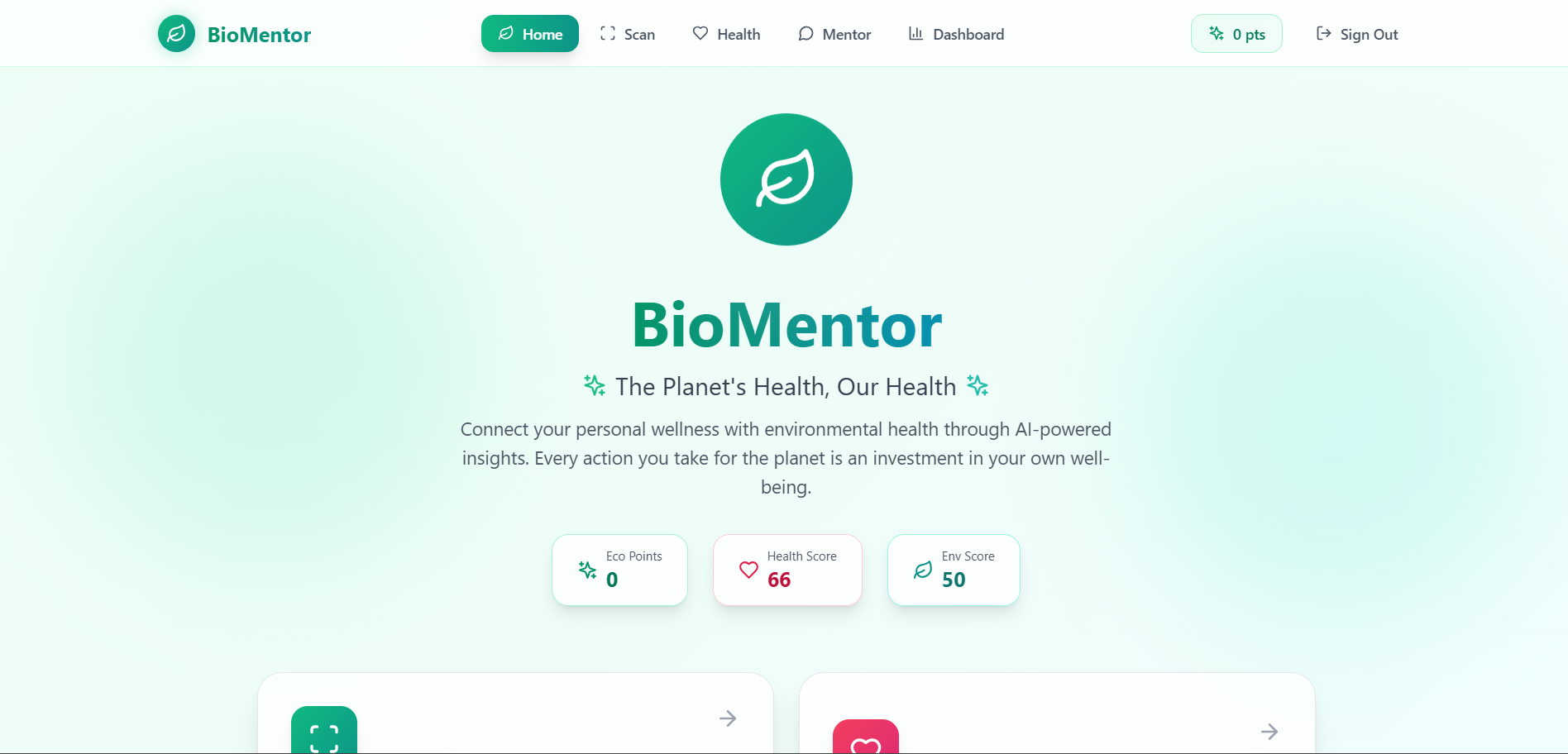
About BioMentor BioMentor is an AI-powered personal ecological and health guide that bridges the gap between individual well-being and environmental quality. Our core philosophy is simple: "The Planet's Health, Our Health." It’s a platform designed to make sustainable action personal and highly rewarding.
Inspiration We were inspired by the growing body of evidence showing a direct correlation between environmental quality (like air and water pollution) and chronic health issues (like respiratory problems and stress). We recognized the need for a tool that moves beyond general advice and provides personalized, actionable guidance by connecting two disparate data streams: personal health logs and local environmental scans.
What it Does BioMentor provides a three-part feedback loop to inspire action:
Environment Scanner (Gemini Vision): Users upload an image of their surroundings (e.g., waste, greenery, water). Gemini analyzes the image for environmental quality and provides a clear summary.
Health-Environment Correlation: The app connects the scan results with the user's logged health data (fatigue, sleep, mood). Gemini generates personalized insights (e.g., "Poor air quality likely correlates with your recent sleep scores").
AI Mentor Chat: A conversational assistant provides educational content and suggests small, gamified eco-actions (e.g., "Plant a tree this week," "Reduce plastic use") to improve both local ecology and personal health.
How We Built It We built BioMentor using a modern, scalable stack focused on performance and engagement:
Frontend: React and Tailwind CSS for a minimal, soothing aesthetic. We used react-three-fiber to create the animated, futuristic 3D AI Mentor Orb for high user engagement.
Backend: Node.js/Express served as the API gateway to manage data flow and securely execute AI calls.
AI Core: Google's Gemini API was essential, handling:
Multimodal Analysis (Gemini Vision) for image interpretation.
Contextual Chat (Gemini Text) for the AI Mentor.
Data Analysis for health and environmental correlation.
Challenges We Ran Into The primary challenge was prompt engineering for multimodal correlation. Getting Gemini to accurately identify environmental details from a user-uploaded photo (Vision) and then integrate that context into a subsequent data analysis prompt (Text/Data) required meticulous refinement. Specifically, ensuring the AI's output was consistently formatted (using Markdown and clear language) for smooth UI rendering was an iterative process.
Accomplishments We're Proud Of We are most proud of establishing a functional, end-to-end multimodal loop in the MVP. Seeing the application move from a user uploading a photo of litter, to the AI recognizing the waste, storing the data, and then later generating an insight like, "The detected local pollutants may be contributing to your reported fatigue," was a significant technical and conceptual achievement.
What We Learned We learned the critical importance of System Instructions in large language models. The quality, tone, and format of the AI Mentor's advice were entirely dependent on setting clear rules. We also learned that visualizing the data connection (using the 3D mentor and animated rings) is key to making complex health/eco correlations understandable and motivating for the average user.
What's Next for BioMentor Our roadmap focuses on expanding utility and deepening engagement:
Real-Time Data Integration: Connect to third-party IoT/public APIs (e.g., local air quality indices) to provide more immediate, ambient environmental context.
Gamification Expansion: Fully integrate a system for "Eco-Health Points," badges, and challenges to drive community interaction and long-term retention.
Preventative Health Paths: Develop specialized guidance paths (e.g., "Respiratory Health Path" or "Water Conservation Path") where the AI proactively guides the user based on emerging local environmental risks.
Built With
- api
- geminiapi
- markupdownrender
- react
- supabase

Log in or sign up for Devpost to join the conversation.