

I. Introduction
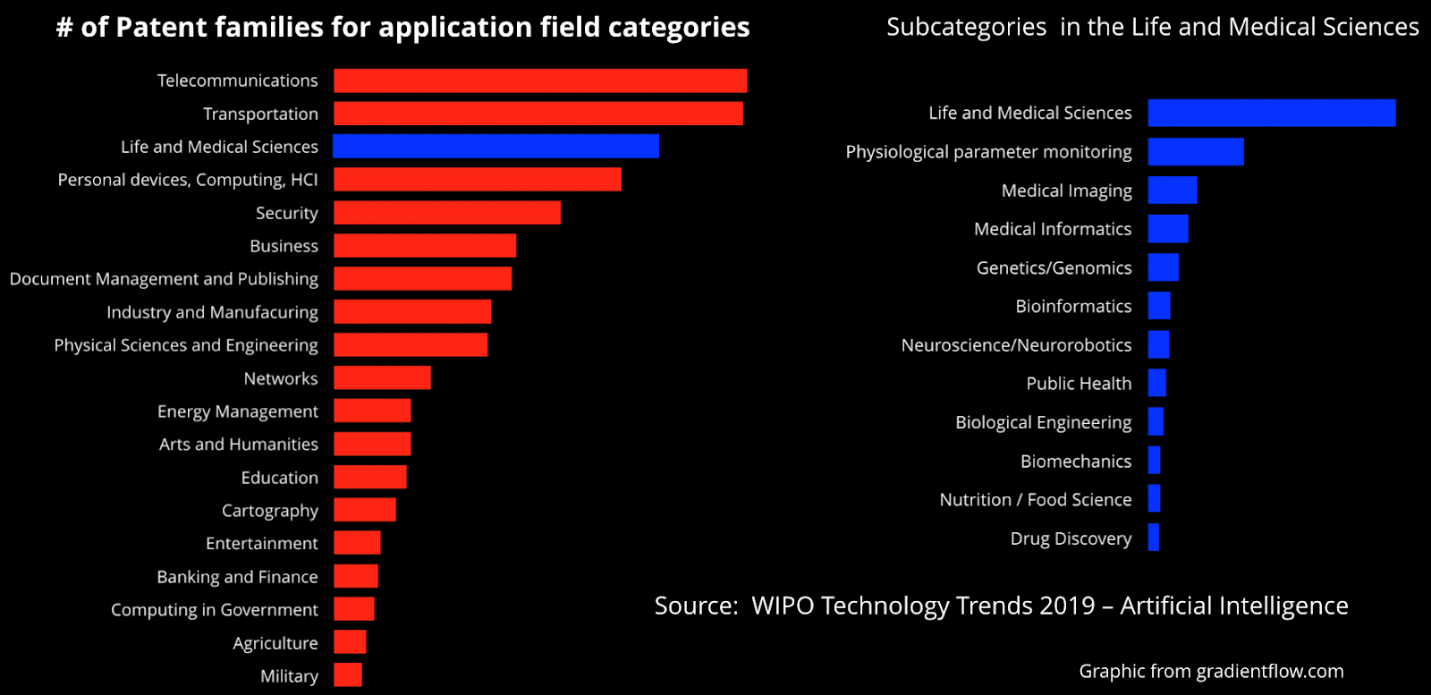
Artificial intelligence has been used in many beneficial fields. One of those fields is the biomedical field. The first AI application in the medical field was in the 1970s when the field of AI was 15 years old. Early AI in medicine (AIM) researchers discovered the applicability of AI methods to life sciences. The general AI research community was fascinated by the applications being developed in the medical world, noting that significant new AI methods were emerging as AIM researchers struggled with challenging biomedical problems. In fact, by 1978, the leading journal in the field (Artificial Intelligence, Elsevier, Amsterdam) had devoted a special issue [7] solely to AIM research papers. Over the next decade, the community continued to grow, and with the formation of the American Association for Artificial Intelligence in 1980, a special subgroup on medical applications (AAAI-M) was created. The field of (AIM) has been developing all over the years and it is coming better.
II. AI in the biomedical information process
Information processing in biomedicine had many breakthroughs by using traditional information processing ways. As a result, there should be a step forward to make these processes as fast as it can. In the area of biomedical question answering (BioQA), the aim is to find fast and accurate answers to user-formulated questions from a reservoir of documents and datasets. To begin with, the biomedical questions must be classified into different categories in order to extract appropriate information from the answer. ML can categorize biomedical questions into four basic types with an accuracy of nearly 90% [3]. Next, an intelligent biomedical document retrieval system can efficiently retrieve sections of the documents that are most likely to contain the answers to biomedical questions [1]. For biomedical information collected from different sources over an elongated period of time, many important tasks can dominate; these are clinical information merging, comparison, and conflict resolution [2]. These have long been time-consuming, labor-intensive, and unsatisfying tasks performed by humans. To improve efficiency and accuracy, AI has been demonstrated to be capable of performing these tasks with results as accurately as a professional evaluator can do [4]. Also, natural language processing of medical narrative data is needed to free humans from the challenging task of keeping track of temporal events while simultaneously maintaining structures and reasons [6]. ML can be used to process high-complexity clinical information (e.g., text and various kinds of linked biomedical data), incorporate logical reasoning into the dataset, and utilize the learned knowledge for a myriad of purposes [5].
III. AI in biomedical research
In addition to being able to act as an ‘‘eDoctor” for disease diagnosis, management, and prognosis, AI has uncharted usage as a powerful tool in biomedical research [8]. In medical research, AI is most commonly employed to analyze and identify patterns in large, complicated datasets. This data can be analyzed in a meaningfully precise, faster, and more cost-effective way than traditional analytical methods, reducing spending and improving outcomes. AI can be used to search through huge troves of scientific literature to find related studies, as well as combine different datasets. Researchers at the institute of cancer have developed a unique cancer database that is able to combine patients’ clinical and genetic data with independent chemistry, biology, patient, and disease information.
IV. Disease diagnostic and prediction
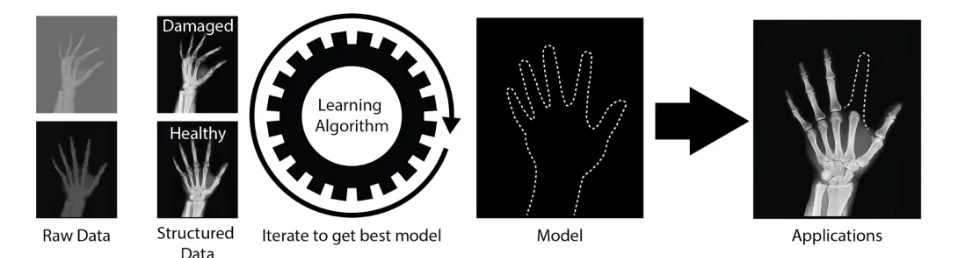
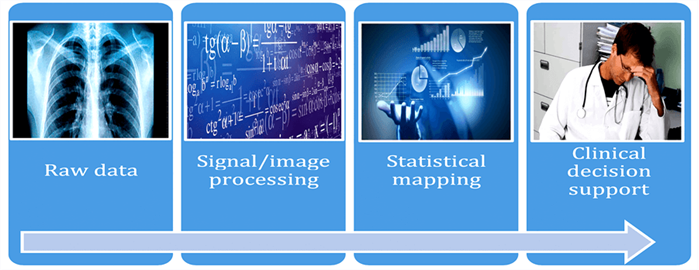
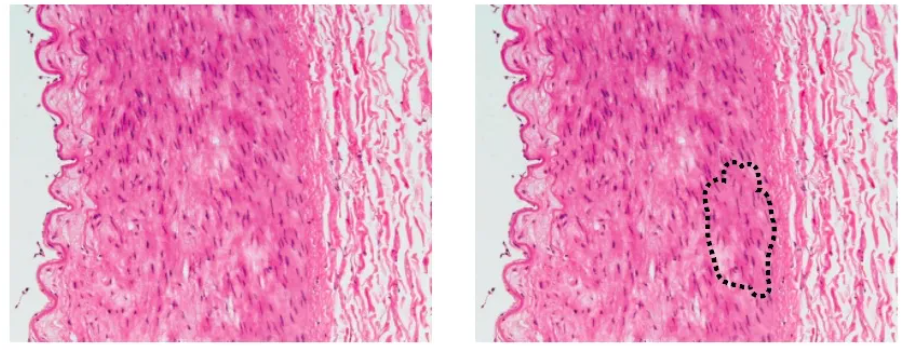
The most urgent need for AI in biomedicine is in the diagnostics of diseases. AI allows health professionals to give earlier and more accurate diagnostics for many kinds of diseases [10]. Propper image processing, appropriate selection of features, and AI methods can support medical diagnostics. This topic has been the subject of much research in recent years. One main class of diagnosis is based on in vitro diagnostics using biosensors or biochips. For instance, gene expression, which is a significant diagnosis tool, can be analyzed by ML, in which AI interprets microarray data to classify and detect abnormalities [9], [12]. One new application is to classify cancer microarray data for cancer diagnosis [11].
V. Healthcare
AI nowadays had many approaches like predicting the health status of the body rabidly. Using AI, we could predict and measure blood pressure, heartbeats, body temperature, and more health care status that are significant. Blood pressure (BP): many people are daily tracking their blood pressure. Mostly measured to get insights into their health condition or to communicate with their doctor for follow-up. Nowadays they measure their BP with a sphygmomanometer, a tool with inflatable cuffs, but it is not a good choice, as it is not a user-friendly measuring tool, also faults may be caused by wrong placement, and it is only a single moment measurement. “experts stress the importance of accurate blood pressure screenings “. Varheart wanted to create an AI-solution that could work with a dataset of one sensor. This fits into already-known applications like smartwatches. It also makes it a lot easier to implement in future applications.
VI. Conclusion
AI was first used in the 1950s; it entered the biomedical field in the 1970s. AI in biomedical fields had many approaches and beneficial applications. AI can be used in the biomedical information process. In the BioQA, the aim is to find an answer in a reservoir of documents. AI helped make the process of searching for these questions easier than earlier. AI is also used in biomedical research in analyzing and identifying patterns in large, complicated datasets. This data can be analyzed in a meaningfully precise, faster, and more cost-effective way than traditional analytical methods, reducing spending and improving outcomes. The most relevant uses of AI in biomedical fields are the diagnosis and prediction of disease. AI allows health professionals to give earlier and more accurate diagnostics for many kinds of diseases. Also, it can measure the health status of the body as heart rates, body temperature, and body pressure.
VII. References
[1] Sarrouti M, El Alaoui SO. A generic document retrieval framework based onUMLS similarity for biomedical question answering system. In: Proceedingsof the 8th KES International Conference on Intelligent Decision Technologies;2016 Jun 15–17; Puerto de la Cruz, Spain; 2016. p. 207–16. [2] Shahar Y. Timing is everything: temporal reasoning and temporal data maintenance in medicine. In: Horn W, ShaharY, Lindberg G, Andreassen S, Wyatt J, editors. Artificial intelligence in medicine. Berlin: Springer; 1999. p.30–46. [3] Sarrouti M, Ouatik El Alaoui S. A machine learning-based method for question type classification in biomedical question answering. Methods Inf Med 2017;56(3):209–16. [4] Rodriguez-Esteban R, Iossifov I, Rzhetsky A. Imitating manual curation of text-mined facts in biomedicine. PLoS Comput Biol 2006;2(9):e118. [5] Athenikos SJ, Han H. Biomedical question answering: a survey. Comput Methods Programs Biomed 2010;99(1):1–24. [6] Zhou L, Hripcsak G. Temporal reasoning with medical data—a review with emphasis on medical natural language processing. J Biomed Inform 2007;40(2):183–202 [7] Sridharan NS. Guest editorial. Artificial Intelligence. 1978;11(1–2):1–4. [Google Scholar] [8] Handelman GS, Kok HK, Chandra RV, Razavi AH, Lee MJ, Asadi H. eDoctor: machine learning and the future of medicine. J Intern Med 2018;284 (6):603–19. [9] Molla M, Waddell M, Page D, Shavlik J. Using machine learning to design and interpret gene-expression microarrays. AI Mag 2004;25(1):23–44. [10] Sajda P. Machine learning for detection and diagnosis of disease. Annu RevBiomed Eng 2006;8:537–65. [11] Shi TW, Kah WS, Mohamad MS, Moorthy K, Deris S, Sjaugi MF, et al. A reviewof gene selection tools in classifying cancer microarray data. Curr Bioinform2017;12(3):202–12. [12] Pham TD, Wells C, Crane DI. Analysis of microarray gene expression data. CurrBioinform 2006;1(1):37–53.


Log in or sign up for Devpost to join the conversation.