-
-
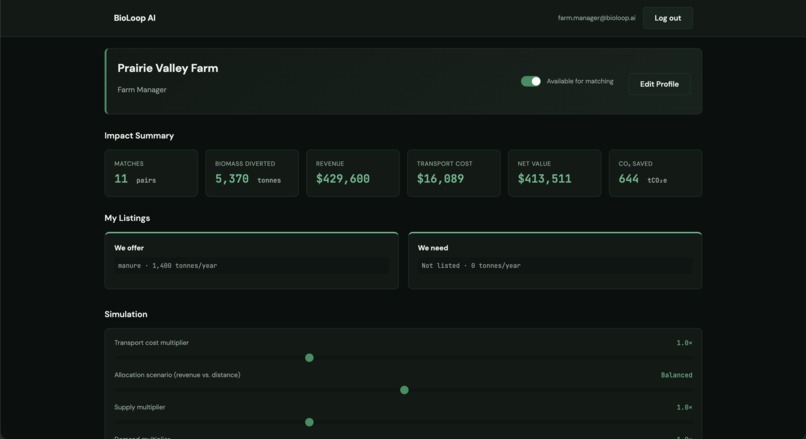
Screenshot of Dashboard
-
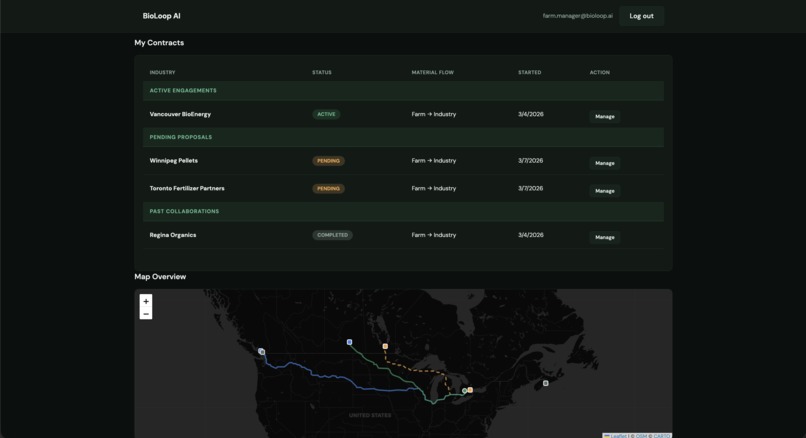
Screenshot of Dashboard
-
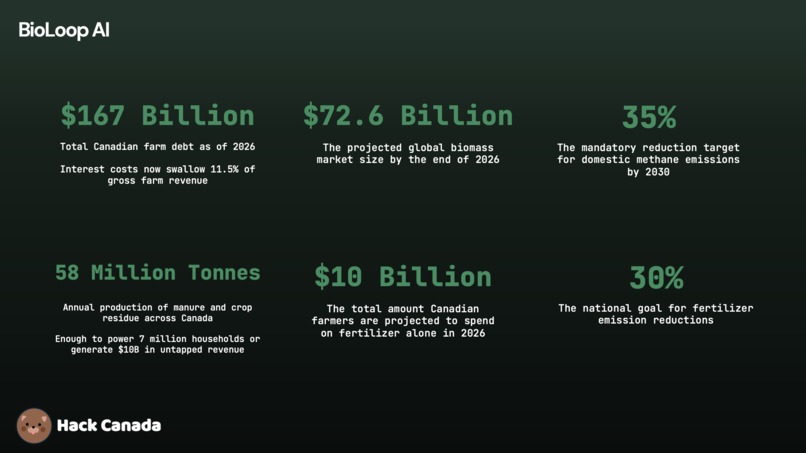
Statistics
-
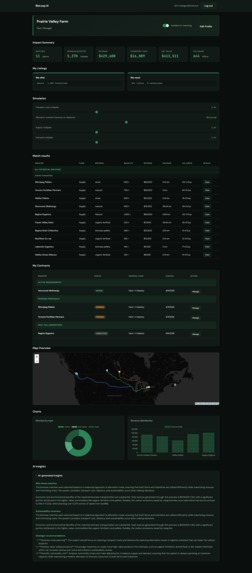
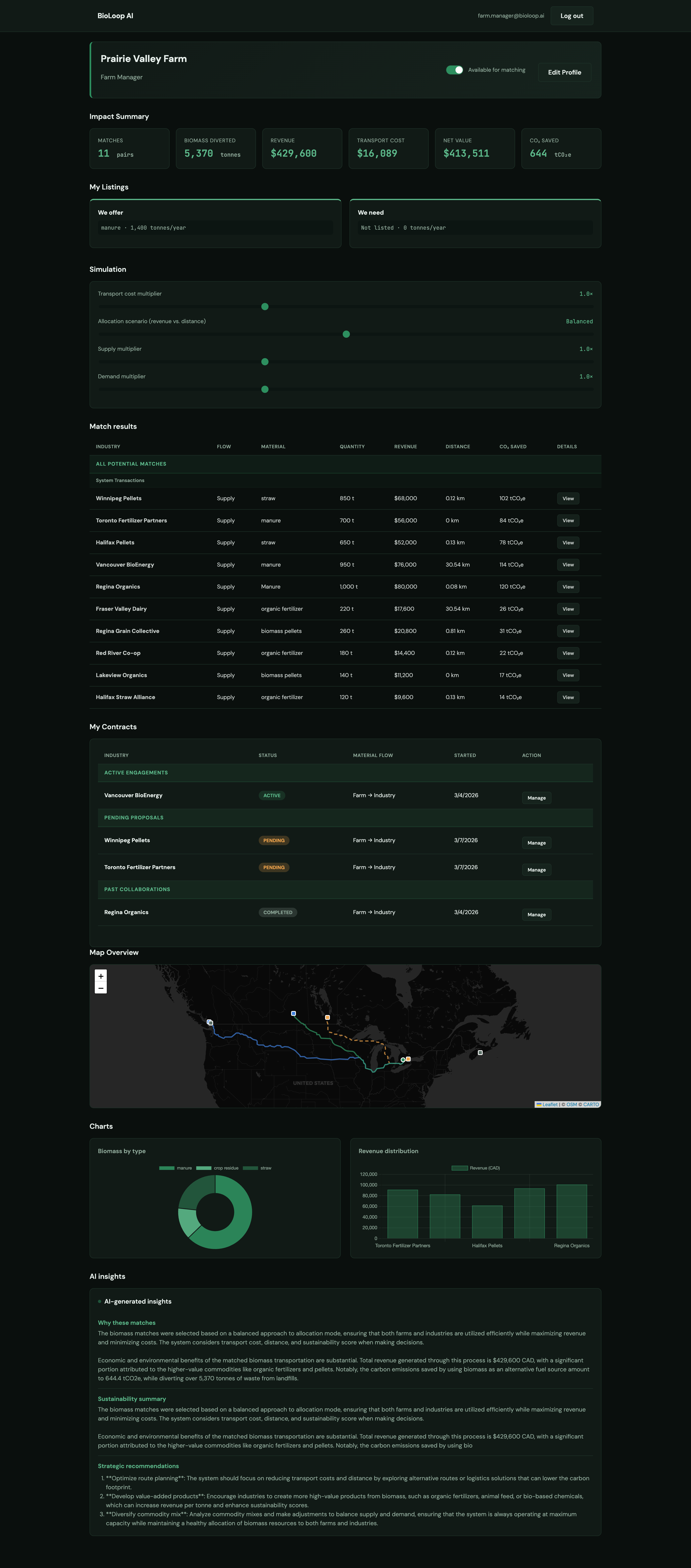
A full website screenshot of the dashboard of a farm manager
Inspiration
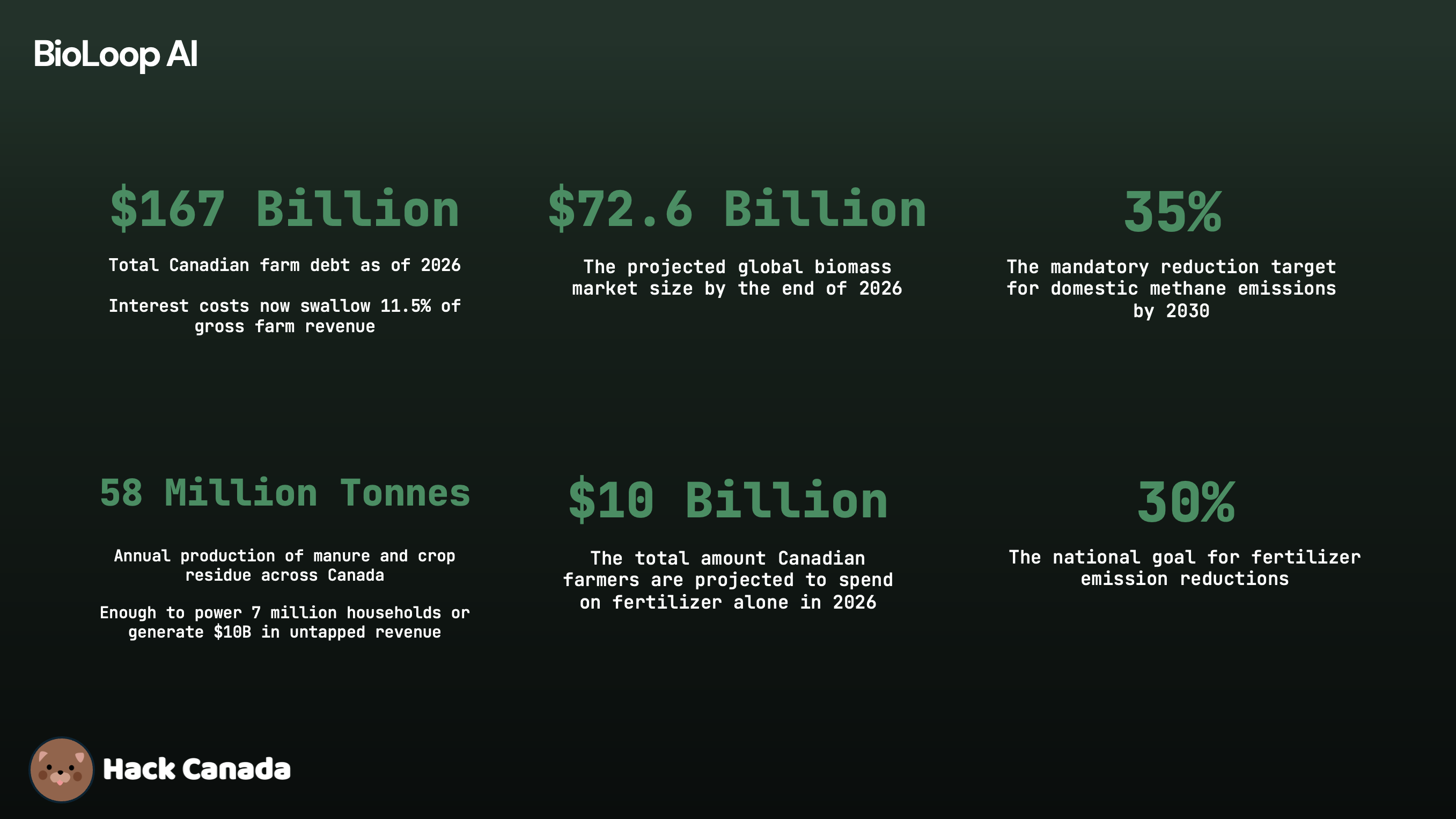
I witnessed a 2026 agricultural crisis: $167B in farm debt colliding with aggressive 2030 methane mandates. Farmers were paying to dispose of "waste" while the energy sector starved for feedstock. I saw an opportunity to turn a $10B liability into the foundation of Canada’s circular bioeconomy. One farmer’s waste could be another industry’s feedstock—and BioLoop AI makes that connection possible.
What it does
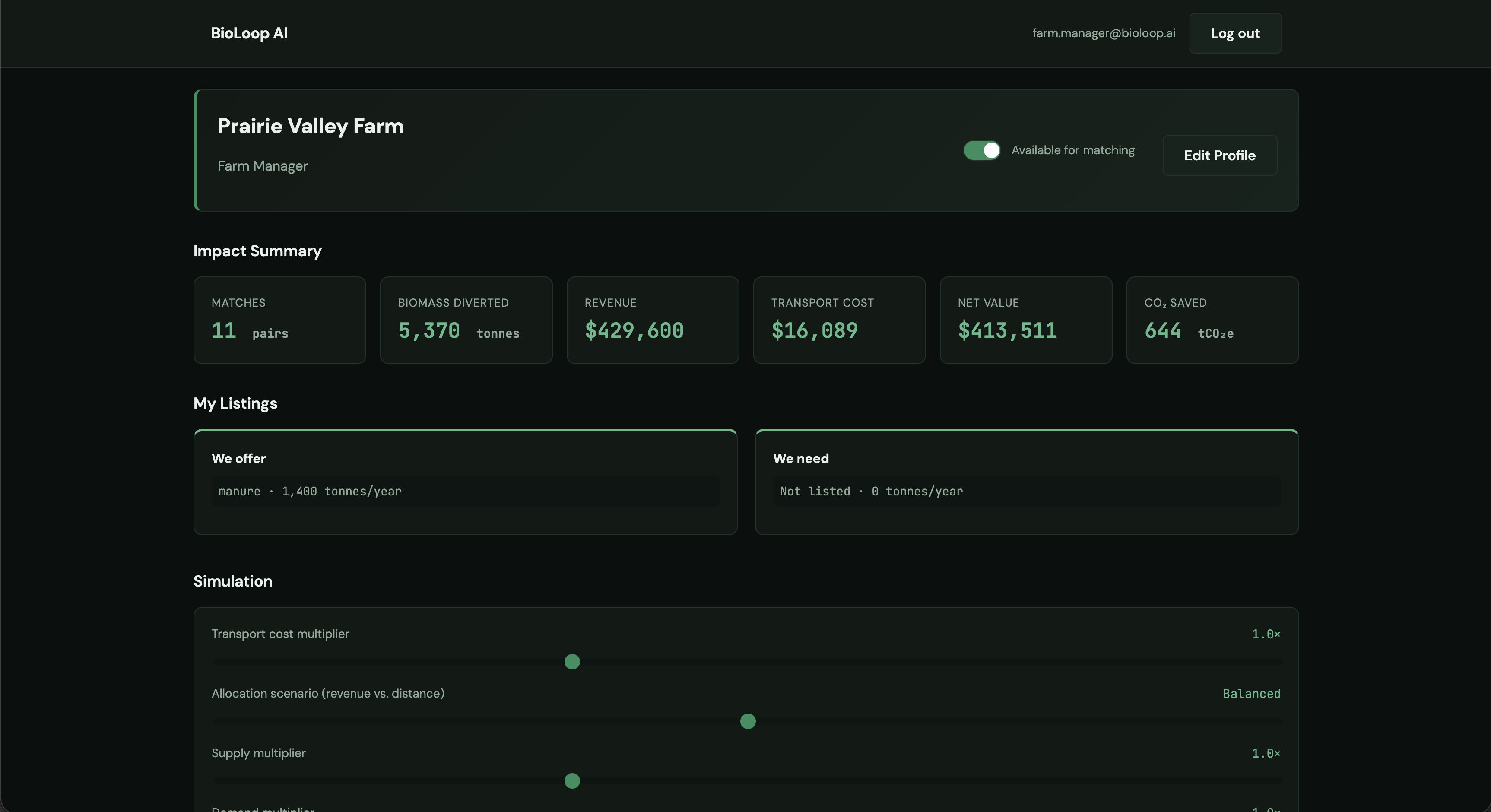
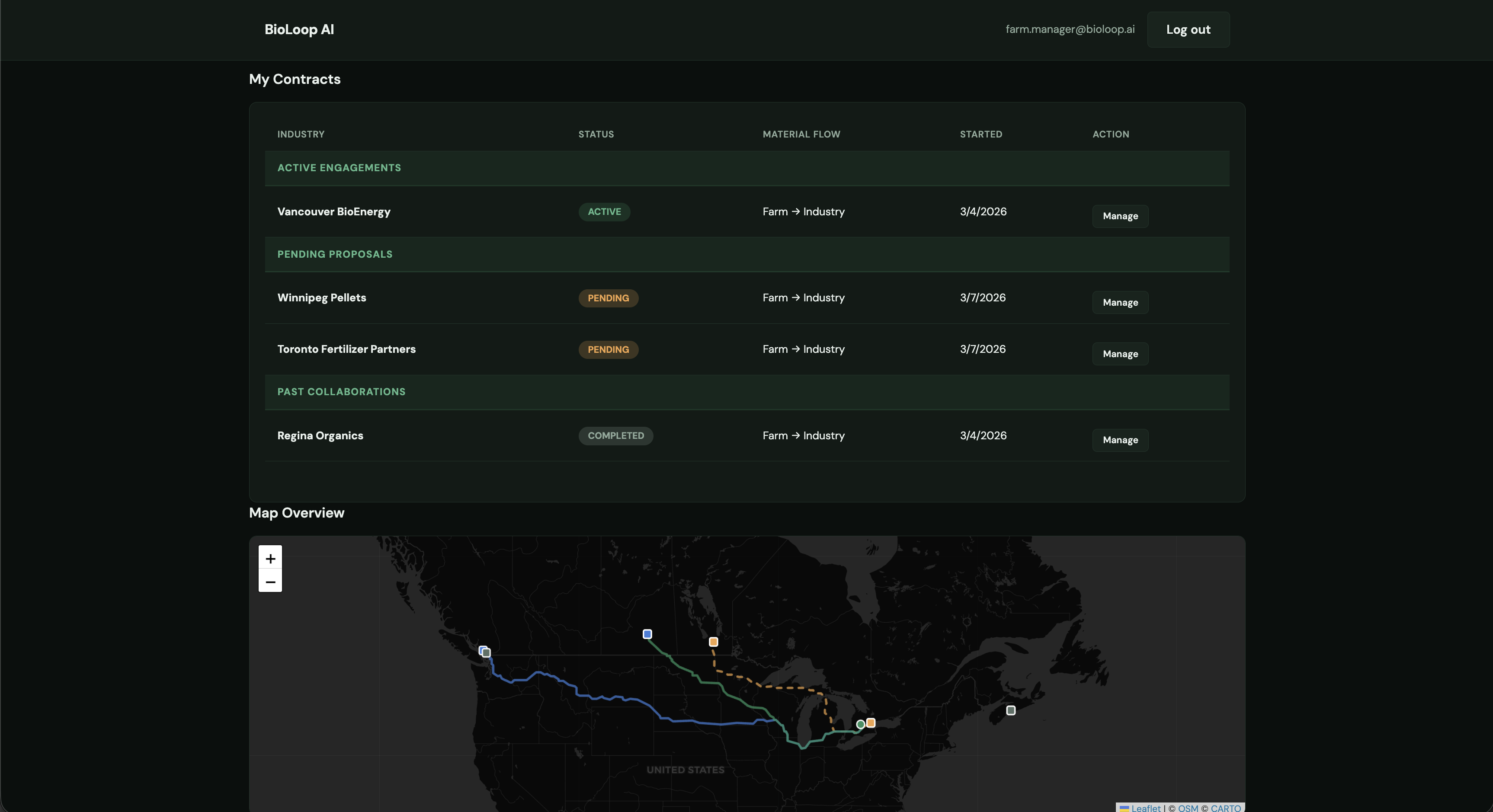
BioLoop AI is a logistics-optimization marketplace. It identifies, clusters, and routes agricultural biomass (manure/residue) to biofuel producers. My AI ensures quality and volume consistency for buyers while creating a secondary revenue stream and low-cost bio-fertilizer for the farmer.
How I built it
I engineered a multi-layered platform using:
- Geospatial AI: For route optimization and biomass density mapping.
- Predictive Modeling: To forecast manure/crop residue yields.
- Smart Contracts: To automate carbon credit sharing and transaction transparency between farmers and industrial buyers.
- Synthetic Data: Used to simulate farm and industrial datasets, validating profitability and logistics calculations.
Challenges I ran into
The "Logistics Gap" was the biggest hurdle. Moving low-density biomass is expensive. I developed a clustering algorithm that aggregates waste from smaller neighboring farms to make industrial-scale pickup economically viable for the first time.
Accomplishments I'm proud of
- Modeled a system that can swing a farm’s annual bottom line by $35,000.
- Integrated a Carbon Ledger tracking 2030 methane compliance in real time, turning regulatory pressure into financial opportunity.
- Built a platform that aligns environmental compliance with economic incentives.
What I learned
Bioeconomy isn't just about biology—it’s a data problem. The "waste" isn't the issue; it's the information asymmetry between the barn and the biorefinery. Solving the data flow is what actually closes the loop.
What's next for BioLoop AI
- Move from simulation to a Live Pilot in Southern Ontario’s dairy corridor.
- Scale my "Cluster-to-Refinery" model across the Prairies, aiming to divert 10 million tonnes of biomass by 2028.
- Expand integration of real-time farm inventories and industrial demand to fully operationalize Canada’s circular bioeconomy.
LinkedIn Journey
Built With
- chart.js
- css3
- html5
- javascript
- leaflet.js
- llama3.2
- node.js
- ollama
- prisma
- python
- sqlite


Log in or sign up for Devpost to join the conversation.