-
-
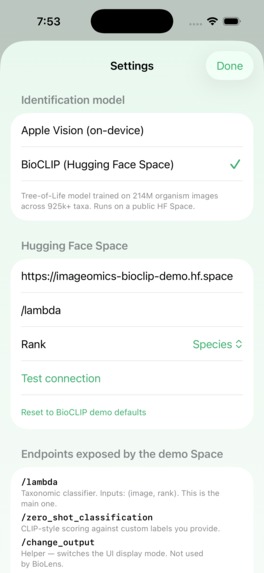
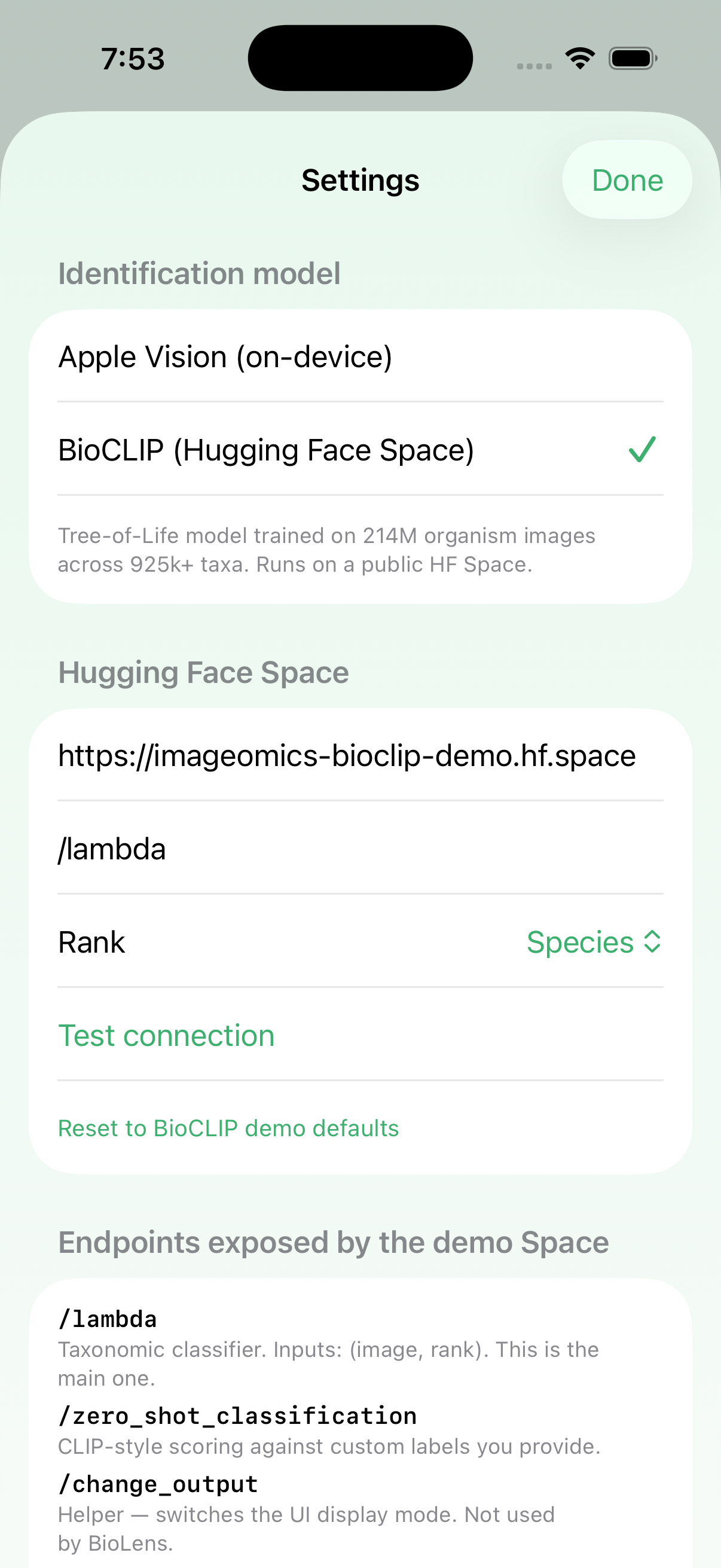
Setting Screen
-
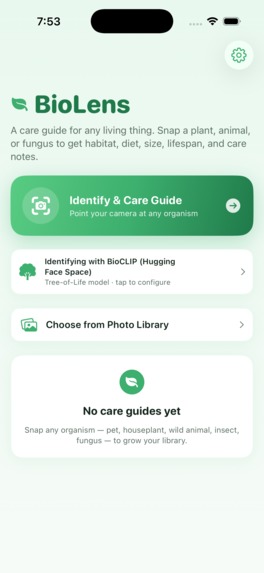
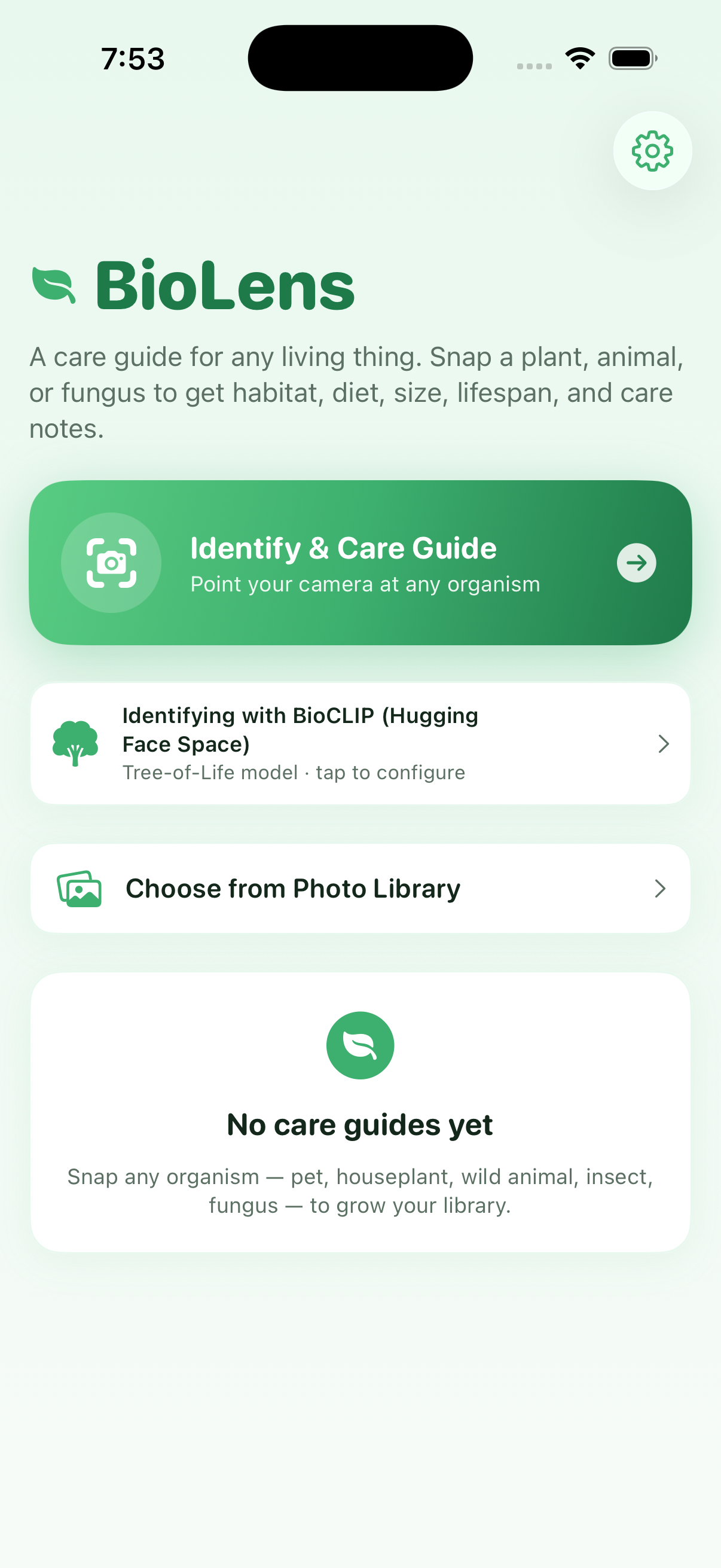
Home Screen
-
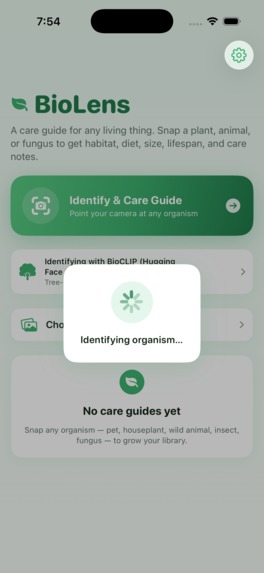
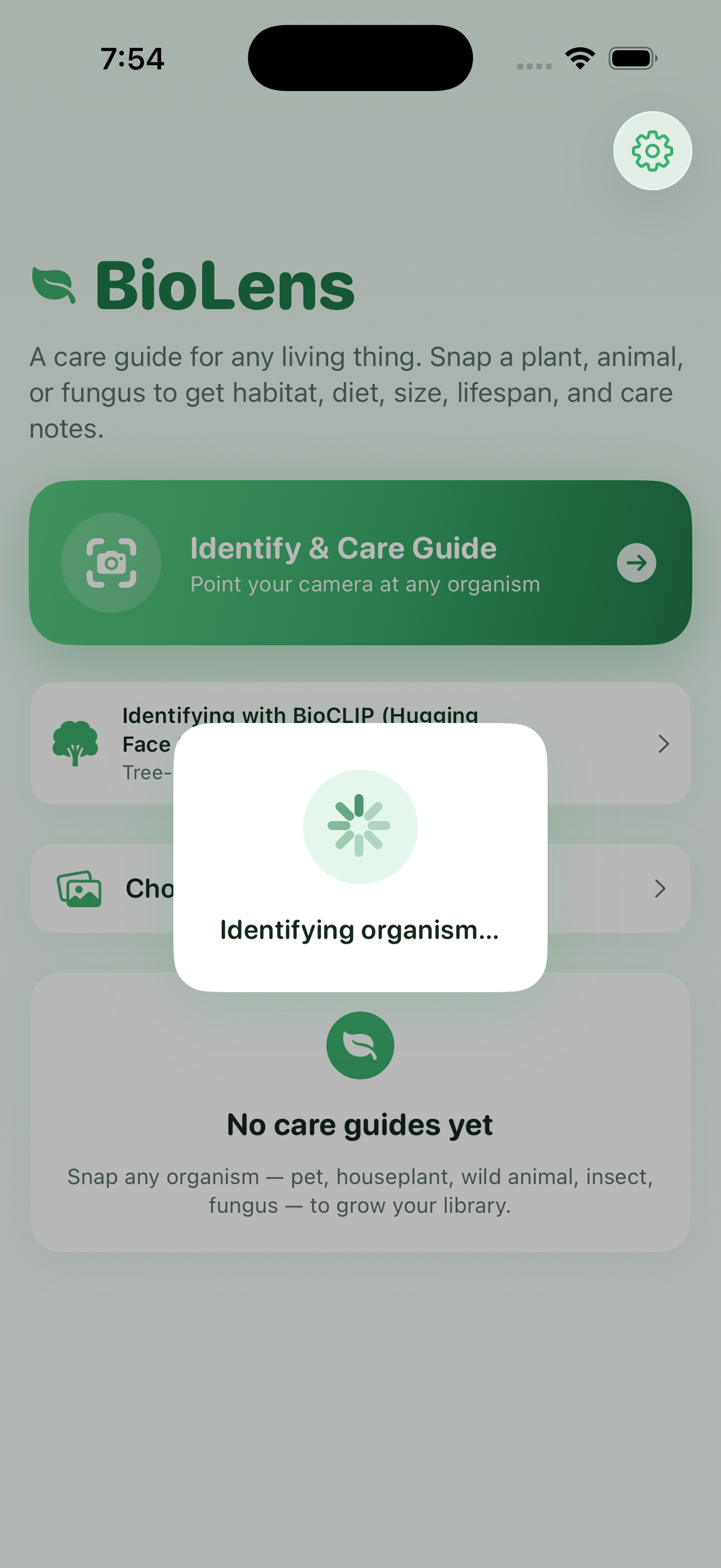
Processing Picture
-
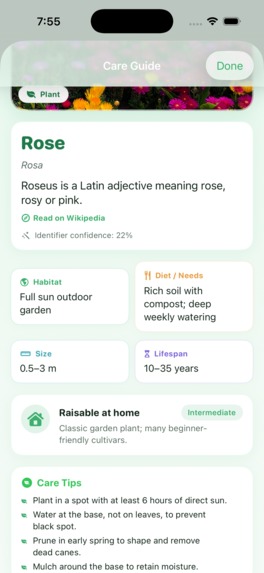
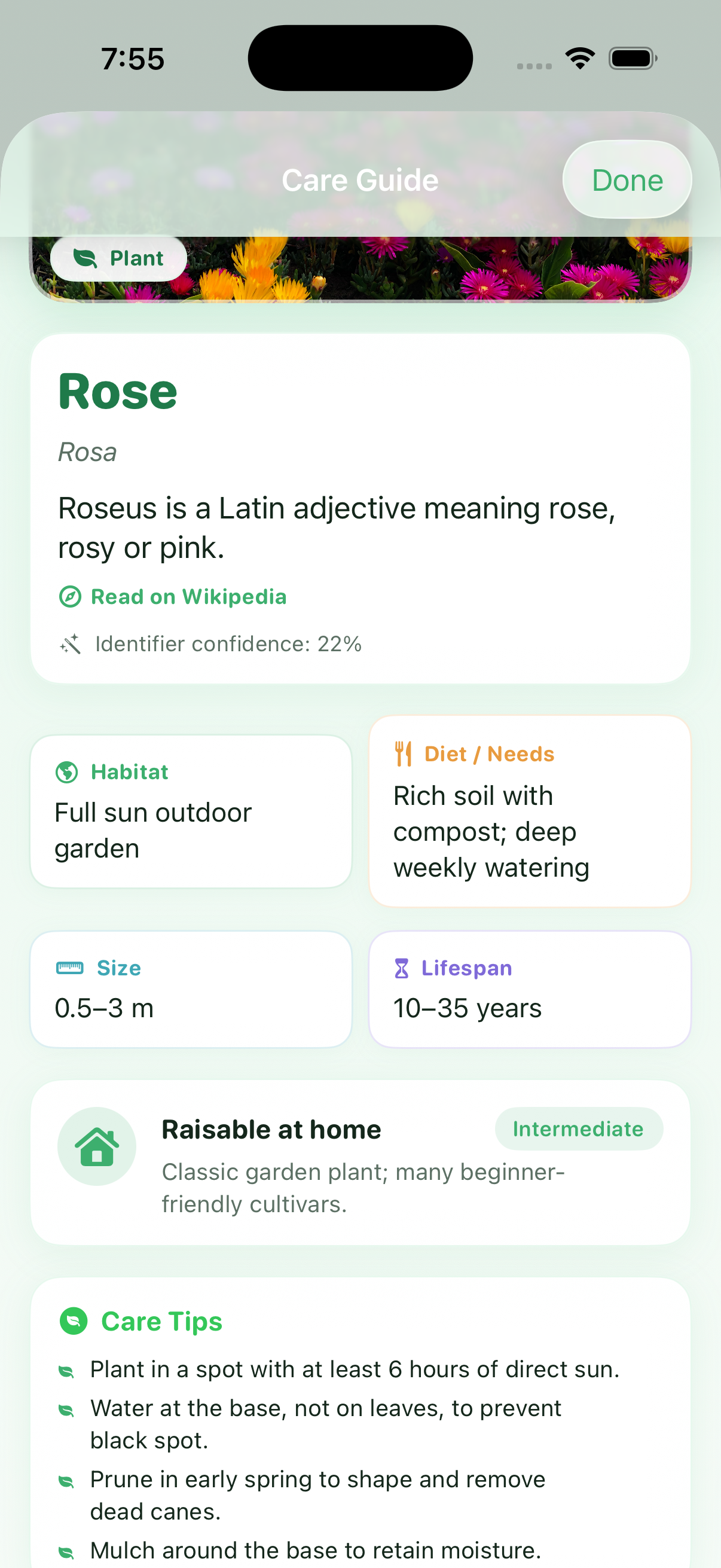
EXAMPLE of raisable organism
-
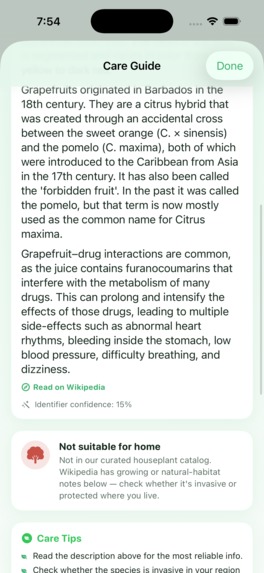
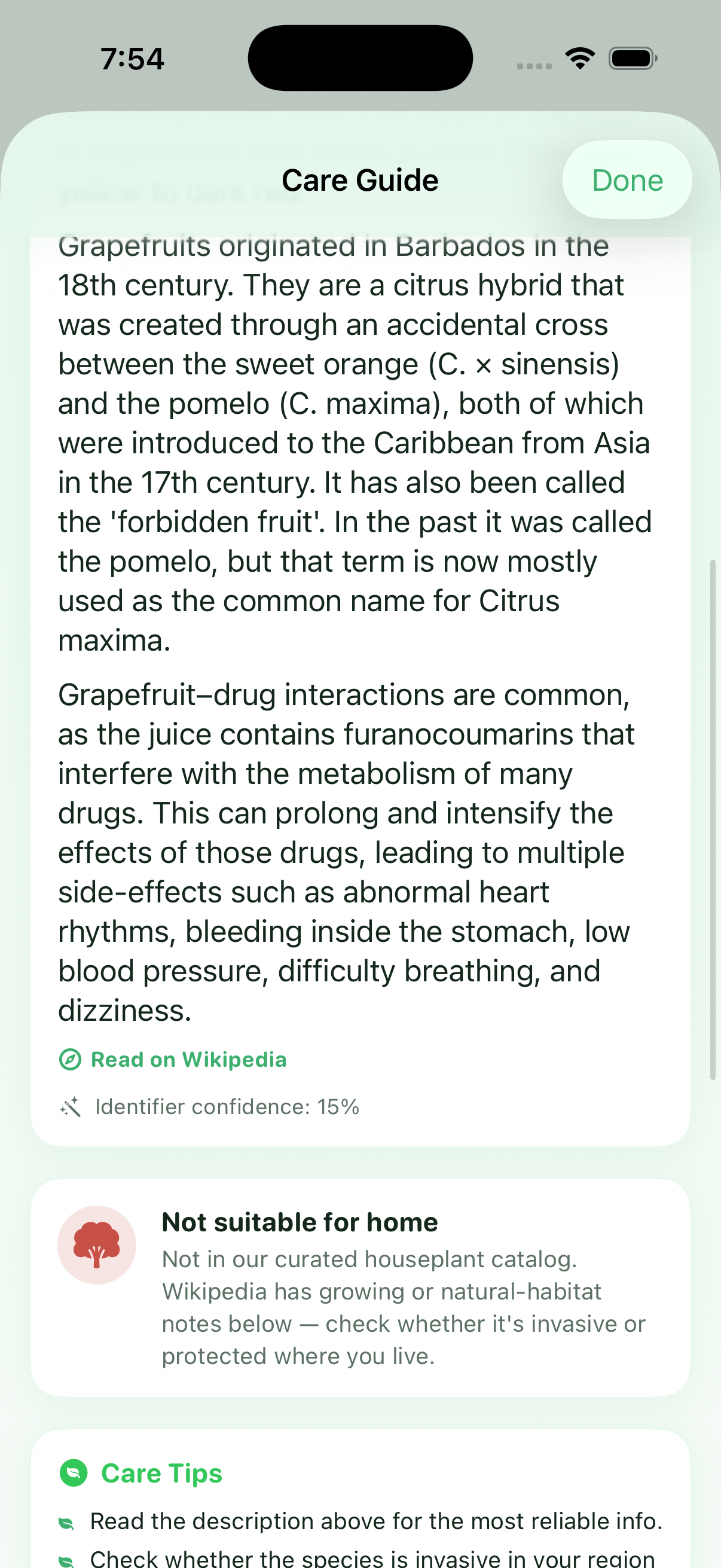
EXAMPLE of non-raisable organism
Inspiration
A pocket field guide for any living thing — so anyone with a phone can identify an organism and learn how (or whether) to care for it.
What it does
Point your camera at any plant, animal, or fungus and BioLens identifies it, then assembles a care guide with habitat, diet, size, lifespan, raisability, and warnings about endangered or protected species.
How I built it
SwiftUI iOS app that runs identification through the BioCLIP vision foundation model on a Hugging Face Gradio Space, then layers Wikipedia, Wikidata SPARQL, and an LLM extraction step (HF Inference + Qwen2.5) to build a structured care profile.
Challenges I ran into
BioCLIP has no hosted REST API — I reverse-engineered the Gradio queue protocol, handled /gradio_api/ path changes, parsed mixed-type SSE responses, and tuned accuracy.
Accomplishments that I'm proud of
I built a system that automatically converts Wikipedia's vast biological knowledge into structured species care profiles, enabling BioLens to scale to thousands of organisms without manual data entry.
What I learned
I learned that species identification is much harder than it seems—even strong vision models can struggle with similar-looking organisms, image quality, and uncommon species. Building a useful app required designing around uncertainty rather than assuming the AI was always right.
What's next for BioLens
Bundling a Core ML BioCLIP build for fully on-device identification, adding iNaturalist citizen-science contributions so scans help real biodiversity data, and surfacing IUCN conservation status as a hero badge to push the social-good angle further.


Log in or sign up for Devpost to join the conversation.