-
-
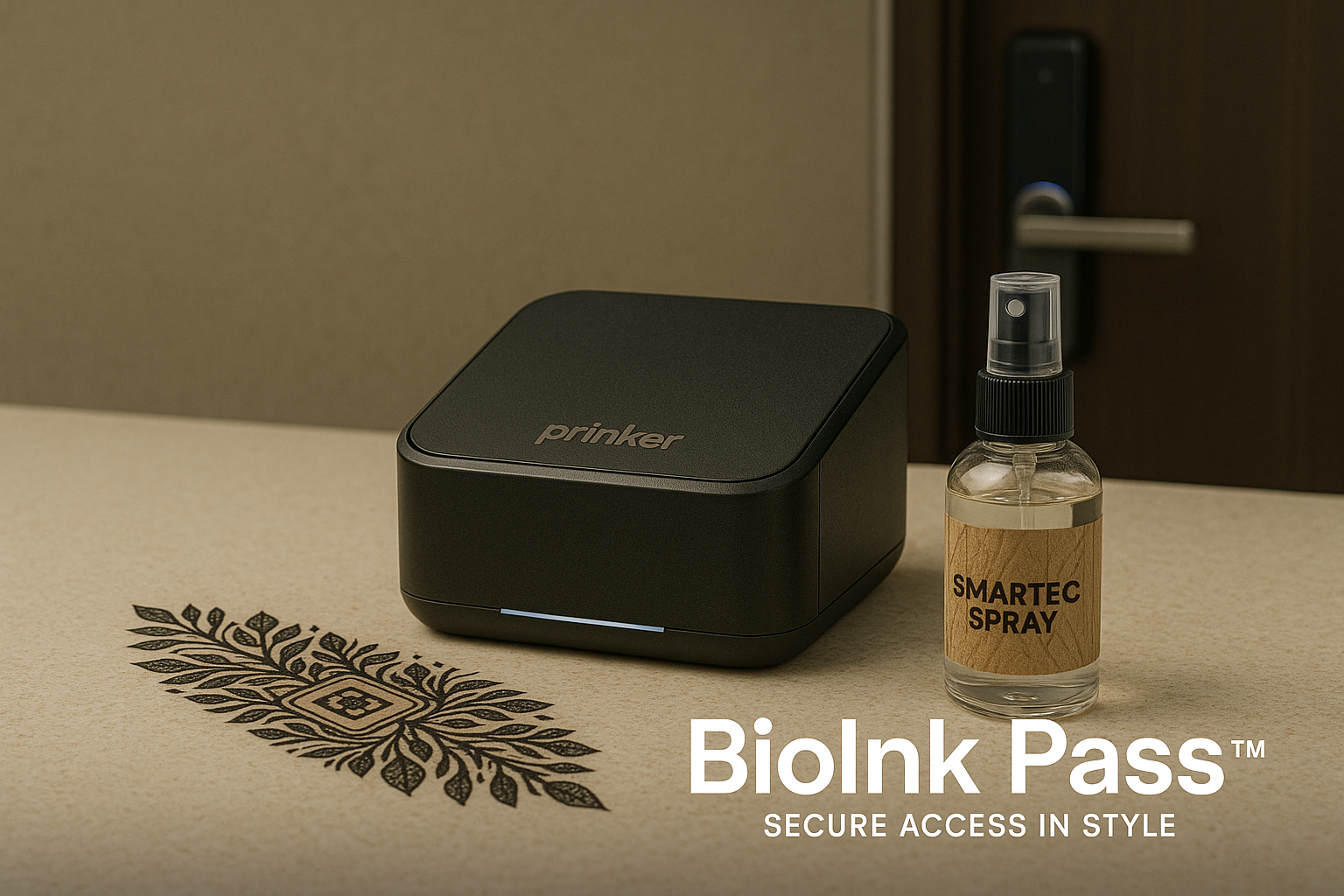
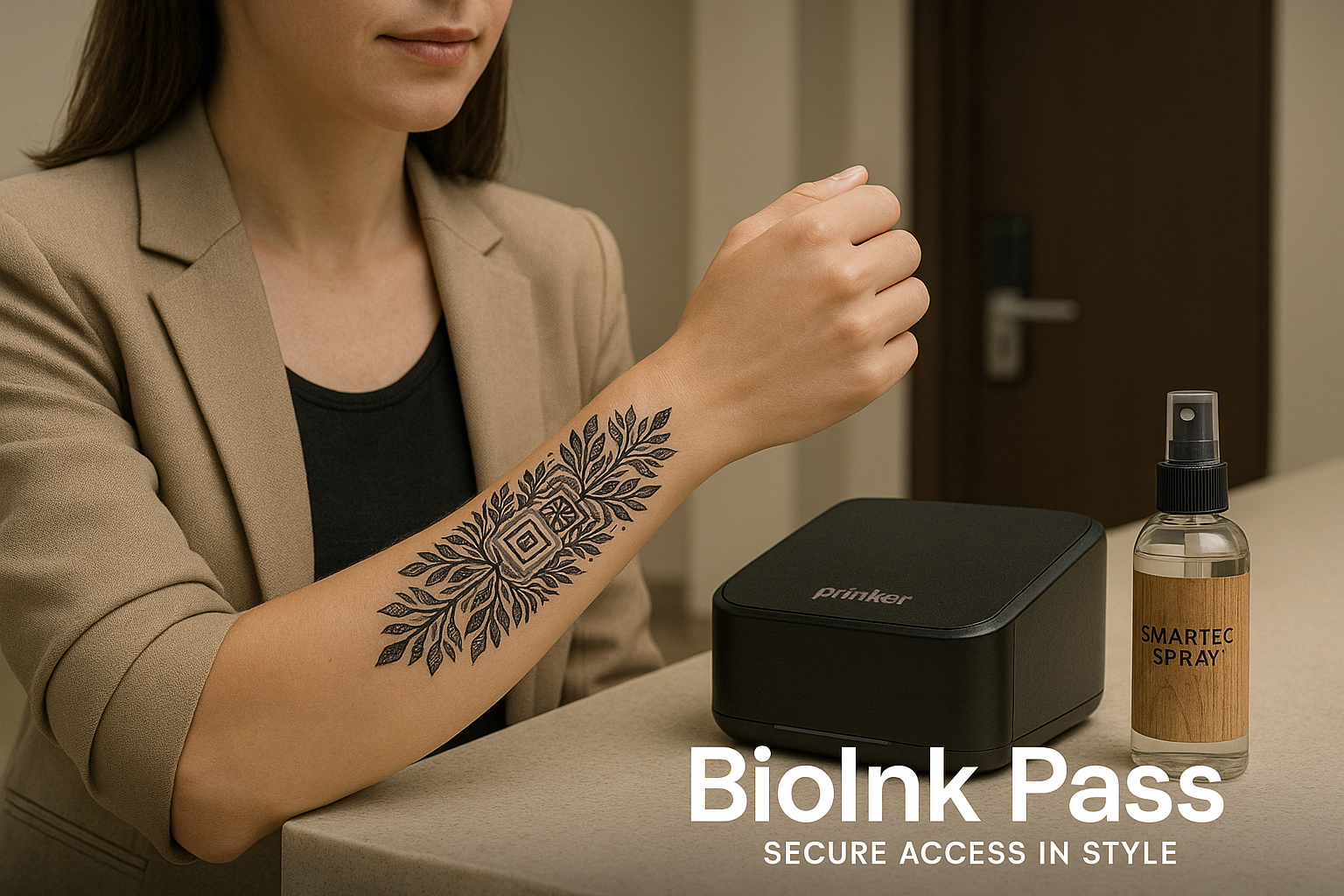
Prinker, spray and tattoo
-
Inspiration
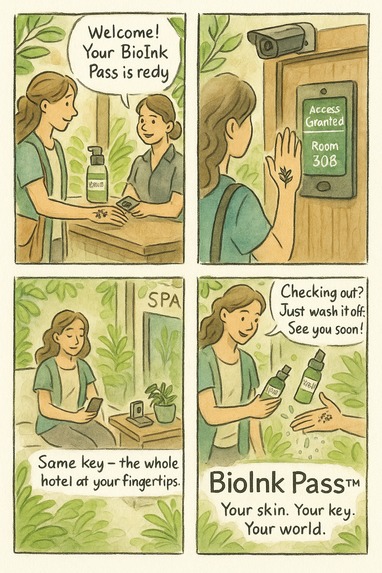
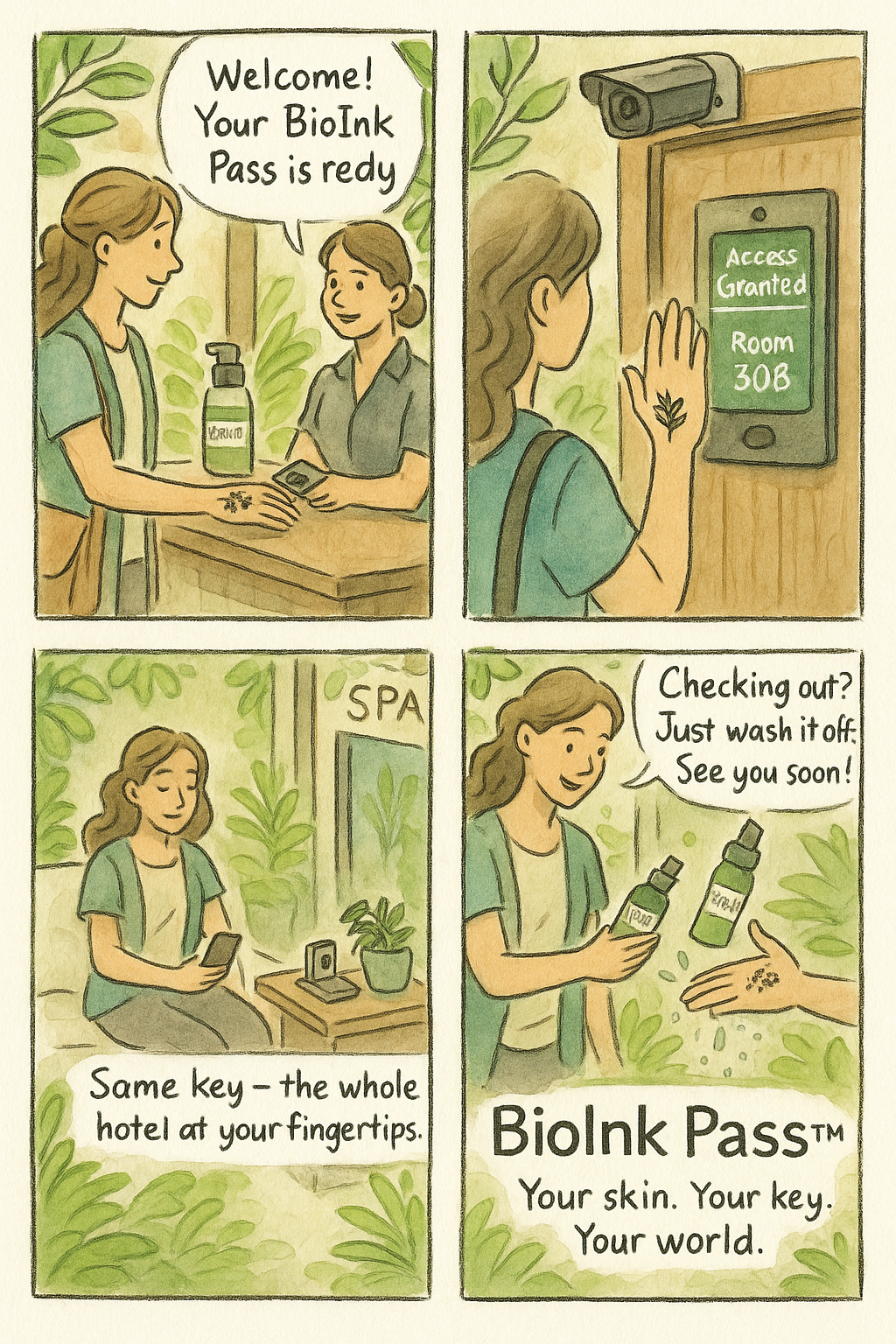
The idea for BioInk Pass was born from a desire to rethink how we access private spaces—like hotel rooms or event zones—without relying on cards, wristbands, or phones. Inspired by the elegance of temporary tattoos and the precision of biometric ID, we envisioned a tech-forward system that blends identity, security, and style. Think of it as your digital key—worn on your skin.
What it does
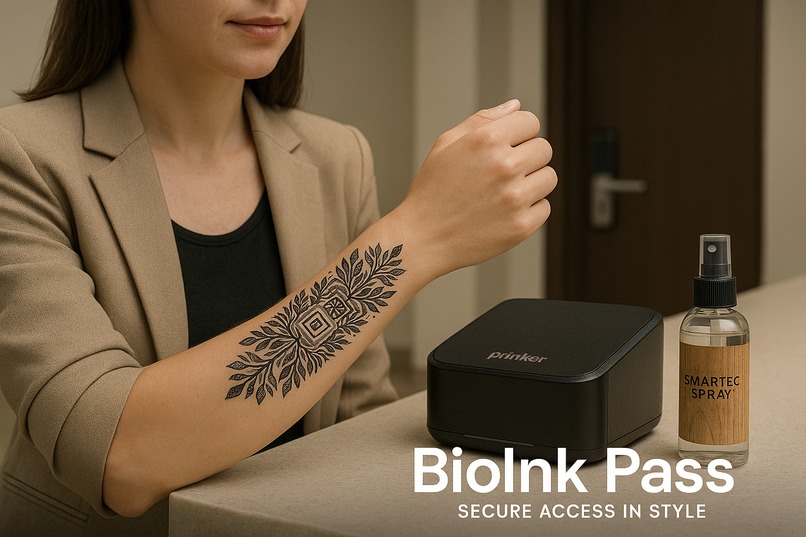
BioInk Pass is a temporary biometric tattoo system that functions as a digital room key or event pass. Each tattoo includes:
A unique visual pattern, generated and matched to your room or zone Biometric validation, using texture, position, and skin surface features Ink embedded with traceable glitter microparticles for anti-copy security A visible code (symbolic or scannable) for human or device recognition The tattoos are readable via a special scanner that checks both the design and the skin beneath it.
How we built it
We combined several layers of tech and design:
Pattern Generator: Python-based script that creates a unique tattoo design per room or user. Ink Composition Research: We designed a hypothetical blend of: FDA-safe temporary tattoo base ink (used in semi-permanent cosmetics) Biocompatible reflective particles (like pearlescent mica-based glitter) Conductive nano-ink components (theoretical—optional for advanced versions)
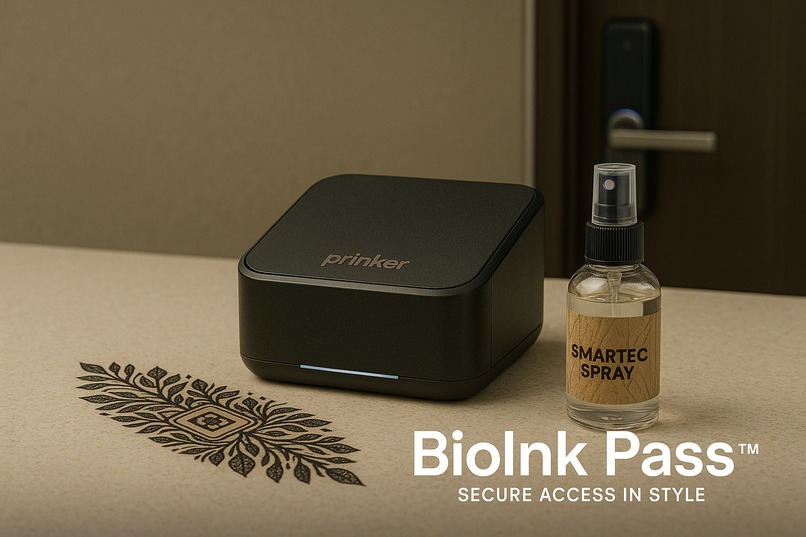
Application Tool: We suggest the use of Prinker M, a portable digital tattoo printer, to apply the tattoos on skin with millimeter precision. Reader Concept: A non-UV, near-infrared visual scanner that validates the tattoo using both pattern recognition and surface mapping of the skin. Wear Duration: With the described ink base, the tattoo lasts 4–6 weeks, resistant to water and sunlight, but removable via a custom spray made from gentle exfoliants and alcohol-free solvents.
Challenges we ran into
Ink formulation: Designing a safe, semi-permanent ink that can last weeks without irritation or fading was a big research point. Biometric integration: Making the tattoo both aesthetic and secure required careful planning to balance visual design with unique identification. Reader design: Ensuring the reader could scan both the ink and skin surface under different lighting without UV was conceptually difficult.
Accomplishments that we're proud of
We developed a concept that blends fashion, security, and biometrics—making tech feel personal and wearable. We created realistic design guidelines that could be implemented today with tools like Prinker M and existing scanning tech. We built a working pattern generator and concept mockups for visual presentation.
What we learned
Security doesn't have to be clunky—it can be beautiful. Biometric data can be used passively, without intrusive sensors, if combined creatively with physical tags. Designing for skin is completely different than designing for screens or cards: it demands more attention to durability, allergy safety, and comfort.
What's next for BioInk Pass
We plan to:
Prototype the reader using basic camera and AI tools Experiment with tattoo printers and safe glitter-based ink Test the wear time in tropical climates and with different skin types Partner with hotels or event venues for trial use


Log in or sign up for Devpost to join the conversation.