Inspiration
Many people face emergencies where they cannot speak or call for help, and this reality inspired me to build this project. I wanted to create a system that listens to the body's signals and reacts instantly when a person cannot. Seeing rising cases of heart attacks, women safety issues, and elderly falls pushed me to think of a smarter, automatic solution. With technology already in everyone’s pocket, I realized a mobile-based safety system could save lives without needing extra hardware. This project was inspired by the idea that even one life saved makes the entire effort worth it.
What it does
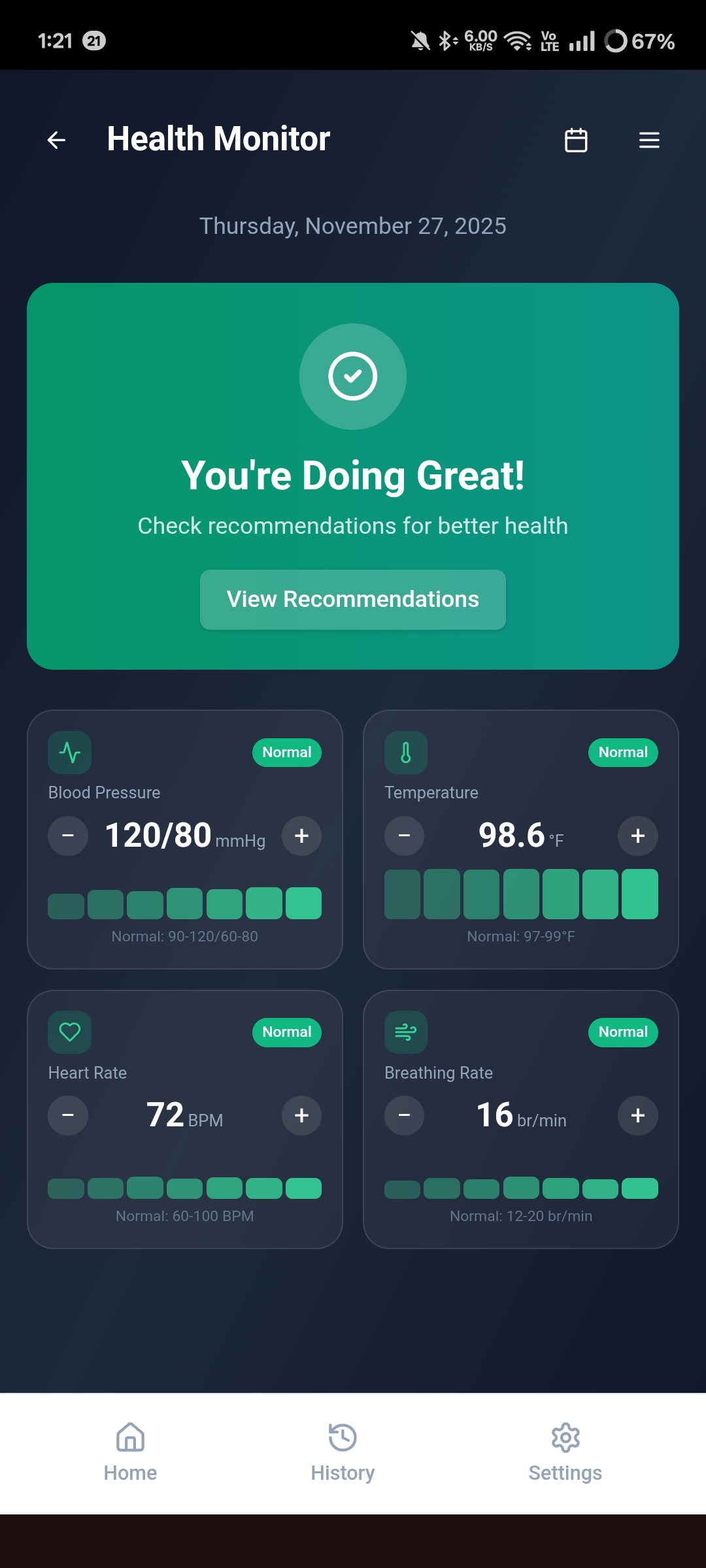
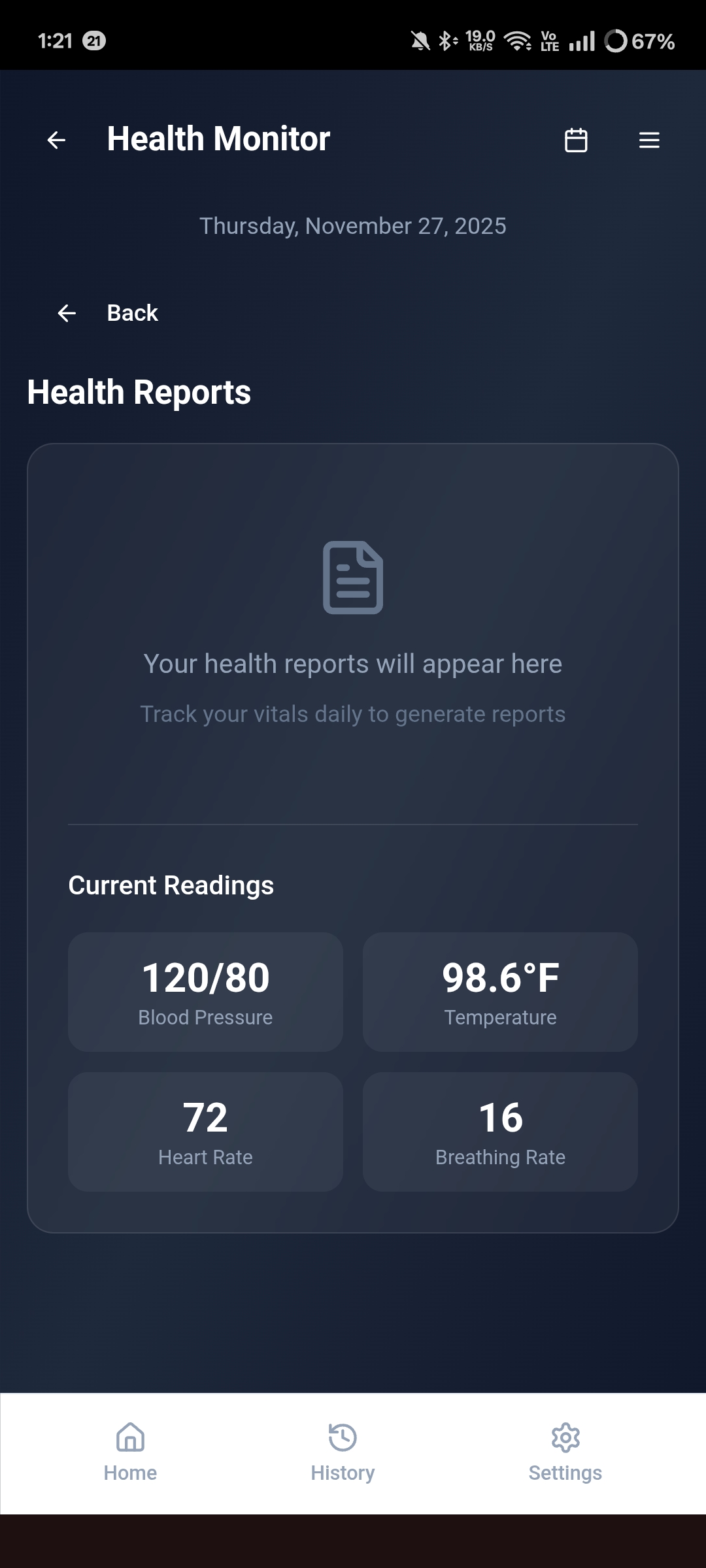
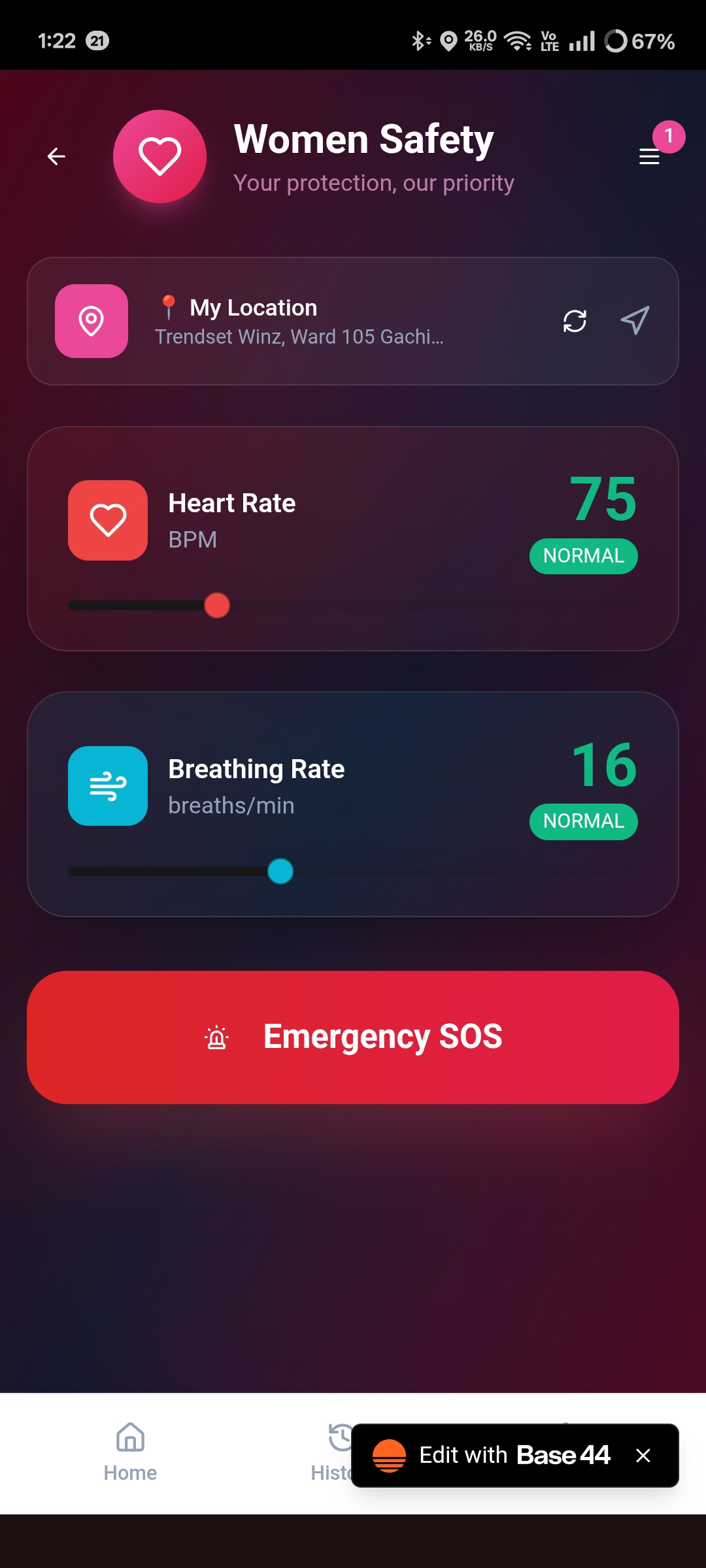
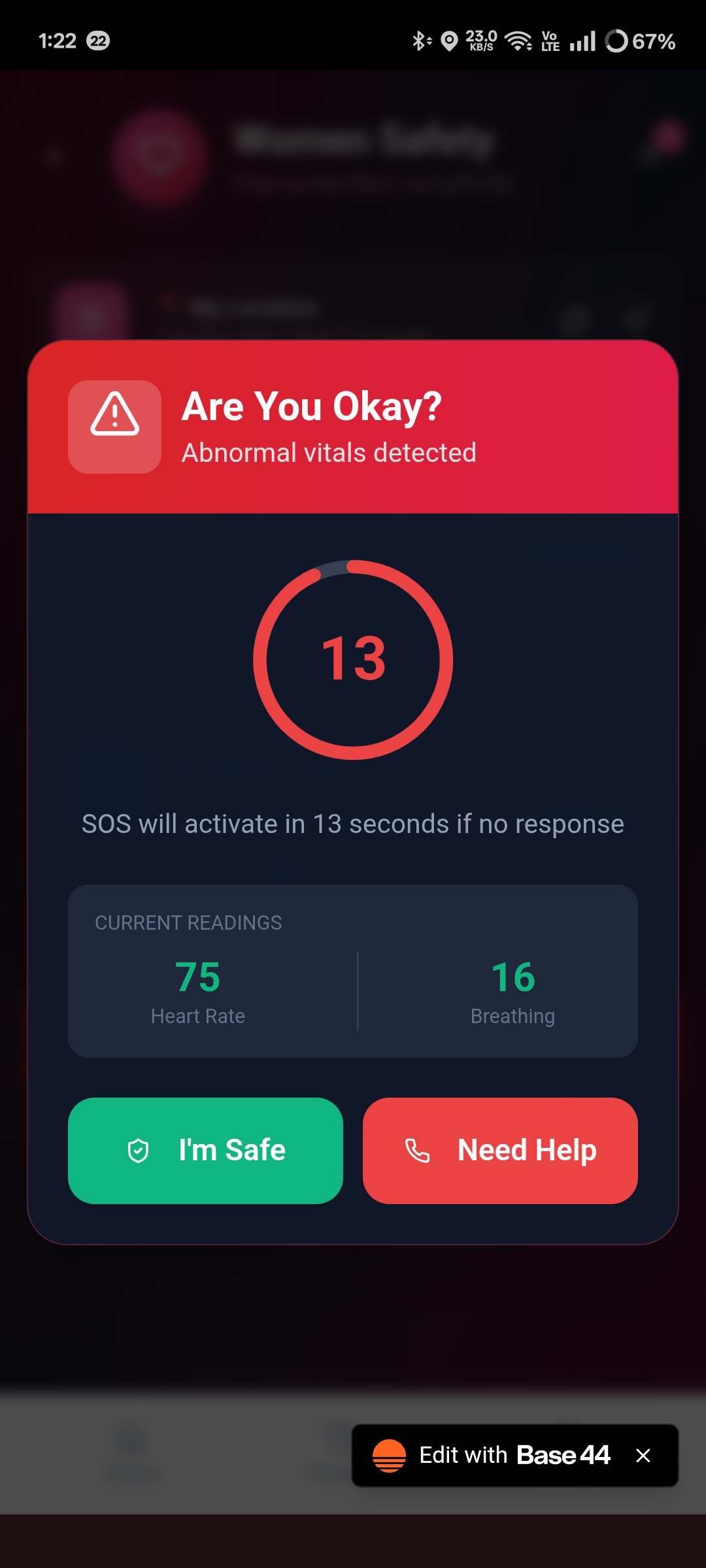
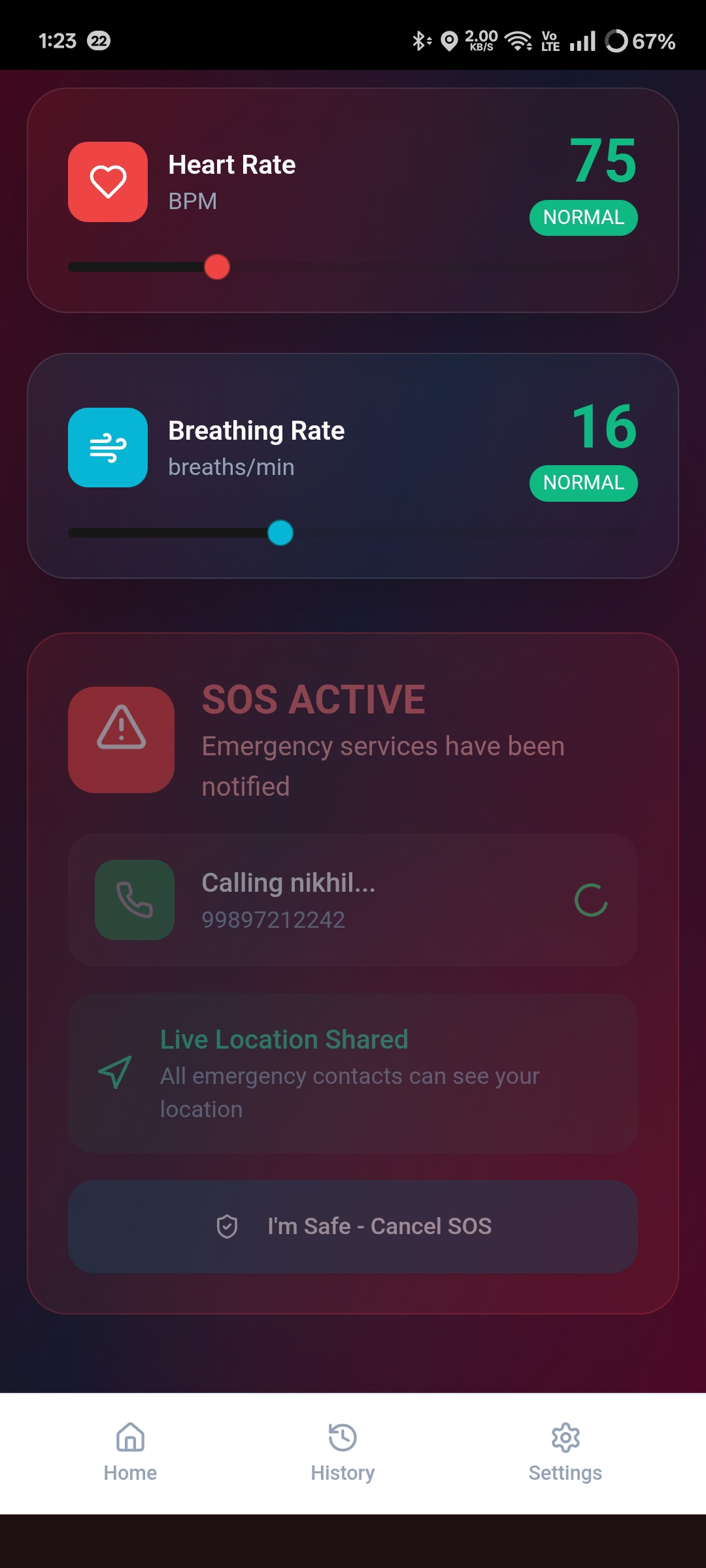
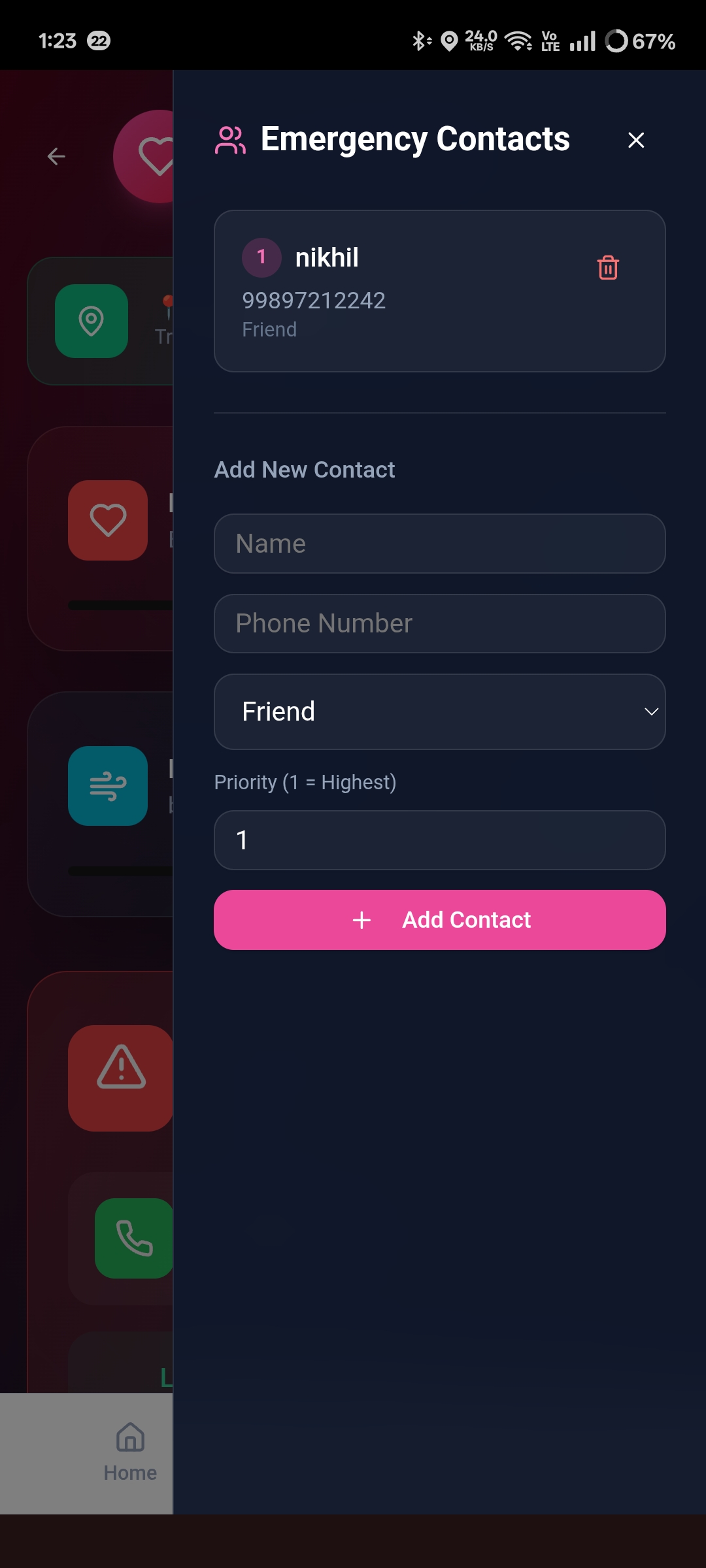
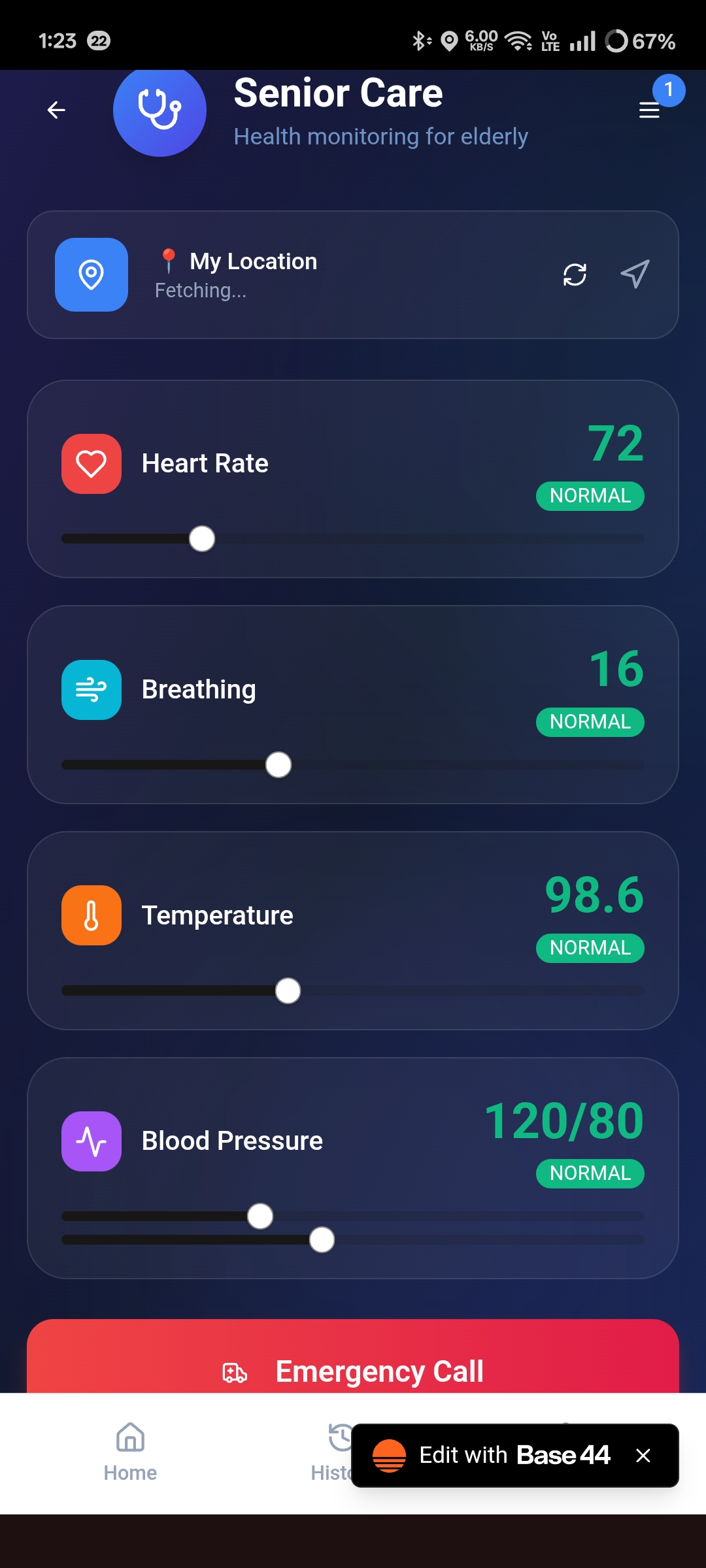
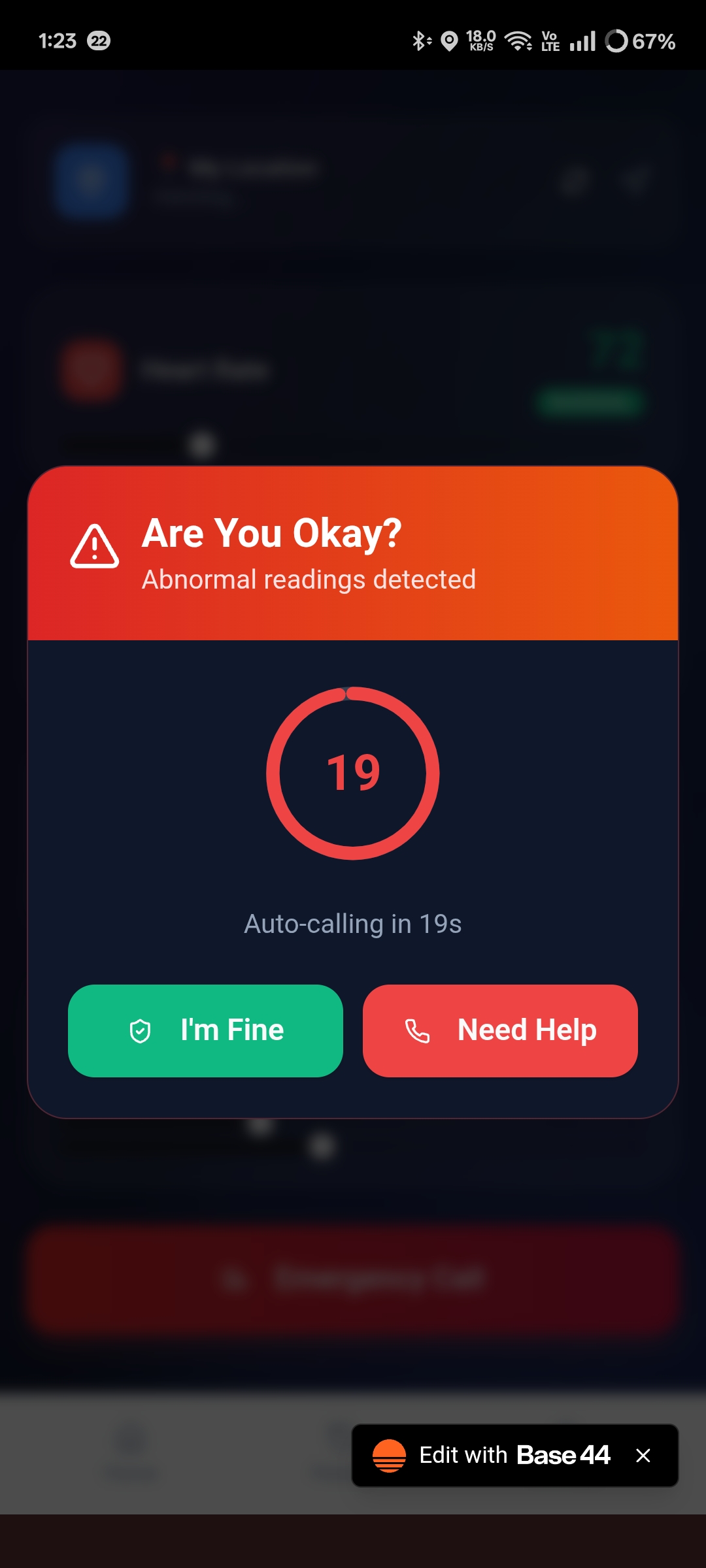
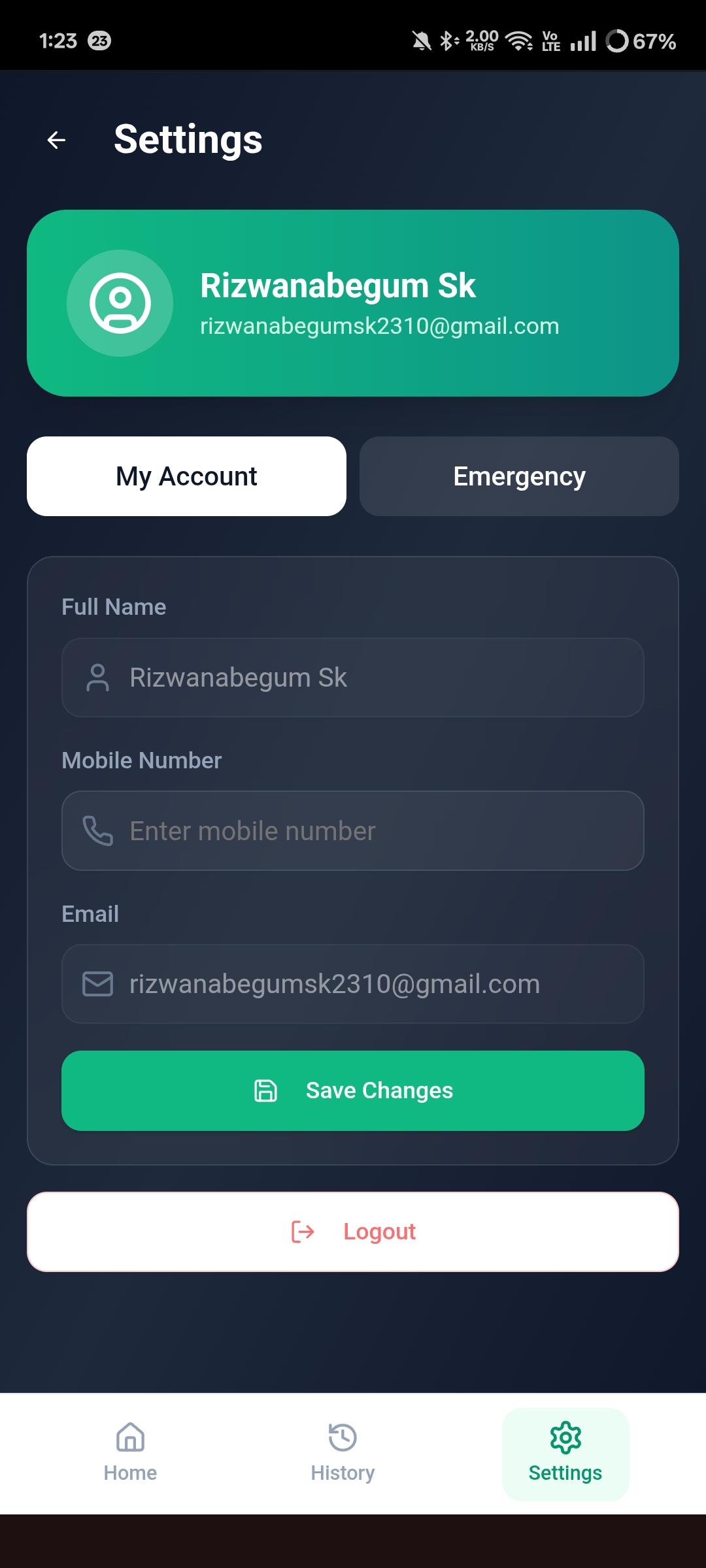
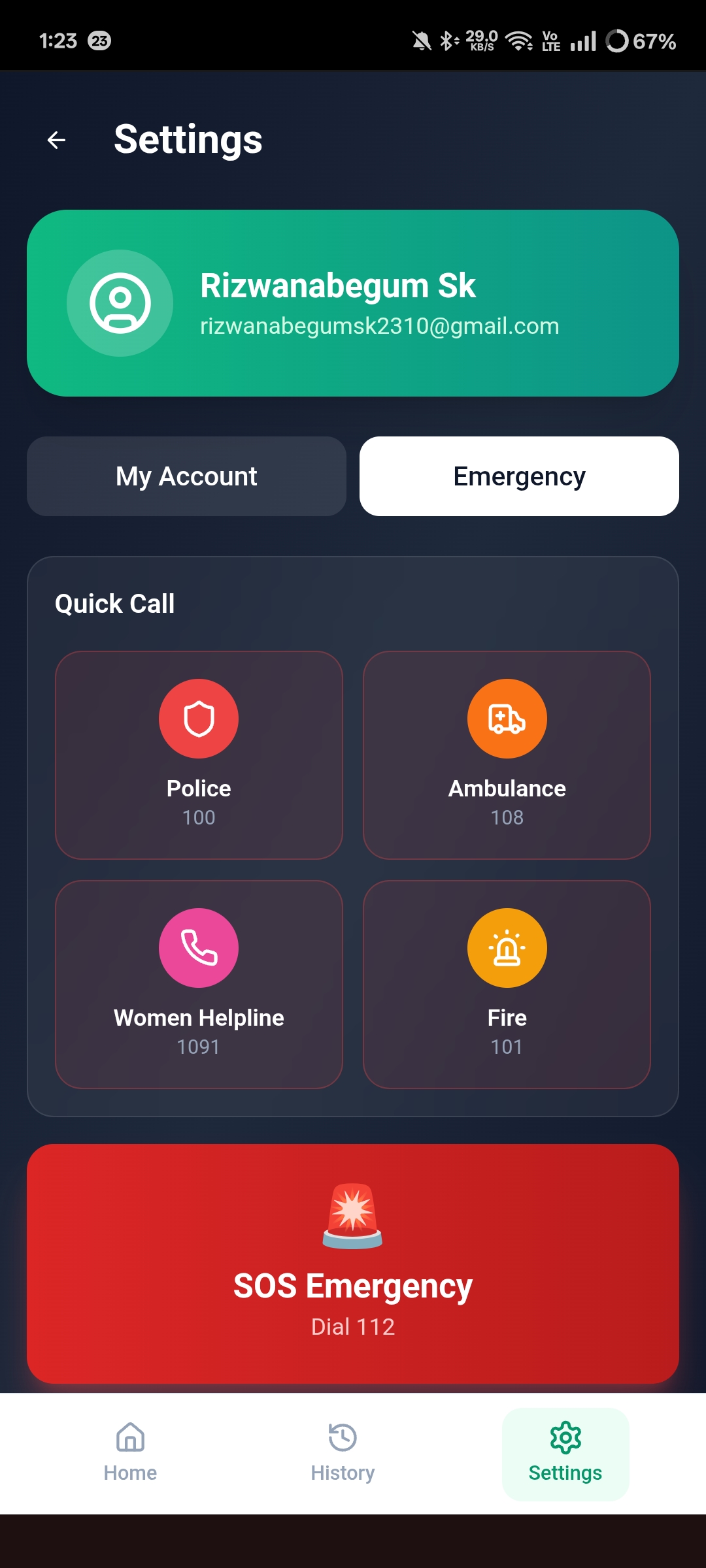
the app continuously monitors their heartbeat, oxygen level, and breathing pattern to detect any danger. If it senses abnormal readings or panic signals, it instantly pops up an alert asking if the user is safe. When the user doesn’t respond within 10 seconds, the app automatically sends SOS, live location, and emergency calls to the right people. It also adjusts the rescue actions based on whether the user is a woman, senior citizen, or normal user. Overall, the project acts like a smart guardian that protects the user automatically, even when they can’t ask for help themselves.
How we built it
Challenges we ran into
One major challenge was simulating real medical sensor data without actual hardware, while still making it look accurate for the demo.
Building reliable danger-detection logic using only heartbeat and oxygen values required several trials to avoid false alerts.
Implementing automatic SOS actions like calling, sending SMS, and sharing live location was difficult due to permission restrictions on mobile devices.
Designing different safety flows for women, senior citizens, and general users required careful thinking to avoid confusion for users.
Ensuring the app responds instantly during emergencies while keeping the UI simple and easy to use was another big challenge we had to overcome.
Accomplishments that we're proud of
We successfully built an app that can automatically detect danger using simulated heartbeat, oxygen, and breathing data without any external hardware.
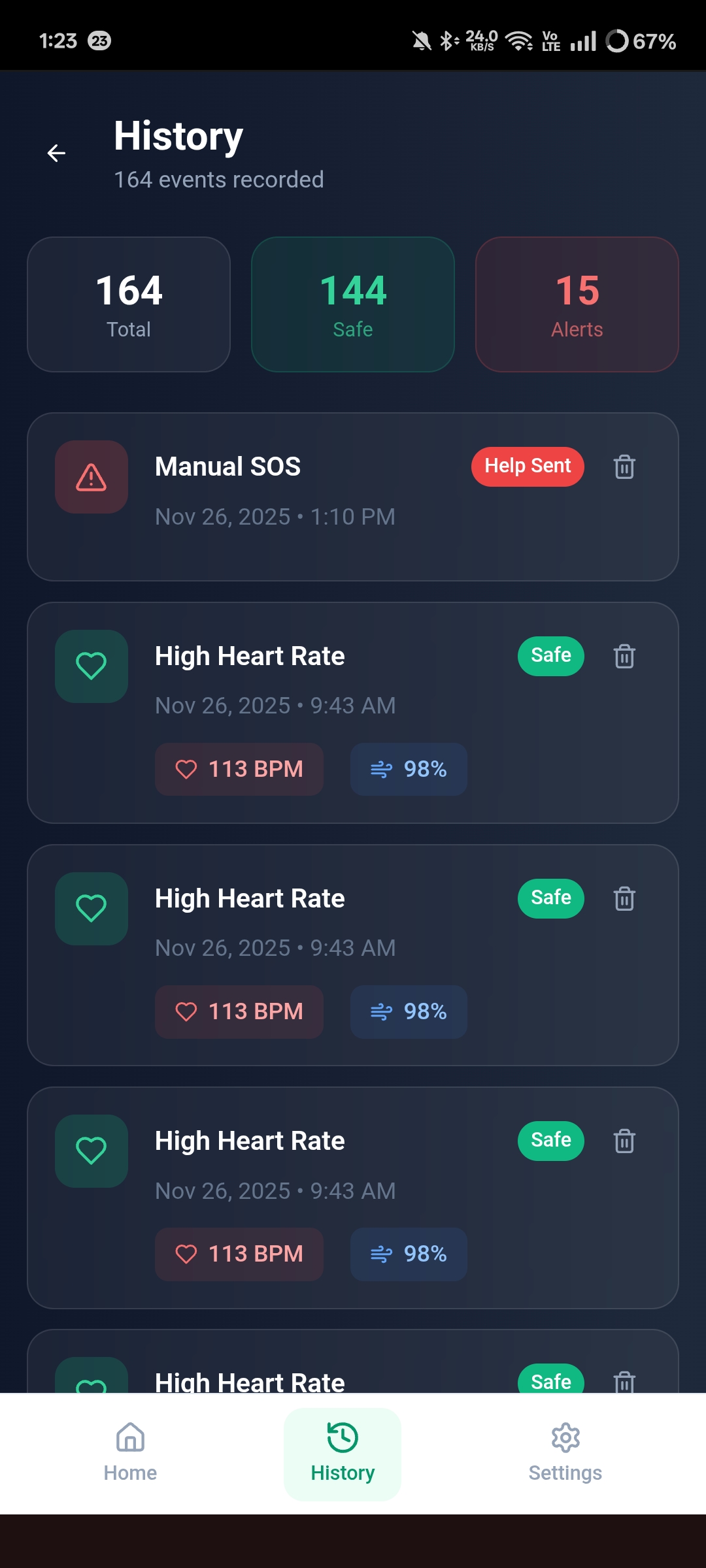
We created a fast and reliable SOS system that sends alerts, location, calls, and evidence within seconds.
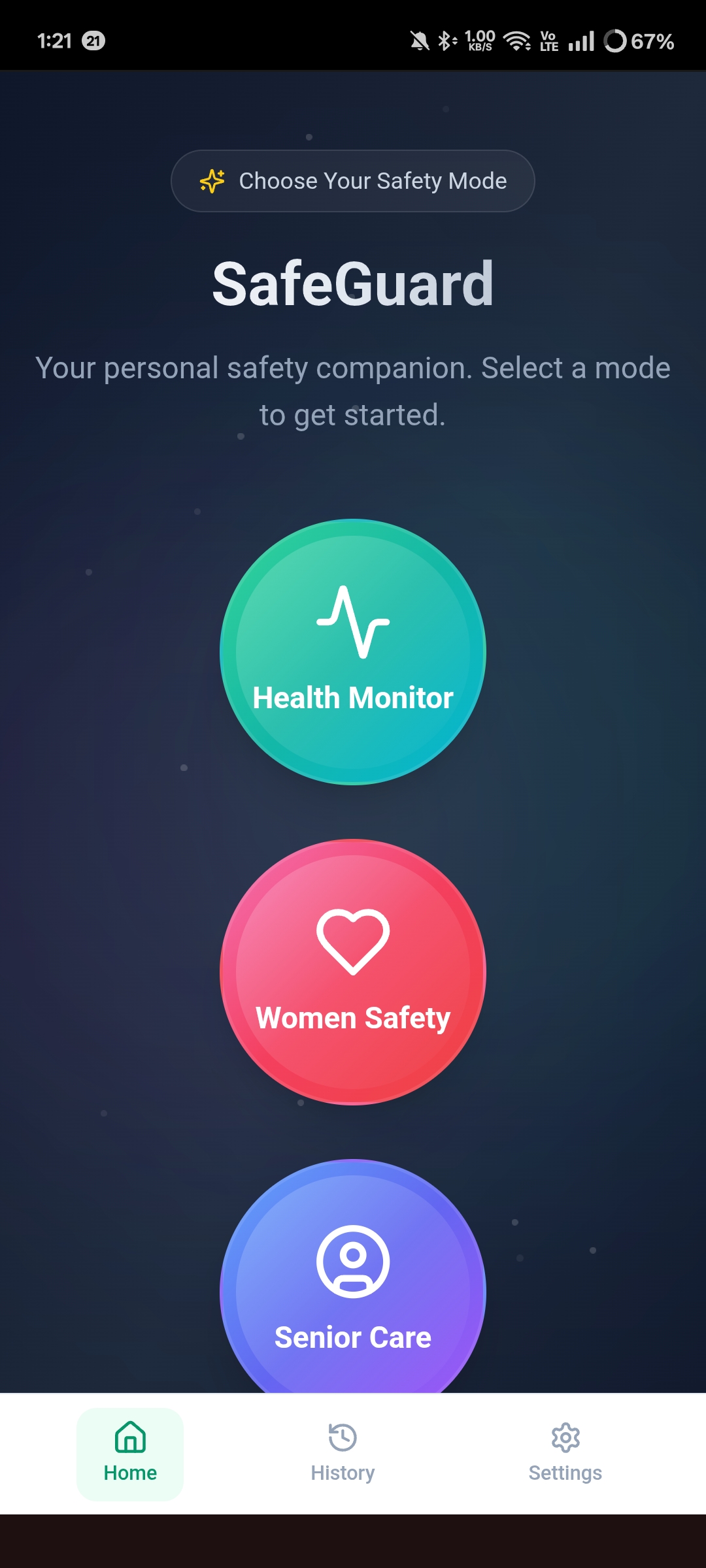
We designed separate safety modes for women, senior citizens, and general users, making the app versatile and user-focused.
We implemented a clean and simple UI that works smoothly even during emergency situations.
Most importantly, we proved that a smartphone alone can act as a life-saving device, which is a big step toward real-world impact.
What we learned
We learned how vital real-time monitoring is and how even small changes in heartbeat or oxygen can indicate serious danger.
We understood how to simulate sensor data and turn it into useful insights using simple logic and threshold-based detection.
We gained experience in integrating mobile features like SMS, calling, and live location to build a complete emergency system.
We realized the importance of designing user interfaces that remain simple and effective, especially during high-stress situations.
Most importantly, we learned that technology can save lives, and even a prototype can create meaningful impact when built with purpose.
What's next for BioGuardX
This app is used to automatically detect health or safety emergencies by monitoring the user's heartbeat, oxygen, and breathing patterns. It protects people during critical moments when they cannot speak, call, or ask for help. When danger is detected, the app instantly sends SOS alerts, live location, calls, and evidence to family members or emergency services. It is especially useful for women, senior citizens, heart patients, and people living alone. Overall, the app acts like a personal safety guardian that stays active 24/7 and steps in to save the user when they need help the most.
Built With
- analytic
- api
- database
- javascript
- python


Log in or sign up for Devpost to join the conversation.