Inspiration
Since I was a child, I've loved biology, and after brainstorming, I chose this path because I found it to be the most solid option for a well-established project.
What it does
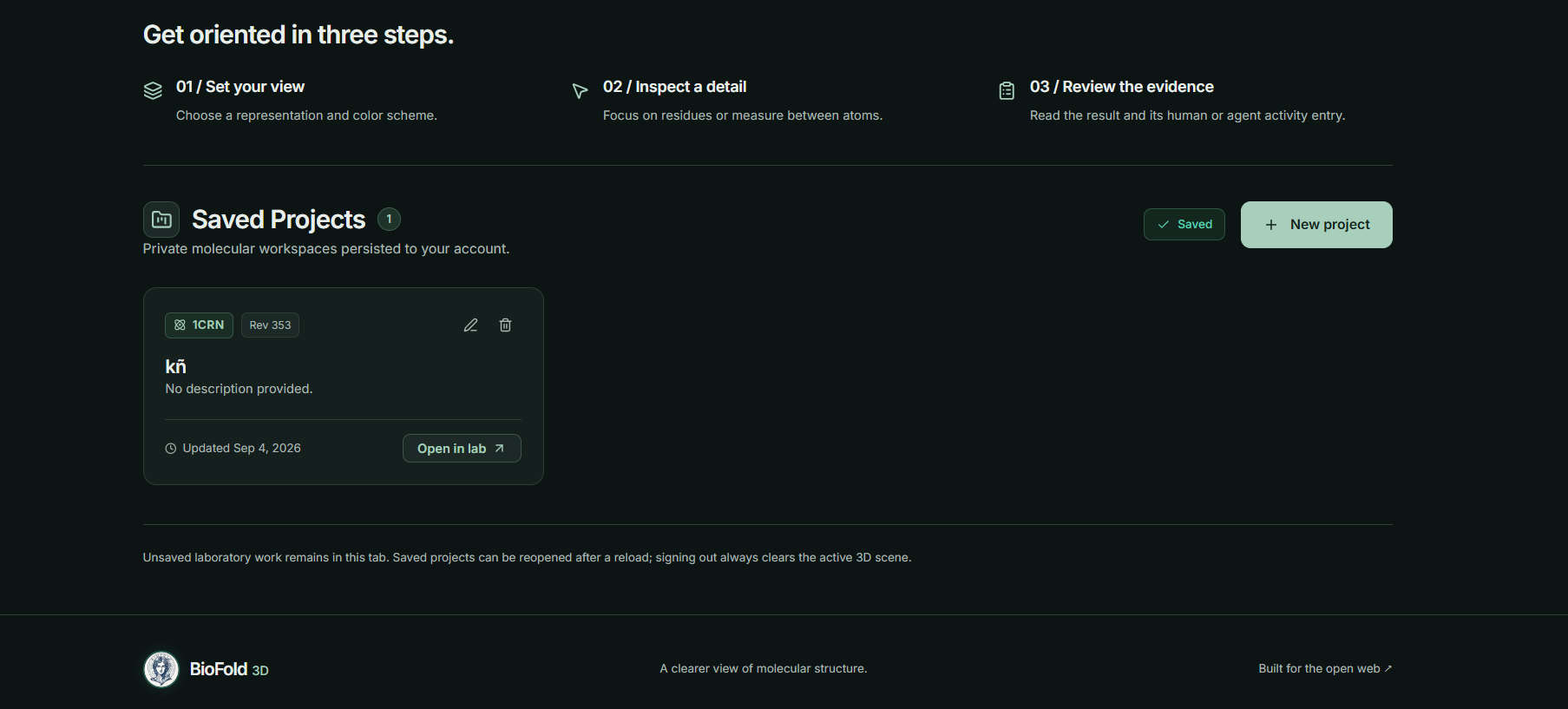
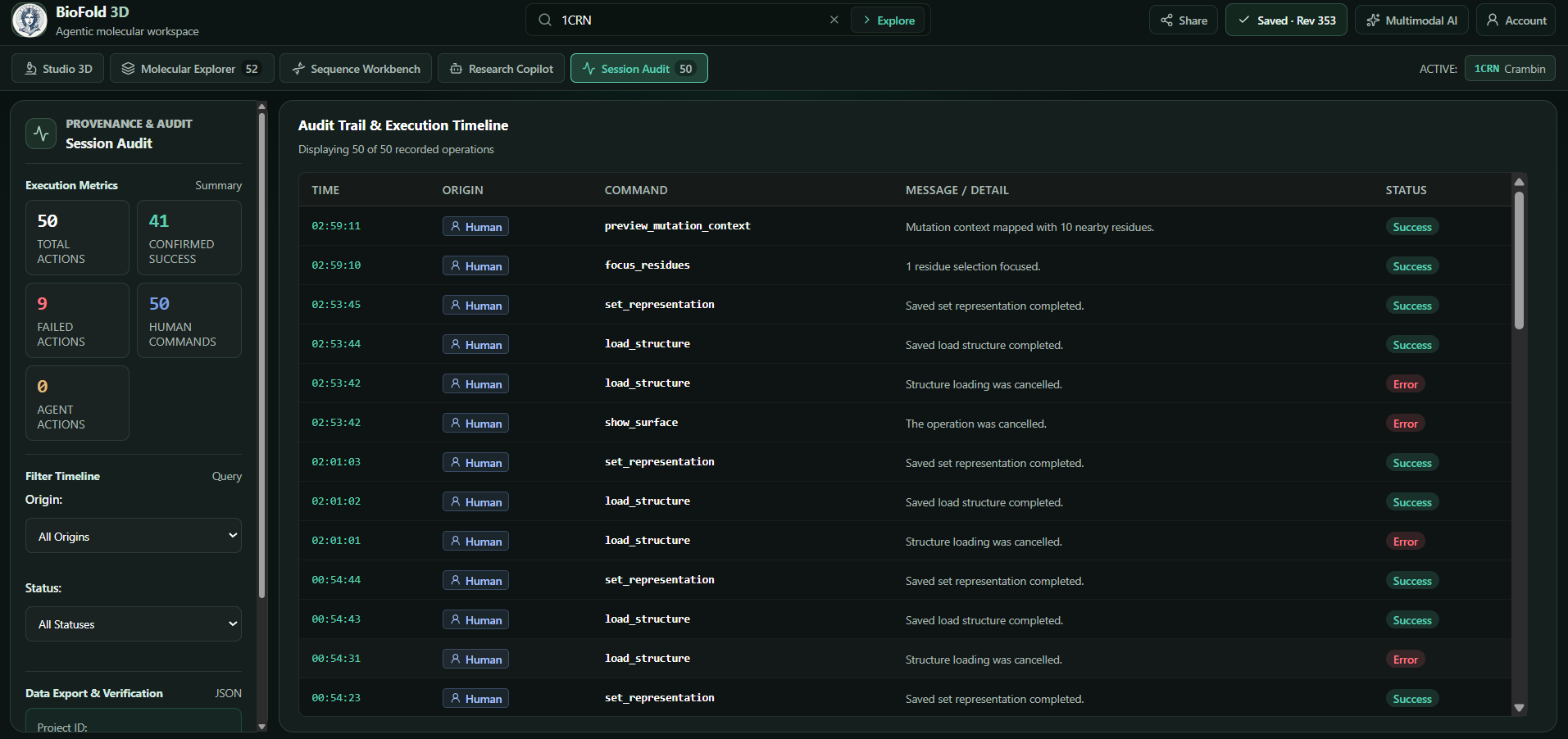
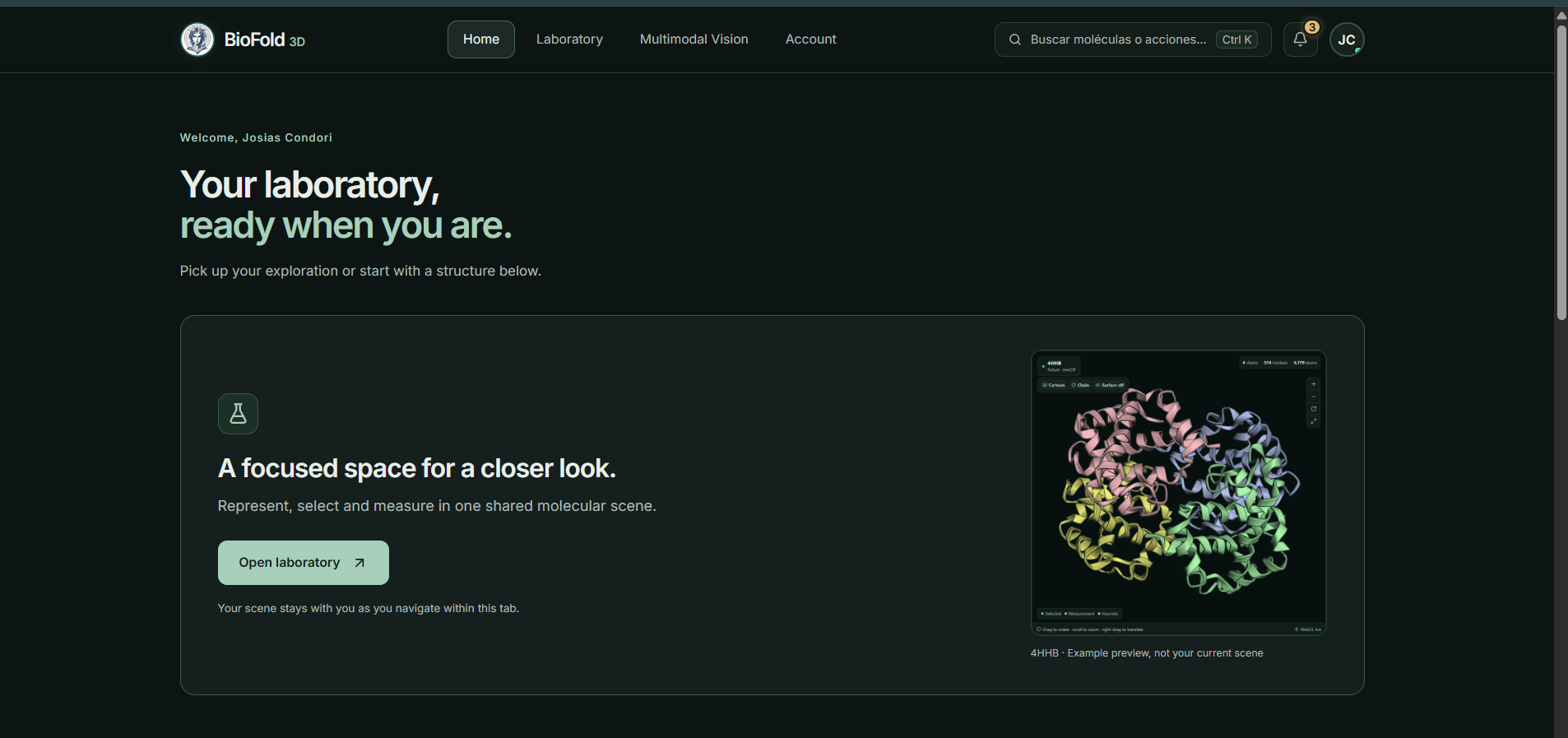
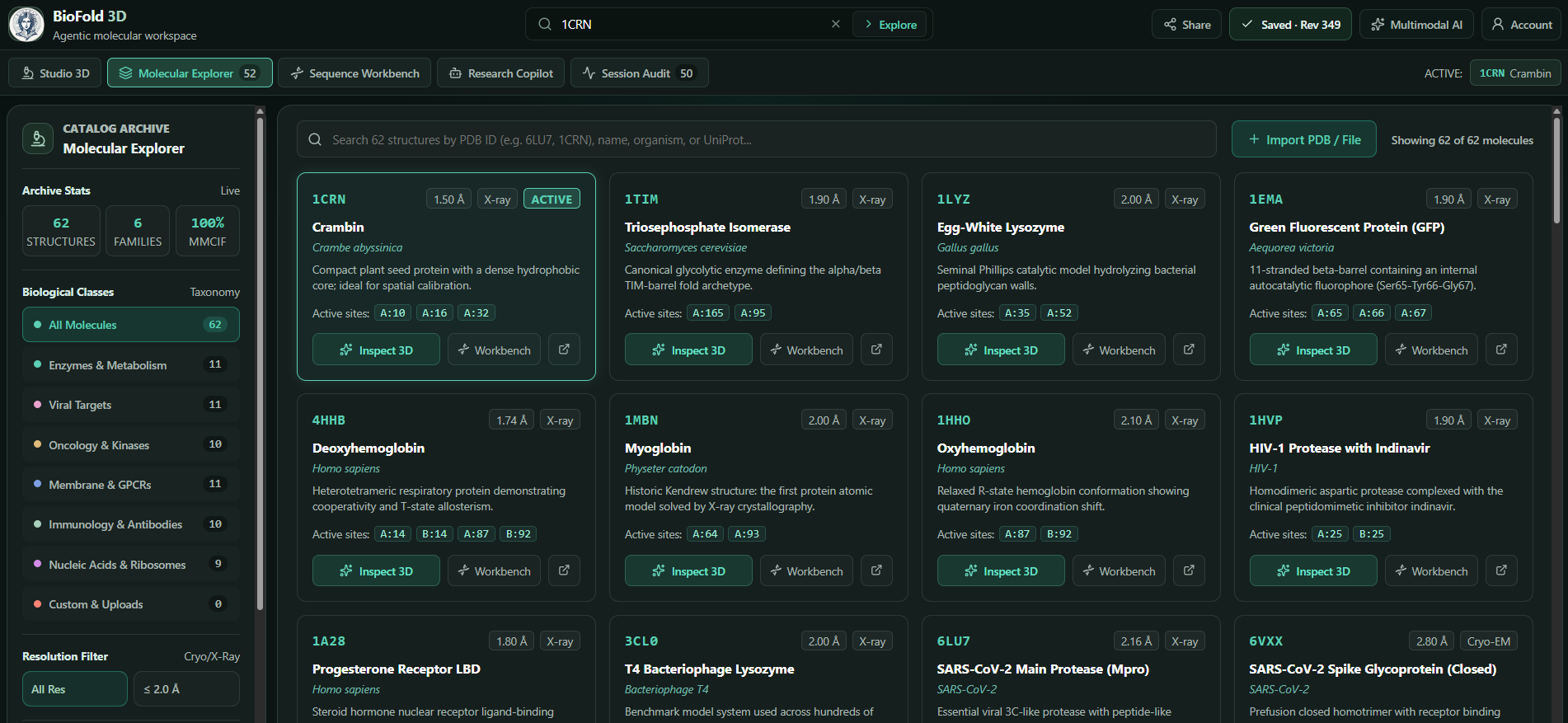
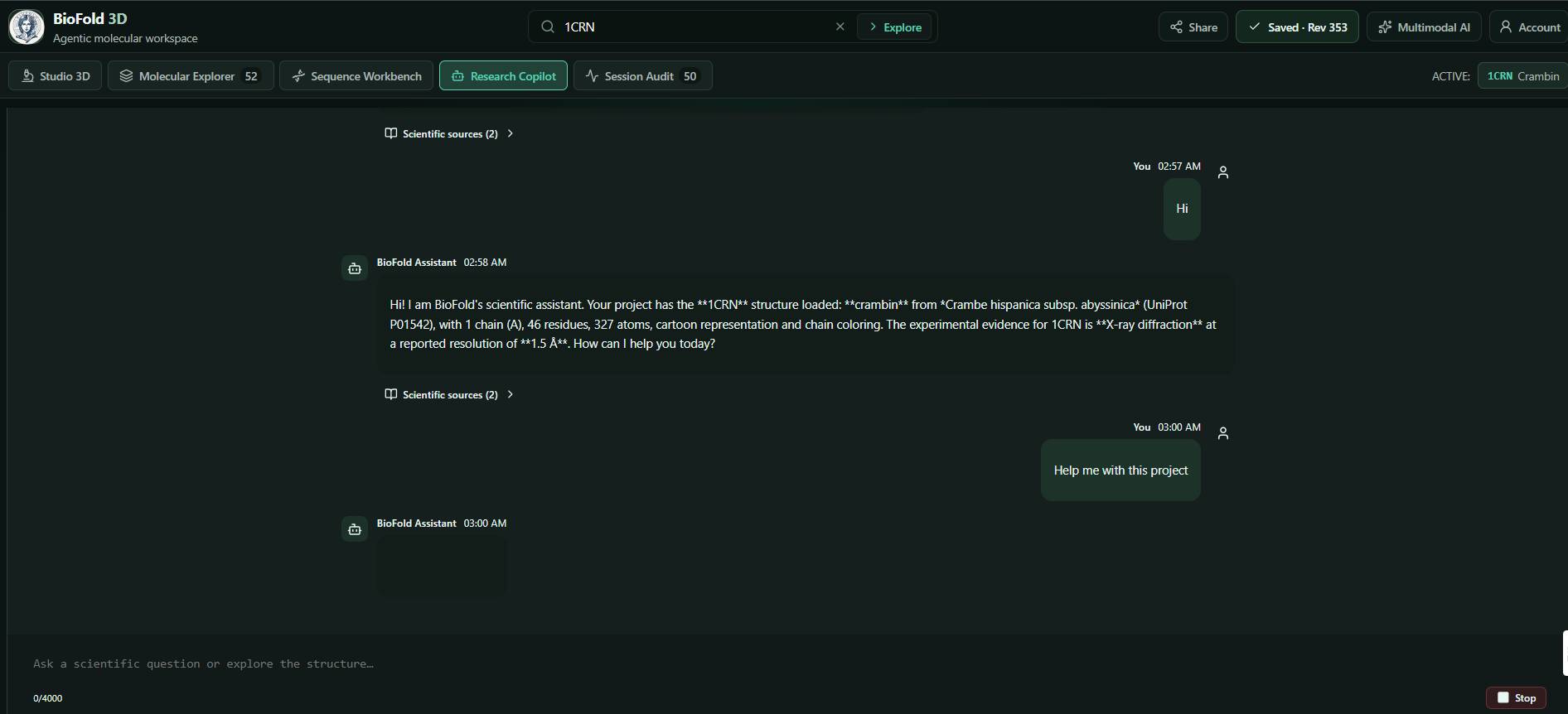
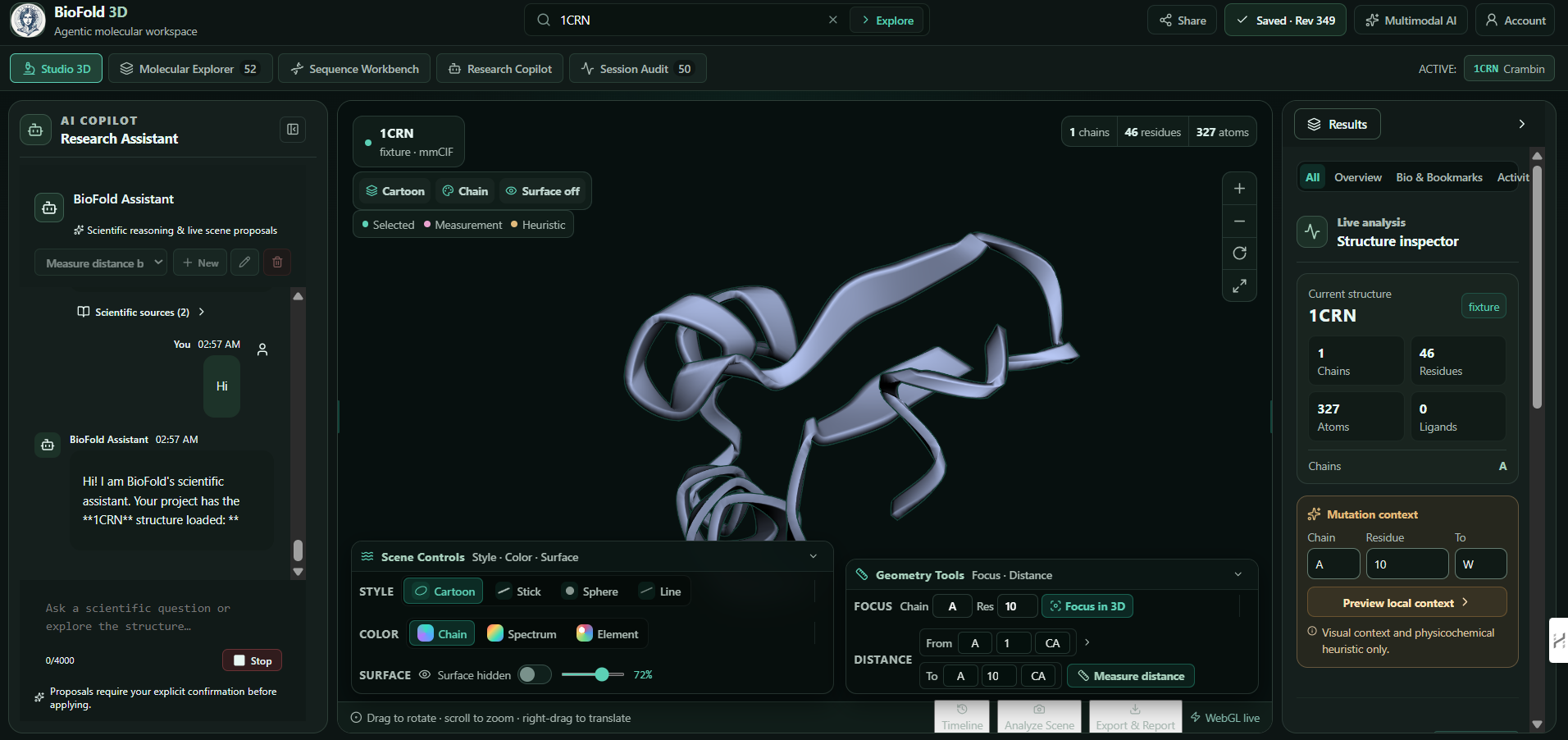
Biofold is a web-based laboratory that handles molecular analysis supported by artificial intelligence, and is built on databases such as uniproot and alphafold DB.
How we built it
BioFold 3D is built on the frontend with React 19, Vite, and TypeScript, using a centralized state in Zustand that decouples persistent memory from the 3Dmol.js WebGL context. It's complemented by dedicated Web Workers for non-blocking calculations of van der Waals surfaces and sub-angstrom distances, along with a WebMCP adapter that links eight typed tools to a unified Command Bus for humans and agents. The backend relies on Supabase Edge Functions on Deno to orchestrate caching from RCSB PDB and UniProt, serving a wizard powered by OpenRouter.
Challenges We Encountered
Errors in the configuration of the free OpenRouter templates, UI errors, backend errors, WebMCP configuration errors, among others.
Achievements We're Proud Of
I'm proud to deliver a functional product with excellent scalability potential.
What We Learned
Besides the usual improvements in backend and database knowledge, I learned a lot about MCP configurations, as well as a great deal about web design.
What's Next for BioFold? Biofold's objective is to expand the functionalities that, although mostly advanced, in several cases need improvement for university or professional work. That is why my next objective is to create the bioacademy section focused on learning molecular analysis, geared towards both high school and university students.
Built With
- css
- javascript
- openrouter
- supabase
- typescript

Log in or sign up for Devpost to join the conversation.