-
-
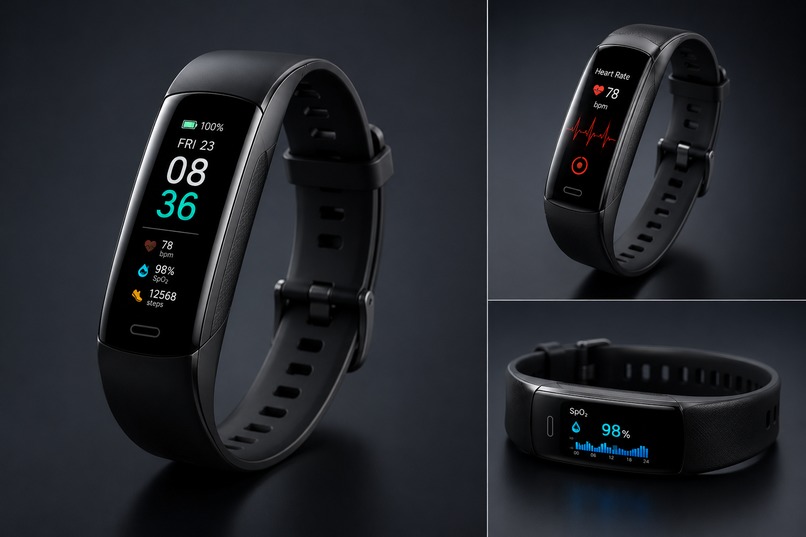
model of the idea
-
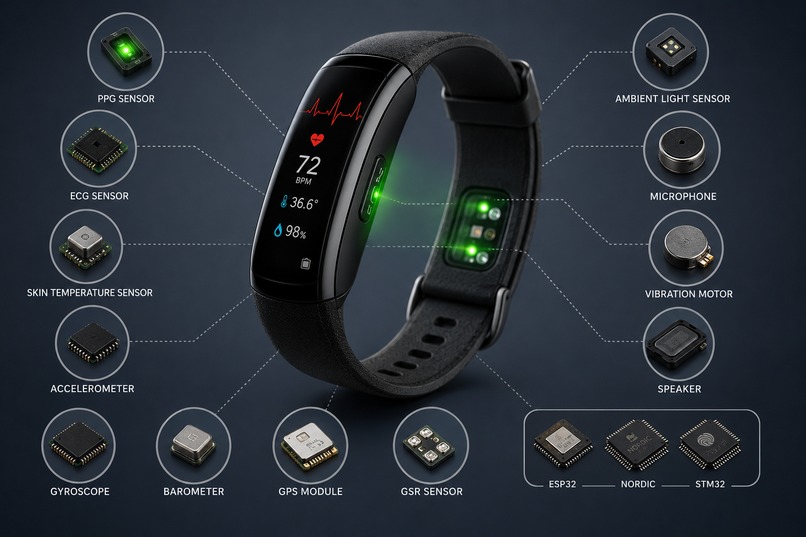
model with components
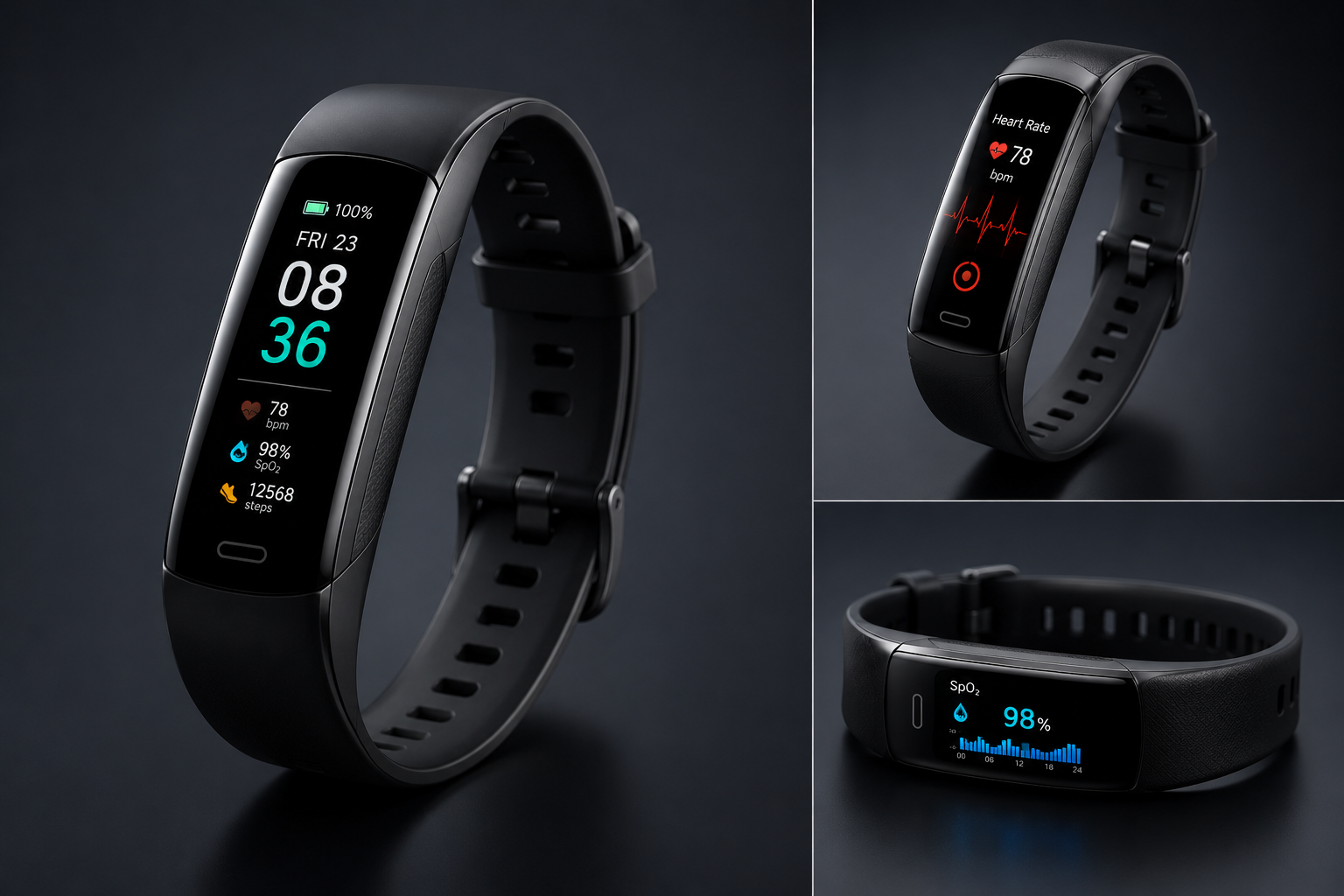
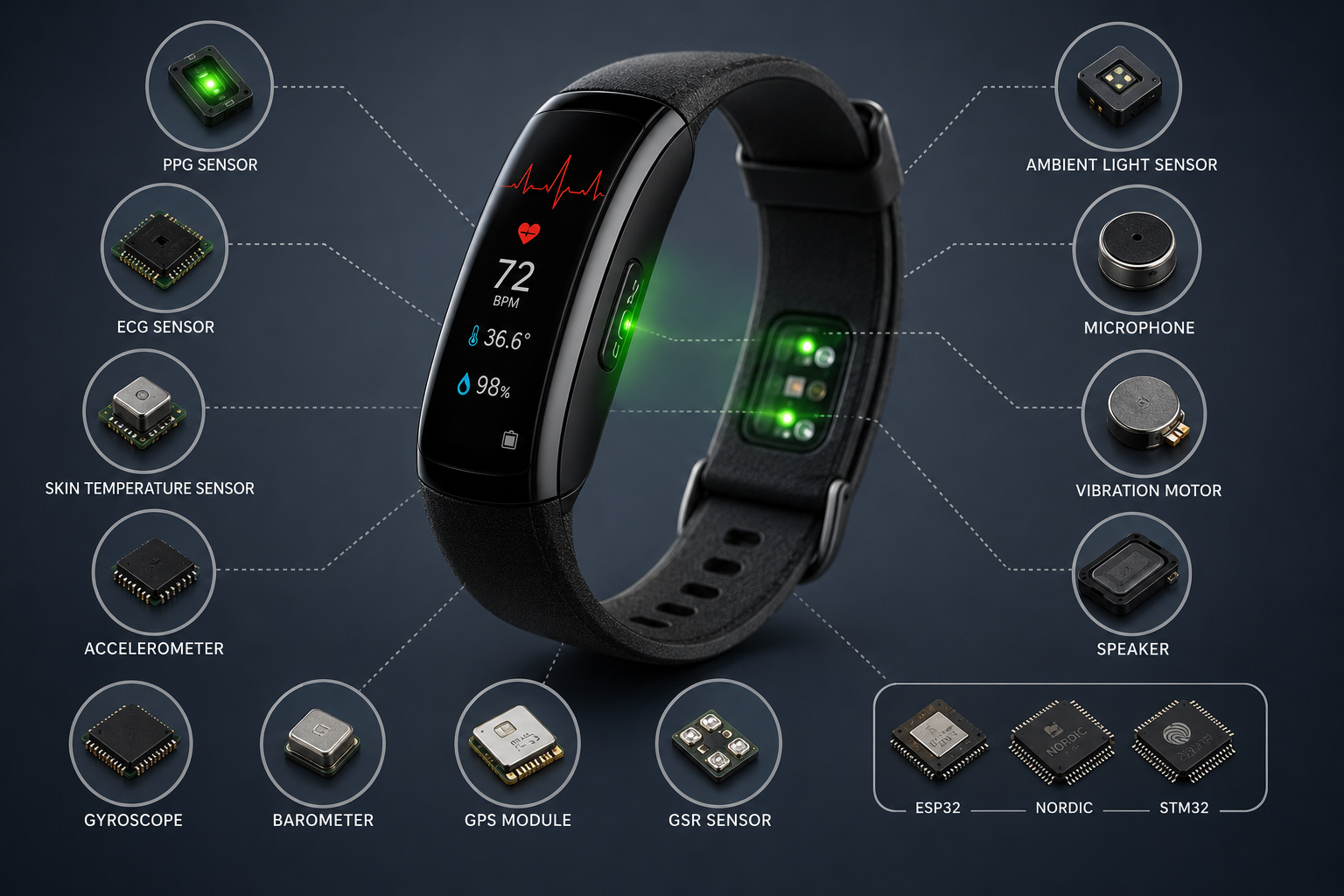
BioFit Pro – AI Smart Medical Band
Inspiration
Healthcare emergencies often happen without warning, especially for elderly people, patients with heart conditions, and individuals living alone. While current smartwatches and fitness bands can track basic health metrics, they rarely provide continuous medical-grade monitoring or intelligent emergency assistance.
As biomedical engineering students, we wanted to bridge the gap between consumer wearables and medical monitoring devices. Our vision was to create a wearable that not only tracks health but also analyzes it, predicts potential risks, and automatically responds during emergencies. This idea inspired BioFit Pro, an AI-powered smart medical band designed to provide continuous health monitoring and rapid emergency response.
What it does
BioFit Pro is a next-generation wearable that combines the convenience of a fitness band with the intelligence of a medical monitoring system.
The device continuously monitors important physiological parameters such as:
- Heart Rate
- ECG (Electrocardiogram)
- Blood Oxygen Saturation (SpO₂)
- Skin Temperature
- Physical Activity
- Stress Level
- Sleep Quality
- Fall Detection
- GPS Location
Using AI-powered health analytics, BioFit Pro detects abnormal conditions such as irregular heart rhythms, sudden falls, or unusual physiological changes.
If a medical emergency is detected, the device automatically:
- Triggers an Emergency SOS
- Sends the user's GPS location
- Notifies pre-registered emergency contacts
- Shares important health information for faster assistance
The system also provides personalized health insights, reminders, and long-term wellness tracking through a companion mobile application and cloud dashboard.
How we built it
We designed BioFit Pro as a modular wearable platform consisting of four major layers.
Hardware Layer
The wearable integrates multiple biomedical and environmental sensors including:
- ECG Sensor
- PPG Sensor
- Skin Temperature Sensor
- Accelerometer
- Gyroscope
- Barometer
- GPS Module
- GSR Sensor
- Ambient Light Sensor
- Microphone
- Vibration Motor
- Speaker
The processing unit can be built around low-power microcontrollers such as:
- ESP32
- Nordic nRF Series
- STM32
These components work together to continuously collect physiological and environmental data.
Embedded System
Firmware manages sensor acquisition, signal filtering, Bluetooth communication, power management, and emergency detection while optimizing battery life.
Artificial Intelligence
Collected sensor data is processed using AI algorithms to identify abnormal health patterns, analyze trends, and generate intelligent alerts instead of simply displaying raw sensor values.
Mobile and Cloud Platform
The wearable communicates with a smartphone application through Bluetooth. Health records are synchronized securely to the cloud, allowing users, caregivers, and healthcare professionals to monitor health trends remotely.
Challenges we ran into
Developing BioFit Pro presented several engineering challenges.
- Selecting sensors that balance medical accuracy, low power consumption, and compact size.
- Designing a comfortable wearable capable of supporting multiple sensors.
- Reducing motion artifacts that affect ECG and PPG measurements.
- Optimizing battery life while maintaining continuous monitoring.
- Designing a reliable emergency detection algorithm that minimizes false alarms.
- Integrating hardware, firmware, AI, and mobile applications into a unified system.
- Considering data privacy, secure communication, and future regulatory requirements for healthcare devices.
These challenges helped us better understand the complexity of designing real-world biomedical wearables.
Accomplishments that we're proud of
- Designed a complete concept for an AI-powered smart medical wearable.
- Combined fitness tracking with biomedical monitoring and emergency response.
- Planned an automatic Emergency SOS system with GPS location sharing.
- Proposed a modular sensor architecture for future upgrades.
- Integrated AI-based health analysis instead of conventional data logging.
- Developed a scalable architecture suitable for future hospital and telemedicine integration.
What we learned
Throughout this project, we gained valuable knowledge in multiple engineering domains.
- Biomedical signal acquisition and wearable sensors.
- Embedded system design for low-power devices.
- Artificial intelligence for healthcare applications.
- Bluetooth communication and IoT connectivity.
- Human-centered wearable product design.
- Cloud-based health monitoring.
- Medical device security and privacy considerations.
- The importance of designing technology that can improve patient safety and quality of life.
We also learned that successful healthcare innovation requires collaboration between biomedical engineering, electronics, software development, artificial intelligence, and user-centered design.
What's next for BioFit Pro
Future versions of BioFit Pro will focus on expanding its capabilities through advanced healthcare technologies.
Planned enhancements include:
- AI-powered early disease prediction.
- Improved cuffless blood pressure estimation.
- Integration with electronic health records (EHR).
- Remote doctor dashboard for telemedicine.
- Voice-assisted emergency support.
- Smart medication management.
- Wireless charging and enhanced battery optimization.
- Support for future non-invasive health sensing technologies.
- Clinical validation and regulatory compliance for real-world healthcare deployment.
Our long-term vision is to transform BioFit Pro into an intelligent wearable healthcare platform that enables preventive medicine, supports remote patient monitoring, and helps save lives through early detection and rapid emergency response.
Built With
- c/c++
- dart
- javascript
- python

Log in or sign up for Devpost to join the conversation.